Friday, January 12, 2024

The Role of The Coach in Elite Equestrian Sport - Juniper Publishers

Physical Fitness, Medicine & Treatment in Sports - Juniper Publishers

Abstract

British Equestrian (BE) aims to develop a holistic coach education and certification program, moving away from traditional autocratic instruction in line with the United Kingdom (UK) Coaching Framework. This framework is based on generic coaching science research where the coach is cited as a pivotal aspect in developing sporting success. Theoretic knowledge suggests that the role of the sports coach is to develop the physical, tactical, technical and psychological attributes of the athlete and is responsible for the planning, organization and delivery of the training plan and competition schedule. However, there is no empirical evidence to suggest that is the role required in equestrian sport, as the rider often takes responsibility for many of these tasks. This research aimed to address the void in current knowledge by gaining an understanding of coaching in equestrian sport at the elite level, to improve coaching education systems through awareness of the role of the coach. A qualitative method using semi-structured interviews was used. A sample of elite coaches (N=3) and elite riders (N=3) were interviewed. Analysis of the transcripts revealed a total of 534 meaning units that were further grouped into sub-themes and general themes from the coaches’ perspective and the riders’ perspective. This led to the development of a final thematic structure revealing major dimensions that characterized coaching in elite equestrian sport. It was found that the riders at the elite level, coach themselves most of the time therefore can be considered as ‘self-coached’ athletes. However, they do use elite coaches in a mentoring and consultancy role, where they seek guidance from the coach on specific problems, to sound ideas off or to seek reassurance that what they are doing is correct. Findings from this research suggest that the rider-coach relationship at the elite level is a professional one, based on trust and respect, but not a close relationship, as seen in other sports. The results show the imperative need for the BE to educate coaches in coaching the self-coached rider at the elite level, particularly in terms of mentoring skills. As well as incorporating rider education aimed at developing the independent, self-coached riders.

Keywords: Coach; Elite; Equestrian sport

Introduction

Equestrian sporting origins are deeply rooted in military tradition, both in the development of the sport and the training of the horse and rider. Equestrian sports are unique as they test the rider’s mastery over the horse in terms of athleticism, control, and accuracy. British Equestrian (BE), the umbrella governing body of equestrian sport, represents 10 sports including the Olympic disciplines of evening, Show Jumping and Dressage. It works to promote the interests of 3 million riders and carriage drivers in the United Kingdom. The Federation is responsible for distributing government funds from UK Sport with an aim to win more medals on the world stage and to get more people participating in equestrian sports. BE places the coach as an integral part in achieving these aims. Substantial sports coaching literature has identified the importance of the role of the coach in sporting success as they are pivotal in the development of physical, tactical, technical, and psychological attributes of the athlete. However, equally important is the role the coach plays in the overall enjoyment, satisfaction and ultimately retention of people participating in the sporting activity. The basic role of any sport coach is to develop and improve the sporting performance of the team or individual. However, as participation in sport is usually voluntary, the experiences encountered can make or break a participant’s continuation in the sport. If the experience is not satisfactory, they are likely to leave the sport. The coach is therefore the key component to whether the activity is positive, and the quality of this experience depends on the coach’s value, principles, and beliefs.

It is acknowledged that the role of the coach is diverse and often not fully understood. Indeed, modern day coaching practitioners are not only responsible for directing practice and training sessions but also for the overall social and psychological well-being of their athlete both inside and outside of the sporting arena. Therefore, as [1] points out, to fully understand the role of the coach a critical analysis is needed of the nuances, actions, behaviour, and complexities used by sport specific coaching practitioners. This suggests that there needs to be recognition of the layers of skill and competencies required, how these interact with each other and how they impact on performance. Research has identified that successful coaches across a range of sports have several qualities in common: the ability to select the most important leadership behaviour; a personal desire to foster individuals’ growth; organizational skills in planning and preparation; a strong sense of goals, philosophy, and personality. This indicates that coaching cannot be viewed as purely a series of actions but a complex model of overlapping aspects. Research supports this by suggesting that coaches require additional skills above the technical knowledge of their sport and that these include pedagogical skills of a teacher, counselling skills of a psychologist, fitness training skills of a physiologist and the administrative and leadership skills of a business executive [2] also includes the role of a mentor and pillar of support to the athlete [3] clarifies the practice of coaching as a complex, dynamic, social domain and context dependent enterprise with often contradictory goals and values. Understanding these complexities is key to evaluating the purpose of the coach, needed in coach education to develop and improve coaching skills. The training of coaches is seen as essential to sustaining and improving the quality of coaching and on-going professionalism. Yet, [4] points out that currently coach development programs use a competency-based approach. This is, in fact, true of the BE who have developed a certification program in line with UK Sport’s United Kingdom Coaching Certification (UKCC). This is a move away from the traditional autocratic style ‘instructor’ to an ‘athlete-centered’, holistic approach to coaching. The traditional system, whilst acknowledged worldwide as a comprehensive program developing basic riding skills was an authoritarian approach to teaching riding. The syllabus was based on the ‘classical’ tradition of training horses based in the military past and lacked scientific validity. The current focus on the holistic approach and the development of an athlete, is supported in other areas of coaching, physical education and indeed education. A strong athlete-centered coaching approach emphasizing the development of self-confidence and belief in one’s ability is essential in making the correct decisions in a competitive situation. Producing ‘independent learners’ and ‘independent ‘decision markers’; may be key to the equestrian model as the rider is often considered as the ‘leader’ and non-verbal decision maker of the team.

Decisions made during riding must be made quickly and have dynamic consequences. The rider must calculate so many variables and translate them to effective communication with the horse. The rider needs to make the correct decisions at the right time and failure to make correct decisions can be catastrophic. This requires quick cognitive function, complex tasks, and choice reaction times. Indeed, it is this quick proprioceptive processing and effective decision making that are key to effective horse riding. This can only be achieved if the rider is empowered to be independent leaders that are confident decision makers. Olympic rider and coach, Phillip Dutton agrees: “You need to be strong and independent enough so you can ride without an instructor watching you all the time, holding your hand, and doing everything for you. Eventing is a sport where you are out there on your own especially cross-country phase. Your instructor may help you gain skills and improve your riding, but you must develop your mind and confidence so that when you are on course you can do it on your own [5].

To attain this holistic approach to coaching a substantial amount of literature has revealed the importance of the coach-athlete relationship and that the strength of this relationship should be based on closeness, co-orientation, and complementarity (3Cs). However, literature, mainly popular and non-academic, suggests that it is the rider that is responsible for the training of the horse in terms of fitness, skill, and technique as well as the management and wellbeing of the horse. They also assume the planning of competition schedules as well as most of the tactical and technical support, therefore it can be assumed that in part, they coach themselves. There is little empirical research to identify what the role of the equestrian coach is in this triad relationship. Therefore, the aim of the study was to gain an understanding of the role of the coach in elite equestrian sport to improve coaching education systems through awareness of the role of the coach. The first objective was to examine the relationship between coach and rider at elite level in equestrian sport providing empirical evidence to suggest that the rider is, in part, ‘self-coached’. The second objective was to identify what elite equestrian coaches believed their role is in the development of safe and effective riders.

Method

Sampling

The research question was developed with regards to elite equestrian coaches and riders as the study of their inferences could be drawn and applied to coach education. As there is no cohesive definition of an expert coach or valid ways to identify expertise, almost all research relies on years of experience or level of performance. As this study formulates primary research in the field of equestrian coaching and due to the large number of variables associated with the sport a top-down approach researching the elite level was chosen. Therefore, the principles of purposeful sampling were implemented using the following criteria: Three elite equestrian coaches were selected who were currently coaching on the BEF World Class Programme and working with GB senior team riders competing at the international level. A list of subjects that met the criteria, were drawn up and were approached based on location to researcher. One female coach and two male coaches were interviewed, one specialised in dressage, one show jumping and one in eventing, although all had had experience of coaching event riders. All were known in a professional manner to the researcher. Three elite riders were selected using the following criteria: member of the BEF World Class Programme and had represented Team GB at senior level during the past year. Three riders were selected from a possible 32 across the disciplines of eventing, dressage and show jumping. Two riders competed in eventing, one in the discipline of Show Jumping and were selected on location to researcher and were also known in a professional manner to the researcher.

Instrument

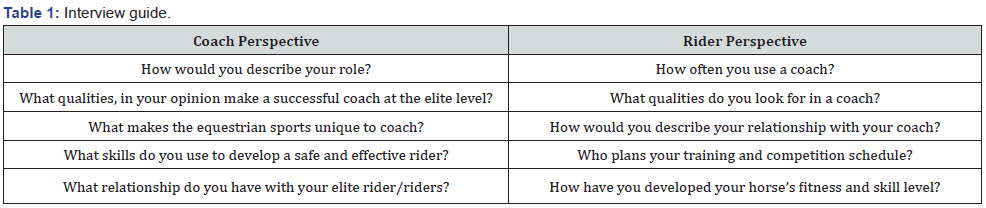
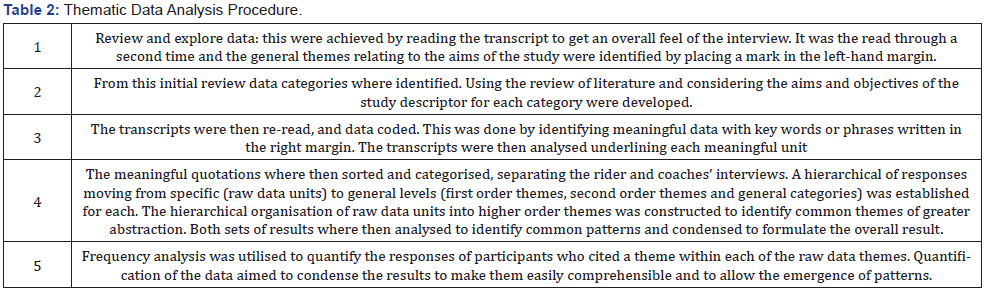
A semi-structured interview schedule that prompted responses to open ended questions about the roles and relationships of coach and rider was chosen as the method for this study. A semi-structured interview guide (Table 1 & 2) was developed to allow the interviewer to explore the relationships and roles within the coaching process. Participants were informed that there were no right or wrong answers, they were asked to take their time to respond to questions or to tell the interviewer if they did not understand the question. In addition to the semistructured questions specific probes were identified for each question and encouraged participants to elaborate on their responses.
Data collection

Coaches and riders were approached via phone call or email by the author and invited to participate in the study. After explanation of the aims and background of the study, interviews were arranged at a time and place elected by the interviewee. The interviews ranged from 25-55mins and were audiotaped with participants’ consent. The interviews were later transcribed verbatim into A4 single-spaced text.

Pilot study

A pilot study was carried out to assess the effectiveness of the questions selected. One elite coach was selected to be interviewed. Responses were forthcoming and met expectations. However, to validate the results further it was decided to also interview riders to gain their perspective of the role of the coach and the relationship they have with their coach. A further pilot interview was carried out with an elite rider to again assess the effectiveness of the questions selected.

Data analysis

Thematic Analysis was used as a systematic method for exploring the contents of the obtained data.

Ethics & Limitations

Ethical approval was granted by Hartpury University. The interviewees remained anonymous and confidential throughout the study, however, due to the high-profile nature of the sample it may be possible for people in the equine industry to identify subjects from their responses, however all efforts were made to retain anonymity and participants were given a letter and number as a means of identification through the study. Questioning topics did not cover intrusive or overtly personal subject areas. All participants were over the age of 18 and choose to take part under their own free will and were able to withdraw from the study at any time. Informed consent from the coach and riders were obtained prior to the interviews being recorded. The Data, both audio recordings and transcripts were stored in accordance with the Data Protection Act 1998.

The limitations of using a semi structured interview technique are that not all people are equally cooperative, articulate, and perceptive. The interviewer requires skill, not only to select and ask the appropriate questions clearly, but to gain the interviewees trust and confidence for them to elicit a full and honest response.

As a result, it is not a natural tool for gathering data as it requires interaction between two parties. However, due to knowledge level and experience of the researcher regarding equine performance these limitations are reduced.

Results

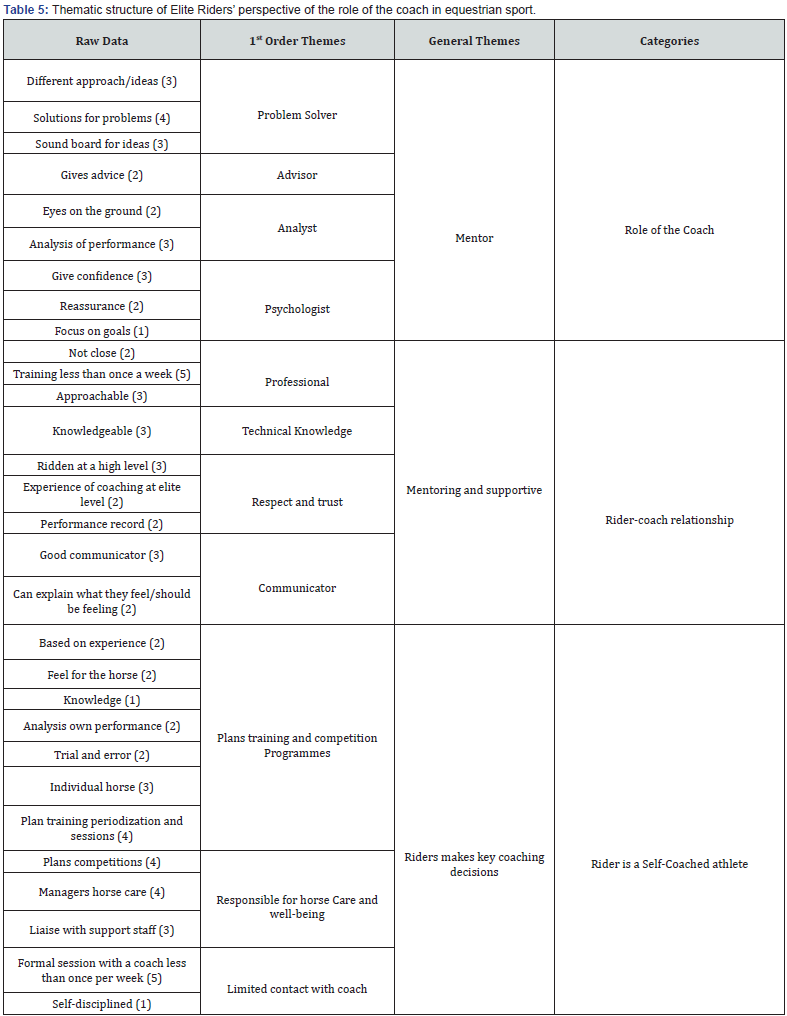
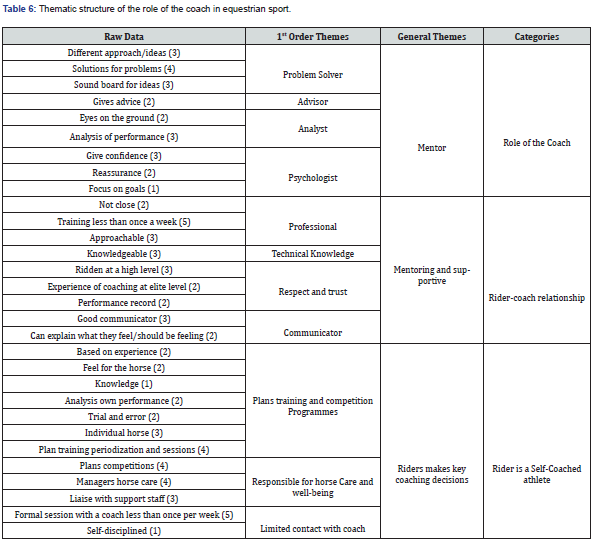
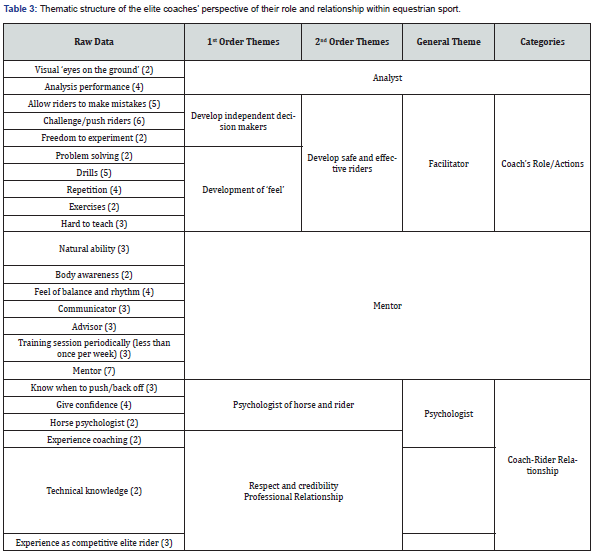
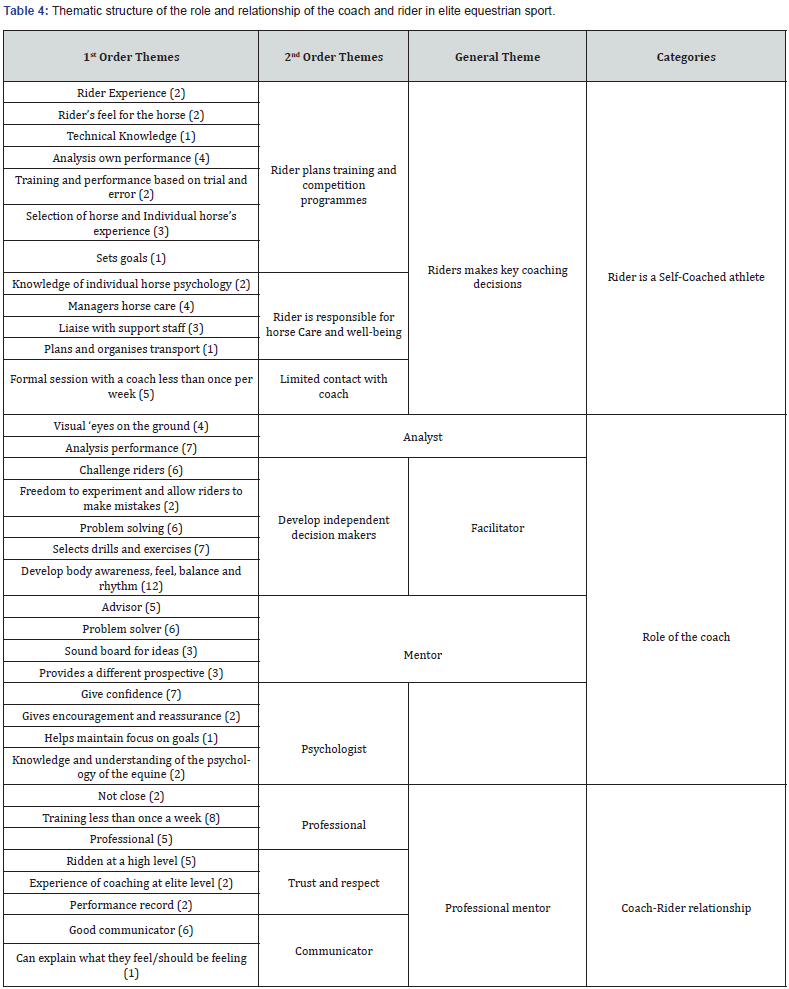
Analysis of the transcripts revealed a total of 534 meaning units that were further grouped into sub-themes and general themes from the coaches’ perspective (Table 3) and the riders’ perspective (Table 4). This led to the development of a final thematic structure revealing major dimensions that characterized coaching in elite equestrian sport (Table 5 & 6).
Discussion

Self-coach athletes

Analysis of data suggests that riders at the elite level in equestrian sport are in part ‘self-coached’. The results of the study show that riders attend a training session with a coach less than once a week and some as little as once a month. The remaining time the individual rider is responsible for all training decisions including horse selection; competition planning; implementation of periodization plans; management of support staff. Training decisions are made by the riders based on experience and knowledge of the individual horse. Therefore, in depth knowledge is needed by the rider in all areas. The development of the equestrian UKCC qualifications has incorporated the importance of planning for the coach but fails to acknowledge that it is the rider that plans the program. It was acknowledged by both the riders and coaches that consideration for the horse’s wellbeing and ensuring they were willing to do the task being asked was a key factor in their planning. This is because the equine has no concept of the goals involved. Coach C1 clarified this by stating “It is better to have the horse 90% prepared or 90% fit and 10% willing than have 100% prepared but you have no willingness”. This is in direct contrast to literature in other sports where being 100% prepared is necessary for sporting success. Therefore, any equestrian plan needs to suit the temperament of the horse. The results highlighted that knowledge and understanding of the psychology of the individual horse was significant and that as the rider has a close relationship with their horse, they are in the best position to make these training decisions. However, the equestrian UKCC syllabus does not incorporate any aspect of equine psychology or horse management, although these topics are still present in the other equine coach certification systems.

All riders in the study identified that how the horse ‘feels’ is the deciding factor in increasing intensity of training or increase in competition level, this suggests that there is an element of reflective analysis occurring and highlights the importance for developing and understanding this concept of ‘feel’. Yet there was no evidence to suggest riders use an objective analysis approach, this may be due to lack of knowledge by the rider and lack of research reaching the industry e.g., use of heart rate monitors, biomechanical analysis etc. There is also a lack of consistency both in literature and amongst the participants as to what actually constitutes ‘feel’. More research is needed to define this concept in equestrian sport and how it is developed to enable it to be taught or coached more effectively.

During their self-coaching training, all riders stated that they used outside observers either grooms, family members or friends to gain feedback. However, the quality of these observers is unknown. This is an area that requires focus and providing quality education to this support team needs consideration. A greater understanding of the self-coached riders is needed to fully feed into education programs for riders at all levels as well as an understanding of how the coach can support the self-coached rider optimally.

Coach-rider relationship

Current research in the field of coaching science recognizes that sport is not immune from the social world and that to examine the dynamic coaching process contextual social factors must be considered. Indeed, any activity that involves human beings is complex, interpersonal and that relationships are contested at levels of meaning, value, and practices. The relationship between the coach and the athlete is not an add-on or by-product of the coaching process but could be considered the foundation of coaching. Therefore, the coach-athlete relationship can be defined by mutual and casual interdependence between coaches and athlete feelings, thoughts, and behaviour, suggesting shared goals and values [6] proposed that successful coach athlete relationships are based on four concepts: closeness (trust and respect); commitment (shared goals and connection); complementarity (interaction that is co-operative and effective); co-orientation (acceptance of individual roles). However, previously there is no evidence to suggest these are used in equestrian sport.

The interpersonal relationship between athlete and coach plays a significant role in the sporting lives of the athlete and is likely to determine satisfaction in the sport, self-esteem and confidence and ultimately successful sporting performance.

However, knowledge and understanding of these relationships remains limited at both the theoretical and empirical level. This study elucidated that the relationship between the coach and rider was a professional one that could be described as reciprocal, yet asymmetrical characterised by a unique relationship between individuals and depended upon experience and age difference. This study revealed riders sought a coach that was approachable, that they felt comfortable discussing ideas with and that they trusted and respected. This view is supported in other sports; however, the riders did not describe the relationship as ‘close’. Yet closeness is considered by Jowett’s 3Cs as a key component of the in successful coach-athlete relationships. This may be in part due to the limited contact riders have with their coaches. Contact was mixed amongst the subjects; one respondent only saw their coach during periodic World Class training which may explain why their relation was not considered ‘close’. Further research is needed to fully quantify the ‘norm’ for contact time with coaches across equestrian sport at varied rider levels.

Respect and trust

The emerging themes that were expressed by the rider participants show some commonality in their lower order themes, that they desire a coach that they trust and respect. All participants claimed that this respect was generated from the coaches’ own riding experience and level in which they had competed. It was felt that this was needed to not only have credibility but also to have the knowledge of riding a variety of horses at the elite level and to have the appropriate repertoire of training solutions. The ability to have the concept of ‘feel’ of the individual horse was also deemed important. One participant commented that: “It is also really useful for them to get on the horse so they can feel what I feel” R1. This suggests that equestrian coaching is largely experienced-linked and situation-specific base, like that required in the sport of sailing. Such an important statement is worthy of further investigation as other equestrian coaching qualifications include riding tests as part of their qualification curriculum, whereas the UKCC does not. Interestingly the elite coaches acknowledge the advantage of riding experience for a successful coach but felt that this was not necessary. This is supported in other sports where the best coaches are not always elite athletes but have had experience of competing just below the elite level, this may well not be applicable in equestrian coaching at elite level.

Mentor relationship

Riders in this study referred to their chosen coach when they needed advice or mentoring. One way by which the riders identified this mentoring relationship was that they used a coach as a sounding board for ideas. This was, in part, used to gain confidence and reassurance in the knowledge that what they were doing was correct. They also used the coach as a mentor when they had a particular problem or needed a fresh approach to a particular horse or situation. Whilst BE acknowledges the importance of mentoring skills within coaching, it fails to clarify what these skills actually are, yet it can be accepted that it is a form of supported learning through social interaction. Evidence from these interviews suggests this is achieved through a shift between support and challenge.

Facilitator in the development of safe and effective riders

[7] when analysing relationships within the caring professions, identified good mentors as challenge givers, the collective viewpoint expressed by the participants indeed concurs with this within this study. Emphasis was placed on the element of challenging the rider. This may be since in the remaining time the riders are self-coaching and may not be motivated or confident to push themselves outside their comfort zone. C1 expressed this view “that they go over what they are comfortable doing and that they are good at” C1 29-30. Within this study the findings concluded that the elite equestrian coaches facilitated this challenging environment by setting up exercises that allow riders to experiment, for example, different approaches to jumping a combination. This suggests a move away from skill practice to development of perception and decision-making processes. This allowed the riders to make mistakes and learn from these mistakes. The coaches in this study stated that they achieve a learning experience by discuss those mistakes, getting them to think how they would ride the exercise differently and creating awareness of feel in relation to position. This cognitive action through a guided discovery approach achieves an empowerment process.

Similarly, to other sports, feel or body awareness in equestrian sports is achieved through drills and repetition. Riders felt this fed into positively developing their own confidence, improving their cognitive awareness and automatic decision-making processes. More research is needed in this area to understand which exercise or drills are the most effective in developing this aspect within equestrian coaching.

Recommendations

The results from this study provide substantial evidence for the need to incorporate the topic of coaching the self-coached rider into equestrian coaching education systems at elite level. Coaches should be aware of the demands and limitations of coaching the self-coached rider and appreciate the importance of their role in the successful outcome of the horse/rider dyad in equestrian competition. BE should highlight and develop the role of the coach as a mentor to self-coached riders at the elite level. Amalgamation of both phases of this study combined with the themes that emerged from the interviews provides the following recommendations:

a) Role of the coach in Equestrian UKCC education should be clearly identified

b) Further development of mentoring skills of coaches

c) Identification of techniques that facilitate the development of ‘self-aware’ and ‘self-reliant’ effective decisionmaking riders

d) Development of rider skills to self-coach in terms of planning and implementing training, developing all areas of psychology, equine psychology, injury prevention etc. and analysis

e) Increasing the use of tools to enable the self-coached rider to analyse performance in both training and competition environment

Limitations of Study and Future Research

It is important to highlight the limitations inherent in the study which must be considered against the results that emerged. The sample size used in the study was small (coaches N=3, riders N=3) however, the selection criteria was carefully applied and even though the sample size was small it could justifiably be seen as offering expert opinions therefore, the findings are directly applicable to elite coaches and riders. Future research is required with differing levels of riders and equestrian coaches working to provide validity across all equestrian participants. More indepth research is indicated investigating individual equestrian sports in greater detail to examine any differences that may arise in each discipline. As expected, with any attempt to summarize or condense findings from the semi-structured interviews, not all participants were as forthcoming as each other and did not respond in the same way or to the same extent to the identified themes. The practical coaching processes were not quantified, therefore this study relied on the participants perception of coaching and the role of the coach, whilst this is a legitimate form of qualitative research the study could have included coaching observations. using video analysis to evaluate the coaching process and identify evidence of the coaching roles displayed in practice [8-54].

Conclusion

In equestrian sports there is a unique triad relationship between the horse, rider, and coach. The rider assumes many responsibilities that are undertaken by the coach in other sports, such as planning training schedules, nutrition, competition schedule, tactics etc. As a result, we can consider the elite rider often as a self-coached athlete. The findings of this study were that elite equestrian athletes therefore used a coach primarily as a mentor and that this mentoring role includes problem solving and reassurance that the training and management techniques being used are correct. Within the coached training sessions, the coach assumed the role of a facilitator, challenging the riders in a holistic manner with a specific aim to develop independent decision makers. In this study riders felt that their relationship with their coach was one of a professional nature and that they selected a coach that they trusted and respected. This was based on the level and experience of the coach as a competitive rider. This has implication on the current BE coach certification system that does not assess riding ability. Considering these findings, the BE needs to address coach education in terms of holistic practice, specifically regarding coaching the self-coached rider. Further research is indicated, establishing links between riders’ natural ‘feel’ and the development of correct decision making in equestrian sport. This will enable a better understanding of how the BE can develop coaches who will successfully facilitate and mentor essential and equestrian specific skills at all levels and across all disciplines.

To Know more about Journal of Physical Fitness, Medicine & Treatment in Sports
Click here: https://juniperpublishers.com/jpfmts/index.php

To Know more about our Juniper Publishers
Click here: https://juniperpublishers.com/index.php

Wednesday, January 10, 2024

Effects of Strength Training and The Pilates Method on Dynamic Balance, Physical Capacity and Quality of Life in Older People: A Triple-Blind Randomized Clinical Trial - Juniper Publishers

Yoga and Physiotherapy - Juniper Publishers

Abstract

Objectives: The study aimed to compare the effect of different exercise modalities on dynamic balance, physical capacity, and quality of life. Methods: Fifteen older people aged over 60 years participated in this randomized clinical trial. Group 1 performed resistance training (RG) and Group 2 exercises based on the Pilates method (PG). The dynamic balance behavior was evaluated by Timed Up and Go (TUG) and the 6-minute walk test (6MWT) physical capacity. Quality of life was assessed using the questionnaire SF-36. Results: Regarding balance and physical capacity, we can observe an improvement in the results of TUG and 6MWT, after four weeks of intervention in the PG. No significant differences were found when comparing STG and PG. In terms of quality of life, the criteria of general health and vitality had a statistically significant improvement in the STG and PG. It is concluded that for the older people evaluated in 4 weeks of training, there was no statistically significant difference compared to the groups for the dynamic balance and physical capacity variables. Both strength exercises and Pilates method show significant improvement in criteria assessed in quality of life.

Keywords: Aging; Postural Balance; Physical Capacity; Quality of Life; Physical Training

Abbreviation: RG: Resistance Training, PG: Pilates method, TUG: Timed Up and Go, MWT: Minute Walk Test, UFCSPA: University of Health Sciences of Porto Alegre, SPSS: Statistical Package for Social Science

Background

Physical changes due to the aging process affect muscle strength, balance, and gait, leading to a decline in physical capacity in older people, increasing the chances of falls, morbidity, and mortality among this population [1]. Physical exercise is an intervention used by health professionals for muscle strengthening, physical resistance, and prevention of changes in body balance in the older population. With the practice of exercise, it is possible to obtain an improvement in the risk factors of chronic degenerative diseases, gait speed, muscle weakness, consequently improving the biopsychosocial domains and increasing the quality of life [2,3].

Resistance training has been one of the most common exercise programs applied to the older people, and it has been established that this type of training improves muscle strength, range of motion, levels of functional autonomy, body composition and mental health [4-6].

Among the physical activities recommended for this public, the Pilates method also stands out, which portrays a system of physical exercises created by Joseph Pilates more than a century ago and, even with its multiple ramifications, it is noted that the work with the method is based on the wide variety of movements combined with proper breathing [2,3,5,7,8]. This study is justified by the fact that the literature indicates resistance training and the Pilates method as excellent exercise options for the older people [3,7], however, is not known which of the two has a greater effect on balance, physical capacity, and quality of life in healthy older people, and there is still a lack of standardization in exercise protocols. Therefore, the objective of the present study was to analyze the effect of two different training programs (resistance training versus Pilates method) on the dynamic balance, physical capacity, and quality of life of healthy older people in the community.

Methods

Blinded randomized controlled clinical trial. Approved by the Research Ethics Committee of the Federal University of Health Sciences of Porto Alegre (UFCSPA), under number 2.137.840/2017. Fifteen older people participated in the study, 7 in the Resistance Training group (RG) and 8 in the Mat Pilates group (PG). All volunteers who agreed to participate in the research signed the Informed Consent Form.

Subjects

Older people, residents in the city of Porto Alegre, who were contacted through different sources participated in this study: public invitation, carried out through posters; dissemination on social networks and local dissemination actions with pamphlets. Inclusion criteria were people aged 60 years or older, as established by Brazilian Law No. 8.842 [9], with available time for training. Those who had autonomy and independence, and control of chronic diseases and physical symptoms were considered healthy [10]. Older people who were in a regular physical training program in the last 12 weeks, cognitively impaired, people with a physical disability that prevented them from participating in the groups, in any type of postoperative period or at high risk for performing physical exercises, by cardiopulmonary, vascular, or metabolic disorder, were excluded.

Procedures for Data Collection and Evaluations

The evaluation of the participants was carried out by the same evaluator before and after the training. In the first evaluation, the Mini-Mental exam was performed [11] to assess the individual’s cognitive ability to participate in the study. Dynamic balance was assessed by Timed Up and Go (TUG) test. The test indicates balance and functional mobility, whose performance is related to gait, postural and direction changes during the act of walking, being evaluated through the time spent in carrying out the route [12]. The physical performance was assessed using the Six-Minute Walk Test (6MWT), which measures the maximum distance covered in a period of 6 minutes and is commonly used to assess submaximal cardiorespiratory capacity while performing activities that require commuting. [13]. All individuals were familiarized with the tests previously.

To assess quality of life, participants answered the Medical Outcomes Study 36 - Item Short-Form Health Survey (SF-36) [14] seated in a comfortable and air-conditioned environment.

Intervention Protocol

To ensure the quality of the intervention protocol, as well as the method used in this study, the teams responsible for the training protocols were trained by the responsible researcher to perform the exercises specifically in the RG or PG groups. The study was conducted in secrecy about the training method, focusing on protocol criteria and the safety of participants. The individuals were randomized into two groups, RG and PG, with a training frequency of 3 times a week, over 4 weeks, lasting 60 minutes each. The older people in the RG were first submitted to the estimated test of one repetition maximum (1RM estimated), following the recommendations of the ACSM [15], for each of the exercises of each training cycle. All loads were then adjusted to 70% to 80% of 1RM [15,16]. The protocol was composed of 12 global exercises. The individuals were instructed to perform three sets, from eight to twelve repetitions in each. If the participant reported that the load was light, the load was adjusted again.

In the PG, the protocol had 24 global exercises, all maintaining the principles of the Pilates method. The method is based on 6 principles: control, breathing, fluid movement, precision, concentration, and centering [17]. The exercises were performed with sets of ten repetitions [18]. All exercises were performed on the ground, without the use of equipment. Only accessories such as a Swiss ball, soft ball, stick, dumbbell (1 kg for all individuals) and elastic band were used. [19]. In all sessions, of both groups, the individual was submitted to the same training model, with the same exercises, and if the individual needed any adaptation for the exercise, this was done. In this study, in both training programs, exercises involving strengthening of upper and lower limbs, abdominal and trunk muscles were designed, each modality respecting the characteristics described above. There was a rest period between one exercise and another, not exceeding the time of 1 minute. If the participant reported exhaustion to perform the task, it was finished. No more than 4 individuals were allowed per training schedule, with 2 duly trained instructors to carry out the protocol.

Allocation Sequence Generation

The division between the RG and PG groups occurred after the initial evaluation under analysis of the inclusion and exclusion criteria, following the availability of volunteers’ participation. A table was presented to the older people with the training times, without identifying the modality at each time. According to his availability for training, he stayed in G1 or G2 and only learned the type of training when he participated in it, although the researchers responsible for the training were careful not to mention which method was being used. The health professional who carried out the initial assessment of the elderly was unaware of the schedules for each group, therefore, there was no influence or indication during the choice of the individuals. Both RG and PG offered morning and afternoon schedules, and alternated offering weekly schedules for the beginners. The person responsible for this logistics also kept the assessments confidential for the researchers who conducted the training sessions.

Allocation Masking and Implementation

The evaluators were not aware of the RG and PG training schedules. The researchers responsible for the training were blinded to the evaluation process and to the opposite group. The volunteers were instructed not to comment with the evaluators during the reassessment about the types of exercises they performed. The researcher responsible for analyzing the outcomes was not aware of the allocation of groups, receiving data from the evaluator as Group 1 and Group 2.

Blinding

Due to the masking and implementation of the allocation, the volunteers, the evaluator, the researchers responsible for the training and the researcher responsible for the analysis of the outcomes were blinded.

Statistical Analysis

For data analysis, the Shapiro-Wilk test was performed in order to verify the normality of continuous data. The descriptive analysis of parametric numeric data was expressed as mean and standard deviation, and when non-parametric as median, minimum, and maximum. Descriptions of qualitative variables were expressed in absolute and relative frequency. For inferential analysis, comparisons between RG and PG referring to baseline data were performed using the Student’s t test for independent samples when continuous, and the Chi-square test with Yates correction when categorical. To compare the non-parametric data of the SF-36, the Kruskal Wallis H test and the post hoc Mann Whitney U test were used. Comparisons between GF and GP in the TUG and 6MWT, for the 2 groups in the 2 moments, before and after, were carried out with the Anova Two-Way test with Sheffee’s Post-hoc. All analysis was performed using the Software Statistical Package for Social Science (SPSS, version 21), considering a significance level of 5% (p≤ 0.05).

Results

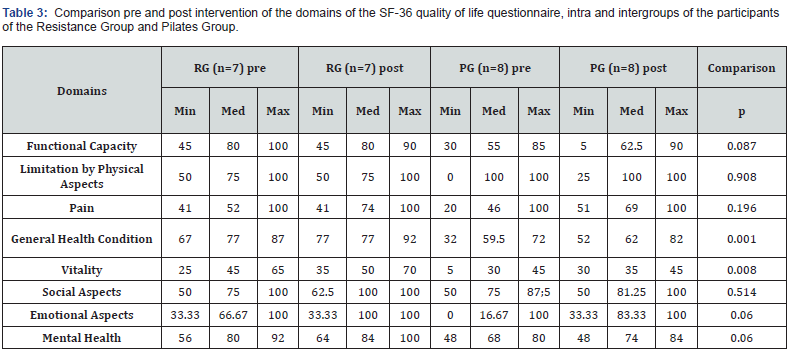
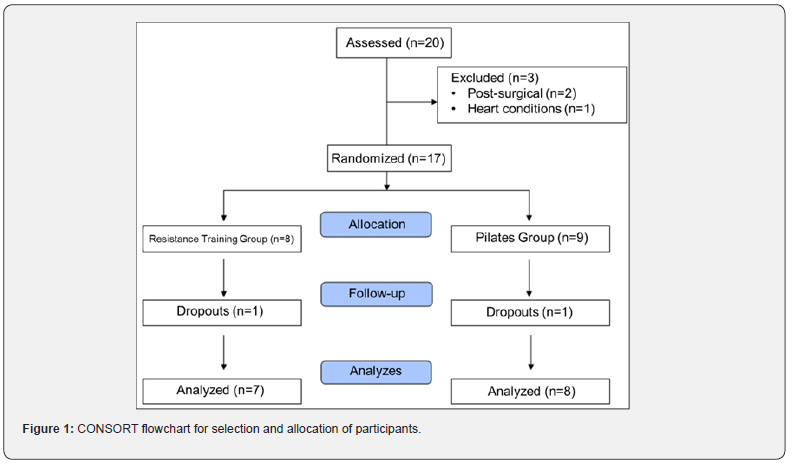
The present study was composed of 7 individuals in the RG and 8 in the PG. All showed cognitive ability assessed by Mini Mental to participate in the study. The allocation of participants is shown in Figure 1. The characterization of the elderly is presented in (Table 1). There were no differences between the groups in the evaluated variables, demonstrating a homogeneity of the sample, except for the number of female individuals in the GP. The results referring to the applied tests are presented in (Table 2). All the participants were able to complete the dynamic balance and physical capacity tests without interruptions. Regarding the quality of life of the participants, assessed by the SF-36 questionnaire, we can highlight an improvement in the domain of vitality (p=0.008) and general health status (p=0.001) even with statistical significance (Table 3).

Where: SD= standard deviation; n= sample; %= relative sample; RG= resistance group; PG= Pilates group; BMI= body mass index; p¹= Student’s t test to independents sample; p²= Qui-Square test with Yates correction.

Where: n= sample; RG= resistance group; PG= Pilates group; SD= standard deviation; 6MWT= six-minute walk test; p= comparison by Anova Two-Way with Shaffee Post-hoc.

Where: n= sample; RG= resistance group; PG= Pilates group; Min= minimum; Max= Maximum; Med= Median; p= H of Kruskal Wallis with Mann Whitney’s U post hoc.

Discussion

In the present study, we did not observe a statistically significant improvement in relation to the performance in the TUG test, corroborating the findings of Vieira et al [19]. One of their hypotheses would be the intervention duration. In addition, we also believe in the hypothesis that they are healthy elderly people, who already had values considered good for their age group in the initial assessment, and another assessment instrument could provide greater specificity to the results. However, the TUG is the most used instrument to assess balance in the older people [17]. The RG did not show improvements in balance after the intervention period, still demonstrating a decline in its performance. The findings of Low et al [6] e Orr et al [20] claim that resistance training does not generate changes in variables on balance. In order to obtain results on balance in the older people, more dynamic and challenging exercises are recommended, with resistance training indicated as a complement to intervention on this outcome. Because, since balance is dependent on several systems for its maintenance, one should not work on resistance exercises alone [21].

We can observe the improvement in TUG results in relation to the effect on balance in elderly people in PG compared to RG, although not statistically significant. Exercises based on the Pilates method, in general, include dynamic muscle stretching and muscle strengthening using body weight as resistance. [22]. According to Chatzopoulos et al [23] dynamic stretching has a positive effect on balance, unlike static stretching. This being one of the hypotheses that would explain the change in the behavior of equilibrium in RG. Also, studies from Barker et al [24], Bullo et al [25] and Cancela et al [26] concluded that the Pilates method has strong evidence of improvement in static and dynamic balance in older people. Research demonstrate that the Pilates method activates and strengthens the central musculature of the “power house”, required during the execution of the exercises and this can contribute to an improvement in the posture and alignment of the trunk, changing the center of gravity, which directly reflects on the maintenance capacity of body balance [27,28]. Regarding physical capacity, we can observe a greater distance in the 6MWT after four weeks of intervention in the RG, although the comparison between RG and PG reached statistical significance (p=0.06). In exercises based on the Pilates method, planti and dorsiflexors and lower limb strength are worked on simultaneously throughout the exercises [29]. What may have contributed to a better performance in the 6MWT, suggesting that individuals have a more evident improvement in physical capacity with training based on the Pilates Method [18].

According to Santos et al [30], exercises that work on motor coordination are able to provide an increase in gait speed in the older people, also indicating functional independence [31]. Comparing the Pilates method to traditional resistance exercise, it presents a greater degree of difficulty in its execution, since it requires concentration, activation, and coordination of several muscle groups at the same time [22]. In both groups, the SF-36 domains on vitality and general health showed improvements, indicating the positive impact that physical exercise provides in the lives of the elderly. With age-related physical losses, the older people have a reduction in physical activity levels and become more sedentary, reduce their work and social activities, factors that may be associated with a decrease in quality of life [32]. In addition to the health benefits of regular physical activity, seniors find support from other seniors in these groups and end up resuming their social activities. Therefore, physical exercise brings significant changes to the quality of life of older people [32-34].

Existing studies regarding the effect of training on balance in older people have been described in systematic reviews and meta-analyses as having low methodological quality. Which demonstrates the importance of carrying out works encompassing this theme [35,36]. In this study, we evaluated healthy older people. In addition, the average age of the participants demonstrates that they are young older, which could justify the values presented in the TUG in the initial evaluation. According to Alcock et al [37] the postural control of older women suffers worsening with age, with significant annual reductions, with greater oscillation in the most challenging conditions. The number of individuals in this study was a limitation, data collection was terminated early due to the onset of the Covid-19 pandemic. During the study five participants did not stay over the four weeks. It is known that the older population has difficulty in following an activity, mainly due to family commitments, health problems, lack of social and family support [32]. New studies are suggested with larger samples, and with longer duration protocols, in order to identify from what moment, the gains on balance occur. Second Bird [38] to obtain improvements in balance attributed to neuromuscular adaptations, at least 5 weeks of training are required.

Conclusion

The findings of this research showed that in four weeks of training, there was no statistically significant difference compared to the groups for the dynamic balance and physical capacity variables. Both strength exercises and the Pilates method show significant improvement in criteria evaluated in quality of life, which is extremely relevant, showing that, regardless of the time of performance, these modalities bring benefits to healthy older people./p> 

To Know more about Journal of Yoga and Physiotherapy
Click here: https://juniperpublishers.com/jyp/index.php

To Know more about our Juniper Publishers
Click here: https://juniperpublishers.com/index.php


Tuesday, January 9, 2024

Hashimoto’s Thyroiditis: A Comprehensive Review of Pathogenesis, Clinical Manifestations, and Management Strategies - Juniper Publishers

 Annals of Reviews and Research - Juniper Publishers

Abstract

Hashimoto’s thyroiditis, or chronic lymphocytic thyroiditis, an autoimmune disorder targeting the thyroid gland, presents a global health concern. This review compiles current knowledge, advancements in research findings, and emerging trends related to this condition’s etiopathogenesis, diagnosis, management, and complications. The intricate interplay of genetic predisposition, environmental triggers, and immunological mechanisms underscores the development of Hashimoto’s thyroiditis. Novel insights into the genetic landscape and immune dysregulation pathways contribute to a deeper understanding of disease susceptibility and progression. Diagnostic advancements, including hormonal estimation, serological tests, ultrasound, and molecular imaging modalities, are pivotal in early detection and prognosis.

Furthermore, the review delineates the heterogeneous clinical manifestations and challenges in managing the diverse symptomatology, emphasizing the necessity for personalized and tailored therapeutic approaches. The spectrum of treatment modalities spans conventional hormone replacement therapy to evolving interventions targeting immune modulation and personalized medicine. Lifestyle modifications and nutritional interventions also merit attention in optimizing patient outcomes. This review aims to furnish a comprehensive resource for clinicians, researchers, and healthcare stakeholders, fostering a nuanced understanding of Hashimoto’s thyroiditis. This review seeks to inspire further investigations and innovative approaches towards improving patient care and outcomes by elucidating current trends and potential future directions.

Keywords: Hashimoto’s Thyroiditis; Autoimmune Thyroiditis; Autoimmune Disease; Hypothyroidism; Myxedema

Abbreviations: HT - Hashimoto’s Thyroiditis; TSH - Thyroid-Stimulating Hormone; TPO - Thyroid Peroxidase; TG – Thyroglobulin; TPOAb - Anti-Thyroid Peroxidase Antibodies; TgAb - Anti-Thyroglobulin Antibodies; SN-CAT - Serum Antibody-Negative Chronic Autoimmune Thyroiditis; HLA-DR - Human Leukocyte Antigen - DR isotype; CTLA-4 - Cytotoxic T-Lymphocyte-Associated Protein 4; PTPN22 - Protein Tyrosine Phosphatase Non-Receptor Type 22; IU - International Units; CSF - Cerebrospinal Fluid; PTC - Papillary Thyroid Carcinoma; PTL - Primary Thyroid Lymphoma; MALT - Mucosa-Associated Lymphoid Tissue

Introduction

Hashimoto’s thyroiditis, also called chronic lymphocytic thyroiditis, is named after Japanese physician Dr. Hakaru Hashimoto, who first described it in 1912. It is currently considered the most common autoimmune disease affecting the thyroid gland [1]. This chronic condition arises from an autoimmune assault on the thyroid, leading to infiltration by inflammatory cells and subsequent destruction of the thyroid follicles [2]. This condition is characterized by the production of autoantibodies targeting thyroid-specific proteins such as thyroglobulin and thyroid peroxidase [2]. Although a brief hyperthyroid phase may precede Hashimoto’s thyroiditis, it most commonly presents as hypothyroidism, causing a range of symptoms, including fatigue, weight gain, cold intolerance, constipation, and depression [2]. Inadequately treated or long-standing disease can result in a myxedema coma [3].

The prevalence of this condition varies across the world, affecting women at a significantly higher rate than men, with peak incidence observed during middle age [4]. Recent epidemiological studies have suggested that genetic predisposition contributes the most to this disease, followed by environmental triggers and hormonal influences [4]. Despite advancements in our understanding of etiopathogenesis and the advent of extensive diagnostic modalities, Hashimoto’s thyroiditis poses a challenge due to its diverse clinical presentations, its associations and complications, and the necessity for personalized therapeutic approaches. This literature review aims to synthesize current knowledge and highlight the latest research findings, diagnostic modalities, treatment options, and emerging therapeutic strategies in managing Hashimoto’s thyroiditis.

Etiology & Pathogenesis

The pathogenesis of HT involves a combination of genetic susceptibility and environmental triggers. Studies in twins suggest genetics plays an important role, with disease concordance rates of 55% in monozygotic twins versus 0% in dizygotic twins [5]. The implicated genes are still being elucidated but include immune regulatory genes such as HLA-DR, CTLA-4, and PTPN22 [6]. On top of the genetic predisposition, environmental factors such as infection, stress, pregnancy, dietary iodine excess or deficiencies, toxins, and medications can trigger abnormal immune responses against thyroid proteins [7]. This activates both cell-mediated (Th1) and humoral (Th2) immunity against TG, TPO, and the thyroid-stimulating hormone (TSH) receptor [8]. Key steps include loss of self-tolerance, activation of thyroid-specific T and B cells, and proliferation of autoreactive lymphocytes that infiltrate the thyroid gland [9]. The sustained autoimmune attack leads to apoptosis of thyroid follicular cells, impaired hormone synthesis, and eventual thyroid destruction [10].

Epidemiology & Risk Factors

Hashimoto’s thyroiditis is estimated to affect up to 5% of the general population, with a female-to-male ratio ranging from 4:1 to 10:1 [11]. The disease most commonly presents between ages 30-50 but can be seen at any age [12]. Twin studies estimate the heritability of Hashimoto’s to be around 75% based on concordance data [13]. Aside from genetics, hypothesized risk factors include excessive iodine intake, vitamin D deficiency, gut dysbiosis, stress, and certain toxins/medications [14].

Studies have demonstrated an association between Hashimoto’s thyroiditis and other autoimmune conditions; the most commonly seen in adults are arthropathies and connective tissue diseases, while type 1 diabetes and celiac disease were seen in children/ adolescents. Skin diseases were represented with similar prevalence in both groups, vitiligo being the most common [15]. An ethnic preponderance has been established, with the white race characterized by a higher incidence than black or Asian and Pacific Islanders being rarely affected [16]. Within the United States, higher rates were observed in some areas like the Midwestern United States compared to coastal areas [17]. Further research is needed to clarify non-genetic predisposing factors.

Clinical Manifestations

The clinical manifestations of Hashimoto Thyroiditis vary due to the nature of the disease. Initially, patients may experience hyperthyroid symptoms due to the destruction of the thyroid cells, leading to the release of thyroid hormone into the bloodstream. Eventually, patients exhibit symptoms of hypothyroidism when enough destruction has occurred to the thyroid gland. This presentation is rather insidious [18]. Skin findings due to hypothyroidism can include myxedema. This is uncommon and only present in severe cases. More commonly, the skin can be somewhat scaly and dry. Hair growth is impeded and can become coarse or brittle. The patients can also present with fatigue, exertional dyspnea, and exercise intolerance due to limited pulmonary and cardiac reserve. In addition, there is muscle weakness or decreased strength. Other symptoms can include cold intolerance, weight gain, constipation, decreased sweating, depression, and menorrhagia [18]. As well there can be symptoms due to a goiter, such as voice changes, dysphagia, and neck pain [19]. Findings on clinical examination can include cold/dry skin, non-pitting edema, brittle nails, increased blood pressure, bradycardia, and delayed relaxation of tendon reflexes [18].

Diagnosis and Laboratory Evaluation

Diagnosing Hashimoto’s thyroiditis (HT) is a comprehensive approach that combines clinical examination, laboratory testing, and imaging studies [20]; due to HT being often asymptomatic at baseline, extensive laboratory examination is inevitable for early diagnosis and opportune intervention. Confirmation of the immunological nature of the disease is based on the detection of thyroid autoantibodies, particularly anti-thyroid peroxidase (TPOAb), which are the most important feature because they are present in about 95% of patients and anti-thyroglobulin (TgAb) that can be found in about 60-80% of cases [21,22]. A TPOAb level above 200 UI per mL strongly suggests HT [23]. Some studies define TgAb as the expression of an early immune response, whereas TPOAb may result from an immune escalation, given that they are a late immune response [22]. Ultrasounds and additional imaging modalities can enhance the scope of laboratory findings, unveiling pivotal features such as decreased echogenicity, heterogeneity hypervascularity, and presence of hypoechoic micronodules with an echogenic rim [22]; also, these procedures can be helpful in the diagnostic of serum antibody-negative chronic autoimmune thyroiditis (SN-CAT) whose prevalence is estimated at 5% of cases [24]. In recent years, computer-aided ultrasonography could distinguish HT from normal thyroids with an accuracy of 80%, sensitivity of 76%, specificity of 84%, and positive predictive value of 83.3% [23]. The cytological examination is performed when a thyroid nodule is present with suspicion of malignant transformation; the key feature to distinguish HT and thyroid tumors is the presence of lymphocytes in contact with thyroid cells [22].

Prevention & Treatment Strategies

Autoimmune hypothyroidism prevention is a topic that receives far too little attention worldwide from both medical professionals and policymakers [25]. It involves a wide variety of public health and medical factors, in which preventing the emergence of risk factors, postponing the onset of symptoms, and reducing the severity of the disease are the main goals of primordial and primary preventions of autoimmune thyroid disorders. A significant contribution from environmental factors is strongly supported by incomplete concordance observed in monozygotic twins or other siblings of people with autoimmune thyroid disease [25]. According to a study by Rosaria et al., consuming fewer animal products may protect against thyroid autoimmunity. Also, it may benefit redox balance and other illnesses linked to oxidative stress, which is a significant risk factor leading to the disease [26].

Furthermore, while the characteristics of a Mediterranean diet were protective, eating meat was linked in a logistic regression analysis to an increased odds ratio of developing thyroid autoimmunity [26]. Other studies have also shown that children raised in higher socioeconomic circumstances had a higher prevalence of thyroid autoimmunity; these findings are consistent with the hygiene theory, which postulates that early virus exposure may divert the immune system from Th2 responses, such as allergy and autoimmunity [27]. Additionally, Brazilian research has demonstrated that compared to controls, those who live near a petrochemical complex have higher rates of thyroid autoantibodies and Hashimoto’s thyroiditis [28]. Subsequent studies also demonstrated clearly that smoking cessation is linked to the presence of thyroglobulin antibody and, to a lesser degree, thyroid peroxidase autoantibody, as the risk of being diagnosed with overt autoimmune hypothyroidism is more than six times higher in the first two years after quitting smoking [29,30]. Drinking in moderation was also associated with a lower risk of developing overt autoimmune hypothyroidism regardless of gender or type of alcohol consumed, as demonstrated in a multivariate regression model [31]. More research is required to assess vitamin D’s therapeutic and preventive benefits in autoimmune thyroid disease. But a study done in Egypt proved a significant correlation as it concluded that in comparison to 20.0% of healthy controls, 76.7% of those with Hashimoto thyroiditis lacked vitamin D. Additionally, the vitamin D deficiency in the Hashimoto thyroiditis group was negatively correlated with antithyroglobulin and antithyroid peroxidase [32].

Currently, the treatment for hypothyroidism is thyroid hormone replacement. The drug of choice is levothyroxine sodium, taken orally. It is important to note that this drug should not be taken with iron or calcium supplements, aluminum hydroxide, and proton pump inhibitors, as it prevents absorption [33]. The standard dosing is 1.6-1.8 mcg/kg per day, commenced on patients less than 50 years of age, those older, or with cardiovascular diseases; it is recommended to start on a lower dose; typically, the starting dose of 25 mcg/day is reevaluated in six to eight weeks. In pregnancy, it is recommended to increase the dose by 30%, and in all patients who have short bowel syndrome, it is recommended to maintain a euthyroid state [33]. Some evidence suggests that selenium can be used as supplementation with adjunctive therapy in treating Hasimoto’s thyroiditis. A 3-month meta-analysis showed that supplementation was associated with a significant decrease in TPOab titers and that patients improved mood and overall well-being [6.10]. The four studies showed random effects weighted mean difference: −271.09, 95% confidence interval: −421.98 to −120.19, p < 10−4 [34].

Complications

There are several complications of Hashimoto’s thyroiditis, ranging from the acute presentation of myxedema coma to the insidious complications of papillary carcinoma of the thyroid and thyroid lymphoma. Myxedema coma or myxedema crisis is seen in long-standing undertreated or undiagnosed cases of Hashimoto’s thyroiditis [35]. Most cases of myxedema crisis are precipitated by a particular trigger that disrupts homeostatic mechanisms in hypothyroid patients. This trigger could be an infection, gastrointestinal bleeding, cardiac failure, surgical stress, burn injuries, traumatic injuries, hypoglycemia, hypothermia, or even drugs, such as beta-blockers, lithium, amiodarone, and diuretics [36]. The pathogenesis of myxedema coma can be explained by reduced intracellular levels of T3, which lead to suppression of thermogenesis and cause hypothermia. Hypothermia leads to a decrease in heart rate and cardiac output, resulting in cardiogenic shock. Activation of the renin-angiotensin-aldosterone system will lead to fluid retention and dilutional hyponatremia. Due to CNS depression, there is reduced sensitivity to hypoxia, hypercapnia, and subsequent respiratory failure. The presence of triggers will worsen the aforementioned pathophysiological mechanisms and lead to an acutely decompensated state with altered mentation known as myxedema coma [37]. A detailed history should be taken regarding the thyroid supplementation dose, medication adherence, thyroid surgery, radioactive iodine ablation, possible triggers, and concomitant drug intake [37]. The system-wise manifestations of myxedema coma are as follows:

1.1. Cardiovascular manifestations

The typical cardiovascular manifestations include shock, hypotension, arrhythmias, and heart blocks. Hypotension results from decreased cardiac output and myocardial contractility brought on by hypothermia and myxedema. Sinus bradycardia flattened T-waves, low voltage complexes, bundle branch blocks, and even complete heart blocks have been seen in myxedema coma [36,37]. Prolongation of the QT interval resulting in polymorphic ventricular tachycardia, which responds to thyroid supplementation, has been reported in severe hypothyroidism [37].

1.2. Neurological manifestations

The term myxedema coma is a misnomer. Usually, patients are present with lethargy, especially in the initial phase of the disease. There is a slow progression to a comatose state. The patient may also present with depression, psychosis, confusion, poor cognition, seizures, and, rarely, status epilepticus. Lumbar puncture, if done, may show increased opening pressure and raised CSF protein levels [36,37].

1.3. Gastrointestinal manifestations

Patients with myxedema coma can show symptoms of acute abdomen such as nausea, vomiting, abdominal pain, and loss of appetite. They may also show constipation, paralytic ileus, and toxic megacolon. Ascites have been reported in a few cases. Due to the increased risk of coagulopathy in myxedema, there can be gastrointestinal bleeding. Gastric atony caused by myxedema may reduce the absorption of oral medications [36,37].

1.4. Renal manifestations

The typical finding in myxedema coma is dilutional hyponatremia due to fluid retention by the kidneys under the effect of aldosterone and vasopressin. Urine sodium may be normal or elevated. Due to fluid retention, urine osmolarity is higher than plasma osmolarity. There may also be urine retention due to bladder atony [36,37].

1.5. Hematological manifestations

Normocytic normochromic anemia in myxedema crisis patients may result from reduced oxygen requirement and erythropoietin. Macrocytic anemia can be associated with pernicious anemia or low folate absorption [37]. A decrease in factors V, VII, VIII, IX, and X and an acquired von Willebrand syndrome type 1 enhance the risk of bleeding in patients with myxedema coma. Studies have demonstrated that T4 treatment can reverse acquired von Willebrand syndrome [36]. In coagulation studies, patients may show raised bleeding and clotting times, raised aPTT, low to normal factor VIII activity, and reduced platelet adhesion [37]. While patients with myxedema coma show coagulopathy, patients with mild hyperthyroidism usually show hypercoagulability [36].

1.6. Respiratory manifestations

Impaired hypoxic and hypercapnic ventilatory response, along with the resulting weakening of the diaphragmatic muscles, cause hypoventilation in myxedema coma. It appears that respiratory depression brought on by a reduced reaction to hypercapnia is the leading cause of coma in myxedema patients. Additionally, obstructive sleep apnea caused by enlargement of the vocal cords and tongue contributes to respiratory failure. A decrease in tidal volume due to ascites or pleural effusion is another problem that may be involved [36].

Another complication of Hashimoto’s thyroiditis is Hashimoto’s encephalopathy or steroid-resistant encephalopathy associated with autoimmune thyroiditis (SREAT). There are 4 major criteria to diagnose SREAT, which include an altered level of consciousness accompanied by cognitive changes, psychiatric symptoms that are new or worsening, raised serum TPO-Abs levels (≥0.5 U/mL) or other antithyroid antibodies, such as antithyroglobulin (TG) or antithyroid microsomal antibodies, and ruling out infections, toxic, metabolic, or carcinomatous etiologies that could contribute to symptoms [38]. It presents as an acute or subacute-onset encephalopathy with convulsions, myoclonus, tremor, and stroke-like episodes. Most patients, however, are euthyroid, unlike Hashimoto’s thyroiditis, and this condition responds to steroids [37].

Papillary thyroid carcinoma (PTC) is the most common type of cancer associated with Hashimoto’s thyroiditis. Although this association is well established in current literature, there is a lack of a causal relationship between the two. Both diseases show female preponderance, have a relatively high prevalence, and are seen in iodine-replete regions [39]. Most cases of Hashimoto’s show mutations of RET/PTC oncogenes, which is characteristic of PTC as well [40]. PTC, which arises in patients of Hashimoto’s, has a relatively favorable prognosis. The disease is more common in younger females, has smaller nodules, and has a lower rate of lymphatic spread. Thus, Hashimoto’s thyroiditis is a favorable prognostic factor in patients of PTC [39]. Hashimoto’s thyroiditis is a predisposing factor for primary thyroid lymphoma (PTL), with 80% of PTL cases being positive for Hashimoto’s [41]. The risk of PTL is increased by 40 to 80 times in patients of Hashimoto’s thyroiditis [42]. PTL is a non-Hodgkin B-cell lymphoma that affects about 0.6% of patients of Hashimoto’s thyroiditis [41]. The most prevalent histological types include diffuse large B-cell lymphoma followed by mucosa-associated lymphoid tissue (MALT) lymphoma [43].

Conclusion

Hashimoto’s thyroiditis (HT) is a complex autoimmune disorder with a multifaceted etiology involving genetic susceptibility and environmental triggers. While immune regulatory genes play a crucial role, factors like infection, stress, and dietary iodine levels contribute to abnormal immune responses targeting thyroid proteins. The disorder predominantly affects women, peaking during middle age. Diagnosis is challenging due to diverse clinical manifestations, necessitating a comprehensive approach with clinical, laboratory, and imaging assessments. Addressing environmental risk factors through dietary changes and lifestyle modifications is vital in prevention and treatment. Complications range from severe hypothyroidism-associated myxedema coma to an elevated risk of thyroid cancer and lymphoma. Levothyroxine sodium remains the primary treatment, but ongoing research explores promising adjunctive therapies, offering hope for more personalized interventions. Understanding HT requires a holistic perspective, and ongoing research aims to uncover additional insights for improved management.

To Know more about Annals of Reviews and Research
Click here: https://juniperpublishers.com/arr/index.php

To Know more about our Juniper Publishers
Click here: https://juniperpublishers.com/index.php

Thursday, December 14, 2023

Alternative Clinical Trial Designs and Methods for Assessing Treatment Effects Incorporating Real-World Data - Juniper Publishers

 Biostatistics and Biometrics - Juniper Publishers


Abstract

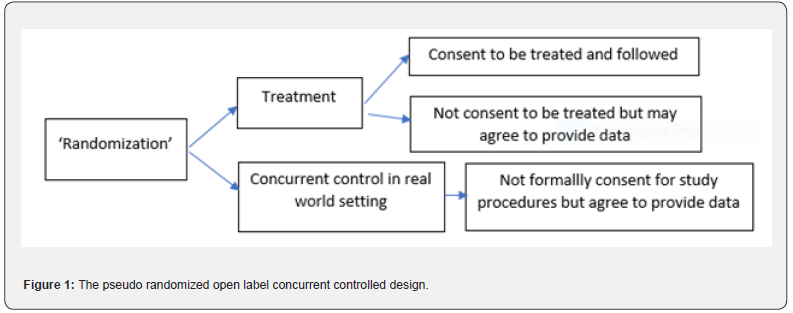
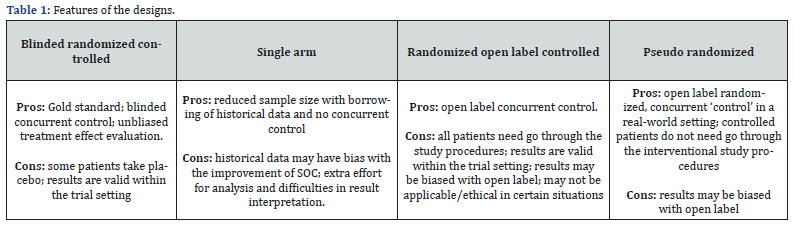
Traditional parallel group double-blind controlled trial design is the preferred approach to provide substantial evidence to support a new drug application. To elevate trial efficiency to a new level, the pharmaceutical industry and the health regulatory authorities continuously make great effort to propose the applications of innovative designs to new drug developments. These designs include the branching out group sequential design, a variety of adaptive designs and platform designs. Moreover, to overcome the challenge of patient recruitment and reduce trial sample size particularly in rare disease areas, Bayesian design and patient matching approach are often applied by incorporating historical or real-world data for statistical inference. In addition, for ethical or practical considerations, single arm or open label randomized controlled designs may also be utilized to evaluate treatment effects. In this paper, we discuss these designs and their applicability in different scenarios, in the context of proposing a new pseudo randomized controlled design where patients ‘randomized’ to control will be under standard of care and therefore may not need to consent for the interventional trial procedures and need only agreeing the use of their data which are closer to real-world data. This new design improves upon the single arm design, while featuring part of the open label randomized controlled designs; thus, inherit some of their key features as we summarize in the paper. Therefore, this new design may have its value in some trial settings through providing improved controlled Real-World Data..

Keywords: Bayesian Design; Historical Data Borrowing; Single Arm Design; Open Label Randomized Design; Real-World Evidence; Pseudo Randomized Controlled Design

Introduction

Currently, with the cost of developing a new medicine continuously increases, paradigm for clinical research has changed over time. New ideas for a variety of innovative clinical trial designs steadily emerge. Regulatory agencies also start to accept some of these designs [1] for the purpose of accelerating the availabilities of more innovative, safe and effective therapies to patients. Nonetheless, we should still open our mind to think of and embrace all other possible clinical trial designs. In this paper, we will discuss the key features of some these designs, motivating us to propose a new design: pseudo randomized controlled design, which could be considered as a design improving upon the traditional single arm design and open label randomized controlled design. The new design can also leverage Real-World Data while address selection biases and comparability concerns. With the layout of all the design options, it will be convenient for the practitioners to compare and evaluate the choices for a specific clinical study.

Randomized Double-Blind Controlled Trial Designs

The traditional randomized double-blind controlled trial design is considered as the ‘gold standard’ design. In this design, the sponsor first prepares a study protocol which details the objectives/hypotheses, the sample size, the study population (inclusion/exclusion criteria), the study duration, the number of visits, the treatments which include the control, the methods of endpoint measurements, the other study procedures and the approaches for data analysis (e.g., the model, the estimand and the way for handling missing data). Then the sponsor selects study centers from different countries based on the feasibility of timely recruiting patients and the regional sample size requirements from the regional health authorities [2-4]. Often after a run-in period, patients are randomized to treatment or control after consent and go through the study procedures specified in the protocol. Trial results are subsequently derived after data base lock. The common perception is that trial results with such a design are ‘unbiased’ for ‘certain measures, estimands and purposes.

Actually, trial results even from a trial with such a ‘gold standard’ design are still trial specific with the limitation for the particular population via the country or site selections and protocol inclusion/exclusion criteria. They are unbiased only within this population as well as the study procedures described in the protocol including perhaps the inclusion of the run-in qualification period. To have the evidence of a robust (beyond this narrow study population) treatment effect, the sponsors are often required to conduct two pivotal studies (or a large single trial with an extremely small p-value) at different study centers/countries. Both studies should confirm the treatment effect to demonstrate the reproducibility. Additional evidence could be provided through trials for additional related indications. Moreover, post-marketing bridging studies may be conducted in new countries to extrapolate the treatment effect to different/broader patient populations. Real-world or post-marketing observational studies may also be conducted to get real-world evidence in a real-world setting. Even though study centers are not randomly selected globally, results derived from a random effect model treating study center as a random effect with the incorporation of between-center variability should be more generalizable than those from a fixed effect model [5-7]. Nonetheless, we seldom see the application of the random effect model to multi-center trials or multi-regional trials. Subgroup analyses need also being performed to assess the consistency of treatment effects across different subpopulations.

Within the broad traditional randomized controlled design category, there are further subtypes of designs. They include the fixed design, group sequential design, sequential parallel comparison design, platform design, adaptive design, the regular parallel group design and crossover design. Different designs have their own advantages under their corresponding assumptions and circumstances. For example, owing to many unknowns before the initiation of a study, we have the desire to modify the study based on either the blinded or unblinded internal data of the study obtained during the trial monitoring process to increase the chance of trial success. We then can apply the adaptive design which provides us many flexibilities [8]. We can stop the trial early due to futility or unexpectedly strong treatment effect. We can revise the sample size for the targeted conditional power. We can select dose(s) and enrich patient population(s) for the later stages of the trial. We can even determine for the final analysis whether we want to only assess the non-inferiority or go further to assess the superiority if there is the hope based on the interim data. The power for superiority assessment will be no larger than the significance level if there is truly no between-treatment difference regardless of the magnitude of the sample size. If the interim data show no or very small treatment effect, we had better just go for the noninferiority assessment so that we can complete the study early and save valuable resource [9].

Given the limitation of the trial results from the traditional randomized controlled trials revealed above, we are motivated to explore other possible alternative trial designs. One ideal scenario is to find all patients without applying the extensive inclusion/exclusion criteria and randomize them to treatment and control. Even though the trial results (the focus should be on estimation rather hypothesis testing with the huge sample size) are the results of one specific realization of the randomization and another similar trial cannot be conducted after (almost) all patients have been studied (unless another trial is conducted in newly diagnosed patients subsequent to the first trial), the trial results should be applicable to another randomization of the same scheme due to the huge scale of the trial. Thus, the results should be more generalizable compared to those of the traditional randomized controlled trials with limited sample sizes. Clearly, such a design is not realistic as we cannot really include all (currently diagnosed) patients in one single study. In any case, we should keep in mind that trial results from a larger trial are always more desirable and interpretable than those of a relatively smaller trial [10]. The size of a trial should be determined not merely for enough power for hypothesis testing of the primary efficacy endpoint but more for appropriate and robust quantitative evaluation of the treatment effects measured broadly by other endpoints including those for safety assessments. As discussed below, other considerations can trigger the applications of alternative designs given the infeasibility of the various traditional randomized controlled trial in some circumstances.

Single Arm Design

It is sometimes unethical or practical to include a (placebo) control in a clinical study particularly exposing a large number of patients to ineffective/inappropriate placebo control. In addition, patients may not have the motivation to participate in such placebo-controlled trial if alternative treatments are available in the disease area which makes recruitment very challenging. Then a single arm design will often be the option for the study. EMA recently issued a draft reflection paper on establishing efficacy based on single-arm trials [11]. The reflection paper clearly outlines the description and specific characteristics of single-arm trials. It also provides general considerations for single-arm trial designs including the choice of endpoints, target and trial population, role of external information, statistical principles, sources of bias and potential mitigation. As there is no internal control, the endpoints must be able to isolate treatment effects undoubtedly caused by the treatment rather than the selection of trial population or some prognostic factors. The assessment of treatment effect may be through the evaluation of the within-treatment effect; for example, measured by mean change from baseline at a specific time point for a continuous endpoint and compared to a threshold.

This threshold often depends on the treatment effect of the standard of care (SOC) (measured using historical data). Notice that the treatment effect of the standard of care can improve or change over time along with the continuous advancement of innovative medical technology and the availability of more effective treatments or other prior or concomitant medical interventions. It may also depend on the population and the regions of conducting the study as the standard of care can vary substantially long with the health care system and even the human development index [12] across countries. In addition, if the threshold is a constant without any variability, the study should be sized with certain level of precision based on confidence interval for the assessment of treatment effect. Clearly, the determination of a relevant threshold is not straightforward, and the interpretation of the trial result may rely on something that is not measured within the study. Such studies therefore are more limited to rare diseases and oncological studies [13], where the effect of ‘current standard of care’ is usually quite low with small variabilities. For binary, count data, time to event and other study endpoints, the within-treatment event rate, cumulative event rate curve and the other summary statistics may be used to evaluate the within-treatment effect.

Rather than comparing the within-treatment effect to a constant threshold, we may directly leverage external historical control data or Real-World Data (RWD) (potentially concurrent standard of care control) using a synthetic control for statistical inference of a single arm trial in order to consider the data variability (rather than just the use of the point estimate as the threshold). But the results will still be uninterpretable if we fail to account for known and unknown confounding factors when comparing the results to an external control [13]. Thus, when external data are borrowed to form a control group, for the validity of the analysis outcome, we need to ascertain some key assumptions which include the consistency of patient population, medical practices, and treatment regimens. If individual patient data from the external source are available, propensity score estimated from individual patients’ covariates can be applied to match and select patients from the external source [14]. Thus, patients of the single arm trial and the selected patients from the external source are comparable at least by some measures believed to be relevant or predictive of ‘disease progression’. If individual patient data from multiple RWD sources are not simultaneously accessible due to data privacy policy, aggregated data in the form of special summary statistics may be requested in order to perform the appropriate data matching analysis [15,16]. Further research in this area is of great critical needs.

As for the other open label studies, to mitigate potential bias, for a single-arm trial, the statistical analysis plan should be finalized before the initiation of the study. Theoretically, during the trial, there should be no unplanned trial modifications including the target population, the sample size, the threshold, the approach for analysis and the source of external information. Any amendment is considered potentially data driven.

Historical Data Borrowing Design and Pseudo Randomized Controlled Design

Obviously, there are some challenging issues associated with the traditional single arm design in the alternative design category as alluded to previously. We attempt here to address the issue of better generating and incorporating valid internal/external control data to ameliorate the design deficiency of single arm studies.

Bayesian Design

Bayesian design allows the leveraging of historical/external information through the application of an informative prior distribution. The design may borrow treatment effect information (both the active treatment and control data) or borrow just the control data from the historical studies so that the total sample size of the current study can be reduced to make the study more feasible particularly for a trial in a rare disease area where recruiting patients is very challenging. If only the historical control data will be borrowed, a full sample size for the experimental treatment arm, but a reduced sample size for the control arm could be used. Different from the single arm trials, the study with a Bayesian design has both comparative arms even though the sample size for the control arm may be relatively smaller. Thus, the design can sometimes be treated as the hybrid of single arm and controlled design with the borrowing of external data. Only when internal data are available can we assess the consistency between the historical and current data. Consistency has two aspects. One is the consistency in study setting regarding patient population definition/identification, study endpoint definition/specification, study procedures and similar study centers [17].

This consistency is the prerequisite for the validity of the design. Another aspect is the consistency in the study endpoint value across the historical and current studies. To prevent the excessive amount of data borrowing, even when the study characteristics of the historical and current studies are largely similar, a dynamic data borrowing procedure may still be implemented so that the amount of data borrowing depends on the observed level of consistency in endpoint value (e.g., the observed mean values of the endpoint) of the two datasets [18,19]. The amount of data borrowing is reflected in the adjustment on the variance of the prior distribution or the effective sample size. There is no impact on the mean of the prior distribution in this dynamic historical data borrowing process. If baseline covariates could impact the value of the study endpoint, to make the patients of the historical data comparable to the concurrent patients, we can first do patient matching and selection using propensity score and then apply the Bayesian dynamic approach to regulate the amount of data borrowing.

A Bayesian design is considered as a Complex Innovative Design (CID) per the FDA guidance [6]. CIDs are designs that have rarely or never been used to date to provide substantial evidence of effectiveness in new drug applications or biological license applications. Based on the guidance, extensive simulation should be performed to demonstrate the frequentist operating characteristics of the Bayesian design in terms of type I error probability and power. Rather than just claiming the significance of the treatment effect and providing the point estimate of the treatment effect, the advantage of the Bayesian design and analysis is that it provides the flexibility to make probabilistic statement regarding the true treatment effect through the posterior distribution. Particular attention should be paid to any historical borrowing methods. With the improvement of the standard of care, placebo effect may vary and change over time, and the treatment effect may attenuate over time. Therefore, the borrowing of historical control data may create bias in favor of the superiority claim but against the non-inferiority claim [20]. Simulation will be helpful to quantify the range of bias.

Pseudo Randomized Controlled Design

One of the underlying deficiencies with the above single arm or Bayesian design is the usage of ‘historical’ control data which are subject to drift over time, and therefore potentially non-comparable to current medical practices, endpoints measurements, study procedures and patient populations. The question is whether we can and how to potentially address this challenge (at least in part). Let’s now modify the traditional randomized controlled open label trial in the following way. In selected countries/sites, patients who meet the protocol criteria will be virtually ‘randomized’ to the treatment or control in a pseudo trial. There is no need for the patients to know they are randomized in this ‘pseudo’ trial at this point of time. Those who are ‘randomized’ to the control will be followed with the standard clinical practice procedure or standard of care, in this case, without the need of consent. By nature of this randomization scheme, this ‘control’ group is (concurrent and) comparable to the future ‘treatment’ group and serves as the basis of creating ‘unbiased’ comparisons. Among the patients who are ‘randomized’ to the treatment, we ask for their informed consent to participate in an open label single arm trial. Those who consent to participate in the pseudo randomized and ‘single treatment arm’ study will take the study medication and be followed according to the protocol while the other patients who do not consent will be followed like those ‘randomized’ to the control, i.e., under the standard of care. (Figure 1) provides the flow chart of this design which has the following features.
i.It can be considered as a design with a single treatment arm plus a ‘randomized’ concurrent rather than historical control arm. Therefore, this design is somewhere between the single arm uncontrolled or historical controlled design and the regular open label randomized controlled design. Note that the traditional single arm trial does not have a randomization step and therefore has no randomized ‘unbiased’ concurrent control. The issues associated with the traditional single arm trials have been discussed in Section 3. This design improves upon the traditional single arm trial by providing a comparable concurrent control group and yielding ‘unbiased’ treatment effect estimates.
ii.Note further that patients are ‘randomized’ first and then consent next for those randomized to ‘treatment’, or consent to provide Real World data for those randomized to ‘control/placebo’. In the traditional randomized controlled trials, patients consent first then are randomized later, those who do not consent are not randomized and not included in either the treatment arm or control arm. The proposed new design could therefore be applicable to situations where traditional randomized, placebo-controlled trials are not ethical or practical.
iii.The control is the real open label standard of care control rather than a placebo control (with the exclusion of certain concomitant medications). Due to the open label nature, if a placebo was used, there should be no extra placebo effect (Figure 1).

We next address the question of how to perform data analysis and interpret the results; moreover, how to use the data from patients who are randomized to ‘treatment’ but do not consent. First, for those patients randomized to treatment, we need to assess the comparability between those who consent and do not consent to participate in the study based on their characteristics (In traditional trials, we cannot assess this. It is nice to have this information). In the case where they are very similar, we can infer that if the patients who are randomized to the control were also asked to consent, likely, those who consent and those who do not consent might also be similar. Actually, no matter whether they consent or not, they all should realize that they will all have the same standard of care. Thus, the comparison between the treated patients and all the patients in the control arm should be justifiable. Patients who are randomized to treatment, but do not consent have no on-treatment data. If the intent-to-treat principle is applied and include all randomized patients in the analysis, clearly, the treatment effect will be substantially underestimated. As the missing data mechanism is more likely to be independent with the missing endpoint data and therefore is missing at random. The analysis based on a likelihood approach with non-consent patients excluded is therefore valid [21,22] particularly if the key baseline covariates are included in the analysis model. On the other hand, in case where the consent and none consent patients are different in terms of their characteristics, propensity score can be used for patient matching and selection from the controlled patients for the eventual treatment effect evaluation [14]. Since the control is concurrent real-world control and ‘randomization’ is performed, the between treatment comparison should be less biased and we should have more confidence with this analysis compared to the analysis with historical control.

Note that in order to include patients in data analysis, we need to obtain their agreement or ‘consent’ to use their data. This ‘consent’ is a light consent (e.g., signing a HIPPA release form with appropriate de-identification measures) for those who are randomized to the control as they do not need going through interventional study procedures. We just need their endpoint being measured at specific timepoints, which can be considered as a part of the treatment procedures even under the standard of care. Since the safety profile of the standard of care should be well known, patients in the ‘control’ group also do not need to take the cumbersome safety endpoint measurements. The safety of the experimental drug can be evaluated by the within treatment assessment approach using the concurrent background safety profile as the reference. Moreover:
i.For efficacy: we likely only have measures of the primary endpoint (survival or clinical outcome) at certain timepoints. Study design should consider such SOC practices, so we avoid any design or data measurement bias (e.g, more frequent measures in treatment group, creating ascertainment biases). For some secondary endpoints, we may not have data from the control group.
ii.For safety, again, we need to avoid data collection biases: if we have more frequent clinical visits in the treatment group, we may collect more ‘routine’ adverse events or have more lab abnormalities detected via frequent central labs. Therefore, we should focus more on serious adverse events, or assess lab out of ranges (exceeding multiple times of the upper limits of normal) only at timepoints of SOC practice.

If all patients are required to formally consent and go through the formal study procedures according to the trial protocol, the pseudo randomized design can be replaced by a traditional randomized open label-controlled design. (Table 1) provides the summary of the comparative features of different designs. Besides those discussed in (Table 1), for the pseudo randomized trial design, trial procedures could be simplified at least for the patients in the control group to save cost. Moreover, there will be less issues of patients’ dropping out from the ‘study’ for those randomized to the control (Table 1).

Discussion

As discussed, there are many different clinical trial designs for us to select for a specific trial in a given context. The suitability of a design will depend on the disease area, the objectives of the trial, the nature of the new treatment, the study population, the acceptability by the health authorities, the timeline and cost considerations. Some of the designs including the traditional randomized double-blind controlled design and single arm design are widely used. Nonetheless, they may not always be applicable efficient or feasible for some scenarios. Thus, innovative designs are proposed in literature and are being used in practice. Clearly, some of these designs may need additional assumptions for the results to be valid such as the consistency assumption for the use of the Bayesian design with historical data borrowing. Some of the assumptions can be verified via observed data when performing data analysis. Based on the comparison in (Table 1), the pseudo randomized controlled design may be a suitable option when blinding is not possible, and we need a concurrent control to provide valid comparable data in a real-world setting where patients can have more flexibility and at the same time cost for the study can be reduced. There is one drawback compared to traditional single arm trials: because of the ‘pseudo randomization,’ we do ‘lose’ some patients who refuse to consent to be treated.

Even though there may be some sound rationale and considerations behind any new designs, to fully understand and appreciate the features of the design, we need to further evaluate and share our experience obtained from real trial practice. Sometimes, performing simulation for a specific trial setting is also necessary per the regulatory guidance. In terms of the pseudo randomized single treatment arm concurrent controlled design discussed in Section 4.2, we do not have much experience regarding when and why a patient would consent or not consent to participate in the active treatment group of the study. Patients’ behavior may depend on the availability of alternative medicines in the market even though a patient can always drop out from the study and switch medication any time during the study if the study treatment apparently has no effect. In addition, a patient may consent to take the active treatment and participate in the study for the purpose of saving medical cost and getting the needed care at the same time. Then the behavior will be ‘social-economic’ related and the associated prognostic covariates will need being incorporated in the analysis model to reduce bias. If such a design can be deployed, we will have data to assess the differences (if any) between consent and none-consent patient subgroups and evaluate the differences between the concurrent control group and any historical control data (if available). We welcome readers to consider and further enhance this new design proposal.

To Know more about Biostatistics and Biometrics Open Access Journal
Click here: https://juniperpublishers.com/bboaj/index.php

To Know more about our Juniper Publishers
Click here: https://juniperpublishers.com/index.php
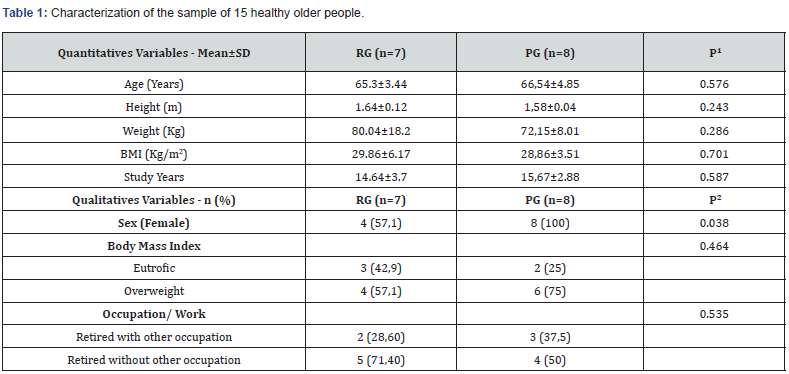
Wednesday, December 13, 2023

Infantile Ocular Cystinosis: About Two Family Casesy - Juniper Publishers

 Ophthalmology - Juniper  Publishers


Abstract

Cystinosis is a metabolic pathology characterized by the accumulation of cystine in lysosomes, essentially damaging the eyeball and the kidney. It is characterized by a cystine transport defect due to a mutation in the CTNS gene. Our objective was to report two familial cases of cystinosis with ocular manifestation. It involved a 7-year-old girl (Case 1) and her 18-month-old little brother (Case 2), followed in nephropediatrics for cystinosis and referred to our department for an eye assessment. Rickets resistant to vitamin D supplementation were noted . They presented with Fanconi syndrome and renal ultrasound was normal in both. At the slit lamp we found superficial punctate keratitis and a deposit of refractive microcrystals scattered over the entire extent of the cornea, with a Gahl score of 3.00 in both patients. A homozygous CNTS mutation was revealed by molecular biology. The asymptomatic parents presented the same mutation in the heterozygous state. They benefited from treatment based on vitamin A in ophthalmic ointment and correction of hydro-electrolyte disorders and vitamin D supplementation. Cystinosis is a rare genetic pathology. It is to be looked for in the presence of corneal crystals associated with a delay in height and weight growth. The diagnosis is made by measuring intra leukocyte cystine. Cysteamine, orally and ocularly, has significantly improved the prognosis. Genetic counseling is of paramount importance.

Keywords: Cystinosis, Corneal crystals, Fanconi syndrome, Cysteamine

Introduction

Cystinosis is a lysosomal, autosomal recessive pathology caused by mutation of the CTNS gene encoding cystinosin. This membrane transport protein allows the efflux of cystine from lysosomes to the cytoplasm, where it is degraded into cysteine. The intralysosomal accumulation of cystine induces the formation of insoluble crystals responsible for progressive multi-organ failure, particularly in the kidneys, pancreas, thyroid and eyes. Several ocular locations of this crystal accumulation have been described and can jeopardize the quality of life of affected patients, possibly creating visual impairment and even blindness [1]. Our objective was to report two familial cases of cystinosis with ocular manifestation.

Case Description

It involved a 7-year-old girl (Case 1) and her 18-month-old little brother (Case 2), respectively from a family of four children, the result of second-degree parental consanguinity. They were followed by a nephropediatrician for cystinosis and referred to our department for an eye assessment. Pediatric examination revealed rickets resistant to vitamin D supplementation, marked by failure to thrive (-2 standard deviations). In Case 1, an epiphyseal bulge at the ankles and wrists, a genu valgum, was noted. On laboratory examination, they presented Fanconi syndrome marked by polyuria, hypocalcemia, hypokalemia, hyponatremia, hypophosphatemia, hypovitaminosis D and elevated β 2-microglobinuria. Renal ultrasound was normal, well differentiated in both.

The ophthalmological examination showed distance visual acuity assessed according to the Léa scale at 0.2 at OD and 0.4 at OG in Case 1. It was difficult to assess in Case 2, who presented good light tracking at 2 eyes. At the slit lamp, there was superficial punctate keratitis and a deposit of refractive microcrystals scattered over the entire extent of the cornea, with a Gahl score of 3.00 in both patients (Figures 1 and 2). The remainder of the examination was normal in both Cases. The ophthalmological examination of both parents was unremarkable. Molecular biology allowed us to make the diagnosis of cystinosis in the 2 Cases, revealing a homozygous mutation of the CNTS (c.614A>G) (Figure 3). The asymptomatic parents presented the same mutation in the heterozygous state (Figure 4). The other 2 children of the siblings were unaffected by the mutation. They benefited from treatment based on vitamin A in ophthalmic ointment and correction of hydro-electrolyte disorders and vitamin D supplementation.

Discussion

Cystinosis is an autosomal recessive disease that is caused by an accumulation of cystine in lysosomes. This concerns cells of all tissues and organs with greater sensitivity on the part of kidney tissue. It is the absence of cystinosine, a cystine transporter located in the lysosome membrane, which is responsible for this accumulation, with cystine no longer being transported out of the lysosome [2]. Found in all ethnic groups, this disease has a prevalence of between one birth in 200,000 and one birth in 100,000 depending on the country [3]. These were the first cases found in our department.

Ninety-five percent of people with cystinosis have the infantile nephropathic form. Three clinical forms of cystinosis (infantile, juvenile and ocular) have been described depending on the age of onset and the severity of symptoms. In the infantile form, the most common, the first signs appear after 3 months, marked by a polyuro-polydipsic syndrome and significant growth retardation, secondary to a generalized proximal tubular syndrome (Toni-Debré-Fanconi syndrome) with disturbances. hydro electrolytes severe.

The accumulation of cystine in different organs is responsible for hypothyroidism, insulin-dependent diabetes, hepatosplenomegaly with portal hypertension, muscle damage and brain damage. Ocular damage, secondary to cystine deposits in the cornea and conjunctiva, leads to tearing and photophobia. The disease gradually progresses after the age of 6 to end-stage renal failure. The juvenile form appears after the age of 8 years and presents a clinical picture of intermediate severity, with end-stage renal failure occurring after the age of 15 years [2-4]. Finally, there is the non-nephropathic or pure ocular form , which appears in adulthood . The 2 patients reported presented with infantile cystinosis.

The severity of the disease is essentially based on kidney damage which can be life-threatening. Cystinotic nephropathy manifests itself by weight loss, Fanconi syndrome, damage to the renal glomerulus and manifestations affecting other organs. The extrarenal involvement is essentially ocular and mainly causes photophobia and blepharospasm. Corneal damage is constant, appears from 12 months, and consists of deposits of birefringent spindle crystals which accumulate over time in the corneal stroma, and progress from the anterior stroma towards the endothelium. The appearance is scintillating and multicolored on biomicroscopic examination. Superficial punctate keratitis and strip keratitis are often associated, and the corneal endothelium is spared. In more advanced stages, limbal corneal neovascularization can be found [5,6]. The severity of corneal damage can be assessed by the Gahl biomicroscopic score (0 to 3) and by OCT of the anterior segment [6]. Confocal microscopy makes it possible to analyze and quantify corneal crystals, assess the infiltration of inflammatory cells and look for nerve damage [7].

Cystinotic retinopathy is rarer. Crystal deposits are sometimes noted throughout the retina. Depigmentation of the retinal periphery associated with pigment deposits is possible, which can progress to retinal atrophy [5,8]. The crystals can also be located on the conjunctiva, the iris, the ciliary body, the anterior lens capsule, the choroid or the optic nerve and cause complications such as angle closure glaucoma, posterior synechiae, edema. macular, choroidal neovascularization [6,8]. Our patients did not present any localization other than corneal involvement.

The biochemical diagnosis is based on the intra-leukocyte cystine dosage which is the gold standard. It is a sensitive and precise examination for the confirmation of the disease [5]. It is not available in our context.

The molecular diagnosis is confirmed by the presence of mutations in the CTNS gene coding for cystinosine located on chromosome 17. There are genotype and phenotype correlations explaining the variability of the symptoms [3]. This genetic study is necessary to confirm the diagnosis and carry out family studies with a view to genetic counseling. In our case, it made it possible to confirm the genetic mutation in the 2 children and in the parents.

Treatment with cysteamine has improved the prognosis of the disease. Its aim is to deplete lysosomes of cystine [1,3]. Its early administration makes it possible to delay the age of onset of end-stage renal failure and prevent late complications. To achieve effective corneal concentrations, topical administration of cysteamine in the form of ophthalmic gel is required [1]. This requires an increased dosage which can make treatment compliance difficult. As cysteamine is not marketed in Senegal, patients received symptomatic treatment with vitamin A ointment and hydro electrolytic and vitamin supplementation.

Conclusion

Cystinosis is a rare genetic pathology whose main manifestation is Fanconi syndrome. It is to be looked for in the presence of corneal crystals associated with a delay in height and weight growth. The diagnosis is made by measuring intra leukocyte cystine. Cysteamine, orally and ocularly, has significantly improved the prognosis. Genetic counseling is of paramount importance.


To Know more about JOJ Ophthalmology
Click here: https://juniperpublishers.com/jojo/index.php

To Know more about our Juniper Publishers
Click here: https://juniperpublishers.com/index.php
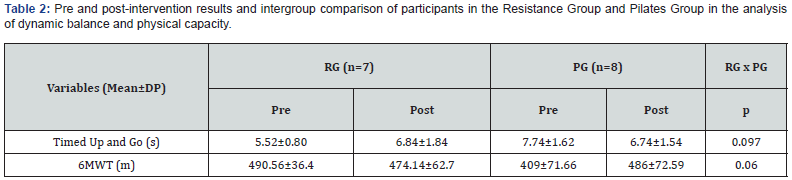
Understanding The Acute Interventions for Complicated Pleural Effusions - Juniper Publishers

  Pulmonary & Respiratory Sciences - Juniper Publishers Abstract Pleural effusion affects approximately 1.5 million individuals in the U...