Showing posts with label Mental health. Show all posts

Wednesday, June 19, 2024

The Impact of Covid-19 Pandemic on Children’s Mental Illness Presentations to A Pediatric Emergency Department - Juniper Publishers

 Pediatrics & Neonatology - Juniper Publishers


Abstract

Introduction: The number of children presenting with symptoms of mental illness (MI) to emergency departments (ED) increased during the COVID-19 pandemic.

Objective: The objective of this study was to identify changes in ED visits for new onset MI in children compared to children with a pre-existing MI during the COVID-19 pandemic in a paediatric ED.

Methods: A retrospective chart review of children treated for MI in the ED was conducted from March 1,2019 to September 29,2022.

Results: There were 6431visits for mental illness by 5092 patients during the study period. Of them 4084(63.5%) were biological females. During the first two years of the pandemic the percentage of all children presenting with mental illnesses increased significantly compared to the pre pandemic year from 2.04% to 3.34% and 3.5% of all total ED visits and reduced slightly to 2.92% in the third year. New onset MI visits increased from 1.08% in the pre pandemic year to 1.63%, 1.65 % and1.65% in the first second and third year of the pandemic whereas visits for children with known MI increased from 0.96% in the pre-pandemic year to 1.71% and 1.85% and 1.27 the first and second and third year of the pandemic. Overall, eating disorder presentations increased significantly through all three years of the pandemic compared to the pre pandemic year and admission rates were similar during the pandemic years.

Conclusion: The percentage of MI related visits to the paediatric ED increased significantly during the pandemic, for both new onset and known mental illnesses.

Keywords: Mental Illness; Mental Health; Children, Pandemic; Emergency Department; Covid 19

Introduction

The COVID-19 pandemic had a profound impact on the world and has resulted in widespread suffering and loss of life [1]. Of note, the paediatric population has been less severely affected by medical complications of COVID-19 compared to adults [2,3], and containment methods implemented to battle the covid pandemic have led to an overall decrease in emergency department (ED) visits during the initial stages of the pandemic [4-6]. Nonetheless, the pandemic has had deleterious effects on children’s mental health, with several studies showing an increase in anxiety, depression, and other mental illness (MI) related complaints [7,8]. While the absolute number of MI related ED visits was variable at the onset of the pandemic in 2020, with some reporting a decrease in MI related visits [9-11], almost all studies have shown an increase in the proportion of MI related ED presentations , especially in the second half of the 1st year of pandemic [5,6,12-17]. Although it seems that the pandemic has led to an increase in many MI related symptoms in the community, some have suggested that ED visits for MI related complaints are mainly reserved for the more severe cases of MI, such as those involving risk of self-harm [6,12,13], similar to presentations prior to onset of the pandemic [18]. In addition, literature shows that children with some MI seem to be more vulnerable to the effects of the pandemic [16].

The pandemic and measures employed to manage it have brought rapid changes to the lives of all, with loss of structure and daily routines, decreased opportunities of socialization and social isolation, loss of support mechanisms including those provided by schools [10,11]. These changes had a toll on everyone, and especially on adolescents and young children who usually lack the emotional and mental resilience to deal with emotional hardship compared to adults [8,9,19]. These effects are theorized to be even more pronounced in children already dealing with mental health disorders [10,11].

While several studies have focused on the effect of the pandemic on paediatric mental health, studies examining the differential effect it had on those previously dealing with mental health disorders have been scarce, with at least one showing an increase in MI visits by those with prior MI diagnosis [13]. Studies had contradicting findings regarding the admission rate of MI during the covid pandemic, from an increase [3, 13], to no change or a decrease in rate of admission [13,16]. This study aims to examine the impact of the COVID-19 pandemic on ED visits for mental illness in the paediatric population, focusing specifically on the differential impact of the pandemic on children with new onset and known MI.

Objectives

The objective of this study was to identify changes in presentations of children with new onset mental illness and those with a pre-existing mental illness diagnosis during the Covid-19 pandemic in a paediatric emergency department.

Materials and Methods

A retrospective chart review of patients under 18 years of age who were treated for mental illness at the paediatric emergency department from March 1, 2019, to September 29, 2022, at a tertiary care children’s hospital in Canada was conducted after obtaining institutional ethics approval. The study collected data on patients’ demographic information, pre-existing conditions, presentation, and disposition information between those who sought treatment during the pre-pandemic year and those who presented during the first, second, and third years of the COVID-19 pandemic.

Additionally, the patients’ previous MI were classified into comparable groups, resulting in the identification of the following patient groups:

i. New onset MI visits.

ii. Those with a history of known mental illness presenting with.

a. Exacerbation of known MI.

b. New presentation leading to another MI diagnosis in those with known MI.

The patients’ ED visit discharge diagnoses were classified into several mental health diagnosis groups based on ICD 10 codes. Of note ICD 10 identifies suicides and intentional selfharm by poisoning or overdose of substances as a primary diagnostic category and they were grouped as such [20]. Data regarding previous mental health disorders, chronic conditions and previous diagnoses were extracted automatically from the electronic medical records (Epic) and 10% of them were manually checked for accuracy. The primary diagnosis of a prior visit was for mental illness in the institution only was used to identify prior mental illness. The institution is a tertiary care paediatric hospital with a psychiatry ward and provides psychiatry assessments both in the emergency department and outpatient urgent care clinics.

Although co-existence of more than one mental illness diagnosis is possible and different symptoms can present at different times we subdivided the children with known mental illness, if a mental illness diagnosis was made at the ED visit that was different from previously diagnosed mental illness or illnesses. In instances where the discharge diagnosis did not necessarily suggest a mental health condition (e.g., decreased intake, irritability, altered mental status), the nursing triage notes were reviewed to ensure that the discharge diagnosis was indeed secondary to a mental health-related condition. In cases where uncertainty arose, a full chart review was conducted. SPSS 16.0 statistical software was used for the analysis and chi-square tests, or Fischer exact tests were used to compare subgroups as appropriate.

Results

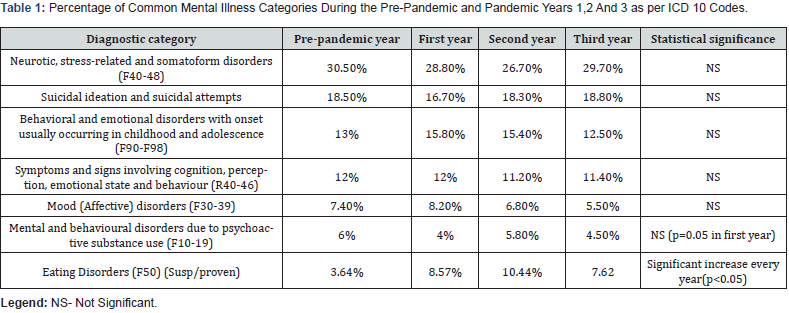
A total of 6431 ED visits related to mental health disorders were identified, which involved 5092 individuals. Most patients were biologic females (4084; 63.5%) with 97 (2.4%) identifying as non-binary or transgender. Among the 2347 (36.5%) children who were biologically males, 28 (1.2%) identified as non-binary or transgender. Mean age was 12.7 (SD ± 3.57) years. A total of 3173 (49.3%) had a known MI and 2333 (36.3%) were taking psychotropic medications. Compared to the pre pandemic year (2.04%), here was a significant increase in the proportion of MI related visits in the first (3.34%) second (3.5%) and third (2.92%) and third years of the pandemic (p < 0.001). Some of the common mental illness diagnosis in the pre-pandemic period and the first three years of the pandemic are listed in Table 1.

Period

New Onset MI

The proportion of new onset MI visits increased from 1.08% (852/78378) in the pre pandemic year to 1.63% (735/45158), 1.65 % (1054/63858) and 1.65% (617/37363) in the first second and third year of the pandemic respectively. Of all mental illness presenting to ED, new onset MI presentations were 53.3% in the pre pandemic year, which reduced to 49% and 47% in the two subsequent years of the pandemic and returned to 57% in the third year Table 2. New MI diagnosis increase was seen in the eating disorder category where it was 3.64% of all new MI diagnosis which went to 8.57%, 10.44%, 7.62% respectively in the first, second and third years of the pandemic (P< 0.001).

Patients With Known MI

The proportion of visits for known MI increased significantly from 0.96%(746/78378) in the pre-pandemic year to 1.71% (772/45158)and 1.85%(1180/63858) and 1.27%(475/37363) the first and second and third year of the pandemic. The percentage of patients with known MI presenting with exacerbations or new symptoms which was at 43.5% of all mental illness presentations increased significantly in the first (51.2%) and second (52.8%) years of the pandemic (p=0.01 and < o. ooo1 respectively). However, there was no statistically significant change compared to the pre-pandemic year in the third year of the pandemic (46.7%).

The common previous MI identified in children presenting with MI exacerbations and new symptoms were suicidal ideation and attempts (SI) (20.95%), neurotic, stress-related, and somatoform disorders (F40-48) (20.93%), mood disorders (F30-39) (13.28%) and eating disorders (F50) (11.48%). The percentage of patients with a history of SI/SA who presented with MI-related complaints significantly increased from 15.4% to 22.7% in the first year (p<0.0001,) and remained significantly increased at 23.4% in the second year (p<0.0001), and at 21.7% in the third (p<0.0001) of the pandemic. The percentage of patients with previously diagnosed history of mood disorders did not change significantly during the study period. The percentage of patients with neurotic, stress-related, and somatoform disorders (F40-48) also did not change significantly from pre-pandemic compared to the first 2 years of the pandemic. However, it was significantly reduced in the third year of pandemic from 21.2% to 16.7% (p=0.004)

The percentage of patients with a history of eating disorders significantly increased from 8.4% in the pre pandemic year to 15.9% in the first year of the pandemic (p<0.0001) and remained significantly increased at 11.9% in the second year (p=0.001). However, there was no significant change compared to prepandemic levels in the third year (9.1% vs 8.4%). There were no significant changes in other categories except for patients previously diagnosed with substance abuse where emergency visits significantly increased from 4.6% in the pre pandemic year to 7.1% in the first pandemic year (p=0.003) and remained significantly increased at 6.4% in the second year (p=0.013). In the third pandemic year, the difference was not statistically different (6.0% vs 4.6%; p=0.11).

Length of Stay (LOS) in the Emergency Department

Children with new onset mental illness had significant decrease in LOS (p<0.001) from pre-pandemic (292 ± 160) to first year (249 ± 149), followed by an increase in LOS in the next two years (326 ± 185) and (388 ± 187). A trend of decreased LOS in the first year of the pandemic, followed by an increase over the next two years, was observed in the patients with known mental illness but it was not statistically significant.

Hospital Admissions

Admission rates for all children with mental illness was at 21% in the pre pandemic year and increased significantly to 29% (p 0.001) in the first year and reduced to 25% and 22 % in the second and third years of the pandemic. In the pre pandemic year 30.6% of patients presenting with suicidal ideations or attempts were admitted which increased significantly to 41.3% in the first year(p=0.05) but was not statistically significant in the second (29.7%) and third years (32.3%) of the pandemic. Children with eating disorders had the highest admission rates in the pre pandemic year (63.6%) which was similar in the first (63.8%), second (57.8%) and third (62.2% years of the pandemic.

New MI presentations had no statistically significant change in admission rates compared to the pre pandemic rate of 2.1% during the first year (3.4%), but admission rates increased significantly to 5.5% in the second year (p<0.0001) and remained significantly increased at 5.2% in the third year of the pandemic (p=0.001). Patients diagnosed with MI presenting with exacerbation, had significant increase in the admission rate from the 49.3% in the pre pandemic year to 60.8% in the first year of the pandemic (p=0.0002). During the second and third pandemic year the rates were not significantly different from pre-pandemic year (50.7% and 54.1% respectively). For patients with MI presenting with new symptoms the pre pandemic admission rate of 30.41% did not change significantly in the three years of the pandemic (34.52%, 24.53% and 21.9% vs 30.41% respectively. Admission rates for patients with known MI on psychiatric medications were not statistically different from those who were not on psychiatric medications.

Discussion

Our findings support previous studies that have reported an increase in MI during the COVID-19 pandemic, as well as an increase in the proportion of MI-related visits to ED [6,7,13]. However, the distinction of new onset mental illness and exacerbation in children during pandemics has not been previously described well in the literature. Interestingly, during the first 2 years of the pandemic, a greater proportion of ED visits for MI were for exacerbation of symptoms rather than new onset mental illness compared to the pre-pandemic period. This suggests that the pandemic tends to exacerbate existing MI symptoms to a greater degree compared to causing new symptoms. However, this increase was not statistically significant in the third year of the pandemic, suggesting a shift back to the baseline of the prepandemic period.

It is worth noting that whilst some previous studies have also discussed the more severe effect of the pandemic on patients already suffering from MI disorders [10,11,13,20], others have indicated that children with high levels of mental health problems before and during the pandemic were less likely [20], or at least as likely [21] as their healthy peers to display an increase in mental health problems in response to the onset of the pandemic.

In our study we observed an increase in the proportion of patients presenting for MI complaints who had a history of suicidal ideations or attempts and those with eating disorders. This increase was more pronounced during the first two years of the pandemic, again suggesting a gradual return to baseline levels in the third year of pandemic. These findings are consistent with previous studies that have shown that individuals with these disorders are at higher risk of being affected by the COVID-19 pandemic [22].

Our study also found no significant increase in the proportion of patients presenting with mood disorders, which is consistent with previous reports suggesting that ED visits are increasingly reserved for more severe cases involving a risk of self-harm [7,16]. Therefore, the true rate of mood disorders in the community may not be accurately reflected by ED visits alone.

In our study, we observed that the highest admission rates were for those presenting with an exacerbation of a known MI. This finding was not surprising, as children who present to the ED with an already known condition may represent a situation where they have failed outpatient management or are unable to receive the help they need in the community setting, while those who present with new onset symptoms may simply require reassurance, education, and referral for appropriate services. While some previous studies have reported an increase in admission rates during the pandemic [6,12,13], not all studies have found this to be the case [16].

During the first year of the pandemic, the rate of admission increased in our institution and the reasons for this are challenging to discern. One possible explanation is that there were fewer community resources available, another explanation might be related to more severe presentations during the pandemic. The fact that children with a first-time presentation of MI symptoms were more likely to be admitted during the second and third years, but not during the first, is not well understood.

When children experience mental distress without access to evidenced-based interventions, their risk of relapse is seven times higher than those who receive treatment services [23], and as psychiatric hospitalization is a major contributor to high health care costs among children suffering from MI, providing a suitable work frame to address acute presentation of MI in a timely fashion and limiting hospitalization can help reduce costs [24].

Limitations

The study is a retrospective chart review in a single institution that relies heavily on the completeness of documentation in the charts and is limited by what is available on the charts. Data regarding previous mental health disorders, chronic medications, and previous diagnoses were extracted from the electronic medical records available at our site, and missing entries or visits to other hospitals may have affected our study results. However, we have no reason to suspect that the completeness of data has significantly changed between groups or over the study period. Therefore, we have assumed that any omission in the data entry would be random and equal over the various groups. As such, we do not anticipate any major errors in data collection.

Furthermore, our study is based on data from a single tertiary care paediatric hospital, and the findings may not be generalizable to other locations with different patient populations or healthcare systems. In addition, our study period was limited to the first three years of the pandemic, and future studies are needed to examine the long-term impact of COVID-19 on paediatric mental health. It should be noted that it was not possible to distinguish between the effects of the pandemic itself and the effects of the public health measures taken in response to the pandemic, such as school closures and social distancing. These measures may have had an impact on children’s mental health, but we were unable to quantify their effects.

Finally, our study was not designed to establish causal relationships between COVID-19 and mental health outcomes. While we observed associations between the pandemic and certain mental health conditions, further research is needed to determine the underlying mechanisms of these associations.

Conclusion

MI related visits to the Paediatric ED increased significantly during the pandemic, for both new onset MI presentations and exacerbation of previously diagnosed MI with increases being more pronounced in children presenting with exacerbations. The study results will hopefully aid in identifying populations that are at-risk for worsening MI and help us better target preventative strategies and guide resource utilization for the management and treatment of vulnerable individuals.


To Know more about Academic Journal of Pediatrics & Neonatology

To Know more about our Juniper Publishers

Monday, October 16, 2023

Stress Among College Students is Linked to Headache, PCOS, Hypertension, and Depression: A Cross-Sectional Study - Juniper Publishers

 Psychology and Behavioral Science - Juniper Publishers


Abstract

Objective: In the present study, we aimed to find out the prevalence of stress among college students.

Methods: In this descriptive cross-sectional study, a simple random sampling approach was chosen for data collection from different colleges of Jammu & Kashmir (UT). Data analysis was done by using the chi-square test, and the t-test was utilized for discrete and continuous variables respectively. The logistic regression model using odds ratio was utilized to find out the association between the risk variable and the dependent variable.

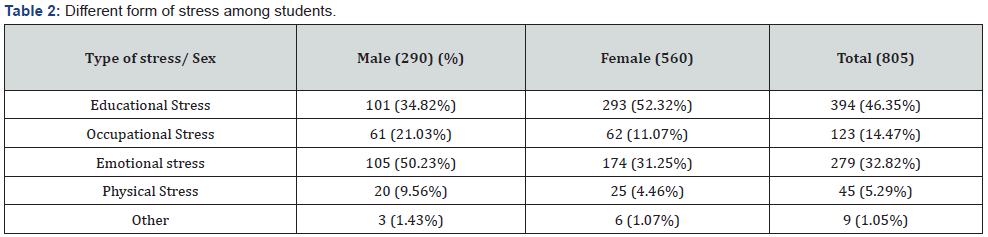
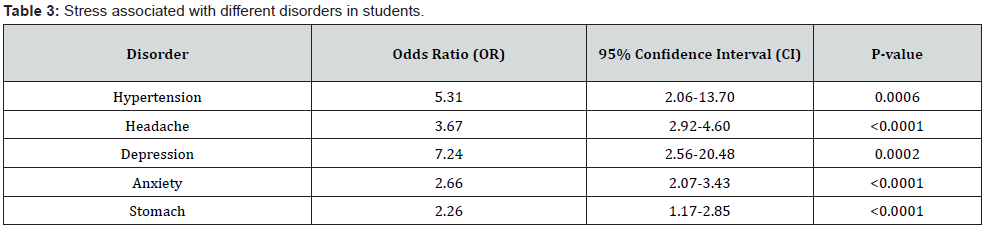
Results: A total of 1405 college students were included in which stress was found in 60.49% of students with males representing 34% and females 65.88%. Educational stress was found to be the major contributor of stress-type faced by the students with 46.35%. Different disorders were also observed in students including hypertension 2.70%, PCOS (Poly-cystic ovarian syndrome) 2.34%, and depression 2.84%. Stress was found associated with the PCOS with OR: 3.62 [95% CI: 1.4850-8.84, p-value: 0.0047], headache OR: 3.67, hypertension OR: 5.31 [95% CI: 2.06-13.70, p-value: 0.0006] and depression OR: 7.24 [95% CI: 2.56-20.48, p-value: 0.0002].

Conclusion: Educational stress is found to be very common among college students which may alter the prosperous life of students. Female students were seen to be more stressed than male students. Stress has a strong detrimental impact on students’ health because it is considerably linked to conditions including hypertension, PCOS, and depression. Therefore, the educational system must need a better strategy that will ensure a better education system.

Keywords: Stress; Educational stress; Hypertension; PCOS; College students

Abbreviations: PCOS: Poly-cystic ovarian syndrome; SAA): Salivary Amylase Activity; FGD: Functional Gastrointestinal Disorders; IBD: Inflammatory Bowel Disease; PU: Peptic Ulcer; UC: Ulcerative Colitis; CRH: Corticotrophin Releasing Hormone; ACTH: Adrenocorticotropic hormone; OR: Odds Ratio; OECD: Organization for Economic Co-operation and Development

Introduction

In today’s world, many shortcomings need to be eliminated and education is the one that is often seen as a solution to many social problems. Education is an important instrument that has the power to make a person interactive, self-reliant, social, and disciplined. Education broadens the scope of learning by facilitating knowledge absorption and dissemination among people in order to advance society [1]. Every individual is bombarded with a multitude of perceptual information in their day-to-day life activities. Apart from such advantageous features of education, the ability to process information is limited and varies from person to person. These cognitive characteristics have the potential to disrupt students’ lives periodically, which might result in circumstances that resemble stress and anxietylike condition. According to physiological definition, stress may be described as “any form of change that results in bodily, emotional, or psychological strain or pressure”.

It could result from a traumatic, disappointment, or uneasy encounter or sensation [2]. It is not that stress is bad, “Eustress” describes stress as a “positive, motivating, and enhances functioning feature which leads to the excellent performance” while “distress” refers to bad and overwhelming stress full condition which leads to tiredness, despair, and a variety of other illnesses and thus impairs functioning [3]. Albeit intense or transient pressure can be helpful but ongoing pressure, which goes and remains for a more extended period, is very unfavorable to the body and causes hypertension, weight gain, sadness, and even coronary diseases [4]. The effects of anxiety on students’ academic performance were detrimental [5] and besides anxiety, another emotionally uncomfortable disorder that could interfere with a student’s life is depression.

Stress affects students’ life in a variety of ways, including how they perform academically, socially, physically, and emotionally [6]. Exam stress, a lack of interest in attending lectures, full schedules &responsibilities, lack of sleep, an inability to understand the topic, and academic pressure (pressure to achieve high marks and concerns about receiving poor grades) are some examples of stresses faced by students [7]. The cognitive system becomes overburdened under stressful settings, reducing the student’s attention and ability to process the perceived information [8]. Biologically, stress can lead to long-term health complications, chronic illness, and psychiatric conditions such as migraine, PCOS (poly Cystic Ovarian Syndrome), depression, and suicide [9-11].

The Organization for Economic Co-operation and Development (OECD) recently conducted a survey that included 540,000 students aged 15-16 years old from 72 nations which showed that education and academic achievement are major sources of stress for students [5]. Therefore, in the present study, we aim to find out the stress frequency among college students of Jammu division. To our knowledge, this is the first study that included 10 district colleges from our region. The remainder of the paper is laid out as follows: methods utilized in this study are depicted in Section 2, section 3 includes the result of the study, section 4 represents the discussion and the conclusion of the study is present in section 5.

Method

In this present descriptive cross-sectional study, a random sampling approach was chosen for data collection from different colleges in the Jammu division of Jammu & Kashmir (UT). The sample collection was done in two phases i.e., Phase-I (Face-face interview) and Phase-II (E-based sampling).

Sample Collection

A targeted survey was taken in the colleges of the Jammu division to gather data from the different college students. The information was gathered using two different phases, including face-to-face interviews (Phase-I) conducted by an experienced interviewer/ trained interviewer and online sampling/ E-Sampling using a google form (Phase-II). The questionnaire/ Google form was disseminated through emails and social networking sites. The present study design was duly approved by Animal and Human Experimentation Ethical Committee (AHEEC), University of Jammu vide notification number EC: DRS/22/4969.

Filtering and Data Cleaning

A large data set was obtained using the E-based sampling approach, and the data was cleaned and filtered using a variety of exclusion criteria to decrease redundancy and bias. Exclusion criteria include “students that did not belong from the district of Jammu division”, “non-college students”, “who don’t permit for use of their data (incomplete consent)”, and also the exclusion of subject data “who gave the partial information”.

Data analysis and statistics

For the descriptive data analysis, mean with Standard deviation and frequency distribution were used for the continuous and discrete variables respectively. The chi-square test and the t-test were utilized for the discrete and continuous variables, respectively, in the inferential statistics. The logistic regression model utilizing the odds ratio (OR) was used to determine whether the risk variable and the dependent variable i.e., diseases were associated or not. Online free statistical tools/calculators such as MedCalc’s Odds ratio calculator for calculation of Odds ratio, t-test were calculated by graph-pad Home-GraphPad and for chi-square statistics Social Science Statistics (socscistatistics.com) were used to draw out the inference.

Result

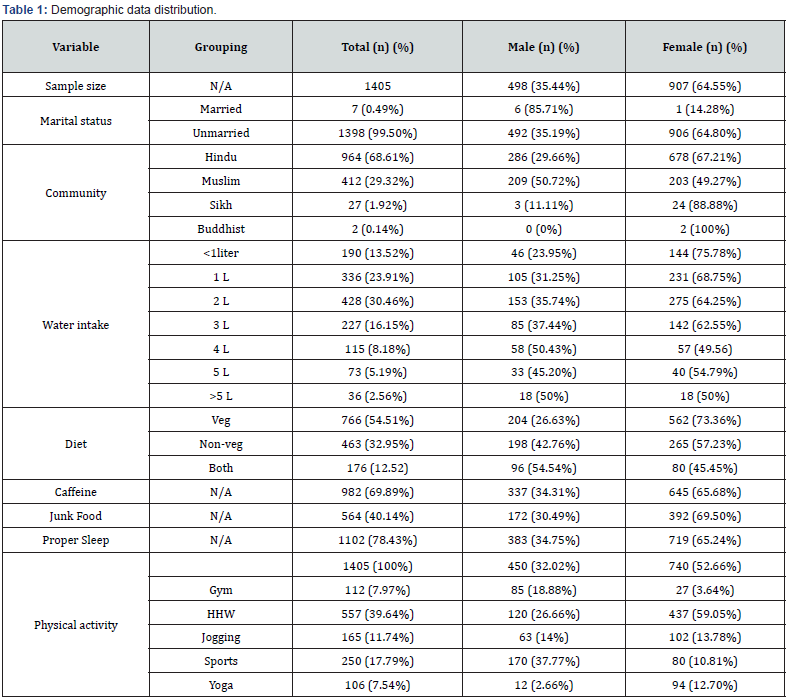
A total of 1405 college students were included with a mean age of 19.64±1.32, including 498 males (19.46±1.32) and 907 females (19.74±1.31). We found a highly statistical difference between the age of male and female students among college students (t-test: 3.8220: p-value: 0.0001). The majority of students were belonging to the Hindu community (n=964) in contrast to Muslims (n=412) and with minorities including Sikhs and Buddhists n=27 and n=2 respectively (Table 1) (Figure 2A). Regarding the martial estimates, the frequency of married students was not quite high (0.49%) (Table 1). Lifestyle activity of students has been also observed where it is found the lower frequency of alcohol usage 1.35% (n=19/1405) in which the male participants represent the dominancy 72.68% (n=14/19) over the female 26.31% (n=5/19).

Also, the increased smoking habit was observed in males 71.42% (n=15/21) in contrast to female students 28.57% (n=6/21). Around 1190 students (84.69%) were observed to do physical activities including n=450 males (37.81%) and n=740 female (62.18%) (Figure 2E) (Table 1). Regarding the dietary pattern, it was observed that 32.95% (n=463) were non-vegetarian (n=766) were vegetarian and 12.52% (n=176) take both (veg % and non veg.) and with respect to the caffeine 69.89% (n=982) were taken caffeine out of which32.29% (n=327) were occasional (Figure 2B) (Table 1). Stress was found in 60.49% students (n=850/1405) with the male representing 34% (n=290/850) and female 65.88% (n=560/850). We observed statistically significant difference (t-test = 3.3926, p-value: 0.0007) between the age difference between stressed males (19.46±1.33) and females (19.78±1.29).

The frequency of the different types of stress was observed (Table 2) and the educational stress was at the top representing 46.35% including 34.82% (n=101/290) and females 52.32% (n=293/560) (Figure 2F). Different disorders were observed in students which include hypertension 2.70% (n=38/1405), PCOS (Poly-cystic ovarian syndrome) 2.34% (n=33/1405), and depression 2.84% (n=40/1045). To find out the risk attribute associated the condition Odds ratio (OR) were utilized. Stress was found associated with the headache OR: 3.67,95% CI: 2.92-4.60, (p value: <0.0001), PCOS with OR: 3.62 [95% CI: 1.4850-8.84, p-value: 0.0047], hypertension OR: 5.31 [95% CI: 2.06-13.70, p-value: 0.0006] and depression OR: 7.24 [95% CI: 2.56-20.48, p-value: 0.0002]. Also, caffeine risk on hypertension and PCOS were also observed including OR: 5.24 [95% CI: 1.60-17.17, p-value: 0.0061] and OR: 3.12 [95% CI: 1.13-9.34, p-value: 0.027] respectively.

We also observed the bidirectional association of headache and hypertension and found a significant increase of risk i.e., headache to hypertension OR: 14.65, 95% CI: [6.59-32.57], (p-value: 0.0001) and hypertension to headache OR: 3.61, 95% CI: [1.64-7.94] (p-value: 0.0014). Stress was also found significantly (p value <0.0001) associated with the risk of anxiety (OR: 2.66, 95% CI: [2.07-3.43] and risk of stomachache (OR: 2.26, 95% CI: [1.17-2.85]) (Table 3). Educational stress was found significant (p value: <0.0001) responsible for increasing the likely hood of headache by 3.8-fold (OR:3.84, 95% CI: 2.92-5.05). Emotional stress was found to be a high-risk variable associated with hypertension with an OR: 2.74 [95% CI: 1.35-5.54, p-value: 0.0050]. Also, the association between emotional stress and PCOS was observed with an OR: 1.14 [95% CI: 0.50-2.58] but did not reach at statistical significance (p-value: 0.74).

Discussion

Education has a crucial role in society since it may influence people’s attitudes, ways of thinking, and behaviors [12]. But stress which is an inevitable part of life has a detrimental effect on student’s physical and emotional health as well as their academic performance. In the present study, we observed that college female students were more stressed than the male participants, with the female group showing higher levels of educational stress (Figure 3F). Also, emotional stress was found to be more frequent in the female group as compared to the male students (Figure 3F). College students experience stress due to increased workload, new responsibilities, poor time management, and interpersonal relationships [13].

In comparison to our study, many research studies have provided significant data on stress and students and their relationship. According to Waghachavare and colleagues, 25.1% of medical students, 28.7% of dentistry students, and 19.7% of engineering students reported feeling stressed out. In comparison to the gender disparity, female students were found to be more stressed than the male participants [14-16]. According to published data, secondary school students had a medium degree of tension, with females being shown to be more stressed [17]. In the college institution, more than one-fifth of college students suffer from mental problems [18] and the academic domain was the most common source of stress, followed by the social activity area, and group activity domain [19]. Regarding the academic domains, science, and commerce domains students were shown to be more academically stressed than the students in the arts, management stream, and humanities [20]. The fact is that most of the female respondents feel stress in their college life because of fear of failure [21,22].

Reasons for the stress among the students were found the lack of appropriate support, a variety of personal and social issues, academic pressure, extracurricular activities, assignments overburden, and most importantly parents want their children to participate in the rat race and outperform their peers to improve their social status, the attitude of faculty members [16,23,24]. Rana and colleagues reviewed that stress can be either bad or positive for a person, depending on the severity and duration of the stress, the person’s personality, cognitive assessment of the stress, and social support. They must be raised in a positive environment and more attention is paid to the child’s growth as they enter adolescence [7]. Extreme stress can make it difficult to work effectively, as well as cause poor academic achievement and reported poor health and a lower quality of life [13] and there was no association between high-stress levels and students’ age [15].

The biological aspect of stress is complicated where stress has much negative feedback. One such example is the stress-induced stimulation of the hypothalamus to secrete CRH (Corticotrophin releasing hormone) which then further stimulates the anterior part of the pituitary gland to release ACTH (Adrenocorticotropic hormone) [25]. ACTH flows down from the brain to the kidney through the bloodstream (endocrine signaling) and binds to the specific receptor on the Adrenal gland (located on the kidney) and stimulus to secrete the adrenaline and cortisol. Adrenaline and cortisol alter the homeostatic mechanism of the different systems including heart rate, dilation of bronchioles, increasing blood pressure, increasing blood glucose level by converting glycogen, and decreasing digestive activity (Figure 4). Long-term and continuous stimulus results in a dysregulated mechanism which leads to different diseases such as heart diseases [26], asthma [27], Obesity, Diabetes [28], headaches including migraine [11], depression [29] and anxiety [30], gastrointestinal problems [31], Alzheimer’s disease [32] etc. (Figure 5).

In the present study, we have observed that stress negatively impacted the reproductive health of females where it significantly increases the chance of PCOS (Poly-cystic Ovarian Syndrome) OR: 3.62 [95% CI: 1.4850-8.84, p-value: 0.0047]. Also, structural changes in blood vessels i.e., hypertension found to be significantly associated with stress with OR: 5.31 [95% CI: 2.06- 13.70, p-value: 0.0006]. Mental status among students is the seed for progress but stress has created a distressing environment for the brain and alters its normal activity. We have also observed that stress increases 7 times more chance of depression among students with OR: 7.24 [95% CI: 2.56-20.48, p-value: 0.0002]. Emotional stress was found to be a high-risk variable associated with hypertension with an OR: 2.74 [95% CI: 1.35-5.54, p-value: 0.0050]. Also, the association between emotional stress and PCOS was observed with an OR: 1.14 [95% CI: 0.50-2.58] but was not reached statistical significance (p-value: 0.74). Students have a lot of stress related to their academics, where we found that educational stress is significantly associated with the increased likelihood of headache (OR:3.84).

PCOS results in low self-esteem which causes the majority of psychiatric conditions, such as depression and suicide [9]. Stressrelated factors such as Salivary Amylase Activity (SAA) and salivary cortisol levels were found to be higher in PCOS patients than in age-matched controls, implying an exaggerated response of the central stress stations in the affected women [33,34]. Early life stress such as abuse, and school bullying play a significant effect on the susceptibility to develop FGD (Functional Gastrointestinal Disorders) and IBD (Inflammatory Bowel Disease) later in life [35], gastrointestinal conditions like peptic ulcer disease (PU) and ulcerative colitis (UC). Psychological stress has been found to negatively impact the immune system which worsens the number of skin and hair conditions like psoriasis, alopecia areata, and atopic dermatitis [36].

Humensky and group have shown that self-reported depressive symptoms were associated with concentration difficulties and difficulty completing school tasks between 14 to 21 aged students in the United States were at risk for major depression [37]. One-fifth of college students had mental problems, indicating that mental health is a serious problem that increases with the children’s grade level [18]. These findings imply that there is a strong link between stress or stress-related factors and altered body composition. Also headache and hypertension has been found to be linked with each other (comorbid conditions) [38,39] and this might be due to the presence of diverse risk attributes such as environmental including stress and genetic factors [40].

To this end, the future of any nation lies in its students, who are blessed with incredible abilities; we simply need to discover them. Despite of advanced learning and teaching approach, enhancement of students is not at its peak. Stress is a major reason for the decreased development of students which negatively impacted their health, social status, future goals, their academic life, and many other important life aspects. Therefore, emphasizing the value of research, improving pupils’ growth may be accomplished by suggesting some coping mechanisms like college students should pay attention to their health and nutrition, take proper sleep, manage their time effectively, practice self-care, make connections with others, maintain healthy relations, focus on physical activities, use relaxation techniques like meditation, live organized life, practice positive thinking etc. All of these will help college students to increase their overall health and can reduce stress. Avoiding stress decreases and increases the likelihood of disease occurrence and happy and healthy existence respectively.

Conclusion

If a healthy solution cannot be found, stress can have a negative influence on academic performance and mental health. Therefore, there must be needed a system that will ensure a better education system. Colleges must develop coping strategies to reduce stress triggers and improve student experiences by identifying the causes of stress (financial struggles, academic pressure, studentteacher relationship, conflict with a roommate, family issues, relationship issues, career problems, post-graduation plans etc.) which disrupts student’s daily activities and how to manage it.

To Know more about  Psychology and Behavioral Science International Journal

To Know more about our Juniper Publishers
Click here: https://juniperpublishers.com/index.php

Tuesday, August 9, 2022

Autistic Voices are Missing in Research on Inclusion Best Practices - Juniper Publishers

 Intellectual & Developmental Disabilities - Juniper Publishers

Abstract

In this researcher’s dissertation and further educational research, literature on the perspective of inclusion and school experience from the voice of those on the autism spectrum is uncommon. Research is robust and spans decades from the perspectives of clinicians, administrators, educators, and researchers. Students on the autism spectrum have experienced well-meaning inclusion practices that have not felt inclusive to practices of exclusion and even bullying from peers and educators. Educational organizations primarily focus on education practices in inclusion defining inclusion as mainstreaming or increased time with peers but neglect the important of social inclusion and the importance of social skills for both students on the autism spectrum and their non-autistic peers for meaningful social interactions and inclusion. This review is a call to action for further educational research on school experiences from the perspective of those on the autism spectrum and clinical research on the impact on mental health and outcomes for students on the autism spectrum whose social skills are and were neglected and who experienced exclusion through segregation and/or bullying in the school system.

Keywords: ASD; Inclusive practices; Autistic perspective; Bullying; Mental health; Call to action; Autistic voice; Social skills building

Introduction

This researchers’ original dissertation research, “Creating an Inclusive Climate for Students on the Autism Spectrum” [1] is the basis for the mini review. In this phenomenological study, a total of 35 participants which included administrators, educators, school psychologists, paraprofessionals, school counselors, parents of children on the autism spectrum, and individuals on the autism spectrum were surveyed through semi-structured interviews concerning barriers to inclusive educational practices and suggestions for more inclusive practices for students on the autism spectrum. In further research, “Inclusion, autism spectrum, students’ experiences” [2], in creating a literature review of available research from the students’ perspectives, comes this call to action for further research from the voices of those on the autism spectrum on inclusive best practices in the educational system.

A previous literature review of research concerning inclusion from the perspective of autistic students included: Brede et al. [3], Humphrey et al. [4], Gordon [5], Jones et al. [6], McGregor et al. [7], Sproston et al., [8], and Wang [9]. Lack of research and understanding of students on the autism spectrum is contributing to negative stigma and lack of understanding of the autism community [2,6]. Research spanning the last two decades has focused on the importance of teacher attitude concerning inclusion [1, 7-15] and what contributes to teachers’ attitudes toward inclusion [1,14,16-19].

A section of research has indicated teachers who do value inclusion or desire to be inclusive are not supported by their administrators and lack resources and training to include students on the autism spectrum in the general classroom [1,14,17,18,20-24]. Inclusion literature also focuses on the importance of the administration or educational leadership in building a climate of inclusion within the school as well the responsibility for training and resources and understanding of the laws concerning inclusion [1,16,25-32]. Furthermore, you can find research on factors that promote inclusion [33], tools for inclusion [34], tips for inclusion [35], defining inclusion [36], special education law and inclusion [37-39], interventions that promote inclusion [40], effects when there is not inclusion [41] and a review of other inclusion literature [32]. All of the above studies are important and have their place on the topic of inclusion. However, we need to move from the paradigm of disabilities and differences from the medical or professional approach addressing behaviors and treatments and protocols to reach appropriate norms and standards [42] to an empowerment and partnering approach with the autism community on what practices are defined inclusive to them [1].

Discussion

Now referred to as autism spectrum disorder (ASD), Blumberg et al. [43] explained that ASD is a complex neurological disorder that includes the following former diagnostic labels, such as autistic disorder, Asperger’s Syndrome, and pervasive developmental disorder, not otherwise specified (PDDNOS). The Centers for Disease Control and Prevention [CDC] [44] reported the current prevalence of ASD to be 1 in 59 children with 1 in 6 children in the United States having some form of developmental disability from mild to severe making, autism the fastest-growing developmental disorder in the United States [1,16]. The World Health Organization cites autism globally as 1 in 100 children [45].

While pediatrician Dr. James Coplan, a neurodevelopmental pediatrician from the University of Pennsylvania, argued the rates of autism are due to changing criteria and lack of record keeping of autism in the school system before 1975, Dr. Martha Herbert, a pediatric neurologist at Harvard Research School of Medicine, examined the rates based on changing criteria and found that of the 1200% increase of diagnostic rates only 400% of that increase could be attributed to change in criteria alone leaving an 800% increase 31 over 25 years not related to change in diagnostic criteria [1,46]. While research is not certain concerning the causal attributes to the increased rate of autism, the CDC [44] reports that ASD is found equally among races, ethnicities, and socioeconomic backgrounds [1]. Bai et al. [47] five country cohort study of 2.1 million participants does suggest an 80% heritability rate of autism spectrum disorder; therefore, we can project autism rates to increase. Autism is reshaping special education, and the public school system has not adapted or responded to handle the increase of students to be served on the autism spectrum over these past 40 years [1,16,48].

According to Watkins et al. [40], students with ASD will have limited or hindered success in an inclusive or general education classroom if they are in a general education classroom without supports or resources and social skills [1]. The classroom experience is social with numerous social interactions a student will have with the teacher(s) and peers across many activities, both structured and unstructured throughout the day, which is challenging because of the core deficits in ASD center on social communication [1].

According to Stitcher et al. [49], the level of social skill deficit will manifest differently from student to student on the spectrum with varying degrees of severity. Students on the spectrum have difficulty in the areas of Theory of Mind (ToM), emotion recognition, and executive functioning. Cited by Stitcher et al. [49], Baron-Cohen et al. [50] described the inability to understand intentions and thoughts of others or understand that others have different perspectives and thoughts than one’s own is what is referred to as Theory of Mind. Coupled with lack of emotional recognition, the student with ASD has an understanding of basic emotions but may not recognize nuances in emotions or facial, gestural, or inflections in tone which may cause the student not to be able to follow social communication in activities in the classroom [49].

Vermeulen [51] stated social communication has contextual sensitivities that may be missed by those on the autism spectrum. Without intervention, social skills training with contextual sensitivities [51], and supports, the student with ASD may exhibit problematic behaviors, which may lead to internalizing, anxiety, or becoming socially withdrawn [52]. Isolation or exclusion can create a negative impact on the student’s mental health and academic performance and create further deficits in other developmental skills [53,54].

Social skills training is important not only for those students on the autism spectrum but also their neurotypical peers and educators. Crompton et al. [55] stated that effective information transfer requires social skills and found miscommunication from mismatched neurotype. Autistic to autistic communication was found to be effective as well as neurotypical to neurotypical communication information transfer; the challenges arose in autistic to non-autistic persons transferring information through communication. This indicates that autistic and non-autistic people have difficulty communicating with each other and reading each other’s social cues. Therefore, social skills programs in schools should include both neurotypical peers and those on the autism spectrum instead of autism only social skills building groups.

Understanding that friendship and belonging are crucial toward mental health and better life outcomes, Boutot [35] wrote that merely increasing favorable attitudes toward peers with disabilities and placing them side by side in class is not enough to promote inclusive behaviors that lead to friendship [1]. Parents and teachers must work together to promote friendships within and outside of the classroom.

Listed among characteristics of being unpopular or excluded, Boutot listed those who tend to play alone, those children that do not have athletic skills, children with inappropriate or extreme behaviors, and those with poor social skills that are difficult to engage in cooperative play make the list. While ASD was not specifically mentioned in the study, these characteristics are part of the ASD symptomatology listed in the DSM 5 [56]. Boutot [35] noted that many times, teachers and schools hide behind confidentiality, claiming parents do not want other students to know about their child’s issues [1]. However, research supports that most parents of children with ASD are longing for their child to have one friend and are willing to disclose the diagnosis if asked. Boutot suggested that preparing the students in the general education classroom before the student(s) with disabilities or differences arrive is important to explain behaviors, any devices or supports the student may need, and provide time for students to ask questions to lessen fear or confusion of behavior the child to be included may display [1].

Boutot suggested promoting a system of peer mentoring or peer tutoring rotating students to be a buddy or lunch friend to promote inclusive behaviors and build friendship behaviors. One-way schools may try to implement and promote inclusion has been through special education clubs aimed at pairing neuro-typical students with special education students for social inclusion. Such programs ask nondisabled students to volunteer to eat lunch with or attend school functions with students who are not able to be part of the mainstream class due to severe disabilities or mental impairment. This practice would fall under peer support, as outlined by Cowie & Hutson [57]. Cowie and Hutson stated that to promote truly inclusive behaviors, classroom peers need to spend time with peers with differences and disabilities intentionally. Peer support behaviors in schools are those that promote befriending, peer counsel, peer tutoring, lunch conversation, and inclusive play in nonroutine portions of the school day.

Wanting to know what knowledge and understanding school-aged children possess about students with autism, Dillenburger et al. [58] surveyed 3,353 children and youth (p. 766). Overall, children and youth were aware of autism and had basic knowledge concerning strengths and challenges children on the spectrum face. It was found that 43% of students knew someone personally on the autism spectrum and reported a favorable attitude (p. 769). Increased levels of autism and knowledge were associated with a more favorable attitude toward having a student on the autism spectrum in one’s class [1]. While awareness and attitude were keys to promoting acceptance and understanding, the students surveyed also indicated at a high rate a lack of knowledge on how to engage with persons on the spectrum and how to intervene if they witnessed bullying. One out of six students surveyed in the Dillenburger et al. study reported witnessing someone with autism being bullied, and one in ten of those stated they did nothing to help while the majority stated they wanted to intervene or told someone in authority [1].

Conclusion

Negative socio-emotional effects and less favorable outcomes are cited for students with special needs who are not receiving social skills training [41] or being social included [1]. However, to date as indicated by the students in my study [1,2], they nor their parents were not asked about what practices would build peer or teacher understanding and social inclusion. For suggestions on inclusion and what feels inclusive, students have suggestions if educators and professionals dare to ask [1,2,59,60]. Therefore, future research on best practices for inclusion and social skills building curriculum and training must include the voices and perspectives of those on the autism spectrum. While it is important and ethical to protect individuals with disabilities and differences from exploitation of research, we cannot continue to use protection as the reason voices and perspective of those on the spectrum are excluded from research [1]. Guidelines exist, such as AASPIRE, to outline ethical practice for including adults on the autism spectrum in research [61].

All persons need autonomy and relatedness as fundamental needs at home or school; however, autonomy and relatedness are crucial for increased learner outcomes for both student and teacher [62] Self-determinism can be applied to many facets of educational practices to promote learning and increase the competence of one’s abilities as this produces intrinsic motivation and personal growth for better academic outcomes [63]. Klassen & Usher [64] cite Albert Bandura’s work on self-efficacy and define it as the core belief one can achieve one’s goals. Self-efficacy is important in educational setting because to achieve educational goals and goals beyond the education setting, individuals want to exercise a measure of control over their life and believe they can help architect their destinies [64].

An autism friendly, supportive, and inclusive school would begin with supportive administration that promotes a positive and favorable climate for inclusion through visionary leadership while supporting and providing resources and training to all staff in a sensory-friendly environment with multiple layers of support of staff [22]. Building on the body of research concerning inclusion, researchers are now called to include those on the spectrum when building best practices for inclusion. To conclude with the words of disability advocate Charlton [65], “Nothing about us, Without us!” Persons with disabilities and differences need to be included on what is best for them and be empowered in personal involvement in practices outlined for them [66-69].

Click here: https://juniperpublishers.com/index.php  

Friday, April 29, 2022

Role of Gatekeepers in Suicide Prevention During COVID-19 Pandemic - Juniper Publishers

 Addiction & Rehabilitation Medicine - Juniper Publishers

Abstract

Keywords: COVID-19; Suicide; Mental health; Psychopathology; Gatekeepers

Abbreviations: WHO: World Health Organization; CNS: Central Nervous System; ACE-2 : Angiotensin-Converting Enzyme 2; CRH: Corticotropin Releasing Hormone; mTOR: Mammalian Target of Rapamycin

Introduction

Suicide is defined as death caused by injuring or harming oneself with intent to die and a suicide attempt is an injury or harm caused to self with intent to die but has not resulted in death [1]. Suicide and suicidal behaviors are influenced by multiple psycho-social and biological factors. Factors such as resilience, good social support are protective against suicide while lack of occupation, financial issues, ill health, poor social support are risk factors of suicide. Prevention of suicide is the need of the hour. Amidst the COVID-19 pandemic is a possible suicide and suicidal behavior increase that is being neglected at community level.

Burden of Suicide

World Health Organization (WHO) statistics show that globally more than 800,000 people die by suicide every year, that is, one death by suicide occurs every 40 seconds. For every completed suicide there are 10-20 suicidal attempts that are reported [2]. About 77% of all suicides occur in low and middle income countries [3]. In India, as per National Crime Records Bureau of India 1.53 lakh people have died by suicide in the year 2020 (vs 1.39 lakh in 2019). The most common form of suicide being death by hanging followed by death by consumption of poisons especially insecticides. Total rate of suicides nationwide is 11.3 [4,5]. Though global statistics collected by WHO shows that the rate of suicides have reduced between 2010 and 2019 in low-middle income countries, statistics from India does not reflect this [6].

Influence of COVID -19 pandemic on suicide and suicidal behavior

Suicide and self-harm behavior are influenced by multiple psychological, social and illness aspects and reflects the severity of the mental health crisis and illness in a given community. COVID-19 infection has impacted the psychological, social and physical health globally and thus self-harm and suicide behavior as well. A study in Nepal has shown that suicide rates were higher during lockdown than immediate post lockdown period and same time period of pre-COVID years. Delay in arrival to hospital, admissions and in hospital deaths due to self-harm were also higher during lockdown [7]. Indian study compiled from news reports and social media showed that more than half of them were tested positive for COVID-19, about one-third was in institute setting and that the most common mode of suicide was by hanging followed by fall from height.

Nearly two-thirds of the patients had contacted a physician within 2 weeks prior to their self-harm. More than 80% of the people who completed suicide did not have pre-existing psychiatric or physical co-morbidities [8]. This may indicate that COVID-19 pandemic and its effect on psychological health and social factors may be an independent risk factors for suicide. Comparing pre-COVID data with the current data shows that depressive illness has increased two to three fold than before. Anxiety and stress levels in the general population have also increased significantly [9-11]. As 90% of people who have completed suicide have a pre-existing psychiatric diagnosis [12], increase in psychiatric illness can lead to increase in suicidal behavior.

Psychosocial factors influencing suicidal behavior during COVID-19 pandemic

Studies have shown that stressors related to COVID-19 infections such as fear of infection, increased vigilance about changes in body and wrongly attributing it to COVID-19 infection, deterioration of physical health due to COVID-19 infection, reduced social support and caregiver ability have impacted the mental health of the people [13]. People who follow COVID-19 related news closely are more prone to develop anxiety as most of the news is distressing and emphasizes the infectivity of the virus and its associated morbidity and mortality. Rumors, fabrications and misinformation on social media also contribute to the rising anxiety levels and exacerbate depressive symptoms [14-16]. Isolation due to lockdowns, work from home and infection can cause loneliness, helplessness and stress. Physical isolation with social and emotional closeness by using social networks and virtual platforms can be a protective factor [17].

Pathogenesis of psychopathology associated with COVID-19 infection

COVID-19 or SARS CoV 2 2019 is well known for its entry through mucosal surfaces and its effect on respiratory system, morbidity and mortality associated with the same. However, lesser-known fact is that SARS Cov-2 infection and associated immune response affects multiple organs and organ systems of the body; one such system being the Central Nervous System (CNS). SARS CoV-2 virus enters the epithelial cells via angiotensin-converting enzyme 2 (ACE-2) receptors. This in turn leads to down-regulation of ACE-2 receptors expression. In animal studies down-regulation of ACE-2 expression has resulted in increased sympathetic activity, reduced tryptophan uptake and production of serotonin; thus, compromising the body’s ability to respond to stress and hence increasing the individual’s susceptibility to depression and anxiety.

ACE-2 receptors in hypothalamus suppress fear responses, anxiety and its related behavior as well as Corticotropin releasing hormone (CRH) which plays an important role in response to physiological stress. ACE-2 receptor down-regulation hampers negative feedback mechanism of glucocorticoids in reducing excessive inflammation. Therefore, in SARS CoV 2 infection an excessive and dynamic inflammation is observed. SARS CoV 2 virus has the ability of infecting all tissue having the ACE-2 receptor including the brain tissue. Hence, direct infection and increased immune response both play a role in pathogenesis of psychiatric illnesses associated with COVID-19 illness. This can be prevented by preformed antibodies occupying the ACE-2 receptors in the brain thus preventing entry of the virus into the neuronal cells. Hence, ACE-2 receptor modulator drugs may have a role in treatment of COVID-19 infection and prevention of psychiatric complications [13].

Though rennin angiotensin aldosterone system plays a role in pathogenesis of stress related depression and anxiety, it is minimal. Bradykinin and mammalian target of rapamycin (mTOR) play a major role in depression and effect of COVID-19 infection on them is not known [13]. Inflammatory mechanisms activated by SARS CoV 2 virus increase inflammatory cytokines such as TNF-A, Interleukin 6 and Interferons in both peripheral and central tissues leading to cell apoptosis. This leads to increased risk of developing mood disorders, anxiety and psychosis. Hence, augmenting anti-depressant or anti-psychotic drugs with immunomodulatory drugs or anti-inflammatory drugs are more beneficial than anti-depressant or anti-psychotic drug treatment alone [13]. Effect of COVID-19 pandemic on pre-existing psychiatric illness and access to mental health care services.

The COVID-19 pandemic, precautionary measures implemented to limit its spread and burden on the health care services due to infection had a major impact on non-pandemic related illnesses and treatment for the same. Restrictions in movement, transport, burden on health care infrastructure made accessing health care services in timely manner difficult globally [18,19]. This has also had an effect on the help seeking attitude and availability of services for people with pre-existing mental illnesses. Re-allocation of all available services in health care services including mental health care professionals to tackle the burden of COVID pandemic may have resulted in lack of timely professional help for people with mental illnesses [20]. As psychiatric facilities were found to be a high risk area of spread of COVID-19 infection, community based or home based treatment through telepsychiatry, psychological support and home delivery of the medications would have been recommended and ideal.

However, due to sudden and unexpected impact of the pandemic mental health services were not equipped to handle this crisis [20]. Study comparing people with pre-existing psychiatric illnesses and those without showed that people with psychiatric illnesses had significantly higher depression, anxiety, stress, PTSD like symptoms, anger, impulsivity and suicidal ideation [21]. Lack of access to mental health care services and medications could have resulted in untreated mental illnesses and above findings. This results in impaired ability of the individuals to cope with stress and in turn cause increase in suicidal ideation and attempts.

Bridging the gap…Gatekeeper?

In India, there exists a huge gap between the requirement of mental health services and the personnel who are trained to provide adequate services. The National Mental Health Survey of 2015-2016 shows that lifetime risk of psychiatric illness is 13.67% and point prevalence was 11.56%. But the available mental health professionals were 0.3 per 100,000 population for psychiatrists, 0.07 per 100,000 population for clinical psychologists and 0.12 for mental health nursing staff [22]. To meet the minimum mental health needs of the population of India there should be 3 psychiatrists per 100,000 populations and for optimum care or in an ideal situation 6 psychiatrists per 100,000 populations. Keeping attrition rate of psychiatrists to 0%, approximately 2700 new psychiatrists need to be trained annually the next 10 years to meet the demands of our country [23].

However, as of 2021-2022 academic year approximately 1200 Post-graduate students are being trained as psychiatrists throughout the country, which is less than half the required numbers [24]. COVID pandemic has also increased the risk factors for suicide thus increasing the need for mental health services in prevention of suicide. Gatekeepers can help in bridging this gap. Gatekeeper refers to people who have primary contact with individuals at risk for suicide, and who can identify such individuals by recognizing suicidal risk factors and refer to a professional. Gatekeeper training refers to training individuals to identify risk factors for suicide among people and refer for appropriate help [25]. Gatekeeper could be teachers, family members, supervisors, religious leaders, faith healers, physicians, police, colleagues and friends. Most of them are however not aware of the signs that people who have risk of suicide exhibit and hence are unable to identify and provide timely health.

Most of the people in the community, especially the youth are hesitant approaching mental health professionals for help for suicide due to stigma attached with suicide and lack of awareness of avenues of help available and fear of being judged. Often times when they approach lay people for help with suicidal ideation, their concerns are trivialized or ignored (probably due to ignorance and their own discomfort regarding suicide) making them hesitant to reach out for help again. Gatekeeper training is a strategy designed to improve early identification of individuals at high risk for suicide and to facilitate timely mental health referrals, responding to the fact that suicidal youth are under-identified and few are using these services.

Identifying people who have contact with population at large and adequate training to recognize and provide first aid for people with risk of suicide before professional help is available becomes important. Educational institutes (like schools, colleges and universities) and workplaces should have a crisis management team who have had gatekeeper training from professionals. Crisis team should include people from the administration and employees who are willing to undergo gatekeeper training and help in suicide prevention.

Click here: https://juniperpublishers.com/index.php  

Tuesday, October 27, 2020

Working Together, Psychology and Yoga - Juniper Publishers

 Yoga and Physiotherapy - Juniper Publishers


Opinion

Psychology as a science of behavior to know, understand and improve the conscious and unconscious states of the human being. The scientific method is applying to know and understand human behavior. Through which measurable and repeatable social representations are constructed, that can start from the inductive method (particular to the general) or the deductive method (general to the particular). By measuring behaviors in a valid and reliable way, we can predict behaviors and the procedures that generate them. So here we not only know what (specific behavior) but how (understanding) human behavior from a social perspective. The personal conceptualizations, derived from the subjective experiences in specific sociocultural spaces, also possess characteristics to the belonging group and for that reason, specific treatments prescribed, starting from general behaviors and adapting them to the particular case for the intervention in improvements.

Yoga employs the traditional anatomy of yoga to guide patients or students to experience the five koshas (layers) session. The physiological alignment of the patient stimulates a corresponding internal alignment, allowing the physical body to open up and connect with the cosmic body. One’s consciousness deepens and expands to include all layers of being physical, pranic, mental/emotional, intuitive, and pure consciousness. Therapeutic sessions designed to draw attention to specific koshas (layers) and guide patients to experience their practice through these five levels of being for different purposes. The first layer treated is the physical because it is the center of control and balance, from the point of view of security. It often initiated in the physical part to the mental, forming centuries to preserve health considering itself as the cornerstone. As yoga is fundamentally an experimental inner research, students are encouraged to be aware of the control points and to explore how the posture in their body feels and manifests during any yoga experience. Each session has a theme intended to further encourage the patient’s inner journey.

Yoga has often used as an alternative or complementary intervention for Anxiety and Depression Disorders, and these psychiatric disorders considered recurrent in this human age. The use of Yoga is beneficial to reduce the doses of medication with side effects, lack of response or adherence to treatments. There are studies that have shown that anxiolytic and antidepressant drugs have side effects; among the most frequent we can mention some: limited long-term efficacy [1], generate dependence [2], affect cognition and memory and produce sexual dysfunction [3], increased appetite and weight and headache [4]. What causes the patient in treatment with medication causes another concern, affecting the improvement of his condition. The therapeutic of Yoga as an alternative treatment frequently used in anxious psychiatric disorders and / or mild to moderate depressive and as a complement in moderate to severe. In both cases, it is always going to be beneficial because Yoga acts as a path towards the awakening of the being. The introjection and the consciousness it reveals is homeostasis based on physical and mental health.

Physical because it regulates endocrinological and vegetative functions, the hypothalamus produces diverse responses to internal and external environmental alterations. The regulation of the physical mind helps the balance of ideas. The ideas are the activators of the sympathetic nervous system that causes the increase in heart rate, blood flow to muscles, glucose levels, cellular metabolism, synthesis of adrenaline and noradrenaline that triggers ideas and actions. The cyclic cause and effect interrupted by feedback [5]. Yoga sessions are systematically but artfully structured to align the physical, energetic, mental/emotional, and intuitive self through the five elements of the practice and the five energetic principles. Many psychological research studies reinforce the use of yoga as an alternative or complete emotional treatment.


Click here: https://juniperpublishers.com/index.php   


On the Positive Effects of Overconfident Self-Perception in Teams - Juniper Publishers

  Social Sciences & Management Studies - Juniper Publishers Abstract In this paper, we study the individual payoff effects of over confi...