Thursday, August 27, 2026

Parking Demand for Elementary & Secondary Schools in Jordan- Juniper Publishers


Civil Engineering- Juniper Publishers

Abstract

This study aimed at investigating parking demand at elementary and secondary schools in Irbid city; the second largest city in Jordan, to identify the main influencing factors, and develop models to predict future demand based on local conditions. The major considered factors included school area, number of students, number of teachers, number of classrooms, gender of students, education level (elementary, secondary), and school ownership (public, private). A total of 118 different types of schools were surveyed from different areas in Irbid City. The required field data were collected on regular weekdays by field surveys and manual counting for the total number of parked vehicles and the variation during the schools working hours, while schools descriptive information’s were obtained from the directorate of education in Irbid city. Peak demand models for different types of schools were developed using multiple linear regression analysis by SPSS software. The results of the study showed that the main affecting factors on school parking demand include the total number of students, classrooms, and teachers. However, more focus was given to the number of students due to collinearity among these main independent variables and to be consistent with the international practice.

Keywords: Parking demand, Elementary school, Secondary school, Irbid, Jordan

Term Campus

Concerns are raised about traffic congestion and parking problems in Jordan as one of the developing countries with high population growth, immigration from neighbouring countries, increasing vehicle ownership and weak public transportation system, that require expansion of road networks and affect traffic operations and parking demand (both on street and off-street). Parking is an important element in the transportation system, since each driver needs to park somewhere before and after each trip. Parking has a significant effect on traffic problems like traffic congestion, traffic safety and environment. It must be effectively organized whether at on- or off-street to meet the land uses parking demand, reduce traffic problems and keep the desired levels of service for the street network.

Parking studies are main part of transportation studies used to assess the impact of new proposed developments. Findings and results represent the input needed to understand the existing parking conditions and requirements, to guide and enhance parking planning, management, and implementation of related projects. Parking studies may also help to set possible improvements required for handling existing traffic conditions and accommodating future changes to create balance between parking supply and demand especially in cities where the cost of land is expensive. It is necessary to estimate parking demand requirements at existing and proposed developments to assess parking adequacy and their impact on the transportation network. Parking demand models are necessary tools to guide engineers, planners, and decision makers in transportation planning and parking management.

It is not accurate to use international parking demand models in Jordan to estimate or predict the required parking demand without validation for local conditions since there are different socioeconomic and traffic characteristics between different countries, especially between developed and undeveloped ones. So it is essential to develop parking demand models based on local traffic and socioeconomic conditions in order to provide more accurate estimates. This study aims at investigating the required parking demand at elementary and secondary schools in Irbid city, identify affecting factors, and develop models to predict future parking demand as a function of the main influencing factors such as the school area, number of class rooms, number of students, number of teachers, gender of students, school ownership (public, private), etc. Parking demand models are used to provide prediction for future parking demand at developments for planning and management and creating balance between demand and supply.

Literature Review

The Institute of Transportation Engineers [1] has defined parking generation as “an educational tool for planners, transportation professionals, zoning boards and others who are interested in estimating parking demand of proposed development”. It has also defined parking supply as “the total number of parking spaces that are built or available at the study site, regardless of whether or not are utilized” and parking demand as “the total number of parking spaces required at a given site during the peak period”. It has been found by different international studies that the total number of students is the main variable that is positively related and significantly affect the number of parking spaces needed at school’s land use. Other variables that may affect schools parking demand include number of teachers, number of classrooms and school area. ITE [1] predicts parking demand rates for different types of schools (elementary, middle, high, private, and schools for blind) at different location types based on the number of students and presents linear relationships between school peak parking demand and the number of students.

Dubai Municipality [2] has a parking generation manual which estimates the required parking rates for different school levels based on the number of students. Different factors are presented based on school level (kindergarten, elementary and intermediate, and secondary), ownership (private, government), period (school morning peak, school afternoon peak, traffic peak hour), and gender (male, female). Riyadh Municipality [3] has a Parking Generation Manual which estimates parking rates for elementary governmental schools in Riyadh city based on the total area of the school, number of classes, number of students, and number of employees. Different studies were conducted in Jordan at different land uses to investigate parking demand and develop models for parking demand prediction based on local conditions. Al-Masaeid et al. [4] have conducted a study in Jordan to estimate parking generation rates at different land uses including apartment buildings, restaurants, shopping centers, office buildings, hospitals, and hotels and found lower parking demand rates as compared with developing countries. Ghuzlan et al. [5] have investigated the parking demand for multistory apartment buildings in Jordan, and identified their significant influencing factors which included building age (years), number of floors, apartment gross floor area (m²), average apartment income (JD), average apartment car ownership, and location of the building.

A study at the University of Washington [6] has conducted parking field surveys at a high school located at Seattle metropolitan area and collected data about location, site area, building area, time of regular classes, total number of students, teachers, and administrators and developed models for parking rate as a function of the number of students. Wong et al. [7] conducted a parking demand study in Hong Kong at different land uses to investigate parking demand for both private cars and goods vehicles. Linear parking demand models were developed for different land uses including schools. A study at the Arizona state university [8] has surveyed parking demand at three elementary schools in Maricopa county region in Arizona with data on the number of students, number of employees, and school size. Parking demand rate was calculated as a function of the number of students, resulting in a rate of 25 vehicle/student as compared to 14 vehicle/student in the national ITE parking generation manual.

Data Collecion and Reduction

The study data were collected from Irbid city which is the second largest city in Jordan after the capital (Amman), with a population of 929,224 [9]. The city is in the northern part of Jordan with most of its total area classified as residential. The directorate of education in Irbid was contacted to obtain the available information about schools including school area, education type, education level, students’ gender, number of students, number of classrooms, and number of teachers. Field surveys and manual counting was performed for collecting parking data during schoolworking hours. The study included 118 elementary and secondary schools from Irbid city to investigate their parking demand and the main influeing factos [10]. different types of schools were considered and surveyed in the study including public and private schools for male, female, and mixed students, in elementary and secondary levels. (Table 1) presents a list of abbreviations for the main dependent and independent variables as they are used in this study.

Parking demand data were collected through field surveys to obtain accurate information about existing parking supply and the peak number of parked vehicles at each school site with parking demand variation along the schoolworking hours. Vehicle counts at schools were conducted as follows:

a. The total number of parked vehicles were continuously counted by visual observation and recorded manually on a regular weekday.

b. Vehicles that were considered in the schools parking demand surveys included personal automobiles for teachers and administrative staff, school buses, commercial vehicles for school needs, and vehicles for school visitors such as students’ parents and education supervisors, and for special related activities.

c. To get the accurate data for real peak demand, all access points (gates) to the schools were considered in this study.

d. Some teachers, and administrative staff preferred to park a little far from the schools buildings or at adjacent streets to avoid congestion in front of the schools gates and these vehicles were also considered.

e. During field surveys, the counting was only for the parked vehicles for school purposes and not for any other developments activities.

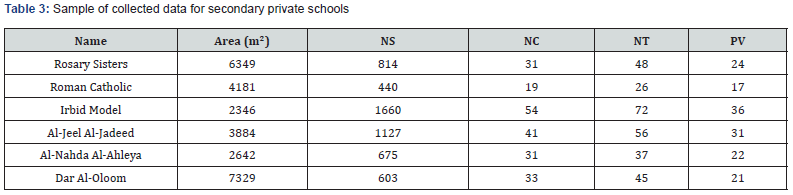
Some descriptive independent variables were coded as (0, 1) or (0, 1, 2) for regression analysis and model development as shown in (Table 2). (Table 3) shows a sample of the collected data that were surveyed which includes descriptive information and peak parking demand for secondary private schools (all are mixed and morning schools). Similar data were collected for all school types.

Analysis and Modeling

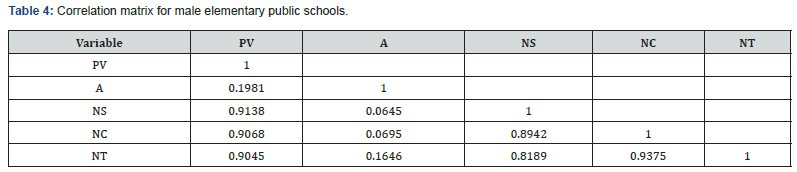
Correlation matrices were developed for each school type to investigate correlation between different variables and parking demand before model development. (Table 4) presents a sample correlation matrix for male elementary public schools.

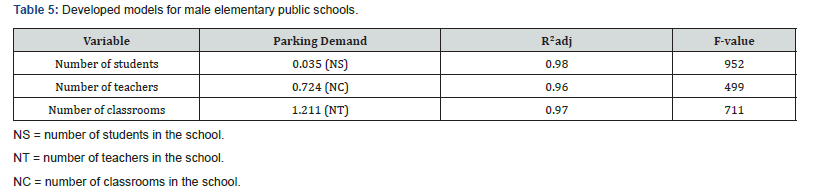
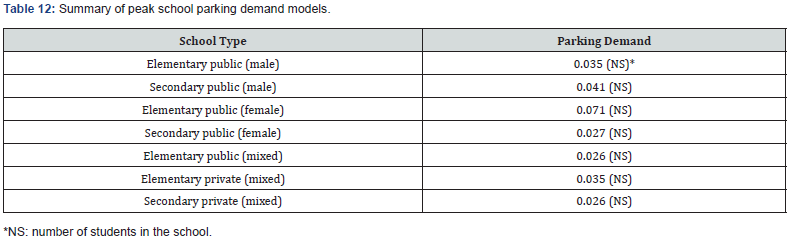
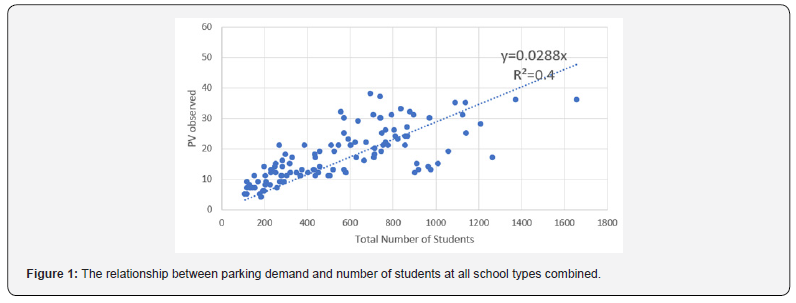
It can be seen from the above table, that parking demand is highly correlated with the number of students, number of classrooms, and number of teachers which are also highly correlated with each other’s. The same trend was also noticed for other types of schools. The statistical analysis linear regression method was performed on the collected data using the statistical package for social sciences (SPSS) software in order to develop models for predicting school peak parking demand as a function of its influencing variables. The highest number of parked vehicles during observation period was the value considered in regression analysis and model development. (Table 5) through 11 present the developed models for parking rate as functions of the main affecting variables. All equations and parameters are significant at 95% confidence level, where: Since NT, NC, and NS have high collinearity with each other and to be consistent with the international practice, it has been decided to focus on the total number of students (NS) in the developed parking demand models. (Tables 6-11) (Table 12) presents a summary of the developed models for the school peak parking demand as a function of the number of students for different school types. (Figure 1) shows the relationship between parking demand and the number of students at all school types combined. The model R2 is weak (0.40), so it is not recommended to use a combined model and it is preferred to use separate models (rates) for different school types.
Comparison with Other Models

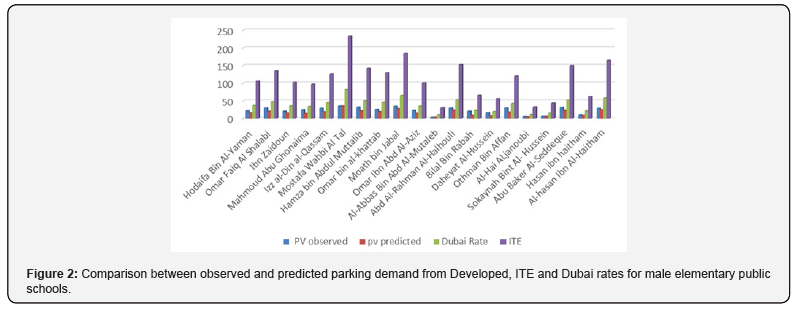
(Figure 2) shows an example of a comparison for parking demand based on the observed data and developed models with the corresponding predicted values from ITE and Dubai manuals for male elementary public schools. As can be seen from the above figure, the developed rates provide closer estimates for parking demand while international models provide high overestimates as compared to the field observations.

Conclusion & Recommendations

Empirical models were developed for predicting peak parking demand at each type of school as a function of the main influencing variables. Key conclusions are summarized as follows:

I. Depending on data collection and analysis it was found that the main affecting factors on school parking demand include the total number of students, classrooms, and teachers. However, more focus was given to the number of students due to high collinearity between the three factors and to be consistent with the international practice.

II. The relationships between the dependent variable (peak school parking demand) and the affecting factors have liner forms.

III. A weak relationship was found between average peak parked vehicles and the total number of students for all school types combined, so it is not recommended to use a combined model and it is preferred to use separate models/rates for different school types.

IV. The developed school parking demand rates provide closer estimates than commonly used international models as compared to field observations.

Based on the data collection, analysis, and model developments in this research, it is recommended to:

1. Conduct similar studies at different land uses to establish a comprehensive parking demand manual based on local conditions instead of using foreign manuals with different socioeconomic and traffic characteristics.

2. Utilize the results of this study in planning, design, construction, and study of school parking in Jordan.

3. Validate the study results for other cities in the country.

Conduct similar studies every few years to find out the effects of changes over time in socioeconomic characteristics, population, vehicle ownership, to propose possible updates if required.
To Know more about  Civil Engineering Research Journal

Click here:   https://juniperpublishers.com/cerj/index.php

To Know more about our Juniper Publishers

Click here: https://juniperpublishers.com/index.php


Sunday, August 23, 2026

Anthropology, Participatory Research and Development Cooperation: A Necessary Dialogue- Juniper Publishers


Archaeology & Anthropology- Juniper Publishers

Abstract

Le domande sul “perché e per chi” if it generates conoscenza [1] sono da tempo a chiave per anthropological discipline. At the present time, it is always the case that it is important for the dissemination of the risultati, poiché il sapere prodotto in such a way that it can be used positively in the realta study. This line of thought is directed towards the end of the rifle and the gli obiettivi of the progetti of cooperation to the sviluppo, in particolare i micro-progetti. The text presents some concrete cases in which, as an anthropologist, I directed cooperation projects and community formation processes in indigenous areas of Mexico. These experiences reveal the need for integrating anthropological research and cooperation activities, in which the researcher’s work has facilitated the identification of key issues for the intervention and the relationship with the community that hosted it. Secondly, the necessary complementarity of knowledge for the integral interpretation of reality and the consequent design of cooperation projects became evident. Thirdly, the enhancement of local organizational structures guarantees the strength and durability of the results obtained through cooperation activities.

Keywords: Participatory research; Development cooperation; Anthropology; Mexico

Introduction

“We do not ask for your help, rather we want you to come and share our cause and our struggle.” This is what Juan told me, representing a Zapatista indigenous village in Chiapas, in southern Mexico, during my first research trip for the realization of my thesis in Ethnology. An irrefutable ethical statement that should accompany every research or cooperation project, both too often marked by welfarist or ethnocentric legacies

At the age of twenty, I found a way to reach the south-east of Mexico by participating in a project of “cooperation from below” directed by a small Italian NGO: for a month, I found myself with other volunteers doing masonry work for the construction of a turbine that equipped the village with electricity. In the twenty years that followed, anthropological research turned into my life project, always intertwined with projects of cooperation and community formation in indigenous areas of Mexico. Juan’s words have turned into the ethical compass that, both in research and in cooperation, has always sought the joint construction of projects and results with the stakeholders. The experiences realized also reveal the need for the integration of anthropological research and cooperation activities, in which the researcher’s work facilitated the identification of key issues for the intervention and the relationship with the community that hosted it.

Discussion

Anthropology and cooperation: from coloniality to participation

First of all, I stress the obvious parallelism between anthropology, as a social science, and development cooperation, which have in common a colonial or neo-colonial root. The anthropological discipline developed, historically, with the declared objective of producing knowledge on the Others, indigenous and native populations, object of the colonial domination. Also, in Mexico, the exceptional development of the discipline since the thirties is part of the same process, expression of the nationalist policies of state strengthening, assimilation and control of cultural diversity, defined by González Casanova [2]as internal colonialism.

Secondly, “development cooperation” also bears the colonial mark defined by the controversial term “development”. The criticisms of the concept are manifold; among the many authors, I would like to mention here only [3-5] which from distinctperspectives have shown how development implies the action of transforming subjects and directing them to change towards an objective defined elsewhere: “progress”, often to the detriment of the way of life, the relationship with the environment and the cosmovision of the “subjects / objects” of development itself. The limits and potential of cooperation have long been highlighted by the current anthropology of development or anthropology of development [6-9].

Starting from the identification of the common colonial and neo-colonial brand, the reflections on the relevance and purpose of the research or of the cooperative intervention are also common; on the recipients and producers of the knowledge produced or shared, on the ways in which these are produced. Finally, the question concerning the “why and for whom” social sciences create knowledge, formulated by Robert Lynd since 1939, continues to be central to the anthropological discipline. The construction of knowledge, infrastructure or training are processes that have in common the objective of transforming existing reality, and as such require the active participation of both the local population as well as researchers and cooperators. If anthropology is understood as a political practice, and therefore with a relevant theoretical substrate, a complex ethnography and a political commitment, it can therefore have a real impact in cooperation policies and projects: it would be the passage from an anthropology of development to a postdevelopment anthropology [10].

With the intention of subverting the neocolonial heritage, research approaches have been developed since the 1960s that favor the participation of those who previously were considered only “objects of study” and, subsequently, objects of the intervention of public policies and processes of building ethnically hierarchical societies. It is in this age that, in different countries, the enhancement of “local” or “popular” knowledge is growing and the proposal of participatory action research (IAP) promoted by Fals-Borda in the Seventies is born. The centrality of research as a tool for the transformation of society also characterizes the approaches marked by the reflection on the intrinsic colonial brand or coloniality of power and knowledge [11], or those focused on methodological reflection, such as activist or militant anthropology [12]. With increasing frequency, research projects are developed in which the “subjects of study” actively participate, from the definition of the themes or co-licensing [13] to the dissemination of the results, since the knowledge produced in this way can be used for affect positively in the studied reality.

Participatory action research is at the same time a research methodology and a social transformation project, since it involves the active participation of the population, which goes from being an object to the subject of research aimed at social change [14]. The question of Lynd on why, for whom and how to do research is equally fitting if transposed to the theme of international cooperation. The emphasis on participation in all phases of social transformation is key in the decolonization process, both in anthropology and in cooperation. Both pass both for a democratization of projects and activities (research and development cooperation), which in order to acquire cognitive and social effectiveness and relevance must be forcibly shared and consensual with the subjects. The active participation of the collective subjects involved in the project is fundamental, from the identification of the problem, to its analysis (object of the participatory research) up to the elaboration of the intervention project, its planning and the realization of the activities (objective of the projects of cooperation). In this sense, there is a necessary relationship of continuity between anthropological research and participatory and bottom-up cooperation projects [9] a field of action studied and theorized by the current anthropology for development [15] or development anthropology [7].

Anthropology and cooperation: an experience from the field

The experience of one of the various cooperation projects in indigenous regions of Mexico in which I participated allows me to exemplify some further reflections. This is the Community Communication Project promoted by the Coordinadora Regional de Autoridades Comunitarias, in the Costa Chica and Montaña regions of the state of Guerrero. Between 2005 and 2014 I carried out research activities in the area, and in particular on the activities of the organization mentioned, which brings together different indigenous peoples. The relationship of trust built with the organization and with the inhabitants of the villages, thanks to a method of participatory research, meant that I was shared a need that had been identified for some time: the impulse to one’s own, direct means of communication to facilitate the exchange of information both within the region and externally [16].The collective discussion led to the definition of two main instruments: a network of community radios that spoke the indigenous languages of the region and gave space to local problems, and a web page that spread the activities of the Coordinadora Regional de Autoridades Comunitarias.

The first requested contribution was in the participated elaboration of the project, and subsequently in the funding research. Cooperation agencies outside the region did not intervene in this case, but in a collaborative way (through assemblies in which the region’s indigenous authorities participated, and then village by village) a shared project was drawn up, and then they looked for the sources of financing. In this case, considering the micro character of the project, we turned to funding sources that did not require a high level of formality in the project (The German Umverteilen foundation; the cooperation sector of the Italian Region Trentino-Alto Adige through the mediation of an Italian NGO). In this context, the voluntary cooperation of the villages concerned with materials for the construction of radio studios, labor or money was fundamental. My role was, after the identification of the need and the participation in the elaboration of the project, substantially that of mediator between the indigenous organization and the requests for funding, and the coordination of the activities that required the presence of subjects external to the region (training of young speakers and editors, installation of radios).

The role of the anthropologist can therefore provide different contributions to the world of cooperation. First of all, from the anthropological research work needs can emerge which are then channeled to the development of cooperation projects, favoring a real relevance of the projects. Secondly, anthropological knowledge, which consists of a profound knowledge of the cultures on which one acts, can provide a multiplicity of visions that guide cooperation and help it to define its interventions in a culturally appropriate way. According to Antonino Colajanni, an anthropologist who has worked on these issues for decades, the first thing to check for a future project is its “socio-cultural sustainability” that can be ascertained with a survey on local capacities to generate resources, with skills, knowledge, interests and vision of the future. The best idea is to ensure that the next intervention does not create dependence but stimulates local capacities [17]. An anthropologist does this by profession: he observes, questions, tries to understand, listens, feels, sees, understands the links between people and has a technical knowledge that allows him to collect this “forgotten dimension of development”, the cultural one

Complementarity of knowledge and enhancement of own knowledge

Collaborative anthropology, and truly such cooperation, have in common the enhancement of local skills and knowledge. In training activities on the subjects of popular communication, community journalism and radio communication aimed at the young operators and operators of indigenous radios installed in Guerrero, we have indeed invited external experts, but we have also and above all involved those subjects present in the territory (masters, lawyers, but also seniors, students and peasants) whose skills have been valued within the training activities. In this way the territorial rooting of the project is strengthened, and the knowledge that is conveyed is culturally appropriate; there is no need for a “translation” of the cooperation objectives because the project is acted by the subjects themselves.”Solo entre todos sabemos todo”, explained a wixárica indigenous essay. The phrase highlights the necessary complementarity of local, cultured, popular, traditional and innovative knowledge for the integral interpretation of reality and the consequent design of cooperation projects. We are in the sphere defined by Sousa Santos as “ecology of knowledge”, where “the credibility of a cognitive construction is measured by the type of intervention in the way it allows or prevents” [18].

Enhancement of local organizational structures

Following the discussion of the Community Communication Project in the assemblies inside each village, these collectively chose the people who would participate in the training activities (mostly young people) and consequently they would then be in charge of the community radio operation. In this way the project was legitimized and appropriated within the local society and culture. The leaders of each of the three radios were then elected in the Regional Assembly (attended by all the representatives of the villages in the region). In this way that of “radio manager” becomes a public office, recognized and included in the traditional indigenous organizational structure; this guaranteed the durability of the results, since the vigilance on the good technical and organizational functioning of the radios was immediately assumed by the local communities.

Conclusion

The experience I told is of micro-cooperation, and obviously the cooperation on a larger scale, which implies a higher technological specialization and greater economic investment, faces more complex problems. In any case, I believe that the emphasis on sharing, participation and the substantial democratization of cooperation, as well as the production of knowledge that should accompany it, must be key elements to be privileged in activities at every scale, micro and macro. The anthropological sensitivity, attentive to cultural nuances and to complex social transformations, is also characterized by the continuous movement on the micro and macro scales of knowledge, and in this, I believe, its fundamental contribution to the world of cooperation should be enhanced and strengthened.

To Know more about Global Journal of Archaeology & Anthropology

Click here:  https://juniperpublishers.com/gjaa/index.php

To Know more about our Juniper Publishers

Click here: https://juniperpublishers.com/index.php


Thursday, August 20, 2026

The “State of The Art” of Art Therapy in Psychiatry: Reflections on International Evidences and Italian Experiences- Juniper Publishers


Complementary Medicine & Alternative Healthcare- Juniper Publishers

Abstract

The complex and reciprocal dialectic between art and psychiatry has represented the object of investigation of many researchers for many years in last century, although a specific role of art therapy in psychiatric. The art-therapies are currently conceptualized as forms of psychotherapy employing artistic media (painting, dance, theatre, music etc.) as an expressive and receptive communication modalities. In Italy, along the XX century there has been a growing diffusion of art-therapies as rehabilitation techniques in several settings. The currently available empirical evidence suggests a relevant role for art-therapies in psychiatry, especially for psychotic’s patients with negative symptoms and depression. This brief summary has not set as its objective a critical reevaluation of all the studies present in the literature on Art Therapy, a task left to the experts of the meta analyses and reviews but wants to be a reflection on some limits of the current studies. Final point is on the Italian reality: despite the evidence and the ten-year tradition on Art Therapies in Italy, they have a fairly wide spread in the rehabilitation services of the Mental Health Departments and Art Therapy is still confused as “socialization” or as techniques of which little is known about the effect. This confusion refers to the need for training on the subject to be constant for psychiatric service operators and for scientific researchers to produce evidence that can be used to finalize its use in a personalized way with a view to an increasingly modern precision medicine.

Keywords: Art therapy; Psychosis; Depression; Psychiatric rehabilitation

Introduction

The complex and reciprocal dialectic between art and psychiatry has represented the object of investigation of many researchers for many years in last century [1-9]. In the last few decades the concept of “Art Therapy” has been developed and reshaped in many different ways and has often been associated with various Anglo-Saxon expressions such as “Creative Art Therapies” or “Expressive Therapies”. Following the definition given by the British Association of Art Therapists, Art Therapy is a “form of psychotherapy that uses graphic-pictorial artistic means, but not only, as a primary mode of communication” [10]. This definition, however, favours a conceptualisation of Art Therapy meant as “art in therapy” (art represents an expressive and emotionally immediate means to be placed within a more structured psychotherapeutic path), to the detriment of the conceptualization known as “art as therapy” (that is, art as a form of re-socializing therapy and that eases emotional expression itself), doubtful for many, but still widely represented in the context of psychiatric rehabilitation [11,12].

In Italy, Art Therapy has experienced a substantially bimodal spread. An initial interest in the use of the arts in psychiatry in Italy lies at the end of world conflicts and has substantially followed, in the context of psychiatric hospitals, the international orientation ruled by the current psychoanalytic thought [13,14]. In the subsequent decades of the twentieth century, different art-therapeutic approaches have spread in Italy, based on empirical evidence (although not systematically collected and sometimes anything but methodologically flawless) relating to the good impact on resocialisation processes and reasonable costs. However, after the gradual closure of psychiatric hospitals, the parallel shift towards community-oriented psychiatry paradigms, the critical review of psychoanalytic paradigms, associated with an indiscriminate (or, more often, inappropriate) application of the above mentioned techniques have probably led to a drift that has dragged the Art Therapies, like other rehabilitative approaches, increasingly towards entertainment and less and less towards a real psychiatric rehabilitation [15-18].

With the transition to the third millennium, the use of art in psychiatric rehabilitation has experienced a new impulse associated with greater methodological rigor and the accumulation of growing scientific evidence. Several randomized controlled trials have been conducted and they have demonstrated the effectiveness of such rehabilitative approaches as an additional treatment in different mental and neurological disorders [19-29]. This second peak of interest in the application of artistic disciplines to psychiatric rehabilitation was not only associated with a greater methodological rigor in documenting the effectiveness of these approaches, with standardized and reproducible outcome assessments, but also and above all through the application of reference models that are no longer exclusively psychoanalytic (many approaches of cognitive, narrative, systemic-relational orientation, centered on the person, etc. have spread), extension to populations (not just patients with chronic psychoses, but patients with various psychiatric diagnoses, often with a recent history of illness and different levels of severity) and different settings (above all, territorial psychiatric facilities and rehabilitation residences, in short-term and long-term programs) as analyzed in recent reviews and meta-analysis [30,31]. Finally, the National Collaborating Center for Mental Health [32] has also included the “Art Therapies” among the recommended treatment to promote (together with a structured psychotherapy) the healing of patients with schizophrenia, especially if young and with prevalent affective and/or negative symptoms. In the last decade some evidences of its effectiveness on specific psychological and symptomatological dimensions and in different age groups are appearing, even if an agreement does not yet exist.

Art Therapy and Psychotic Disorders

A few years have passed since the well-known RCT of the English group of Mike Crawford (Matisse Project Team) [33] which, through a severe RCT, stated that the use of Art Therapy was not more effective than other standard techniques in improving global functioning for schizophrenic patients [34]. Since then, studies have appeared in literature that, always analyzing the therapeutic effect of Art Therapy for schizophrenic patients, have used less quantitative standard dimensions as indicators, that show that they seem to reduce the expression of negative symptoms in schizophrenia, improve self-knowledge, interpersonal skills and affective development. For example, another study always conducted in the United Kingdom on acute psychiatric inpatients has stressed that participation in structured sessions of Art Therapy can change the subjective experience in a positive sense and restore a sense of hope in the future, increase participants’ level of emotional awareness and ability to reflect on other people’s emotional states, thus indirectly acting on positive affective dimensions and recovery [35]. Very similar is the result of another study conducted in Norway [36] that aimed more at investigating the mechanisms of action of Art Therapy rather than the effects on psychiatric symptoms, observing an improvement in the insight and management of positive symptoms. The authors confirm that Art Therapy is effective especially when inserted into integrated treatment programs.

In a meta-analysis conducted by De Silva MJ et al. [37] the Art Therapies still show common positive efficacy profiles like other psychosocial interventions conducted for psychotic patients.

Angelica Attard and Michael Larkin published a review of the literature on the effectiveness of Art Therapy for psychotic patients in 2016 and concluded that valid studies are still a small number in literature. Among these 18 High-quality quantitative articles provided inconclusive evidence for the efficacy of Art Therapy in adults with psychosis. However, high-quality qualitative articles should be considered as Art Therapy to be beneficial, meaningful, and acceptable, although this conclusion is based on a small number of studies [38]. A limitation inherent in randomized clinical trials that aim at measuring the effectiveness of Art Therapy in psychotic patients is the use of standard symptom outcome indicators (positive symptoms, negative symptoms) [39] while it would be more appropriate to use more extensive indicators that also take into account qualitative and subjective dimensions and emotional experiences, indicators more suitable to measure the subjective effect of these techniques that have a psychotherapeutic value. In a study conducted on patients dwelling in community facilities (psychiatric rehabilitation community and day center) using the ESM (optimal experience or flow method, to evaluate a state characterized by the perception of high challenges and high skills, deep concentration, positive affect, clear goals, control and autonomous motivation, which contributes to individuals’ well-being) this state is most evident in some rehabilitation activities including Art Therapy and instead does not occur in non-structured or leisure time [40]. Several authors have emphasized as a limit in the design of RCT for these techniques the need for patient motivation to the activity, a condition that enables a constant adherence to the activity itself [34].

Art Therapy and Non-Psychotic Disorders

A recent 2017 review of the Uttley and Sutton (UK) group conducted on articles published up to 2013 highlighted that benefits associated with Art Therapy included the following: the development of relationships with the therapist and other group members; understanding the self/own illness/the future; gaining perspective; distraction; personal achievement; expression; relaxation; and empowerment. Small numbers of patients reported varying reasons for not wanting to take part, and some highlighted potentially negative effects of Art Therapy which included the evoking of feelings which could not be resolved. The findings suggest that for the majority of respondents Art Therapy was an acceptable intervention, although this was not the case for all respondents. Therefore, attention should be focused on both identifying those who are most likely to benefit from Art Therapy and ensuring any potential harms are minimized [41].

Art Therapy and Action on Internalizing Symptoms and Depression

Most studies in the literature on art and depression concern the elderly population. Dunphy K et al. [21] have published a systematic review on the use of artistic techniques for elderly depressed patients, selecting those conducted by specialized professionals came out to confirm the use of artistic techniques in the improvement not only of mood and of physical state of the people, more connected to the techniques like dance movement- therapy and dramatherapy but more generally of the subjective perception of well-being and enhanced self-concept, of the processes of elaboration of the emotions, of the cognitive functions like memory [20,21].

Less data are available on the very young even if for the 14- 18 age group, in a controlled clinical study, we have seen that participation in Art Therapy sessions for short periods (6 sessions) improves the dimension of internalization, which is often linked to depressive and anxiety symptoms and withdrawal, thus providing a more solid theoretical basis for the use of these techniques in adolescents with anxiety, depression and withdrawal disorders [42].

Conclusion

This brief summary has not set as its objective a critical re-evaluation of all the studies present in the literature on Art Therapy, a task left to the experts of the meta-analyses and reviews, but wants to be a reflection on some limits of the current studies that use only the impact of the technique on symptom resolution as indicators, classic approach for clinical trials on psychiatric drugs or punctual interventional techniques (surgery) but less suitable to probe the effect of intervention techniques that act on more complex dimensions of the person, such as self-perception and of one’s emotions, the ability to get in touch with one’s own intrapsychic experience, with the emotions of others, without falling into the classic bias of product measurement (artistic product) because the product of the creative action of the Art Therapy session in psychiatric rehabilitation often finds its explanation in the dimension of the relationship more than in the product itself. What is now shared by several authors is that Art Therapy is not improvisation, it is a psychotherapeutic and rehabilitative technique that requires specialized training to be applied; it is therefore a technique that cannot be improvised.

Despite the need for trained personnel, it seems that in the studies on the costs of the different interventions, Art Therapy does not seem more expensive than other ones, as highlighted by Lesley Uttley in 2015 with the PROSPERO study for the National Institute for Health Research Health Technology Assessment [29] where he states that Art Therapy was associated with positive effects when compared with a control in a number of studies in patients with different clinical profiles, and it was reported to be an acceptable treatment and was associated with a number of benefits. Art Therapy appeared to be cost-effective compared with waitlist, but further studies are needed to confirm this finding as well as evidence to inform future cost-effective analyses of Art Therapy versus other treatments. Final point on the Italian reality. Despite the evidence and the ten-year tradition on Art Therapies in Italy, they are still perceived as “socialization” or as techniques of which little is known about the effect. Although expressive techniques, including Art Therapy, have a fairly wide spread in the rehabilitation services of the Mental Health Departments, reaching about 10.5% of all structured group activities implemented in Lombard rehabilitation services [43] and about 8.5% in the national average, as shown in a survey conducted in 2013 on the national territory by the Italian Society of Psychosocial Rehabilitation [44]. There is still a lot of confusion among operators in differential terms between what is defined as an artistic expressive technique and what is instead a simple socialization intervention or an occupational activity during which sonorous means are used, such as singing, drawing, or still production of artefacts. These interventions also have their own dignity but cannot be defined as “expressive” and are often conducted by operators without specific training in arts-therapies or at least in psychotherapy. In the reality of psychiatric services it is not rare to see activities such as singing, painting, decoration, production of artefacts or to generally socializing activities (for example, karaoke) conducted by personnel without a specific artistic or psychotherapeutic training defined as “Art Therapies” or structured group activities led by trained therapists to be ascribed into the performance registration system as “group socializing activities”. This confusion refers to the need for training on the subject to be constant for psychiatric service operators, taking into account the turnover that is occurring in this field and for scientific research to produce evidence that can be used to finalize its use in a personalized way with a view to an increasingly modern precision medicine.

To Know more about  Journal of Complementary Medicine & Alternative Healthcare

Click here:  https://juniperpublishers.com/jcmah/index.php

To Know more about our Juniper Publishers

Click here: https://juniperpublishers.com/index.php


Parking Demand for Elementary & Secondary Schools in Jordan- Juniper Publishers

  Civil Engineering- Juniper Publishers Abstract This study aimed at investigating parking demand at elementary and secondary schools in Irb...