Showing posts with label Nanotechnology. Show all posts

Thursday, October 13, 2022

Assessing the geotechnical properties of soils treated with cement and nano-Silica additives - Juniper Publishers

 JOJ Sciences - Juniper Publishers

Abstract

One of the problematic soil types is fine-grained soils including CL, CH, ML, MH, which are found in construction projects in large amounts. The main problem with these soils in construction projects is their high ductility (inflation and shrinkage) and low strength, so the presence of these soils in the foundation of construction projects will cause hazards, indicating the necessity of utilization of improving methods. Studies conducted on geotechnical engineering effects of nanomaterials show the efficiency of these materials for soil treatment. by adding nanomaterials to the soil treated with cement, the strength of the base soil has been increased and the percentage of cement use has been significantly decreased, reducing the CO2 emissions into the environment, hence reducing the environmental pollution. The increase in soil strength is due to the high specific surface area of nanomaterials and cationic interactions with soil compounds. Research on nanomaterials and fine-grained soil treatment is very promising increasing our understanding of the relationship between nanotechnology and geotechnical engineering. In this research, the effects of nano-silica on the uniaxial compressive strength of fine-grained soils are investigated.

Keywords: Stabilization, Fine-grained soil, Nanotechnology, Uniaxial strength, Nano-silica

Introduction

Fine-grained soils CL, CH, ML, MH are considered as problematic soils present in almost every civil project, especially in roadbeds. Most of these soils are considered as inflatable soils [1-3]. Due to their water absorption ability, in addition to volume changes (so-called swelling), their strength is also significantly reduced, intensifying risks in the foundation of construction projects as well as in the road pavement beds. Therefore, various physical and chemical methods have been used to stabilize this type of soil. The advantages of using nanomaterials can be expressed in reducing environmental damages and gaining the desired strength for the problematic soils [1,4,5].

Additives used previously include lime, cement, bitumen, coal fly ash, etc. One of the basic requirements in construction projects is minimizing the environmental damages by choosing the most proper material, in addition to reducing project costs. Sometimes the land to be recovered covers a wide area such as highways, railways, dams, airports, etc so to overcome the requirements of the designs and to reduce environmental pollution, nano-products can be used as additives to problematic soils [1,6].

Various studies such as Kalkan et. al. [7,8], Taha [9,10], Taha and Taha [5], Arabani et.al [11], Mohammadi and Niazian [12], Changizi and Haddad [13-15] and Choobbasti et al. [16] have shown that the addition of small amounts of nanomaterials to the fine-grained problematic soils increases their strength significantly and minimizes soil swelling. The advantage of adding nanomaterials in comparison to other stabilizing materials such as lime and cement is that the small amount of nanomaterials can result in obtaining similar outcomes, presented in studies like Sobolev et al [17], Bahmani et al. [18,19], Choobbasti et.al [20,21], Choobbasti et al. [22]0.4, 0.8 and 1.2% by weight of the soil, Tsampali et al. [23] and Yao et al [24].

Nanotechnology

Nanotechnology is the manipulation of matter on an atomic, molecular, and supramolecular scale. A more generalized description of nanotechnology is defined as the manipulation of matter with at least one dimension sized from 1 to 100 nanometers. Nanotechnology in a simple definition allows the production of new materials or systems by considering the control of molecular and atomic levels, the controlled arrangement of nanostructures, and the achieving unique properties in the final system. This technology due to its rapid development and proper performance in various fields and the limitations in traditional materials (including bitumen, lime, cement, etc.) has become of great importance for improving soil engineering parameters by introducing the nanomaterials [25,26].

Utilizing the properties of materials at the nanoscale has become very promising in human life. The development of industry and urban planning on one hand and the importance of environmental sustainability on the other hand have challenged soil researchers to find a satisfactory solution for improving the soil engineering properties rather than using existing traditional materials such as cement and chemical mortar (sodium silicate, acrylate, and epoxy). These materials were both expensive and environmentally damaging, so their use has been limited. Therefore, by limited utilization of these materials, other substances with better performance and reduced consequences have been introduced by nanotechnology [27].

Stabilization theory with nanomaterials

The application of nanomaterials for problematic soils is one of the chemical stabilization methods of soils. The nanoparticles with unique characteristics like possessing very small size, high specific surface area, surface charges, and nanoporous can actively react with other soil particles. As a result, their usage even in small amounts in soil modifies soil engineering properties. Various nanomaterials are used for soil-improving purposes, including nano-silica, nano-alumina, nano-clay, nano-carbon, and nanoiron. In this research, the effects of nano-silica in fine-grained soil improvement are briefly discussed.

Effects of nano-silica on improving soil strength

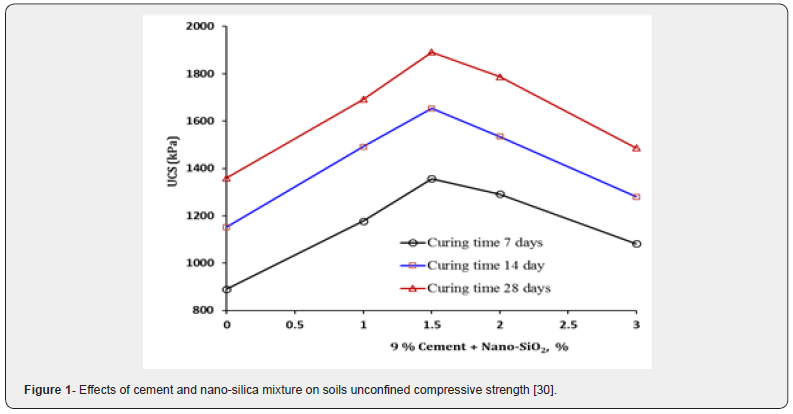
The uniaxial compressive strength test is commonly performed for stabilized soils. Figure 1 shows the effects of a mixture of treated soil with cement and different percentages of nano-silica at 7, 14, and 28 days of curing time. The results indicate that the strength increases with more curing time and cement hydration process completion up to 28 days. Also, with the addition of nanosilica by 1.5% of soil dry weight to the cement-treated soil uniaxial compressive strength increases, it can be inferred that Nanosilica has made the cement-stabilized soil structure denser and more cohesive due to its high specific surface area, fine particles, and cation exchange. With the addition of more nano-silica, the soil strength decreases, which may be due to the agglomeration of nanomaterial particles where the soil particles are separated from each other and the cohesion and integrity of soil particles are reduced so the uniaxial strength of the soil is reduced. results of Bahmani et al., [18], Lei Lang et al., [28] and Thomas and Rangaswamy [29] works, presented in Figures 2 to 4, also confirm this.

Results

i. The addition of small amounts of nanomaterials to the fine-grained soil has significantly increased the strength of the samples. The difference between adding nanomaterials and other stabilizing materials such as lime, cement, etc. in obtaining similar results is on the small amount needed for nanomaterial in comparison to other stabilizers.

ii. As the curing time increases, the uniaxial compressive strength of the stabilized samples increases, since the soil reacts with the nanomaterials synthetically as time goes on the reactions are more complete and samples are better stabilized.

iii. Addition of nanomaterials to cement-treated soils has reduced the percentage of cement use, resulting in reduced environmental pollution.


Tuesday, September 13, 2022

Herbal Nanoparticles A Positive Approach to Treat Leishmaniasis-Review - Juniper Publishers

 Global Journal of Nanomedicine - Juniper Publishers

Abstract

Leishmaniasis known as Kala azar in India is transmitted by the protozoan parasite phlebotomine sandfly. There are more than 20 parasites species found in the world. Since many millions are affected and thousands of deaths occur every year this is a neglected tropical disease. There are more than 90 countries affected which contain developed countries and developing countries. The countries include the Eastern Mediterranean region, South Asian countries, Africa and South America. The WHO is taking preventive measures to eradicate this disease within 2020. There are three forms of leishmaniasis, visceral leishmaniasis (VL) which affects the liver and spleen, muco-cutaneous leishmaniasis which affects the oral cavity and nasal tract and cutaneous leishmaniasis (CL) which affects the skin. The current treatment available for the disease is pentavalent antimony compounds such as sodium stibogluconate, macrolide compound amphotericin B and Alkylphosphocholine miltefosine. In these drugs severe side effects and toxicity is observed. So, the current strategy available for these drugs is treatment through nanomedicine. Nanotechnology has emerged as an alternative drug delivered by nanocarriers with improved bioavailability and reduced side effects, together with other characteristics that help to reduce the toxicity. Nanotechnology has shown enormous growth in recent years in the application of new drug delivery devices to antileishmanial drug to the targeted cells, tissues and organs specifically with minimizing the toxic effects to normal cells. This review attempts to present a comprehensive overview of different nanocarriers that have greatly contributed to improving the efficacy of anti-leishmaniasis drugs].

Keywords: Nanotechnology; Leishmaniasis; Liposomes; Niosomes; Nanoparticles

Introduction

Leishmaniasis is a vector borne disease transmitted by sand flies. Leishmaniasis is a parasitic disease caused by more than 20 Leishmania protozoan parasite specie [1]. Almost 2.5 million people are affected all over the world, 1 -1.5 million are affected by cutaneous Leishmaniasis and in India over 90000 are affected by visceral Leishmaniasis [2]. From 2004–2008 there were an estimated 200,000–400,000 cases and 20,000–40,000 deaths per year globally [3]. The current perspective of the disease is that WHO is trying to eradicate the disease within 2020. WHO is taking preventive measures to eradicate the disease and the parasite vector in spraying of pesticides, protection and prevention against the vectors? The environmental and climatic condition is suitable for the insect vector to grow. It is also found in epidemic and non endemic areas of the country. The main cause of the disease is poor sanitary conditions for the vector to grow using animals as host and this disease is carried over to humans through a bite of the insect.

There are three main types of leishmaniasis: Cutaneous, visceral and mucocutaneous. Since the symptom of the disease are severe with skin lesions which do not disappear for lifetime in cutaneous leishmaniasis, visceral leishmaniasis where liver and spleen and lymph nodes gets damaged and leads to death and mucocutaneous leishmaniasis leads to loss of oral cavity and nasal tract. The first-line drugs for treatment of leishmaniasis include pentavalent antimony compounds such as stibogluconate [4]. The drugs have severe toxic side effects, such as cardiotoxicity and hepatotoxicity. The parasite has developed resistance to this drug. The second-line drugs for treatment of leishmaniasis include macrolide compound amphotericin B [5]. The severe side effects include nephrotoxicity and cardiotoxicity and it is very expensive. Alkylphosphocholine miltefosine was the first approved orally administered antileishmanial drug on the market. The main side effects being related to toxicity to the gastrointestinal tract. Due to teratogenic effects of miltefosine, it is not used for treatment in pregnant women [6].

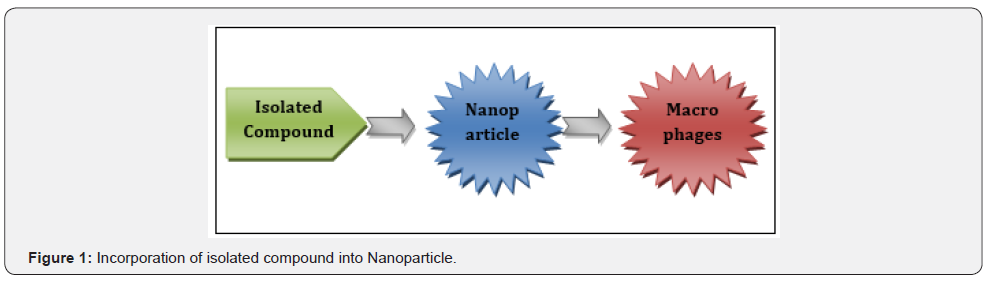
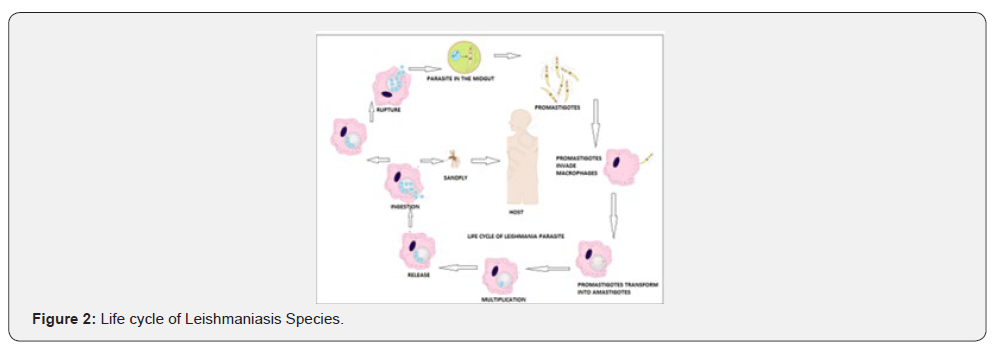
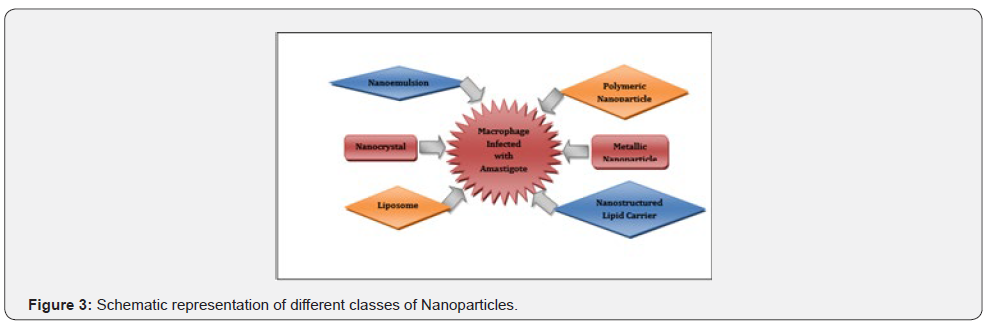
Nanoparticles are materials with sizes in the range of 1-100 nm. Nanostructured materials can reach the targeted site like liver, spleen and bone marrow. Nanotechnology is gaining importance day by day the drug is administered into the cells, tissues and organs directly. Some drawbacks are seen in tablet formulations, emulsions and suspension, the drug does not reach the site and the drug is not administered completely to the targeted site of application. Many diseases like cancer, neurological disorders, vector borne diseases like malaria, filariasis, Leishmaniasis. The drug can be administered to the active site with complete bioavailability through nanoparticles. The isolated compound can be incorporated in the nanoparticle and delivered to the desired site of action through Nanotechnology (Figures 1-3). There are number of methods employed in nanotechnology. In this review we have added few important uses, advantages and significance of nanoparticles.

Global Journal of Nanomedicine

Liposomes

Liposomes are small minute vesicles which are spherical in shape that can be prepared from cholesterol and phospholipids. They are compatible due to their minute particle size, solubility, stability and dissolutions. Liposomes are currently used as DDS for the treatment of different diseases. Most liposomal formulations available in the market target many diseases like cancer and neurological disorders [7].

Nano emulsions and Niosomes

They are mixtures of two immiscible liquids their stability can be enhanced by adding a surfactant (emulsifier). The surfactants are added in these preparations to decreases the interfacial tension and for the creation of small droplets. The emulsifier also plays a significant role in increasing the stability of NE [8].

Solid lipid Nanoparticles

They are prepared from phospholipids, Tweens, polyoxyethylene ethers, and polyvinyl alcohol. The lipids used in their production are stable at room temperature and they have very good potency, high efficacy and low toxicity and side effects [9].

Polymer Nanoparticles

Polymer based nanoparticles may be used in treating infectious diseases such as leishmaniasis, cancer, neurological and vector borne diseases. Since their small size enables them to pass through plasma membrane and biological barriers upon parenteral administration, also enhancing absorption and enabling therapeutic agents to be delivered to infected cells, tissues and organs [10]. Polymer nanoparticles have certain advantages, such as increased bioavailability, compatibility, biodegradability, and release of the encapsulated drug to the targeted site of action.

Biodegradable Nanoparticles

They can be prepared from a variety of materials such as proteins, polysaccharides and synthetic biodegradable polymers. Advantages [11].

i. Desired particle size of the nanoformulation,

ii. Varied properties of the drug i.e. solubility and stability,

iii. Surface characteristics,

iv. Biodegradability and compatibility,

v. Drug delivery profile of the finished product.

Poly-D-L- lactide-co-glycolide

Poly-D-L- lactide-co-glycolide (PLGA) is one of the most successfully used biodegradable polymers. It undergoes hydrolysis in the body to produce glycolic acid and lactic acid. Since glycolic acids and lactic acid are naturally found in the body and participate in a number of biosynthetic pathways, there is very minimum side effects and toxicity with the use of PLGA for the targeted drug delivery [12,13].

Metallic Nanoparticles

Metallic nanoparticles such as gold and silver nanoparticles are now receiving considerable attention in the pharmaceutical field. They exhibit several important facts and different functions i.e., diagnostic and therapeutic efficacy to be combined in a single dosage form [14,15].

Nanocrystals

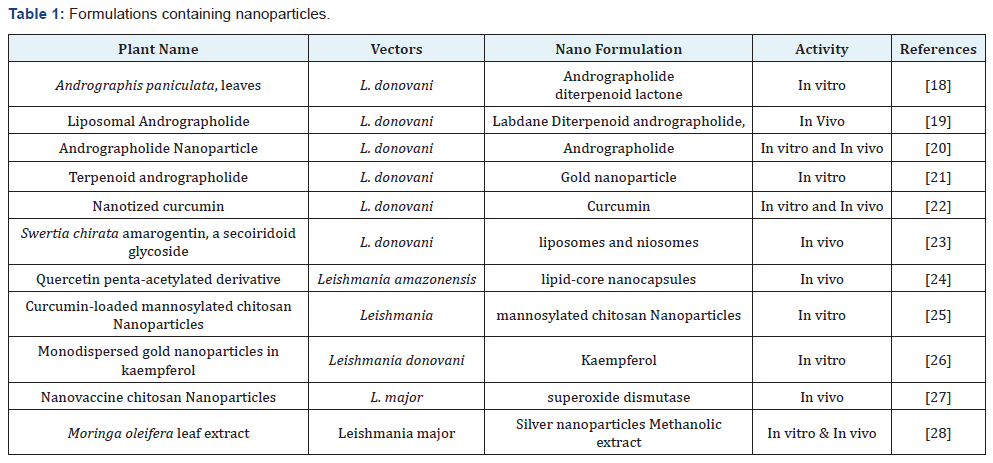
Nanocrystals are pure solid drug particles, particle size in range of 1000 nm. They are usually stabilized by using a polysmeric stearic stabilizers or surfactants. They are 100% drug without any carrier’s molecule attached to it [16,17]. The different dosage forms and formulations available in the form of nanoparticles, liposomes, neosomes etc. are reported in this study (Table 1).

Global Journal of Nanomedicine

Conclusion

The present review focuses on the recent advances in nanotechnology. Initially, the use of nanotechnology was largely based on enhancing the stability, absorption, biodegradability, biocompatibility, bioavailability, dissolution and controlled release of drugs [18-28]. Hence enhancing the efficacy and potency of known natural bioactive compounds through nanotechnology has become a feature trend. The efficacy of these natural products has greatly improved through the use of nanocarriers formulated with metallic nanoparticles like, gold & silver nanoparticles, polymeric nanoparticles together with solid lipid nanoparticles, nanocrystal, liposomes, niosomes, nanoemulsions, biodegradable nanoparticles and lipid core nano capsules, etc. There has been a continued demand for novel natural biomaterials for their quality of being biodegradable, biocompatible, availability, renewable resources, less side effects and low toxicity. Nanotechnology being applied to treat leishmaniasis is a relatively new area of research and still needs to be enhanced with the available data that will arise when nanotechnology will be applied to various aspects to treat leishmanial disease.


Tuesday, January 25, 2022

Assessing the geotechnical properties of soils treated with cement and nano-Silica additives - Juniper Publishers

JOJ Sciences  - Juniper Publishers

Abstract

One of the problematic soil types is fine-grained soils including CL, CH, ML, MH, which are found in construction projects in large amounts. The main problem with these soils in construction projects is their high ductility (inflation and shrinkage) and low strength, so the presence of these soils in the foundation of construction projects will cause hazards, indicating the necessity of utilization of improving methods. Studies conducted on geotechnical engineering effects of nanomaterials show the efficiency of these materials for soil treatment. by adding nanomaterials to the soil treated with cement, the strength of the base soil has been increased and the percentage of cement use has been significantly decreased, reducing the CO2 emissions into the environment, hence reducing the environmental pollution. The increase in soil strength is due to the high specific surface area of nanomaterials and cationic interactions with soil compounds. Research on nanomaterials and fine-grained soil treatment is very promising increasing our understanding of the relationship between nanotechnology and geotechnical engineering. In this research, the effects of nano-silica on the uniaxial compressive strength of fine-grained soils are investigated.

Keywords: Stabilization, Fine-grained soil, Nanotechnology, Uniaxial strength, Nano-silica

Introduction

Fine-grained soils CL, CH, ML, MH are considered as problematic soils present in almost every civil project, especially in roadbeds. Most of these soils are considered as inflatable soils [1-3]. Due to their water absorption ability, in addition to volume changes (so-called swelling), their strength is also significantly reduced, intensifying risks in the foundation of construction projects as well as in the road pavement beds. Therefore, various physical and chemical methods have been used to stabilize this type of soil. The advantages of using nanomaterials can be expressed in reducing environmental damages and gaining the desired strength for the problematic soils [1,4,5].

Additives used previously include lime, cement, bitumen, coal fly ash, etc. One of the basic requirements in construction projects is minimizing the environmental damages by choosing the most proper material, in addition to reducing project costs. Sometimes the land to be recovered covers a wide area such as highways, railways, dams, airports, etc so to overcome the requirements of the designs and to reduce environmental pollution, nano-products can be used as additives to problematic soils [1,6].

Various studies such as Kalkan et. al. [7,8], Taha [9,10], Taha and Taha [5], Arabani et.al [11], Mohammadi and Niazian [12], Changizi and Haddad [13-15] and Choobbasti et al. [16] have shown that the addition of small amounts of nanomaterials to the fine-grained problematic soils increases their strength significantly and minimizes soil swelling. The advantage of adding nanomaterials in comparison to other stabilizing materials such as lime and cement is that the small amount of nanomaterials can result in obtaining similar outcomes, presented in studies like Sobolev et al [17], Bahmani et al. [18,19], Choobbasti et.al [20,21], Choobbasti et al. [22]0.4, 0.8 and 1.2% by weight of the soil, Tsampali et al. [23] and Yao et al [24].

Nanotechnology

Nanotechnology is the manipulation of matter on an atomic, molecular, and supramolecular scale. A more generalized description of nanotechnology is defined as the manipulation of matter with at least one dimension sized from 1 to 100 nanometers. Nanotechnology in a simple definition allows the production of new materials or systems by considering the control of molecular and atomic levels, the controlled arrangement of nanostructures, and the achieving unique properties in the final system. This technology due to its rapid development and proper performance in various fields and the limitations in traditional materials (including bitumen, lime, cement, etc.) has become of great importance for improving soil engineering parameters by introducing the nanomaterials [25,26].

Utilizing the properties of materials at the nanoscale has become very promising in human life. The development of industry and urban planning on one hand and the importance of environmental sustainability on the other hand have challenged soil researchers to find a satisfactory solution for improving the soil engineering properties rather than using existing traditional materials such as cement and chemical mortar (sodium silicate, acrylate, and epoxy). These materials were both expensive and environmentally damaging, so their use has been limited. Therefore, by limited utilization of these materials, other substances with better performance and reduced consequences have been introduced by nanotechnology [27].

Stabilization theory with nanomaterials

The application of nanomaterials for problematic soils is one of the chemical stabilization methods of soils. The nanoparticles with unique characteristics like possessing very small size, high specific surface area, surface charges, and nanoporous can actively react with other soil particles. As a result, their usage even in small amounts in soil modifies soil engineering properties. Various nanomaterials are used for soil-improving purposes, including nano-silica, nano-alumina, nano-clay, nano-carbon, and nanoiron. In this research, the effects of nano-silica in fine-grained soil improvement are briefly discussed.

Effects of nano-silica on improving soil strength

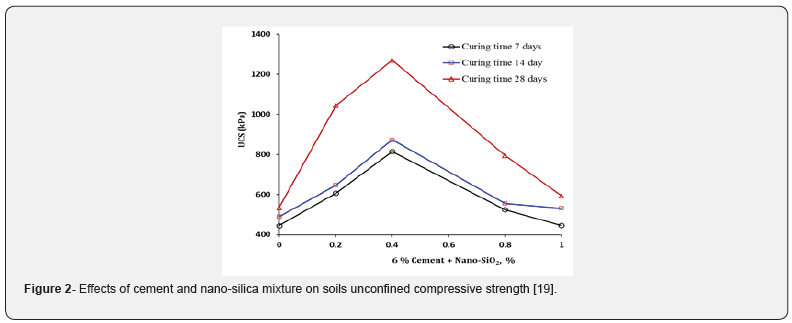
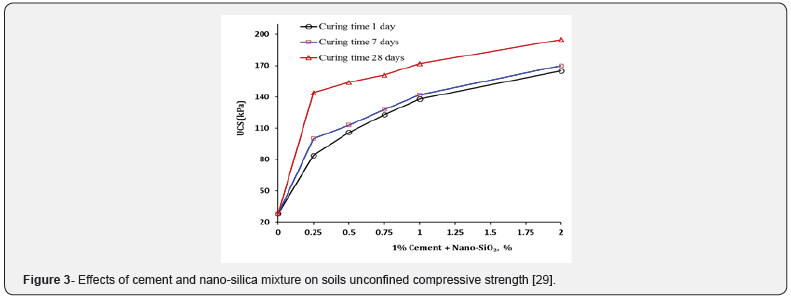
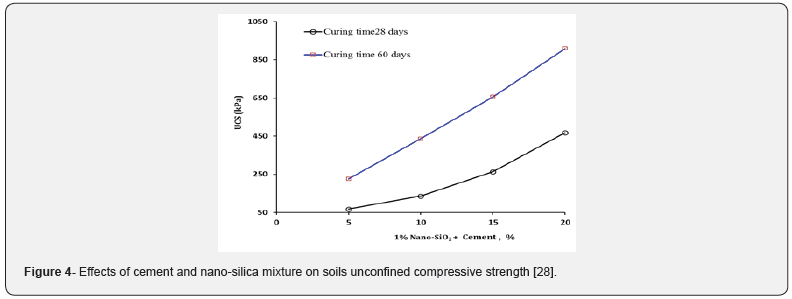
The uniaxial compressive strength test is commonly performed for stabilized soils. Figure 1 shows the effects of a mixture of treated soil with cement and different percentages of nano-silica at 7, 14, and 28 days of curing time. The results indicate that the strength increases with more curing time and cement hydration process completion up to 28 days. Also, with the addition of nanosilica by 1.5% of soil dry weight to the cement-treated soil uniaxial compressive strength increases, it can be inferred that Nanosilica has made the cement-stabilized soil structure denser and more cohesive due to its high specific surface area, fine particles, and cation exchange. With the addition of more nano-silica, the soil strength decreases, which may be due to the agglomeration of nanomaterial particles where the soil particles are separated from each other and the cohesion and integrity of soil particles are reduced so the uniaxial strength of the soil is reduced. results of Bahmani et al., [18], Lei Lang et al., [28] and Thomas and Rangaswamy [29] works, presented in Figures 2 to 4, also confirm this.

Results

i. The addition of small amounts of nanomaterials to the fine-grained soil has significantly increased the strength of the samples. The difference between adding nanomaterials and other stabilizing materials such as lime, cement, etc. in obtaining similar results is on the small amount needed for nanomaterial in comparison to other stabilizers.

ii. As the curing time increases, the uniaxial compressive strength of the stabilized samples increases, since the soil reacts with the nanomaterials synthetically as time goes on the reactions are more complete and samples are better stabilized.

iii. Addition of nanomaterials to cement-treated soils has reduced the percentage of cement use, resulting in reduced environmental pollution.


To Know more about JOJ Sciences

Click here: https://juniperpublishers.com/index.php  

Wednesday, November 10, 2021

The Copper-Calcium Hydroxide Nanoparticles Galvanophoresis for Cleans-Ing Spaces of the Root of the Tooth - Juniper Publishers

 Dentistry & Oral Health - Juniper Publishers

Abstract

Have lead a clinic-laboratory estimation of a new way purification of roots spaces of a teeth at endodontic treatment chronic apical periodontitis with the help of nanoparticles copper-calcium hydroxide (CCH) galvanophoresis. In research with participation of 60 patients by a double-blind method have estimated quantitative dynamics and structure allocated of root channels of a single-root teeth of a liquid within 2 weeks with use of three different galvanic couple. Have compared efficiency of decontamination root channels at the standard report irrigation and CCH galvanophoresis. It is revealed that intensity of allocation of a liquid from root channels at CCH galvanophoresis is gradually increased to 4 - to 5 days, and then reduced to 10 - to 12 days. At an allocated liquid there are proteins and carbohydrates, characteristic pulps for the rests and a biofilm. CCH galvanophoresis suppresses aerobic and anaerobic micro-flora, then irrigation more effectively: on the average on 22,0 % for 6 day and on 65,5 % for 12 days. Modern endodontics the new paradigm representing a root of a tooth as porous biological structure that will allow to increase quality of treatment due to use nanotechnologys is necessary.

Keywords: Apical periodontitis; Nanotechnology; Treatment of the root channel; Endodontic irrigation

Introduction

Individual distinctions of anatomy of root channels of a teeth, variability of their number, the form and degree of passableness remain the reason of low efficiency endodontic treatments [1-3]. However, besides this problem there is also another – presence in dentine a root of the big number of dentine tubules. On 1 mm2 pathogenic or conditionally pathogenic microflora (biofilm) is necessary the area of a wall of the root channel up to 80 000 apertures such tubules with diameter near 800 nm, in which persist. This biofilm, remote for irrigants, results not only in formation of the chronic center odontogenic infections, but also to demineralization of a root dentine [4, 5]. For today there is up to the end unsolved a question about effective purification systems of root channels of a teeth and dentine tubules a root from the albuminous rests of a pulp, components of a biofilm and products of its ability to live. Be-sides action antiseptic irrigants is limited on time and a degree of their penetration in dentine tubules [6,7].

Modern ways of purification of endodontic spaces, such as use irrigant by sodium hypochlorite and other antiseptics, photo-dynamic inactivation microflorae, influence by ultrasound or cold plasma, time obturation antiseptic materials, do not allow to clear on 100 % porous of dentine structure a root of the albuminous rests and microflora [8,9]. For treatment apical periodontitis of a teeth with difficultly passable root channels professor A. Knappwost (Germany, 1998) was offered a method "depotphoresis" a complex ionic preparation – copper-calcium hydroxide (CCH) [10,11]. Its updating is galvanophoresis at which instead of the electric device use galvanic pairs (galvanic pins) [12]. Particles CCH having the size 50 - 100 nm, under action of a galvanic current easily will penetrate into spaces of a root of a tooth, switching and dentine tubules. Due to the chemical properties, they promote disintegra-tion and destruction of biofilm extracellular matrix, chitinous environments microbic dispute, lysed the rests of cel-lular and fiber elements of a pulp. Being late in dentine tubules on long term, they actively destroy bacterial toxins, occlusive themselves narrow dentine tubules.

Galvanic pins in depth of the root channel of a tooth with CCH paste become a source of a galvanic current with potential near 0,5 V in and size near 0,1 mA. Such current allows slowly, but in regular intervals and to big enough depth to deliver CCH nanoparticles in dentine tubules and also to cover them walls macro channel, additional channels and sleeves apical deltas. Procedure is painless, and during its reali-zation the tooth continues is high-grade to function. Being engaged on an extent more than 15 years studying of a method CCH galvanophoresis, we count, that its opportunities undervalued modern by endodontics. In particular, clinical supervision has shown, that in the begin-ning of realization of galvanophoresis procedures occurs active purification systems of the root channels, accompa-nying deproteinization and decontamination a root spaces of a tooth. The purpose of research: a clinic-laboratory estimation and a substantiation of a method purification a root spaces dentine of a tooth at endodontic treatment of apical periodontitis with the help by copper-calcium hy-droxide galvanophoresis.

Material and Methods

According to the purpose of research, have formulated the following tasks: (1) - at chronic apical periodonti-tis to study dynamics of allocation of a liquid from root channels of a teeth at realization in them CCH galvanophore-sis, and also its qualitative structure; (2) - to compare this dynamics at realization CCH galvanophoresis to applica-tion of three different galvanic pairs, distinguished in the size of potential of a galvanic current; (3) - to compare in-fluence of procedures CCH galvanophoresis and the standard report irrigation on microflora of root channels to the help of a microbiological method and electronic microscopy.

Research have lead a double blind method with participation of specially picked up patients – volunteers for which clinically and radiologically was diagnosed chronic fibrous apical periodontitis of a single-root teeth with kept crowns (52 cutters, 8 canines). On intraoral roentgenograms observed only expansion periodontal cracks or resorp-tion of a cortical plate. For reception of the most representative data in research with destructive forms of a periodon-titis or patients did not participate in a stage of its aggravation. Among patients appeared 24 men and 36 women in the age of from 22 till 56 years.

In total – 60 person which have any way united in 4 groups (on 15 people in every-one). After identical in all cases of tool processing of root channels with the help of rotating nickel-titanic tools ap-plied various ways cleansing systems of root channels. Ways were coded in a computer and are unknown to the head of research down to an analysis stage of the received data. In I group of patients applied the standard report irrigaton root channels with use of solutions sodium hypochlorite - 5,25 %, EDTA - 17 %, chlorhexidine bigluconate - 0,2 %, a citric acid - 50 %, distilled water and ultrasonic activation. After that root channels sealed up, that is used one-session a method of treatment. In other groups applied a new way cleansing root channel with the help CCH galvano-phoresis [12]. It consists of that root channels unitary washed out 17 % solution EDTA and distilled water.

Then in them on 2/3 filled CCH paste and entered a galvanic element representing a galvanic pair (Figure 1). Intra radix part of an element as a needle (a bimetallic pin) consist of an alloy copper, and extra radix (head) – from other metal. In II group of patients for extra radix parts used chemically pure zinc, in III group – an alloy of aluminium and in IV – an alloy of magnesium. Real potential of elements determined with the help by voltmeter directly in a tooth after their introduc-tion in root channels. In wellhead a part of the channel placed identical on the sizes of foam balls for the subsequent gathering allocated in result electric osmosis from the root channel of a liquid. A cavity closed by time light-curing material so that to provide contact of the head of a galvanic element to an oral liquid. In quality CCH applied a prepa-ration "Cupral" firms «Humanchemie GmbH» (Germany). Patients II - IV groups daily visited the doctor during 2 weeks except for revival. Each day at them deleted a time seal and foam balls. Last placed about a sterile plastic glass and carefully washed out its distilled water. A glass with a washing liquid dried up on air at 200 C. Remaining dry rest weighed on analytical weights, and also subjected to the spectrometer analysis. Into a cavity of a tooth entered a new foam ball and closed a time seal before the follow-ing visiting.

All research in these three groups last 12 day (excepting revivals) and began on Mondays. On Wednesday of 1 week, Monday and environment (Wednesday) of 2 weeks in root channels changed CCH paste for a new portion and entered a new galvanic element. On Saturdays of 1 both 2 weeks a galvanic element and CCH paste from channels took and took tests of contents of the channel for microbiological research. On Sunday between two weeks a galvanic element took from the root channel and in it left only CCH paste. At 3 patients under indications a tooth for realization of further their research having chopped off on were removed an electronic microscope. At the patient who was not including in one of groups, – without realization of any procedures root channels cleansing. At two others – right after realizations of those procedures: in II group – after the report irrigation (1 tooth) and in III group – after realization CCH galvanophoresis for 6 day (1 tooth). All pa-tients were warned about necessity of removal of these teeth and gave the consent to participation in research.

Spectra of absorption by the dry rest of the liquid allocated from root channels, measured a method of the broken full internal reflection. The analyzed area of wave numbers made from 400 up to 4000 sM- 1. A spectrum of absorption of air containing carbonic gas and pairs of water, automatically subtracted from a spectrum of a sample. Infra-red spectra of absorption registered on an infra-red spectrometer «Nicolet iS10» («Thermo SCIENTIFIC») with automatic record of a spectrum in the field of 400-4000 sM- 1 at speed of 64 sM- 1/ min. Processing of spectra spent in the computer program "OMNIC-2". For microbiological research a fence of a material spent the sterile paper pins impregnated with a physiolog-ical solution. A pin placed for 10 seconds in the root channel, and then – in the transport environment for delivery in laboratory. Colonies of microorganisms raised in Petry cups during 2 day in thermostat at temperature 36,70 C: aero-bic cultures – on Endo environments, Saburo, Columbia, М118 and the Streptococcal environment. Anaerobic – in bifidus environments and Schaedler. Colonies identified up to a sort and counted up. For research of the removed teeth with the help of an electronic microscope their roots split along root channels. Chipped carefully ground. Research spent in a tunnel electronic microscope «Tecnai G2 20F U-TWIN STEM» at accelerating voltage 20 kV. The received data having normal distribution, processed by variation statistical method with application of criterion “t”. Research is approved by ethical committee of the Tver medical university. All surveyed gave the written informed consent to participation in research.

Results and Discussion

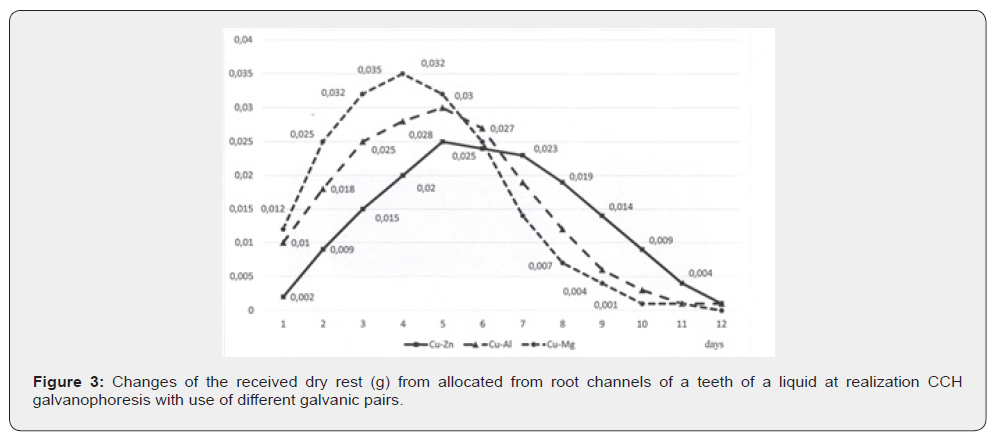
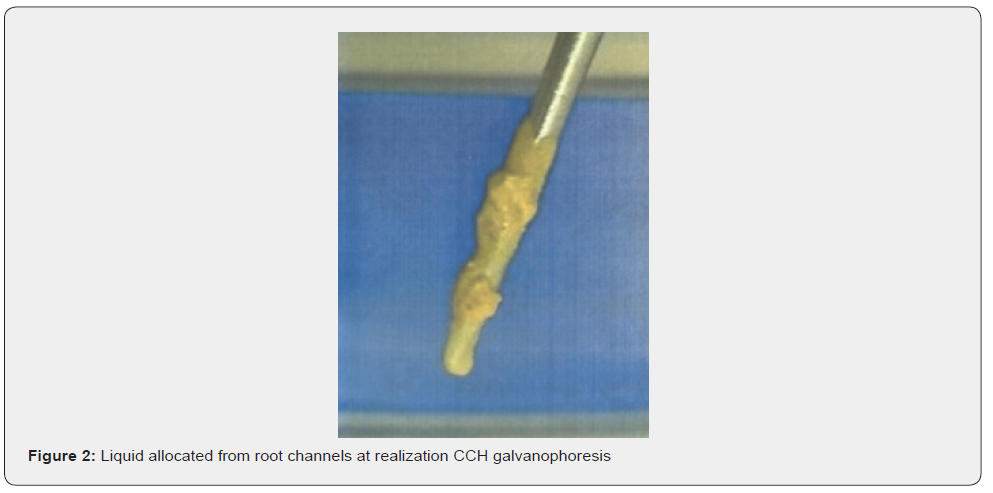
The potential of the used galvanic elements differed (Table 1). In the least potential the galvanic pair «copper - zinc», and the greatest - «copper - magnesium» had. Distinction between theoretical and real values of potential speaks electroresistance of fabrics of a tooth (2 - 10 ohms) and presence CCH at root channels. In clinic under influence CCH galvanophoresis, since the first day, we observed active allocation in a cavity of a tooth gel with a yellow shade (Figure 2). After drying a liquid received dense vitreous weight which subjected to the analysis. In the first day’s process of cleansing most actively went in those teeth where used galvanic couples «copper - magnesium» with a maximum of this activity for 4 day (Figure 3). Hardly less active it was in a tooth where for CCH galvanophoresis applied galvanic pairs «copper - aluminium» with a maximum on 5 days. And practically weight of the dry rest of a liquid down to 5 day in direct ratio accrued at application galvanic pairs «copper - zinc». After the expiration 4 - 5 day weight of the dry rest was slowly reduced at application of all galvanic pairs: about 12 day in a teeth with elements «copper - zinc», about 11 day - «copper - aluminium» and about 10 day at application galvanic pairs «copper - magnesium».
The analysis of an infra-red spectrum of the dry rest of a liquid, liberated from root channels of a teeth, has shown presence in an analyzed sample of an organic component (Figure 4). Maxima testified to it in zones of the spec-trum, the appropriate 2917 and 2852 sM- 1 (symmetric and asymmetric fluctuations methylene groups). It is con-firmed also with a strip at 1397 sM- 1, appropriate to deformation fluctuations of СН-groups. Besides appeared, that the researched material contains in the structure also a carbohydrate component. It is known that presence of a plenty hydroxyl groups in structure of carbohydrates results information of system of hydrogen connections specific to everyone connection. On an infra-red spectrum wide and intensive enough strip testified to it in the field of wave numbers 3500 - 3200 sM- 1. In a spectrum of absorption weaker strips of absorption are visible in 1747 and 1651 sM- 1, characteristic for valent fluctuations carbonyl groups S=O which alongside with OH-groups are present at carbohydrates more often. In a spectrum of absorption of 862,9 sM- 1 were determined the strips appropriate to sulphidic groups, present in polysaccharides. Besides there were strips of absorption in the field of 1000-1100 sM- 1 caused by fluctuations of a skele-ton of a molecule (pyranose rings).
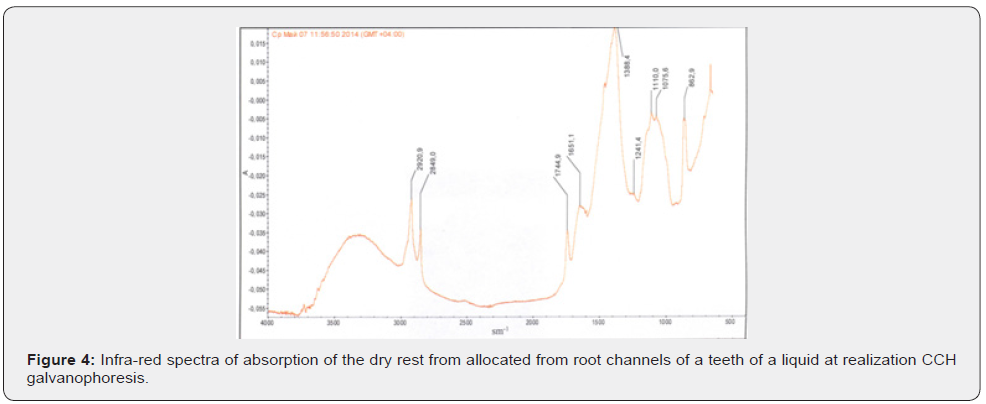
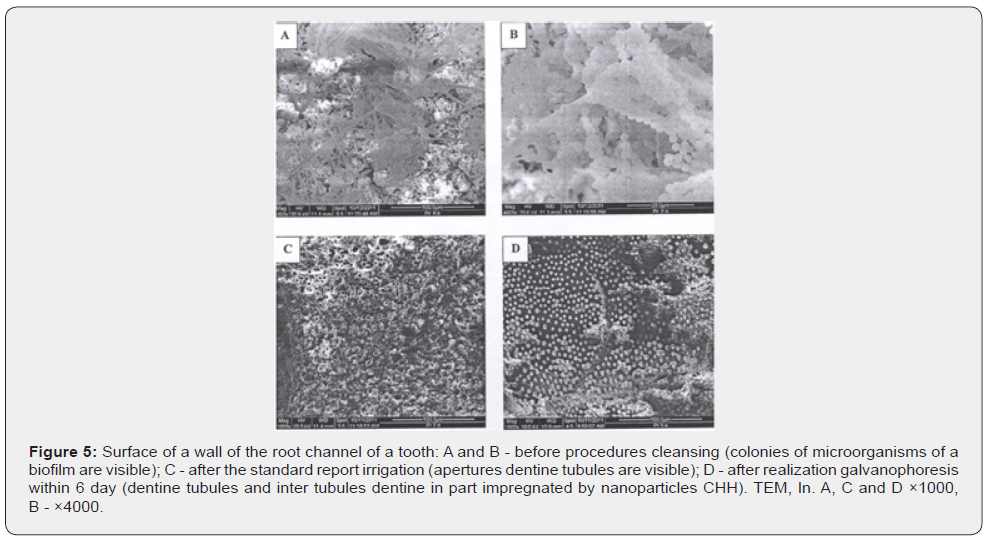
Thus, the liquid, liberated from root channels of a teeth, besides albuminous components contain also the rests extracellular polysaccharides, being an obligatory component of a biofilm. We believe, that at CCH galvanophoresis from the root channel of a tooth the albuminous rests of microflora, and also fabrics of a pulp and contents den-tine tubules are actively allocated. It is marked, that the proportion of a carbohydrate component in the dry rest was gradually reduced with increase of duration galvanophoresis, that, apparently, corresponded decontamination systems of the root channel of a tooth. The kept albuminous component specified longer process of deproteinization. This conclusion also is confirmed with results of electron-microscopic research. Without procedures cleansing on walls of root channels found out the numerous colonies of microorganisms closing apertures of dentine tubules (Figure 5a, 5В). The ambassador irrigation on walls of the root channel of microbe colonies became less and on electron diffraction apertures of dentine tubules (Figure 5c) were precisely visible. After 6 day of galvanophoresis apertures of dentine tubules visualized under an electronic microscope for the account contouring their walls CCH particles (Figure 5d). Besides sites inter tubules dentine, in part CCH impregnated were revealed. Apparently, it is sites which electroresistance is reduced due to microbe demineralization.
The microbiological analysis of contents of root channels of a teeth (Table 2) has shown, that in them up to cleansing prevails anaerobic microflora. The average of anaerobes colonies exceeded those among aerobes on 18,5 % (р<0,05, t=2,7). From aerobic forms it is most of all revealed Enterococci, on the average on 25,0 % it is less - than Streptococci and on 39,3 % - Peptokokki. The ambassador irrigation root channels of a teeth the reduction of number of anaerobes colonies has made on the average 52,5 %, and aerobic microorganisms – 58,3 % (р<0,05). At the same time at realization CCH galvanophoresis during 6 and 12 day these numbers, accordingly, have made 68,5 % and 66,7 % (р<0,05). And reduction of number of colonies of aerobic forms has made 93,2 % and 90,2 %, accordingly (р<0,05). That is, appeared, that pro-cedure of CCH galvanophoresis is more effective irrigation on the average on 22,0 % at duration of 6 day and on 65,5 % at duration of 12 days thus for 12 days with the help CCH galvanophoresis was inactivated on the average about 92 % of microflora of root channels system.

Conclusion

The carried-out research confirms the known data that under influence CCH galvanophoresis occurs lysis fossils of a pulp and a microbe biofilm in spaces of root of a tooth. Under influence of powerful process electro osmosis of proteolysatis it is allocated from macro channel in a cavity of a tooth that is it is carried out deproteinization and decontamination not only systems of root channels, but also dentine tubules. The algorithm of CCH galvanophoresis includes double replacement in root channel CCH and a galvanic element during 10 - 12 days. The investigated way of cleansing root channels spaces of a teeth when it terms of treatment allow, can be effective alternative to known reports irrigation at endodontic treatment of apical periodontitis. Besides the spent research shows, that modern endodontic for qualitative treatment of a teeth the new paradigm representing a root of a tooth as porous biological structure is necessary. Such approach assumes development of essentially new technologies of cleansing all spaces of a root with the help by nanotechnology and mechanisms of delivery medical products nanoparticles in the remote sites of spaces root dentine.

To Know more about Dentistry & Oral Health


To Know more about our Juniper Publishers

Click here: https://juniperpublishers.com/index.php  

Tuesday, June 1, 2021

Opinion on The Development of Nanotechnology for Treatment of Coronaviruses - Juniper Publishers

Drug Designing & Development - Juniper Publishers


Opinion

The pandemic of innovative coronavirus disease (COVID-19) is an unparalleled public health danger. The disease was discovered in late December 2019 in Wuhan, Hubei Province, China, with an exceptionally high rate of spread. The virus that causes COVID-19, identified as Severe Acute Respiratory Syndrome Coronavirus 2 (SARS-CoV-2), has infected over 118 million people and caused 2.5 million deaths in 216 countries, with the numbers continuing to rise. There are currently no officially licensed vaccines or antiviral drugs for the treatment or prevention of COVID-19. Numerous therapeutic techniques have been tried since its discovery, such as the use of repurposing drugs including broad-spectrum antivirals, immunomodulators, plasma therapies, protease inhibitors, and nucleoside analogs, among others. However, these methods have not demonstrated substantial clinical benefits and are only used to relieve symptoms. Nanotechnology has evolved in recent decades, allowing us to build new nanomaterials and progress in the application of new technical tools.

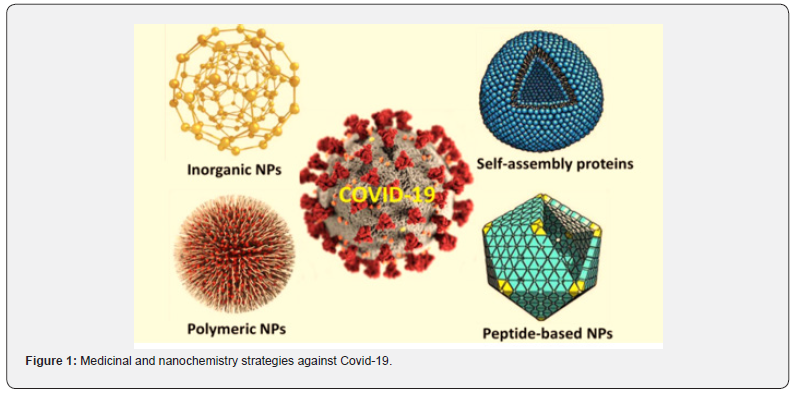
Nanotechnology-based clinical solutions are a potential way to get around the limitations of COVID-19 prevention, diagnosis, and treatment [1]. Nanomaterials with antiviral activities may be used in personal protective equipment and disinfection procedures to avoid SARS-CoV-2 infection [1], as well as nanomaterials-based vaccines or immunomodulators, to control this disease [1,2]. Nanomaterials can also be used in diagnosis to develop simple, fast, and low-cost detection methods for SARS-CoV-2. For care, nanosystems are used to deliver antiviral and biomolecules to the pulmonary system in a controlled manner, for example, to prevent viral replication or prevent the growth of viral particles [1]. Nanotechnology has the ability to have major benefits in the treatment of emergency viral diseases like COVID-19 [3]. Nanoscale structures, as opposed to macro and micro components, have different physicochemical and biological properties, as per the Food and Drug Administration (FDA). Drug encapsulation in nanocarriers, for example, allows for more precise monitoring of drug release in target sites, increased biocompatibility, and decreased toxicity in healthy tissues [4]. Nanomaterials also prevent infectious infection from the air and interaction with contaminated objects, which could be particularly useful in the sterilization of protective equipment and in a hospital setting. Nanomaterials also have optical and electrical properties that have been studied extensively in the development of diagnostic tools, such as point-of-care (POC) biosensors. Nanoparticles, which allow us to identify the study at low concentrations, may boost the sensitivity of detection. These techniques aid in the rapid diagnosis and exclusion of SARS-CoV-2 infected individuals, as well as the treatment of those infected. Nanomaterials’ interactions with biological interfaces are the framework for their future (bio) medical applications [5]. By allowing new and improved ways of prevention, diagnosis, and treatment, nanotechnology opens up new possibilities in the battle against COVID-19 based on the properties and advantages of nanostructured systems (Figure 1).

Gold nanoparticles (AuNPs) are one of the most appealing nanomaterials because they have optoelectronic properties that can be investigated by a number of biosensors, including spectrofluorimetric, electrochemical, and plasmonic detection systems [6]. AuNPs have been commonly used to mark the target molecule in lateral flow assays (LFAs), resulting in a color shift in the test zone that can be read by the naked eye for qualitative results or analyzed by a smartphone that can assess the concentration of the target from a recorded picture [7].

LFAs biosensors have recently been used to diagnose COVID-19 and are now being distributed to healthcare systems to allow for highly centralized testing [9]. Other colorimetric monitoring systems, in addition to LFAs, investigate the redshift in the LSPR band of AuNPs when they collate. The most main characteristic strategy is to functionalize these nanomaterials with biomolecules, which causes the AuNPs to aggregate and cause a color change in the solution when they bind to the target molecules (Figure 2). Importantly, because it is based on the optical properties of AuNPs, this colorimetric assay can significantly contribute to COVID-19 management by providing a quick and simple diagnosis.

Nanomedicine is a valuable resource in the fight against innovative coronaviruses, but its application in clinical practice still faces significant challenges, most notably in vivo behavior, nanocarrier toxicity, and industrial scale production. Other critical issues include a lack of understanding of the specific characteristics and aspects of disease physiopathology, the processes involved in the nano-biointerface, as well as cytocompatibility, safety, and regulatory issues. COVID-19-specific features and the physicochemical properties of nanosystems can be investigated and used to design customized nanostructures for specific therapeutic purposes, with the goal of neutralizing the current threat to global public health and developing more sustainable nanotechnology-based approaches. Although these factors have not yet been thoroughly investigated, they are critical for the safe and effective application of nanotechnologies to combat SARSCoV- 2 infection. 

To Know more about Drug Designing & Development

To Know more about our Juniper Publishers

Click here: https://juniperpublishers.com/index.php 
  

Thursday, April 15, 2021

Exosomes and Exosome-like Nanoparticles: Applications for Biomedicine - Juniper Publishers

Organic & Medicinal Chemistry - Juniper Publishers

Abstract

With the rise of the average life expectancy in the last century, the prevalence of life-threatening diseases has greatly increased. Thus, the need for effective, cost efficient and easy to produce therapeutic systems, combined with recent technological advances, boosted nanotechnology research. Since their discovery more than 30 years ago, naturally occurring exosomes are an increasingly interesting vehicle for drug delivery, with the disadvantage that they are difficult and expensive to extract, characterize and their encapsulation efficiency is poor. Liposomes, known since the mid-60’s, can be used for various types of therapies for their capacity to encapsulate almost any molecule, with efficient production and encapsulation processes, but are less biocompatible. A new type of systems, exosome-like nanoparticles, that combine the advantages of these two systems, mitigating their limitations, show potential to be excellent therapeutic options with almost no side-effects.

Keywords: Nanotechnology; Liposomes; Exosome-like; Exosomes; Nanoparticles

Introduction

In recent decades, in the nanotechnology field, many new approaches have been developed, in basic and clinical research, to obtain a better diagnosis and an early effective therapy for the most debilitating diseases such as cancer or neurodegenerative disorders [1]. Extracellular vesicles are naturally occurring molecular vehicles, having an important role in the transport of molecules-being misfolded proteins to be degraded in the lysosome, or nucleic acids - and in intercellular communication [2,3]. Extracellular vesicles can be divided into three subpopulations according to their size and origin: exosomes, Microvesicles and apoptotic bodies [1]. These vesicles naturally do what some of the industrially manufactured nanoparticles aim to do: the encapsulation of molecules and their controlled release into a target cell [4]. Exosomes are becoming an increasingly interesting vehicle for the delivery of drugs due to their biocompatibility, capacity to cross biological barriers and to encapsulate hydrophilic and lipophilic molecules [3,5-7]. However, exosomes can also be difficult to extract and to characterize, and the costs of extraction and encapsulation of bioactive molecules can be high. Moreover, the encapsulation process can be difficult, very time-consuming, and can lead to poor encapsulation efficiencies [4.8].

Similarly, to exosomes, liposomes have a bilayer of lipid molecules, that can be synthetic or natural occurring ones, on the membrane of cells or vesicles [9,10]. This type of intensively studied synthetic vesicles have been used for various types of therapies, from imaging to the treatment of a wide range of diseases, since they can encapsulate almost every molecule [4,11]. These nanocarriers, while similar to exosomes to a certain degree, have a simple and efficient production process, and can encapsulate bioactive drugs more efficiently than exosomes, with the drawback that they can be far less biocompatible than these natural occurring nanovesicles [9]. Mitigating the drawbacks of these two systems, while retaining their excellent properties, exosome-like liposomes have been recently considered for therapy, with some very interesting systems-that can encapsulate biomolecules efficiently and deliver them safely in the targeted area - have been developed through various types of approaches. These can be considered as some of the most promising drug delivery nanoparticles, and more research in the area may lead to a more efficient and safe delivery of biomolecules.

Advantages and drawbacks of exosomes in drug delivery

Exosomes are the smallest in the extracellular vesicle class [12], with a diameter of 30 to 150 nm, which is why they are considered nanovesicles, are highly heterogeneous and with different molecular and charge compositions, depending on the type of producing cell [2], its structure is formed by a lipid bilayer with associated proteins on its membrane [13]. Exosomes can be produced by almost all human cells [14], wherein the mechanism is maintained for several classes of organisms. Exosomes can also be considered a waste disposal mechanism [1]. For drug delivery, exosomes have some advantages, one of which is to encapsulate lipids, proteins, DNA, mRNA, non-coding RNA or other bioactive substances [1,12], they can also circulate in biofluids and thus transport messages from one cell to another; when the exosome reaches the recipient cell, it can modify its behavior depending on the message received. Exosomes are an efficient platform for drug delivery, due to their biodistribution, biocompatibility and low immunogenicity. Moreover, they can also cross most biological barriers, allowing the delivery of biomolecules in all organs of the human body [12].

Advantages and drawbacks of liposomes in drug delivery

Liposomes have a spherical structure with one or more phospholipid bilayer [9,10], which can be classified according to size (small, large, and giant); number of bilayer (unilamellar, oligolamellar and multilamellar) and charge (neutral; anionic and cationic) [10,11]. While liposomes’ size can range from 50 to 200nm, they are more efficient when they have 100 to 140nm since they have a longer half-life in the blood stream. Moreover, these particles are not so easily detected by the immune system and are relatively more difficult to be recycled or eliminated from the body [10,15]. Liposomes can encapsulate antimicrobial drugs, nucleic acids, and antioxidants, within their bilayer or their aqueous area. This delivery is directed and controlled [16]. Since liposomes can be made by various types of naturally occurring or synthetic lipids, the toxicity of the system must be extensively studied, often limiting the use of these systems for various types of therapies [9,11].

Exosomes-like liposomes: fusing the advantages of liposomes with exosomes.

Exosome-like nanoparticles often have a similar size to liposomes (60nm–150nm) [17,18], joining the advantages such as the ease of production, tuning of the formulation, and encapsulation efficiencies of liposomes with the biocompatibility, longer circulation time, stability, and ability to cross biological barriers better than exosomes. Moreover, the cytotoxicity of this type of nanocarrier is often negligible since their composition is like naturally occurring exosomes. This type of nanoparticles can be obtained from various processes, such as the fusion of liposomes with exosomes [19], their extraction from plants [20,21], or serial extrusion of animal cells [17,22,23]. Exosomelike vesicles from plants are some of the most like exosomes, as they have a composition very similar to exosomes from human cells. More than that, their encapsulated molecules are like the ones found in animal exosomes, but differ in number, containing a lesser quantity of both nucleic acids and proteins than the animal ones [24], being non cytotoxic and being able to deliver biomolecules for the treatment of various diseases such as brain tumors [25].

Conclusion

Exosome-like nanoparticles, while newly discovered, have already been the target of multiple studies, with some interesting results [1,2]. In fact, their biocompatibility is excellent, and they can effectively encapsulate a fair number of biomolecules, being an interesting therapeutic option on their own, when they are extracted from plants. Studies in animals prove that they can effectively bioaccumulate in the desired therapeutic area and attenuate some of the most debilitating diseases as brain tumors or cancer [2,11,15]. While liposomes and exosomes remain more commonly studied and used systems for therapy, the advantages of exosome-like nanoparticles cannot be ignored as they continue to rise in interest among the scientific community.

To Know more about Organic & Medicinal Chemistry

To Know more about our Juniper Publishers


How Does the Multi-Disciplinary Team Impact Chronic Kidney Disease Management? - Juniper Publishers

  Urology & Nephrology - Juniper Publishers Abstract Chronic kidney disease (CKD) is a condition where a gradual kidney function loss le...