Showing posts with label Fracture. Show all posts

Tuesday, June 7, 2022

Fractures of the pelvis: Complications and Mortality in a Sub-Saharian Hospital - Juniper Publishers

 Orthopedic & Orthoplastic Surgery - Juniper Publishers

Abstract

Objective: the aim of this work was to study the prognosis of pelvic fractures in the orthopedic-traumatology department of Idrissa Pouye General Hospital.

Materials and methods: We performed a retrospective, descriptive and monocentric study over a period of 13 years. We included in this study, hospitalized patients or not for fractures of the pelvis (151 cases). We estimated the prognosis of these fractures by assessing their mortality, their complications and their sequelae.

Results: One-third of the patients died (33.88%). Early complications were dominated by vascular lesions (14.80%). The correlation between the lesional type and the occurrence of vascular complications was statistically significant. However, there was no correlation between lesion site and urinary complications.

Conclusion: The prognosis of pelvic fractures is characterized by high early mortality in our country. This high rate of death is related to immediate complications and associated lesions responsible for polytrauma.

Keywords: Pelvis; Fracture; Urinary complications; Polytrauma

Introduction

Fractures of the pelvis are frequent, of variable severity, ranging from benign parcel fractures to major forms breaking the continuity of the pelvic ring, for which the mortality rate still remains high. Road traffic accidents are the largest contributors to these injuries [1-4]. The prognosis of these fractures can be vital from the outset because of the frequency of hemorrhagic shock, related to vascular lesions or bleeding of fractured bone slices, and to the risk of infection favored by the opening of the fracture and associated intra-pelvic visceral lesions (rectum, bladder, urethra). Functionally, the prognosis remains reserved because of the frequency of nerve sequelae, genitourinary and especially osteoarticular resulting from lesions not or insufficiently reduced and fixed. The goal of this work was to estimate the prognosis of pelvic fractures in the orthopedic-traumatology department of Idrissa Pouye General Hospital.

Material and Methods

We performed a retrospective, descriptive and monocentric study over a period of 13 years. We included in this study, hospitalized patients or not for fractures of the pelvis (151 cases). We also add lifeless body deposits with pelvic fractures (32 cases). Patients who had an isolated fracture of the acetabulum were not included in this study. The studied population consisted mostly of men (n = 125) with a sex ratio of 2.15. The average age was 33.87 years old ± 17.52. Pelvic fractures were more common in young adults (50.27%). The radiological data were assessed by Tile’s classification and type A lésions were predominant (63.38%). We estimated the prognosis of these fractures by assessing their mortality, their complications and their sequelae.

Results

Mortality

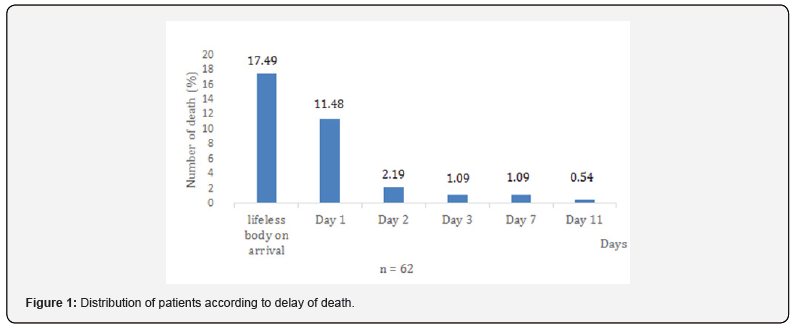
One-third of the patients died (33.88%; n = 62). The lifeless body deposits were the most common (17.49%). Among the patients arrived alive, mortality was higher within 24 hours (11.48%). It decreased gradually over the course of the days (Figure 1). Autopsy was performed in all cases of death and found 32.24% of deaths from severe polytrauma, 1.09% from pulmonary embolism and 0.54% from septicemia.
Among the severe polytraumatic patients who died:

a. a severe cranial trauma was noted in 10.38% of cases;

b. a thoracic contusion with hemothorax of great single or bilateral abundance was observed in 15.84% of cases;

c. Abdominal contusion was noted in 6.55% of cases, including 2.76% ruptures of the spleen, 3.82% liver fractures and 1.64% renal bruising;

d. pelvic vascular lesions were observed in 12.02% of cases;

e. and fractures of the lower limbs were also noted in 12.02% of cases including 5.46% open fractures.

Complications and sequelae

Early complications
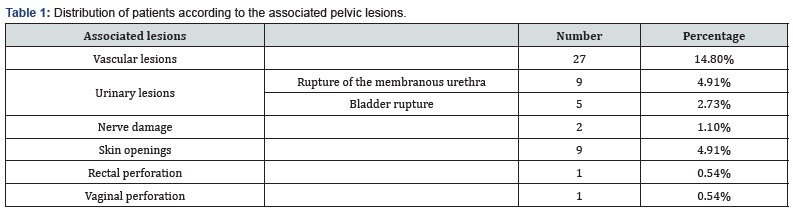
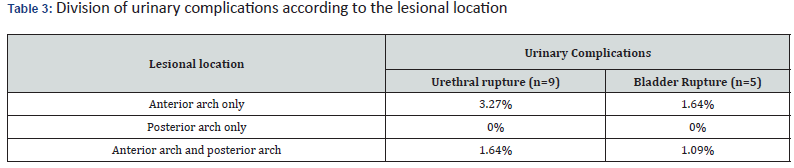
They were dominated by vascular lesions (14.80%) followed by urinary lesions (7.64%). Of these, rupture of the membranous urethra was the most common (4.91%). Cutaneous opening was noted in 4.90% of patients (Table 1). Vascular complications were more common in type C lesions (7.65%). The correlation between the lesional type and the occurrence of vascular complications was statistically significant with a p-value= 0.0025 (Table 2). Lesions of the anterior arch were noted in all patients with urinary complications (7.65%). Isolated injury of the anterior arch was responsible for 3.27% urethral rupture and 1.64% of bladder rupture. Simultaneous injury of the anterior and posterior arches resulted in 1.64% urethral rupture and 1.09% of bladder rupture. The correlation between the site of injury and the occurrence of urinary complications was not significant with a p-value = 0.98% (Table 3).

Secondary complications

Massive pulmonary embolism was noted in 1.64% of patients. One case of sepsis was observed (0.54%).

Late complications and sequelae

The malunion was observed in 4.91% of patients. One patient had a shortening of a lower limb (0.54%). Sacroiliac pain was observed in 5.46% of patients, of which 1.64% had sacroiliac arthrodesis in the long run. Urethral stricture was noted in two patients (1.09%). A urethroplasty was performed in everyone.

Discussion

Mortality

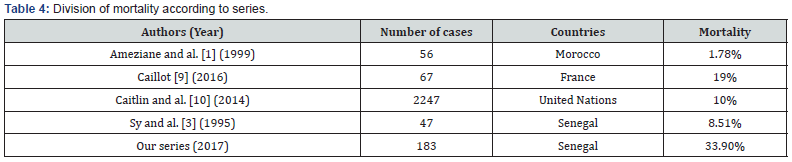
One third of our patients died (33.88%). Overall pelvis trauma mortality is typically between 5 and 15%, but can reach 50% [5-8]. In france, Caillot et al. [9] reports a mortality rate of 19% in polytrauma victims with pelvic fractures (Table 4). This high frequency of mortality is explained by the fact that in our study we took into account the cases before their arrival at the emergency department. Indeed, we think that among the dead polytrauma, there are probably some who had a fracture of the pelvis that has been unknown. Lifeless body deposits are the most common (17.48%). This could be explained by the violence of traffic accidents encountered in the cities of Dakar and the poor conditions of pre-hospital care. Among patients who arrived alive, the mortality is higher within 24 hours (11.47%) and decreases gradually over the days. This rate is very high compared to that obtained by Caitlin et al. [10] (2%). In fact, in our surgical emergencies, the lack of qualified trauma equipment and staff present a real problem in the immediate care of pelvis trauma patients. In addition to this, the multi-disciplinary care of traumatized of pelvis is not promoted in our hospitals. This is also the cause of this high mortality in the first 24 hours.

Complications

The state of hemorrhagic shock is noted in 25.68% of patients. Our results are consistent with those of Ngongang et al. [2] and Ameziane et al. [1] which are respectively 20% and 28% of the announced patients in shock state. This very high frequency of hemodynamic instability is related to pelvic vascular lesions associated with fractures more often in unstable pelvic fractures and multiple extra-pelvic lesional associations. In Caillot’s work [9], 48% of patients were in hemorrhagic shock. This is related to the predominance of type C lesions (58%) in her study.

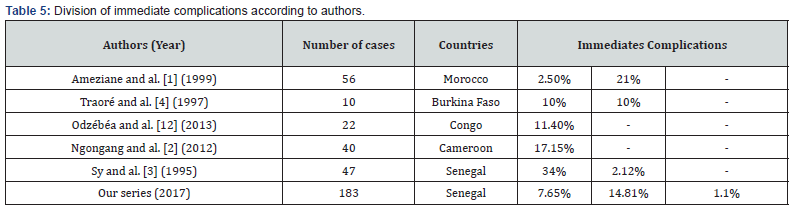
In our series, vascular complications are the most common among the associated pelvic lesions (14.80%), in the work of Ameziane et al. [1] and Traoré et al. [4], vascular lesions are predominant with 21% and 10% respectively (Table 5). This high frequency of vascular complications is related to the importance of vascularization of the pelvis. In addition, the vessels are in direct contact with the bone frame and they can be damaged in case of fracture of the pelvis following a violent trauma. We have had 7.65% urinary complications. Among them, urethral rupture is the most common lesion (4.91%) and it concerns only the membranous portion. In the series of Sy et al. [3] and Ngongang et al. [2], urinary lesions are the most common immediate complications with 34% and 17.15%, respectively. They are all dominated by urethral rupture (Table 5). The frequency of urinary complications is 11.40% in the Odzébéa and al. series with predominantly membranous urethra involvement. According to Le Guillou and Ferrière [11], rupture of the membranous urethra is the most frequent lesion of urinary complications that can reach 90%. This is explained by the high frequency of ruptures of the pelvis’s anterior arch. The predominance of rupture of the membranous urethra is due to the fact that it passes through the uro-genital diaphragm which, anatomically, is sharp like a razor blade.

Conclusion

The prognosis of pelvic fractures is characterized by high early mortality in our country. This high rate of death is related to immediate complications and associated lesions responsible for polytrauma. Thus, to improve the lesion prognosis of patients:

a. the pick-up of trauma victims at the accident site must be done with a medical ambulance.

b. and the management of severe pelvic fractures must be multidisciplinary in our hospitals.

To Know more about Orthopedic & Orthoplastic Surgery  

Click here: https://juniperpublishers.com/jojoos/index.php


To Know more about our Juniper Publishers

Click here: https://juniperpublishers.com/index.php 


Thursday, January 20, 2022

Fractures of the pelvis: Complications and Mortality in a Sub-Saharian Hospital - Juniper Publishers

Orthopedic & Orthoplastic Surgery - Juniper Publishers

Abstract

Objective: the aim of this work was to study the prognosis of pelvic fractures in the orthopedic-traumatology department of Idrissa Pouye General Hospital.

Materials and methods: We performed a retrospective, descriptive and monocentric study over a period of 13 years. We included in this study, hospitalized patients or not for fractures of the pelvis (151 cases). We estimated the prognosis of these fractures by assessing their mortality, their complications and their sequelae.

Results: One-third of the patients died (33.88%). Early complications were dominated by vascular lesions (14.80%). The correlation between the lesional type and the occurrence of vascular complications was statistically significant. However, there was no correlation between lesion site and urinary complications.

Conclusion: The prognosis of pelvic fractures is characterized by high early mortality in our country. This high rate of death is related to immediate complications and associated lesions responsible for polytrauma.

Keywords: Pelvis; Fracture; Urinary complications; Polytrauma

Introduction

Fractures of the pelvis are frequent, of variable severity, ranging from benign parcel fractures to major forms breaking the continuity of the pelvic ring, for which the mortality rate still remains high. Road traffic accidents are the largest contributors to these injuries [1-4]. The prognosis of these fractures can be vital from the outset because of the frequency of hemorrhagic shock, related to vascular lesions or bleeding of fractured bone slices, and to the risk of infection favored by the opening of the fracture and associated intra-pelvic visceral lesions (rectum, bladder, urethra). Functionally, the prognosis remains reserved because of the frequency of nerve sequelae, genitourinary and especially osteoarticular resulting from lesions not or insufficiently reduced and fixed. The goal of this work was to estimate the prognosis of pelvic fractures in the orthopedic-traumatology department of Idrissa Pouye General Hospital.

Material and Methods

We performed a retrospective, descriptive and monocentric study over a period of 13 years. We included in this study, hospitalized patients or not for fractures of the pelvis (151 cases). We also add lifeless body deposits with pelvic fractures (32 cases). Patients who had an isolated fracture of the acetabulum were not included in this study. The studied population consisted mostly of men (n = 125) with a sex ratio of 2.15. The average age was 33.87 years old ± 17.52. Pelvic fractures were more common in young adults (50.27%). The radiological data were assessed by Tile’s classification and type A lésions were predominant (63.38%). We estimated the prognosis of these fractures by assessing their mortality, their complications and their sequelae.

Results

Mortality

One-third of the patients died (33.88%; n = 62). The lifeless body deposits were the most common (17.49%). Among the patients arrived alive, mortality was higher within 24 hours (11.48%). It decreased gradually over the course of the days (Figure 1). Autopsy was performed in all cases of death and found 32.24% of deaths from severe polytrauma, 1.09% from pulmonary embolism and 0.54% from septicemia.

Among the severe polytraumatic patients who died:

a. a severe cranial trauma was noted in 10.38% of cases;

b. a thoracic contusion with hemothorax of great single or bilateral abundance was observed in 15.84% of cases;

c. Abdominal contusion was noted in 6.55% of cases, including 2.76% ruptures of the spleen, 3.82% liver fractures and 1.64% renal bruising;

d. pelvic vascular lesions were observed in 12.02% of cases;

e. and fractures of the lower limbs were also noted in 12.02% of cases including 5.46% open fractures.

Complications and sequelae

Early complications

They were dominated by vascular lesions (14.80%) followed by urinary lesions (7.64%). Of these, rupture of the membranous urethra was the most common (4.91%). Cutaneous opening was noted in 4.90% of patients (Table 1). Vascular complications were more common in type C lesions (7.65%). The correlation between the lesional type and the occurrence of vascular complications was statistically significant with a p-value= 0.0025 (Table 2). Lesions of the anterior arch were noted in all patients with urinary complications (7.65%). Isolated injury of the anterior arch was responsible for 3.27% urethral rupture and 1.64% of bladder rupture. Simultaneous injury of the anterior and posterior arches resulted in 1.64% urethral rupture and 1.09% of bladder rupture. The correlation between the site of injury and the occurrence of urinary complications was not significant with a p-value = 0.98% (Table 3).

Secondary complications

Massive pulmonary embolism was noted in 1.64% of patients. One case of sepsis was observed (0.54%).

Late complications and sequelae

The malunion was observed in 4.91% of patients. One patient had a shortening of a lower limb (0.54%). Sacroiliac pain was observed in 5.46% of patients, of which 1.64% had sacroiliac arthrodesis in the long run. Urethral stricture was noted in two patients (1.09%). A urethroplasty was performed in everyone.
Discussion

Mortality

One third of our patients died (33.88%). Overall pelvis trauma mortality is typically between 5 and 15%, but can reach 50% [5-8]. In france, Caillot et al. [9] reports a mortality rate of 19% in polytrauma victims with pelvic fractures (Table 4). This high frequency of mortality is explained by the fact that in our study we took into account the cases before their arrival at the emergency department. Indeed, we think that among the dead polytrauma, there are probably some who had a fracture of the pelvis that has been unknown. Lifeless body deposits are the most common (17.48%). This could be explained by the violence of traffic accidents encountered in the cities of Dakar and the poor conditions of pre-hospital care. Among patients who arrived alive, the mortality is higher within 24 hours (11.47%) and decreases gradually over the days. This rate is very high compared to that obtained by Caitlin et al. [10] (2%). In fact, in our surgical emergencies, the lack of qualified trauma equipment and staff present a real problem in the immediate care of pelvis trauma patients. In addition to this, the multi-disciplinary care of traumatized of pelvis is not promoted in our hospitals. This is also the cause of this high mortality in the first 24 hours.
Complications

The state of hemorrhagic shock is noted in 25.68% of patients. Our results are consistent with those of Ngongang et al. [2] and Ameziane et al. [1] which are respectively 20% and 28% of the announced patients in shock state. This very high frequency of hemodynamic instability is related to pelvic vascular lesions associated with fractures more often in unstable pelvic fractures and multiple extra-pelvic lesional associations. In Caillot’s work [9], 48% of patients were in hemorrhagic shock. This is related to the predominance of type C lesions (58%) in her study.

In our series, vascular complications are the most common among the associated pelvic lesions (14.80%), in the work of Ameziane et al. [1] and Traoré et al. [4], vascular lesions are predominant with 21% and 10% respectively (Table 5). This high frequency of vascular complications is related to the importance of vascularization of the pelvis. In addition, the vessels are in direct contact with the bone frame and they can be damaged in case of fracture of the pelvis following a violent trauma. We have had 7.65% urinary complications. Among them, urethral rupture is the most common lesion (4.91%) and it concerns only the membranous portion. In the series of Sy et al. [3] and Ngongang et al. [2], urinary lesions are the most common immediate complications with 34% and 17.15%, respectively. They are all dominated by urethral rupture (Table 5). The frequency of urinary complications is 11.40% in the Odzébéa and al. series with predominantly membranous urethra involvement. According to Le Guillou and Ferrière [11], rupture of the membranous urethra is the most frequent lesion of urinary complications that can reach 90%. This is explained by the high frequency of ruptures of the pelvis’s anterior arch. The predominance of rupture of the membranous urethra is due to the fact that it passes through the uro-genital diaphragm which, anatomically, is sharp like a razor blade.

Conclusion

The prognosis of pelvic fractures is characterized by high early mortality in our country. This high rate of death is related to immediate complications and associated lesions responsible for polytrauma. Thus, to improve the lesion prognosis of patients:

a. the pick-up of trauma victims at the accident site must be done with a medical ambulance.

b. and the management of severe pelvic fractures must be multidisciplinary in our hospitals.


To Know more about Orthopedic & Orthoplastic Surgery

Click here: https://juniperpublishers.com/index.php   

Wednesday, March 3, 2021

Orthopedic Injuries Related to Personal Mobility Devices - A Retrospective Observational Study - Juniper Publishers

 Orthopedics and Rheumatology - Juniper Publishers

Abstract

Purpose: Personal mobility devices (PMDs) are increasingly common and progressively being adopted as a mainstream mode of transport. The main objective of this study was to evaluate the demographics, injury pattern and use of protective equipment in patients admitted following PMD-related injuries over a 15-month period.

Methods: All patients admitted to the Department of Orthopedic Surgery between December 2016 to February 2018 with injuries due to PMD accidents were recruited. Data collection was performed retrospectively on the injury pattern, use of protective equipment, patient profile, day and time of injury.

Results: 43 patients were included in this study. Incidence of PMD accidents resulting in orthopedic injuries was higher in patients aged 40 or less (n=29 vs n=14). The accidents occurred more commonly at night and around the weekend period. Across both age groups, at least 80% of patients sustained fractures with at least 30% having more than 1 fracture and 77% requiring surgery. There were more upper limb injuries. The use of protective gear was low at 20% or less. The patients aged above 40 were more likely to sustain open fractures as compared to their younger counterparts (p=0.042).

Conclusion: The use of PMD as a mainstream modality of transport can result in significant orthopedic injuries and hospitalization. The legislation on the mandatory use of protective equipment and the regulation of PMD use in public can help mitigate this.

Keywords: Personal mobility devices; e-scooter, e-bikes; Fracture; Accident

Abbreviations: PMDs: Personal Mobility Devices; GCS: Glasgow Coma Scale; ISS: Injury Severity Score; LTA: Land Transport Authority; AMA: Active Mobility Act

Introduction

The use of personal mobility devices (PMDs) has become increasingly common worldwide. Initially comprising of conventional bicycles and kick-scooters that were used for leisure and recreational purposes, the types of PMDs now available have also increased in variety. The current range of products come in power-assisted or even fully motorized forms, such as electric bicycles (e-bikes), electric scooters (e-scooters), hover boards and mono-wheels, to name a few. In Europe and the United States, these PMDs have experienced rapid growth since the late 1990s as they have been marketed as efficient and cost-friendly modalities of transport. Additionally, they provide a “green” alternative to motorcycles and cars due to their low energy consumption, and overall reduce the number of vehicles on the roads. Progressively, fully powered devices are being preferred over conventional bicycles and scooters as they enable users to travel longer distances [1].

Alongside the rise in use and numbers of PMDs came the installation of powerful motors and batteries that aided these devices to reach greater speeds of up to 100km per hour (30 mph) and run for longer durations [2]. However, safety features had not evolved in tandem with this increase in speed of PMDs. There are limited infrastructure modifications to accommodate these devices. As such, the number of traffic accidents has also increased tremendously in countries that have adopted these vehicles [3,4]. PMD riders on the roads are more likely to be injured as compared to car drivers, as they ride in the open rather than inside the steel cage of a car frame. Without the car’s structural protection, the PMD rider involved in a crash is more likely to be thrown off and sustain serious or fatal injuries. Furthermore, 2-wheel vehicles are inherently unstable in comparison to 4 wheeled vehicles. Although they appear similar to other 2 wheeled vehicles such as motorcycles, they lack features such as side mirrors, headlights or even air bags as in motorcycles that can help reduce the risk of a crash or the severity of the injury. PMD riders going on conventional bicycle lanes puts the slower moving cyclists and pedestrians at risk of collisions as well [5].

The main objective of this study was to evaluate the injury pattern of patients following PMD-related accidents admitted to the orthopedic department in a tier 2 trauma center. The secondary objective was to determine the use of safety equipment and patient profile.

Materials and Methods

This is a retrospective observational study. The waiver of informed consent by institutional review board was granted as only retrospective and de-identified data was used. All patients admitted to the Department of Orthopedic Surgery with injuries associated with PMD accidents were entered into a registry over a 15-month period between December 2016 and February 2018. This was done by diligently reviewing all daily admissions over the study period and identifying patients who were hospitalized following accidents related to all PMDs including e-scooter, e-bikes, electric hover boards and electric mono-wheels. The demographic details of the relevant patients were captured in the registry database. The registry included patients who were admitted directly from the Emergency Department as well as patients who were admitted from the orthopedic specialist outpatient clinic. However, it did not include patients with PMD injuries who were admitted under other specialties and those who may have died on scene, on the way to the hospital or discharged from the Emergency Department. The patients managed solely in the outpatient clinic were also excluded.

The demographic details of the subjects, type of road user, circumstances of accident, mechanism of injury, injury severity, and nature of the injury were traced from the registry database and collated. The demographic variables considered were age, sex and race. The type of hospitalized road user was categorized into riders, pillion riders and pedestrians. The details on circumstances of accident included the time and day. The mechanism of injury was divided into direct impact, fall on outstretched hand and others. The severity of injury was assessed by Glasgow coma scale (GCS) on admission and injury severity score (ISS). The details on nature of injury comprised the region of body affected, number of fractured bones, open or closed nature of fractures and the Gustilo classification for open fractures (if any). The region of the body involved was plotted on the Barell injury diagnosis matrix [6], which was divided into head and neck, spine torso, extremities, and system-wide or unspecified. The extremity injuries were further divided into upper limb and lower limb. The length of hospital stays, number of hospital admissions, type of bed occupied (general ward, high dependency or intensive care unit bed), surgical management and number of surgeries (if any) as well as discharge destination were collated. After tabulation of results, data analysis was performed using IBM SPSS Statistics 20.0 software, using Chi-square test and Fisher’s exact test as appropriate. A p-value < 0.05 was taken to be statistically significant.

Results

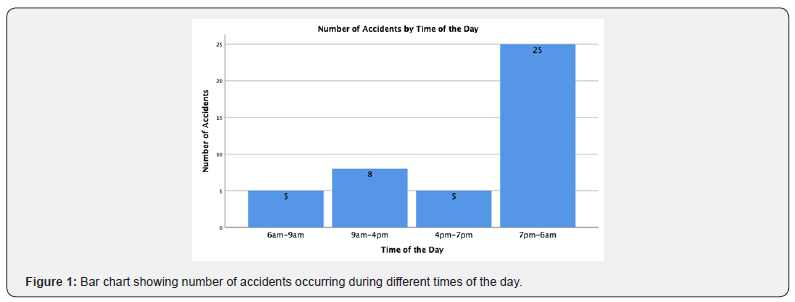
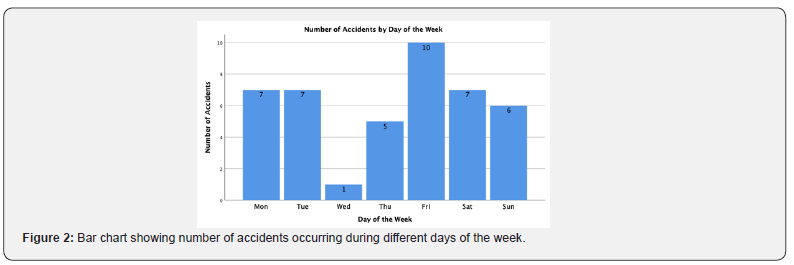
During the study period from 1st December 2016 to 28th February 2018, 43 patients with PMD-related injuries were admitted to the Department of Orthopedic Surgery. 38 patients (88.3%) were involved with accidents related to e-scooters. Of the remaining 5 patients, 2 patients (4.7%) had accidents involving e-bikes, 2 patients (4.7%) had accidents involving electric hover boards and 1 patient (2.3%) had an accident involving the electric mono-wheel. 40 out of 43 patients (93%) were riders, 2 patients (4.7%) were pillion riders and 1 patient (2.3%) was a pedestrian. Majority of the accidents (n=25, 58.1%) happened at night (between 7pm and 6am), as shown in Figure 1. The hospitalization trend was also analyzed according to days of the week. More accidents tended to occur on or closer to the weekend, as shown in Figure 2.

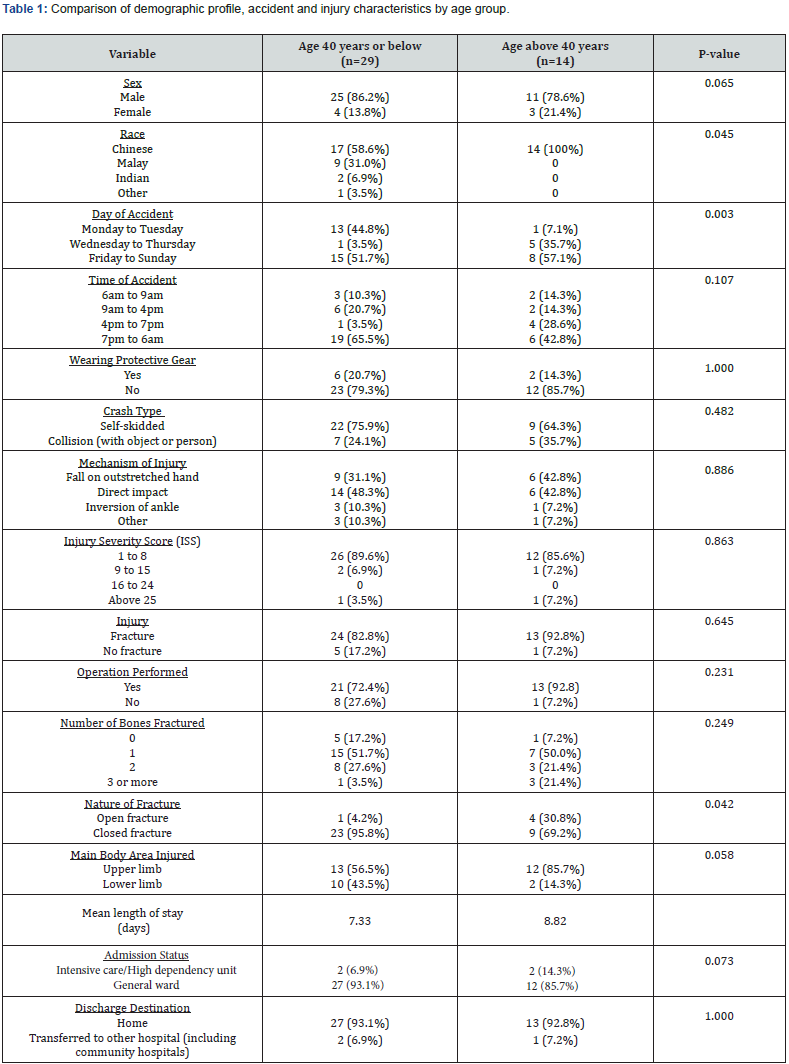
The majority of the patients were male (n = 36, 83.7%) and of Chinese race (n = 31, 72.1%). Most of the patients were age 40 years or younger (n = 29, 67.3%). For the rest of the analysis, demographic data, details of accident and injury characteristics were compared between the age groups of 40 years old or below and above 40 years old, as shown in Table 1. There were significant differences between ethnic distribution (p = 0.045) and day of accident (p = 0.003) amongst patients of the 2 age groups. Most injuries were sustained from self-skidding and across both groups; use of protective gear was low at 20% or less. At least 80% of patients sustained fractures and at least 30% had more than 1 fracture, with 34 patients (77%) requiring surgical intervention. Patients aged above 40 were more likely to sustain open fractures as compared to their younger counterparts (p=0.042). Upper limb injuries were more common in older patients than younger patients (85.7% vs 56.5%), although this was not statistically significant. Most patients were managed in the general ward and more than 90% did not require further institutionalization after treatment in an acute hospital.

Discussion

To our knowledge, this is the first study that attempted to study inpatient orthopedic injuries related to PMDs in Singapore. PMDs started out as novelty toys and are rapidly rising in popularity globally. They are gradually being adopted as the mainstream mode of travel. In the local context, many in the food delivery service have even become dependent on these devices for sustenance of their daily livelihood, using PMDs as their main mode of transport for the job. Unfortunately, there has also been a worrying upward global trend of accidents [7-9] associated with PMDs. The current study described 43 patients with orthopedic injuries that warranted admission. The demographic profiles of patients were similar to two other relevant local studies [10,11] performed to evaluate PMD-related injuries, with male predominance, more young patients and majority of patients being Chinese in ethnicity.

Cha et al. [10] reviewed injury patterns sustained by PMD users presenting to the emergency department in Singapore. The severity of injuries was similar to that in the current study, with majority of patients having ISS less than 9. The nature of injuries was different with majority being external wounds (89.2%) such as abrasions and lacerations instead of fractures, as their study was based on patients seen at the emergency department. However, the anatomic distribution was similar with upper limb injuries being more common than lower limb injuries. This phenomenon could be explained by the instinctive human response to use their upper limbs to break falls or brace themselves for the impact of a collision. In the current study, more than 30% of patients sustained more than 1 fracture from their accident.

Tan et al. [11] evaluated factors associated with injury severity and hospitalization in PMD riders across a range of PMD types using information from the Singapore National Trauma Registry and found that older age was an independent risk factor for severe injury and hospitalization. We found a significantly greater proportion of patients in the age group greater than 40 years old sustaining open fractures instead of closed fractures. A possible contributing factor is slower reaction and less tissue bulk in the relatively older age group. However, the current study did not show significant difference in age of patients who sustained higher ISS or required admission to the high dependency or intensive care unit. More than 90% of patients in both age groups were discharged home after approximately a week’s recovery in the hospital.

In the current study, there was a gross lack of protective gear being worn by PMD riders - less than 20% of all patients had protective gear on at time of accident. This was also noted in other studies performed locally and internationally [10-14]. There is currently no legislation mandating the use of protective gear such as helmets or limb-guards when riding PMDs. Authors have advocated the use of wrist guards to reduce the risk of injuries in skaters, and this might find similar application in this cohort of patients [15,16].

The main mechanism of injury appeared to be skidding of the PMD. There appears a higher incidence (more than 50%) of such accidents occurring at night (Figure 1) and over a weekend (Figure 2). We need to consider performing prospective studies to evaluate the factors contributing to this trend, such as correlation to holidays, road or weather conditions, influence of alcohol, the speed at which the PMD rider was travelling at the time of the accident, as well as purpose of PMD use during time of accident (for leisure or occupation related, such as deliveries).

Many countries including Canada, China and the United States have all passed legislation regarding PMDs. In Singapore, PMDs are regulated by the Land Transport Authority (LTA) [17]. The Active Mobility Act (AMA) was enforced in May 2018 after the study period to regulate the sale of mobility devices and their use on public paths. However, there were at least 3,700 reported accidents [18] within the first year of implementation of the AMA. The first fatal collision was reported in September 2019 [19] when a cyclist died after being involved in a collision with a PMD rider. Currently, all PMDs have been banned from footpaths. The current study was conducted prior to AMA and it would be useful to determine the incidence of PMD related injury after the implementation.

There were several limitations to the current study. Firstly, this is a pilot study comprising a small population of only 43 patients over a 15-month period, which may not be representative. Secondly, as this was a retrospective study, the data collected relied on the accuracy and completeness of the registry and electronic medical records.

Conclusion

The use of PMD use as a mainstream modality of transport can result in significant orthopedic injuries especially in the upper limbs and requiring admission to hospital. The spectrum of such injuries ranges from open fracture to multiple fractures in the upper limb. There exists a need for stricter regulations on its use in public and the mandatory use of protective gear to mitigate the risk of such injuries.

To Know more about  Orthopedics and Rheumatology

To Know more about our Juniper Publishers

Click here:
 https://juniperpublishers.com/index.php  

How Does the Multi-Disciplinary Team Impact Chronic Kidney Disease Management? - Juniper Publishers

  Urology & Nephrology - Juniper Publishers Abstract Chronic kidney disease (CKD) is a condition where a gradual kidney function loss le...