Juniper publishers have been established with the aim of spreading quality scientific information to the research community throughout the universe. We, as Open Access publishers, strive to offer the best in class online science publications. Open Access process eliminates the barriers associated with the older publication models, thus matching up with the rapidity of the twenty-first century. Our main areas of interest lie in the fields of science, engineering and other related areas.
Showing posts with label Archaeology & Anthropology. Show all posts
Showing posts with label Archaeology & Anthropology. Show all posts
Copper-based weapons including battleaxes, daggers, and spearheads from the Middle Bronze Age II (c. 1900-1600 B.C.E.) have been unearthed mainly in burials found in the southern Levant. Archaeological and metallurgical analyses of these metal weapons done recently, make it clear that in the beginning of the period, in the decorated weapons were made of tin bronze with and without arsenic while during the second part of this period we can see a decrease in the number of weapons found in graves as well as changes in the metallurgical composition into the usage of tin bronze, arsenic copper and copper with tin and arsenic. To explain these results, there is a need to look further on the possible social economical context of the “Warrior’ burials” phenomenon using metal weapons made of copper, arsenic, and tin, which are unavailable metals in the southern Levant at this period.
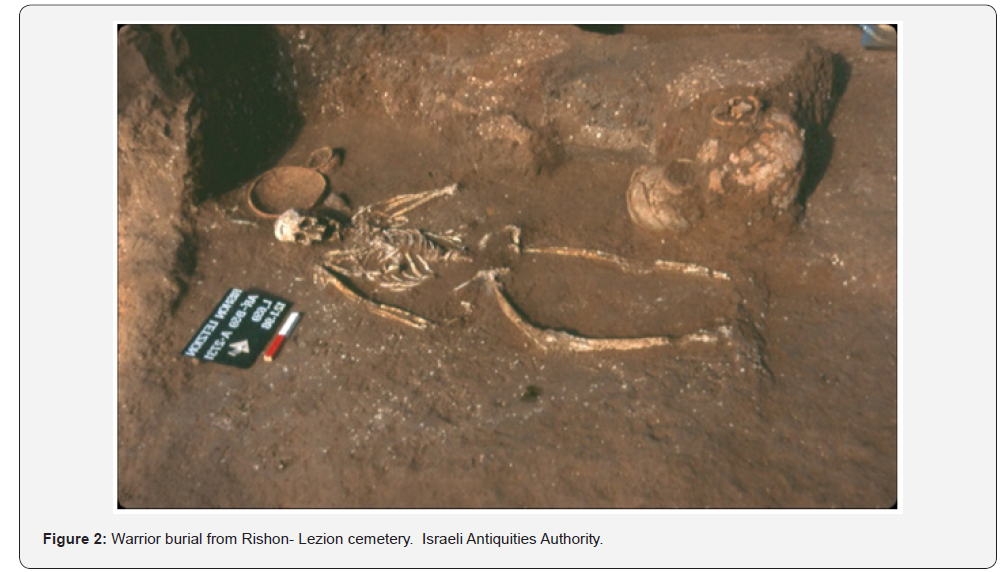
More than 1000 copper-based weapons associated with the Middle Bronze Age II (MB II; ca. 1950–1550 BCE) culture have been recovered, primarily in burials, throughout the Levant (Figure 1); [1-7]. These, funerary contexts have generally been referred to as “warrior burials”, and contained individuals buried with a presumed “kit”, comprising weapons, such as daggers, axes and spearheads found on the deceased’s waist and/or next to their head (Figure 2). The “warrior burials” are dated mainly to the first half of the MBII period (MB IIA; 1950–1750 BCE) and decline in occurrence in the Middle Bronze IIB (MB IIB; 1750–1550 BCE) [6-8].
Recently, it has been shown [6,7] that less than 25% of all the MB IIA burials can be defined as “warrior burials”, and they should rather be considered to reflect high-ranking members of the contemporary society, i.e., an elite social class . The weapons in the MB IIA “warrior’ burials” were well-made, elaborate and composed of copper alloyed with up to 14% tin, both with and without low arsenic concentration [5-7].
The use of tin bronzes is considered the most important technological innovation of the Middle Bronze Age II (MBII). Tin Bronze objects are known from earlier periods, but in small quantities while the use of arsenic copper was more common [5,9]. During the Middle Bronze Age II, tin bronze was widely used to create metal objects in general and weapons [5,6,7,10]. While for production of arsenic copper one metal source containing copper with arsenic was needed, the production of tin bronze required two metal sources, one of tin and one of copper, which were in far distance from the southern Levant [11,12]. Nevertheless, no tin sources were found in the Levant and there is no evidence that local copper sources were exploited at this time, in contrast to the former periods [13-15]. In addition, almost no ingots and complete workshops from this period were found in the Levant [1,2,14-16]. This raise a series of significant questions concerning the factors that led to the widespread use of tin bronzes at this period, the sources of copper and tin, and the trading systems that brought the raw materials and the finished products to the Levant.
In addition, to date, the transition from the use of arsenical copper to tin bronze was perceived as a linear development; It was assumed that at the beginning of the Middle Bronze Age (MBIIA), most weapons, in continuation of the former period, were made of arsenical copper, while in the later part of the period (MBIIB), most of the weapons were made of tin bronze [5]. Through a detailed analysis of the available metallurgical data we have shown that the situation was in fact quite the opposite. It was demonstrated that the transition was highly complex; Tin bronze appeared quite abruptly in the MBIIA, with only few antecedents, and decreased during the MBIIB [6,7].
Classical scholars have tended to locate the nucleus of Greek identity in one or more of the three principal themes of nineteenth- and early-twentieth century identity discourse: culture, nationality, or race [1,2]. Of all the elements to influence recent scholarship on Greek identity, however, that which surrounds ethnicity has been the most pervasive [3,4]. And yet it would be an error to see this as a scholarly innovation; for ever since the birth of Greek historiography in the fifth century B.C.E., ethnicity has been a central issue in the debate over Greek identity. That Herodotus’ four key criteria of Greekness-blood, language, religion, and customs-closely parallel those identified by modern scholars-descent, ‘commensality or the right to share food’, and cult-is evidence of the circularity and irresolution of the ongoing discourse [5-7]. Indeed, since the Second World War, scholarship has emphasized ethnicity, favoring at first the anthropological ‘instrumentalist’ approach which argued that ethnic identity was a guise for political or economic aims. However, a series of ethnic resurgences in the 1970s and 1980s undermined instrumentalism, resulting in the development of more nuanced interpretations which present ethnic identity as unstable and unfixed; as negotiable and situation-specific-conditionality confirmed in this study [8,9].
‘Greekness’ is chimera: a fluid concept dependent on, and derived from, mutable context and circumstance [8-10]. It was no more crystallized collectively in sixth century B.C.E. Attica, Thessaly and Euboea than it was in the closing moments of the Battle of Actium when Ptolemaic Egypt, the last of the Hellenistic kingdoms, fell to the Romans in 31 B.C.E. [11]. Yet a civilization of Greeks (a term derived from the Latin ‘Graeci’ and transmitted via the Romans; for their part the Greeks, as the putative descendants of the mythological figure Hellen, refer to themselves as ‘Hellenes’, the people of ‘Hellas’) undoubtedly existed in antiquity [12]. One need only borrow Gustave Flaubert’s conceptual framework in Dictionnaire des idees recues and graft onto its portentous clichés and quotations culled from a conspicuously small body of extant ancient texts to demonstrate the veracity of this statement. The result, rendered here in machine-gun-like staccato in the interests of both brevity and satirical effect, is a compendium of traits which seem to confirm the existence of an identifiably Greek civilization: democracy (Athens, polis, kingship foreign and alien to Greeks) [13]. Literature (Homeric epics, Iliad, Odyssey). Drama (Euripides, Sophocles, Aeschylus). Art (naturalistic, idealized human form). Philosophy (Socrates, Plato, Aristotle, Pythagoras). Further, it was a Greek-speaking people who, in response to social pressures at home, colonized the region of the Eastern Mediterranean between the eighth and sixth centuries B.C.E. [14]. The epiphenomenal by-product of this diasporic process was the diffusion of cultural artefacts that are widely recognized as quintessentially Greek, a profundity acknowledged by the later Hellene Dio Chrysostom when he wrote that ‘Greece lies scattered in many regions’ [14].
While none of this is false or blatantly misleading, it nevertheless neglects the complex interplay of internal forces (e.g. ethnicity, language, culture) and externalizing dynamics (e.g. ‘othering’) which, at various times and to varying degrees, informed Greek identity-that is, the traits which compass Greekness (to Hellenikon, ‘that which is Greek’) [15]. The distinction is critical, for the tension raised by this ambiguity suggests the problematic which lay at the heart of this study: what is Greekness and can it be quantified? So considered, this paper sets out to assess Greekness within the context of the Hellenistic (‘Greek-like’) age, the temporal bookends of which are marked by the death of Alexander the Great in 323 B.C.E. and the death of Cleopatra VII, the last Macedonian ruler of Egypt, in 30 B.C.E. [16]. The approach adopted is comparative, framed by a parallel examination of Greekness as expressed through the image (coins), text (epigraphy and official correspondence), and social practice (urban planning, government, and religion) of the Hellenistic rulers of Ptolemaic Egypt and Seleucid Asia. The findings of the study support the conclusion that when examining Greekness, to paraphrase the philosopher Heraclitus, the only constant is change [17].
To situate it within the continuum of ancient Greek identity, and thus establish its position along a sensible trajectory, an analysis of Hellenistic age Greekness compels a brief ethnographic survey, beginning with the earliest generally perceived articulations of communal Greek identity. In the aggregate, the evidence reveals the instability, equivocality and multivalence of the cardinal elements which the Greeks used to distinguish and define their civilization-in relation to both themselves as well as to non-Greeks-over time. We begin with the Persian Wars of the fifth century B.C.E., for the events surrounding them are widely considered the catalyst for a shared sense of Greek identity [11]. We turn to a famous passage from Herodotus’ Histories (written before 425 B.C.E.), in which the author gives an account of the conflict between the Greeks and the Persians [18].
‘It was most human that the Lacedaemonians should fear our making an agreement with the barbarian.... (But) there are many great reasons why we should not do this…; first and foremost, the burning and destruction of the adornments of temples of our gods, whom we are constrained to avenge to the utmost rather than make pacts with the perpetrator…and next the kinship of all Greeks in blood and speech, and the shrines of gods and the sacrifices that we have in common, and the likeness of our way of life…’ (Herodotus, Histories 8.144.1-2; trans. A. D. Godley). This speech is attributed to the Athenians, who at the time were being enticed by the Persians (the ‘barbarian’ mentioned above) shortly after witnessing the virtual destruction of their city. Though courted by the emissaries of the shahanshah, who sought an alliance, the Athenians demurred, a restraint explicated to the Lacedaemonians (i.e. the Spartans) through the invocation of ‘the Greek thing’ (to Hellenikon) [19].
Scholars cite this passage as an unambiguous statement of the precise components that constituted Greek identity-that is, common blood, common tongue, common cult foundations and sacrifices, and similar customs [20]. To a certain extent, such a perspective is justifiable: first, it is undoubtedly true that these ethnic and cultural traits were shared by certain-though arguably not all-Greeks and thus formed the basis upon which some Greeks united against the Persians. Second, as Hall notes, in the ‘extant literary corpus there are few statements that define Hellenic identity quite so explicitly’ [20]. For many, the implications are tantalizing enough to support bequeathing the passage canonical status in the debate surrounding Greek identity- thus putting paid the question [20].
Such interpretations are, however, fraught with difficulty. Firstly, although the Persian Wars motivated unprecedented levels of intercultural contact, a dynamic enhanced by Athenian efforts to prop up a faltering Greek alliance in a rhetorical effort akin to propagandistic carpet-bombing, Herodotus’ view cannot be said to be wholly representative of the majority of the ‘Greek’ world [8]. The best that can be said for it is that it was strategically ‘Athenocentric’ view of Greekness, since groups like the Spartans, who considered everyone outside Sparta a ‘foreigner’, certainly possessed no inviolable sense of communal Greek identity [8]. Moreover, Herodotean audiences would undoubtedly have been aware of Athenian efforts to restrict citizenship to those who could prove both patrilineal and matrilineal lines of descent, thereby circumscribing the franchise by birth and, by extension, ethnicity [21]. At the same time, the Athenians-who viewed themselves as the ‘most Greek of the Greeks’-also promoted myths of autochthony (the idea that, quite literally, the ancestors of the Athenians were born from the land of Attica, rather than through sexual reproduction) over the kinship ties that had hitherto linked Athens to Ionia-efforts meant to distance the Athenians ethnically from the ‘lesser’ Greeks, the Dorians [20,22] Thus, the grandiose Athenian claim that ‘kinship’, a ‘common language’ and shared cultural practices formed the basis of an unbreakable solidarity between Greeks was, at best, insincere rhetoric [8].
It would, however, be a mistake to view the developments of the ‘inventive’ fifth century as having a genesis in the Persian Wars [8]. Rather, they represent a culmination of Greek sociocultural evolution that stretched at least as far back as the mid-eighth century, when the Greeks embarked on the great colonization of the Eastern Mediterranean [23]. Whatever the impetus behind it, colonization brought the Greek diaspora-already possessed of a sense of communal identity defined by internal criteria such as ethnicity, language, aesthetics (e.g. pottery design) and poetry (e.g. Homeric epics), and religion-into contact with non-Greeks on unparalleled levels [11]. The result of this process was the crystallization of the Greeks’ sense of communal identity in relation to others; from this point forward, Greekness became defined not just by what the Greeks were, but by what they were not: barbarians [8,11,24].
Yet the tidy ‘Greek-barbarian’ binary this suggests, as revealed in a programmatic statement in the proem of Book I of Histories, is rather more complex than it seems [20,25]. For although there was a tendency amongst some to stereotype non-Greeks with supposedly ‘un-Greek’ attributes-as, for example, when the Greek tyrant Aristagoras of Miletus represented the Persians as weak, effeminate and decadent to the Spartan king Leonidas-just as often there are Greeks who expressed a more balanced view-as when the dramatist Aeschylus refused to stigmatize the Persians in his play Persae, which he produced a mere seven years following the end of the Persian Wars [25,26]. The dialectic surrounding the Greek-barbarian dichotomy reached an apex with the Macedonian conquest of Greece, an event which transformed the geopolitical context of the Eastern Mediterranean world.
By the early fifth century, when Herodotus wrote of the Athenians’ invocation of ‘to Hellenikon’, the schema of which indicates the primacy of culture as a defining trait of ‘Greekness’ alongside the archaizing ethnic classification, the Macedonians-viewed by more than a few Hellenes as barbarian- had already claimed Greek ancestry. The locus classicus of the Macedonian case can be found in the following passage from Histories, in which Herodotus describes the attempt of Alexander I of Macedon to compete in the Olympic Games [27,28].
‘That these descendants of Perdiccas are Greeks (as they themselves say) … and I shall demonstrate that they are indeed Greeks later in my account, but in any case, it is a fact known by those who manage the contest of the Hellenes. For when Alexander chose to compete and came down to enter the contest some of his Greek fellow-competitors were about to bar him, alleging that the contest was not for barbarian athletes but for Greeks. But when Alexander demonstrated that he was an Argive, he was judged to be a Hellene and competed in the footrace where he jointly took the first position’.
The nub of the Macedonian argument rested on Alexander’s membership in the Argead genos, specifically as a descendant of Temenus of the Peloponnesian Heraclidae-descendants of Herakles, the mythological Panhellenic Greek figure [11,29]. The genealogical (and fictive) path that legitimated Alexander’s claims - and, subsequently, his descendants - is a torturous one (complicated by the coupling of Herakles’ sexual tenacity with the wanderlust obliged by his Labors) and has been covered extensively elsewhere [28-30]. Suffice it to say and given what we know of the malleability of communal Greek identity, the assertion was legitimate enough. In time the Macedonian claim became generalized so that every Macedonian, not just the Argead dynasty, could be seen as Greeks of a kind. Yet not every Greek was convinced, a bifurcation of opinion that proved decisive in the wake of the Peloponnesian War (431-404 B.C.E.) [31].
The conflict between the poleis (city-states) of the Peloponnesian League, led by Sparta, and those of the Athenian Empire was disastrous. As the war ground on indecisively, not only did it coarsen life within the walls of the poleis, the inhabitants of which were subjected to deprivation, disease, and death on an unprecedented scale, but it also had the effect of coarsening public debate and discourse [31]. The war was ended ignominiously when the Spartans, determined to break the decades-long deadlock, allied with the Persians, the Greeks’ ancient enemy, to defeat the Athenians [31,32]. The Greek world that emerged following the war was riven; its civic discourse polluted by suspicion and mistrust [33].
As tensions festered, the intelligentsia groped for solutions to prevent a recrudescence of all-out war. To this end, the philosopher Isocrates proposed a controversial solution: the Greek world, he argued, should unite in a Panhellenic crusade against the Persians [34]. As uncontentious as this may sound, it was anything but; for Isocrates suggested that the campaign be led by a figure whose Hellenic pedigree was still very much in doubt: Philip II of Macedon, a successor of Alexander I and, as such, a member of the Argead dynasty [29]. Not that any of this mattered to the rhetorician Demosthenes, who vehemently rejected the bona fides of Philip’s Greekness. Indeed, Demosthenes opposed Isocrates’ plan on the basis that the Macedonian king was no more Greek than any other member of the great unwashed horde of non-Greek barbarians [35]. In his Third Philippic Oration, Demosthenes damned not only Philip and the Macedonian throng, but castigated the Greeks who supported him:
‘But if some superstitious bastard had wasted and squandered what he had no right to, heavens! how much more monstrous and exasperating all would have called it! Yet they have no such qualms about Philip and his present conduct, though he is not only no Greek, nor related to the Greeks, but not even a barbarian from any place that can be named with honor, but a pestilent knave from Macedonia, whence it was never yet possible to buy a decent slave’ (Demosthenes, Third Philip Oration 9.31; trans. J. H. Vince). Philip’s destruction of the combined Athenian and Theban forces at Chaeronea in 338 B.C.E. effectively mooted the debate over Macedonian Greekness [11]. When the Macedonians subsequently levelled Thebes, they left standing only the house of the venerated Greek poet Pindar. It was a deliciously potent symbol of their cultural Greekness [36].
In a way, the Macedonian conquest of the Greek world vindicated Isocrates who, decades earlier (ca. 380 B.C.E.), wrote his Panegyricus (a ‘discourse bringing all together’) [33]. Presented as an address to the Greeks gathered at a national festival, the Panegyricus stressed Greek unity by asserting that, ‘…the name Hellenes suggests no longer a race but an intelligence, and that the title Hellenes is applied rather to those who share our culture than to those who share a common blood’ [38]. While this may seem like nothing more than the next step in the continued evolution of communal Greek identity, nothing could be further from the truth. For Isocrates deliberately abandoned not only a criterion of Herodotean Greekness, but also the last vestige of Greekness as defined in the earlier Archaic Period (ca. 750-480 B.C.E.): that is, ethnicity (blood) [29,37,38]. Although it cannot be said that Isocrates intended a lowering of the barriers between Greeks and non-Greeks, or that every Greek agreed with his definition of Greekness, his was nevertheless a potent vision of the new Greek world, and it had particular resonance in the ‘cosmopolitan’ Hellenistic cultures of Seleucid Asia and Ptolemaic Egypt, where far more ambiguous criteria like education and culture came to dominate the discourse of Greekness [37].
Philip’s overwhelming defeat of the Greek forces at Chaeronea decisively settled Macedonian affairs with the Hellenes. The way was now clear for the monarch’s long-gestating crusade against the Persians. Yet Philip did not live long enough to realize his dream; for in 336 B.C.E., he was murdered [39]. The task of prosecuting Philip’s campaign of ‘liberation’ and ‘punishment’ fell to his son and successor, Alexander the Great who, over the course of a decade-long campaign, not only defeated the Persian Empire, he also forged through conquest a Macedonian kingdom that stretched from the Aegean Sea in the west to the Hindu Kush in the east [40]. This cosmopolitan (albeit loosely-knit) kingdom was one of the largest single political entities the world had yet seen. With the benefit of hindsight, its swift dissolution following the death of the man who forged it seems a foregone conclusion.
The ‘funeral games’ that followed Alexander’s death in 323 B.C.E. consumed his nascent empire, and for the next fifty years its history was one of violent struggle and shifting alliances between the diadochoi (i.e. Alexander’s generals) [40]. When the last of these men died in battle in 281 B.C.E., a single unified ‘Alexandrine Empire’ was nowhere in sight. In its place stood the estranged empires of Seleucid Asia and Ptolemaic Egypt, as well as a varying number of smaller kingdoms [41]. For the next three centuries, these far-flung, polyethnic and polyglot (although the Greek lingua franca was koine, a dialect of Attic Greek) realms populated by a minority of Greeks served as the locus of Hellenistic culture. The remainder of this study surveys the semantics surrounding Greekness during this period, as expressed through the image (coins), text (epigraphy and official correspondence), and social practice (urban planning, government, and religion) of the Hellenistic rulers of Ptolemaic Egypt and Seleucid Asia [29].
‘For now, that there was no one to take over the empire, those who ruled peoples or cities could each entertain hopes of kingship and controlled hence-forward the territory under their power as if it were a spear-won kingdom’ [41]. As with Alexander before them, the authority of the Seleucid and Ptolemaic kings rested theoretically on the right of the victor - that is, the right to exercise sovereignty over lands won through conquest [40]. Yet rulership in these ‘spear-won’ kingdoms was rather less straight forward than the imposition of monarchical will through brute force [42]. For one thing, the Seleucids, whose vast, heterogeneous realm stretched from Asia Minor to Bactria, constituting the bulk of the now-defunct Achaemenid Empire, had to reckon with numerous existing power centers: not only non-Greek temple-states like Babylonia, but also numerous Greek poleis, the foundations of which were in some cases centuries old [43]. These poleis were accustomed to a certain degree of internal autonomy, a license which fostered both democracy and political harmony within the confines of the city-state. Naturally, these islets of Greekness in an ocean of indigenous cultures guarded such traditions jealously.
Epigraphic evidence suggests that the Seleucids, acutely aware of their status as minority rulers, acknowledged and likewise protected these ideals of civic Greekness, as shown demonstrably in the following passage from a letter from the Seleucid king (attributed variously to Antiochus I or II) to the city of Erythrai (ca. 261 (?) B.C.E.) [40,44]: ‘And since (your envoys) have shown that under Alexander and Antigonus your city was autonomous and free from tribute, while our ancestors were always zealous on its behalf; since we see that their judgment was just, and since we ourselves wish not to lag behind in conferring benefits, we shall help you to maintain your autonomy and we grant you exemption not only from other tribute but even from (the) contributions (to) the Gallic fund. You shall have also (... and) any other benefit which we may think of or (you ask for)’ (OGIS 223).
The passage also reveals the Seleucids’ sense of realpolitik, a savviness confirmed by their calculated adoption of euergetism (i.e. benefaction) [45]. Euergetism was not a Hellenistic innovation; rather, it developed out of a Classical tradition known as liturgies [46]. Briefly, in the Classical age taxation was anathema; thus, most city-states had very little public revenues from which to draw for things like town improvements or festivals. The funding gap was filled by liturgies, a system of reciprocity wherein a wealthy patron undertook to fund tasks for the benefit of the community in exchange for the prestige accrued by virtue of his munificence [47]. In the Hellenistic age, euergetism replaced liturgies, and kings became the ultimate patrons of their Hellenic populations, embedding themselves more deeply in Greek tradition by funding not only the foundation of new poleis, but also such projects as the addition of new stoa and gymnasia to pre-existing foundations. Even the forgiveness of taxes fell under the rubric of euergetism, an excellent example of which can be found in the epigraph below (ca. 242 B.C.E.) [48]. Excavated at Delphi, the inscription asks, on behalf of Seleucus II, ‘the kings and the dynasts of the cities and leagues’ (of Smyrna and Magnesia-by-Sipylos) to confirm, ‘…the city of the Smyrnaeans be sacred and inviolable (and whereas) he himself, having obeyed the oracle of the god and having done what he requests of the city, has granted to the Smyrnaeans that their city and land should be free and not subject to tribute, and guarantees to them their existing land and promises to return their fatherland…’ (OGIS 228).
In return for such largess Greek cities declared the king their saviour (soter), as attested, for example, by Ptolemy I and Antiochus I; or their benefactor (euergetes), as attested by Ptolemy III; or even a living god (epiphanes), attested by Antiochus IV; with the result being the proliferation of Greek-style ruler cults-an institution which had a long tradition in the Hellenic world [49]. Since time immemorial the historical founders of Greek cities received an official cult of the dead. In the early Hellenistic period, the establishment of ruler cults remained a posthumous affair, but by the third century B.C.E. they were increasingly formulated as a way of giving thanks to founders, benefactors, donors, and saviors who were still very much alive [50]. As institutions cults propagated the divine and charismatic nature of kingship and the kings-a process which had the effect of legitimating the Hellenistic rulers in the eyes of the Greeks-and flourished in the Seleucid and Ptolemaic kingdoms on both the state and municipal levels. On the municipal level, a ruler cult dedicated to the Seleucid king Antiochus III and his ‘sister’ queen Laodike was deliberately woven into the fabric of Teos (ca. 204/3 BCE) and Iasos (ca. 197 B.C.E.), honoring Antiochus’ successful liberation of the poleis from Attalid rule [51]. At Teos, the king and queen received a cult statue, along with the following dedication: ‘In order therefore that we also on every occasion shall appear as returning appropriate thanks to both king and the queen and surpassing ourselves in the honors (given) to them for their benefaction and that the People appear to all as strongly inclined toward the expression of gratitude, with good fortune, it shall set up beside the statue of Dionysus marble statues of the finest (quality) and most religiously appropriate (character) of both King Antiochus and his sister Queen Laodice, in order that, having granted that the city and its land be sacred and inviolable and freed us from tribute…they may be common saviors of our city and jointly confer benefits on us’ [52,53].
In addition, and in keeping with ancient Greek custom, the Antiocheia and Laodikeia civic festivals were established at Teos to celebrate the creation of the new deities. Much the same process unfolded in Egypt with the development of the state ruler cult of the Ptolemies. Begun with the efforts of Ptolemy II to posthumously deify his father Ptolemy I Soter, the process not only agglomerated all the trappings of a Greek ruler cult-including a temple foundation and an annual festival with games, the Ptolemaia (which came to rival the Olympic Games in renown)-but also set out to ossify the putative genealogical link between the Ptolemies and Alexander the Great. The process culminated under Ptolemy Philopator (r. 221-204 B.C.E), who caused to be constructed a new, collective sema (i.e. grand tomb or mausoleum) in Alexandria where the mummified remains of the Ptolemaic kings were displayed alongside those of Alexander [19]. The end result was the creation of a true dynastic cult in the Ptolemaic kingdom [19].
Whether establishing Greek-style ruler cults, protecting Greek civic ideals or engaging in ancient forms of Hellenic munificence, the Ptolemaic and Seleucid monarchs virtually swaddled themselves in Classical traditions, of necessity formulating policies and displaying behavior’s that bequeathed to them an ineffable sense of Greekness-and, by extension, affirmed their legitimacy. It would be an error, however, to assume that such efforts mark the limit of these programmes; for nothing quite so readily conveyed to their subjects the Greekness of these rulers as the images they propagated on coins. Coupled with the monumentalism of Greek architecture characteristic of the Hellenistic age, these articulations of power asserted the Hellenic pedigree of the Macedonian dynasts.
In the Hellenistic kingdoms the typology of coinage was heavily symbolic. On the one hand, it constituted an essential pivot in the ongoing dialectic between the ruler and the ruled; it was an omnipresent means by which the relationship between the dominant and the dominated was reified, a self-perpetuating dynamic affirmed and strengthened through constant use [54,55]. While on the other hand, the program of representational art signifies active self-definition-that is, the symbols the ruler thought appropriate to display in public (Millar 1993). For example, new tetradrachms struck at Alexandria beginning in 290 B.C.E. were issued bearing the portrait of Ptolemy I on the obverse. The portrait is highly individualized, depicting Ptolemy Soter with scruffy ‘Alexander-like’ hair, a royal diadem, and a goat-skin aegis. On the reverse of the series was an image of the eagle of Zeus [55]. Combined, this motif encoded a message which served to reinforce Ptolemaic Greekness; for according to legend, Ptolemy was the child of Arsinoe, a descendant of Herakles and lover of Alexander the Great’s father, Zeus. This meant that Ptolemy was not only the brother of Alexander the Great, but also the son of the chief Olympic deity in the Greek pantheon, a narrative which explains coin’s iconography: Ptolemy’s carefully disarrayed locks recalled Alexander; the crown evoked Greek kingship; the goat-skin aegis was Zeus’s goat-skin aegis; and the image of the eagle clutching a thunderbolt on the reverse married two symbols which represented the Olympian. Thus, the immense narrative elicited by these small silver coins, which were used throughout Egypt for 250 years, confirmed the Greekness of the Ptolemaic line by positioning it along a continuum (arguably the continuum) of Hellenic dynastic lineage-one which began with Zeus.
As with the Ptolemies, the coinage of the Seleucids was purely Greek in style, iconography and legend [44]. Unlike the Ptolemies, however, the Seleucids did not possess an absolute monopoly over the types of coins-and hence their concomitant iconography- issued within their realm [54]. Beginning with the reign of Seleucus I (r. 305-281 B.C.E.), a diversity of images (including a head of Dionysus, Athena Nike, and even elephants) populated Seleucid coinage [56]. The range of state-minted coin types (as opposed to those minted locally by Greek city-states) was circumscribed in the third century under Antiochus I, who formulated a new pattern of motifs that remained characteristic of the Seleucid kingdom’s state-minted coins at least until Antiochus IV (d. 164 B.C.E. [56]. These tetradrachms tended to depict the monarch under whose reign they were issued (although it must be noted that, as with the Ptolemies, this was not invariably the case; for special issues were minted occasionally). Thus, the portraits found on Seleucid coins are ultra-specific: on the obverse we are presented with the un-bearded image of the reigning Seleucid monarch who, echoing the symbolic typology of Ptolemaic tetradrachms, wears the quintessentially Alexandrine hairstyle tucked casually beneath the band of a royal diadem [56]. On the reverse is found the naked, bow-and-arrow wielding image of Apollo-on-the-Omphalos [56]. As with the Ptolemies, this combined iconography was meant to reinforce Seleucid Greekness by recalling the legend surrounding Seleucus’ birth: ‘…He (Seleucus), too, was illustrious for his bravery and for his miraculous origins. His mother, Laodice, who was married to Antiochus, one of Philip’s famous generals, had a dream in which she saw Apollo unite himself with her and, having conceived, she received from the god, as a gift for her favors, a ring with a stone on which was engraved an anchor together with the demand that she give it to the son she would bear. This vision was even more amazing as a ring with the same engraving was found the following day in Laodice’s bed, and Seleucus, when he was born, had an anchor marked on his thigh’.
Once again, we are confronted by an immense and complex narrative conveyed simplistically via image and inscription on coinage. Very clearly in both the Ptolemaic and Seleucid contexts, these Hellenistic rulers saw themselves as Greek and wanted their subjects/citizens to as well. If this was insufficient reminder, the Greek settlers in these Hellenistic kingdoms need look no further than the city-states they populated. Indeed, in the various Hellenistic societies, the polis was the natural environment for Greeks wherever they lived, just as it had been during the Classical period [40]. Unlike the Seleucids, whose penchant for Greek city-founding is well documented [57,40], the Ptolemies founded virtually no poleis, the exception being Ptolemais in Upper Egypt (Ptolemaic Egypt possessed a total of three poleis, including Alexandria and Naukritas) [58]. This is explained by Egypt’s millennia-long history of pharaonic rulership, which embedded within the polity as well as its people a predilection toward monarchical rule. Meanwhile the Seleucids found themselves encumbered with a massive realm in which Greek city-states, possessed of long histories of (semi)autonomy, were already present. Moreover, it suited Seleucid political and strategic needs to find their own poleis in order to entice Hellenic settlement. To this end, an urban fabric arose based on the so-called Hippodamian plan of classical Greece, a standard and familiar formula which bequeathed to these new foundations such quintessentially Greek elements as agora, theatres and gymnasia, the pedagogical institution that reinforced Greek identifications [59]. In so doing, Greekness became writ large across the Seleucid landscape.
The foregoing survey of Greekness in the Hellenistic world is by no stretch of the imagination comprehensive; rather, it is meant to be representative-sufficient to confirm through examples found in text, image, and social practice that Greekness was at no point universally fixed across the Greek world (a concept as ill-defined, undefinable, and inconstant as Greekness itself) [60,61]. Clearly, to anticipate congruence rejects the historical reality: in the fifth century, Herodotus’ criteria were different from those of the Archaic Greeks, who centuries earlier largely defined Greekness by blood (ethnicity); meanwhile, the Spartans considered all non- Spartans foreigners, a position which excluded the rest of the Greek world; Isocrates, for his part, argued in the fourth century for a set of criteria that not only undermined key principles of the Herodotean view, but also diverged from that of Demosthenes (and, it must be said, most fifth-century Athenians). Thus, to expect convergence across the Hellenistic kingdoms, following the end of Hellenic political hegemony, denies the agency of context and conditionality that informed the earlier debate. That the Athenian perspective should bear the weight and profundity of a canonical view is only by virtue of sheer probability. More, much more evidentiary material (inscriptions, histories, tragedies, poems, treatises, and dialogues) was produced in Athens and by Athenians than by any other Greek polis. Statistically, then, those perspectives were much more likely to survive-a reality that has since colored the debate.
To Know More AboutGlobal Journal of Archaeology & AnthropologyPlease click on:
Technology is defined as the application of science to solve the problems of daily life experienced in activities such as communication, education, health, agriculture, banking, and logistics. Within this context, technology is considered not merely a product of modern age such as smart phones or laptops which people refer to when subject of technology comes up. Rather, technology could largely be considered as a product of influence that shapes and improves human society. The influence of the technological product advances as technology evolves. For instance, just as the emergence of digital and interactive technologies shapes the way we conduct our contemporary activities and lives, the era of fire and stone tools were important form of technology during the Stone Age that also helped change how premodern humans lived and survived. Hence, technology influences all aspect of lives - premodern and contemporary irrespective. However, not everyone has equal access to technology as technological advancement creates changes that result to ever greater inequalities; termed digital divide. The Organization for Economic Co-operation and Development (OECD) defines the digital divide as ‘the gap between individuals, households, businesses and geographic areas at different socioeconomic levels with regards to both their opportunities to access information and communication technology (ICTs) and to their use of the Internet for wide variety of activities’ [1].
Within the context of technology and media, both are interwoven and neither can be separated in terms of contemporary media practice and management. Media refers to all print, electronic and new digital means of communication among users. From the advent of printing and electronic press, technology has influenced how and where information is processed and disseminated. However, today, there is a new focus on new digital (new media technologies) as it is impossible to discuss media practice and ways that societies communicate without addressing the increasingly pace of technology. Moreover, fundamental changes are seen to be occurring in the media space as a result of the activities of the new media technologies and digital platforms. Hence, when one considers and talks about how societies engage with media, new media technologies are considered essentially because of the fundamental changes it has to the societies and media space.
The new media technologies refer to the interactive and digital technologies which aid communication and information management among users. They include the mobile computing device such as smart phone; the streaming audio and video gadget like the digital camera; email services, web sites, virtual reality environments and social networking platforms. Practically, these platforms are internet-enabled and adjudged impacting and changing the ways and approaches activities of established (traditional) media are conducted. This also include generating new skills requirement, new tasks and multiple ways to access, create, produce and disseminate content. The changes brought by these digital technologies and platforms are considered disruptive; at least within the context that things do not remain the same when these technologies are applied. Hence, this disruptiveness implies and does demonstrate that there has been fundamental unsettling of the conventional and the routine media practice and which could present both challenges and opportunities to the traditional media depending on the variables at play in the particular context. As such, “disruptive” can have both negative and positive connotations and which will also both applied in the rest of this discourse.
The concept of disruptive technologies was introduced by a researcher, Christensen Clay to distinguish between sustaining and disruptive technologies [2]. Christensen argues that there is repeated pattern of incumbent business failure due to new, low end products introduced by small innovating firms. This happens because usually, the existing market leaders choose to concentrate on their core markets rather than adopt the new and initially weaker technology, until a tipping point is reached when the new technology takes over the market causing the big firms to fail. Within the context of media and communication industry, scholars such as Picard & Abendroth [3,4] have discussed how radical innovations are impacting on the industry today, noting the influx of ‘smart’ technologies disrupt the way contemporary media operate as well as how content is developed, consumed and shared. Moreover, the convergence between new media technologies and digitalization in media production process and management practice has led to multi-skill, multi-task and multi-media jobs in the newsroom. This aspect has influenced the news production processes (such as enhancing news quality, online dissemination) and media management practice (such as coordination of entire news packaging process, decision making). As a result of these, some traditional news outlets have found themselves on a downward spiral while some new media enterprises are on the rise. In the United States, for example, Google, BuzzFeed, Yahoo News, Flip board, YouTube, Facebook, etc.; in Korea, Naver and Daum, and in Nigeria, Facebook, Twitter, Blogs and YouTube represent some of the new giants that emerged through digital disruption of the media market [5].
Media industry ecosystem has undergone and continues to witness transformations due to emergence of disruptive innovations. These disruptive innovations are based on new and disruptive technologies. Disruptive technologies are technologies that introduce a different performance package from mainstream technologies and are inferior to mainstream technologies along the dimensions of performance that are most important to mainstream customers. As such, in their early development they only serve niche segments that value their nonstandard performance attributes. Subsequently, further development raises the disruptive technology’s performance on the focal mainstream attributes to a level sufficient to satisfy mainstream customers. While improved, the performance of the disruptive technology remains inferior to the performance offered by the established mainstream technology, which itself is improving as well. However, technology disruption occurs when, despite its inferior performance on focal attributes, the new technology displaces the mainstream technology from the mainstream market [6]. Essentially, the dynamics of disruptive technologies are characterized by three aspects: incumbent technologies that are displaced from the mainstream market by technologies that underperform them on the performance dimensions that are most important to mainstream consumers; mainstream consumers who shift their purchases to products based in the invading technology, even though those products offer inferior performance on key performance dimensions; and incumbent firms that do not react to disruptive technologies in a timely manner [6,7].
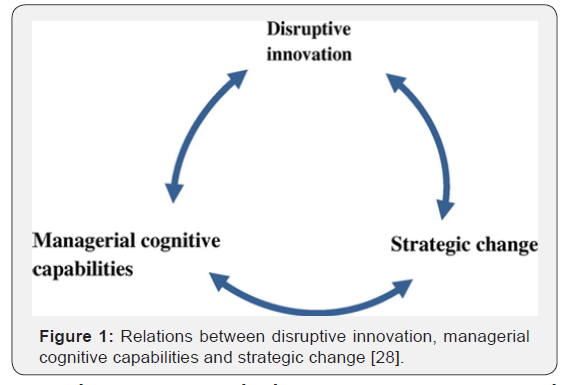
The disruptive innovations construed within polymediation and media digitalization -have transformed the rules dominating media industry [8]. When industry ecosystem incumbents have dynamic organizational capability and make necessary strategic changes, they could exploit disruptive innovations. Thus, as crucial variables; managers’ cognitive capabilities, dynamic organizational capabilities, and strategic changes share key relationships [2]. Moreover, research by Jones & Salter [9] have shown that Media industry ecosystem incumbents could exploit innovations only when they create necessary dynamic organizational capabilities. The basis of creating these dynamic capabilities lies in development of managerial cognitive capabilities. Therefore, it is important for organizations to understand that development of managers’ cognitive capabilities on the one hand helps the better understanding of disruptive innovations and it is the basis of dynamic organizational capabilities and strategic changes on the other hand. In this regard, exploiting disruptive innovation does not occur without the reconfiguration of management capabilities. Sandström, Berglund, & Magnusson [10] contend that dynamic organizational capabilities are means to achieving organizational strategic objectives.
Disruptive technologies such as the new media technologies create new rules and system for the management. For instance, the new media technologies bring about digital systems that provide media managers with the ability to develop their skills and conduct tasks through the application of special visual effects in their news packages and online placement. Such visual effects afford the opportunities for the media managers to re-design, polish, add graphic designs and perform other creative tasks in news production [11]. The emergence and dominance of these new rules and system has considerable impacts on incumbents in industry ecosystem. Thus, the recognition of media industry ecosystem dynamics helps media managers to set the priorities of strategic changes in order to preserve value-creation ability and to improve organization competitive position in that ecosystem. That is to say, for media managers, cognitive capabilities are vital in terms of understanding ecosystem dynamics and triggering strategic changes.
As shown in Figure 1, the disruptive innovation, managerial cognitive capabilities and strategic change are mutually interrelated. The emergence of disruptive innovation creates its own winners and losers. Winners in this context are media organizations that have the required capabilities to take advantage of innovation. The benefits of an innovation in industry are distributed between different groups such as innovators, customers, suppliers, imitators, and other followers. Therefore, the distribution of innovation-related benefits is based on three fundamental building blocks: the appropriability regime, dominant design paradigm and complementary assets [12,13].
From the perspective of business management, these new digital and technology-driven rules and standards provide for the emergence of dominant design paradigm. As the dominant design emerges, competition shifts to price and away from design. Competitive success then shifts to a whole new set of variables. Scale and learning become much more important, and specialized capital gets deployed as incumbents seek to lower unit costs through exploiting economies of scale and learning. In this regard, reducing uncertainty over product design provides an opportunity to amortize specialized long-lived investments [12]. In addition, complementary assets provide set of capabilities that for instance, the media organizations need to take advantage of these innovations. Whether origin of innovation is inside the company (which means the company is innovator) or in institutional context, these complementary assets or capabilities are needed in order to take advantage of innovation. In almost all cases, the successful commercialization of innovation requires that the know-how in question be utilized by the management in conjunction with other capabilities or assets. Services such as marketing, competitive manufacturing, and after-sales support are almost always needed. These services are often obtained from complementary assets which are specialized. In some cases, as when the innovation is systemic, the complementary assets may be other parts of a system. Even when an innovation is autonomous, as with plug compatible components, certain complementary capabilities or assets will be needed for successful commercialization [12]. Christensen & Overdorf [2] note that sustaining innovations are nearly always developed and introduced by established industry leaders; however, those same companies never introduce - or cope well with - disruptive innovations.
Disruptive innovation does not necessarily involve cuttingedge new technology, as radical innovation does. Sometimes, innovations could be disruptive in that they didn’t address the next-generation needs of leading customers in existing markets. They had other attributes, of course, that enabled new market applications to emerge - and the disruptive innovations improved so rapidly that they ultimately could address the needs of customers in the mainstream of the market as well. Hence, disruptive innovation involves the application of a relatively new, but not cutting-edge technology to a new product category [14]. Technology-driven disruptive typically emerges from startup firms that focus on upstream Research and Development (R&D) exploration activities and unfolds through uncertainties, intermittent evolutionary and complex processes that involve multiple actors. A disruptive business model unfolds when a market emerges for the technology and downstream firms begin to exploit market opportunities [15].
This section discusses polymediation and media digitalization as disruptive factors; x-raying conditions and nature of technological disruptions they represent. They consider that media practice and management faces challenges that require the understanding and appreciation of the new tasks and their implication to traditional media management practice.
Polymediation represents the condition that disruptive technologies stemming from other industries or emerging segments transform the rules dominating media industry ecosystem. Polymediation is a word that is meant to signify the idea that we now live in the ultimate co-created mediated reality. It is with us and all around us - always - already we exist in the media. We are continually weighing, measuring, filtering, balancing, discarding, and constructing our mediated reality. Polymediation is not just a product; it is an ongoing process [16].
Some of the characteristics of polymediation that may shape our performances of identity include ubiquity, shapeshifting authorship, the simultaneous fragmentation and merging of identity and division/communality [16]. Ubiquity is a fundamental piece of the polymediation equation. In this context, the term ubiquity refers to the widespread and often simultaneous accessibility and presence of media. The saturation of new media platforms in our daily lives has altered how we seek information and how we connect with others and maintain relationships, while also providing some opportunities for the shifting nature of content authorship and ownership. Messages are mediated by different authors in different contexts. Individual users of new media technologies have greater power to create and distribute content; making users not just consumers, but also producers [16]. A third element of polymediation is the paradox of the fragmented/unified performance of identity. Our presences online are all a part of who we are and are performed specifically for others. Not everyone sees all of these performances; they are intended for different audiences. Therefore, our self is decentered but interconnected. All of our performances, online and offline, constitute the self, which means the ways in which technology fragments and merges identity performances [16]. More information, more media outlets, and more social networking can do as much to divide us as unite us. While polymediation has the potential to divide us, it also creates possibilities for communality and the creation of shared meanings.
Polymedia shift the emphasis from discrete technologies or platforms to media environments. Rather than focus on the properties or affordances of specific technologies, polymedia shifts our attention to how users navigate media environments and choose platforms from a range of communicative opportunities [17]. Polymedia is an emerging environment of communicative opportunities that functions as an “integrated structure” within which each individual medium is defined in relational terms in the context of all other media [18].
Thus, the emergence of digital media or digitization of media forms the foundation of polymediation. Digital media have led to domination of connective action logic on social life. Digital media networking can change the organizational game, given the right interplay of technology, personal action frames, and, when organizations get in the game, their willingness to relax collective identification requirements in favor of personalized social networking among followers. The logic of collective action that typifies the modern social order of hierarchical institutions and membership groups stresses the organizational dilemma of getting individuals to overcome resistance to joining actions where personal participation costs may outweigh marginal gains, particularly when people can ride on the efforts of others for free and reap the benefits if those others win the day. In short, conventional collective action typically requires people to make more difficult choices and adopt more selfchanging social identities than DNA based on personal action frames organized around social technologies. The spread of collective identifications typically requires more education, pressure, or socialization, which in turn makes higher demands on formal organization and resources such as money to pay rent for organization offices, to generate publicity, and to hire professional staff organizers. Digital media may help reduce some costs in these processes, but they do not fundamentally change the action dynamics [8].
The logic of connective action foregrounds a different set of dynamics from the ones just outlined. At the core of this logic is the recognition of digital media technologies as organizing agents [8]. When these interpersonal networks are enabled by technology platforms of various designs that coordinate and scale the networks, the resulting actions can resemble collective action, yet without the same role played by formal organizations or transforming social identifications. In place of content that is distributed and relationships that are broken by hierarchical organizations, social networking involves co-production and codistribution, revealing a different economic and psychological logic: co-production and sharing based on personalized expression [8]. Digital technologies have transformed the rules dominating many industries including media industry. Digital technologies in media industry are disruptive. These technologies are the origin of many disruptive innovations in media industry.
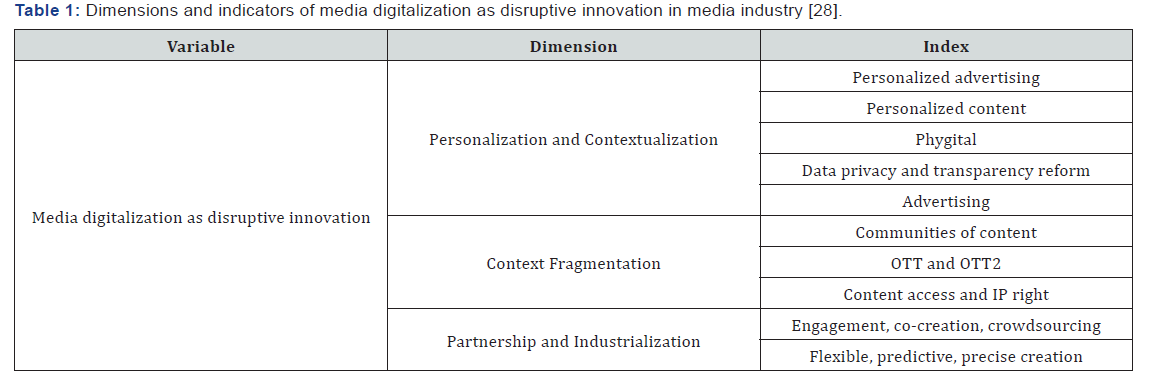
The media industry has already been transformed by several waves of digitalization. To thrive, media enterprises will have to keep technology at the heart of what they do, helping them create compelling content and reach new audiences [19]. Digitalization has become so important that the boundary between the media and technology industries has broken down. This has implications for both traditional media companies and digitally native startups. However, research has identified a number of digital initiatives that will be the building blocks media companies can use to transform their business. The initiatives are grouped into three themes - personalization and contextualization, content fragmentation, and partnerships and industrialization - which are believed will be of importance to the digital transformation of the media industry.
As more content is produced, marketers and content creators need to produce personalized content and personalized advertising to engage consumers facing information overload. Both these developments will raise data privacy and security issues that firms need to resolve ethically and transparently.
Content is being distributed across an increasing number of platforms, devices and media. For companies, this presents challenges (to keep their audiences engaged) and opportunities. Communities of content, which have sprung up on instant messaging and social platforms, will be fertile ground for advertisers, as long as their strategy is adapted to the group they are targeting.
As the creation and distribution of content have become fragmented, partnerships in the media industry have become more important. Technology is enabling enterprises to partner with their audiences to fund or co-create innovative content. Companies will also need to harness technology effectively, setting it at the heart of a digital organization, balancing creativity in content creation with industrializing digital processes such as production and distribution [19]. Digitalization as disruptive innovation has influenced different parts of media industry – in both print and electronic media organizations. In different studies, the impacts and consequences of digitalization on media organizations have been investigated. In some of them, the general aspects of digitalization impacts on media industry have been described [20]. Some other researches have been devoted to digitalization impacts on Public Service Media (PSMs) [21- 23].
However, the importance of accurate understanding of disruptive innovations by top managers and the impact of proper understanding of these innovations on strategic decision-making have been addressed in many researches. Saltzi & Dickinson [24] note that the traditional news organizations are undergoing substantial changes in terms of strategic thinking and work organization which ultimately affect the media work and management practice. Therefore, there is a sound relationship between the extent of recognition of disruptive innovations by managers and the quality of strategic decisions. Media digitalization with multiple waves of disruptive innovations has widespread outcomes and consequences for every type of media. Thus, media managers require proper understanding of media digitalization and its impacts on different aspects of business and organization actions.
Media digitalization as a disruptive innovation is caused by different drivers. Demographic factors, new consumer behaviors and expectations, ecosystem challenges and technology processes are four types of elements that act as disruptive innovation drivers. Media digitalization as disruptive innovation has influences on media. These impacts are articulated as three dimensions of personalization and contextualization, content fragmentation, partnership and industrialization. Understanding of disruptive innovation by managers is measurable based on their understanding of these dimensions [25-28]. These dimensions are components of media digitalization for media organization. The dimensions and indicators of media digitalization as disruptive innovation are illustrated in Table 1.
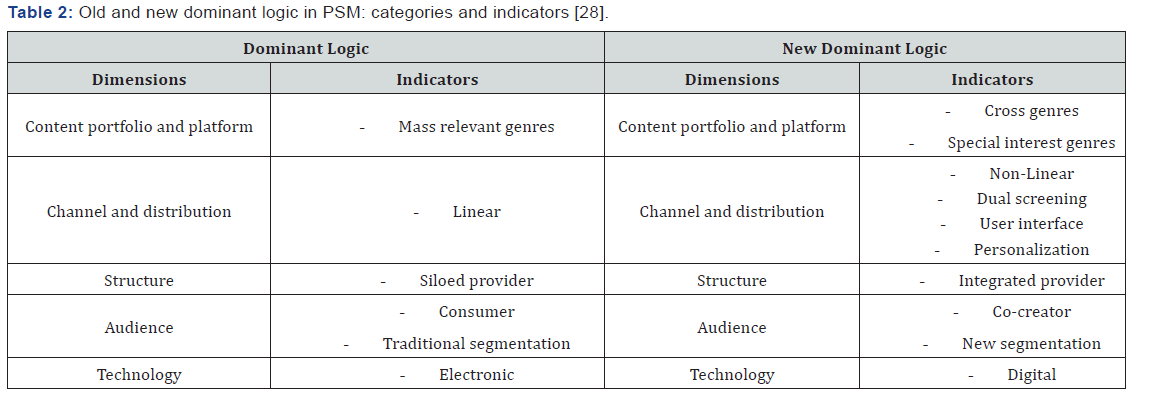
The dominant logic reflects both managerial cognitive capabilities and strategic change priorities. The measurement of new dominant logic attributes shows the extent of organization willingness to digitalization as disruptive innovations. In addition to the extent of new dominant logic dominance, the results of this evaluation illustrate the priority of digitalization in strategic plans of IRIB. Identifying the priorities of strategic actions in view of mangers also illustrates priorities of strategic changes (Table 2).
While many media organizations are still getting to grips with using social media effectively, others are still moving one or two steps ahead of business with their use of new media technologies. This is shown by the explosion in the digital mobile app market and wearable technologies that have become the latest ‘must-have’ gadgets on the market. Tagged as ‘digital disruption technologies’, these new systems now put pressure on business owners to bring together their IT department and their marketing team to collaborate on sales strategies. Thus, the one-way physical marketing of olden times has long gone. Yes, it was much simpler in the past when you could take out; for instance, a print advert in a newspaper or magazine, or even in more recent times encouraging people to buy from you through a well-targeted email campaign. In these days of social media marketing, it is definitely a two-way street where social interaction and trust building are the key to selling your brand. Today the customer is more in charge of marketing efforts than in the past. They are digitally connected to diverse businesses and media sites and empowered to review and patronize content, product and services as well as provide feedback; even without ever having to physically meet with such business or media site. The goal with disruptive technology is to get businesses and media organizations closer to their target audience with something innovative on their chosen device.
Technology has shaped media practice and management all over the world. This assumption recognizes that new technology, along with globalization and the conglomeration of media, is causing shift from the traditional and bringing changes in the ways and manners media content is accessed, generated, produced and disseminated. This change has so been described as disruptive as impact on media space is arguably visibly fundamental. The rise of disruptive technologies and business models in the media sector is causing considerable concern among sector management, many of who seem unprepared to deal with increased, and new, competitive pressures. Management are particularly concerned about the use of social media, customer experience, cloud and broadband based technologies. Media companies face a barrage of new threats, from new entrants such as Netflix disrupting traditional television, to large advertising platforms such as Facebook, disrupting the traditional revenue models of media organizations. New technologies such as such as the Internet, mobile smart phones and other digital gadgets are likely to create a host of new threats, from improved competitive business models for competitors, to new entrants taking market share or completely disseminating markets as such.
To Know More AboutGlobal Journal of Archaeology & Anthropology Please click on: