Showing posts with label Antimicrobial activity. Show all posts

Thursday, September 3, 2026

In vitro assessment of the synergism between extracts of Zanthoxylum zanthoxyloides and Zanthoxylum leprieurii and some standard antibiotics - Juniper Publishers


Pharmacy & Pharmaceutical Sciences- Juniper Publishers

Abstract

Purpose: To survive in harsh environments, plants developed functional and metabolic adaptive mechanisms. One of the most relevant defense strategies is the biosynthesis of secondary metabolites, including terpenoids, alkaloids, flavonoids, and phenolics that are accumulated in cellular organelles or secretory structures. Hence, plants are recognized as a valuable source of natural products and for thousands of years very diverse herbal formulations were created to treat several diseases. Zanthoxylum zanthoxyloides and Zanthoxylum leprieurii, two Rutaceae species native to Guinea-Bissau, are well known for their ethnopharmacological relevance.

Methods: In the present study, the in vitro antimicrobial activity of these plants against human pathogens was assessed and the phytochemical profile was screened. The extracts of roots and young leaves were obtained by sequential extraction of increasing polarity (n-hexane, CH2Cl2, EtOAc, MeOH and H2O) and tested against Gram-positive and Gram-negative bacteria. The minimum inhibitory concentration (MIC) and minimum bactericidal concentration (MBC) were determined, as well as the evaluation of the synergic potential of the extracts.

Results: Z. leprieurii leaves extracts, the most apolar ones, had the highest antimicrobial activity, being able to inhibit the growth of Enterococcus hirae and all the Staphylococcus strains assayed, including the resistant ones. A synergic effect between the Zanthoxylum species extracts and standard antibiotics was found, reverting the activity of resistant strains. The phytochemical screening revealed the presence of terpenes, flavonoids, and phenolic compounds, known to have antibacterial properties.

Conclusions: The obtained results point to the validation of their use in tradition medicine and emphasize the worthwhile of additional studies of these species to better understand the compounds and mechanisms that may be valuable to restore antibacterial activity.

Keywords: Zanthoxylum zanthoxyloides; Zanthoxylum leprieurii; Antimicrobial activity; antibiotics; Synergic effect; Bioactivity

Abbreviations: MIC: Minimum Inhibitory Concentration; MBC: Minimum Bactericidal Concentration; LISC: Lisbon University Herbarium

Introduction

The use of plants as a medicine has been reported since the beginning of civilization. Diverse plant parts and extracts led to innumerous formulations created to treat a wide variety of diseases [1-3]. Nowadays, plants are still part of traditional medicine but also play a greater role on the source of new compounds that can be active by themselves or be used as lead molecules to developed new drugs.

The discovery of penicillin in the early 1940s, led to the development of several classes of compounds with antibacterial activity which allowed the reduction of mortality and morbidity caused by infectious diseases. However, the irrational and uncontrolled use of antibiotics by health professionals, animal industry and agriculture resulted in the emergence of resistant microbial populations. As a result of this strong selective pressure and increased volume of intercontinental travel, the development and transmission of multiresistant bacteria is turning into a serious public health problem [4,5].

According to [6], the mechanisms of antibiotic resistance can be summarized in four major classes: I. Modifications of the antibiotic molecule; II. Decreased antibiotic penetration and efflux; III. Changes in target sites; IV. Resistance due to global cell adaptations. The combined effects of these mechanisms associated with rapid growth rates and the ability to exchange genes led to the development of methicillin resistant (MRSA), Vancomycin Intermediate Staphylococcus aureus (VISA) and Vancomycin Resistant Enterococci (VRE). For instance, in 15 European countries more than 10% Staphylococcus aureus infections are caused by methicillin-resistant strains (MRSA), with several countries, namely Portugal presenting resistance rates closer to 50%. Several highly resistant gram-negative pathogens like Acinetobacter species, multidrug-resistant, Pseudomonas aeruginosa, carbapenem-resistant Klebsiella species and Escherichia coli are also emerging as significant pathogens, transforming antibiotic resistance in one of the greatest public health threats of the 21st century [7].

The occurrence of various infectious diseases and the increasing prevalence of antibiotic-resistant pathogens have become a serious threat to human health, and it is necessary to find new antimicrobial agents capable of reversing antibiotic resistance. Pharmaceutical companies, in the past few decades, have shifted their development efforts to chronic diseases and antiviral compounds instead of the development of new antibiotics molecules [8]. Several previous studies proved that there is a huge potential of plant-derived compounds as antibacterial and as a resistance-modifying of other antibiotics through synergistic behavior [9]. Therefore, in vitro antibacterial assessment of plants extracts, their phytochemical profile screening and the evaluation of the synergic affect when combined with antibiotics reversing the bacteria resistance may lead to a new approach on antiinfective therapy [10].

The selected species for the present study are autochthonous plants from Guinea-Bissau, a small African Portuguese speaking country, where there is a wide range of plants used in herbal medicine to treat endemic diseases as result of fragile health services, easily found in local markets and pharmacies [11]. This country is estimated to have a vascular flora with around 1507 species, 1495 of which are native. Since 1997, to protect biodiversity, a network of protected areas was established in Guinea-Bissau, a collaboration between National Institute for Biodiversity and Protected Areas and International Union for the Conservation of Nature [12]. Traditionally used and present in Guinea-Bissau flora, there are two species of Zanthoxylum with medical properties. Zanthoxylum zanthoxyloides is used to treat malaria, sick cell anemia, tuberculosis, ulcers, hemorrhoids, injuries, and syphilitic wounds as well as arthritic pain [13]. Zanthoxylum leprieurii is traditionally used in the treatment of HIV,malaria, urinary infections, rheumatic pain and used as antiseptic [14]. The present work aims to evaluate the in vitro antimicrobial activity of the two Zanthoxylum species, Z. zanthoxyloides and Z. leprieurii, against a selected panel of microorganisms, to better understand their application in traditional medicine. The potential synergistic effect of plant extracts with standard antibiotics was tested as well as screening of the phytochemical profile.

Materials and Methods

Plant materials

Samples of Z. zanthoxyloides and Z. leprieurii roots and young stems were collected during 2016-2017, in Orango island, Bagos archipelago, Guinea-Bissau and dried at room temperature. Voucher specimens were deposited and identified at the Lisbon University Herbarium (LISC).

Plant extracts

The plant material was powdered, obtaining 6g of leaves and 30g of roots of Z. zanthoxyloides and 13g of leaves and 27g of roots of Z. leprieurii. Each powdered material was subjected to extractions with five ascending polarity solvents: n-hexane (n-hex), dichloromethane (CH2Cl2), ethyl acetate (AcOEt), methanol (MeOH) and water (H2O). Ensuing the usual procedures [15] each solvent extraction took about 24h, at room temperature, with occasional shaking followed by decantation, filtration, drying and storage at -20ºC, until use.

Bacterial strains

To assess the in vitro antimicrobial activity of each plant, extract the model proposed by [16] was considered. The microorganisms include a range of Gram-positive and Gram-negative bacteria, all known to be the cause of several human diseases Table 1.

Antibiotics

The standard antibiotics amoxicillin and oxacillin, purchased from Sigma (Madrid, Spain).

Minimum inhibitory concentration (MIC)

The minimum inhibitory concentration (MIC) values were determined by the microplate broth microdilution method according to CLSI (2019). Briefly, on each well of the microplate, 100 μL of the medium plus 100μL of each extract solution to be tested were added, obtaining concentrations ranging between 500-7.5μg/mL. An inoculum of each microorganism was also added (10μL; final concentration 104cfu/mL). Appropriated antibiotics were used as reference for antibacterial activities. After incubation at 37ºC for 24 h, the optical density at 630nm was measured in a Biotek ELX 808 plate spectrophotometer to assess the bacterial growth and confirmed by macroscopic evaluation. The samples with MIC value ≤ 100μg/mL were determined to have antibacterial activity. All assays were performed in triplicate.

Minimum bactericidal concentration (MBC)

The minimum bactericidal concentration (MBC) was evaluated following the CLSI method [17] with some modifications. 10μL of suspension from each well showing no visible growth was spread out on a Muller-Hinton agar plate. Colony growth was observed after 24h incubation at 37ºC. MBC corresponds to the lowest concentration of extract that reduces almost at 100% the viability of the bacteria.
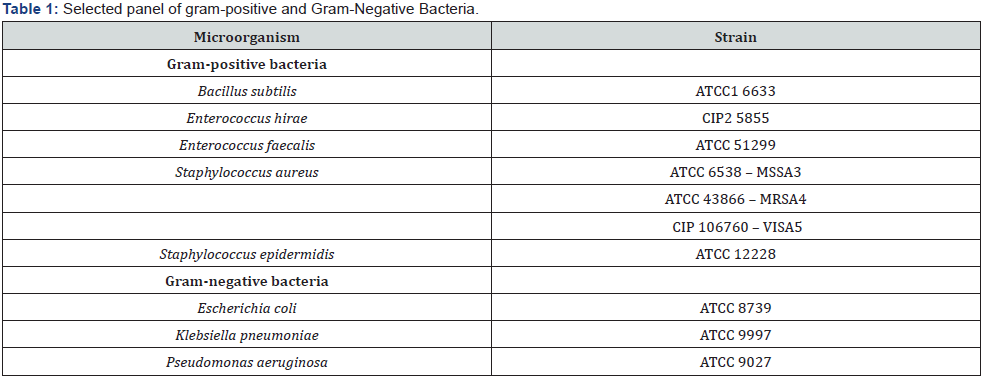
1ATCC: American Type Culture Collection, Maryland, USA; 2CIP – l’Institut Pasteur Collection, Paris, France; 3MSSA: Methicillin-Sensitive Staphylococcus aureus; 4MRSA: Methicillin-Resistant S. aureus; 5VISA: Vancomycin-Intermediate S. aureus.

Synergic effect of extracts with standard antibiotics

In order to determine the type of interaction between the extracts and the standard antibiotics (amoxicillin and oxacillin), a checkerboard assay was performed against the MRSA strain ATCC 43866 and VISA strain CIP 106760 according to [18]. Two-fold serial dilutions of antibiotic was prepared on the horizontal rows of microtiter plate and then cross- diluted vertically by two-fold serial dilutions of the extracts. The concentration of each antibiotic ranged from 1 to 1/2048 of the MIC and the concentration of the compounds from 1/2 to 1/64 of the MIC.

The synergic effect was determined based on the fractional inhibitory concentration index (FICI), calculated according to the formula

FICI= FIC(A)+FIC(B)

where, FIC(A)= MIC (A in the presence of B)/MIC (A alone) and FIC(B)= MIC (B in the presence of A)/MIC (B alone) [18]. When FICI ≤ 0.5 a synergic effect is considered. FICI ranging 0.5-4 are classified as indifference and FICI values > 4 an antagonistic effect is pondered [18].

Phytochemical screening

A semi-quantitative phytochemical analysis to detect the major chemical groups found in each extract was carried out through thin layer chromatography (TLC) on silica gel plates [19]. Proper mixtures of eluents were used to develop and the spots were revealed with appropriated spray-reagents made according to [20]. being: anisaldehyde-sulfuric acid reagent for terpenoids,Dragendorff reagent for alkaloids, natural products–polyethylene glycol (NEU) reagent for flavonoids and Fast Blue salt reagent for phenolic compounds. Results were displayed between absent (-) and a strong intensity (+++).

Results

Minimum inhibitory concentration (MIC) and minimum bactericidal concentration (MBC)

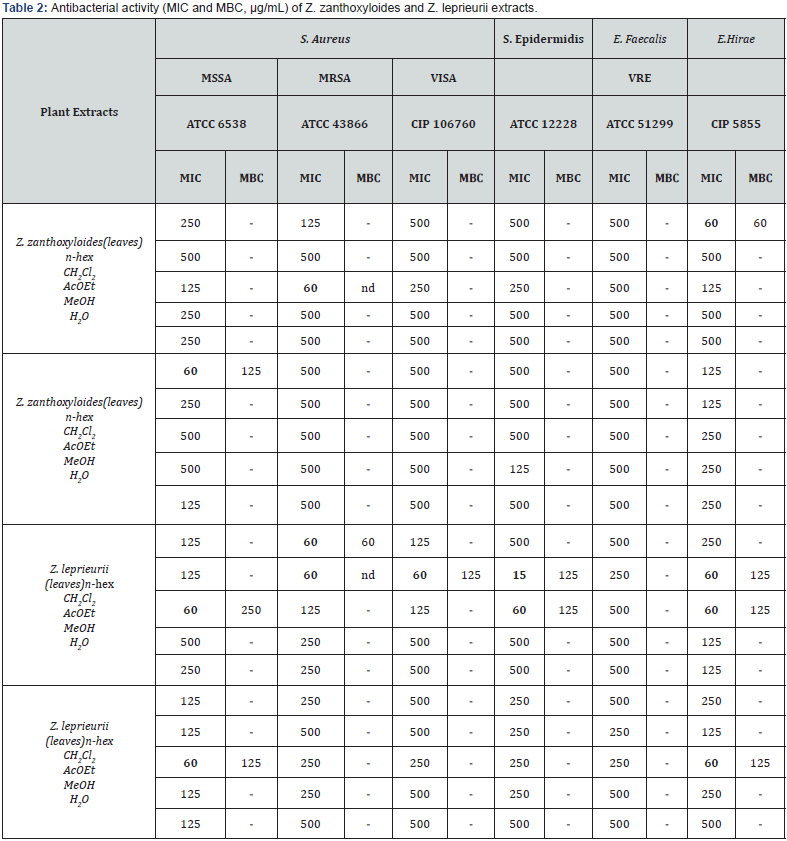
A total of 20 extracts of two Zanthoxylum species were prepared where the bactericidal and bacteriostatic activity (MBC and MIC) were evaluated against an enlarged panel of Gram positive and Gram negative sensitive and resistant bacteria strains. The results are presented in Table 2.

The MSSA growth was inhibited by Z. zanthoxyloides n-hex root extract (MIC 60µg/mL) and by both Z. leprieurii leaves and roots AcOEt extracts (MIC 60µg/mL). Z. zanthoxyloides AcOEt leaves extract and Z. leprieurii n-hex and CH2Cl2 leaves extracts inhibit the development of the MRSA strains (MIC 60 µg/mL). The VISA strain was inhibited by Z. leprieurii CH2Cl2 leaves extract (MIC 60µg/mL). Z. leprieurii CH2Cl2 and AcOEt leaves extracts also presented activity against S. epidermidis (MIC respectively 15 and 60µg/mL). Z. zanthoxyloides leaves n- hex extract, Z. leprieurii leaves CH2Cl2 and AcOEt extracts and Z. leprieurii roots AcOEt extract exhibited inhibitory activity against E. hirae (MIC 60μg/mL). The most active plant part was the Z. leprieurii leaves and the extract presenting major activity was the CH2Cl2 extract which displayed activity against MRSA, VISA, S. epidermidis and E. hirae strains.
Synergic effect of extracts with standard antibiotics

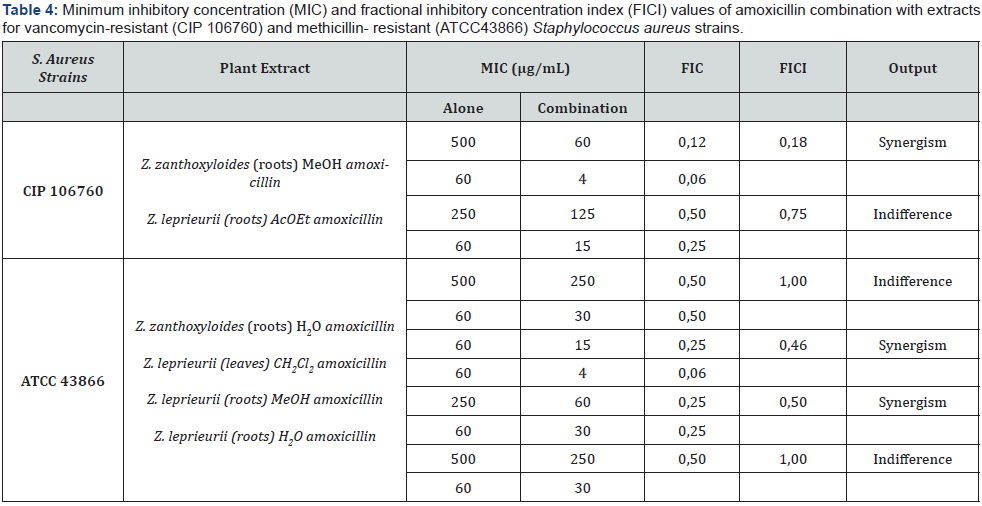
In order to evaluate the interactions between the extracts and two reference antibiotics used to treat S. aureus infections (amoxicillin and oxacillin), the checkerboard assay was performed with two S. aureus strains one methicillin-resistant (MRSA, ATCC 43866) and vancomycin-resistant (VISA, CIP 106760). The results for extracts with fractional inhibitory concentration index (FICI) 1 or lower are displayed in Table 4 and Table 5. FICI values under 0.5 are considered to show a synergic interaction between the antibiotic and the plant extracts [18].

Phytochemical screening

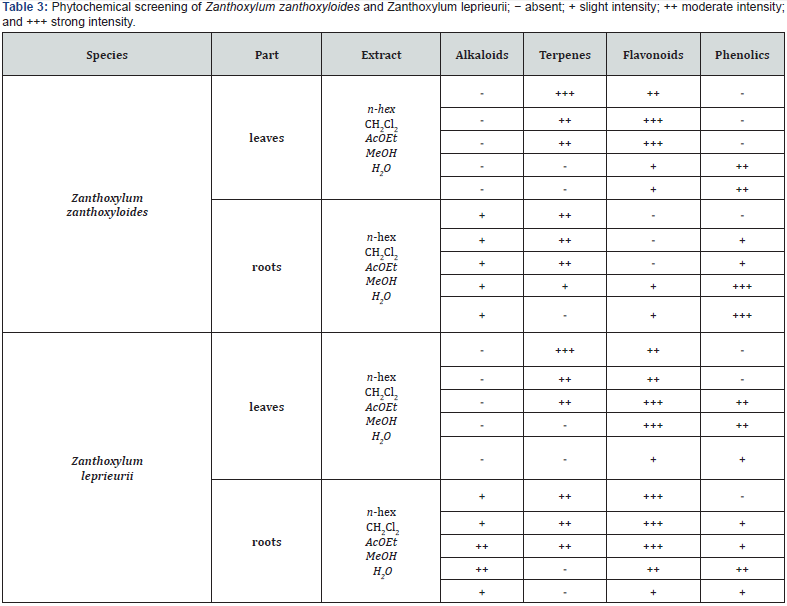
Results are displayed in Table 3.
MSSA: Methicillin-Sensitive Staphylococcus aureus; MRSA: Methicillin-Resistant Staphylococcus aureus; VISA: Vancomycin- Intermediate Staphylococcus aureus; VRE: Vancomycin-Resistant Enterococcus; Nd: Non-Defined; (-) not tested.

Discussion

Analyzing the results displayed in (Table 2), the bioactive extracts are the non-polar ones, mainly CH2Cl2 and AcOEt extracts which are rich in terpenes and flavonoids (Table 3). Terpenoids have antibacterial properties in nature, acting by an unclear mechanism. They seem to disrupt the membrane of bacteria cell [8]. Flavonoid’s bioactivity is markedly related with the antioxidant action. Nevertheless, several properties have been reported as anti- inflammatory, antimicrobial, antiviral, antiallergic and antitumor [21-23].

No antibacterial activity was found for Gram-negative bacteria and B. subtilis. The presence of a highly hydrophobic outer membrane that works as a permeability barrier in this group, can explain those results [24]. Comparing the MIC / MBC values (Table 2), it is possible to deduce that the extracts that presented antibacterial activity will act as bacteriostatic agents [25]. MIC is considered the standard parameter to determine the susceptibility of bacteria to an external agent like a compound or extract and corresponds to the lowest concentration of compound/extract that inhibits the bacterial grow. MBC is considered a relevant index of the bactericidal activity of antimicrobial agents. MBC corresponds to the lowest concentration of extract that reduces almost at 100% the viability of the bacteria. If the MIC and MBC are in the same range, the extract will probably kill the bacteria.

The antimicrobial activity of Z. zanthoxyloides polar extracts (ethanol and water extracts) against resistant isolates of S. aureus was previously reported by [16]. Similarly, the antibacterial activity of Z. leprieurii and Z. zanthoxyloides essential oils against a MSSA strain was reported by [26,27] published the results of the antibacterial activity of steam bark MeOH/H2O extract of Z. leprieurii against a MSSA strain. Those results sustained the ethnopharmacological properties described for these Zanthoxylum species, once they are mostly used for intestinal disorders and wound care.

Staphylococcus aureus strains are one of the major pathogens worldwide related with a large range of clinic manifestations with different levels of severity, triggering lethal infections, by synthesizing a large variety of toxins and enzymes. S. aureus strains developed an increasing antibiotic resistance such as a methicillin resistance (MRSA) and a vancomycin-intermediate resistance (VISA) [28]. The emergence of multidrug resistant bacteria strains and the increase of the pathogenicity of the strains are intimately related [29]. One approach to overcoming bacterial resistance mechanisms and restoring antibiotic efficacy is the use of inactive plant extracts when administered individually, in combination with antibiotics. This combinatory strategy may play an important role on the management of challenging infectious diseases [18].

In order to establish the potential interaction between the plants extracts and references antibiotics the checkerboard assay was performed as previously described. The extract that stood out was the Z. zanthoxyloides roots MeOH extract, which by itself presents no relevant antibacterial activity against resistant VISA strain (MIC= 500μg/mL) but was able to restore synergistically the antibacterial activity of the two antibiotics tested, amoxicillin from 60 to 4 μg/mL, (FICI = 0.18) and oxacillin from 125 to 7.5μg/mL (FICI = 0.31), corresponding in both cases to a 16- fold reduction. Z. leprieurii leaves AcOEt was also able to interact synergistically with oxacillin against the VISA strain, lowering the antibiotic MIC from 125 mg/mL to 7.5μg/mL (FICI = 0.31), corresponding to a 16-fold reduction.

For the MRSA strain (ATCC 43866) Z. leprieurii CH2Cl2 extract was able to revert synergistically the antibacterial activity of amoxicillin decreasing the MIC value from 60 to 4μg/mL (FICI= 0.46) corresponding to a 16-fold reduction. Z. leprieurii roots MeOH extract also displayed some synergistic interaction with amoxicillin against this strain, lowering the antibiotic MIC from 60 to 30μg/mL (FICI =0.5). The water extract of Z. zanthoxyloides roots when combined with oxacillin, decreased the antibiotic MIC value from 125μg/mL to 15μg/mL against MRSA strain (FICI=0.37).

Conclusion

Due to the growing problematic of drug-resistant bacteria it is urging to discover new compounds and new pathways to control and revert antibiotic resistance, to regulate the increasing bacterial derived diseases worldwide. The use of natural products as plant extracts reveal to have a multi target mechanism of action leading to a reduced prevalence of bacterial resistance. Therefore, the study of plant compounds and their synergistic interaction is a fundamental step in overcoming community health problems arising from current bacterial infections.

Some of the studied extracts were active against Gram positive strains but the results that stood out were the synergistic activity that some of the extracts presented, being able to restore the activity of the tested antibiotics. Overall, these results emphasize the worthwhile of additional studies of these species to better understand their efficacy and safety in traditional medicine and the mechanisms behind the restore of the antibacterial activity.

To Know more about   Global Journal of Pharmacy & Pharmaceutical Sciences

Click here:   https://juniperpublishers.com/gjpps/index.php

To Know more about our Juniper Publishers

Click here: https://juniperpublishers.com/index.php


Friday, October 27, 2023

Endophytic Microbial Remediation of Heavy Metals: An Overview - Juniper Publishers

 Biotechnology & Microbiology - Juniper Publishers


Abstract

Technological explorations (chemical fertilizers, pesticides, timber preservatives, polythene, microelectronic, synthetic textiles, mining extractions, smelting, aerosols, metallurgic extractions, leaching, automobile exhausts, sewage sludge, coal combustion products, pharmaceutical and hospital wastes) are the major source of heavy metal contamination and pollution in the environment). Metal contaminated sites have been effectively cleaned by a process called bioremediation. This bioremediation process has emerged as an effective application to remediate heavy metal pollution. Heavy metal remediation by plants is known as phytoremediation which is time consuming process. Further, high concentrations of pollutants lead to toxicity of the remediating plants. This situation could be overcome by exploring the plant intriguing microbes, which would improve the plant growth by facilitating the appropriation of toxic heavy metals. Through in-situ rhizospheric process, plants can bioconcentrate phytoextraction and bioimmobilize phytostabilization of toxic heavy metals. The properties such as bioavailability and mobility of heavy metal are very critical factors in the rhizosphere where root uptake of heavy metals takes place. These factors affect the rate of phytoextraction and phytostabilization. The uptake of heavy metals can be enhanced significantly by its solubilization in soil through reaction with ligands, which allow the formation of mobile complexes. Endophytic fungi take part in this mechanism of enhancing heavy metal solubilization by producing organic compounds like citric acid and oxalic acid, which form complexes and enhance heavy metal reclamation processes.

Keywords: Heavy Metals; Endophytes; phytoremediation; Antimicrobial activity; Secondary metabolites; Soil pollution

Introduction

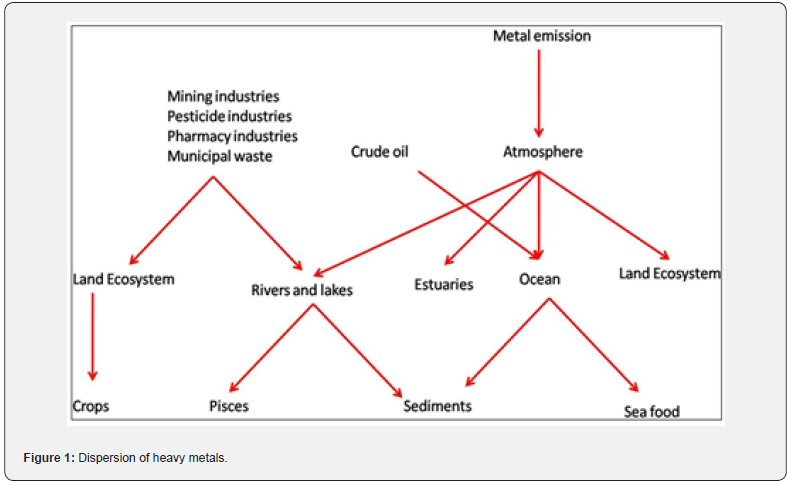
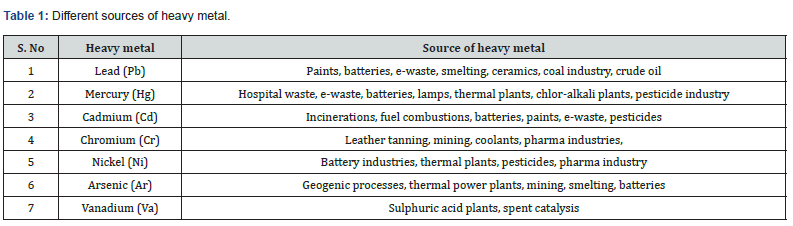
Heavy metals causing soil pollution has become one of the most severe worldwide environmental problems. For the last two decades, industrial explorations/activities have been leading to a continuous enhancement in heavy metal (chromium, nickel, lead, mercury and cadmium) discharge into the soil, rivers and ocean. Different sources of heavy metals include Hospital waste, e-waste, batteries, lamps, thermal plants, chlor-alkali plants, pesticide industry, paints, mining, coal industries, thermal industries, sulphuric acid plants, mining, smelting, pyrolysis and pharmaceutical industries [1]. Table 1 clearly denotes the different sources of each and every heavy metal. Continuous increase of metal levels in soil and water poses a health risk to humans and animals through the food chain and or contaminated drinking water. The dispersion of heavy metals through different sources including mining, pesticides, pharmaceutical, crude oil and metal emission was clearly represented in Figure 1, [2].

Different conventional methods such as reverse osmosis, evaporation, adsorption, precipitation, ion exchange and electro chemical methods have been used for the removal as well as treatment of heavy metal contaminating sites [3,4]. However, conventional methods involve application of more reagents, high energy, high cost and result in incomplete and ineffective removal as well as producing toxic metal sludge [2]. Bioremediation has emerged as a potential tool to treat heavy metal contaminated sites [5]. Different microbes are capable of reducing the heavy metal stress on plants, enhance the bioavailability of metal for plant uptake and promote growth [6]. Fungal endophytes live inside the healthy plant tissues and show significant metal-binding capacity [7] and provide more advantages over bacterial endophytes [8].

Heavy Metal Pollution

In our everyday life a wide variety of hazardous materials are released into natural resources from different kinds of industries including chemical, biochemical, pharmaceutical, fertilizer, pesticides, battery industries [9]. Among different pollutants, heavy metals are of major concern to human health due to their cytotoxicity, carcinogenicity, and mutagenicity [10]. Phytoremediation, the use of plants to remediate polluted soils, an eco-friendly and cost- effective approach receiving considerable global attention for a decade [11]. A large number of plant species are capable of hyper accumulation of heavy metals in their tissues; however, phytoremediation in practice has several constraints at the level of sites as these are with a variety of different contaminants [12]. Further, the success of phytoremediation of metals depends upon a plant’s ability to accumulate high concentrations of the metals [13]. Heavy metalhost plant- endophyte associations have been the objective of particular attention due to the potential of microbes for bioaccumulation of metals from polluted environment or its effects on metal mobilization/immobilization and consequently enhancing metal uptake and plant growth. The present review explains how the mutual partnerships between plants and their associated endophytes can be exploited as a strategy to accelerate plant biomass production and influence plant metal accumulation through different mechanisms including adaptive strategies, metal mobilization, and immobilization mechanisms.

Endophytic Microbes

Endophytic microbes are intriguing microorganisms present inside the plant tissue with mutual/symbiotic relationship. Endophytes provide plant’s protection by triggering signaling pathway through the elicitation of signal molecules/ phytohormones/secondary metabolites. Endophytes stimulate plant growth by biosynthesizing plant proteins and other molecules. Endophytes are involved in biotransformation and biocatalytic processes. Endophytes enhance the nutrient solubilization and nutrient uptake by plants. Endophytes stimulate in vitro seed germination, and enhancement of production of plant secondary metabolites. Endophytes act as bio controlling agents, biofertilizers and biopesticides. Further endophytes are involved in pollution control, and heavy metal remediation (bioremediation/phytoremediation) through different mechanisms. Endophytic microbes in different ways affect plant growth. Endophytic microbes can actively or passively promote growth through a variety of mechanisms. and there are a large number of soil microorganisms that do not appear to directly affect plant growth one way or the other, although this may vary as a result of a range of different rhizosphere soil conditions including organic matter, pH, temperature, nutrients, and pollutants level [14,15]. Endophytes accelerate phytoremediation of metalliferous soils though modulation of plant growth promoting parameters, by providing plants with nutrients, and by controlling disease through the production of antifungal metabolites.

Rhizobacteria

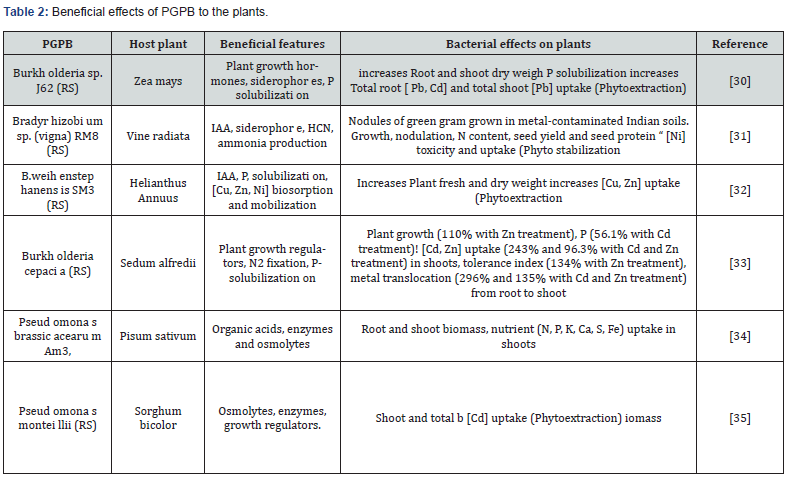
Rhizobacteria, an abundant symbiotic/mutualistic partner of plants, are considered plant growth promoting bacteria [16]. Among the soil microbes, the plant growth promoting bacteria (PGPB) deserves special attention. In general, PGPB migrates from the bulk soil to the rhizosphere of plant and colonize the rhizosphere and roots of plants [17]. The mechanisms behind plant growth stimulation differ between PGPB strains and certainly depend on the various metabolites released by these strains of PGPB. For example, production of different phytohormones such as cytokinins, auxins, gibberellins, and ethylene are mainly attributed to the presence of different strains of PGPB [18,19]. These hormones can alter plant growth together with bacterial secondary metabolites usually in a dose-dependent manner [20,21]. Other beneficial compounds produced by PGPB include organic acids, osmolytes, enzymes, antibiotics, siderophores, biosurfactants, and nitric oxide etc. All of these compounds are responsible for tolerance to abiotic stresses [22,23] associated nitrogen fixation [24] improved mineral uptake [25] suppression of pathogenic microorganisms [26,27] etc. Together, these are responsible for plant higher tolerance to heavy metal stress and stimulate host plant growth via different mechanisms including biological control, production of growth regulators, enhancement of mineral nutrients and water uptake, induction of systemic resistance in plants to pathogens, and nitrogen fixation [28]. Additional benefits due to bacterial endophytes are plant physiological changes including accumulation of osmolytes and osmotic adjustment, stomatal regulation, reduced membrane potentials, and changes in phospholipid content of cell membranes [29-35]. Table 2 denotes metal resistant features of PGPB to the plants.

Metal resistance mechanism of PGPB

Iron is a necessary cofactor for many biological reactions and hence is an essential nutrient for all organisms. In aerobic conditions, iron exists predominantly as ferric state (Fe3+) and insoluble hydroxides and oxyhydroxides which are unavailable to plants and microbes. Bacterial siderophores can bind Fe3+ and solubilize this metal for its efficient uptake. Some plants produce phytosiderophores which typically have a lower affinity for iron than bacterial siderophores. Further, heavy metals that are accumulated in plant tissues also cause changes in different vital plant growth processes and also possess negative effects on iron nutrition. Under such conditions, the siderophore producing rhizosphere bacteria is capable of chelating Fe3+ and making it available to plant roots. Then the roots are able to take up iron from siderophores-Fe complexes through different plausible mechanisms [36]. Various instances of increased Fe uptake in plants with co-stimulation of plant growth because of PGPB inoculations have also been reported [37]. Siderophores also promote bacterial IAA synthesis by reducing the detrimental effects of heavy metals through chelation reaction [38]. Phosphorus (P) is one of the major essential macronutrients for biological growth and development. Under stressed conditions, most metal-resistant PGPB can convert these insoluble phosphates into available forms through different mechanisms [39]. An increase in availability of phosphorous to plants through the inoculation of PSB (phosphate solubilizing bacteria) has been reported in pot experiments [40,41]. In addition, fixation of atmospheric N2 is a metabolic ability of endophytes and rhizobacteria and colonization offer different benefits to the host plant [42] including the production of enzymes, siderophores [43] and antibiotic metabolites [44] and induction of systemic resistance in plants [45,46]. Some metalresistant PGPB have been reported to produce enzymes such as chitinase, beta 1,3 glucanase, protease, and lipase, by which they can lysis the cells of fungal pathogens [46]. The interaction of plant–PGPB–phytopathogens in metal contaminated soils remains poorly understood due to both pathogenic and non-pathogenic microbes depend on the properties of surrounding environment (rhizosphere/tissue interior of plants) and hence these plantassociated microbes may modulate responses to direct and/or indirect effects of metal toxicity.

Metal mobilization in phytoextraction

Among the various metabolites produced by PGPB, the siderophores play a significant role in metal mobilization and accumulation [47,48]. Siderophores produced by PGPB solubilize unavailable forms of heavy metal-containing Fe and also form complexes with bivalent ions which can be assimilated by root mediated processes [49,50]. Braud et al 2009 [50] investigated the exudation of Cr and Pb in soil after inoculation of various PGPB. Pseudomonas aeruginosa was able to solubilize large amounts of Cr and Pb in soils. P. aeruginosa is used as only a model system since regulatory agencies will never give permission for the release of this bacterium to the environment. Inoculation of Zea mays with P. aeruginosa increased Cr and Pb uptake into the shoots. Bacterial culture filtrates containing hydroxamate siderophores secreted by Streptomyces tendae F4 significantly enhanced the uptake of Cd by the plant, compared to the control shows that siderophores can help to reduce metal toxicity in bacteria while simultaneously facilitating the uptake of such metals by plants [47]. PGPB has been shown to increase heavy metal mobilization by the secretion of organic acids such as gluconic acid, citrate, oxalate, malate, acetate, and succinate, etc. Production of 5-ketogluconic acid by endophytic diazotroph Gluconacetobacter diazotrophicus, which dissolves Zn sources such as ZnCO3, Zn3 (PO4)2, and ZnO thus making Zn available for plant uptake [51]. The biosurfactants produced by PGPB have also been demonstrated to enhance heavy metal mobilization in contaminated soils [52]. Sheng et al [53] reported that the inoculation of soils with biosurfactant producing Bacillus sp. J119 significantly enhanced Cd uptake in plant tissue and biomass of tomato plants. From the above findings, it can be concluded that inoculating the seeds/soils with selected bacteria, it is possible to improve bioavailable metal concentrations for plant uptake and thereby phytoextraction potential in metal-contaminated soils.

Metal immobilization in phytostabilization

Phytostabilization shows heavy metal tolerance and assists plant growth. Plant-associated bacteria have evolved several mechanisms by which they can immobilize/transform metals and make them inactive. The active mechanisms behind heavy metal resistance in bacteria includingmetal exclusion by active transport from the cell extra cellular sequestration of metals with polymers chemical modification and detoxification makes metal inactive [54]. Binding of metals to ionic functional groups such as sulfhydryl, sulfonate, hydoxyle, carboxyle, amide and amine groups immobilizes the metal and prevents entry into the plant root. Similarly, extracellular polymers such as polysaccharides, proteins, and humic substances detoxify heavy metals by chelation [55]. Organic acids and siderophores can reduce the metal bioavailability and toxicity by chelation mechanism [56,57]. According to Dimkpa et al. [57] the decreasing Ni concentration in cowpea plants is indicative of a Ni binding potential of hydroxamate siderophores. Madhaiyan et al. [58] reported that endophytic bacteria, such as Magnaporthe oryzae and Burkholderia sp. increased plant growth but reduced the Ni and Cd accumulation in roots and shoots of tomato and also their availability in soil. Bacteria can interact directly with the heavy metals to reduce their toxicity: metal dissolution by strong organic acids produced by bacteria (i.e., H2SO4 produced by Thiobacillus); production of organic bases resulting in metal hydroxide precipitates; fixation of Fe and Mn on the cell surface in the form of hydroxides; biotransformation via oxidation, reduction methylation, demethylation, volatilization, complex formation [59]. The role of soil microbiota, specifically rhizospheric and endophytic microbes, in the development of phytoremediation techniques has to be elucidated in order to speed up the process and to optimize the rate of accumulation/absorption/mobilization of heavy metal contaminants. The bioavailability ratio of metals to plant roots is considered a critical requirement for plant metal bioconcentration or bio immobilization to occur. In this view, it is possible to employ endophytes to alter the bioavailability of metals for improving phytoremediation of metal contaminants on a large scale.

Role of endophytes in metal remediation

Endophytes are intriguing microorganisms that reside inside the healthy plant tissue and show mutualistic relationship with plants. The symbiotic relationship between plants and endophytes was first reported in 1697. Endophytes play an important role in increasing crop yield by secretion of secondary metabolites which increase the rate of plant metabolism, in turn increasing the crop yield. Endophytes protect plants against many pathogens by secreting secondary metabolites. Endophytes induce multiple benefits to plants by colonizing plant roots [60,61]. By colonizing plant roots, endophytes become part of a symbiotic plant-microbe system.

For instance, the plant growth, metal accumulation/metal tolerance, endophyte colonization, and plant growth promoting potentials must be met for microbial assisted phytoremediation to become effective. Further the concentration of bioavailable metals i.e., bioavailability in the rhizosphere greatly affect the quantity of metal which will be accumulated in plants, because a large proportion of metals are bound to different inorganic and organic components in polluted soil and their availability is closely related to their speciation [62]. The metabolites released by PGPB (e.g., biosurfactants, siderophores, organic acids, and phyto regulators, etc.) can alter the uptake of heavy metals directly and indirectly: directly, through chelation, acidification, immobilization, precipitation, and oxidation–reduction reactions in the rhizosphere. Indirectly, through their effects on plant growth dynamics.

Many studies proved that endophytic mcrobes significantly contribute to their host plant towards many stresses such as high salinity, drought, extreme temperature, and heavy metal toxicity, and oxidative stress [63]. Endophytic microbes were proved to have potential for phytoremediation and might be utilized as biosorbents for the detoxification of heavy metals [64]. Moreover, recent studies have demonstrated that many endophytes are metal resistant, able to enhance plant growth and able to degrade organic contaminants. Endophytes could promote host plant growth in heavy metal contaminated soils. Heavy metal resistant endophytic microbes are capable of promoting host plant growth, biomass production and enhanced metal extraction. Furthermore, they alleviate the toxic effect of heavy metals by regulating various biochemical processes inside the plant through the production of different metabolites and phytohormones that help the host plant avoid metal stress toxicity [65]. It has been reported that 76 endophytic microbial isolates were isolated from sewage, sludge and industrial effluents.

Four identified microbes screened for their resistance to four heavy metals including cadmium (Cd), chromium (cr), nickel (Ni) and lead (Pb), Cadmium (Cd), Chromium (Cr) and Nickel (Ni) and Copper (Cu). These endophytic microbes were identified as fungal isolates including Aspergillus niger, A. terreus, Trichoderma viride, and T. longibrachiatum and they showed tolerance to Pb, Cd, Cr, and Ni [66]. In a study by Fazli et al. [67] it has been proved that Aspergillus versicolor and Trichoderma sp. showed tolerance index to Cd. Jenny et al. [68] ninety-three endophytic fungal isolates were identified from Nypa fruticans sp. Eight of them showed resistance to metals such as Pb, Cr, and Cu. These eight fungal isolates were closely related to Pestalotiopsis sp. and showed tolerance against metals such as Cr, Cu, Zn and Pb. Scleroderma citrinum isolated from mining sites, Pisolithus tinctorius strains Pt1 and Pt2 isolated from unpolluted sites. The biomass production of Scleroderma citrinum was increased in presence of Cd while Pt1 and Pt2 biomass was reduced in presence of Cd. The tolerance index of S. citrinum was higher when compared to Pt1 and Pt2. The mycelium of P. tinctorius strains Pt1 and Pt2 accumulated more Cd than S. citrinum mycelium [69]. Various species of Penicillium have been proved to show resistance against heavy metals such as manganese (Mn), aurumn (Au), thorium (Th), uranium (U), cadmium (Cd), nickel (Ni) and lead (Pb). Examples of Penicillium in heavy metal removal include P. italicum, P. oxalicum, and P. chrysogenum [70].

Among the Penicillium species, P. chrysogenum has been studied the most and P. chrysogenum was demonstrated to adsorb Cr(III), Ni, and Zn, as well as Pb, Cd, and Cu [70]. Five endophytes isolated from roots including P. mustea, P. chrysanthemicola, G. Cylindrosporus, E. Salmonis and C. cladosporioides. G.Cylindrosporus were resistant to Pb, Zn and Cu and exhibited strong growth when compared with other fungi [71]. niger has the ability to remove various heavy metals such as Pb, Cd, and Cr from aqueous solution [72]. A. niger showed potential affinity for binding with Cu, Zn and Ni ions in a single composition system, while it only showed binding properties for Cu and Zn in a multi-metal solution [73]. Auricularia polytricha exhibited tolerance to metals such as Pb, Cd, and Cu. FTIR (Fourier transform infrared) analysis indicated that functional groups such as carboxyl, phosphoryl, hydroxyl, amine/amino, and C–N–C were the main functional groups that affect the metal biosorption process. SEM observations showed that the surface of the raw biomass was smooth and uniform with regular and plain structure. The surface of Cd and Cu loaded biomass was changed when compared with control. The surface of Pb loaded biomass was much rougher. The metal ions as spot-like particles distributed on the surface of the Cd and Pb loaded fruiting body, while extra flake-like substances distributed on the surface of the Cu loaded biomass [74].

Fusarium solani was found to tolerate a number of heavy metals and other metals such as Cr, Pb, Hg, Ni, Li, Co, Al, Mn, As, Fe, Cu, Zn. Certain morphological changes such as bulbous hyphae, increase in number of spores, thickened cell wall, and changes in the shape and size of the cultures in presence of metals were observed during of the culture in response to metal. Pigment production also played a role in higher tolerance to metal [75]. Hongmei et al. [76] reported the 53 isolates of endophytic fungi from the roots of Salix variegata. Among them 27 isolates were selected to test their metal tolerance against Cd. Four isolates were further tested for minimum inhibitory concentrations (MICs) against Cd and observed that Paraphaeosphaeria sp. was the most tolerant endophyte with highest MIC value. Deng et al. [77] reported that a total number of 33 fungal isolates were isolated from stems of Portulaca oleracea. Among them, Lasiodiplodia sp was resistant to Cd, Pb and Zn. FTIR analysis revealed that biosorption process of endophytic fungi Lasiodiplodia sp. was due to the functional groups such as hydroxyl, carbonyl, amino, and benzene ring on the cell wall.

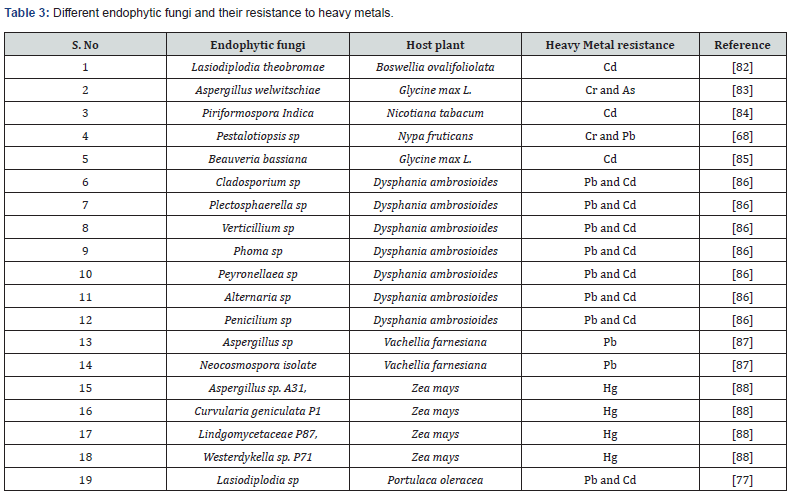
The inoculation of endophytic fungi increased the biomass of Brassica napus L, translocation factor of Cd and the extraction amount of Cd by rape in the Cd and Pb contaminated soils. The endophytic fungi P. funiculosum from soybean plant showed resistance to Cd and Cu. The heavy metal resistant P. funiculosum association with soybean plants significantly increased the shoot fresh biomass, shoot length, and root fresh biomass when compared with non-inoculated endophyte plants under Cu stress. Protein and chlorophyll content were significantly higher in endophyte inoculated plants as compared to non-inoculated endophyte plants under Cu stress condition. Cu tolerance rate was significantly higher in endophyte inoculated plants compared with non-inoculated endophyte plants. Anzhi Reni et al. 2011 [78] reported that endophyte infection of host Lolium arundinaceum significantly increased the biomass under Cd stress. Endophytic infection increased Cd accumulation in L. arundinaceum and Cd transport from root to shoot was significantly higher when compared with endophyte free plants. The endophyte-plant relationship was a resembling model for endophyte assisted phytoremediation of heavy metal contaminated soils. Neotyphodium infected two grass species Festuca arundinacea and F. pratensis under Cd stress showed increased shoot, root and total biomass than endophyte free plants. Cd accumulation was higher in shoot and root of endophyte infected plants (F. Pratensis and F. arundinacea) compared with non-infected plants. Cd accumulation was higher in roots compared to shoot. The endophyte infected plants had higher potential to remove Cd from contaminated soil than non-infected plants [79]. Olivier et al. [80] showed that Glomus intraradices fungi was inoculated to Medicago truncatula under Pb, Cd and Zn stress. The root and shoot biomass were increased compared to non-inoculated plants. Cd and Zn content in shoot was increased in G. intraradices fungi inoculated plants when compared with non-inoculated plants. Kanwal et al. [81] also reported that G. intraradices inoculated M. Sativa plants showed significant increase in chlorophyll content, plant growth and biomass under Cd and Zn toxicity compared to non-inoculated plants. Table 3 shows the different endophytes and their resistance to different heavy metals.

Endophytes Role in the Ecosystem

Endophytes play crucial roles in ecosystems by protecting plants against many biotic and abiotic stresses, increasing their resilience, and helping plants to adapt to new habitats [82-89]. Biotic stresses from which endophytes can provide protection include plant pathogens, insects and nematodes. Abiotic stresses include nutrient limitation, drought, salination, and extreme pH values and temperatures. In return, plants provide spatial structure, protection from desiccation, nutrients and, in the case of vertical transmission, dissemination to the next generation of hosts [90,91].

Concluding Remarks and Future Perspectives

Endophytic microbes exhibit remarkable phytoremediation property through various approaches including metal sequestration, metal immobilization, metal absorption and accumulation of heavy metals. Endophytic microbes produce proteins, polysaccharides, organic acids and other bioactive compounds to effectively phytoremediate metal- contaminated soils. Bioavailability of metals to plant roots is considered a critical requirement for bio-concentration/bio immobilization to occur. In this regard, it is suggested to employ beneficial endophytes to alter the bioavailability for improving phytoremediation on large scale.

To Know more about Advances in Biotechnology & Microbiology
Click here: https://juniperpublishers.com/aibm/index.php

To Know more about our Juniper Publishers
Click here: https://juniperpublishers.com/index.php

How Does the Multi-Disciplinary Team Impact Chronic Kidney Disease Management? - Juniper Publishers

  Urology & Nephrology - Juniper Publishers Abstract Chronic kidney disease (CKD) is a condition where a gradual kidney function loss le...