Showing posts with label Water. Show all posts

Friday, February 25, 2022

The Content of Natural Radionuclides in the Fish of Lake Issyk-Kul - Juniper Publishers

 Oceanography & Fisheries - Juniper Publishers

Abstract

This work is devoted to the study of the features of biogenic migration of natural radionuclides in the conditions of Lake Issyk-Kul located in the north-eastern part of Kyrgyzstan. Lake Issyk-Kul is a high-mountainous, thermal, drain less reservoir with brackish water with a high content of natural uranium. This is due to climatic conditions, the geological structure of river valleys, and the peculiarities of the composition of river waters capable of extracting uranium from rocks. Calculations using the Erica tool 1.3 software showed that the natural uranium content in the water of Lake Issyk-Kul (0.809 Bq/l) is safe for living organisms of the aquatic ecosystem, the level of absorbed dose, accumulation and risk factors vary within the normal range. According to the Erica tool 1.3 database, low radiation doses (0-50 μGy/h) can stimulate the growth of aquatic plants. The species composition of the ichthyofauna of Lake Issyk-Kul consists of 22 species of fish, including 12 aboriginal and 10 acclimatized. The content of natural radionuclides (226Ra, 228Th and 212Pb) in the bone and muscle tissue of some fish species of Lake Issyk-Kul was investigated. It has been established that radionuclides are predominantly found in bone tissue in comparison with muscles, their concentrations vary within the limits of natural parameters.

Keywords: Water; Natural radionuclides; Fish; Issyk-Kul Lake

Introduction

Lake Issyk-Kul is located in the northeastern part of Kyrgyzstan, between the ranges of the Northern Tien Shan: Kungey-Ala-Too and Terskey-Ala-Too, at an altitude of 1609 meters above sea level. The lake is closed, with about 80 relatively small rivers flowing into it. The largest of them are Tyup and Jergalan, flowing from the east. The water is brackish (water salinity 5.90 ‰), so it does not freeze in winter. The volume of water is 1738 km3, the area of the water surface is 6236 km2, the average depth is 278 m, the maximum depth is 668 m. The length of Issyk-Kul from west to east is 182 km, and from south to north - 58 km. The climate is temperate maritime, with the lake having a softening effect in the region. Average January temperature: -2° -6°, average July temperature: + 17° + 21°. In the western mountains bordering the lake, only 115 mm of precipitation falls, on the eastern coast - about 600 mm [1-3]. According to the research of prof. Kovalsky [4], the waters of the rivers in the regions of the Issyk-Kul depression are enriched with natural uranium. The increased content of uranium in the waters should be associated not only with the climatic conditions of the regions, but also with the geological structure of river valleys, as well as with the peculiarities of the chemical composition of river waters capable of well extracting uranium from rocks. So, for example, if in the northern rivers of Russia (Northern Dvina, Lena, Neva, Kama), the uranium content fluctuates within (2-13) ×10-7 g/l, while in the rivers flowing into Lake Issyk-Kul, its concentration increases to (58-71) ×10-7 g/l [4]. The average uranium content in the water of Lake Issyk-Kul varies within (62-65) ×10-6 g/l [5]. In modern literature, a number of studies are presented on the topic of pollution, migration, accumulation of radionuclides in the environment and their biological effect on living organisms. [6-12]. Based on the above, the aspect of the biological effect of natural concentrations of uranium and products of its decay on living organisms of the aquatic ecosystem of Lake Issyk-Kul is poorly studied.

Materials and Methods

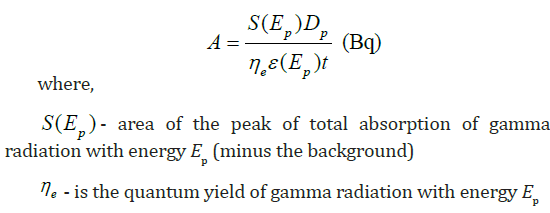
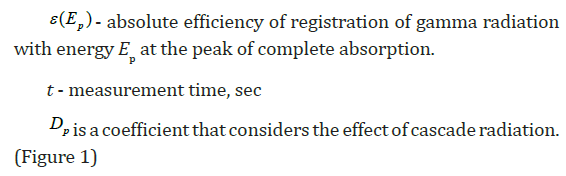
The content of natural radionuclides (226Ra, 228Th and 212Pb) in the bone and muscle tissue of some fish species of Lake Issyk-Kul has been investigated. 64 samples were prepared for gamma spectrometric analysis. The measurements were carried out on a GX4019 gamma spectrometer with Genie-2000 S 502, S501 RUS software. To obtain a stable equilibrium of radionuclides, the studied samples after their packing were stored from 25 to 180 days. The radionuclide activity in the sample on the day of spectrum measurement was calculated by the formula:
The Erica tool 1.3 application package is used for radioecological assessment of the state of terrestrial and aquatic ecosystems. Knowing the content of radioactive elements in soil or water, the program calculates the accumulation of radionuclides by living organisms, absorbed radiation doses, and an assessment of the radiation risk factor. The element of the radioecological assessment consists of three levels, at the first level the radiation risk factor is assessed, if its value is low, then level 1 can be limited (Figure 2). If the value of the radiation factor is increased, then the action is recommended to continue the assessment at level 2. To assess the statistical distribution of indicators, level 3 is used [13,14].

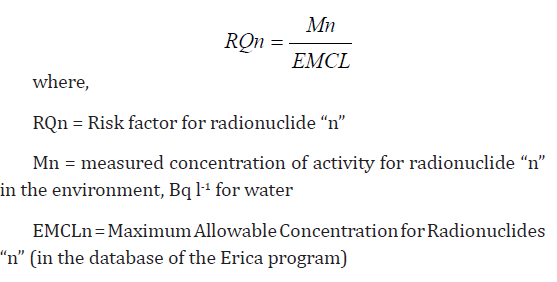
To calculate the radiation risk factor using the Erica tool 1.3 program, we entered the data on the specific activity of uranium in the water of Lake Issyk-Kul. If the calculated value of the risk coefficient is higher than 1, then there is a possibility of accumulation of radionuclides by living organisms. The risk factor (RQ) was determined using the following formula:

Results and Discussion

The species composition of the ichthyofauna of Lake Issyk- Kul is not rich and consists of 22 species of fish, including 12 aboriginal and 10 acclimatized [15,16]. We have investigated the distribution of natural radionuclides (226Ra, 228Th and 212Pb) in the bone and muscle tissue of some fish species of Lake Issyk-Kul. For the analyzes, fish species with wide distribution were selected, their habitat, type of food, commercial value were considered:

1. Pike perch (Lucioperca Lucioperca. 1958) is a predator, a widespread acclimatized species, the basis of its food is chironomids, mysids, amphipods, from about one year old it begins to switch to a predatory type of food. Forms large accumulations during the feeding period in shallow waters, and mainly in areas of the lake with a lower salinity of water.

2. Issyk-Kul trout (Salmo ischchan Issykogegarkuni Lushin. 1932) - an acclimatized species, distributed throughout the lake, with the formation of pre-spawning accumulations in the estuarine areas, near shallow waters with a spawning substrate. The diet of trout is predominantly benthic, but it can switch to a predatory type of diet.

3. Issyk-Kul Chebachok (Leuciscus bergi Kaschkarov. 1925) - an aboriginal and rare species, found in small quantities in the southwestern and southeastern parts of the lake.

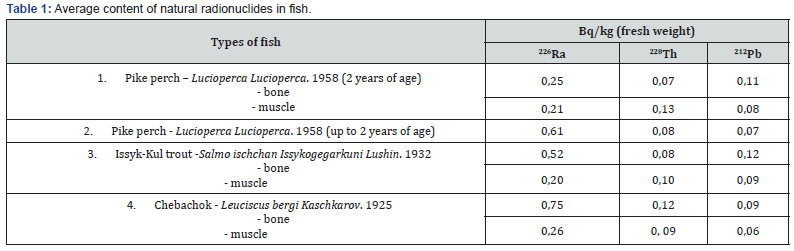
4. The research results showed that natural radionuclides are predominantly found in bone tissue in comparison with muscles, especially 226Ra (Table 1). Concentrations of natural radionuclides vary within the background values, for example, the 226Ra content in the total mass of a two-year-old pike perch (Lucioperca Lucioperca) was 0.61 Bq/kg per wet weight, the absorbed dose level was 0.081 μGy/h, and the risk factor was 0.008. Lower concentrations are typical for 228Th and 212Pb.

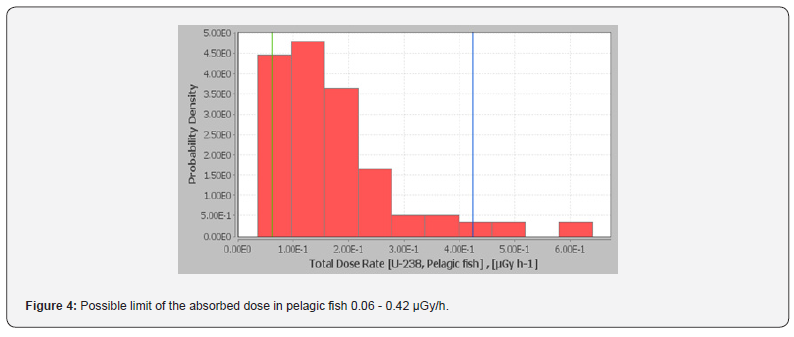
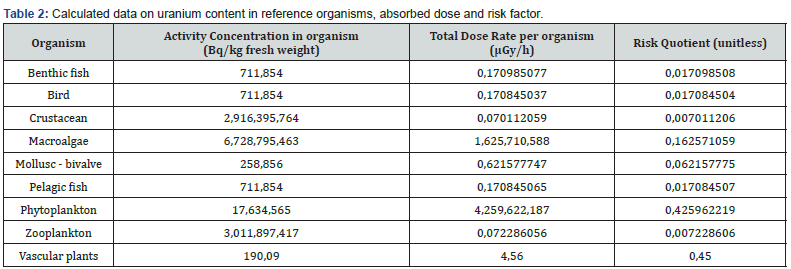
With the average uranium content in the water of Lake Issyk- Kul - 0.809 Bq/l, the following results were obtained (Table 2). Among the reference organisms, uranium is able to accumulate in aquatic plants (190.09 Bq/kg). The absorbed dose level was 4.56 μGy/h, it can vary in the range of 0.47 - 17.9 μGy/h. According to the Erica tool 1.3 database, absorbed doses in the range (0-50 μGy/h) do not have statistically significant negative biological effects on aquatic plants. At low doses of radiation, a slightly stimulating effect on growth is possible (by 1.2 times). For Lake Issyk-Kul, the greatest species diversity falls on the group of blue-green (Cyanophyta), diatoms (Bacillariophyta) and green (Chlorophyta) algae. The average value of the hazard coefficient for aquatic plants is (0.45). If the calculated value of the risk coefficient is higher than 1, then there is a probability of accumulation of radionuclides by living organisms (Figure 3). The estimated average uranium content in pelagic fish is 7.11 Bq/kg wet weight. The absorbed dose level was 0.17 μGy/h, it can vary in the range of 0.06 - 0.42 μGy/h (Figure 4).

According to the database of the Erica tool 1.3 software, no statistically significant negative biological effects on the fish organism are observed within these absorbed doses. It is known that uranium accumulates mainly in bone tissue, kidneys, gills, and then in the liver, and only a small part is retained in muscles. Since parts of fish organs: gills, liver and bones are usually not eaten by the population, the total daily dose for uranium established by the World Health Organization is no more than 50 Bq/kg [17,18].

Conclusion

Calculations using the Erica tool 1.3 software showed that the natural uranium content in the water of Lake Issyk-Kul (0.809 Bq/l) is safe for living organisms of the aquatic ecosystem, the level of absorbed dose, accumulation and risk factors vary within normal limits. According to the conclusions of the scientific of the UN Committee on the Effects of Atomic Radiation, the absorbed dose of 80 μGy/h is the threshold dose. The presented absorbed doses for reference organisms in Table 1 are much lower than this indicator. The content of uranium and other natural radionuclides (226Ra, 228Th and 212Pb) in certain fish species of Lake Issyk-Kul vary within the background values, mainly radionuclides are found in bone tissue as compared to muscles.

To Know more about Oceanography & Fisheries

Click here: https://juniperpublishers.com/ofoaj/index.php


To Know more about our Juniper Publishers

Click here: https://juniperpublishers.com/index.php   

Thursday, July 29, 2021

The Content of Natural Radionuclides in the Fish of Lake Issyk-Kul - Juniper Publishers

 Oceanography & Fisheries - Juniper Publishers

Abstract

This work is devoted to the study of the features of biogenic migration of natural radionuclides in the conditions of Lake Issyk-Kul located in the north-eastern part of Kyrgyzstan. Lake Issyk-Kul is a high-mountainous, thermal, drain less reservoir with brackish water with a high content of natural uranium. This is due to climatic conditions, the geological structure of river valleys, and the peculiarities of the composition of river waters capable of extracting uranium from rocks. Calculations using the Erica tool 1.3 software showed that the natural uranium content in the water of Lake Issyk-Kul (0.809 Bq/l) is safe for living organisms of the aquatic ecosystem, the level of absorbed dose, accumulation and risk factors vary within the normal range. According to the Erica tool 1.3 database, low radiation doses (0-50 μGy/h) can stimulate the growth of aquatic plants. The species composition of the ichthyofauna of Lake Issyk-Kul consists of 22 species of fish, including 12 aboriginal and 10 acclimatized. The content of natural radionuclides (226Ra, 228Th and 212Pb) in the bone and muscle tissue of some fish species of Lake Issyk-Kul was investigated. It has been established that radionuclides are predominantly found in bone tissue in comparison with muscles, their concentrations vary within the limits of natural parameters.

Keywords: Water; Natural radionuclides; Fish; Issyk-Kul Lake

Introduction

Lake Issyk-Kul is located in the northeastern part of Kyrgyzstan, between the ranges of the Northern Tien Shan: Kungey-Ala-Too and Terskey-Ala-Too, at an altitude of 1609 meters above sea level. The lake is closed, with about 80 relatively small rivers flowing into it. The largest of them are Tyup and Jergalan, flowing from the east. The water is brackish (water salinity 5.90 ‰), so it does not freeze in winter. The volume of water is 1738 km3, the area of the water surface is 6236 km2, the average depth is 278 m, the maximum depth is 668 m. The length of Issyk-Kul from west to east is 182 km, and from south to north - 58 km. The climate is temperate maritime, with the lake having a softening effect in the region. Average January temperature: -2° -6°, average July temperature: + 17° + 21°. In the western mountains bordering the lake, only 115 mm of precipitation falls, on the eastern coast - about 600 mm [1-3]. According to the research of prof. Kovalsky [4], the waters of the rivers in the regions of the Issyk-Kul depression are enriched with natural uranium. The increased content of uranium in the waters should be associated not only with the climatic conditions of the regions, but also with the geological structure of river valleys, as well as with the peculiarities of the chemical composition of river waters capable of well extracting uranium from rocks. So, for example, if in the northern rivers of Russia (Northern Dvina, Lena, Neva, Kama), the uranium content fluctuates within (2-13) ×10-7 g/l, while in the rivers flowing into Lake Issyk-Kul, its concentration increases to (58-71) ×10-7 g/l [4]. The average uranium content in the water of Lake Issyk-Kul varies within (62-65) ×10-6 g/l [5]. In modern literature, a number of studies are presented on the topic of pollution, migration, accumulation of radionuclides in the environment and their biological effect on living organisms. [6-12]. Based on the above, the aspect of the biological effect of natural concentrations of uranium and products of its decay on living organisms of the aquatic ecosystem of Lake Issyk-Kul is poorly studied.

Materials and Methods

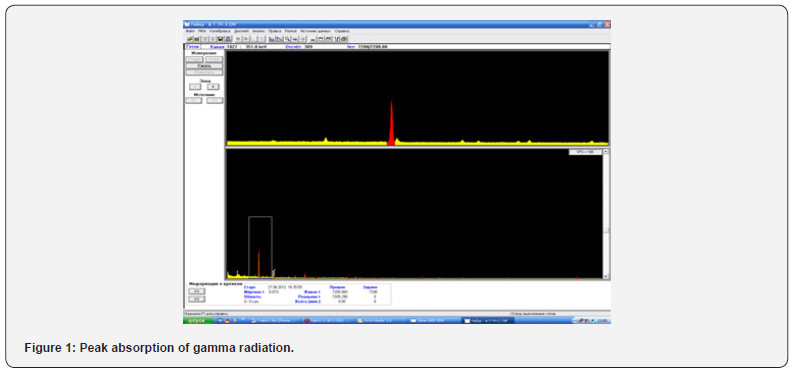
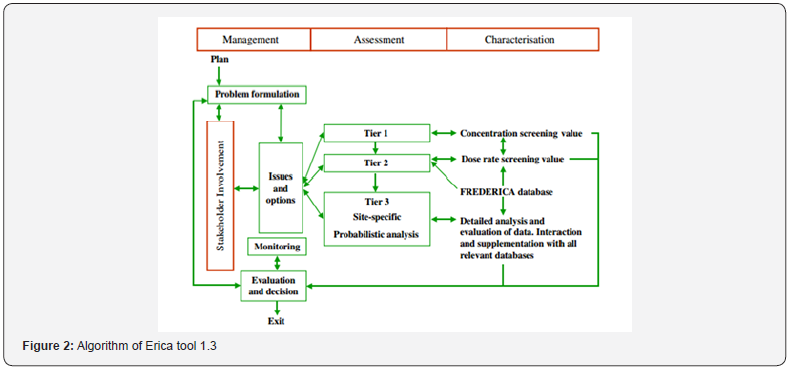
The content of natural radionuclides (226Ra, 228Th and 212Pb) in the bone and muscle tissue of some fish species of Lake Issyk-Kul has been investigated. 64 samples were prepared for gamma spectrometric analysis. The measurements were carried out on a GX4019 gamma spectrometer with Genie-2000 S 502, S501 RUS software. To obtain a stable equilibrium of radionuclides, the studied samples after their packing were stored from 25 to 180 days. The radionuclide activity in the sample on the day of spectrum measurement was calculated by the formula:
The Erica tool 1.3 application package is used for radioecological assessment of the state of terrestrial and aquatic ecosystems. Knowing the content of radioactive elements in soil or water, the program calculates the accumulation of radionuclides by living organisms, absorbed radiation doses, and an assessment of the radiation risk factor. The element of the radioecological assessment consists of three levels, at the first level the radiation risk factor is assessed, if its value is low, then level 1 can be limited (Figure 2). If the value of the radiation factor is increased, then the action is recommended to continue the assessment at level 2. To assess the statistical distribution of indicators, level 3 is used [13,14].
To calculate the radiation risk factor using the Erica tool 1.3 program, we entered the data on the specific activity of uranium in the water of Lake Issyk-Kul. If the calculated value of the risk coefficient is higher than 1, then there is a possibility of accumulation of radionuclides by living organisms. The risk factor (RQ) was determined using the following formula:
Results and Discussion

The species composition of the ichthyofauna of Lake Issyk- Kul is not rich and consists of 22 species of fish, including 12 aboriginal and 10 acclimatized [15,16]. We have investigated the distribution of natural radionuclides (226Ra, 228Th and 212Pb) in the bone and muscle tissue of some fish species of Lake Issyk-Kul. For the analyzes, fish species with wide distribution were selected, their habitat, type of food, commercial value were considered:

1. Pike perch (Lucioperca Lucioperca. 1958) is a predator, a widespread acclimatized species, the basis of its food is chironomids, mysids, amphipods, from about one year old it begins to switch to a predatory type of food. Forms large accumulations during the feeding period in shallow waters, and mainly in areas of the lake with a lower salinity of water.

2. Issyk-Kul trout (Salmo ischchan Issykogegarkuni Lushin. 1932) - an acclimatized species, distributed throughout the lake, with the formation of pre-spawning accumulations in the estuarine areas, near shallow waters with a spawning substrate. The diet of trout is predominantly benthic, but it can switch to a predatory type of diet.

3. Issyk-Kul Chebachok (Leuciscus bergi Kaschkarov. 1925) - an aboriginal and rare species, found in small quantities in the southwestern and southeastern parts of the lake.

4. The research results showed that natural radionuclides are predominantly found in bone tissue in comparison with muscles, especially 226Ra (Table 1). Concentrations of natural radionuclides vary within the background values, for example, the 226Ra content in the total mass of a two-year-old pike perch (Lucioperca Lucioperca) was 0.61 Bq/kg per wet weight, the absorbed dose level was 0.081 μGy/h, and the risk factor was 0.008. Lower concentrations are typical for 228Th and 212Pb.
With the average uranium content in the water of Lake Issyk- Kul - 0.809 Bq/l, the following results were obtained (Table 2). Among the reference organisms, uranium is able to accumulate in aquatic plants (190.09 Bq/kg). The absorbed dose level was 4.56 μGy/h, it can vary in the range of 0.47 - 17.9 μGy/h. According to the Erica tool 1.3 database, absorbed doses in the range (0-50 μGy/h) do not have statistically significant negative biological effects on aquatic plants. At low doses of radiation, a slightly stimulating effect on growth is possible (by 1.2 times). For Lake Issyk-Kul, the greatest species diversity falls on the group of blue-green (Cyanophyta), diatoms (Bacillariophyta) and green (Chlorophyta) algae. The average value of the hazard coefficient for aquatic plants is (0.45). If the calculated value of the risk coefficient is higher than 1, then there is a probability of accumulation of radionuclides by living organisms (Figure 3). The estimated average uranium content in pelagic fish is 7.11 Bq/kg wet weight. The absorbed dose level was 0.17 μGy/h, it can vary in the range of 0.06 - 0.42 μGy/h (Figure 4).

According to the database of the Erica tool 1.3 software, no statistically significant negative biological effects on the fish organism are observed within these absorbed doses. It is known that uranium accumulates mainly in bone tissue, kidneys, gills, and then in the liver, and only a small part is retained in muscles. Since parts of fish organs: gills, liver and bones are usually not eaten by the population, the total daily dose for uranium established by the World Health Organization is no more than 50 Bq/kg [17,18].
Conclusion

Calculations using the Erica tool 1.3 software showed that the natural uranium content in the water of Lake Issyk-Kul (0.809 Bq/l) is safe for living organisms of the aquatic ecosystem, the level of absorbed dose, accumulation and risk factors vary within normal limits. According to the conclusions of the scientific of the UN Committee on the Effects of Atomic Radiation, the absorbed dose of 80 μGy/h is the threshold dose. The presented absorbed doses for reference organisms in Table 1 are much lower than this indicator. The content of uranium and other natural radionuclides (226Ra, 228Th and 212Pb) in certain fish species of Lake Issyk-Kul vary within the background values, mainly radionuclides are found in bone tissue as compared to muscles.

To Know more about Oceanography & Fisheries

Click here: https://juniperpublishers.com/ofoaj/index.php


To Know more about our Juniper Publishers

Click here: https://juniperpublishers.com/index.php    


Wednesday, May 5, 2021

Analytical Method Development and Validation of UV-Visible Spectrophotometric Method for the Estimation of Saxagliptin in Gastric Medium - Juniper Publishers

Pharmacy & Pharmaceutical Sciences - Juniper Publishers  

Abstract

Aim: A simple, accurate, precise, cost effective, rapid and sensitive UV/visible spectrophotometric method was developed for the determination of Saxagliptin in active pharmaceutical dosage form. The developed method was validated as per ICH guidelines. Method: The purity of saxagliptin was characterized by solubility profile, melting point, Fourier Transform Infra-Red. The drug was analyzed using UV/visible spectrophotometric method was validated in terms of linearity, accuracy, precision, specificity, Limit of detection and Limit of quantitation. The solvent used was methanol: water (15:85, v/v) and the wavelength corresponding to maximum absorbance of the drug were found at 204 nm. Result: Melting point of drug was found 101°C nearly corresponds to its actual melting range. The linear response for concentration range of 2-10 μg/ml of saxagliptin was recorded with y = 0.1126x - 0.0103, regression coefficient r2 = 0.99068. The accuracy was found between 93.75- 104.16%. Precision for intra-day and inter-day was found to be within the limits. To establish the sensitivity of the method, limit of detection (LOD) and limit of quantification (LOQ) were determined which were found to be 6.77 μg /mL and 20.33 μg /mL respectively. Conclusion: The drug was confirmed by interpretation of UV spectra. Hence proposed method stands out validated and thus may be used for routine analysis of Saxagliptin in pharmaceutical dosage forms.

Keywords: Spectrophotometric method; Saxagliptin; Methanol; Water; Melting point

Abbreviations: UV spectroscopy: Ultraviolet Spectroscopy; ICH: International Conference on Harmonisation; DPP: Dipeptidyl Peptidase; FTIR: Fourier Transform Infra-Red; LOD: Limit of Detection; LOQ: Limit of Quantification

Introduction

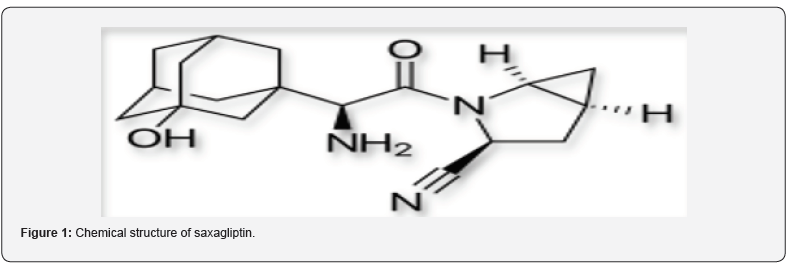
Saxagliptin (SXG) is chemically (1S, 3S, 5S)-2- [(2S)-2-Amino-2-(3 hydroxytricyclo [3.3.1.13,7] dec- 1-yl) acetyl]-2-azabicyclo [3.1.0] hexane-3-carbonitrile previously identified as BMS-477118 as shown in figure 1. The empirical formula is C18H25N3O2.H2O, and the molecular weight is 333.43 [1-4]. Saxagliptin is an oral hypoglycemic or anti-diabetic drug of the dipeptidyl peptidase-4 (DDP-4) inhibitor class. The inhibition of DPP-4 increases levels active of glucagon like peptide 1 (GLP-1), which inhibits glucagon production from pancreatic alpha cells and increases production of insulin from pancreatic beta cells. In 2009, U.S. Food and Drug Administration (FDA) approved saxagliptin and sold under the brand name Onglyza. In adults with type-2 diabetes mellitus, saxagliptin is suggested as an add-on to diet and exercise to improve glycemic control [5-11].

Literature survey reveals that the drug can be estimated only by LC-MS/MS, spectrophotometric method have been reported [12,13]. The aim of the present work was to develop a simple, sensitive, precise and accurate UV/Visible spectrophotometric method for the determination of saxagliptin in its pure form and pharmaceutical formulations further, to validate the developed method.

Materials and Methods

Chemical and reagents

All the chemicals used were of analytical grade. All the solutions were freshly prepared in Methanol and 0.1N HCl (15:85, v/v). Authentic of saxagliptin were obtained as gift samples from Mylan Laboratories Limited, Hyderabad

Methods

Saxagliptin was estimated using UV-Visible spectrophotometer (Shimadzu model 1800 double beam) at the wavelength of maximum absorption (204 nm) in acidic medium containing 0.1N HCl. The drug was characterized by solubility, melting point, and Fourier Transform Infra-Red (FTIR) techniques. The analysis of the drug was carried out by UV-Visible method which was validated analytical parameters like linearity, precision, and accuracy as per guidelines laid down by International Conference on Harmonization (ICH).

Physical characterization of saxagliptin

The physical characterization of procured drug sample of saxagliptin was determined on the basis of following parameters.

Organoleptic properties

The organoleptic properties have been determined for nature, colour, taste and odour of the pure sample of saxagliptin

Solubility

Excess amount of saxagliptin was dissolved in 10 ml distilled water till a saturated solution was obtained. The saturated solution of saxagliptin was stirred for 48 hrs on magnetic stirrer at 100rpm and room temperature (at 25 ± 1ºC). Then the sample was centrifuged for 10 min at 10,000 rpm. Clear supernant was collected using 0.22 μm syringe filter and analysed using UV spectrophotometer. The results were analysed and noted [14].

Melting point

Melting point of saxagliptin was determined using capillary melting point apparatus. In this method a small quantity of drug was filled in a capillary tube open both the ends and it was placed along with thermometer in melting point apparatus.

Fourier transform Infrared spectroscopy (FTIR)

FTIR spectrum was used as an analytical technique for identification of pure drug sample by KBr method using FTIR spectrometer (Agilent Technologies, USA). Peaks of individual pure drug were compared with reference FTIR peaks. Samples were previously prepared with KBr at 1: 5 (sample: KBr, w/w). KBr disks were prepared by compressing the powders at a pressure of 5 tons for 3 min in a hydraulic press and scanned against a blank KBr disk at wave numbers ranging from 500 to 4000 cm-1 with a resolution of 1.0 cm-1 [15].

Analytical method for drug concentration measurements (UV/Visible method)

The ultraviolet spectrophotometric method was selected for the estimation of saxagliptin in the range of 200 to 400 nm and the λmax was determined.

Diluent preparation

Methanol and 0.1N HCl (15:85, v/v) were used as a diluents.

Preparation of saxagliptin stock solution (20μg/ml) in 0.1N HCl

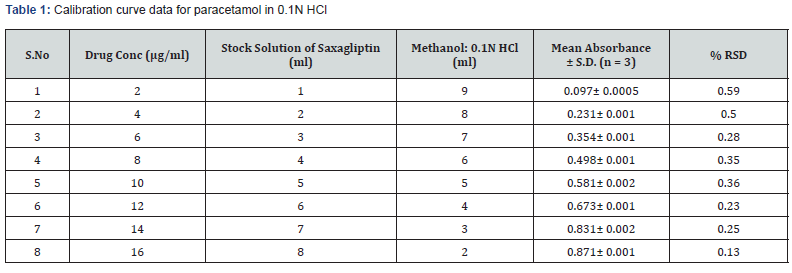
Saxagliptin was weighed equivalent to 100mg and transferred into 100ml volumetric flask then 15ml of methanol was added and shaked well to dissolve it after that the volume was made up to 100ml with 0.1N HCl. From that 2ml of solution was withdrawn and taken in 100ml volumetric flask. The volume was adjusted with diluent up to up to 100ml with 0.1N HCl [16,17] as shown in table 1.

Selection of detection wavelength

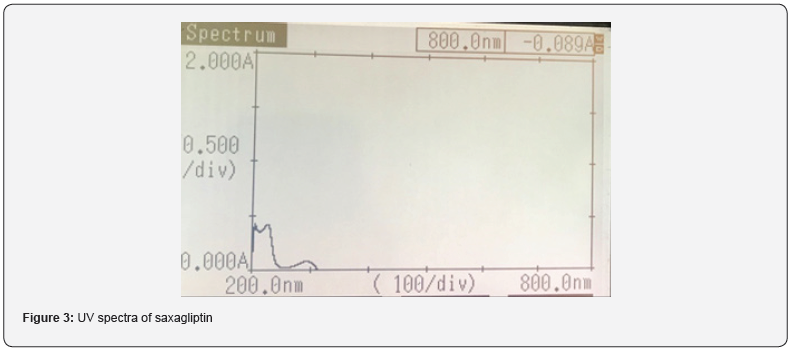
Drug solution was scanned over the range of 200- 400 nm. The wavelength of saxagliptin was determined to be 204 nm.

Preparation of working standard

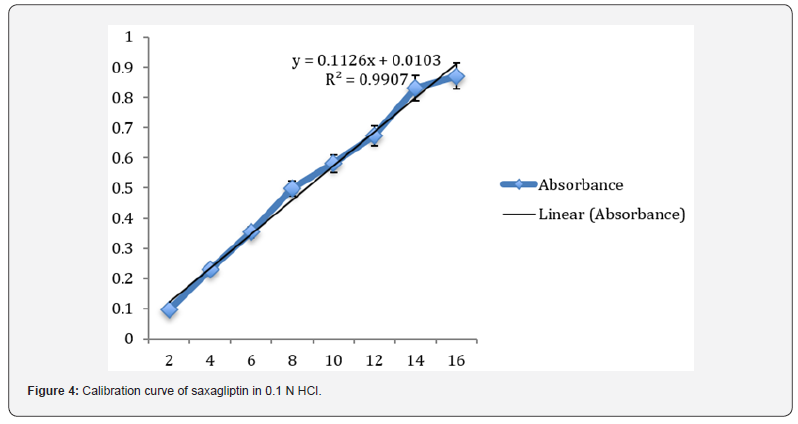
Prepare a series of dilute solution from the above stock solution according to table 2 in 10 ml volumetric flask. Measure the absorbance of the solutions at 204 nm using distilled water as a blank. Plot a graph by taking concentration (μg/ml) on X-axis and absorbance on Y-axis. This plot gives a straight line and the linearity can be determined using y = mx + C formula. From the calibration curve calculate the Coefficient of determination R2 value, slope m and intercept C using the following formula, OR by excel sheet.

Construction of calibration curve

Pipette out 1,2,3,4,5,6,7, and 8 ml of working solution and transfer into separate 10 ml volumetric flasks. Dilute all of them to 10 ml with water to get solution of concentrations to 2, 4, 6,8,10,12,14,16 μg/ml respectively

UV Method Validation

The ultraviolet spectrophotometric method was validated for accuracy, precision, linearity, detection limit, quantitation limit and robustness [18-20].

Linearity

Appropriate aliquots of saxagliptin working standard solutions were taken in different 10 ml volumetric asks and diluted up to the mark with distilled water to obtain final concentrations of 2, 4, 6, 8, 10 μg/ml. Calibration curves were constructed by plotting absorbance versus concentrations and regression equations were calculated for both the drugs.

Range

The Range of the analytical method was decided from the interval between the upper and lower level of the calibration curve by plotting curve.

Precision

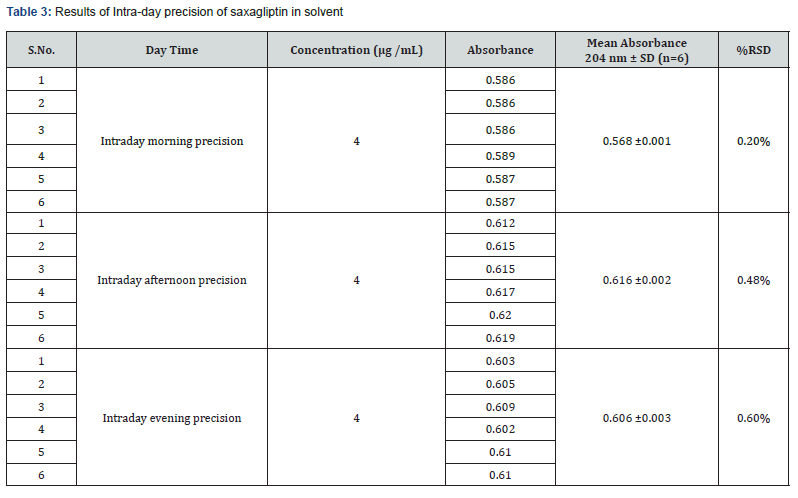
Intraday precision was determined by analyzing the drugs at concentrations (4μg/mL) and each concentration for three times, on the same day. Inter-day precision was determined similarly, but the analysis is carried out daily, for two consecutive days. Repeatability (intraday) of the method was determined by analyzing six samples of the same concentrations of the drug (4μg/mL). The absorbance of each was measured and reported in terms of relative standard deviation to obtain the variation.

Accuracy

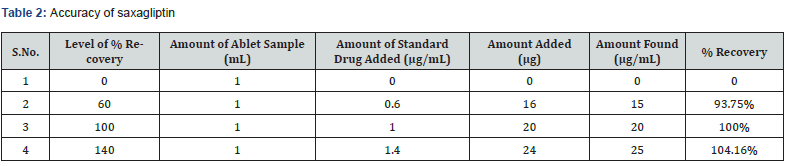
The accuracy of the method was determined by calculating recoveries of saxagliptin by method of standard additions at three different levels 60, 100 and 140 %. Mean percentage recovery was determined. Recovery values were calculated and shown in table 1.

Detection limit

The Detection Limit of an individual analytical procedure is the lowest amount of analyte in a sample which can be detected but not necessarily quantitated as an exact value. The detection limit (LOD) may be expressed as. LOD= 3.3σ/S Where σ = Relative standard deviation of the response. S = the slope of the calibration curve (of the analyte).

Quantitation Limit

The Quantitation limit of an analytical procedure is the lowest amount of analyte in a sample, which can be quantitatively determined with suitable precision and accuracy.

Quantitation Limit (LOQ) may be expressed as: LOQ = 10σ/S Where

σ = Relative standard deviation of the response.

S = the slope of the calibration curve (of the analyte).

Results & Discussion

Organoleptic properties

Saxagliptin was found to be white colored, non-hygroscopic, crystalline powder.

Solubility

The solubility of saxagliptin in water was found to be 2.12 ± 0.28 mg/L corresponding to reference value of 2.9 mg/L.

Fourier transform infrared spectroscopy (FTIR)

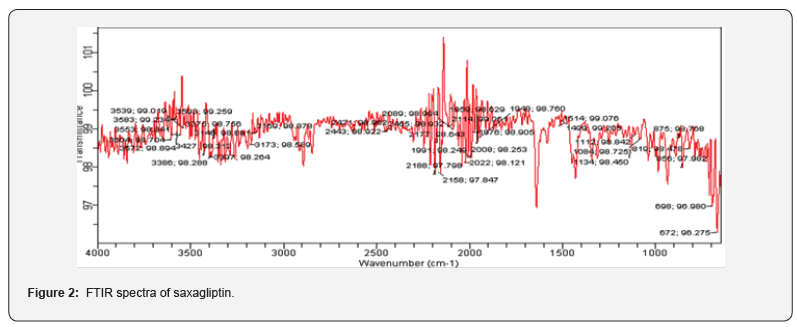
FTIR spectrum for identification of pure drug sample was done by FTIR spectrometer. Major absorption peaks of saxagliptin was found at 3450.12 cm-1 (N-H stretching), 2912.61 cm-1 (C-H stretching), 3301 cm-1 (OH stretching), 1614.47 cm-1 (C-N stretching), 1255.70 cm-1 (C-O stretching) as shown in figure 2 which corresponds to the literature peaks confirming the purity of drug sample.

Melting point

The melting point was determined by capillary melting point apparatus. The observed melting point of saxagliptin is 101°C

Analytical method for drug concentration measurements (UV/VIS Method)

Selection of detection wavelength: The wavelength of saxagliptin was determined to be 204 nm as shown in figure 3.

Preparation of standard plot for saxagliptin: Absorbance of the resultant solution was measured at 204 nm using blank. A graph was plotted between the concentrations and their respective absorbance. The response of the drug was found linear in the entire investigational range of 2 to 10μg/ml as shown in table 1. The calibration curve showed the linear equation as, y = 0.1126x - 0.0103, with a correlation coefficient, r2 = 0.99068, where y represents absorbance (optical density) and x represents the concentration (μg /ml) as shown in figure 4.

Method validation: The developed method was validated as per ICH guidelines for the following parameters:

Linearity: The linearity for Saxagliptin was found to be linear in the range of 2-10 μg/ml. The regression equation was found to be y = 0.1126x - 0.0103, r2 = 0.99068.

Range: The observed range of saxagliptin in test solution was observed from 0.097± 0.0005 to 0.871± 0.001.

Accuracy: The accuracy of the analytical method for Saxagliptin was determined at 60%, 100% and 140% levels of standard solution. Absorbance was measured at 204 nm and results were expressed in terms of % recoveries in table 2.

Precision: The Intra-day and Inter-day precision were carried out using same optimized conditions. The precision (measurement of inter-day, intra-day repeatability) results showed good reproducibility with the relative standard deviation (% RSD) below 2.0 % as shown in table 3 & 4 respectively. This indicated that the method was highly precise.

Limit of detection (LOD) and limit of quantification (LOQ): LOD and LOQ of method were determined to be 6.77 μg /mL and 20.33 μg /mL respectively. LOD and LOQ indicate that method was highly sensitive and fast.

Conclusion

The method was validated and found to be simple, sensitive, accurate and precise as per ICH guidelines [21]. The % RSD for the validation parameters was found to be less than 2%. Hence proposed method may be used for routine analysis of these drugs in pharmaceutical dosage forms. Accuracy of proposed method was confirmed by performing accuracy studies that showed the results within the range. Precision of proposed UV method was confirmed by performing intra-day and inter-day precision. Results were well within acceptance criteria that indicate excellent scope of the method for the determination of Saxagliptin in pharmaceutical dosage forms and bulk.


To Know more about our Juniper Publishers


Friday, October 2, 2020

Lovely by the Water- Reflections on the Pleasures and Benefits of Doing Qigong in Natural Surroundings - Juniper Publishers

 Complementary Medicine & Alternative Healthcare - Juniper Publishers

Abstract

Qigong and Nature are intertwined. The image of water is omnipresent in Taoist philosophy as Taoist sages believe we are always immersed in Tao that our lives are spent in this moving river of life. Images of trees usually willows situated near water their branches moving in the gentle breeze permeate the ancient texts which guide Qigong practice. While there has been considerable research recently on Green and Blue Spaces on exercise in general however, there has been very little modern research on the health or any other benefits of practicing Qigong outside in natural surroundings. This article offers a commentary on the experience and perceived benefits of practicing Qigong in natural surroundings. It presents 20 years of teaching Qigong classes in Natural surroundings through the eyes of my students and of Qigong colleagues around the world and places these in the context of academic research. It concludes that the ancient Taoist and Buddhist master’s perceptions written many years ago are correct. The quality of the experience health benefits, and the energy accrued from Qigong is enhanced by practice in nature.

Keywords: Qigong; Health; Wellbeing; Nature; Water; Forests; Green space; Blue space

Introduction

Context and limits

I retired from full-time University teaching 3 years ago. One day I sat down and realized I have been offering Qigong classes for over 25 years and outside in natural surroundings for more than 20 years. As I started to reflect on this. I decided to write an article about this topic. My intent was to gather personal anecdotes about my own experience and the experiences of my students and Qigong colleagues around the world about their perceived benefits of practicing Qigong in natural surroundings (by/over water amongst trees in fields on hills/mountains etc.) and to put these in context against a backdrop of academic research drawn from international studies on health benefits of Qigong and of being in Nature. I sent a brief note to my current and former students and to a few other colleagues around the world. I asked each of them:

“are you able and willing to contribute some personal anecdotes-a few lines (or more if you wish) about your own previous experiences practicing Qigong in natural surroundings. This could be about what you felt or saw and/or about any perceived benefits you experienced”. Their comments are recorded verbatim indented and in italics in the text. However, what follows is not a research paper per se but rather focusses on personal reflections on my own journey through both Qigong and research and the experience of others who engage in Qigong practice within nature Foot note.

The Road to Qigong for Healthy Adults

I have practiced Japanese and Chinese Martial Arts for over 50 years. In 1993 I met my current teacher Master George Ling Hu [1]. In 1994, Master Hu encouraged me to offer Qigong and Tai Chi classes for adults. I began very slowly but offered both Tai Chi and Qigong. I quickly realised that while Tai Chi was more recognisable and thus more popular it was also more difficult for participants especially those who attended classes only sporadically. Participants who attended only 3 of 10 classes and those who did not practice forms outside of class time were not only frustrated but also frustrating to participants who attended regularly and practiced dutifully outside of our class meetings. Qigong on the other hand was easier for students to pick up and attend classes as their schedule allowed. Also, I was drawn more and more to its benefits for health. In part this is because it is easier to begin and practice as there is less to memorise but also because in my opinion the benefits to participants were more tangible.

In the past 25 years I have offered regular weekly Qigong classes for adults in many diverse locations including among other spaces: a small pharmacy a large university gym a portable ‘Nissan Hut’ various Yoga studios and even a realtor’s office in various communities throughout Ontario Canada. In addition to my regular weekly classes I have run weekend classes and Train the Trainer workshops and programs based on these weekly classes at various locations worldwide including Australia, China, Portugal, New Zealand, South Africa & the UK

Qigong in Natural Surroundings: Research as Context

While the term “Qigong” is a modern construct many of the methods that are used today are derived from age-old Chinese traditions-most notably Taoist & Buddhist longevity (so called immortality) techniques, meditations and martial arts training exercises [2]. The monasteries of Wudang (Taoist) and Shaolin (Buddhist) feature prominently in the history and practice of what has come to be known as Qigong. Wudang Temple was situated high in the Wudang mountains and Shaolin Temple high in Song Mountains. Each in their own way exemplified and in modern times inform the idea of practicing Qigong outside in Nature. In researching this article, I was initially struck by the paucity of research connecting natural surroundings and Qigong. True there are references in several ancient texts to the value of practicing amongst trees or on mountain or by lakes and there are some modern articles primarily in health blogs that follow the same line. However, I found almost no research qualitative or quantitative specifically linking the health or any other benefits of practicing Qigong outside in natural surroundings. However, the therapeutic value to Human Health and Quality of Life of “Green Spaces” (i.e. woods and natural meadows, wetlands as well as urban parks and sports fields) and “Blue Spaces” (i.e. waterfront parks, harbors, ports, marinas, rivers, open air streams, canals, lakes, ponds and fountains) and especially their inclusion within urban environments is well documented [3-7]. Research in this area is extensive and ranges from studying the effects of simply spending 5 minutes in an urban park to the practice of Shinrin-yoku (bathing in the forest atmosphere or taking in the forest through our senses) – usually referred to simply as Forest Bathing. Dr Qing Li suggests Forest Bathing can reduce your stress levels and blood pressure strengthen your immune and cardiovascular systems boost your energy, mood, creativity, and concentration even help you lose weight and live longer [3]. Other findings from research on exercising in Green and Blue spaces which are often interlinked include the following:

I. Participants who exercised outdoors expressed more restorative feelings compared to ones who exercised indoors … (they) said they felt like the activity allowed for them to escape they were fascinated by their surroundings they felt like their interest during the activity was sustained [4]. II. Compared with exercising indoors exercising in natural environments was associated with greater feelings of revitalization and positive engagement, decreases in tension, confusion, anger, and depression, and increased energy [5]. III. A positive association between greater exposure to outdoor blue spaces (with) benefits to mental health and well-being [6].

The overwhelming finding from research on exercising in Green and/or Blue Spaces is that each have significant health benefits for human beings. The term Green Exercise has been coined in the research to describe any activity in the presence of nature irrespective of whether this is deemed a Green Space or a Blue Space. The evidence shows that pursuing Green Exercise leads to positive short and long-term health outcomes. Getting outside and moving for as little as five minutes at a time improves general good health. Every green environment improves both self-esteem and mood; the presence of water generated greater effects. Interestingly, low-intensity to moderate-intensity physical activity shows greater improvements in self-esteem than high-intensity outdoor exercise [7].

Research on The Effects of Nature on Health and Well-Being

Qigong in nature is the ultimate gift: The tangible nurture which nature brings me plus the renewed energy I feel being bare foot on the earth-is like an enhanced power boost to my body, mind and spirit-all in one go. Qigong and Nature are intertwined. As mentioned elsewhere [8] images of water are omnipresent in Taoist philosophy, as Taoist sages believe we are always immersed in Tao that our lives are spent in this moving river of life. Images of trees, usually willows, situated near water, their branches moving in the gentle breeze permeate the ancient texts and artwork which guide Qigong practice [9] while Lao Tzu and other Taoist Sages make many references to trees, water and nature in general [10]. The exercise Stand Like A Tree, the basic exercise for Yi Chuan-Zhan Zuang, (the so-called Iron Shirt training exercises for building strong bones and muscle) is based on the Chinese theory-sky above, earth below, and man standing like a tree rooted between the two. Considerable research has been conducted on the benefits of Qigong and remarkable results have been suggested not only for persons with medical conditions (such as High Blood Pressure, Cancer and even Spinal Cord injuries) but also in helping to prevent illness and increase longevity [11]. My own research over the last 20 years has suggested that 30 minutes of seated Qigong helps normalize blood pressure, lower pulse rate and reduce stress. This research also showed that participants reported having more energy, less illness (shorter duration and less severe) and generally felt healthier [1,8]. However, the ancient Qigong masters prescribed how and when to practice. How the time of day, and the direction one faces while practicing influence the effects of Qigong on the body and mind. Similarly, the position of the sun and whether one should have its rays in front or behind you. Emphasis was placed on the four primary times to practice: Sunrise, Midday, Sunset, Midnight, because of the quality of energy at these times. In addition, the Ancient texts warned against practicing in cold wet windy conditions especially with wind behind you as this leached chi from the body.

Let’s Take this Thing Outside

In 1993 I was still practicing the Japanese (Judo, Ju Jitusu, AiKi Do) and Chinese martial arts forms (Tai Chi, Ba Gua, Kung Fu) I had learned over the previous 25 years from my former teachers such as Sensei O’Tani and Professor Chee Soo. Slowly I was starting to introduce the Chinese forms I was learning from Master Hu into my routine and was practicing for 60- 90mins each time sometimes 2-3 times a day. I found practicing indoors somewhat restricting and so started to move my practice into my back yard and practiced there until the snows made it impossible. My old cat Tikka a Zen master of the first order would accompany me and ‘help’ me in my practice. However, my backyard was not a particularly tranquil space and did not at the time have great Feng Shui. Although later I did put in a fishpond which changed the ambience and distracted Tikka and the other cats. At that time was living in Windsor Ontario Canada and my house bordered a large city park - Jackson Park. One day I decided to move my daily practice to the park. So sometime around 4am I would walk for 5 minutes find a space amongst the trees as far away from houses and the road as I could. I would practice until just after sunrise and then return home and get ready for work. Once in a while this regime was disrupted such as the time the Police stopped and asked me what I was doing-I was practicing Sword forms at the time and they were a little concerned that I was wielding a dangerous weapon in a public park-albeit at 4:30 in the morning!

Classes on the Water

I first began to offer Qigong classes on the water in 1998 when my then assistant John Taylor was living on the Lake St Clair and offered me the use of his deck to teach. I offered 5 linked classes on his deck which was almost at lake level alongside the water. By any measure this pilot project was very successful. Soon after this I moved to live in a house that had a deck that extended out over Lake Erie. For 12 years I offered classes on the deck 1-2 times a week throughout the summer come rain or shine. In 2015 I moved again and for the past 4 years I have been offering classes once a week on a bluff which looks over Lake Erie and from which point you can see all the way to Ohio. Each of these locations offers a different aspect and feeling but the quality of energy experienced practicing by a lake is special particularly when conducted at a time that we can watch the sun go down.

Breathe and Smile Qigong

Over the years I have come to call the classes I teach Breathe and Smile Qigong. This came about when I realized that Master Hu was always smiling and sharing jokes and witticisms to help his students relax. I came to realise that this was not an accident but a conscious teaching tool because when you simply breathe and smile you relax making it easier for Chi the essence of Qigong to flow. The Breath and Smile Qigong class I teach has changed only a little over the years. It was designed to run for a total of 1hr with 50-55mins of this being exercise. I have run the class at various times throughout the day such as at lunchtime (12- 1), immediately after work (4:45-5:45). However, for the last 16 years my class has run predominately in the early evening (6:30-7:30). Irrespective of the time offered the most significant classes have always been those I have offered in natural surroundings. Over the last 20+ years the class size has varied from 6-24 people. On average 8-10 people regularly attend class each week. By and large the participants are relatively healthy and come to the classes to remain that way. Most are women aged 45-80 but occasionally my university students’ former students participants’ children and the occasional man (usually a participant’s partner or spouse) also attended. Participants have been very loyal often attending for more than 3 years and usually only stop coming to class due to health problems (their own or family members) or relocation.

Shape of the Classes

While specific exercises change from time to time the program follows a simple and similar pattern. I use exercises described in Stand Breathe Smile [12] and for many years the sequence of exercises in my classes was: a. Sinews Changing Exercises b. Preparing the Body for Action c. Opening and Closing Breaths d. Ba Duan Jin e. Sinews Changing Exercises – Repeat f. Opening and Closing Breaths – Repeat g. Cool Down

However, as I and the participants in my classes have been growing older some of these exercises have become more difficult to perform without frustration. So more recently I have started to include exercises which are more suited to people as they age. About 2 years ago I started to include more Yi Quan (Standing Mediation or Standing Pole) exercises being careful to limit the length participants hold each posture. Slowly working up from holding each pose 3 long breaths to 2mins. More recently still I have introduced some simple exercises from Wu Qin Xi (Five Animal Frolics). In part I introduced these because the exercises work on specific areas of benefit to aging humans e.g. Crane Stretches to the Heavens (improves breathing) Crane Stands on one Leg (helps improve balance) and Crouching Tiger Grabs Prey (strengthens muscles and bones). I also introduced them because I am working on a health promotion book for younger children linking the Five Animal Frolics health and environmental awareness especially to animals and their habitats

Commentary

Connections to Nature in General

Many participants made general comments about being surrounded by nature: Practicing in a natural setting near trees and water provides tangible feedback that encourages the natural relationship we as humans have with our environment thus creating a deep sense of peace and well-being.

Specific exercises help connect to nature

Other participants made references to how specific exercises amplified the feelings of being in nature: A. The exercises themselves have an outdoor feel as the fresh air fills my lungs when I stretch my arms wide doing Cleansing Breath. I see the sky above when I raise my arms up to perform the exercises (Separate Heaven and Earth. Salute the Sun or Place the Moon Back in the Sky). My fingers sense the water in the lake when my hands cup and move like Lilies Floating on the Water. B. Being outdoors, Lotus Flower Opening & Lotus Flower Closing are the two exercises where I am able to completely let go relax my mind and be one with it all. The feeling is fleeting but it is there and draws me back for more.

Health and well being

Interestingly few participants wrote about specific health benefits from practice outdoors. Most were on the general nature of feelings of wellbeing and tranquility. a. Qigong exercises in a peaceful tranquil outdoor setting nourish both body and soul. b. I found it easier to connect with my senses so, I felt connected to my body. The sense of somatic connection happened more quickly and felt more profound than when I was indoors. c. (playing) calming music helps calm the mind and body to allow focus on breathing. once this happens, you hear nature’s music. Waves, rustling leaves, birds, bugs and you feel the breeze and tiny ants crawling on your toes. Healing and loving one’s self are made possible. d. However, several did comment specifically on health benefits e.g: Through the movements, I found my physical self, relaxing and healing. Stress, tension and muscle aches gently dissolved. I found that my digestive properties were strengthened, and joints became more supple. With increased flexibility and more energy. I could move on to the next event in my life with greater ease and a clarity of mind a focus that wasn’t there prior to the session.

Meditative/calming effects

Many commented about the meditative and calming nature of being outside i. Performing Qi Gong in natural surroundings gave me a sense of tranquility and peace-each simple repeated movement was much like a repeated mantra in meditation: the focus and repetition allowed my mind to relax allowed my thoughts to let the noise go and a sense of ease and peace ensued. ii. (Outdoor practice) is quieter easier to concentrate and lose yourself in the act good for the mind as well as the body. iii. With Nature’s presence all around. I begin to relax in body, mind & spirit and connect with the feeling energy from the heart. iv. The outside environment has a transformative effect on Qigong exercises making the movements less mechanical and more invigorating; exercises flow more freely and naturally as I feel the gentle breezes off the lake smell the roses in the garden and see the sun peeking through the cloud’s overhead. v. Outdoor practice left me feeling rejuvenated because not only did it allow time to connect with myself but also time to reconnect with natural elements that resonate deep within.

Teachers Comment on Effect on Their own Students

a) Several other teachers talked about the effects of Qigong on their students: whenever we were forced to move our class indoors due to inclement I found my participants were much more talkative; it took them longer to get settled and harder to remain focused throughout. It’s interesting because there was actually less going on around us while we were practicing indoors. b) Others talked of how difficult it is sometimes for a student to allow nature in: Sometimes (it takes a) long time to get rid of old habits and ways of thinking and being able to see change in one’s own life differently and reconnect with nature where we are a part of! c) At which time guidance can come in the forms of guiding the senses: Feel the wind how he embraces you! Listen to the songs of the birds and leaves of the trees how they sing the song of life for you! Feel the touch of the sunlight which shines through the trees to warm your skin! See the play of colors of the flowers and the butterflies dancing in the wind!

Biting Insects and Qigong Armour

Practicing outside has its problems from time to time. As one older participant observed: I sometimes found the heat, mosquitos and the time of day challenging. Mosquitos and biting flies are a reality of a South-Western Ontario summer. However, as another participant commented they are not usually a problem while practicing Qigong: I seem to attract mosquitoes and often the bites become very inflamed to the point of leaving me with a bruise. In addition, I avoid the use of insect repellent so I wasn’t sure if practicing Qigong in the evening on a lakeshore would be possible for me to do comfortably. To my great surprise while practicing Qigong. I was not bothered at all by mosquitoes! the way mosquitoes stayed away from me. was so surprising. I remember you described it as “Qigong armour”. This idea of Qigong Armour is very interesting to me. It is commented on obliquely in some of the ancient texts and I have found that when practicing Qigong these biting insects are unable to pierce my skin. I can feel them trying but to no avail. I am not sure if this is a side effect of studying so called Iron Shirt techniques or practicing Qigong in general for so many years

Changing the Weather: Yi Leads Qi-Qi Moves Clouds?

The Weather is another matter. The reality is the weather is often fickle and beyond the control of the Qigong teacher. Summer in my area is sub-tropical-very hot, humid and we get LOTS of thunderstorms that often come out of nowhere. There have been days when the weather was so inclement that class had to be cancelled. However, in over 20 years of practicing Qigong by the water and amongst trees these days were very few and far between. On the occasions when the weather changed while we were practicing Qigong on my deck over Lake Erie. I tried a technique I had read somewhere in an ancient text where masters gathered the energy of the group and used it to affect the wind and rain. What surprised me was it works! Using the concept of Yi leads Chi I shaped the energy of the group to divert the rain and thunderstorms. It was almost unbelievable-it was thundering and raining ALL around us and yet it was as if we were in a bubble with no lightning or rain! If this had happened once I would have said it was a coincidence but I managed to do this on numerous occasions. Everyone who was present on these occasions spoke of the energy they felt and the experience itself as being beyond belief!

Interactions with wildlife and domestic animals

During my practice I have experienced interactions with domestic animals and wildlife. I have been watched closely by coyotes’ foxes and deer during my practice. Eagles have swooped low over my head to take a closer look at me and I have even been dive bombed by a squadron of purple martins while practicing my sword forms. So persistent was this attack that I had to use the flat side of my sword to repel their attack! Dogs and Cats are naturally drawn to Qigong. My own cats used to join me every morning on my deck over the water. One time in Portugal I was practicing outside among the trees and my host’s cat Tigger sat on a wall. a. As she commented: I will never forget my cat Tigger mesmerised with your slow movements, sitting on the wall watching you for a whole hour and following your slow movements with her head in time and as if hypnotised. b. Another couple commented: We both have extremely fond memories of your cats hanging out and practicing with us! I have often spent large parts of my practice with a cat rubbing itself between my legs or laying down in the exact spot where I have to place my foot.

Discussion

Being outside whether under the warmth of the sun the heat of the humidity the cool breezes from the offshore wind the sights and sounds of the lake the lovely colours of the sunset and the rising moon with its emerging stars. The essence of being outside in natural surroundings enhances all the senses to contribute to a better quality and more mindful practice! By and large the writings of the ancient sages were poetic written at a time before the internet and google and prior to the ascension of modern science with its emphasis on evidence based best practice. Nevertheless, my own experience and that of many others is that natural surroundings affect Qigong practice. Not only this but each location has its own Feng Shui effect that exerts an influence on the quality of energy felt and thus the overall experience itself.

As one participant put it: In addition to the benefits of improved flexibility and strengthened immune system in a studio type setting there is infinitely more benefit to the practice of qigong in a natural setting. I found that I began to unwind as I began sensing the tranquility of being on the lake. The sunsets were beautiful the fantastic view of the water as we focused upon the horizon all added to managing tension and anxiety. A truly spiritual experience transmuting all the hustle and bustle into sheer peacefulness and bliss.

I have found there is a difference between practising over water, alongside water and simply viewing water. Exactly what this is hard to describe for like attempts to describe Tao the feeling is visceral fleeting-embodied rather than quantifiable or describable. The presence of trees near the water also exerts an effect. The quality the taste of the air in each natural surrounding is different. Practice with warm summer wind is very invigorating. Breathing in as the wind blows creates an amazing feeling of the body filling with energy

One person commented

Performing Qi Gong next to the water was very beneficial for me as water has always held great spiritual meaning for me. I feel a sense of deeper meaning to the universe when surrounded by bodies of water. The trees flowers birds and other aspects of nature also helped create this space of spiritual healing. When performing the Qi Gong i gained a sense of balance in energymy physical being and spiritual being became one. This in many ways summed up my own experiences. For me from the very beginning the feeling of practicing in natural surroundings amongst the trees hearing the bird’s dawn chorus and the quality of the energy experienced felt tangibly different from practising indoors even in the most balanced space with great energy and light. The later classes by the water had different views and birds but the feelings and the energy experienced were very similar. My own experience and those of my students and other teachers around the world tends to reaffirm the ancient Taoist and Buddhist masters perceptions written many years ago that the quality of the experience the energy and the overall health benefits accrued from Qigong is enhanced by practice in nature

To Know more about Complementary Medicine & Alternative Healthcare  

To Know more about our Juniper Publishers

Click here: https://juniperpublishers.com/index.php 


How Does the Multi-Disciplinary Team Impact Chronic Kidney Disease Management? - Juniper Publishers

  Urology & Nephrology - Juniper Publishers Abstract Chronic kidney disease (CKD) is a condition where a gradual kidney function loss le...