Monday, September 21, 2026

Sensor Data Acquisition and Analysis in Indoor Farming Using Azure IoT Hub - Juniper Publishers


Material Science - Juniper Publishers

Abstract

Indoor farming is one of the agricultural innovations, providing essential support in controlled environments that reduced many traditional farming challenges. However, they face unique issues in managing their crops effectively, from optimizing limited space to controlling environmental conditions within their facilities. While traditional indoor farming methods provide a foundation, they often lack the precision and real-time insights needed for optimal plant health and yield. This paper explores the application of Azure IoT Hub in indoor farming, focusing on how this technology facilitates enhanced data analysis to improve agricultural efficiency and productivity. In the realm of precision farming, Azure IoT Hub plays an important role by enabling seamless integration and management of IoT-enabled sensors. By integrating sensors into the green house, users can access real-time data on crucial parameters such as temperature, moisture levels, and potential nutrient issues. This data is then processed through Azure Stream Analytics, enabling users to make data-driven decisions with precision. These sensors are critical for monitoring variables such as water level, temperature, nutrient levels, and pH, allowing for precise control over irrigation and fertilization schedules. By implementing Azure IoT Hub, the paper demonstrates how real-time data acquisition and analysis can be optimized, ensuring that optimal growth conditions are consistently maintained. This system not only supports the immediate detection and response to environmental changes but also provides a framework for predictive analytics, which is crucial for handling issues that could adversely affect plant health and crop yield.

Keywords:Indoor farming; Precision agriculture; IoT in agriculture; Azure IoT hub; Real-time data analysis.

Abbreviations:SCK: Serial Clock; GND: Ground; VIN: Voltage Input; SDI: Serial Data Input; AI: Artificial Intelligence

Introduction

Agriculture origins date back to 12,000 years, it is a particularly unpredictable and imprecise sector. The primary goal of agriculture is to produce a sustainable food supply to meet the nutritional needs of people. Agriculture is experiencing a significant transformation that implies incorporating new technologies to meet yield requirements, comply with environmental regulations, address labor intensity challenges, and solve workforce issues. To meet these challenges, agriculture has evolved and diversified with advancements in technology, scientific research, and sustainable practices [1].

With farming serving as a crucial subset of agriculture, different indoor farming systems have emerged, including conventional agriculture, organic farming, hydroponics, aquaculture, and agroforestry, among others. These systems aim to maximize productivity while minimizing ecological harm, promoting biodiversity, and securing sustained agricultural viability.

The importance of real-time data in modern farming has revolutionized the way farmers manage their crops and livestock. Access to up-to-the-minute information enables them to make precise decision-making. For instance, real-time data helps farmers anticipate, enables them to optimize irrigation schedules and protect their crops. Sensors provide instant feedback on moisture and nutrient levels, facilitating timely interventions. Additionally, real-time tracking of livestock health indicators can prevent disease outbreaks and improve overall output. By integrating real-time data, farmers maximize efficiency, reduce waste, and increase profitability, ultimately leading to more sustainable agricultural practices as mentioned before.

In the realm of data analysis, Artificial Intelligence (AI) has added value to agriculture, broadening perspectives. CNIL characterizes AI as “the grand illusion of our era,” while experts view it as a segment of software capable of processing complex data. Interestingly, the advent of AI dates to the 1950s as shown in Figure1, contrary to the assumption of its novelty. AI encompasses a broad spectrum, including Machine Learning techniques, with Deep Learning as its subset.

Yann Le Cun, a researcher in Artificial Intelligence, considered as one of the inventors of deep learning, defines AI as a set of techniques allowing machines to accomplish tasks and solve problems normally reserved for humans and some animals [2].

Artificial intelligence requires access to big data, which is best managed through cloud storage rather than traditional data centers [3]. Azure offers a solution with its Azure IoT hub, its service supports the storage and analysis of extensive data streams from IoT devices such as Raspberry Pi, making it readily accessible for AI applications. This approach allows agriculture to overcome the limitations of local data centers and enhance decision-making efficiency [4].

Materials and Methods

Materials Temperature and humidity

I. Description: The Si7sub>021 I2C Humidity and Temperature Sensor shown in Figure 2 is an integrating humidity and temperature sensor element, an analog-to-digital converter, signal processing, calibration data, and an I2C Interface. The patented use of industry-standard, low-K polymeric dielectrics for sensing humidity enables the construction of low-power, monolithic CMOS Sensor ICs with low drift and hysteresis, and excellent long-term stability. The humidity and temperature sensors are calibrated, and the calibration data is stored in the on-chip non-volatile memory. This ensures that the sensors are fully interchangeable, with no recalibration or software changes required. (Silicon labs, 2017).

II. Power pins

a) Vin - this is the power pin. Since the chip uses 3VDC, we have included a voltage regulator on board that will take 3-5VDC and safely convert it down. To power the board, give it the same power as the logic level of our microcontroller - e.g. for a 5V micro like Arduino, use 5V.
b) 3v3 - this is the 3.3V output from the voltage regulator, we can grab up to 100mA.
c) GND - common ground for power and logic.
III. I2C Logic pins
a) SCL - I2C clock pin, connect to our microcontrollers I2C clock line.
b) SDA - I2C data pin, connect to our microcontrollers I2C data line.

Ultrasonic distance sensor HCSR04

The HCSR04 Ultrasonic (US) sensor shown in Figure 3 is a 4-pin module, whose pin names are Vcc, Trigger, Echo and Ground respectively. This sensor is a very popular sensor used in many applications where measuring distance or sensing objects are required. The module has two eyes like projects in the front which forms the Ultrasonic transmitter and Receiver. The sensor works with the simple high school formula: Distance = Speed × Time.

The Ultrasonic transmitter shown in Figure 4 transmits an ultrasonic wave, this wave travels in air and when it gets objected by any material it gets reflected toward the sensor this reflected wave is observed by the Ultrasonic receiver module as shown in the picture below

I. Power pins

a) Vcc. The Vcc pin powers the sensor, typically with +5V.
b) Trigger. This pin must be kept high for 10us to initialize measurement by sending US wave. Trigger pin is an Input pin.
c) Echo. This pin goes high for a period which will be equal to the time taken for the US wave to return to the sensor. Echo pin is an Output pin.
d) Ground. This pin is connected to the Ground of the system.

Characteristics of electronic components

Table 1 defines the characteristics of the electronic components. A breadboard is used to facilitate the connections between the Raspberry Pi and the Adafruit humidity-temperature sensor. The Ground (GND) pin of the Raspberry Pi is connected to the sensor’s GND pin. The Serial Clock (SCK) pin of the sensor is connected to the third pin of the Raspberry Pi, serving as the data input. The Voltage Input (VIN) pin is connected to the 3v3 pin on the Raspberry Pi to power the sensor with a low energy draw and a maximum current of about 50MA. The Serial Data Input (SDI) pin of the sensor is linked to the second pin of the Raspberry Pi, facilitating data transmission from the processor to the sensor.

Azure IoT hub

Azure IoT hub, as shown in Figure 5, is a managed cloud platform provided by Microsoft as part of its Azure services. Azure IoT Hub allows for bidirectional communication between IoT applications and the devices they manage [5]. It is integral for real-time data processing, device-to-cloud and cloud-to-device communication, secure messaging, and device management [6]. This platform supports various protocols, including MQTT, HTTPS, and AMQP, making it versatile for different IoT scenarios. In our study, Azure IoT Hub was used to securely collect, store, and analyze telemetry data from sensors connected to the Raspberry Pi, facilitating sophisticated data management and analysis capabilities crucial for precision agriculture [7].

Methods Sensor integration with raspberry Pi

The Raspberry Pi is connected to various sensors through the breadboard as shown in Figure 6. This setup is critical for realtime data acquisition from the physical environment. Through the breadboard, we connect the sensor Adafruit humiditytemperature: to the raspberry PI, the sensor has four pins. We connect the ground GND pin of raspberry PI and sensor, we connect the SCK pin of the sensor to the third pin of the raspberry PI, this connection serves as an input of data. We connect the VIN pin to the 3v3 in raspberry PI, this connection serves as a power low energy and a maximum available current of about 50mA. The last connection is between the SDI pin of the sensor and the second pin of the raspberry PI, this is for the data sent from the processor to the sensor.

Data management via azure IoT hub

The integration of the Raspberry Pi with Azure IoT Hub is essential for the transmission of data, ensuring the efficient flow of data from the Raspberry Pi to the cloud platform. The process involves transmitting data collected from environmental sensors to Azure IoT Hub, which supports big data storage, analysis, and accessibility. The management of data infrastructure not only captures real-time environmental variables but also secures and processes the data effectively. To illustrate the practical application, a Raspberry Pi simulator is used within a preprovisioned Azure IoT environment to demonstrate device registration, configuration, and data transmission.

Initial steps include setting up the Azure IoT environment: using Azure Cloud Shell, the Azure IoT extension is installed, and a device identity is created for the IoT hub. A connection string, crucial for linking the Raspberry Pi to the IoT hub, is generated and implemented in the Raspberry Pi Azure IoT Online Simulator. Figure 6 shows the Resource Groups section in Microsoft Azure portal’s interface. It illustrates how Raspberry Pi is registered. The presence of the Bash CLI in the portal confirms the flexibility Azure offers to users for interacting with their cloud resources using command-line operations Figure 7, which simplifies the process of deploying and managing IoT solutions.

Figure 8 shows how the Smart Phone communicates with Azure IoT Hub, which acts as the central node orchestrating data transmission and device management. This method highlights the critical role of Azure IoT Hub in not only facilitating seamless data transfer but also in securing the data sent and readily available for further analysis, thereby enhancing the capabilities of IoT solutions in environmental monitoring.

The integration of raspberry Pi with Azure IoT Hub facilitated real-time data acquisition and management, which is illustrated through the transmission of data in form of instant messages as shown in Figure 9. The console outputs display messages sent from the Raspberry Pi to the Azure IoT Hub, confirming successful communication and data relay involving environmental parameters such as humidity.

Figure 10 shows a multi-line graph representing different temperature readings- ambient, box, top, and reservoir temperatures. This graph is critical for understanding the thermal dynamics within the controlled environment, where significant fluctuations occur, potentially correlating with external environmental changes or internal system adjustments such opening the door of the growing chamber.

Figure 11 shows a line graph of relative humidity over time, indicating a peak and subsequent decline, which could suggest an interaction or response within the ecosystem as of controlled adjustment in humidity levels managed by the IoT system. These visualizations not only confirm the functionality of the sensor setup but also provide insights into the environmental conditions, demonstrating the system’s ability to monitor and react to the microclimate effectively.

The comparison in Table 2 highlights the significant improvements achieved by integrating Azure IoT Hub into the indoor farming system. Notably, real-time alert accuracy increased from 91% to 96%, while data latency was reduced by approximately 60%, ensuring faster and more reliable environmental monitoring. Additionally, the system’s enhanced scalability and security features make it suitable for deployment in larger agricultural setups. These improvements contribute to more informed decision-making, efficient resource management, and overall better performance in maintaining optimal growing conditions.

Discussion

This study demonstrated the effectiveness of integrating Azure IoT Hub with real-time sensor data acquisition and MATLAB’s predictive modeling capabilities to optimize indoor farming operations. The system successfully collected environmental data, such as temperature, humidity, and nutrient levels.

By applying this architecture, the following performance improvements were observed:
a) Water usage was reduced by 29%, from 5.2L to 3.7L per day per plant.
b) Nutrient solution use decreased by 36%, from 100mL to 64mL per cycle.
c) Average crop yield increased by 9.5%, reaching up to 301g of biomass per lettuce plant.
d) Real-time alert response time improved by 66%, from over 15 minutes to under 5 minutes.
e) Predictive modeling accuracy ranged between 93% and 96%, enabling highly reliable planning.
f) Irrigation scheduling became 50% more efficient with adaptive timing based on real-time feedback.

These outcomes demonstrate the potential of cloud-enabled IoT infrastructure in transforming data into actionable insights. The integration of Azure IoT Hub with MATLAB not only supports real-time monitoring but also enables predictive and prescriptive analytics essential for next-generation smart agriculture.

By enabling faster responses to environmental changes and reducing resource waste, the system aligns with sustainability goals and precision agriculture principles. Future enhancements could explore integration with Azure ML services for automated actuation and machine learning at the edge using Azure IoT Edge.

This predictive capability supports strategic agricultural planning, optimizing resource use, and improving yield outcomes by anticipating future environmental impacts on plant growth [8]. Such models are pivotal in transforming data into actionable insights, enhancing decision-making in precision farming [9].

Conclusion

The integration of cloud-based IoT infrastructure with advanced data analysis tools offers a significant step forward in the development of intelligent agricultural systems. This study highlights how Azure IoT Hub, when combined with real-time sensor networks and predictive modeling platforms like MATLAB, can enhance the management of indoor farming environments.

By enabling continuous environmental monitoring and datadriven decision-making, the system supports more precise control over critical variables such as temperature, humidity, and nutrient delivery. This approach not only improves operational efficiency but also contributes to more sustainable and resilient agricultural practices.

Overall, the proposed framework demonstrates the potential of combining IoT and analytics to support the transition from reactive to proactive farming strategies. It lays the groundwork for future innovations in autonomous crop management and reinforces the role of digital technologies in shaping the future of agriculture.

To Know more about   Juniper Online Journal Material Science

Click here:   https://juniperpublishers.com/jojms/index.php

To Know more about our Juniper Publishers

Click here: https://juniperpublishers.com/index.php


Friday, September 18, 2026

The Role of The Coach in Elite Equestrian Sport - Juniper Publishers


Physical Fitness, Medicine & Treatment in Sports - Juniper Publishers


Abstract

British Equestrian (BE) aims to develop a holistic coach education and certification program, moving away from traditional autocratic instruction in line with the United Kingdom (UK) Coaching Framework. This framework is based on generic coaching science research where the coach is cited as a pivotal aspect in developing sporting success. Theoretic knowledge suggests that the role of the sports coach is to develop the physical, tactical, technical and psychological attributes of the athlete and is responsible for the planning, organization and delivery of the training plan and competition schedule. However, there is no empirical evidence to suggest that is the role required in equestrian sport, as the rider often takes responsibility for many of these tasks. This research aimed to address the void in current knowledge by gaining an understanding of coaching in equestrian sport at the elite level, to improve coaching education systems through awareness of the role of the coach. A qualitative method using semi-structured interviews was used. A sample of elite coaches (N=3) and elite riders (N=3) were interviewed. Analysis of the transcripts revealed a total of 534 meaning units that were further grouped into sub-themes and general themes from the coaches’ perspective and the riders’ perspective. This led to the development of a final thematic structure revealing major dimensions that characterized coaching in elite equestrian sport. It was found that the riders at the elite level, coach themselves most of the time therefore can be considered as ‘self-coached’ athletes. However, they do use elite coaches in a mentoring and consultancy role, where they seek guidance from the coach on specific problems, to sound ideas off or to seek reassurance that what they are doing is correct. Findings from this research suggest that the rider-coach relationship at the elite level is a professional one, based on trust and respect, but not a close relationship, as seen in other sports. The results show the imperative need for the BE to educate coaches in coaching the self-coached rider at the elite level, particularly in terms of mentoring skills. As well as incorporating rider education aimed at developing the independent, self-coached riders.

Keywords: Coach; Elite; Equestrian sport

Introduction

Equestrian sporting origins are deeply rooted in military tradition, both in the development of the sport and the training of the horse and rider. Equestrian sports are unique as they test the rider’s mastery over the horse in terms of athleticism, control, and accuracy. British Equestrian (BE), the umbrella governing body of equestrian sport, represents 10 sports including the Olympic disciplines of evening, Show Jumping and Dressage. It works to promote the interests of 3 million riders and carriage drivers in the United Kingdom. The Federation is responsible for distributing government funds from UK Sport with an aim to win more medals on the world stage and to get more people participating in equestrian sports. BE places the coach as an integral part in achieving these aims. Substantial sports coaching literature has identified the importance of the role of the coach in sporting success as they are pivotal in the development of physical, tactical, technical, and psychological attributes of the athlete. However, equally important is the role the coach plays in the overall enjoyment, satisfaction and ultimately retention of people participating in the sporting activity. The basic role of any sport coach is to develop and improve the sporting performance of the team or individual. However, as participation in sport is usually voluntary, the experiences encountered can make or break a participant’s continuation in the sport. If the experience is not satisfactory, they are likely to leave the sport. The coach is therefore the key component to whether the activity is positive, and the quality of this experience depends on the coach’s value, principles, and beliefs.

It is acknowledged that the role of the coach is diverse and often not fully understood. Indeed, modern day coaching practitioners are not only responsible for directing practice and training sessions but also for the overall social and psychological well-being of their athlete both inside and outside of the sporting arena. Therefore, as [1] points out, to fully understand the role of the coach a critical analysis is needed of the nuances, actions, behaviour, and complexities used by sport specific coaching practitioners. This suggests that there needs to be recognition of the layers of skill and competencies required, how these interact with each other and how they impact on performance. Research has identified that successful coaches across a range of sports have several qualities in common: the ability to select the most important leadership behaviour; a personal desire to foster individuals’ growth; organizational skills in planning and preparation; a strong sense of goals, philosophy, and personality. This indicates that coaching cannot be viewed as purely a series of actions but a complex model of overlapping aspects. Research supports this by suggesting that coaches require additional skills above the technical knowledge of their sport and that these include pedagogical skills of a teacher, counselling skills of a psychologist, fitness training skills of a physiologist and the administrative and leadership skills of a business executive [2] also includes the role of a mentor and pillar of support to the athlete [3] clarifies the practice of coaching as a complex, dynamic, social domain and context dependent enterprise with often contradictory goals and values. Understanding these complexities is key to evaluating the purpose of the coach, needed in coach education to develop and improve coaching skills. The training of coaches is seen as essential to sustaining and improving the quality of coaching and on-going professionalism. Yet, [4] points out that currently coach development programs use a competency-based approach. This is, in fact, true of the BE who have developed a certification program in line with UK Sport’s United Kingdom Coaching Certification (UKCC). This is a move away from the traditional autocratic style ‘instructor’ to an ‘athlete-centered’, holistic approach to coaching. The traditional system, whilst acknowledged worldwide as a comprehensive program developing basic riding skills was an authoritarian approach to teaching riding. The syllabus was based on the ‘classical’ tradition of training horses based in the military past and lacked scientific validity. The current focus on the holistic approach and the development of an athlete, is supported in other areas of coaching, physical education and indeed education. A strong athlete-centered coaching approach emphasizing the development of self-confidence and belief in one’s ability is essential in making the correct decisions in a competitive situation. Producing ‘independent learners’ and ‘independent ‘decision markers’; may be key to the equestrian model as the rider is often considered as the ‘leader’ and non-verbal decision maker of the team.

Decisions made during riding must be made quickly and have dynamic consequences. The rider must calculate so many variables and translate them to effective communication with the horse. The rider needs to make the correct decisions at the right time and failure to make correct decisions can be catastrophic. This requires quick cognitive function, complex tasks, and choice reaction times. Indeed, it is this quick proprioceptive processing and effective decision making that are key to effective horse riding. This can only be achieved if the rider is empowered to be independent leaders that are confident decision makers. Olympic rider and coach, Phillip Dutton agrees: “You need to be strong and independent enough so you can ride without an instructor watching you all the time, holding your hand, and doing everything for you. Eventing is a sport where you are out there on your own especially cross-country phase. Your instructor may help you gain skills and improve your riding, but you must develop your mind and confidence so that when you are on course you can do it on your own [5].

To attain this holistic approach to coaching a substantial amount of literature has revealed the importance of the coach-athlete relationship and that the strength of this relationship should be based on closeness, co-orientation, and complementarity (3Cs). However, literature, mainly popular and non-academic, suggests that it is the rider that is responsible for the training of the horse in terms of fitness, skill, and technique as well as the management and wellbeing of the horse. They also assume the planning of competition schedules as well as most of the tactical and technical support, therefore it can be assumed that in part, they coach themselves. There is little empirical research to identify what the role of the equestrian coach is in this triad relationship. Therefore, the aim of the study was to gain an understanding of the role of the coach in elite equestrian sport to improve coaching education systems through awareness of the role of the coach. The first objective was to examine the relationship between coach and rider at elite level in equestrian sport providing empirical evidence to suggest that the rider is, in part, ‘self-coached’. The second objective was to identify what elite equestrian coaches believed their role is in the development of safe and effective riders.

Method

Sampling

The research question was developed with regards to elite equestrian coaches and riders as the study of their inferences could be drawn and applied to coach education. As there is no cohesive definition of an expert coach or valid ways to identify expertise, almost all research relies on years of experience or level of performance. As this study formulates primary research in the field of equestrian coaching and due to the large number of variables associated with the sport a top-down approach researching the elite level was chosen. Therefore, the principles of purposeful sampling were implemented using the following criteria: Three elite equestrian coaches were selected who were currently coaching on the BEF World Class Programme and working with GB senior team riders competing at the international level. A list of subjects that met the criteria, were drawn up and were approached based on location to researcher. One female coach and two male coaches were interviewed, one specialised in dressage, one show jumping and one in eventing, although all had had experience of coaching event riders. All were known in a professional manner to the researcher. Three elite riders were selected using the following criteria: member of the BEF World Class Programme and had represented Team GB at senior level during the past year. Three riders were selected from a possible 32 across the disciplines of eventing, dressage and show jumping. Two riders competed in eventing, one in the discipline of Show Jumping and were selected on location to researcher and were also known in a professional manner to the researcher.

Instrument

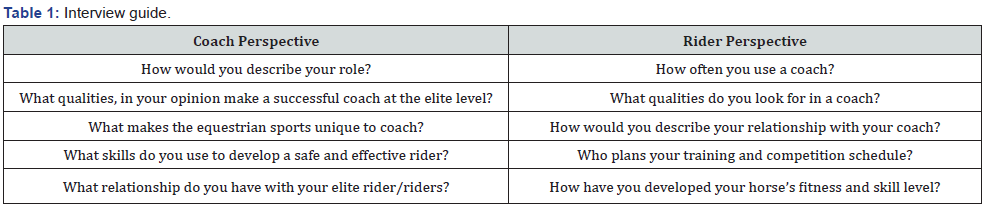
A semi-structured interview schedule that prompted responses to open ended questions about the roles and relationships of coach and rider was chosen as the method for this study. A semi-structured interview guide (Table 1 & 2) was developed to allow the interviewer to explore the relationships and roles within the coaching process. Participants were informed that there were no right or wrong answers, they were asked to take their time to respond to questions or to tell the interviewer if they did not understand the question. In addition to the semistructured questions specific probes were identified for each question and encouraged participants to elaborate on their responses.

Data collection

Coaches and riders were approached via phone call or email by the author and invited to participate in the study. After explanation of the aims and background of the study, interviews were arranged at a time and place elected by the interviewee. The interviews ranged from 25-55mins and were audiotaped with participants’ consent. The interviews were later transcribed verbatim into A4 single-spaced text.

Pilot study

A pilot study was carried out to assess the effectiveness of the questions selected. One elite coach was selected to be interviewed. Responses were forthcoming and met expectations. However, to validate the results further it was decided to also interview riders to gain their perspective of the role of the coach and the relationship they have with their coach. A further pilot interview was carried out with an elite rider to again assess the effectiveness of the questions selected.

Data analysis

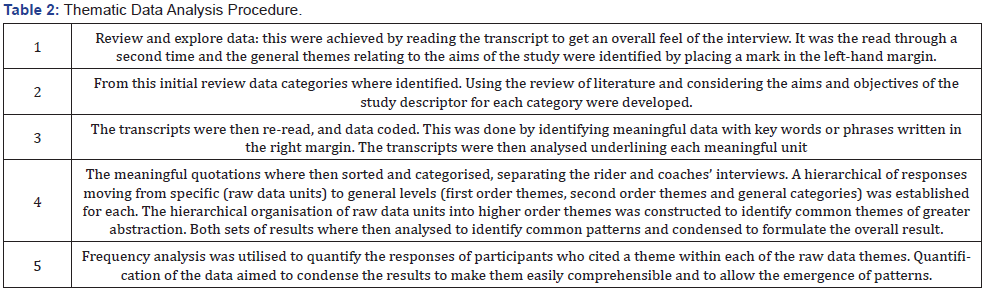
Thematic Analysis was used as a systematic method for exploring the contents of the obtained data.

Ethics & Limitations

Ethical approval was granted by Hartpury University. The interviewees remained anonymous and confidential throughout the study, however, due to the high-profile nature of the sample it may be possible for people in the equine industry to identify subjects from their responses, however all efforts were made to retain anonymity and participants were given a letter and number as a means of identification through the study. Questioning topics did not cover intrusive or overtly personal subject areas. All participants were over the age of 18 and choose to take part under their own free will and were able to withdraw from the study at any time. Informed consent from the coach and riders were obtained prior to the interviews being recorded. The Data, both audio recordings and transcripts were stored in accordance with the Data Protection Act 1998.

The limitations of using a semi structured interview technique are that not all people are equally cooperative, articulate, and perceptive. The interviewer requires skill, not only to select and ask the appropriate questions clearly, but to gain the interviewees trust and confidence for them to elicit a full and honest response.

As a result, it is not a natural tool for gathering data as it requires interaction between two parties. However, due to knowledge level and experience of the researcher regarding equine performance these limitations are reduced.

Results

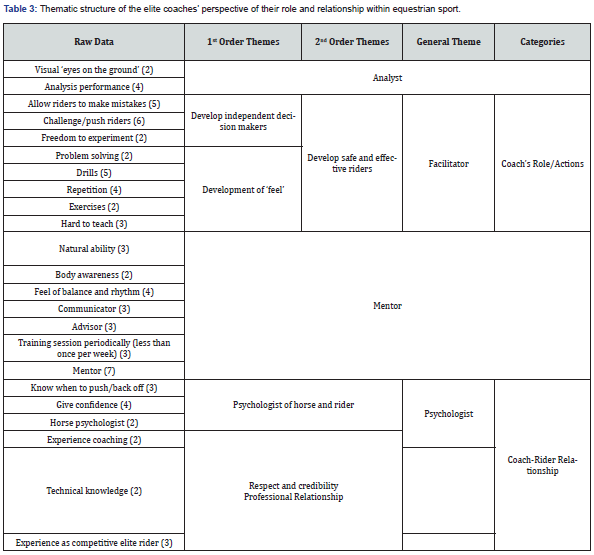
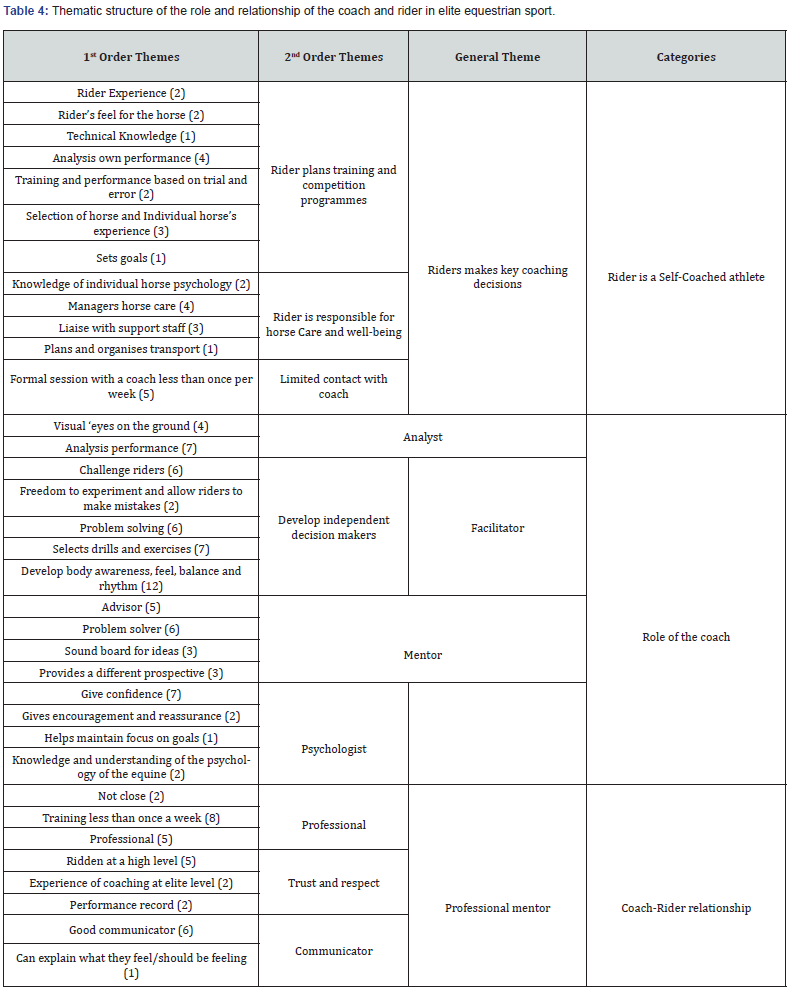
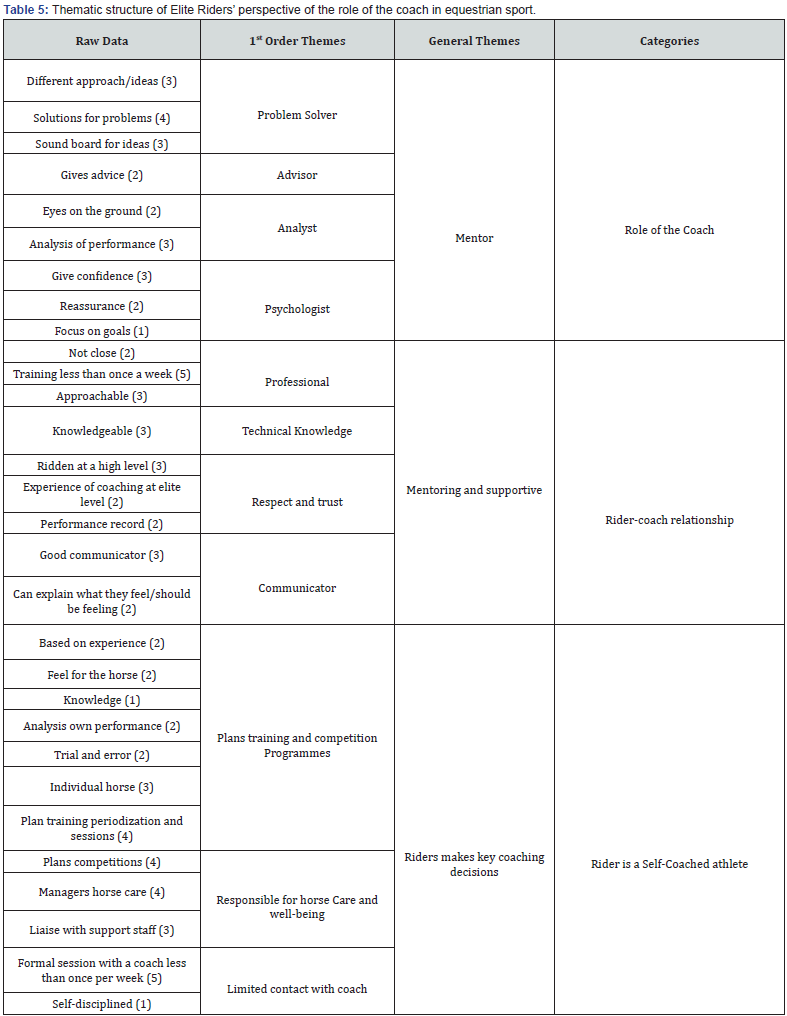
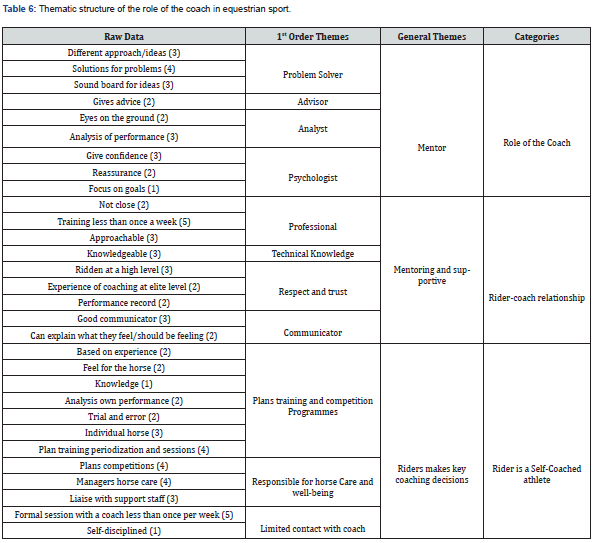
Analysis of the transcripts revealed a total of 534 meaning units that were further grouped into sub-themes and general themes from the coaches’ perspective (Table 3) and the riders’ perspective (Table 4). This led to the development of a final thematic structure revealing major dimensions that characterized coaching in elite equestrian sport (Table 5 & 6).

Discussion

Self-coach athletes

Analysis of data suggests that riders at the elite level in equestrian sport are in part ‘self-coached’. The results of the study show that riders attend a training session with a coach less than once a week and some as little as once a month. The remaining time the individual rider is responsible for all training decisions including horse selection; competition planning; implementation of periodization plans; management of support staff. Training decisions are made by the riders based on experience and knowledge of the individual horse. Therefore, in depth knowledge is needed by the rider in all areas. The development of the equestrian UKCC qualifications has incorporated the importance of planning for the coach but fails to acknowledge that it is the rider that plans the program. It was acknowledged by both the riders and coaches that consideration for the horse’s wellbeing and ensuring they were willing to do the task being asked was a key factor in their planning. This is because the equine has no concept of the goals involved. Coach C1 clarified this by stating “It is better to have the horse 90% prepared or 90% fit and 10% willing than have 100% prepared but you have no willingness”. This is in direct contrast to literature in other sports where being 100% prepared is necessary for sporting success. Therefore, any equestrian plan needs to suit the temperament of the horse. The results highlighted that knowledge and understanding of the psychology of the individual horse was significant and that as the rider has a close relationship with their horse, they are in the best position to make these training decisions. However, the equestrian UKCC syllabus does not incorporate any aspect of equine psychology or horse management, although these topics are still present in the other equine coach certification systems.

All riders in the study identified that how the horse ‘feels’ is the deciding factor in increasing intensity of training or increase in competition level, this suggests that there is an element of reflective analysis occurring and highlights the importance for developing and understanding this concept of ‘feel’. Yet there was no evidence to suggest riders use an objective analysis approach, this may be due to lack of knowledge by the rider and lack of research reaching the industry e.g., use of heart rate monitors, biomechanical analysis etc. There is also a lack of consistency both in literature and amongst the participants as to what actually constitutes ‘feel’. More research is needed to define this concept in equestrian sport and how it is developed to enable it to be taught or coached more effectively.

During their self-coaching training, all riders stated that they used outside observers either grooms, family members or friends to gain feedback. However, the quality of these observers is unknown. This is an area that requires focus and providing quality education to this support team needs consideration. A greater understanding of the self-coached riders is needed to fully feed into education programs for riders at all levels as well as an understanding of how the coach can support the self-coached rider optimally.

Coach-rider relationship

Current research in the field of coaching science recognizes that sport is not immune from the social world and that to examine the dynamic coaching process contextual social factors must be considered. Indeed, any activity that involves human beings is complex, interpersonal and that relationships are contested at levels of meaning, value, and practices. The relationship between the coach and the athlete is not an add-on or by-product of the coaching process but could be considered the foundation of coaching. Therefore, the coach-athlete relationship can be defined by mutual and casual interdependence between coaches and athlete feelings, thoughts, and behaviour, suggesting shared goals and values [6] proposed that successful coach athlete relationships are based on four concepts: closeness (trust and respect); commitment (shared goals and connection); complementarity (interaction that is co-operative and effective); co-orientation (acceptance of individual roles). However, previously there is no evidence to suggest these are used in equestrian sport.

The interpersonal relationship between athlete and coach plays a significant role in the sporting lives of the athlete and is likely to determine satisfaction in the sport, self-esteem and confidence and ultimately successful sporting performance.

However, knowledge and understanding of these relationships remains limited at both the theoretical and empirical level. This study elucidated that the relationship between the coach and rider was a professional one that could be described as reciprocal, yet asymmetrical characterised by a unique relationship between individuals and depended upon experience and age difference. This study revealed riders sought a coach that was approachable, that they felt comfortable discussing ideas with and that they trusted and respected. This view is supported in other sports; however, the riders did not describe the relationship as ‘close’. Yet closeness is considered by Jowett’s 3Cs as a key component of the in successful coach-athlete relationships. This may be in part due to the limited contact riders have with their coaches. Contact was mixed amongst the subjects; one respondent only saw their coach during periodic World Class training which may explain why their relation was not considered ‘close’. Further research is needed to fully quantify the ‘norm’ for contact time with coaches across equestrian sport at varied rider levels.

Respect and trust

The emerging themes that were expressed by the rider participants show some commonality in their lower order themes, that they desire a coach that they trust and respect. All participants claimed that this respect was generated from the coaches’ own riding experience and level in which they had competed. It was felt that this was needed to not only have credibility but also to have the knowledge of riding a variety of horses at the elite level and to have the appropriate repertoire of training solutions. The ability to have the concept of ‘feel’ of the individual horse was also deemed important. One participant commented that: “It is also really useful for them to get on the horse so they can feel what I feel” R1. This suggests that equestrian coaching is largely experienced-linked and situation-specific base, like that required in the sport of sailing. Such an important statement is worthy of further investigation as other equestrian coaching qualifications include riding tests as part of their qualification curriculum, whereas the UKCC does not. Interestingly the elite coaches acknowledge the advantage of riding experience for a successful coach but felt that this was not necessary. This is supported in other sports where the best coaches are not always elite athletes but have had experience of competing just below the elite level, this may well not be applicable in equestrian coaching at elite level.

Mentor relationship

Riders in this study referred to their chosen coach when they needed advice or mentoring. One way by which the riders identified this mentoring relationship was that they used a coach as a sounding board for ideas. This was, in part, used to gain confidence and reassurance in the knowledge that what they were doing was correct. They also used the coach as a mentor when they had a particular problem or needed a fresh approach to a particular horse or situation. Whilst BE acknowledges the importance of mentoring skills within coaching, it fails to clarify what these skills actually are, yet it can be accepted that it is a form of supported learning through social interaction. Evidence from these interviews suggests this is achieved through a shift between support and challenge.

Facilitator in the development of safe and effective riders

[7] when analysing relationships within the caring professions, identified good mentors as challenge givers, the collective viewpoint expressed by the participants indeed concurs with this within this study. Emphasis was placed on the element of challenging the rider. This may be since in the remaining time the riders are self-coaching and may not be motivated or confident to push themselves outside their comfort zone. C1 expressed this view “that they go over what they are comfortable doing and that they are good at” C1 29-30. Within this study the findings concluded that the elite equestrian coaches facilitated this challenging environment by setting up exercises that allow riders to experiment, for example, different approaches to jumping a combination. This suggests a move away from skill practice to development of perception and decision-making processes. This allowed the riders to make mistakes and learn from these mistakes. The coaches in this study stated that they achieve a learning experience by discuss those mistakes, getting them to think how they would ride the exercise differently and creating awareness of feel in relation to position. This cognitive action through a guided discovery approach achieves an empowerment process.

Similarly, to other sports, feel or body awareness in equestrian sports is achieved through drills and repetition. Riders felt this fed into positively developing their own confidence, improving their cognitive awareness and automatic decision-making processes. More research is needed in this area to understand which exercise or drills are the most effective in developing this aspect within equestrian coaching.

Recommendations

The results from this study provide substantial evidence for the need to incorporate the topic of coaching the self-coached rider into equestrian coaching education systems at elite level. Coaches should be aware of the demands and limitations of coaching the self-coached rider and appreciate the importance of their role in the successful outcome of the horse/rider dyad in equestrian competition. BE should highlight and develop the role of the coach as a mentor to self-coached riders at the elite level. Amalgamation of both phases of this study combined with the themes that emerged from the interviews provides the following recommendations:

a) Role of the coach in Equestrian UKCC education should be clearly identified

b) Further development of mentoring skills of coaches

c) Identification of techniques that facilitate the development of ‘self-aware’ and ‘self-reliant’ effective decisionmaking riders

d) Development of rider skills to self-coach in terms of planning and implementing training, developing all areas of psychology, equine psychology, injury prevention etc. and analysis

e) Increasing the use of tools to enable the self-coached rider to analyse performance in both training and competition environment

Limitations of Study and Future Research

It is important to highlight the limitations inherent in the study which must be considered against the results that emerged. The sample size used in the study was small (coaches N=3, riders N=3) however, the selection criteria was carefully applied and even though the sample size was small it could justifiably be seen as offering expert opinions therefore, the findings are directly applicable to elite coaches and riders. Future research is required with differing levels of riders and equestrian coaches working to provide validity across all equestrian participants. More indepth research is indicated investigating individual equestrian sports in greater detail to examine any differences that may arise in each discipline. As expected, with any attempt to summarize or condense findings from the semi-structured interviews, not all participants were as forthcoming as each other and did not respond in the same way or to the same extent to the identified themes. The practical coaching processes were not quantified, therefore this study relied on the participants perception of coaching and the role of the coach, whilst this is a legitimate form of qualitative research the study could have included coaching observations. using video analysis to evaluate the coaching process and identify evidence of the coaching roles displayed in practice [8-54].

To Know more about  Journal of Physical Fitness, Medicine & Treatment in Sports

Click here:   https://juniperpublishers.com/jpfmts/index.php

To Know more about our Juniper Publishers

Click here: https://juniperpublishers.com/index.php


Sensor Data Acquisition and Analysis in Indoor Farming Using Azure IoT Hub - Juniper Publishers

  Material Science - Juniper Publishers Abstract Indoor farming is one of the agricultural innovations, providing essential support in contr...