Showing posts with label knowledge. Show all posts

Thursday, October 20, 2022

Knowledge, Attitude and Practices on Prevention of Noise Induced Hearing Loss Among Factory Workers in Tanzania - Juniper Publishers

 Global Journal of Otolaryngology - Juniper Publishers


Background: Noise-induced hearing loss (NIHL) is sensory deafness caused by long-term exposure of the auditory system to a noisy environment. The pathogenesis of noise-induced hearing loss is complex. Various theories try to explain this, such as the oxidative stress theory, but none perfectly explains the occurrence of noise-induced hearing loss. There is no treatment which can completely reverse the damage. More research is required to explore the pathogenesis and to better guide clinical practice. Preventative strategies, such as educating the public about hearing health, should be adopted to reduce the harm of noise-induced hearing loss [1-3].

Objective: The main objectives were to explore the knowledge, attitudes and practices among factory workers in Ilala regarding noise induced hearing loss and the use of hearing protective devices in NIHL prevention. Noise induced hearing loss is a well-known entity in daily practice of Otorhinolaryngology (ORL).

Methodology: A descriptive cross-sectional design was used to assess knowledge, attitude, practices among factory workers. A study was conducted in Cement Factory and minor factories in, Dar Es Salaam, Tanzania. Non-probability convenience sampling technique was used to obtain all 185 participants. The data was collected using Kiswahili questionnaire with close ended questions. All participants were consented before participating in study, and all the responses were coded and entered in a computer software programme statistical package of social sciences (SPSS) for data analysis.

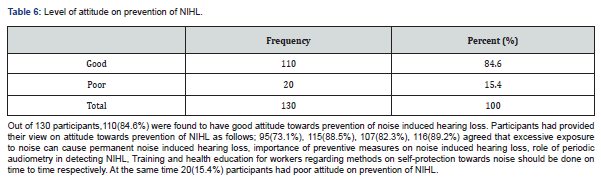
Results: Large proportion of participants were males (79.5%), aged 26-35years old (34.6%) and with primary education (48.6%). 70.3% were aware of NIHL their main source of information being their teammates. Level of knowledge were 49.2% 40.8% and 10.0% for high, moderate and low levels respectively. Knowledge was influenced by gender and working experience. 84.6% had good attitude on prevention of NIHL which was largely influenced by education level. Only 19.2% had good practice on prevention of NIHL.

Conclusion: There is still a problem among factory workers to practice prevention of noise induced hearing loss despite of knowledge they have

Keywords: Knowledge; Attitude; Practice; Noise induced hearing loss; Factory workers

Abbreviations: ACC: Accident Compensation Cooperation; CDC: Centres for Diseases Control and Prevention; dB: Decibels; HL: Hearing loss; KAP: Knowledge, Attitude and Practice; NHIL: Noise Induced Hearing Loss; ORL: Otorhinolaryngology; OSHA: Occupational Safety and Health Administration; PPE: Personal Protective Equipment’s; PTA: Pure Tone Audiometry; SPSS: Statistical Package for Social Services; SRT: Speech Reception Threshold; WHO: World Health Organization

Introduction

Noise induced hearing loss is the gradual bilateral sensorineural hearing loss that occurs due to the effect of workplace noise. In all workplaces there is always risk of exposure to occupational noise, but some workers are more susceptible to a higher exposure of workplace noise in comparison to others. Noise-induced hearing loss is one of the most common forms of major health problem, is largely preventable and is probably more widespread than revealed by conventional pure tone threshold testing [2,3]. Noise-induced damage to the cochlea is traditionally considered to be associated with symmetrical mild to moderate hearing loss with associated tinnitus; however, there is a significant number of patients with asymmetrical thresholds and, depending on the exposure, severe to profound hearing loss as well.

A wide variety of NIHLs are work related. Occupational noise is the most common cause of NIHL in adults which is up to now considered incurable and the best approach to it is to utilize maximum protection. An effective noise exposure prevention programme consists of identification of sources of noise and implementation of controlling measures and regulations at working environments as well as performing periodic audiologic evaluation of those who are working at noisy environment [4]. Worldwide, more than one billion people are affected by hearing loss. Noise-induced hearing loss (NIHL) is reported among the most prevalent occupational diseases. However, little is known about the current level of knowledge and attitude towards NIHL among general population [5].

Hearing impairment is still a major challenge for public health organizations. According to the World Health Organization (WHO), there are approximately 466 million people living with disabling hearing loss, including approximately 34 million children. Furthermore, of these, nearly 90% live in middle and low-income countries. Previous reports have also highlighted the significance of noise-induced hearing loss (NIHL), both work- and recreational activity-related NIHL. In the United States, the estimated percentage of individuals with hearing impairment is around 14.4% of adults aged18 years and above, and approximately 10 million of them suffer from hearing loss due to noise exposure. In the UK, approximately 11 million people have a hearing impairment [6].

Besides loud noise, there are many other risk factors (modifiable and non-modifiable) which can induce progression of noise-induced hearing loss. Modifiable risk factors include smoking, diabetes and lack of exercise, and non-modifiable risk factors include aging, race and genetics. These factors can overlap with noise and accelerate the occurrence of noise-induced hearing loss. Different genders respond almost equally to noise, but gender influences acoustic risk-taking behaviors, boys engage in significantly more high-risk noise activities than girls. Older people and those who have ever suffered from sensorineural hearing loss are more susceptible to noise. Approximately 23% of those between the ages of 65 and 75 years suffer from mild or severe hearing loss. Over the age of 75 years, about 40% have hearing impairment [7,8].

Noise induced hearing loss as the great burden was reported by ACC that it increases the cost each year in rehabilitation centres in New Zealand. The total cost was almost $43 million in 2004/05, over double those just five years earlier. Across the variety of industry, academic, narrative, and government sanctioned sources on noise-induced hearing loss, one clear thread is evident: that noise-induced hearing loss is a significant and widespread public health issue, it leads to substantial negative impacts upon the lives of those that are afflicted, and while there is no cure for those that are already affected, the condition itself is regarded as essentially preventable [9].

Problem statement

Noise-induced hearing loss is identified as a significant public health issue worldwide. There is some evidence that the number of new cases is declining in some European countries but increasing in others. Interestingly consistently in the surveys there is apparent increase in the number of people who believe that they are exposed to dangerous noise levels in the workplace [10]. It has been reported that more than one billion people worldwide are affected from noise induced hearing loss [2,3,5]. Also, there is a study conducted in South Africa that showed greater prevalence of NIHL among mine workers [11]. While it is difficult to precisely define and catalogue the disorder, somewhere in the region of 180 million people worldwide may currently be affected with a further 600 million at a high risk of developing it due to excessive noise exposure levels.

Construction, agriculture, manufacturing and metalworking industries show a higher prevalence of noise-induced hearing loss and the greatest losses are consistently among men above the age of 45 years [12]. Occupational Safety and Health Administration (OSHA), has reported that 22 million Americans are exposed to “potentially damaging” noise in the workplace every year. About one-third of Americans in these kinds of workplaces do, in fact, experience noise-induced hearing loss, the CDC has reported [13]. Prevention for NIHL is most used since the problem is still not curable. Action to prevent noise-induced hearing loss is necessary, especially because many causes of permanent hearing loss are preventable.Due to greater development of industries and urbanization in both developed and developing countries NIHL has emerged to be the problem of public health importance [6, 12].

Societal changes are increasing exposure to noise. Although the sensitivity of each individual is different, sound intensity over 85dB can cause noise-induced hearing loss. High levels of noise exposure usually come from occupational noise (such as factories) or recreational noise (such as personal music players). There are also few studies done on prevention on noise induced hearing loss [14]. In Tanzania there was a study conducted that showed many people to have poor knowledge, attitude and practice on prevention of NIHL [15].

Rationale

The purpose of this study was to assess the level of knowledge, attitude and practices among factory workers on prevention of NIHL. Determining the predictors of knowledge, attitude and practice of noise induced hearing loss (NIHL) among factory workers was important because it may help prevent a serious irreversible noise induced hearing loss [16]. Also, the results of this study will help health practitioners to emphasize more on the prevention of NIHL among the factory workers and the society at large. The results also provide evidence for forming policies which are more effective and influence better response basing on the ground realities. The study also serves as an opportunity for other colleagues to get knowledge and being aware about noise induced hearing loss on how to prevent it emphazing more to reduce exposure to noise and to use PPE’s [17]. The data obtained from this research serves as a platform of data for further research and for comparison of statistics all over Tanzania.

Broad objectives

To assess knowledge, attitude and practices on prevention of noise induced hearing loss among factory workers in Tanzania.

Specific objectives

a) To assess knowledge on prevention of noise induced hearing loss among factory workers

b) To assess attitude on prevention of noise induced hearing loss among factory workers.

c) To assess practices on prevention of noise induced hearing loss among factory workers.

Materials and Methods

Study design

Descriptive cross-sectional study was used to assess knowledge, attitude and practice on prevention of NIHL among factory workers. This was the study of choice because it was meant to collect information once and there was no follow up of participants, it was also cheap, relatively easy to perform and not time consuming. The study was conducted in April to July 2021. A quantitative method was employed. Such a design was chosen to meet the objectives of the study

Study Area

Cement Factory and minor publishing industries in Tanzania.

Study population

All factory workers with noise exposure.

Inclusion criteria

The inclusion criteria were all factory workers that are on exposure to noise in their working environment and who consented to participate.

Exclusion criteria

Workers in other sections that are not on occupational noise exposure and those who were unable to read Kiswahili.

Data collection methods

Data was collected using Kiswahili questionnaires that were having closed ended questions. This was involving pre-test and actual data collection.

Investigation tools and validity and reliability issues

To test for validity in this study the employed research tool (questionnaires) was pretested and revised to ensure that it gives intended information. The pretest involved a small number of participants that conducted a day before actual data collection day. The essence of pretest study was to ensure that the questionnaire measures and give the required information.

Ethical considerations

The ethical clearance was obtained from the Institute of reviewer board of Muhimbili University of Health and Allied Science. Informed consent was obtained from the study participants before enrolment.

Result

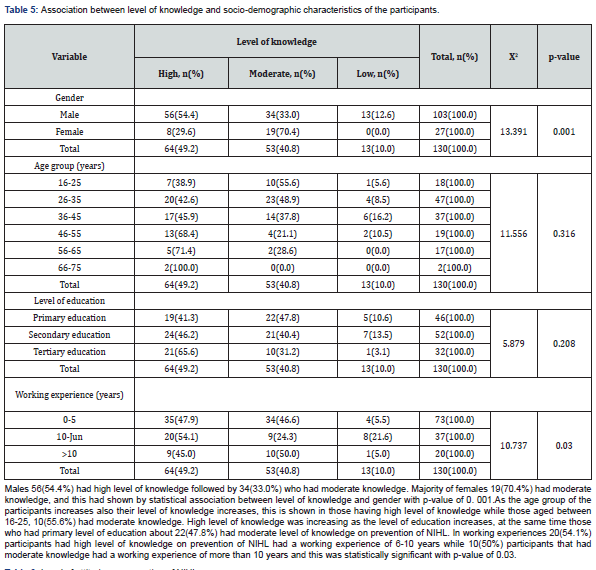
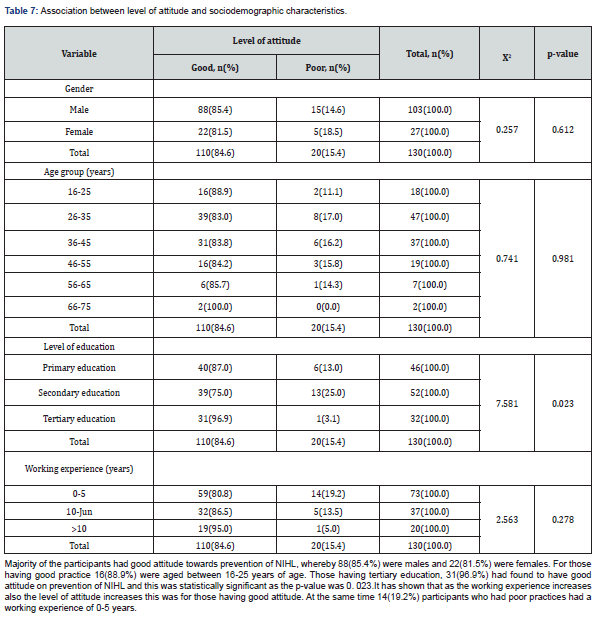
(Tables 1-9)
Discussion

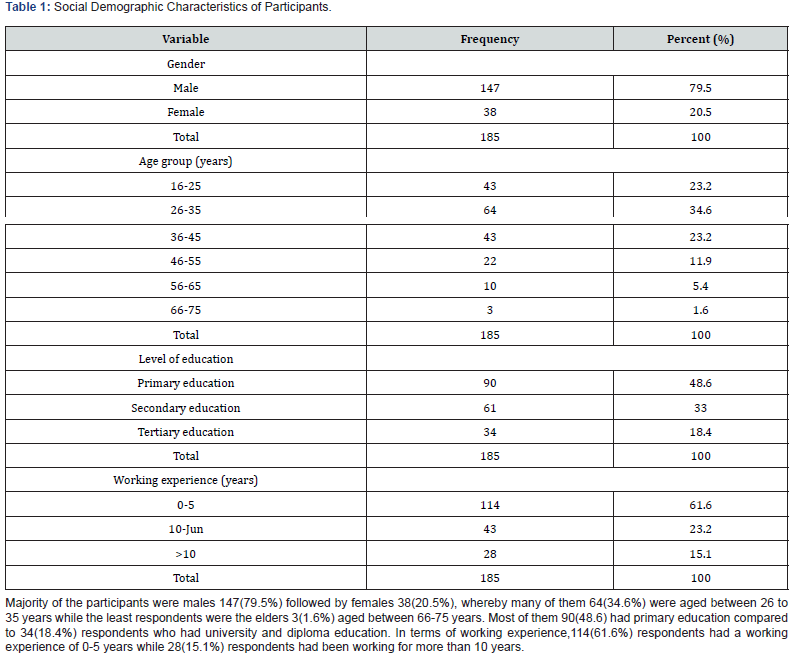
This study revealed that there were more males 147(79.5%) participants compared to females 38(20.5%). Other studies also found the same results i.e., were more males than females [5,16]. Most of study participants aged between 26-35 years. This was contrary to the study done among Malaysian workers where most participants aged 40-49 years, main reason was due to different settings. However, more than half of participants aged above 50 years [16]. This study found out that most participants were aware of the NIHL and reported that working mates were the main source of information on prevention of NIHL. Majority of the participants had high level of knowledge on prevention of NIHL. However, the study done among iron and steel workers in Tanzania, found that high proportion of participants suffers NIHL because of the low-level knowledge [15].

It was found that gender and working experience had positive impact on level of knowledge on prevention of NIHL. Zulkefl et al. [16] found out that gender had no role to the level of knowledge, however they found that working experience and age of workers to have a statistical association with knowledge level [16]. Similar study on level of knowledge done by Jacob et al. [17] found out that many participants had high level of knowledge [17]. Overall, most participants in this study had good attitude in prevention of NIHL. This was shown to be influenced by level of education of participants. Contrary to these results, it was shown that most workers have poor attitude to NIHL. Factors associated with poor attitude were reported to be perception that noise at work is inevitable and therefore taking precautions for both workers and management is important [18]. Level of education was found to have positive impact on attitude of workers in this study.

Study done by Zulkefl et al. [16] found out that attitude was influenced by level of education and working experiences, despite that the level of attitude was low [16]. Despite that high proportions of participants reported to have high knowledge and good attitude, few of them practice preventive measures to noise induced hearing loss. Poor practices on prevention of noise induced hearing loss found to be highly influenced by level of education of participants whereby majority of the participants had primary level of education. The same results were found in other studies done in different settings [8,15,19]. Reasons for poor practices reported were poor management [20], and commitment among workers [21-27].

Conclusion and Recommendation

This study revealed that there is high level of knowledge and good attitude to prevention of noise induced hearing loss to factory workers. Surprisingly, there is poor practice to prevention of NIHL. There is still a problem among workers to practice the measures to prevent noise induced hearing loss despite of knowledge they have. Further studies have to be done on how to bridge the gap between knowledge and practices on prevention of NIHL. Management has to make sure that everyone in working area is abiding to preventive measures as per protocol. Regular health check-up and continuous education to workers for more practice in prevention of NIHL.

To Know more about Global Journal of Otolaryngology

Click here: https://juniperpublishers.com/gjo/index.php

To Know more about our Juniper Publishers

Click here: https://juniperpublishers.com/index.php 

Monday, May 23, 2022

Knowledge and Utilization of Iodized Salt and Associated Factors among Households of Fitche Town, Central Ethiopia, 2020: A Community based Cross-Sectional Study - Juniper Publishers

 Public Health - Juniper Publishers

Abstract

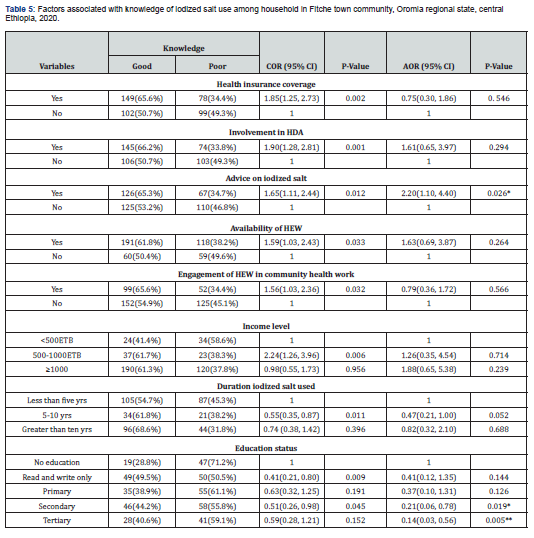
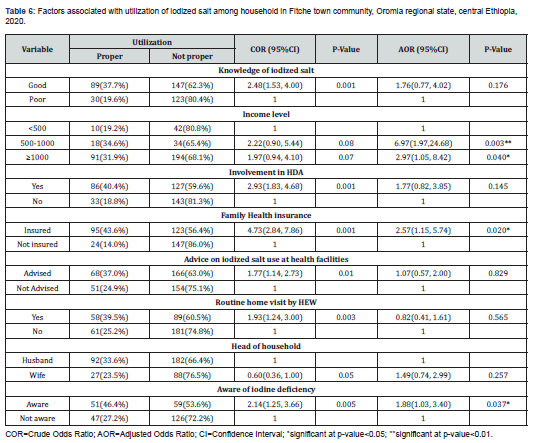
Adequate knowledge and proper utilization of iodized salt in the household is a significant factor in the prevention of iodine deficiency disorders. This study was aimed at assessing knowledge and utilization of iodized salt and associated factors among the Fitche town community. A total of 470 individuals in the household were participated. About 58.6% of the respondents had good knowledge of iodized salt use and 52.6% use adequately iodized salt. Having higher monthly income [adjusted odds ratio (AOR)=2.97, 95%confidence interval (CI):1.05-8.42], having family health insurance [AOR=2.57, 95%CI:1.15-5.74] and being aware of iodine deficiency consequences [AOR=1.88, 95%CI:1.03-3.40)] were significantly associated with proper utilization of iodized salt. Besides, acquiring health advice on iodized salt [AOR=2.20, 95%CI:1.10-4.40] and educational status [AOR=0.14, 95%CI:0.03-0.56] were shown significant association with the knowledge of respondents on iodized salt use. Even though knowledge of iodized salt use in the study area is higher as compared to other findings, the coverage of proper iodized salt utilization is less than the world health organization recommendation of iodized salt use in households. Therefore, promoting the knowledge and utilization of iodized salt should be strengthened. Additionally, routine testing and monitoring for iodine levels in salt sold in the markets and used by households have enormous benefits.

Keywords: Knowledge; Utilization; Iodine; Salt; Fitche; Ethiopia

Abbreviations: AOR=Adjusted Odds Ratio; COR=Crude Odds Ratio; KM=Kilometer; PPM=Parts Per Million

Introduction

Iodine is an essential micro-nutrient and dietary mineral which is required for human growth, development, and maintenance of normal levels of thyroid hormone synthesis [1]. For the past six decades, iodine deficiency has been recognized as a major public health problem, posing huge risks to the population's health and growth. According to a new global report on iodine status, the number of countries where iodine deficiency is a public health problem has halved over the past decade. However, 54 countries are still iodine-deficient [2]. World health organization (WHO) recommends all food-grade salt used in household and food processing should be fortified with iodine as a safe and effective prevention and control strategy for iodine deficiency disorders [3]. Salt is the most preferable and effective vehicle for distributing iodine to the public because it does not spoil and is consumed in a more predictable amount than most other commodities [4]. According to WHO, the recommended daily allowances of iodine intake is 90mcg for preschool children (0-59 months), 120mcg for schoolchildren (6-12 years), 150mcg for adolescents (>12 years) and adults, and 250µg for pregnant and lactating women [5]. Globally, the problem of iodine deficiency was recognized as a major public health problem affecting billions of people with less developed countries affected more than the rest of the world [6]. In 2020, 28 countries have insufficient iodine in their diets worldwide [7]. Likewise, nearly 1 billion people did not consume iodized salt in 2018 [8]. Insufficient daily consumption of iodine causes a range of functional and developmental abnormalities collectively known as Iodine Deficiency Disorders (IDD) [1]. This Disorder refers to all the ill-effects of iodine deficiency including mental retardation, goiter, reproductive failures such as abortions, congenital abnormalities and stillbirths, mental retardation, impaired mental function [9] hypothyroidism, intellectual disability, psychomotor defects, hearing, and speech impairment [3]. Universal Salt Iodization (USI) is a key strategy proposed by WHO, UNICEF, and ICCIDD to eliminate IDD at the population level [3]. In reality, even though salt iodization programs with high coverage exist, the programs remain vulnerable to changes in the knowledge and practice of the community.

In Ethiopia, the practice of adequate iodized salt use showed a noticeable growth from 15% in 2011 to 89% in 2016 [10,11]. However, inconsistencies of the practice are detected among residences and economic standing [12]. As an illustration, iodized salt utilization is highest in Addis Ababa City [12] and lowest in northern Ethiopia [13]. Concerning the knowledge of iodized salt utilization, the highest prevalence was observed in Addis Ababa City [12] and the lowest was observed in the southern part of the country [14].

On top of the observed discrepancy of iodized salt practice and knowledge at household in the country, further studies to identify the knowledge and awareness of the general population about the use of iodized salt are indicated essential to address barriers in general [4] and particularly in Ethiopia where there are needs to improve coverage of adequately iodized salt [15]. Additionally, the knowledge and practice of iodized salt use appear unknown in Fitche town households. So, the current study aimed at filling this evidence gap by providing significant information on the knowledge and utilization of iodized salt and the reason behind it.

Materials and Methods

Study design and setting

A community-based cross-sectional study was conducted in Fitche town, Oromia regional state from May 01 to June 30/2020. Fitche is the capital town of the North Shewa zone, Oromia regional state, and found to the North of Addis Ababa, the capital city of Ethiopia. According to data obtained from the town municipality, the town's total population in 2019 is estimated to be 44,265, of which 21,000 were males. There are 11,020 households in the town, which is divided into 4 kebeles (the smallest administrative unit).

Study participants and sampling procedures

The source populations were all households in Fitche town. The member of a selected household who is responsible for food preparation and aged ≥18 was considered as a study unit. Individuals (study units) who resided in the study area for at least 6 months were included in the study. The sample size was determined by using single proportion formula, n=((Z1-α/2)2*pq/d2), considering the following assumptions: 52.8% proportion of good knowledge of iodized salt utilization [14], 95% level of confidence, 5% marginal error, and 15% non-response rate. Thus, the final sample size was 440. All four administrative kebele in the town were included in the study. Preliminary household enumeration (census) was done to identify eligible households. Then, the total sample size was allocated to each kebele using proportion allocation to size based on the total number of eligible households in each kebele. Finally, the required sample from each kebele was selected by a simple random sampling technique using a computer-generated number in SPSS.

Data collection technique and instruments

Data was collected using a pretested structured, interview administered questionnaire, and a rapid field iodine test kit was used to collect data from the study participants. Two BSc nurses who have experience in supervision and four data collectors female BSc nurses participated in the study. Rapid test kits were used as semi-quantitative estimations of iodine content. Rapid field iodine test kits manufactured by MINI KITS INTERNATIONAL, India were used to test the iodine content of household salt. A small amount of household salt was obtained from each respondent and Rapid Field Iodine Test Kits were used to test the iodine content. The test was done by adding two drops of the test solution to each salt sample and this was expected to produce light or deep violet color within one minute depending on the iodine content of the salt. The color of the salt was compared to the color chart provided to determine the iodine content. On samples where no color appeared after one-minute, fresh salt samples were obtained and about five drops of the test solution were added. The color was again compared to the color chart to determine the iodine content. Depending on this test, if the iodine content in the salt is ≥15ppm then the salt was taken as adequately iodized. But, if the iodine content in the salt is <15ppm then salt is inadequately iodized [16,17]. After validation of whether the salt is iodized or not, the practice of iodized salt at that specific house was determined and classified as practicing and not. Utilization status was classified as proper and improper after determining whether individuals in the household were using adequately iodized salt (≥15ppm) iodine and use salt after cooking finished. Additionally, knowledge status was determined by using a nine-item question regarding the benefits and risk iodine deficiencies for participants to choose. Those who were able to answer above 50% were categorized as having good knowledge while those who answered less than five correct responses were categorized as having poor knowledge. Additionally, the questionaries consist of different socio-demographic, health system-related, and individual-level factors.

Operational Definition

Knowledge of iodized salt

Respondents who answer half and more than half of the knowledge-related questions were considered as [13,16,17].

Utilization of iodized salt

Refers to a respondent who used adequately iodized salt (≥15ppm) by using a rapid test kit [3,17].

Data analysis procedures

After data collection, each questionnaire was checked for completeness and consistency of the information obtained from the respondent. Then, the data were entered into EpiData manager version 4.4.6 and exported to SPSS version 24 for analysis. Descriptive analysis was done to describe the variable based on their nature. Bivariable analysis was conducted to see the association between dependent and different explanatory variables. Then, all variables with p-value ≤0.25 were considered as a candidate for the multivariable logistic regression model. Backward stepwise multivariable logistic regression was used to identify the predictor variables. Adjusted Odds Ratio (AOR) with the corresponding 95% Confidence Interval were estimated to show the strength of association. Finally, variables with a p-value <0.05 were considered statistically significant.

Data quality management

The questionnaires were initially designed in English and translated into the local language (Afan Oromo) by experts, and then translated back to English by a third person to check for consistency. Data collection instruments were pretested on 10% of the total sample size in Hambiso town which is 12.2 km far from the study area. Accordingly, necessary measures were taken to correct the observed error before entering the actual data collection process. Also, data collectors and supervisors were trained for two days on the techniques of data collection before starting data collection. The functionality of the iodine field test kit was checked during the entire process and proper handling of the kit was also maintained.

Results

Socio-demographic characteristics of the respondents

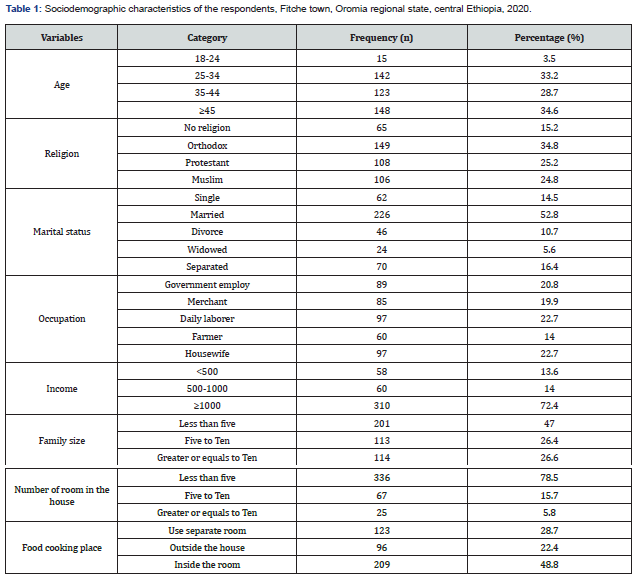
A total of 430 respondents were participated in the study yielding a 97.3% response rate. The mean age of the respondents was 40.48 years with (SD=10.88). One-third of the respondents belong to age 25-34 years. The majority of the respondents, 149(34.8%) were orthodox religion followers and 264(61.5%) attend formal education with 98(22.7%) of them reported not having a job outside the house. About 303(70.8%) households mentioned husband as a head of a family with nearly one third 145(33.9%), and 101(23.6%) of the participant stating husband and wife were the last decision-makers respectively. In about 134(31.3%) and 48(11.2%) of the household joint husband and wife and relatives were mentioned as the last decision-maker at the household level respectively. Almost half, 213(49.6%) of the household had using iodized salt for less than five years and 195(50.8%) were using it for more than ten years. About 242(62.4%) of the household store iodized salt at home for a period lasting less than two months and the rest 146(37.4%) store for more than two months (Table 1).

Health system-related characteristics

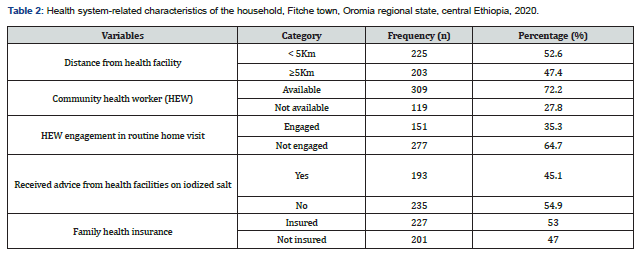
In this study, about 225(52.6%) of the respondents reside within a five-kilometer diameter from a health facility with slightly more than half, 228(53.0%) of the respondent accessed family health insurance service coverage. Out of the total respondents, 193(45.1%) stated as they have been received advice from health facilities on iodized salt (Table 2).

Knowledge of the respondents on the iodized salt use

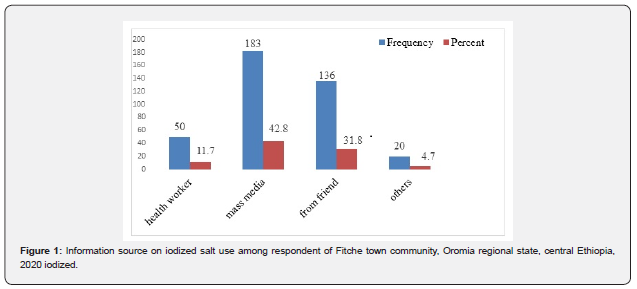
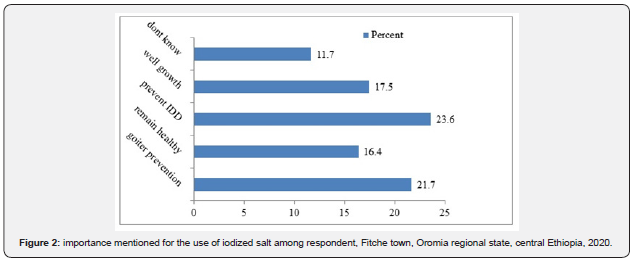
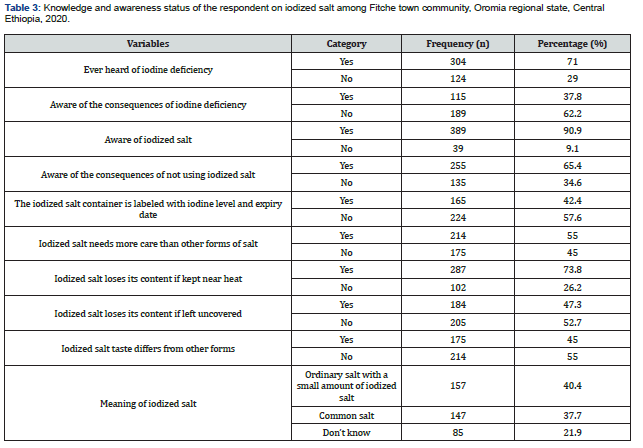
This study demonstrated that more than half, 58.6% of the respondents have good knowledge of the benefit of iodized salt use. About 304(71.0%) of the participants had heard iodine deficiency with only 115(37.8%) of the participants stating some form of health defect/consequences resulting from iodine deficiency. Related to the care of iodized salt more than half (55.0%) of respondents revealed that iodized salt needs more care than other commonly used types of salt. On the other hand, about 82(32.8%), 84(33.6%), and 78(31.2%) of the respondents stated that iodized salt must be stored far from heat, moisture, and sunlight respectively (Table 3). The study also revealed that various sources of awareness related to the importance of iodized salt use among the respondents who have awareness. Accordingly, the majority, 183(42.8%) of the respondents mentioned mass media as their major source of information (Figure 1). On the other hand, a series of questions have been asked the respondents on the importance of iodized salt who were initially aware of iodized salt. Accordingly, the majority 101(26.0%) respond as it prevents iodine deficiency disorder (IDD) followed by goiter prevention 93(23.9%) (Figure 2).

Utilization practice of iodized salt in fitche town community

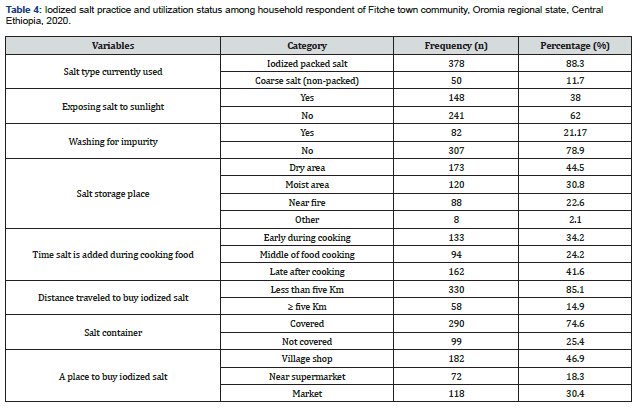
The practice/utilization of adequately iodized salt i.e., iodine (≥15ppm) in Fitche town household was 52.6%. out of the total participants, 10.3% was not having any iodine content (0ppm) and 37.1% having less amount of iodine (<15ppm) (Table 4).

Reasons for non-using of iodized salt

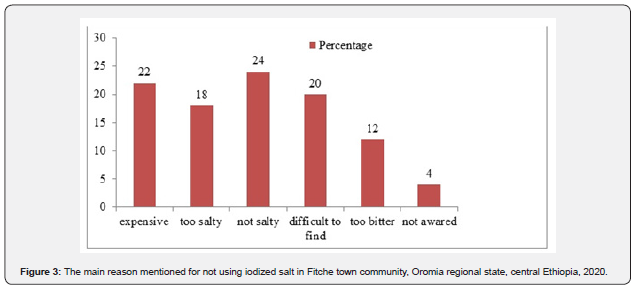
From the total respondents, 71% of the respondent claimed that they heard about iodized salt with around 88.3% revealed as they are using iodized packed salt. But the other, 11.7% reported that they are using coarse salt. Being expensive (22%) and not being salty (24%) were the main reason mentioned for not using iodized salt (Figure 3).

Factors associated with knowledge and utilization of iodized salt

On multivariable logistic regression analysis covariates such as educational status and receive advice on iodized salt at health institution, were significantly associated with knowledge of individuals. Accordingly, individuals who did not attend any formal education were 79% less likely knowledgeable on iodized salt use as compared to those who did attend secondary education (AOR=0.21, 95%CI:0.06, 0.78). Individual who received health advice on iodized salt was more than two times more knowledgeable compared to those who did not receive (AOR=2.20, 95%CI:1.10, 4.40) (Table 5). Furthermore, income level and being aware of the consequences of iodine deficiency were significantly associated with proper utilization of iodized salt. Accordingly, the odds of proper iodized salt utilization were about three times higher in those individuals earning greater than 1000 birr as compared to those individuals earning less than 500 birrs (AOR=2.97, 95%CI:1.05, 8.42). The odds of proper iodized salt utilization were almost two times higher among individuals who have been aware of the consequences of iodine deficiency compared to those who have not been aware of iodine deficiency consequences (AOR=1.88, 95%CI:1.03, 3.40) (Table 5).

Discussion

This study was aimed to assess the knowledge and utilization of iodized salt in Fitche town community. In this study, 58.6% of the respondents have good knowledge of the use of iodized salt. This finding is in line with studies conducted in Ethiopia (63.8%) [18], Sudan (56%) [19] and India (56.2%) [20]. However, it is higher than the study conducted in different parts of Ethiopia including Mecha district (28.5%) [21], Wolaita Sodo (44.7%) [22], Arba Minch (52.8%) [14] and Debreberhan (53%) [23]. Demographical proximity of Fitche town to the center of the country may increase the chance of accessing information helping in knowledge improvement. Besides, the current study has enrolled only urban dwellers which was found to increase the knowledge level [22]. In contrast, this finding is lower than the study conducted in Addis Ababa (78%) [12], Axum (80%) [24], Ghana (72%) [25], and India (64.6%) [26]. The variation may also be due to differences in awareness creation and educational activities [14]. The differences might be due to iodized salt availability and accessibility in the local market and monitoring concerning the use of iodized salt in those areas [13]. About 52.6% of households in the study area were practicing adequately iodized salt for food preparation. This finding is comparable with the study done in Kore town (56.6%) [13]. On the other hand, this finding is higher than the studies conducted in Wolaita (37.7%) [27], Dabat district (33.2%) (16), Gondar (28.9%) [28], Benishangul Gumuz (26.1%) [29], Laelay Maychew District (33%) [30], and zuway (30.7%) [31]. This discrepancy could be correlated to a change in the time when the studies were done [32]. As evidence from the Ethiopian demographic and health survey, the coverage of iodized salt increased from 28.4% in 2000 to 89% in 2016 [11]. In opposite to the above, this finding is lower than the study done in Saudi Arabia (95.2%) [33] and India (83.1%) [34]. The difference could be due to iodine deficiency has been recognized as a major public health problem in Ethiopia as compared to other countries where the studies have been conducted. Beyond assessing knowledge and utilization of iodized salt, this study also points out predictors of knowledge and utilization of iodized salt. Accordingly, receiving health counsel on iodized salt use was identified as a predictor of knowledge in this population. This might be because health counsel/education has a positive impact on knowledge [35].

The educational status of the respondents was also found to be an independent predictor of knowledge on iodized salt use. This finding was in line with the studies conducted in Arba Minch [14] and Laelay Maychew district [30]. This could be because educated respondents have learned and could read about the importance of iodized salt. This study also identifies independent predictors of proper utilization of iodized salt. So, earning high monthly income was identified as an independent predictor of proper utilization of iodized salt. This finding is in line with the findings from Arba Minch town [14] and Addis Ababa [17]. This might be due to the reasons that families with high income can buy packed salts and have better information about iodized salt [17]. Moreover, family insurance coverage was another factor identified as a predictor of proper utilization of iodized salt. This is possibly due to the insured family have a higher chance of obtaining health-related information which might help them to practice iodized salt utilization properly. In this study, higher odds of proper utilization of salt were observed among households who have awareness about iodine deficiency disorder. This finding is supported by the study Laelay Maychew District [30]. This might be due to the fact that having awareness on how iodine deficiency affects health help to give due emphasis on its proper utilization.

Conclusion

Even though knowledge of iodized salt use in this community is higher as compared to other findings, the coverage of proper iodized salt utilization is less than 90% world health organization's recommendation of iodized salt use in the household [36]. Advice on iodized salt and education status were found to affect the knowledge of iodized salt use at the household level, while income level, family health insurance, and iodine deficiency awareness were independently associated with iodized salt use. Therefore, the town health facilities should provide health education programs to promote the knowledge and consumption of iodized salt. Additionally, routine testing and monitoring for iodine levels in salt sold in the markets and used by households are essential.

Click here: https://juniperpublishers.com/index.php  

Thursday, August 5, 2021

Using Online Simulation to Replace Clinical Practice during COVID-19 - Juniper Publishers

 Nursing & Health Care - Juniper Publishers

Abstract

In this article, we describe the use of computer-based simulations and other technology to replace clinical hours for undergraduate nursing students during the COVID-19 pandemic. We describe the technology used and how we prepared for implementation. Most importantly, we describe how we facilitated a full clinical day online using the technology and the feedback from students about the experience. To our knowledge, this is the first example of how to facilitate a fully online clinical day using these technologies. As such, this information will guide educators as they design online instruction to overcome the restrictions related to the pandemic while continuing to ensure quality education and achievement of course outcomes.

Short Communication

Simulation-based education has been used extensively in undergraduate nursing education to replace or deepen the understanding of complex nursing concepts [1]. Historically, a variety of different levels of fidelity (realism) have been used to achieve learning needs, with all levels of fidelity (low, moderate, and high) having a strong positive impact on learning experiences [2]. With the restrictions applied to clinical practice because of the COVID-19 pandemic, students from nursing programs were prohibited from attending in-person simulation labs and clinical settings. New instructional delivery was implemented to provide an opportunity for students to replace clinical skills using innovative simulation experiences that accommodate COVID-19 restrictions. Two types of software from Elsevier (https://evolve.elsevier.com) were incorporated to provide optimal learning experiences. The first, Simulation Learning System for RN® (SLS), which is designed to support the delivery of high-fidelity simulations, was used to provide the framework for unfolding simulations that the instructor delivered using images of a simulation set up, a concept map creator, and an electronic health record. The second software, SimPractice, is a screen-based simulation software where students interact with a virtual client and make decisions about and provide nursing care. Zoom meeting software was used as a means to create telepresence and facilitate fully simulated clinical days. Simulation days were designed intentionally to provide the opportunity to apply the knowledge, skills, and behaviours required to achieve course outcomes.

Instructors and students were required to have a strong internet connection and laptops that met the required specifications. Students and faculty received training sessions about using the new software, before implementation. Furthermore, individualized support was provided as needed by two senior instructors with experience running this software. There was no need for Zoom software training as the students and instructors have previously used it. One example of the online clinical simulation day is for second-year students, where the concepts of “self-concept” and “interprofessional communication” were incorporated. Students were instructed to wear their uniforms and approach the day as they would a shift in the actual clinical setting. The day began with students watching a YouTube video about self-concept followed by a group discussion to reflect critically on the video. The students then drew a mandala that reflected a stressful event in their life and how they coped with that stress. After this activity, the instructor facilitated a group discussion of how positive and negative self-concepts can affect stress management. In order to incorporate related psychomotor skills, students completed a computerized simulation of taking vital signs using SimPractice. The instructor debriefed the students to help them make a connection between vital signs and stress. Interprofessional communication was addressed through a role-play activity involving two students in each Zoom breakout room. Following this, the students practiced providing a handoff report in an SLS simulation. At the end of the day, students submitted a reflection on their performance, which included specific examples of how they met evaluation criteria and how they would improve their professionalism, preparation, knowledge, and participation. The instructor then provided individual formative feedback to students.

Students enjoyed the learning experience and were appreciative of the efforts to provide practical strategies to meet learning outcomes. Carefully developed online clinical days that incorporate simulation technology may be used to replace some clinical experiences. However, several psychomotor skills that need physical contact with patients should be performed in a clinical setting. Online simulation can support clinical education but does not entirely replace it.

To Know more about Nursing & Health Care


To Know more about our Juniper Publishers

Click here: https://juniperpublishers.com/index.php  

Use of Aqueous Extract and Essential Oil of Citrus Aurantifolia Leaves in the Protection of Vegetables- Juniper Publishers

  Nutrition and Food Science- Juniper Publishers Summary Our study is devoted to the valorization of the essential oil and the aqueous extra...