Showing posts with label Ecology. Show all posts

Monday, June 15, 2020

Role of the Biological Processes in Soil Forming Process and Soil Fertility - Juniper Publishers

Ecology & Conservation Science - Juniper Publishers


Abstract

The article discusses the impact of the erosion process on mountain black terrestrial, suitable for planting soils widespread in the Shamakhi region of Azerbaijan, which are subject to erosion, which impairs its fertility, weakens fertility etc. It should be recognized that the influence of agricultural activity of man on the processes taking place in the soil is a deeply studied problem. What contributed to the negligence of the soil, its incorrect and irrational use which weaken its fertility, change the normal direction of the process of soil formation. According to the latest data, more than 50% of the soils of the Shamakhi region are subject to the process of water and irrigation erosion, a process that is widely distributed mainly in mountain black-terrestrial. According to well-known scientists of the republic, it was found that substances synthesized by microorganisms that regulate the complex processes occurring in the soil. For example, the conversion of plant residues and organic substances into humus takes place under the influence of complex environmental factors, which impairs its fertility. This was compared to our study of the dynamics of microbiological activity in black mountain soils and the effect of erosion on it at the object of study. As you know, humus is the basis of soil fertility. For this reason and in the process of research, the factors that form the soil were the focus of genetic science on soil. The results of the study proved that the erosion process, which occurred in nature, possessing a huge potential for its destructive power, destroys the surface fertile soil layer, cancels its fertility and, therefore, removes soil from agricultural circulation. Being a dynamic process, it changes the appearance of a zone, as a rule, a landscape that is widely distributed in the mountainous and foothill zones of the region. This is the reason for the change of the initial relief in the morphological structure and mountain landscapes.

Keywords: Soil, Plant Erosion landscape Microbiological action

Introduction

Ecology & Conservation Science: Open Access
(Figure 1) An importance of the biological processes, mainly microbiological process is great in a period of the soil science and biology science development, especially in biotechnology science formation. The significance for the microbiological process in the xx century is explained that an intensity of the processes in our environment, biosphere is closely connected with microorganism’s activity. Synthesis and resynthesis of organicsubstance, humus mineralization and humification processes in soils are performed by microorganisms. Microbiological process is great in decomposition of the nutrient total forms, in provision of soils with the nutrient. It is already determined that the substances which are synthesized by microorganisms regulate the complex process occurring in the soil [1,2]. Turning of the plant residues and coarse organic substances into humus mainly occurs under an influence of the complex ecological factors and forms a basis of the soil fertility.

The Course of the Study

The microorganisms decompose organic substances in the soil, turn the nutrient in their composition to a form which can be appropriated for the plant, create a favorable condition for their nourishment. The microorganisms also perform sanitary work, prevent from contamination of the environment, especially, soil. As it is not noted that there is a great role of the microorganisms in soil fertility formation. They carry on the organic substance decomposition till the whole mineralization. The plants synthesize the organic matter, the animals fulfil its mechanical Abstract The article discusses the impact of the erosion process on mountain black terrestrial, suitable for planting soils widespread in the Shamakhi region of Azerbaijan, which are subject to erosion, which impairs its fertility, weakens fertility etc. It should be recognized that the influence of agricultural activity of man on the processes taking place in the soil is a deeply studied problem. What contributed to the negligence of the soil, its incorrect and irrational use which weaken its fertility, change the normal direction of the process of soil formation. According to the latest data, more than 50% of the soils of the Shamakhi region are subject to the process of water and irrigation erosion, a process that is widely distributed mainly in mountain black-terrestrial. According to well-known scientists of the republic, it was found that substances synthesized by microorganisms that regulate the complex processes occurring in the soil. For example, the conversion of plant residues and organic substances into humus takes place under the influence of complex environmental factors, which impairs its fertility. This was compared to our study of the dynamics of microbiological activity in black mountain soils and the effect of erosion on it at the object of study. As you know, humus is the basis of soil fertility. For this reason and in the process of research, the factors that form the soil were the focus of genetic science on soil. The results of the study proved that the erosion process, which occurred in nature, possessing a huge potential for its destructive power, destroys the surface fertile soil layer, cancels its fertility and, therefore, removes soil from agricultural circulation. Being a dynamic process, it changes the appearance of a zone, as a rule, a landscape that is widely distributed in the mountainous and foothill zones of the region. This is the reason for the change of the initial relief in the morphological structure and mountain landscapes. Keywords: Soil; Plant; Erosion landscape; Microbiological actionand biochemical decomposition and prepare for humus formation in future. But the microorganisms finish the substance decomposition, synthesize the soil humus, and decompose it again when unfavorable conditions are created.

BG Shakuri [2] commented that all the organic wastes are turned into the inorganic substance form because of the microorganisms’ activity. Without participation of microorganisms exposing of the organic matters to such change and their appropriation by the plants are impossible [3]. Besides it, they cause substances circulation in the nature, soil fertility, oil and pit coal formation, mountain rocks weathering and formation of the other natural phenomena. If there aren`t rottenness microbes, the plant and animal remnants gather on the earth and it can`t be possible to move. It was always defined that an intensity of the biochemical processes occurring in the soil depends on physical, chemical indices, environment development phase of plants, temperature, humidity and other factors of the soil. Just therefore, as a result of the presented factors change, an activity of ferments in soil alters. In this connection an importance of the soil microflora is great in assimilation of the soils, exposed to the anthropogenic pressure and degraded. This is also connected with intensive use of soils. Management of the soil fertility requires an investigation and regulation of their biological activity. In this connection some groups of the researchers gave the detailed information about the soil Roo fauna, biochemical processes, physio-chemical characters, anthropogenic soils genesis held on the international congresses in the Turkey republic in 1998 and “ Anthropogenic soil forming problem” held in Moscow in 1997 [4-7].

We should note that only physio-chemical methods aren`t enough in investigation and analysis of soils. The soil scientists already consider that the research of the biological processes is a great problem in assimilation of the soils genetic characters, clarity of their fertility peculiarities and definition of the processes direction. Such an opinion is already formed that a closely relation available between the plant-soil and microorganisms was investigated for the purpose of soil fertility research. Because of more humus in the mountain-black soils an activity of microorganisms is quick.
Since before the xx century a role of microorganisms was exactly investigated in creation of the complex processes, including bio-chemical processes, especially humus formation, turning of the atmospheric nitrogen to the biological nitrogen. In connection with this problem ZH Aliyev, MP Babayev, PA Kostichev, Vinogradsky, Shakuri BQ and others expressed opinions [3,4,7,8]. The authors show that the microorganisms` role is fixing in decomposition of the plant residues, dead organic world and coarse molecular organic substances and initial humus formation.

As is known the all groups in soil microorganisms are available and the separate groups possess a special function. The enough information was given about a participation of the same groups inhumus forming process. A role of microorganisms in soil forming process and humus synthesis was studied by the Azerbaijan scientists. It was determined that the microbiological activity rises while a height of the zone increases till a definite level. The number and activity of microorganisms aren’t at the same Level, they depend on hydrothermal regime, fertility, structure, plant cover, climate characters, humus supply, nutrient quantity and so on.

All the sorts (surface, linear, irrigation, pasture and wind erosion) of erosion in the region having a complex geological and geomorphological structure develop and consequently the soils fertility is disturbed, fruitfulness ability gets reduced. More parts of the agricultural areas good for sowing deteriorated, but one part was withdrawn from crop rotation. Here the rivers and other water sources became turbid, provision of the local hydrological regime and areas with humidity deteriorated [9]. The greatest part of the Shamakhy region in which the first farming culture develops is situated in the upland zone. Since very ancient periods the relief condition complexity in the mountain zone used in intensive farming and cattle-breeding is characterized by splintering of the firm rocks, unequal distribution of rainfalls on seasons and falling of the rains in a pouring form.

Materials & Discussion

As a result of the joint impact of the anthropogenic and natural factors the soils expose to the erosion process, their upper rotten. Layer are washed out and Lose their fertility. The humus quantity in such soils gets reduced for the first time, its fraction structure deathtime, its fraction structure deteriorates, the mobile part of human acids which is agronomically valuable decreases. So, erosion negatively affects the main parameters of the humus forming process in soil. Erosion deteriorates decomposition of CO, its respiration in soil [8,10].

The erosion process weakens the microbiological process which is one of the main factors in soil fertility. It should be noted that the soil microflora is a decisive factor of the biochemical processes and regulates the humus synthesis and mineralization. Generally, the erosion process deteriorates physico characters, its water regime and food balance. The erosion process reduces water supply of soil, creates arid conditions and this is dangerous for dry- farming land.

An evaluation of all the factors (plant, soil, relief, climate and so on) is required for a comparative character of the soil productivity and fertility and this forms a complex valuation method of the soils agro ecological condition. The microbiological processes in eroded and average eroded kinds of the mountain-black and steppe mountain-brown soils were investigated according to the seasons in the Shamakhy region which is situated in the south-eastern part of the Great Caucasus. An activity of bacteria, radiant fungus and microscopic fungus from microorganisms was studied [9]. 

Study of the microbiological activity in the un eroded mountain-black soils indicated that (Table 1) a total quantity of microorganisms at 0-17cm layer of the same soils is 11704 thousand in one-gram soil, but it is accordingly 9903 and 7283thousand at 17-39 and 39-65cm stratums. Microorganisms gather on the fertile surface stratum. The bacteria and radiant fungus dominate inside microorganisms 

Ecology & Conservation Science: Open Access
As is shown from the figures of the table, the microbiological activity in the mountain-black soils were more than in comparison with the other soil types. This is explained that the same soils are rich in humus and nutrient. This creates conditions for a development and normal activity of microorganisms. As is seen, an extremal situation limits microorganisms’ development. The erosion process weakens all the microbe groups’ activity. Decreaseof humidity negatively affects an activity of microscopic fungus in the same soils.

The microbiological activity of the mountain-black soils with a large fertility potential is high very much. The microbiological activity in un eroded and average eroded kinds of the mountainblack soils was investigated according to the seasons and the obtained results are presented on (Table 2).

Ecology & Conservation Science: Open Access
Conclusion and Proposals
a) Importance of the microbiological process which was paid attention in the xx century is that an intensity of the processes occurring in our environment, biosphere relates to the microorganism’s activity. The organic substance synthesis, rot mineralization and humification processes are performed by microorganisms. A role of the microbiological processes is great in decomposition of the total forms in the nutrient, provision of soils with the nutrient.
b) The erosion process weakened the food potential in the mountain-black and steppe soils, deteriorating the soil fertility parameters limited its fruitfulness ability.
a. The fertility parameters were higher in the mountainblack soils.
b. The mountain-black soils were provided with the nutrient well
c) Because of the favorable structure in the mountainblack soils, the soil composition is rich in organic matter.
The agrotechnical measures consist of performing the tillage and all the cultivation works against the winds direction and slopes diametrically and preserving in moist and so on. 


To Know more about Ecology & Conservation Science


Wednesday, October 9, 2019

Biogas Energy Production Potential of Grass under Anaerobic Digestion: Review-Juniper Publishers

 Agricultural Research & Technology: Open Access Journal  

Abstract

Because of the recent increase demand of energy, interest in environmental issues and depletion of fossil fuel, the demand of renewable energy sources as substitute of fossil fuel is rapidly increasing. Production of biogas under anaerobic digestion as methane can be used to replace nonrenewable energy resources in both heat and power generation and as a vehicle. For biogas production various organic feedstocks are used. Most often used are animal manure, food waste, agricultural wastes and crop residues, aquatic waste, forest residues, municipal solid wastes and grass. The review is based on secondary data obtained through various sources such as textbooks, journals, documents and conference papers with the objective of providing an overview of biogas energy production from biomass, thus providing information toward anaerobic digestion contributing to methane rich biogas production. The review shows that biogas production from biomass as a good fuel alternative because the source biomass can be grown renewably and decrease environmental stress.
Keywords: Anaerobic digestion; Biogas; Methane; Feedstocks

Introduction

Energy is an essential factor in development since it stimulates and supports a country’s economic growth and development [1]. The global energy demand is growing rapidly, and about 88 % of this demand is met at current time by fossil fuels. The depletion of fossil fuel and the impact of greenhouse gases on the environment initiated the concern in searching and exploring alternative sources of energy [2]. These sources are described as renewable energies such as solar energy, wind energy, different thermal and hydro sources of energy, and biomass [3]. Biomass residues available from agricultural and forest processing constitute a potential source for biofuel production. Currently there exist five forms of biofuels such as bioethanol, biodiesel, biomethanol, biohydrogen and biogas [4].
The production of methane rich biogas (biomethane) involves a complex biochemical reaction that takes place under anaerobic conditions in the absence of oxygen and the presence of highly pH sensitive microbiological catalysts that are mainly bacteria [5]. The anaerobic digestion process is a fermentation process where organic raw materials such as manure, food waste, and sewage sludge, organic industrial waste and energy crops used as substrates for biogas production. From energy crops the grass has the greatest potential for biogas production (587.5m3 methane production/tone of dry organic matter) [6]. The production of biogas through anaerobic digestion offers several environmental advantages compared to fossil fuels, because available and cheap resources to feedstock, relatively easy and cheap technology for production, extra values of digestate as a fertilizer [7], avoiding health problems, reduce greenhouse gas (GHG) emissions , reduce deforestation , reduce workload from women and children [8]. The objective of this review is to provide an overview of biogas energy production from biomass, thus providing information toward anaerobic digestion contributing to methane rich biogas production.

Biogas Energy Production Under Anaerobic Digestion

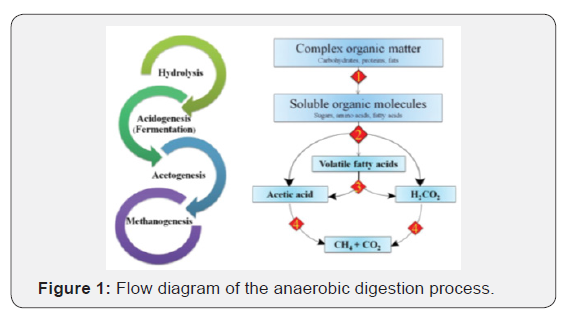
Anaerobic digestion is a natural decomposition processes in which microorganisms break down biodegradable material in the absence of oxygen [3]. Anaerobic digestion is widely used as a renewable energy source because the process produces a methane and carbon dioxide rich biogas suitable for energy production, helping to replace fossil fuels. The nutrient-rich digestate which is also produced can be used as fertilizer. Fig .1 shows that the digestion process begins with bacterial hydrolysis of the input materials in order to break down insoluble organic polymers such as carbohydrates and make them available for other bacteria. Acidogenic bacteria then convert the sugars and amino acids into carbondioxide, hydrogen, ammonia, and organic acids. Acetogenic bacteria then convert these resulting organic acids into acetic acid, along with additional ammonia, hydrogen, and carbon dioxide. Finally, methanogens convert these products to methane and carbon dioxide [9] (Figure 1).

Substrates for Biogas Energy Production

Biogas can be produced from biodegradable substrates such as animal manure, food waste, agricultural wastes and crop residues, aquatic waste, forest residues and municipal solid wastes [10]. According to [11] a brief description of the various feedstocks is provided in this section.

Animal manure

Animal manure is considered a promising way for biogas production and fertilizers through the anaerobic digestion process [12]. There are significant populations of livestock in many countries. Livestock produce large amounts of manure which are suitable substrates for AD. Manure is a mixture of faeces and urine, and its chemical composition varies markedly depending on the chemical characteristics of the feed consumed by the animal. Animal manure comprises huge amounts of lignocelluloses, polysaccharides, proteins, and other biomaterials.

Municipal solid waste (MSW) and food waste

The food industry and municipal authorities produce a wide range of lignocellulosic waste types. These include food waste and municipal waste which can be used as substrates for biogas [2].

Crops and their residues

A number of crops and activities produce residues that can be used as a feedstock for biogas production [10]. Many forage and sugar beets, due to their high organic dry matter yield per hectare which produce high biogas yield [13]. Biogas also produced from non- food crops like Justicia schimperiana (Hochst. ex A. Nees) T. Ander (JS) [14].

Sewage sludge

Production of biogas from sewage sludge provides dual benefits such as biogas energy and waste management [11].

Biogas Energy Production from Grass

Compared with other feedstocks, grass has suitable and promising characteristics as energy. Crop for biogas production due to their fastest growing rates even in infertile land, low cultivation costs, higher accessibility, and consumption of whole plants. In addition, the usage of grassland as a renewable source of energy during biogas production will provide considerable quantity of environment protection, owing to the capability of grass to sequester carbon into the soil [15].

Biogas production potential of napier grass

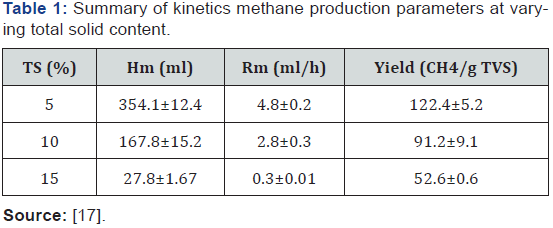
Napier grass is a complex material that is composed of cellulose, hemicellulose and lignin. Commonly, cellulose and hemicellulose primarily contain glucose and xylose, respectively. They can be fermented to produce renewable energy using several microbial processes [16]. As shown in Table 1, the maximum methane content and methane yield of 5% and 122.4ml CH4/g- TVS remove was obtained using napier grass as the substrate [17].

Biogas production potential of vetiver grass

Vetiver (Vetiveria zizanioides) is a perennial tufted grass belonging to the Poaceae family and the common domesticated cultivars used around the world are non-invasive. It has become known as a miracle grass with diverse environmental applications, including: a source of scented oil from its roots, fodder for livestock, soil and water conservation, rehabilitation, remediation, waste water treatment and a raw material for biogas production [18].
Experiment conducted in China on vetiver grass as raw material for biogas production and the result point out that the production potential of biogas were 310mL.Ts and 332Ml/g. vs of the grinding process group and 322 and 349 of the shearing process group [19] (Table 2).

Biogas production potential of elephant grass (Pennisetum Purpureum)

Elephant grass is a species native to African grasslands and is low in water and nutrient requirements, allowing it to make use of otherwise uncultivated lands [1]. Elephant grass possesses several advantages that make it suitable as bioenergy crop; elephant grass is perennial, it can be vegetative propagated and it can withstand repeated cutting/harvesting and regenerates [20] other features that made elephant grass suitable for bioenergy purposes include the possibility of multiple harvest per year.

Conclusion

Demand and dependency on fossil fuels have namely been increasing since the industrial revolution. It has become clear that fossil energy sources of the earth are finite, moreover, their use causes more and more damages to the environment (climate change, air pollution, greenhouse effect, etc.). In this context, biogas from biomass will play a vital role in future. Biogas is a versatile renewable energy source, which can be used for replacement of fossil fuels in power and heat production, and it can be used also as gaseous vehicle fuel. Grass biomass growing is importance as it offers extensive environment protection, owing to the capability of grass to sequester carbon into the soil matrix as a result CO2 emissions reduced. Furthermore, various socioeconomic profits are possible to achieve without compete with food production. Due to their fastest growing rates even in infertile land, low cultivation costs, higher accessibility, consumption of whole plants.
On the other hand, farmers can use grass for biogas production feedstocks and its digestate as fertilizer because it is readily available, it doesn’t require any pretreatment, thus helping farmers to reduce their energy cost. Even environmental concerns such as deforestation and ecological damage will not be an issue as the grass which will be cut will grow in a short span of time.

To Know More About Agriculture Research and Technology-Open Access Journal Please click on:
To Know More About Open Access Journals Please click on: ttps://juniperpublishers.com/index.php 


Friday, September 27, 2019

Highland Agricultural Knowledge in Migrant Families (Argentina)-Juniper Publishers

 Agricultural Research & Technology: Open Access Journal    

      Abstract

Migrant families are key to observe the dynamic relationship between social groups and their territories. We have analyzed different aspects of the migration process of a large group of people in Argentina that currently dwell in a lowland’s peri-urban location (Buenos Aires Metropolitan Area) but whose genealogical origins are placed in Jujuy Province rural highlands (Humahuaca and Tilcara Departments). This paper presents a brief communication about our results and findings of a long-term research on agricultural practices and knowledge deployed in both geographical areas, which are united by a considerable migrant flow intensified during the last three decades. Regularities and changes in family farming type of organization and food knowledge and practices, are key to understand the cultural heritage firmly rooted in these families and the strength and sustainability of the migration process.
Keywords:Upland to lowland migration; Agricultural knowledge and practices; Knowledge transmission; Argentina


Introduction

This case study presents the analysis of knowledge transmission related to agricultural practices and representations of rural migrant families in Argentina, from an anthropological approach, with emphasis in two articulated issues. On the one hand, the material aspect regarding the agricultural productive practices and, on the other hand, a symbolic aspect which informs the agricultural knowledge system. We consider the agricultural practices as the link connecting territory - identity - food [1]. In addition, it comprises particular inherited representations, beliefs, knowledge and practices that those individuals within a specific socio-cultural group learn and share, in which certain regularities and features are established [2].
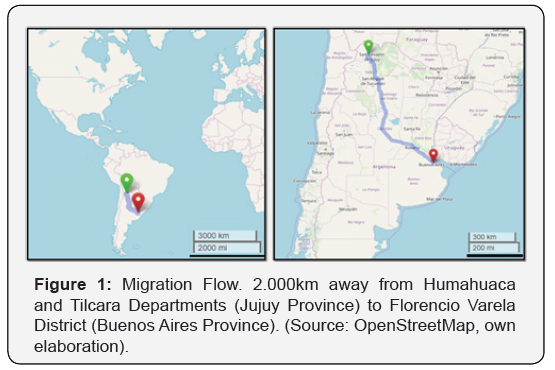
The study includes two different geographical areas (Figure 1). The first of them is in Florencio Varela District, in the Southern Metropolitan Area, in the Buenos Aires City’s peri-urban border. Great amounts of migrant families from very different origins form part of the population, making it a large reception area. In this region, there is no cattle raising activities. The second one, is in Humahuaca and Tilcara Departments (Jujuy Province), in the Northern area of Quebrada de Humahuaca, a narrow mountain valley. In this Province the population in the rural area’s accounts for 40% [3]. The more relevant economic activity is horti- floriculture production complemented by herding for self-supply and exchange.
The study of migrant mountain families’ agricultural practices and representations presents a privileged stage to understand those strategies they displayed in the lowlands, which combine knowledge transmission and adaptability to the current location. The results of the analysis led us to understand a) the identity building process in migrant context through the production, elaboration and consumption of specific meals; b) the reproduction in lowlands of similar agricultural patterns (family farming); c) social health through a culturally adequate food. To address these issues, we have been doing ethnographic fieldwork for the past ten years, carrying out different activities: observations and participant observations of agrarian productive system : in-depth interviews to families through snowball methodology [4] : geographic information analysis. In addition, we have used other data such as national population and agricultural censuses, photographic and historic documents, among others.


Case Report

Along the last 3 decades, a profound change in food practices has taken place. It included, for lowlands and highlands, new food supply in everyday diet (fresh or industrial). This process made people slowly abandon traditional and local food practices, which has negatively affected social local health. However, both in rural and urban areas there is a strong cultural memory regarding local foods as a central element for their personal and community territorial identity [5,6], and many people recreates, for special occasions, those meals they remember having made by their mothers or grandmothers in highland homes. In Florencio Varela, highland families have abandoned quite significantly daily food practices of their home territory, incorporating new elements within the migration context. However, meals from their family territory are made by replacing ingredients and modifying the cooking base, trying to keep the seasoning base as similar as possible. Although the production of the same vegetal species (e.g. certain varieties of potatoes, maize or “ajies”) from the place of origin does not have the same characteristics in the new context (like performance, size or flavor), it is important to emphasize that migrant people continue consuming the same products from purchase, exchange or shipment through family. In this sense, consumption has an important role, giving the possibility to reproducing a particular family farming type of organization.
Thus, availability and access to raw materials are key issues that different communities have managed to overcome, especially through fairs and “ethnic” retailers (often first generations of migrant) [7] who provide the community with their own cuisine elements. Migrant families always mention their constant craving for local food (even those family members of the following generations who have never been there). The community memory of meals made of maize, potatoes or peppers is one of the substantial elements that link all those families together and strengthen the connection with their home territory.


Discussion

Given the geographical features of Florencio Varela, a fundamental aspect of highland families’ migration process is the replication of productive structures that respond to Andean patterns of family farming (type of organization, predominantly reliant on family labor, technology, cultivated species, farming techniques, among others) [8]. The characteristics of this replication enhance the possibility to produce much of those foods that remain in the community’s representation of their territory. In this sense, migrant families carry certain knowledge along and are connected to the new territory through practices and representations taken from the highlands, but with added meanings regarding their migrant trajectory. The fact that migrant families are able to obtain farming smallholdings in peri-urban lowlands, and hence the possibility of job opportunities in which they are able to use knowledge and memories from their home territory, consolidated the migrant process through family farming practices. This case study shows the importance of family farming in both an economic dimension, and in terms of cultural heritage, including notions of healthy and suitable food with strong identity ties, that keeps both territories connected.

To Know More About Agriculture Research and Technology-Open Access Journal Please click on:

To Know More About Open Access Journals Please click on: ttps://juniperpublishers.com/index.php  

Thursday, September 26, 2019

Technological Challenge of Agriculture in Climate Change and the Advancement of Desertification in Developing Countries-Juniper Publishers

AGRICULTURAL RESEARCH & TECHNOLOGY: OPEN ACCESS JOURNAL-JUNIPER PUBLISHERS


Abstract

Climate change has a strong impact on agricultural production, which accentuates in developing countries, due to the lack of technology. From the perspective of food production, we must answer how to maintain agriculture in developing countries strongly affected by climate change, population growth, poverty and lack of technological capacity. The present mini review aims to explore the options that these communities have, which are fundamentally based on the development of technologies accessible to their reality, as the use of tolerant species such as quinoa and aloe or irrigation systems that improve water use efficiency. This article analyzes mechanisms and strategies of the plants to improve the efficiency in the use of water and the necessary requirements to establish a controlled deficit irrigation system
Keywords: Food; Climate change; Water use efficiency; Deficit drip irrigation; Developing countries


Introduction

Traditional agriculture faces the uncertain conditions of climate change (CC) such as the increase in temperature by at least 1.7 °C, the increase of the wind force, rainfall regimes changes and natural production factors decay as soils, water and diversity [1-6]. This condition imposes a major challenge on agriculture: Producing food for more than 9000 million inhabitants by 2050 [7], this greater demand for food must be produced with less water and deteriorated soils. One scenario is that, the deterioration of resources leads to the abandonment of certain items and to the urgent search for alternative crops adapted to the new climatic reality, otherwise there is a risk of the definitive abandonment of agriculture in various areas affected by the irreversible damage in edaphoclimatic conditions [8]. There is uncertainty about the ability of improved traditional crops to adapt to this climate change especially because of their high homogeneity and dependence on agronomic factors, for instance availability and soil fertility. Several models indicate that developing countries will be the most affected, for example, the decrease in wheat yields is estimated between 20% and 34% [9]. Therefore, a reasonable doubt is: How can developing countries overcome this situation? The objective of this article is to explore the technological alternatives available to developing countries to maintain their agricultural production and thus the food security of their population.


Discussion

Numerous strategies are possible to apply in this scenario, from a biotechnological management, through the selection or modification of genes to create new varieties tolerant of drought or temperature increase, by means of Precision Farming. Perez et al. [7] propose an eco-intensive agriculture based on sustainable management of high technology (computers, remote sensors, drones and precision agriculture). However, developing countries do not possess sufficient resources for science and technology development. Therefore, the alternatives should focus on tools that they may be able to develop and apply. For instance, cultivating species tolerant to water deficit, the use of marginal waters or irrigation management with the implementation of technologies that allow a greater efficiency or through water restriction methods, known as deficit drip irrigation.

Use of tolerant species

The greatest tolerance to water deficit is observable in local species and cultivars, in selections that have been made by farmers for centuries. Quinoa is one of them, it presents various strategies to overcome stress conditions caused by a decrease in soil water potential, which can be morpho-physiological [10,11] and biochemical [12]. Quinoa possesses mechanisms for the management of plant transpiration throughout modifying stomatal density and / or stomatal opening [11,13,14]. A decrease in stomatal conductance not only reduces water loss but also affects CO2 assimilation. This situation contributes to a decrease in the efficiency of water use, since less biomass will be produced per unit of water. When comparing two contrasting Chilean varieties for the decrease of water potentials, one tolerant obtained from the altiplano (Amarilla) and another sensitive from the southern zone (Hueque) [15]. Both selections presented a decrease in stomatal conductance. This was significantly greater in the Hueque selection (sensitive variety), in which the stomatal conductance (gs) fell from 471 to 201 mmol H2O m-2s-1, that is, a contraction equivalent to 57.3% of the value. Whereas in Amarilla (tolerant variety) there was only a decrease of 17.4%. This phenomenon was proportional to the loss of the assimilation rate, with 37.7% for Amarilla and 65.1% for Hueque [16]. The previously mentioned experience demonstrates that there are varieties which maintain productivity despite the water deficit, turning them into applicable alternatives for the production of food or other raw materials under these conditions. In CAM plants, such as Aloe, it is possible to observe other strategies for instance succulence and slowdown in the delivery of water stored in their leaves, which is achieved by the synthesis of sugars, especially neofructans and insulins, which generate an intricate network of fibers [17,18]. These morphological modifications in the plant reduce water loss by improving the water use efficiency WUE) under conditions of water stress [16,19] and maintain their photosynthetic rates despite being more than 220 days in water deficit [20].

Controlled drip irrigation

The deficit drip irrigation (DDI) has been defined as a strategy of optimization of irrigation during the most sensitive states of a crop to the requirements of irrigation, mainly the periods of establishment, flowering and filling of fruits. Outside these periods, irrigation may be restricted. Doorenbos and Kassam [21], introduce an empirical performance response factor (Ky) to integrate the complex relationships between water production and consumption for crop production, which limits its applicability to make accurate estimations of the responses of the crop water performance due to other factors such as nutrients, different cultivated varieties, stress tolerance, among others, also impact on the performance response, it means that adjustments must be made for the specific conditions of each site. There are several studies that demonstrate the benefits of this method. In paprika [22], in quinoa [23-26], in aloe [27,17] among other crops. For the application of this method, models such as: Aqua Pro have been used to simulate the behavior of crops subjected to various environmental conditions [28] or the ORDI (Optimized Regulated Deficit Irrigation) [29] model, based on non-linear optimization, which aims to determine the mentioned combination of stress levels for arable crops.
In the case of quinoa, an application scheme for DDI is proposed, which allows starting from 13 pairs of leaves to subject the plants to a water deficit for 50 days until the emission of the flora button [30]. Subsequently, it must be maintained with supplementary irrigation until milky grain for 65 days. Irrigation is suspended from pasty grains. This proposed model should be validated for other varieties of quinoa and regions at the same time, it should be improved considering post-antecedent drought [31]. The reported values of seed yield per unit of water consumed (USA) ranged from 0.3 to 0.6kg/m3, in which the low fertility of the soil [32] and the stress tolerance of the species can have a lot of influence. In the case of Aloe, the deficit risks can be more extreme, due to their great capacity to tolerate the water deficit, in this regard Delatorre-Castillo [20] determined that aloe plants subjected to 222 days water deficit lose only 15% of the foliar volume. On the other hand, Oyarce, [19], finds similar results, evidencing a decrease in water content in Aloe vera leaves as the restriction period progresses, but an increase in the US with values 14.7kg of dry matter per m3 of water in plants with 25% irrigation and 12kg of dry matter per m3 of water in treatments with 100% irrigation, which allows a 75% saving of irrigation water.


Conclusion


Developing countries can improve existing research on the efficient use of water through the use of water-tolerant species, using existing information. The use of local tolerant species or cultivars represent an important alternative, on which scientists should work, since the improved varieties have high yields, but also high-water requirements and agronomic factors such as soil and fertility. It is relevant to return to the traditional varieties selected for centuries by farmers adapted to their own local realities. The greater food security of developed countries is achieved based on the use of technology that often exceeds CO2 emissions and the water footprint, with developing countries being the most affected.

To Know More About Agriculture Research and Technology-Open Access Journal Please click on:

To Know More About Open Access Journals Please click on: ttps://juniperpublishers.com/index.php 

Happy Thanksgiving 2026 – Warm Wishes and Greetings

  Juniper Publishers wishes you a Happy Thanksgiving! May your day be filled with joy, gratitude, happiness, and countless blessings.