Juniper publishers have been established with the aim of spreading quality scientific information to the research community throughout the universe. We, as Open Access publishers, strive to offer the best in class online science publications. Open Access process eliminates the barriers associated with the older publication models, thus matching up with the rapidity of the twenty-first century. Our main areas of interest lie in the fields of science, engineering and other related areas.
MODY( Maturity onset diabetes of young) is a rare
monogenic type of diabetes and which comprises 1-5 % of all diabetes
cases [1]. It is often misdiagnosed as either type 1 or type 2 diabetes
mellitus in children and adolescents due to common clinical signs and
symptoms. With the availability of genetic testing, an increasing number
of cases of MODY are being reported. We are reporting a case of 15
years old male child who presented with hyperglycemia without metabolic
acidosis. He started on standard insulin regimen in view of suspected
type1 diabetes. Later he was detected with NEUROD1 mutation, which is
associated with MODY6, and the child was put on oral hypoglycemic drug,
Metformin. At present the child is not on medication and is euglycemic.
NEUROD1 is one of the least reported mutations in MODY6, only 5-6 cases
are reported from India, and we report the youngest case.
Keywords: MODY6; NEUROD1; Diabetes; Adolescent
Abbreviation: MODY: Maturity Onset Diabetes of Young; NEUROD1: Neuronal Differentiation factor 1; HESC: Human embryonic stem cells;
bHLH: Basic Helix-Loop-Helix
MODY: Is a rare monogenic type of diabetes involving single
gene mutations which comprises 1-5 % of all diabetes cases [1,2].
It can be inherited as autosomal dominant, autosomal recessive
or de novo, and based on gene involved MODY is classified into
11 subtypes. Mutation in NEUROD1 is the least reported form of
MODY (2).
Neurogenic differentiation 1 (NEUROD1) is a transcription
factor necessary for the development of pancreatic islets and
insulin secretion [5]. NEUROD1 heterodimerizes with basic
helix–loop–helix factor E47 to form a complex named insulin
enhancer factor 1 which acts as a transcription factor of insulin
gene [6]. NEUROD1 inactivation in HESCs severely impaired
their differentiation from pancreatic progenitors into insulin
expressing cells [7].
MODY6 usually presents before 25 years of age with
hyperglycemia while ketoacidosis is rare. Other associations in
NEUROD1 gene mutation reported are abnormality of cerebellar
function, mental disability, hippocampal hypoplasia, hearing loss
and epilepsy [8]. We report the youngest case of MODY6 reported
from India maintaining normal blood glucose levels without any
medication which is an unusual presentation with monogenic
diabetes.
15yrs old male child was referred to the hospital with
history of polyuria and polydipsia for 1 week and glycosuria. On
examination acanthosis nigricans was present, his weight was
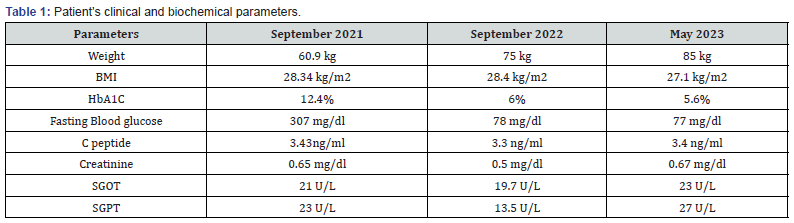
60.9kg, height 168cms and BMI 28.34kg/m2. On investigating his
random blood glucose level was 470mg/dl, HbA1C 12.4%, fasting
blood glucose level 307mg/dl and postprandial glucose level
was 483mg/dl, blood gas study was normal. Child’s GAD65 was
negative, C peptide- 3.43 ng/ml , TSH- 1.33 micro IU /ml were
negative (Table 1).
His father and grandmother also have type 2 diabetes,
diagnosed at the age of 35 years and 40 years respectively. Both are on
oral hypoglycemic therapy and maintain normal blood glucose
levels. Child was started on basal bolus regimen with insulin
Degludec and insulin Lispro. His blood glucose level normalized
within 2-3 weeks of starting on basal bolus regimen. He started
having postprandial hypoglycemia therefore bolus insulin was
stopped. Insulin requirement declined rapidly, so insulin was
stopped and switched to oral hypoglycemic agent (Metformin).
Genetic study was also sent. 6 months later metformin tapered
gradually and stopped because of persistent low postprandial
glucose level levels. Genetic sequencing reported a heterozygous
missense mutation in exon 2 of NEUROD1 gene with autosomal
dominant inheritance. He had no other clinical features associated
with NEUROD1 gene mutation. On regular follow up his cardiac
evaluation and neurological examination remained normal, and
he is maintaining normal blood glucose level with HbA1C value of
5.6%. Liver function test, renal function test and C-peptide were
normal.
MODY: Is monogenic diabetes which is inherited in families
and the common presentation is hyperglycemia which may or
may not be associated with diabetic ketoacidosis. Based on the
underlying mutation it is classified into 11 subtypes. The first
to report association between NEUROD1 mutation and type 2
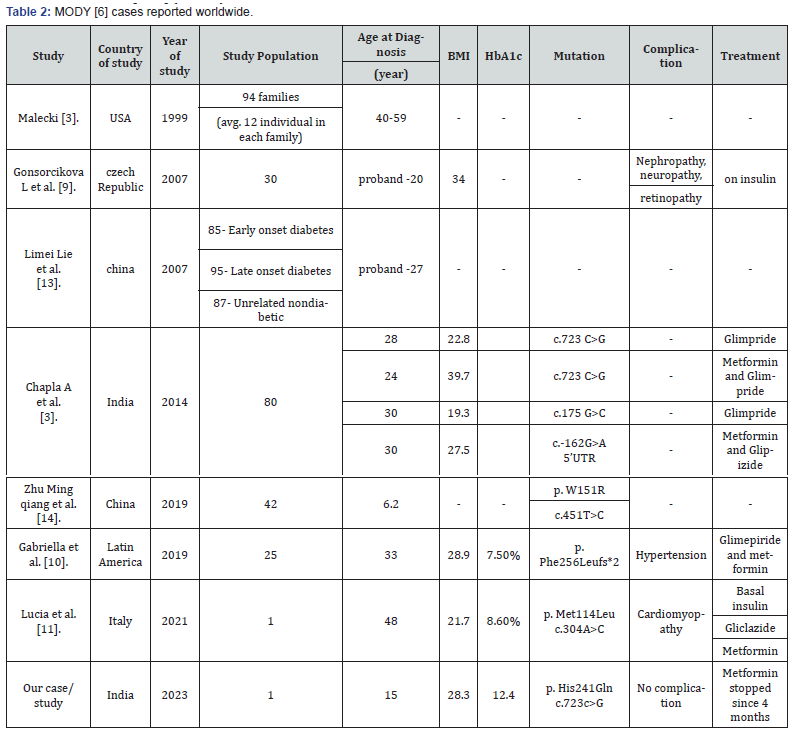
diabetes was done by Malecki et al. [3]. In 1999. With the advent
of newer technologies in genetic testing, reporting of MODY6 has
increased worldwide [9-14] (Table 2).
Majority of reported cases of MODY6 were diagnosed
between 30 - 40years of age, mostly misdiagnosed as other types
of diabetes, we are reporting one of the youngest cases diagnosed
with MODY6 at 15 years of age with NEUROD1, p. his241Gln c.723
C>G heterozygous mutation. Gonosorcikova et al. [9]. reported
nephropathy, neuropathy, and retinopathy as complications of
MODY6. Gabriella et al. [10]. reported hypertension and one of
recent study by Lucia et al. [11]. published a case of NEUROD1
who developed cardiomyopathy. Our patient had no known
associated complication of MODY6 till the most recent follow up.
Aaron C et al. [12]. from India reported 4 patients with
NEUROD1 mutation, between the age group of 25-30 years and all
of them were on one or more oral hypoglycemic drug treatment.
Patients with MODY require sulfonylureas to maintain normal
blood glucose level but our case is maintaining blood glucose level
in normal range without any medications, which has not been
reported previously.
MODY should be suspected in Cases with Hyperglycemia;
negative antibodies and strong family history and genetic testing
should be undertaken in these cases as the most cases respond to
oral medications than insulin. There are very few cases of MODY1
cases especially with NEUROD1 mutation reported worldwide,
and more data needs to be available to understand the course of
the disease.
Aims: The Alergy noninvasive
continuous blood glucose monitor (NICBGM) is a novel wristband device
that reports glucose levels without entailing skin puncture. This study
evaluated the performance of this device compared with an FDA-approved
glucose meter in patients with type 2 diabetes.
Methods: The Alertgy DeepGluco
NICBGM device measures changes in the dielectric spectrum it collects
specific to blood glucose levels three times a minute. This spectral
data is analyzed by using neural network analysis, machine learning and
then with a calibration process is used to generate algorithms to
estimate blood glucose (BG) values once the system is calibrated to the
individual. The Roche Accuchek Inform II glucometer was used as a
reference technique for calibration and then to determine the accuracy
of blood glucose determinations. 27 patients completed three or more
120-minute sessions. Mean absolute relative difference (MARD) was
calculated on the data collected.
Results: MARD values were compiled
for two or more days of data collection following the first day of
calibration. The MARD for all measurements was found to be 15.3.
Conclusions: The resultant MARD
suggest that this technique can achieve equivalent performance to that
of existing CGM devices presently approved by the FDA when the same
reference technique is utilized.
Diabetes mellitus (DM) affects over 30 million people
in the United States [1]. For most patients living with DM, frequent
self-monitoring of blood glucose (BG) is needed for adequate outpatient
glycemic control and has been associated with lower hemoglobin A1c [2].
The majority of patients with DM rely on fingerstick (FS) glucose
measurements for self-monitoring, which necessitates lancing of the
skin. FS testing is associated with pain and anxiety and can lead to
nonadherence with home testing [3,4]. In recent years, the use of
continuous glucose monitors (CGM) has become more widespread. CGMs
significantly reduce the number of fingersticks needed for home
monitoring; however, most devices still require the insertion of a new
subcutaneous catheter every 10 to 14 days.
The Alertgy noninvasive continuous blood glucose
monitor (NICBGM) is a novel device that does not entail skin penetration
of the skin for continuous glucose monitoring. The device is worn on
the wrist and measures BG levels through the use of dielectric
spectroscopy. There have been several prior noninvasive BG monitors on
the market; however, these have had limited success due to issues with
inaccuracy and low reliability [5,6]. This study aimed to evaluate the
performance of NICBGM retrospectively compared to an FDA-approved
hospital-grade glucose meter in patients with T2DM.
This study was approved by the Complete Care
Institutional Review Board. The study included 27 patients with T2DM
recruited from the outpatient Complete Clinic. Inclusion criteria were
known diagnosis of T2DM, current dietary or pharmacologic treatment for
DM, recent hemoglobin A1c between 7.5 % (58 mmol/mol) and 10.0% (86
mmol/mol), and age between 18 and 75 years old. Exclusion criteria were
prandial insulin use, fasting FS BG <70 or >250 mg/dL on the day
of study sessions, pregnancy (tested at the start of each study
session), end-stage renal disease (ESRD), decompensated heart failure,
medications that might cause false readings (including acetaminophen,
ascorbic acid, dopamine, maltodextrin, or mannitol), and any conditions
that might limit the ANICGM device, such as lesions on the forearms.
The studies were performed at the Complete Care main
clinic location in Melbourne Florida. Two sets of trials were conducted
to study the effect of using difference amounts and types of sugar. The
Complete Care Trial I dataset had 17 unique subjects and 14 of those
subjects suffered from type II diabetes among other comorbidities. All
subjects had their baseline blood glucose measured every 5 minutes for
20 minutes before 68 grams of sucrose were ingested. After ingestion,
blood glucose was measured every 5 minutes for 2 hours. All glucose
measurements were carried out using the Accu-chek Inform II glucometer.
Each 2 hour set of data was considered as an individual test. There were
60 individual tests that had followed this protocol and all 60 tests
were included for further analysis.
The CompleteCare Trial II dataset had 10 unique
patients, each of which being a diagnosed diabetic. CompleteCare Trial
II subjects ingested 75 grams to 100 grams of dextrose for each of their
respective tests. The total number of individual tests available were
45. Patients participated in three or more visits, each with a 30-min
warm-up period and a study period lasting 120 minutes, at least three
days apart, and most within 14 days from Day 1. At each visit, study
subjects were fitted with the Alertgy NICBGM device for a warm-up period
of 30 minutes before the start of data collection, and the device was
worn throughout the duration of the 120-minute session thereafter
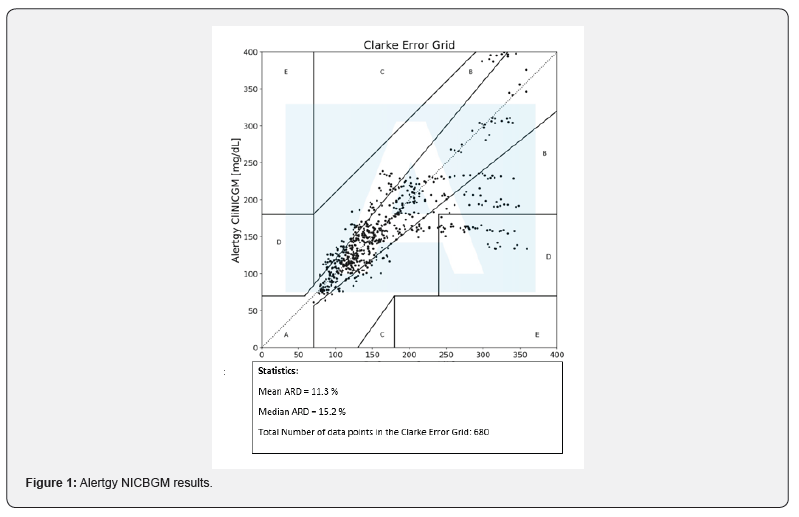
(Figure 1). A trained technician took FS BG measurements. Baseline FSBGs
were obtained at -30 min, -15 min, and 0 min during the warm-up period.
FSBG measurements were made before and during this warm-up period
solely as health/safety checks to ensure that the patients were in
adequate physiological condition to continue the study. These reference
measurements were not paired with any NICBGM device estimates nor used
within the machine learning training process.
Patients were instructed to fast for at least eight
hours the night before. Patients were evaluated at the end of the study
session to ensure that they were asymptomatic, and that their BG was in a
safe range prior to discharge.
FS BG was measured using the Accuchek Inform II
glucose monitor to provide calibration values for the NICBGM. FS BG
levels were entered into a secure database, and a proprietary
calibration program was used to analyze the spectral data from the
device during the training session on Day 1. These POC BG values were
also used in calculations for the estimation of device accuracy. The
NICBVGM uses a weak electromagnetic field generated by its wristband
sensor to produce dielectric spectra. The core sensing technology used
is dielectric spectroscopy, which has been shown in prior work to be
capable of noninvasively measuring blood glucose in a laboratory
environment [7].
The monitoring technology implemented in the study
includes a sensor having a multi-portion dielectric composite. A
microstrip transmission line is placed on one surface of the dielectric
composite and includes an input trace, radiator portion, and an output
trace. The dielectric material adjacent to the radiator portion is
selected for its dielectric properties such that it is matched with that
of the target anatomy (distal forearm/wrist region) of the tested
subject. This dielectric matching between the forearm and the sensor
allows the radiator portion to effectively respond as if it were
embedded inside the target anatomy, removing substantial uncertainty
from the measurement process. By then applying a plurality of signals to
the sensor, the signal's reflected and transmitted components can be
measured and used to determine the amounts of certain constituents
(including blood glucose) present in the subject’s target anatomy. This
study's dielectric sensor is capable of use in broadband sensing
applications, ranging from 0 MHz (DC) to 2GHz. (United States Patent No.
US20200217809A1, 2020).
The device sends and receives signals from the wrist
area used to generate a dielectric spectrum once every twenty seconds.
These spectral data are stored on the device and then downloaded
wirelessly or through a USB port to a secure database. The spectral data
are then inputted into a machine learning algorithm and used to create
an estimate of the patient’s BG level.
Measurements for the algorithm training procedures
were collected on each of the test subject’s Day 1 trial. Blood glucose
measurements were collected via the AccuCheck Inform II POC SMBG system
with a 5-minute sampling period over a duration of 2 hours, resulting in
14 reference measurements per Day 1 session.
Alertgy received the complete FS BG dataset from
Complete Care only for the first visit for each patient for calibration.
For Days 2 and 3, Alertgy received only the -30 min FS BG data. The
data were collected real-time. The data collected from the wristband
were sent to the lab at Alertgy. Upon receipt in the lab, the data were
processed from its original 'raw' form (consisting of many files of
different types) and compiled into a format using internally-developed
software modules.
Categorical patient characteristics were summarized
using frequencies and percentages, while continuous measures were
described with means and standard deviations, after assessing that they
met normality assumptions. Mean absolute relative difference (MARD) was
chosen as the measure of agreement between NICBGM findings and FS BG
levels [7]. MARD was computed by taking the arithmetic mean of the
absolute relative differences between the NICBGM system measures and the
reference standard FS BG, which serves as the denominator of the
calculation. The MARD is expressed as a percentage, and a lower MARD
signifies better concordance between the two measurements
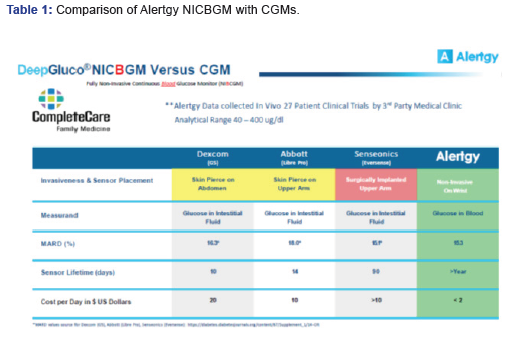
A comparative summary analysis of the results of the
CompleteCare trial data generated by the Alertgy NICBGM are compared to
other CGM devices in Table 1. Each listed device was evaluated against
an SMBG system to develop the provided MARD values. The Alertgy NICBGM
DeepGluco device provides equivalent accuracy. It also offers the
advantages of no interstitial lag, non-invasive measurement, and a
sensor life measured in years as opposed to days and is less costly to
use.
The outbreak of severe acute respiratory infections
is being one of the most serious risks to global health. In early
December 2019, many pneumonia cases with unknown reason emerged in
Wuhan, Hubei, China. Sequencing the samples from lower respiratory
tract, scientists have revealed a novel coronavirus that was named 2019
novel coronavirus (SARS-CoV-2). The most common symptoms identified
were: fever, dry cough and dyspnoea. Thus, doctors were concerned about
the possibility that patients with cardiovascular disease, diabetes or
other chronic diseases were more exposed to complications.
It is now well known that human pathogenic
coronaviruses (severe acute respiratory syndrome coronavirus [SARS-CoV]
and SARS-CoV-2) bind to their target cells through
angiotensin-converting enzyme 2 (ACE2), which is expressed by the
epithelial cells of the lung, intestine, kidney and blood vessels. The
expression of ACE2 is mainly increased in patients with hypertension
treated with ACE-inhibitors and in patients with diabetes. This could
explain why these patients are more susceptible to the infection and its
severe consequences, including death. Actually, current literature has
shown a relation between metabolic comorbidities and a worse outcome for
Covid-19 infection. The aim of this short report is to report the
current knowledge on the relation between hyperglycaemia, diabetes and
severity of SARS-CoV-2 infection.
In December 2019, several cases of respiratory
infections in humans were reported in Wuhan, China [1]. The recognized
pathogen was a novel virus, named “2019 novel coronavirus (SARS-CoV-2)”
and was first isolated on 7 January 2020. Since then, the virus has
spread worldwide and has infected 1 914 916 patients globally, causing
123 010 deaths as of 15 April 2020 [2]. The SARS-CoV-2 is an enveloped,
single-stranded RNA virus that can be transmitted from human to human
through respiratory droplets [3]. Moreover, since SARS-CoV-2 RNA has
been detected in the stool of some patients, faecal-oral transmission
could be possible [4]. The phylogenetic analysis revealed that COVID-19
is potentially a zoonotic virus. According to the similarity of
SARS-CoV-2 to bat SARS-CoV-like coronaviruses, it is likely that bats
serve as reservoir hosts for its progenitor [3]. The most common
symptoms at onset of COVID-19 disease are fever, cough and fatigue.
Other symptoms include headache, haemoptysis, diarrhoea, dyspnoea. Older
people and patients with pre-existing medical conditions such as high
blood pressure, heart disease, lung disease, cancer and diabetes appear
to develop serious illness more often than others [5].
Several investigations have demonstrated a higher
susceptibility to some infectious diseases in patients with diabetes,
probably because of a dysregulation of the immune system. In fact,
diabetes is a multifactorial metabolic disease, characterized by insulin
resistance, glucose intolerance and hyperglycaemia [6]. A recent study
reported that the mortality rate of COVID-19 in patients with diabetes
and without other comorbidities is about 16% [7]. Hence, we review the
current clinical evidence of the correlation between diabetes and
COVID-19 infection.
Nowadays it is well known that chronic
hyperglycaemia accelerates the formation of advanced glycation end
products and increased levels of free fatty acids and stimulates the
production of inflammatory mediators and reactive oxygen species (ROS)
[8]. It is proposed that systemic immune activation and pro-inflammatory
cytokines are central to the development of micro- and macro-vascular
complications associated to chronic hyperglycaemia, particularly in
obese patients with type 2 diabetes [9]. In addition, the inflammation
related to obesity is characterized by an increased activation of innate
and adaptive
immunity cells in adipose tissue with an increased release of
inflammatory factors and chemokines locally and systemically
[10].
Several studies on SARS-CoV showed that a known history
of diabetes and an ambient hyperglycaemia, before any steroid
therapy, are independent predictors of morbidity and mortality,
due to the consequent inflammation and the hypoxia of the
tissues. In this way, hyperglycaemia might reflect the multisystem
involvement and underline the high risk of death among
diabetic patients developing SARS [11]. More importantly, the
normalization of blood glucose levels with the suppression of
ketosis are able to reduce mortality and morbidity especially in
diabetic patients [12].
Therefore, diabetes seems to worsen the outcome of viral
infections as already happened with the 2003 severe acute
respiratory syndrome due to SARS-CoV or the H1N1 infection.
This seems to be the case also for patients affected by COVID-19.
In fact, people with diabetes have a low grade of chronic
inflammation that could facilitate the progression of the typical
‘cytokine storm’ that has been shown to be the cause of severe
cases of COVID-19 infection [13]. Cytokine release syndrome
is a systemic inflammatory response, which can be caused by
infection, some drugs and other factors, characterized by a sharp
increase in the level of a large number of pro-inflammatory
cytokines [14]. A retrospective study in Wuhan has shown that
among different markers of inflammation (C-reactive protein,
fibrinogen, D-dimer), interleukin-6 (IL-6) seems to be the more
represented in diabetic patients than in patients without diabetes
[7].
The IL-6 has a pleiotropic activity on inflammation and
immunity. Usually, it induces the synthesis of acute phase
proteins whereas it inhibits the production of albumin. Moreover,
IL-6 stimulates the acquired immune response and promotes
the proliferation of several non-immune cells [15]. Therefore,
the increased synthesis of IL-6 could play a relevant effect
and lead to the ‘cytokine storm’ associated with the COVID-19
infection. During this inflammatory storm, the D-dimer increases
significantly. This iper-inflammation can also lead to an overall
hypercoagulable state or even disseminated intravascular
coagulation. The presence of higher level of D-dimer and fibrinogen
and higher production of pro-inflammatory cytokines in patients
with diabetes could indicate that they are also more inclined to
present a hypercoagulable state than patients without diabetes.
These data show that COVID-19 patients with diabetes are at
higher risk of excessive uncontrolled inflammation responses and
hypercoagulable state, which may contribute to poorer prognosis
of COVID-19 [16].
COVID-19, like others coronaviruses (SARS-CoV in 2003),
uses a specific ACE2 receptor to invade cells, particularly type
II pneumocytes. Many studies also confirm, through biophysical
and structural analysis, that the 2019-nCoV S protein binds
angiotensin-converting enzyme 2 (ACE2) with higher affinity
than severe acute respiratory syndrome (SARS-CoV) [17,18]. It
is well known that ACE-2 receptor can be found in lung, kidney,
heart and also in the pancreatic islets. In some studies, it has been
described that the severity of the disease and damage to several
organs (lung, kidney, liver) is related to organ expression of ACE2.
The localization of ACE2 in the endocrine part of the pancreas
suggests that SARS-CoV enters islets using ACE2 as its receptor
and may potentially cause acute hyperglycaemia and diabetes
[19]. Therefore, it is possible to speculate that SARS-CoV2 could
act in a similar way and worsen diabetes control in patients with
diabetes or induce hyperglycaemia in non-diabetic patients. Preliminary reports showed that hyperglycaemia may be
present in more than 50% of patients with the novel COVID-19
infection [20]. Interestingly, previous studies on SARS-CoV in
2003, have demonstrated that hyperglycaemia is an independent
predictor of death and sometimes diabetes have occurred during
the course of SARS. Usually, hyperglycaemia has been transient
[21]. These consequences could be explained by the fact that
SARS-CoV and SARS-CoV2 can damage islets cells and reduce
insulin production [22].
According to a retrospective study led to Wuhan, almost 20%
of the patients affected by COVID-19 had diabetes as underlying
disease with poorer prognosis [23]. Another study, of about 150
patients (68 deaths and 82 recovered patients) in Wuhan, showed
that the number of comorbidities is a significant predictor of
mortality [24]. The most distinctive comorbidities of 32 nonsurvivors
from a group of 52 intensive care unit patients with
novel coronavirus disease 2019 (COVID-19) were cerebrovascular
diseases (22%) and diabetes (22%) [25]. A report of 72,314 cases of COVID-19 published by the
Chinese Centre for Disease Control and Prevention showed
increased mortality in people with diabetes (2.3%, overall and
7.3%, patients with diabetes) [26]. These data are important to define that an impairment of
glucose metabolism may significantly affect the prognosis of
COVID-19. In fact, these patients show a higher mortality rate,
which further support the hypothesis that diabetes is a risk factor
for the prognosis of COVID-19. It is possible that there is a one
to one relationship between COVID-19 infection and diabetes
due on the one hand to the chronic inflammation typical of the
diabetic patient and on the other hand to the direct invasion of
pancreatic islets by the virus. Further studies are needed to better
understand the pathophysiological mechanism underlying this
process.
Background:Abdominal obesity is on the increase worldwide and ethnic minority groups are at high risk. However, studies of the underlying causes are scarce. The aims of this study were to investigate the prevalence of abdominal obesity and to identify metabolic, lifestyle and socio-demographic risk factors associated with abdominal obesity in male and female residents of Malmö, a city in southern Sweden, comparing those born in Iraq with those born in Sweden.
Method:We conducted a population-based, cross-sectional study from 2010 to 2012. Both male and female residents of Malmö, aged 30-75 years, born in Iraq (n=1387) or Sweden (n=749), underwent a physical examination. Fasting blood samples were drawn and socio-demography and lifestyle were characterized using questionnaires. Associations with abdominal obesity were assessed by logistic regression analysis.
Results:Abdominal obesity (waist circumference ≥80 cm in women and ≥94 cm in men) was highly prevalent and was most common in Iraqi-born women (Iraqi-born women 89.2% vs. Swedish women 73.1%, p<0.001, Iraqi-born men 70.2% vs. Swedish men 63.6%, p<0.003). Furthermore, family history of diabetes was more prevalent in participants born in Iraq than those born in Sweden (53.6% vs.28.5%, p<0.001). Based on the total study population, female gender, Middle Eastern background, family history of diabetes and depression conveyed higher odds of abdominal obesity. Family history of diabetes and Middle Eastern origin conveyed higher odds of abdominal obesity in females than in males (Pinteraction: Female gender*Family history=0.023; Pinteraction: Female gender*Middle Eastern origin =0.011).
Conclusion:Abdominal obesity is highly prevalent irrespective of Middle Eastern or Caucasian background but most prevalent in Iraqi-born women. Our findings suggest that factors related to heritage such as genetics and traditional lifestyles, influence excess risk in Middle Eastern females in particular, which should be taken into consideration when planning preventive actions.
Keywords: Abdominal obesity; Migration; Middle East; Family history of diabetes; Gender
Abbrevations: BMI: Body Mass Index; CVD: Cardiovascular Disease; FPG: Fasting Plasma Glucose; HAD scale: Hospital Anxiety and Depression Scale; IDF: International Diabetes Federation; OGTT: Oral Glucose Tolerance Test; PA: Physical Activity; The MEDIM study: The Impact of Migration and Ethnicity on Diabetes in Malmö; T2D: Type 2 Diabetes; WHO: World Health Organization
The worldwide prevalence of obesity has more than doubled since 1980 and overweight/obesity is the fifth leading cause of global deaths [1]. Obesity thus represents a rapidly growing threat to the health of populations in an increasing number of countries [1]. In a World Health Organization (WHO) report it was suggested that abdominal fat deposition measured by waist circumference, was a better predictor for metabolic complications such as the metabolic syndrome, cardiovas disease (CVD) and type 2 diabetes (T2D), than obesity measured by body mass index (BMI) [1].
Once considered mainly an issue for high-income countries, overweight and obesity are now an increasing problem also in low- and middle-income countries, particularly in urban settings [2]. Studies from the US have shown that the prevalence of hypertension, physical inactivity, diabetes, as well as overweight, are especially high in certain populations, such as ethnic minority groups, immigrants and groups with low socioeconomic status [3,4].
The largest immigrant group in Malmö and the second largest immigrant group in Sweden is represented by residents born in Iraq, a group at high risk for T2D and overweight [5]. The prevalence of T2D in immigrants from the Middle East is estimated to be twice as high as in native Swedes and the high risk is estimated to be related to obesity [6,7]. Thus, in order to prevent and reduce the risk of T2D in this immigrant group, studies need to identify the risk factors that contribute to abdominal obesity. The aim of this study was to measure and compare the prevalence of abdominal obesity in male and female residents of Malmö, born either in Sweden or in Iraq. A further aim was to study lifestyle, metabolic factors, psychosocial factors and socioeconomic status in association with abdominal obesity, comparing individuals born in Iraq with those born in Sweden. This has to our knowledge not been studied previously.
Malmö, which has nearly 300 000 inhabitants, is the third largest city in Sweden. In 2011 national statistics reported that 32% of Malmö’s population was born abroad [8]. The Iraqi immigrant group, with 9000 inhabitants is the largest one, of which the majority (5000) are between 30 and 75 years of age [8]. Between 2010 and 2012, a random sample of citizens of Malmö, born in Iraq or Sweden were selected from the census register and invited by mail and phone to participate in the MEDIM study (the impact of Migration and Ethnicity on Diabetes in Malmö). All participants, born in Sweden as well as those born in Iraq were citizens of Sweden at the time of the study. Individuals who were immobile or those with severe mental or physical illness were excluded. In total there were 2136 individuals (1387 Iraqis and 749 Swedes) who met the inclusions criteria for the study.
Specially trained nurses conducted a standard physical examination involving measurement of blood pressure, weight, height, waist and hip circumference, as well as the collection of blood samples and the performance of an Oral Glucose Tolerance Test (OGTT) [5].
Blood pressure was measured after five minutes’ rest, in the supine position with the arm at heart level. Two measurements were taken one minute apart and the mean was calculated. The diagnosis of hypertension was based on systolic mean blood pressure of ≥140mm Hg and/or a diastolic mean blood pressure of ≥90mm Hg at the investigation, or a previous diagnosis of hypertension made by a physician [3]. Body height was measured to the nearest cm and body weight to the nearest kg in subjects wearing light clothes and without shoes and light clothing. Waist circumference was measured to the nearest cm in a standing position after a gentle expiration. A tape measure was placed around the bare midriff of each participant and the waist circumference measured midway between the lower border of the rib cage and the superior border of the iliac crest [4].
BMI (kg/m2) was calculated as weight (kg) divided by height (m) squared [4]. Abdominal obesitywas considered in accordance with the WHO criteria and International Diabetes Federation (IDF),which are based on an increased risk for metabolic complications in European and Middle Eastern populations at waist circumference of ≥94 cm in men and ≥80 cm in women [1,9].
Blood samples were collected in the morning following a 10- hour fast. All blood samples were analysed continuously during the study. Cholesterol and triglycerides in serum were analysed using enzymatic methods (Bayer Diagnostics) [10]. HDLcholesterol in serum was measured enzymatically after isolation of LDL and VLDL (Boehringer Mannheim GmbH, Germany) and LDL-cholesterol was estimated using Friedewald’s method [11].
Arabic and Swedish speaking nurses collected information on lifestyle habits, sociodemography, previous diagnosis of diabetes, hypertension, present medication and family history of diabetes (in biological parents and/or siblings) using structured questionnaires in both Arabic and Swedish. Two independent professional translators with Arabic as their native language translated and back-translated all questionnaires [5].
Diagnosis of diabetes was confirmed by one of the following; use of oral hypoglycemic drugs and/or insulin, Fasting Plasma Glucose (FPG) of ≥7mmol/l and/or 2-h plasma glucose level ≥11.1 mmol/l. In case of one abnormal value, OGTT was repeated within two weeks following the same fasting procedures as used earlier. Two values exceeding the normal range were required for diagnosis of diabetes. Participants with previously known diabetes mellitus (confirmed by use of oral hypoglycaemic drugs and/or insulin or FPG of ≥7mmol/l) did not undergo OGTT [12]. Family history of diabetes was considered in the presence of diabetes in biological parents, siblings and/or children.
Moderate to severe depression: The HAD questionnaire (Hospital Anxiety and depression scale) is a 14 item scale assessing a limited set of symptoms where seven relate to anxiety and seven relate to depression. Each item on the questionnaire is scored from 0-3. Moderate to severe depression was indicated by >10 points on the HAD scale [13].
Smoking habits: Never-smokers and individuals that had stopped smoking more than six months previously were considered non-smokers. Others were considered active smokers [14].
Alcohol consumption: All participants who consumed alcohol, regardless of quantities and frequency of drinking, were considered alcohol consumers.
Food habits were studied using questions developed by The National Board of Health and Welfare: Fish < 1/week: fish consumption less than once a week; Vegetables/fruit <1/day: intake of fruit and/or vegetables less than on a daily basis; Soda>1 week: intake of soda more than once a week; Sweets etc. > 1/week: intake of sweets, desserts, pastry etc. more than once a week [15].
Hours physically active/week: Physical activity (PA) was measured using questions developed by The National Board of Health and Welfare [15]. The number of minutes per week spent on non-strenuous PA (e.g., walking, cycling, or gardening), and on strenuous PA (e.g., jogging, swimming, basketball, or football), respectively, were estimated by the participants. Time conducting strenuous PA was multiplied by two and then added to time spent doing non-strenuous PA [15]. Total minutes per week were transformed to hours per week.
Economic difficulties: Difficulties in paying for food, rent or bills on one or several occasions during the last 12 months [8]. Education level was categorized as having taken high school exam or less (
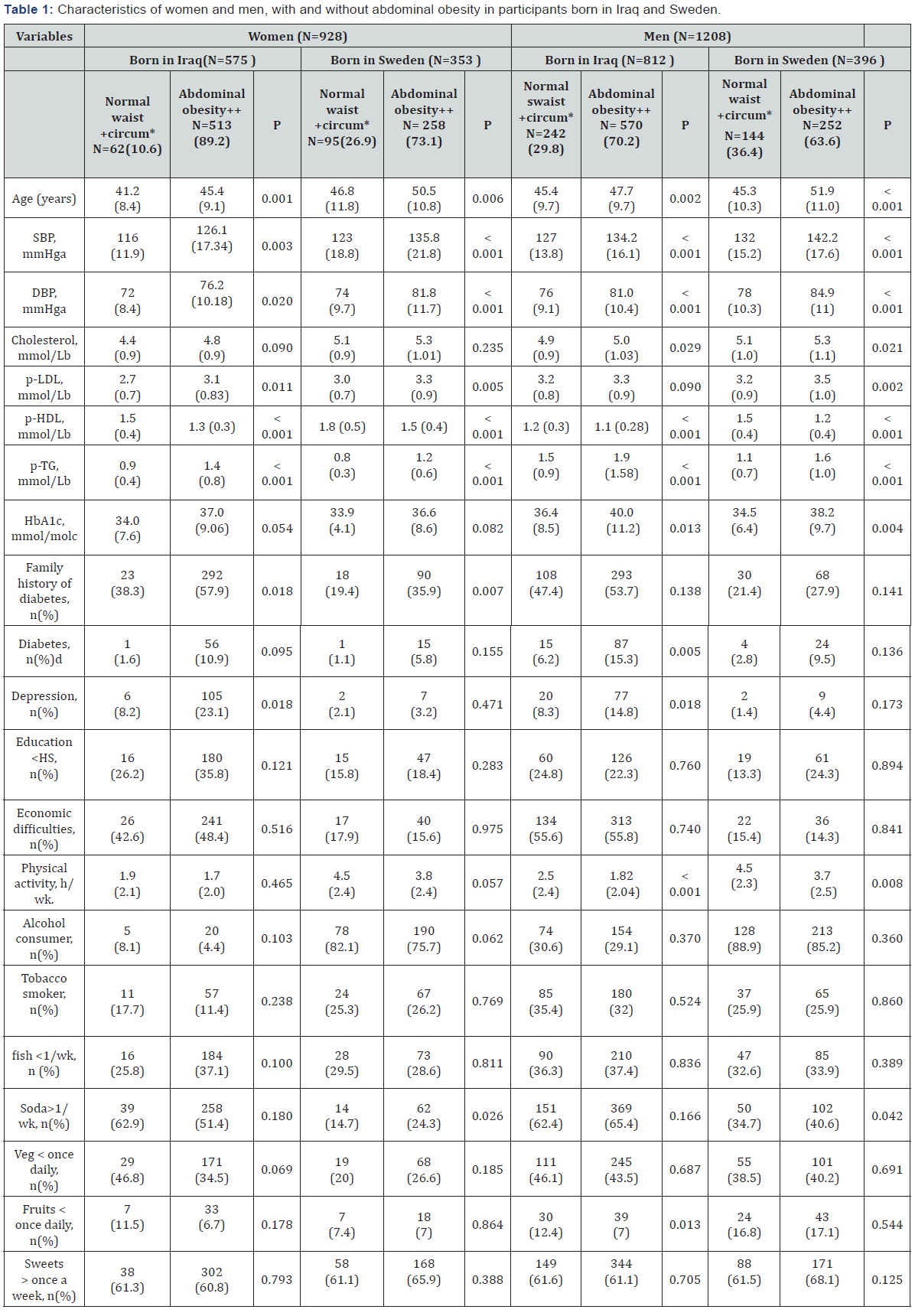
Statistical analyses were performed using IBM SPSS 21.0 for Windows XP. Differences in means between groups were analysed using general linear models (for continuous variables) adjusted for age, while differences in proportions between groups were studied using logistic regression adjusting for age. In addition, differences in systolic and diastolic blood pressures were adjusted for anti-hypertensive medications including diuretics, ACE inhibitors, angiotensin II receptor blockers, betablockers and calcium-channel blockers. Similarly, differences in blood lipid levels (total cholesterol, HDL, LDL, triglycerides) were in addition adjusted for lipid lowering drugs. HbA1C levels were also adjusted for anti-diabetic drugs (i.e. insulin and oral hypoglycemic drugs). All tests were two-sided and p-values<0.05 were considered statistically significant (Table 1).
Data presented in means (standard deviation, SD) or numbers (percentages). Differences in means between groups were adjusted for age using general linear models (for continuous variables) while differences in proportions between groups) were studied using logistic regression adjusting for age
All tests were two-sided and a p-value of <0.05 was considered statistically significant.
aAdjusted for age and antihypertensive drugs (Diuretics, ACE inhibitors, Angiotensin II receptor blockers, Beta-blockers and Ca-channel blockers) ,
bAdjusted for age and lipid lowering drugs.
cAdjusted for age and antidiabetic drugs (Insulin and oral hypoglycemic drugs)
+Women waist circumference < 80cm, men waist circumference <94cm
++Women waist circumference ≥ 80cm, men waist circumference ≥94cm
*Circumference
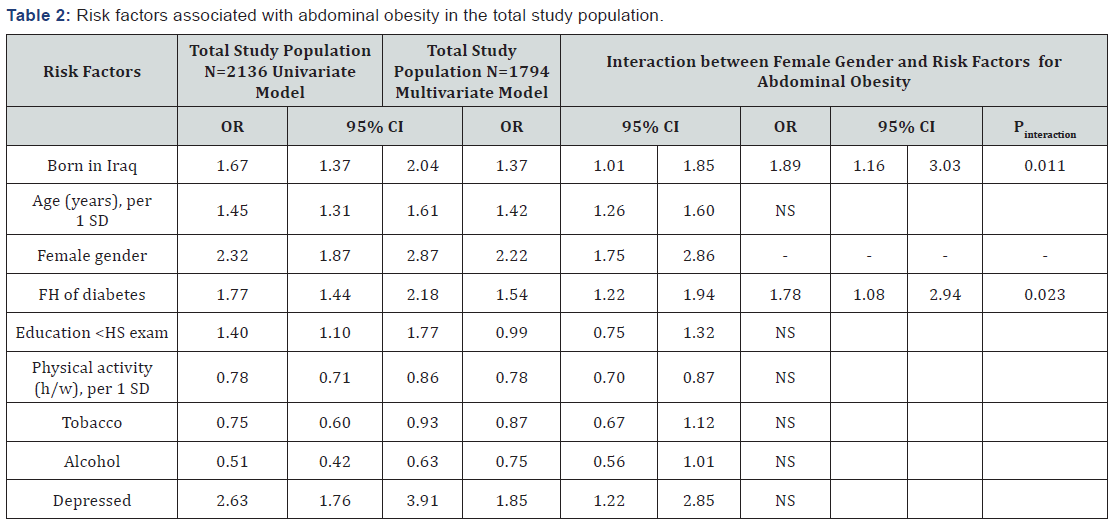
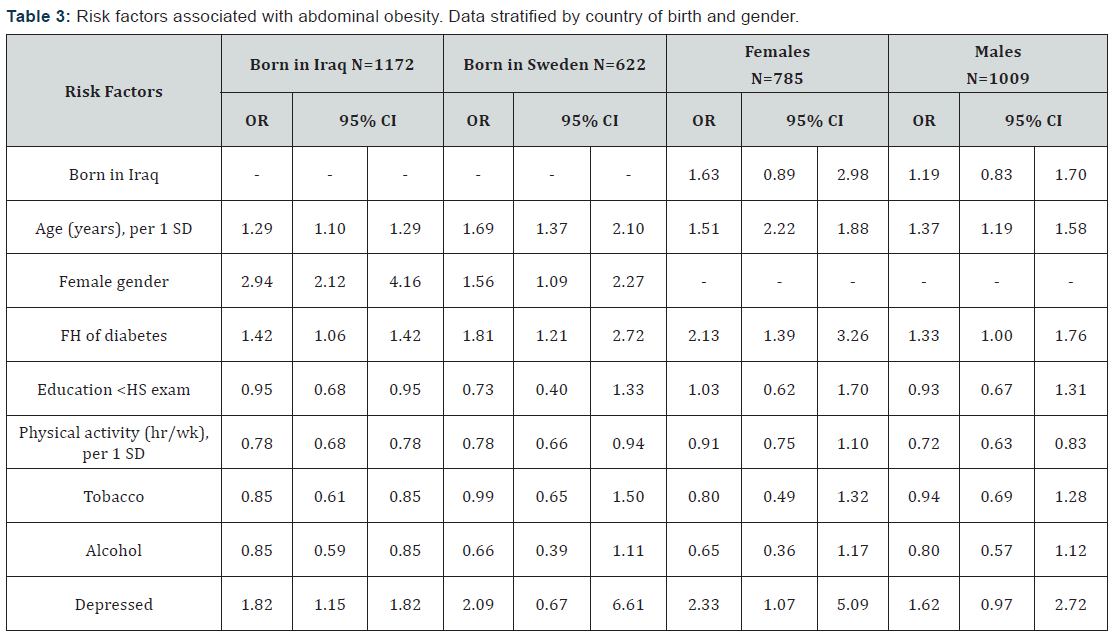
Associations with abdominal obesity were assessed using logistic regression analysis. To control for confounding variables independently associated with abdominal obesity in the univariate model (country of birth, age, gender, family history of diabetes, education, physical activity, tobacco, alcohol consumption and depression) were included in a multivariate logistic analysis (Table 2 & 3). Interactions were tested between female gender and risk factors for abdominal obesity included in the multivariate model. Associations were expressed as odds ratios (OR) with 95% confidence intervals (CIs).Variables for which p<0.05, were retained in the model. Multicollinearity was not considered as an issue since all VIF values were less than 2.0.
The study conforms to the principles outlined in the Declaration of Helsinki [16] and all participants gave written informed consent. The Ethics committee at Lund University approved the study (No. 2009/36 & 2010/561).
Significant associations are bolded
Variables included in the multivariate model were country of birth, age, gender, family history of diabetes, education, physical activity, tobacco and alcohol consumption and depression. Associations with economic difficulties (i.e. difficulties in paying for food, rent or bills on one or several occasions during the last 12 months) and food habits (i.e. fish consumption less than once a week; intake of fruit and/or vegetables less than on a daily basis; intake of soda more than once a week; intake of sweets, desserts, pastry etc. more than once a week) were non-significant in the univariate model and were thus not included in the multivariate model.
Significant associations are bolded.
Data were assessed using binary logistic regression analysis. Variables associated with abdominal obesity in the univariate model (country of birth, age, gender, family history of diabetes, education, physical activity, tobacco and alcohol consumption and depression) were adjusted for in the multivariate model. Associations with economic difficulties (i.e. difficulties in paying for food, rent or bills on one or several occasions during the last 12 months) and food habits (i.e. fish consumption less than once a week; intake of fruit and/or vegetables less than on a daily basis; intake of soda more than once a week; intake of sweets, desserts, pastry etc. more than once a week) were non-significant in the univariate model and were thus not included in the multivariate model. Associations are expressed as odds ratios (OR) with 95% CI.
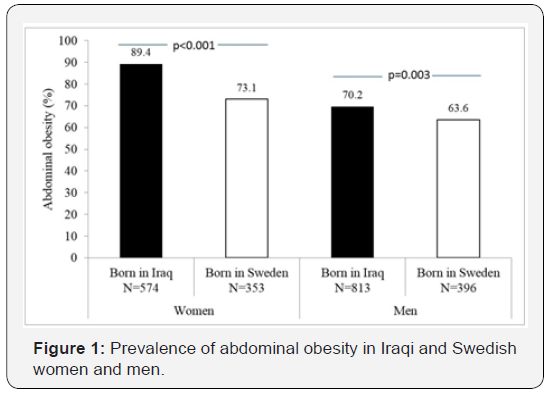
Abdominal obesity was highly prevalent in both Iraqi immigrants (78.1%) and native Swedes (68.1%), however, significantly more so in the former (p<0.001). Further, abdominal obesity was most prevalent in Iraqi-born women (89.2% vs. Swedish women 73.1%, p<0.001) whereas it was least prevalent in Swedish men (63.6% vs. Iraqi-born men 70.2%, p=0.003, age adjusted data) (Figure 1). Mean BMI in Iraqi-born participants as compared to Swedes were higher in both women and men (women 29.7 vs 27.1 kg/m2, p<0.001; men 29.0 vs. 27.4 kg/ m2, p<0.001 age adjusted data).Family history of diabetes was highly prevalent amongst the Iraqi-born participants (53.6 vs. 28.5% in Swedes, p<0.001, age and sex adjusted data). However, in females only, the prevalence of family history of diabetes was significantly higher in those with abdominal obesity compared with those with normal waist circumference (Figure 2).
Characteristics stratified by gender, ethnicity and presence of abdominal obesity are shown in Table 1. Irrespective of country of birth, women and men with abdominal obesity were older, had higher levels of triglycerides and lower levels of HDL as well as higher systolic and diastolic blood pressures as compared to women and men with normal waist circumference. Iraqi-born females with abdominal obesity didn’t differ in terms of life-style related factors like physical activity level, alcohol consumption, smoking, fish intake, fruit and vegetable consumption and soda intake, compared to those without abdominal obesity. By contrast, Iraqi-born men with abdominal obesity were less physically active and ate fruits less frequently, compared to those without abdominal obesity. In the Swedish group, men with abdominal obesity were less physically active and consumed soda more frequently than their compatriots with normal waist circumference, whereas in Swedish females differences were only seen in soda consumption. Further, Iraqi-born men and women with abdominal obesity had higher prevalence of depression compared to their compatriots with normal waist circumference, no such association was seen in the Swedish group. There were no significant differences in socio-economic variables like level of education and economic difficulties in individuals with or without abdominal obesity, neither in the Swedish nor the Iraqiborn participants. Associations with abdominal obesity were assessed by univariate and multivariate analysis (Table 2 & 3). In the entire study population, older age, being born in Iraq, female gender, having a family history of diabetes and depression were independently associated with increased odds of abdominal obesity whereas more hours being physically active were associated with reduced odds of abdominal obesity. Studying interactions, we observed that gender modified the effect of country of birth (Pinteraction=0.011) as well as of family history of diabetes (Pinteraction=0.023) on abdominal obesity (Table 2).Thus, in a next step the analysis was stratified according to country of birth. In that model Iraqi-born females, as compared to males, had higher odds of abdominal obesity compared to their Swedish counterparts. The data was also stratified according to gender. We also observed that family history of diabetes had higher odds of abdominal obesity in females than in males. Further, depression was associated with increased odds of abdominal obesity in participants born in Iraq as well as in females. However, we observed no interactions between gender and depression or between country of birth and depression on abdominal obesity.
The key finding of the present study is the generally high prevalence of abdominal obesity in both populations of Middle Eastern and Caucasian origin. The prevalence was in particularly high in Iraqi-born women. Our finding of a modifying effect of gender on family history of diabetes and ethnicity with regards to abdominal obesity, suggests that family history of diabetes and Middle Eastern background contributes to a higher extent to abdominal obesity in women than in men. Altogether our data indicates that factors related to heritage such as genetics and traditional lifestyles influence abdominal risk in Middle Eastern females in particular.
In the present study, almost 90% of the Iraqi-born women had abdominal obesity, which is considerably higher than the prevalence of 40% found in a previous studyfrom Sweden of randomly sampled immigrant women from the Middle East [17]. However, in the previous study the population was younger (18- 65 years of age) and abdominal obesity was defined as waist circumference ≥ 88 cminstead of>80 cm as in the present study, which may explain the difference in prevalence rates. In one of the studies conducted across 14 Middle Eastern and African countries, it was found that the prevalence of abdominal obesity in the region was twice as high compared to obesity defined by BMI [18]. The prevalence of abdominal obesity in Iraqi-born women (89.4%) compared to Swedish-born women (73.1%) is also in consistency with another study conducted in Sweden reporting over a decimeter larger waist circumference in Iraqiborn as compared to Swedish-born women, (98 vs. 86 cm) [19].
Abdominal obesity is a component of the metabolic syndrome [1,8]. In this study the cut-off values for abdominal obesity were derived specifically from WHO and IDF for Middle Eastern and Mediterranean populations [1,8]. Previous studies have shown that CVD as well as T2DM risk, worsens substantially above the cut-off values for abdominal obesity [20-23]. For instance, individuals with abdominal obesity are twice as likely to have one or more major CVD risk factors and should be supported to undergo lifestyle modification to lower the risk of CVD [22]. Abdominal obesity is also a better predictor of T2DM than BMI [23]. Additionally, from a clinical perspective, it is easier to identify risk groups using cut off values for abdominal obesity, rather than waist circumference per se, which therefore adds clinical significance to our findings. Meanwhile, it is important to explore factors that have protected over 10% of Iraqi-born females from developing abdominal obesity. Our data indicated a slightly protective effect of physical activity, tobacco and alcohol consumption in the Iraqi-born group by having lower odds of abdominal obesity. However there is a need to identify other socio-economic, lifestyle and genetic factors that might protect or predispose Iraqi-born women to abdominal obesity.
The Botnia study conducted in Finland has reported that participants with positive first-degree family history of diabetes had a higher waist-hip ratio compared to those who had a negative family history for diabetes. Moreover, females with family history of diabetes had a higher waist-height index, another measure for abdominal obesity, compared to females who had no family history of diabetes [24]. These observations are in line with our findings that women with family history have higher odds of abdominal obesity than men with family history of diabetes (2.1 vs 1.3) and support the possibility of a gender dependent association between family history of diabetes and abdominal obesity [25].
Our data suggests that females with Middle Eastern background and family history of diabetes might benefit from surveillance of the metabolic profile including waist circumference as well as from advice on lifestyle modification such as changes in diet and physical activity levels.
Depression was significantly associated with abdominal obesity in the total study population. When stratifying the data according to gender we also observed that the associations remained in women and in participants born in Iraq, however we could not find that gender or country of birth modified the effect of depression. Our findings are in consistency with the literature, reporting a positive association between depression and abdominal obesity more consistently for women, whereas in menthe association is either absent, weak or in some cases even inverse [26]. Women with depressive symptoms were in another study reported to have larger waist circumference compared to non-depressed women even after multiple adjustments [27].
In addition, the association between depression and abdominal obesity was manifest only in the Iraqi immigrants. In one of the few studies on this topic, an interaction was reported between post-traumatic stress disorder and race with regard to abdominal obesity; however, no such interaction was seen between major depressive disorder and race [28]. This association between ethnicity, depression and obesity therefore, needs to be explored further.
Strengths of the present study include the large sample size and the random recruitment of participants. The participation rate was relatively high, especially in the Iraqi group. The thorough information on medical history and detailed data on lifestyle habits (including food intake and physical activity) and socioeconomic situation are other strengths.
Although BMI is the most commonly used method for measuring obesity in clinical practice, intra-abdominal adipose tissue estimated by waist circumference has been more strongly linked to T2D and CVD risk [29,30]. In our study, thresholds recommended by the WHO and the International Diabetes Federation (IDF) in populations with different ethnic background [1,9] were thus used to classify abdominal obesity. Repeating the analysis with waist circumference as the outcome variable, did not change the main findings of the study that gender modified the effect of family history and Middle Eastern background on larger waist circumference (data not shown). Although all data were adjusted for age and gender, the skewed gender recruitment with a higher participation rate of Iraqi-born men than women may still not be adequately compensated for, which is a potential weakness. Furthermore, the cross-sectional design does not allow for conclusions with regard to causality.
We conclude that abdominal obesity is highly prevalent in immigrants from the Middle East especially in Iraqi-born women. Our findings suggest that family history of diabetes and Middle Eastern background contributes to a higher extent to abdominal obesity in women than in men. We conclude that factors related to heritage, such as genetics and traditional lifestyles, influence excess risk in Middle Eastern females in particular, which should be taken into consideration when planning preventive actions against obesity and type 2 diabetes].
F.S. analysed and interpreted the data and co-wrote the manuscript; H.I. participated in writing the manuscript, analysing and interpreting the data; C.A.L. assisted with interpretation of the data, discussions and in writing the manuscript and L.B. designed the study, conceived and analyzed the data and cowrote the manuscript. All authors have revised/edited the article critically and have approved the final version of the manuscript.
We are indebted to: Marita Olsson, Katarina Balcker Lundgren, Enas Basheer El-Soussi and Asma Saleh for their excellent work in examining the participants and collecting data and Patrick Reilly, Center for Primary Health Care Research for his skillful advice and for proof reading the manuscript.