Tuesday, July 7, 2020

Transdermal Methimazole for Feline Hyperthyroidism - Juniper Publishers

Journal of Toxicology - Juniper Publishers


Abstract

Hyperthyroidism is a common disorder in older cats causing detrimental adverse effects if left untreated. The three most recommended treatment options include thyroidectomy, radioiodine treatment, and antithyroid medication therapy. Oral methimazole has been the most widely used option due to low cost and accessibility. The topical application of transdermal methimazole is an ideal route of administration for cat owners. The purpose of this review article is to give insight into the efficacy and recommended indication for use of the pluronic lecithin organogel (PLO) formulated transdermal delivery system of methimazole, in the treatment of feline hyperthyroidism. PLO compounded methimazole is uniquely transported through the skin, and chronic use has been shown effective in treating feline hyperthyroidism. In many cases, once daily application of the gel has provided enough methimazole activity for lowering hormone levels. The compounded formulation also allows for more individualized dosing than the oral tablets. There is limited information regarding long-term treatment of PLO methimazole, however, the formulation continues to satisfy both veterinarians and owners, and effectively lower serum thyroxine (T4) concentrations.

Keywords: Feline; Hyperthyroidism; Transdermal; Methimazole

Abbrevations: PLO: Pluronic Lecithin Organogel

Introduction

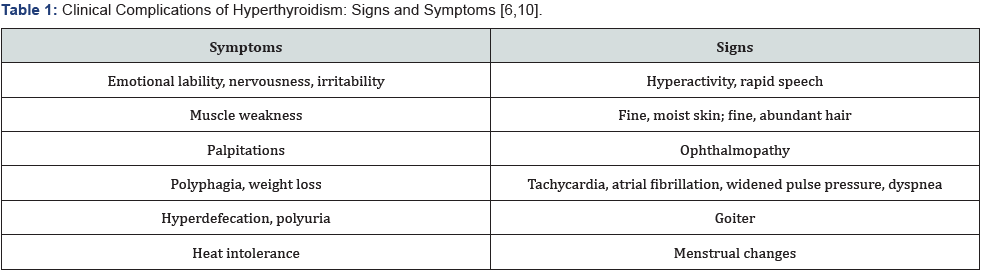
Over the past 20 years, the prevalence of feline hyperthyroidism has increased astoundingly [1-3]. It has become the most common endocrine disorder in cats, and the risk worsens with each year of increasing age, being most common in middle to older-aged felines [1]. The disease is primarily characterized by an excessive production and release of the thyroid hormones thyroxine (T4) and triiodothyronine (T3) most commonly due to a functional, benign adenomatous hyperplasia of the thyroid gland. At present, there is not a feline specific thyroid stimulating hormone (TSH) assay test available, therefore unlike human hyperthyroid diagnosis, veterinarians do not commonly depend on a low TSH value for primary hyperthyroid diagnosis. Hyperthyroidism diagnosis in cats is generally based on a high free T4 level and the presence of clinical signs and symptoms. Some of the clinical complications of hyperthyroidism that may be present include emotional lability, hyperactivity, palpitations, tachycardia, and a plethora of other manifestations of the disease (Table 1). Although the exact etiology is unknown, many nutritional and environmental causes are suspected, including canned cat food products containing iodine, soybean, phthalates, polyphenols, and polychlorinated biphenyls [2,4,5].
Regardless of the etiologic origin, medical management of prolonged thyroid hormone elevation is very important. Untreated hyperthyroidism can have many consequences on the cat. Many cats initially present with a change in personality or behavior, often being more easily agitated and mean, as well as with unexplained weight loss, changes in eating habits, accelerated heart rates, and a goiter. Hyperthyroidism, if left untreated, can also have life threatening adverse effects, such as causing hypertension, cardiac tachyarrhythmia, atrial fibrillation, and even death [6,7]. These result from elevated thyroid hormone levels and cause up-regulation of various gene expressions involved in the body’s metabolism, thermogenesis for heat regulation, nerve function, and muscle and bone function [7]. They also function to increase activation of the sympathetic nervous system, which elevates the heart rate, the heart’s force of contraction, and increases cardiac output overall [8,9]. Clearly, both the symptoms of the disease, as well as the enhancement of these biochemical pathways, can pose serious health risks to the feline patient. The longer a cat goes without treatment, the worse their complications become [6,10,11].

Like the management of hyperthyroidism in humans, there are several different treatment options available for cats. The top three recommended therapies include surgical thyroidectomy, radioiodine therapy, and medication treatment. Thyroidectomy and radioiodine treatment can be permanent solutions to the disease. However, limitations such as expense and permanent hypothyroidism prevent these from being practical options for most feline patients [7,11] (Table 2). Medication therapy is often the most practical and accessible way to manage hyperthyroid cats. Methimazole (Tapazole, Felimazole) is the most common and favored agent in the United States [12]. Other alternatives include carbimazole (a prodrug of methimazole marketed only in the UK), iodine-containing agents, iodine dietary restricted food, and homeopathic regimens [6,12-14]. Dietary iodine restriction is another option, however, there is limited supporting data to determine a true benefit.
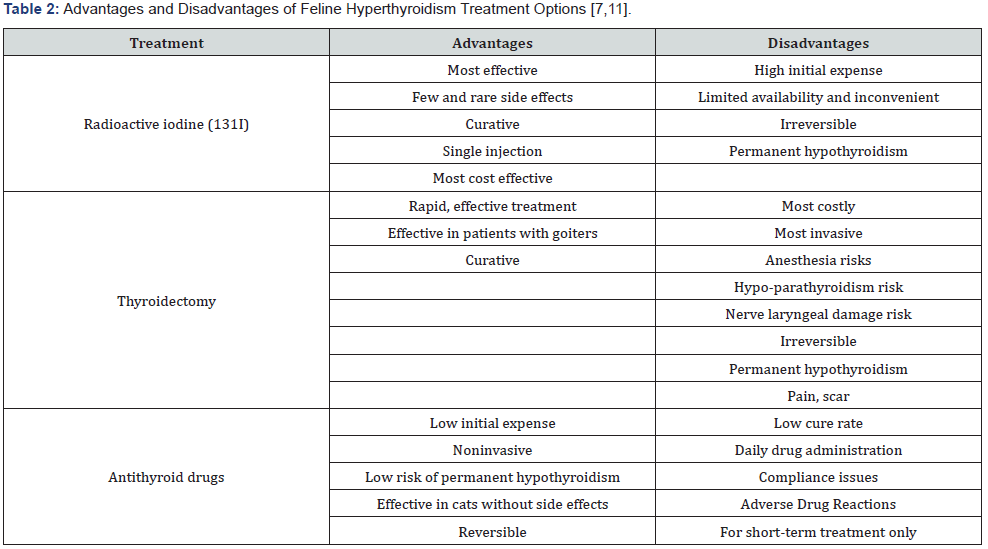
Although several treatment options are available for hyperthyroid cats, each therapy option has considerable drawbacks to both the client and the feline patient. Oral methimazole has historically been the most accessible and affordable choice. However, gastrointestinal side effects and an unfavorable twice-a-day oral administration schedule often limit its ultimate therapeutic outcomes in the cat. Both negative attributes are avoided with use of the transdermal methimazole gel compound. Due to the limited amount of data available on transdermal methimazole, this review aims to evaluate whether the pluronic lecithin organogel (PLO) compound of methimazole is effective in treating hyperthyroid cats. In addition, it also serves to provide insight on the recommendations for its use.

Methods

A PubMed search was conducted to identify articles in which the safety or efficacy of transdermal methimazole for treatment of feline hyperthyroidism was assessed. Key MeSH search terms included feline hyperthyroidism with a subheading for treatment. In addition, feline hyperthyroidism plus one of the following search terms were searched: treatment, drug-related side effects and adverse drug reactions. A free-text search was also conducted to identify articles not included in the MeSH term search. Metaanalyses, randomized controlled clinical trials, and case reports were included in the review if the primary focus of the article related to the use of oral or transdermal methimazole for feline hyperthyroidism. Studies were excluded if published in languages other than English. In addition, studies highlighting mechanisms of action, studies of pharmacodynamics or pharmacokinetic effects were excluded.

Results

Clinical data on the topic of feline hyperthyroidism treatment is limited. A PubMed search revealed 14 articles with transdermal methimazole and feline hyperthyroidism as a subheading. Of the articles used in this review, there were six that directly assessed the use and efficacy of transdermal methimazole in the treatment of feline hyperthyroidism. Of those six, five were small clinical studies and one was a case report/series.

Evaluation of oral methimazole

Oral methimazole has remained the mainstay of feline hyperthyroidism treatment since the early 1980’s. It reversibly suppresses thyroid hormone levels by inhibiting thyroid peroxidase. It does not inactivate circulating T4 and T3, resulting in a 2 to 4-week delay before serum T4 concentrations begin to normalize [8]. While it accumulates in the thyroid gland, it does not block the release of preformed hormone, nor does it help reduce goiters [8,15]. Oral methimazole has variable bioavailability ranging from 27 to 100% so its efficacy varies from patient to patient [6]. The recommended dose for maximum efficacy is 2.5mg administered twice daily.

In a randomized, unblinded, clinical trial by Trepanier et al. [11], forty methimazole naive cats with newly diagnosed hyperthyroidism were studied to compare the efficacy of one daily dosing of oral methimazole to twice daily dosing. Owners completed a questionnaire of their cat’s baseline behavior status and reported any changes that occurred during the study. The overall efficacy of once daily methimazole was found to be less effective than twice daily dosing. Serum T4 concentrations were considerably higher in cats receiving once daily dosing, and only 54% (13/24) were found to be euthyroid at two weeks, compared to 87% (13/15) euthyroid in the twice daily group [16]. Both treatment groups showed considerable clinical improvement of many complications caused by hyperthyroidism. However, among the initial 40 cats studied, one cat in the once daily dosing group was removed prior to the 2-week point due to considerable gastrointestinal (GI) upset. Of the remaining 38 feline patients, 17 (44%) developed some type of adverse event throughout the four-week duration. Throughout the remainder of the study, 23% (9 cats) reported similar GI upset. Among the 24 cats treated once daily, 42% (10/24) required discontinuation of therapy, in order to resolve oral methimazole induced adverse events. Facial excoriation was reported in six patients, five reported from the once daily dosed group alone. Five of the six total facial excoriation cases reported were from the once daily dosed group. Manifestations of blood dyscrasias and hepatopathy were not significantly reported in either group [16].

Not only were adverse events such as GI upset and facial excoriations, found to be less prevalent in cats dosed twice a day, but also these cats were also more likely to obtain the goal euthyroid state. Cats also show rebound increases in serum T4 concentrations and a return to hyperthyroid state within 24 to 48 hours of methimazole discontinuation [3,16,17]. This likely correlates with the need for twice daily dosing in cats, and further research should be performed to help determine methimazole’s true intrathyroidal residence time in cats. Oral methimazole is not a cure for feline hyperthyroidism, and treatment must be continued indefinitely. With the intolerable GI upset from the oral tablets and the difficulty many owners face administering the medication twice daily to uncooperative cats, the alternative transdermal route of administration poses significant benefits [16].
 

Transdermal methimazole formulation

Despite the limited clinical studies on transdermal methimazole, some clinicians have achieved a good therapeutic benefit to using this dosage form in cats. Pluronic lecithin organogel is a microemulsion-based gel containing lecithin, isopropyl palmitate, and pluronic acid to effectively deliver both hydrophilic and lipophilic drugs topically across the stratum corneum and may aid in the administration of methimazole [18- 22]. PLO is composed of both an oil phase (lecithin phase) and an aqueous phase (pluronic phase). It includes isopropyl palmitate acts as a solvent and permeation enhancer while lecithin also serves as a permeation enhancer by increasing the fluidity of the stratum corneum, and slightly disorganizing the skin structure to permit substance permeation [23-25]. PLO reversibly turns into a thick gel at body temperature, leading to an increase in dehydration of the aqueous solution, forming a shell-like structure of aggregated micelles [7,24-28]. Methimazole is an ideal drug for transdermal delivery due to its low molecular weight, high lipid solubility, water solubility, low daily dose, and is non-irritating and non-sensitizing to the skin [20,24].

Efficacy of the PLO methimazole

In a small retrospective study examining dispensing records for 16 hyperthyroid cats undergoing transdermal methimazole treatment, the transdermal formulation was effective at reducing serum T4 concentrations in 15 of the 16 cats studied. One cat showed an increase in serum T4 level, but there is no mention or clarification of appropriate application or other possible contributing factors. The only adverse event reported was a single case of increased blood urea nitrogen level, thought to be the unmasking of prior renal disease. This study also demonstrates variability in dosing and administration frequency of the topical, ranging between 5 mg once a day to a twice daily dose of 7.5mg every morning and 5 mg every night. This wide variation between each feline patient, limits our ability to recommend a standard dose or administration frequency, but does indicate the need for patient-specific doses and frequencies in order to effectively reach the euthyroid goal [29].

In a randomized clinical trial conducted by Sartor et al, 47 newly diagnosed hyperthyroid cats were used to investigate whether PLO formulated transdermal methimazole was safe and efficacious in controlling feline hyperthyroidism. At two weeks of treatment, more cats in the oral methimazole group had serum T4 concentrations within the reference range (14 of 16 [88%], p=0.035). By week four, there was no difference between the oral and transdermal methimazole. The PLO transdermal methimazole group took longer to reduce serum T4 concentrations to the acceptable reference range, however, it was as effective as oral administration in producing euthyroidism by the fourth week of treatment [30]. Fewer GI adverse events were reported with the transdermal formulation (1/27 vs 4/17 in the oral group). The reduction of GI upset deems consideration as it is often the cause of discontinuation of oral methimazole [30,31].

Lecuyer et al evaluated the efficacy of transdermal methimazole in 13 newly diagnosed hyperthyroid cats. The feline patients received 5mg methimazole concentrated in PLO, applied to the inner ear twice daily. In addition to reaching the euthyroid state, all 10 cats that completed the study also showed improved clinical signs related to hyperthyroidism consistent with other previously reported studies [16,32-33]. No GI adverse events were reported, and investigators concluded that PLO transdermal methimazole is a safe and effective alternative to oral methimazole [6].

Duration of t4 suppression

A study by Boretti et al. [33] evaluated the duration of serum T4 suppression among newly diagnosed hyperthyroid cats treated with once daily transdermal methimazole versus twice daily dosing. Twenty cats were treated with the PLO-based methimazole formulation dosed either 2.5mg every 12 hours (10 cats, group 1) or 5mg every 24 hours (10 cats, group 2). Serum T4 concentrations were measured one and three weeks after initiation of therapy, immediately before and every two hours after gel application for up to 10 hours. Cats were limited to a maximum of five blood samplings in one day [33]. A sustained suppression of T4 concentration for at least 24 hours was seen following gel application and there was no significant difference in change in serum T4 concentration immediately before or any time after gel administration in either group. As also discussed in Lecuyer’s study [6], further research is needed concerning the duration of intra thyroid methimazole accumulation [6,33,34]. Among the twice daily dosing group, reductions were required in three cats, and a dose increase was required in one patient. Of the once daily dosing group, two cats required a decrease in dose, and one cat required an increased dose, after three weeks of treatment as a result of sustained hyperthyroid levels [33]. Investigators concluded that once daily application of the PLO methimazole compound can effectively reduce serum T4 concentrations in most hyperthyroid cats. Once a day dosing is most convenient for the owner, and thus promotes better compliance [33]. The compounding of this preparation allows for changes in dose or frequency and allows for the individualization of therapy.

PLO vs. novel lipophilic base

In a 12-week prospective study by Hill et al, a novel lipophilic formulation of methimazole was investigated. The study included 45 cats newly diagnosed with untreated, naturally occurring hyperthyroidism [12]. The study used a novel lipophilic formulation prepared with methimazole, “carrier compounds” (propylene glycol, polyethylene glycol 4000, dimethyl formamide, and cyclodextrin), and several penetration enhancers, chosen from fatty acids, terpenes, pyrrolidones, a short chain alcohol, glycol ethers, acetins, and triglycerides. The formulation was determined to be stable for 12 months after preparation, by the International Cooperation on Harmonization of Technical Requirements for Registration of Veterinary Products. Cats were treated with a starting dose of either oral carbimazole (5mg twice a day) or the novel transdermal methimazole formulation (10mg, or 0.1mL applied to the inner ear once a day). Both the once daily novel transdermal methimazole and twice daily oral carbimazole were effective in the treatment of feline hyperthyroidism in cats with compliant owners. All owners were satisfied with the improved clinical symptoms.

The novel lipophilic transdermal formulation had several advantages over the oral carbimazole, as the transdermal medication was tolerated better, and caused no gastrointestinal side effects in the cats. Owners reported that administering tablets to their cats was a challenge, and 35% admitted to missing doses or cats spitting out the medication [12]. Unlike the rare occurrences of pruritus reported with the PLO formulation of methimazole, no adverse events of pruritus or erythema of the inner ear were reported [6,12]. The study suggests that since methimazole is a lipophilic drug, a lipophilic vehicle might more suitable than the PLO base. Although this study clearly highlights the effectiveness of once a day use of this novel lipophilic formulation, it would have been more appropriate to study it in comparison with the PLO methimazole formulated topical. The novel lipophilic formulation appears to be less irritating to the skin among cats than the PLO. However, this has not been shown clinically significant in any study, and thus does not provide enough evidence to recommend one transdermal formulation over the other [6,12,33]. Further evaluation and study are needed to compare the costs, efficacy, stability, accessibility, and adverse event rates between the PLO and novel lipophilic formulations of methimazole.

Discussion

Transdermal drug delivery is an appealing route of administration for veterinary medicine, especially for clients with uncooperative pets. PLO used for methimazole is recognized as a viable transdermal delivery tool because of its enhanced drug transport capabilities. It can effectively deliver both hydrophilic and lipophilic drugs. Transdermal methimazole circumvents the liver’s first pass metabolism, potentially allowing a lower drug dose for an equal effect while also avoiding the intolerable GI upset often caused by oral drugs leading to discontinuation. Following chronic daily application of PLO formulated methimazole to the inner ear of cats with hyperthyroidism, successful resolution of clinical signs and lower T4 levels have been noted [6,18,30,31,33].

Although ultimately effective, delayed onset of action was noted and transdermal methimazole takes longer to achieve therapeutic serum T4 concentrations compared to oral methimazole activity. Oral administration may be more suitable in cats with very severe hyperthyroidism, requiring rapid reduction of thyroid hormone levels. Repeated dosing with the PLO formulation can lead to exfoliation of the inner ear, mild inflammation, and may cause a depot of drug in the skin [30,35]. As the PLO works to compromise the skin barrier over time, more drug is absorbed. Therefore, maximum effectiveness is not seen immediately, but most feline patients will reach a euthyroid level by week 4 of treatment. Transdermal methimazole can be deemed noninferior to the widely approved oral formulation.

Oral methimazole has only been proven effective if dosed twice a day in cats [16]. Once daily dosing of transdermal methimazole was successful, however, the need for twice daily dosing was recognized early in treatment. Once daily dosing presents an obvious advantage as it is most convenient for the owner and aids in promoting good compliance. Near perfect compliance is imperative when treating hyperthyroidism, because serum T4 concentrations can return to their hyperthyroid level within 48 hours after the last dose. Another unique advantage of the transdermal formulation is that it can be compounded into any dosage concentration needed.

In the past, transdermal methimazole was recommended only for short-term use in cases of oral methimazole induced GI upset or an uncooperative cat. Oral methimazole was indirectly favored due to the cost, variable stability, and unknown pharmacokinetic information of the transdermal form. However, more recent studies have suggested extended effectiveness with long-term use of the transdermal methimazole. Also, upon diagnosis of hyperthyroidism, most cats are near the end of the life and shortterm treatment is usually enough in resolving the hyperthyroid illness until the cat expires due to other unrelated diseases. Although the transdermal formulation is more expensive, it is still a more reasonable cost compared to the expense of thyroidectomy and radioactive therapy. Cat owners reported missing oral doses or cats spitting tablets, thus the transdermal gel may be worth the extra cost in order to manage the disease. Clients at large reported satisfaction with the compounded medicine, with only a few reports of precipitation of the gel [6].

Conclusion

Transdermal use of PLO compounded methimazole is an effective therapy for lowering serum T4 concentrations in cats. It is safe, posing fewer adverse effects than the oral formulation. It can be effectively used to treat feline hyperthyroidism through individualized dosing and frequency of administration. Owners should rotate ears each application and remove any residue with a damp cotton ball prior to the next application. Cats tolerate it very well, and it is favored by owners for its convenience and resolved GI upset events. Frequent monitoring of the cat’s liver function tests, BUN, creatinine, CBC, platelet count, and serum T4 concentration is recommended. Very little data exists regarding its pharmacokinetic properties and formulation stability, and the significance of the information available is limited by the small sample sizes studied.


To Know more about our Juniper Publishers

Monday, July 6, 2020

Data Analytics for Bioequivalence - Juniper Publishers

Bioequivalence & Bioavailability - Juniper Publishers

Abstract

We encourage the growth of data analytics and other computer methods including artificial intelligence and machine learning in the growth of procedure to diagnose and treat those inflicted with disease or indications of the spread of infectious diseases. With the rapid advances in machine intelligence, we have seen the development of the application of machine learning in business forecasting, analyzing treatment data and the results of analytic and diagnostic tests.

Keywords: Quality control and improvement; Diagnostic testing; Data analytics; Artificial intelligence; Machine learning; Autoregressive-integrated moving average (ARIMA); Multivariate methods

Abbreviations: AI: Artificial Intelligence; ML: Machine Learning; HTA: Health Technology Assessment; TQM: Total Quality Movement; ASQC: Automated Statistical Quality Control; ASPC: Automated Statistical Process Control; EWMA: Exponentially Weighted Moving Average; SPC: Statistical Process Control; SQC: Statistical Quality Control; MQC: Most Popular Multivariate; MEWMA: Multivariate Exponential Moving Average Method; ARIMA: Autoregressive-Integrated Moving Average

Introduction

Modern methods of management enter the field of healthcare, diagnostics and bioequivalence in a variety of ways. Everywhere one looks from the production of medical and diagnostic equipment the use of such equipment in medical offices, hospital and other health care providers we observe the automation of procedures and the production of medicines which are similar to each other. We refer to this as automation, but it is the advances in computer technologies that drove this mechanization of seemingly simple but technological advanced tasks to streamline production and development methodologies. The growth of these technologies in the future will accelerated by breakthroughs in artificial intelligence (AI) and machine learning (ML) which will continue the mechanization of tasks improve the quality of output. To incorporate AI into heath care procedures is not simple but it includes the methodology of statistical/ mathematical science as it applies the data-driven methodologies. In this study, we focus on one such plan that involves the analytics associated with a volume of diagnostic tests to produce plans to generate treatments.

Recently, Allen, Sudlow & Downey [1], in a large data prospective study of resources for the investigation of the genetic, environmental and lifestyle determinants of a many diseases of mid-life and older patients. The employed the notion that data analytics can yield great results and alter the methods by which health care solutions are determined. In addition, Abelson, Giacomini, Lehoux & Gauvin [2], indicated that health care coverage decisions utilize health technology assessment (HTA) for crucial information to provide for diagnostics and health strategies. This indicates that health care policy and technology combined to improve the health of human populations and bring changes to those populations whose quality of care are equal to those who can afford the expenses associated with the better health programs. This is especially true to those populations who do not have the ability to acquire the best reproductive health programs. Jarrett [3], expanded the applications of using data analytics in managing health and medicine using new multivariate methods to suggest quality care solutions.

In another opinion article, Marcus and Davis [4], advance some new notions concerning the development of data analytics via AI and the new development of computer technology. Recent programs such as “Google Duplex” suggest that machine learning is on its way to solving ordinary problems in life and produce the hypothesis that machine will take over many tasks done by humans and lead to great strides in producing strategies now common to only humans. The great applications of this program is the notion that machines can learn, but in health care policy improvement through technology it is extremely far from aiding health practitioners in prescribing patient care strategies. Machine learning and AI must turn it focus on solving the difficult problems in patient care. In, addition, machine learning should also employ strategies utilize in other field that do lend themselves to the usefulness of computer technology.

Quality Movement in Diagnostics

Improvements in diagnostic care whether in hospitals, treatment and diagnostic centers and other health care units are a central function of quality health care. In many places, they are the principal methods by which patients can secure care. Planned Parenthood is one such example where patients can receive care and treatment in an affordable and often convenient manner. A client enters the clinic to possibly have diagnosed a severe set of symptoms for which scientific tests are given to determine a condition and the therapeutic plan to produce a treatment to successfully reduce the problem and achieve positive results. Earlier in industrial applications, this process was called “total quality movement (TQM)” which is a plan to achieve successful outcomes to the patient’s health problem. In the future we, expect AI and TQM to spread everywhere and become a central focus of machine outcomes. This is similar to the development of the laser industry and its applications in medical care. Examine the current research in automobiles and the relative changes made by the driverless vehicle. The purpose is to have cleaner exhausts from motor vehicle and greater safety. Humanity is not there as of now but encouragement by governments through proper regulations and other programs changed the motor vehicle industry greatly. Similarly, motor vehicle parts may change this product immensely in the future. Data analytics and ML are both components of the new frontier in the motor vehicle and motor vehicle parts industries as well as the health care industry.

To consider the depth of management science, data analytics, AI and machine learning topics in health care include the following manuscripts by Jarrett [5]; Jarrett & Pan [6], In addition, others including Patel et al. [7], Machado and Costa [8], Khoo and Quah [9], and more recently, Acampora et al. [10], added specific illustrations of new computer-based methods. Technology firms such as Google, Amazon, Microsoft, and Apple in recent years made huge investments in AI to deliver tailored search results and build items called personal virtual assistants. The technology is seeping down to hospital care and other forms of diagnostic and treatment methodology in health care in general. With reforms in health care, health care reform law will enable physicians and other health care personnel to be assisted in choosing medicines and treatments for patients in both an efficient and timely manner. For example, a physician will be able to choose the best medicine to counter the effect of a patient’s severe diagnosis quickly. With the huge number of medications available much of a physician’s decision making will be automated thanks in part to the push for computer systems to prescribe the best treatment available. No longer will a physician need to observe volumes of data bases to find the optimal treatment. The computer will perform the search and inform health care personnel to act quickly and optimally. Health policy makers must encourage the greater development of these methods.

Today, data collection by health statisticians include volumes of patient demographics, clinical data and billing data that are available in an electronic format for analysis by intelligent software. For these difficult tasks AI software can analyze quickly to perform the tasks of recommending medicines, treatment protocols and general advice to assist physicians in attacking the problems associated with difficult diagnoses. For example, applications of AI have been utilized in intensive care for nearly a generation; Hanson & Marshall [11], and Liu & Salinas [12]. Digital devices and home tests are allowing a more thorough patient examination from remote places, which addresses some of the previous setbacks of telemedicine. Remote diagnostic tools such as Tyto, Scanadu and Med Wand are expanding the perception of telemedicine. Heartbeat and respiration rate can now be checked remotely. The same is true for blood pressure, blood glucose, body temperature, and oxygen levels. A device may contain a high-definition camera that can look down throats and ear canals. Cameras can also provide high-resolution images of skin to examine lesions, suspicious skin changes and other dermatological issues. Urine-testing kits may also be employed in the home or specific diagnostic centers to provide information to medical personnel to suggest a treatment without the patient being at the same physical location as the medical personnel.

At this point, we should consider automated statistical quality control or (ASQC) or automated statistical process control (ASPC) as it applies in the quality movement. These terms are no longer new in diagnosis and treatment. however, they are based on previous applications in industry, in banking and everywhere one seeks assistance in the analysis of data where the timing of decisions is very important. The quality movement is the field that ensures that management maintains a set of standards set and continually improves the process to achieve successful goals. Instead of final, end-of-service inspection (whether the patient is found healthy or not after the treatment ends). The quality movement according to Lee & Wang [13], and Weihs & Jessenberger [14], provides guidelines for this. Otherwise, instead of end-of-service inspection and decision-making TQM emphasizes prevention, integrated source inspection, process control and continuous improvement [15-17]. The mitigating of risks of type I and type II errors are the prime purpose of these methods. In addition, AI will provide software, services, and analytics solutions to the ambulatory care market. Also, Health care information technology and services companies that deliver the foundational capabilities to organizations will aid the promotion of healthy communities. Technology provides a customizable platform that empowers physician success, enriches the patient care experience and lowers the cost of health care and, in turn, health insurance. Stated simply, AI statistical quality control monitors the incidence characterized by the results of multiple tests on a similar fluid per period of a short interval over a lengthy period (10 - 20 weeks). The monitoring requires an intelligent system analyzing items (control charts, for example) and seeking whether there are common causes of variation or special causes of variation. In industrial applications, these were called Shewhart charts. Later, others suggested additional methods including the use of exponentially weighted moving average (EWMA) control charts [17].

The great rise of health information systems enables AI and machine learning in the very early stages of its development to match one’s own intelligence. Computers certainly cannot physicians, however, machine learning software and computer technology contain the capability of processing vast amounts of data and identifying patterns that humans cannot. Machine learning solves the complex algorithms that analyze this data and is a useful tool to take full advantage of electronic medical records, transforming them from mere e-filing cabinets into fullfledged physician analysts’ who can deliver clinically relevant, high-quality data in real time to allow doctors to use the technology in prescribing treatment.


AISPC and AISQC

SPC (statistical process control) and SQC (statistical quality control) environments usually assume a steady process behavior where the influence of dynamic behavior does not exist or is ignored. The focus of control there is only one variable (i.e., medical test) over a lengthy interval of time. SPC controls for the changes in either the measure of location or dispersion or both. These procedures as practiced in each phase may disturb the flow of the service production process and operations. We not that in recent years the use of SPC to address processes characterized by more than one test or treatment emerged. First, we review the basic univariate procedures to improve the process of SPC and allow machine learning to enter the process.

Shewhart control charts were the central foundation of univariate (one variable) SPC has a major flaw. The process considers only one piece of data, the last data point, and does not carry the memory of the previous data collected. Often, a small change in the mean of a random variable is not likely to be detected quickly. Griggs & Spiegelhalter [18], EWMA control charts improved upon the detection process of small process shifts. Rapid detection of relatively small changes in the characteristic of interest and ease of computations through recursive equations are some of the important properties of the EWMA control chart that makes the process attractive and easy to use the intelligent software to detect changes.

The EWMA chart is used extensively in time series modeling where the data contains a gradual drift [19], EWMA provides for identifying gradual shifts in medical tests by predicting where the observation will be in the next period of time. Hence, the EWMA process improves decision support in future time periods and is therefore dynamic [20]. The EWMA statistic is useful for monitoring the results of lengthy periods of tests having short intervals when the actual tests are performed. Furthermore, the method gives less and less weight to data as they become more remote in time. Montgomery [21], contains the development of models for finding control limits in this univariate process, but appears to be another example of where intelligent software applies.

Univariate Models and Its Obsolescence

Alwan [22], found that the great majority of SPC applications studied results in control charts with misplaced control limits and essentially false signals to the care providers. The misplacement results from auto correlated process observation. The auto correlated time series observations violate an assumption associated with Shewhart control charts [14]. Autocorrelation of process observations is common in many applications. For example, cast steel [22], wastewater treatment plants [23], chemical processes [24], and many other processes in the health care industry, especially diagnostic care and similar applications. In addition, Alwan and Roberts [25], suggested using an autoregressive integrated moving average (ARIMA) charts for decision analysis. Continuous intelligent software can be of particular aide to identification of the appropriate methods for decision analysis if one follows the works of Atienza, Tang and Ang [26], Box, Jenkins and Reinsel [27], West, Dellana and Jarrett [28], who employed ARIMA modeling with Intervention; and, in addition, Jarrett [29,30], summarized many of these method in SPC. All these models are in the process of being computerized to develop intelligent systems that will enable computers intelligently point to optimal patient treatments and diagnoses. The notion of physicians having patient-centered diagnostic programs using AI will be of immense aid.

Multivariate Quality Controls (MQC) and ML

Multivariate methods utilize additional analyses due to having two or more variables that are the results of several diagnostic procedures to determine specific plan of care (treatment). The use of univariate analysis can lead to incorrect interpretation of data due to the co-integration of the tests performed. The most popular multivariate (MQC) methods are those based on the Hoteling T2 distribution [15,28,31], and multivariate exponential moving average method (MEWMA). Other MQC methods include those developed by Kalagonda and Kulkarni [32,33]; Jarrett and Pan [34-37]; Vanhatalo and Kulachi [38], and Billen et al. [39]. All the above MQC modelers produced results that achieve superiority to SQC analysis because of one or more of the following factors:
a. The control region of variables is represented by an ellipse rather than parallel lines.
b. The Intelligent software is programed to maintain a specific probability of a type I error in the analysis.
c. The determination of whether the process is out of control is a single control limit (ARL).
d. Correcting T2 based MQC analysis where autocorrelation is present.
e. Use of MEWMA, when time series methods have unique schemes.
As a result, the above methodology indicate that intelligent software cannot ignore the various possibilities to lead to nonoptimal decisions. However, proper machine learning methods will adjust to new research and patient assisted analytical software will be of great use to find diagnoses that enable one to use AI to solve difficulties with patient care. A recent study by Makridakis [40], indicated the possibilities of machine learning in prediction which give evidence that data analytics can produce the best results many situations. Hence, medical diagnostic tests may then be couple with newer programs in machine learning [41-42].

Summary and Conclusion

The purpose of this review and study is encourage development in a very important and growing industry called AI as it applies in the technology of health care. AI based platforms for digital transformation will play an increasing role in patient diagnoses health programs. The growth will occur in treatment and emergency care centers as well as intensive care units. Intelligent software is being developed which will suggest to physicians and other health care workers the meaning of studying data bases of information data analytics. In turn, intelligent software will prescribe and set protocols for treatments of difficult prognoses and intensive care. Intelligent programs are AI-based platform for digital transformation. They are modular and an interconnected mixture of flexible digital technologies that span from robotic automation to ML. The programs learn over time and produce new ways to arrive at results. The study indicates that new ways to get results and in timely fashion. The blending of intelligent software and comprehensive data analytics will eventually move health care analysts from the task of interpreting results to have protocols produced for them. Intelligent software will blend seamlessly with a decision maker’s operations insights and produce a unique domain expertise to create better analytical conclusions in the real world. By examining quality operations, we observe how AI shares the burdens of care and assists health care personnel in achieving their goals. As stated earlier, AI in health care incorporates AI into many heath care procedures that are not simple but includes the methodology of statistical/ mathematical science as it applies the data driven methodologies. The notions of bioequivalence will become clairvoyant as one becomes more knowledgeable in modern healthcare and diagnostic innovations.


To Know more about our Juniper Publishers


Thursday, July 2, 2020

Student Motivations that Predict the Self-Selection and Choice of Blended Instructional Delivery - Juniper Publishers

Social Sciences & Management studies - Juniper Publishers

Abstract

This case study examined 303 undergraduate students enrolled in seven traditional face to face courses who were offered the opportunity to self-select into one of four blended modes of instruction. Students could select face to face (F2F) intervals of 90% (almost exclusively in the classroom) to 70%, 30% and 10% (almost exclusively online with the exception of final exams). Findings suggest that students preferred a blended 70:30 face to face instructional delivery. Motivating factors including but not limited to the age of the learner, employment, flexibility and convenience, the number of courses a student is enrolled in, whether a course was an elective for their degree completion and commuting distance were all found to be significant factors in predicting a student’s self-selection of instructional delivery.

Keywords: Online; Blended; Hybrid; Instructional delivery; Face to face; F2F; Self-selection; Grade attainment

Introduction

The COVID19 coronavirus led the World Health Organization (WHO) to identify a global pandemic in 2020 which forced the closure of thousands of schools, colleges and universities across the United States and abroad [1]. As the WHO reports, this is the first time in recorded history where “technology and social media are being used on a massive scale to keep people safe, productive and connected while being physically apart” [1]. This has led colleges and universities across the world to scramble to attempt to complete courses online without face to face community spread in the classroom. This global pandemic [1] has forced instructors to adopt radical approaches to complete their courses online potentially neglecting their own unique outcomes but rethinking how their courses can be implemented in the future. This article offers a glimpse into how self-selection of instructional delivery could assist in delivering courses in the future.

Academic learning within post-secondary institutions has traditionally been face to face (F2F) teaching instruction. The scholarship of teaching and learning has always encouraged and promoted the use of best practices determining what works, what doesn’t and what is promising [2-6]. However, there is no one size fits all, universal method of instruction simply because each instructor is unique in their own delivery [7-9]. Every instructor has their own unique outcomes for their coursework (Singh, 2006) and this certainly varies based on class size [10], lecture versus seminar courses [11-13], basic versus applied courses [11,14] and by discipline [15]. As such, governments, post-secondary institutions and students/ consumers have begun pondering whether online programming is more effective than blended or face to face engagement in the classroom. As such, the timing of this study may not be more appropriate. How do universities and faculty react to a changing online environment and how might students wish to proceed in an online/hybrid environment? What are student motivations for taking blended coursework and furthermore, what might be the most appropriate level of engagement that ensures strong performance outcomes? This case study focuses on approximately three hundred students within seven undergraduate courses at a medium sized liberal arts midwest American university.

Literature Review

Research indicates that online and blended courses are reliable and valid methods of course delivery [3,5,16,17]. Similar to face to face course instruction, the evidence of the efficacy of online courses is mixed. For each study that suggests online instruction is similar or as effective as traditional classroom instruction [2], there are also studies to the contrary [18]. The reasoning is simplistic. There is a plethora of course deliveries available for instructors from the extremities of traditional F2F instruction to no F2F interaction at all. A meta-analysis by Zhao & Breslow [19] reported that evidence is mixed in terms of the efficacy of blended versus traditional and online learning deliverables. The lack of comparison groups, low sample sizes and the differentiation of modes of delivery [19-21] impacted the efficacy of the 45 studies examined. The meta-analysis concludes that students who enroll in hybrid learning “performed modestly better” than those enrolled in F2F interactions [21]. However, there is very little research to suggest how student self-selection can impact their chosen instructional delivery. Often instructional delivery is forced on students and they do not have the opportunity to select what might be in their best interests. The purpose of this study is to build on what we know, what we don’t know and what is promising highlighting selfselection within differing/varying intervals of F2F interactions.

The Sloan Consortium has adopted a scaled form of online learning delivery based on the percentage of content delivered online [2]. The lowest level of content delivered to students is denoted as web supported delivery; where online instruction is less than 30% online and focuses specifically on online content and internet sourced works. This could range from using selected readings that are available online or within a digital library consortium to the adoption of online readings developed by book publishers. Alternatively, the higher extremes of 80% and above are categorized as online. This categorization could be the implementation of entire textbooks and performance measurement outcomes. Hybrid or blended learning is determined to be within the mid-range of 30%-70%. This is where there is an inclusion of more digital content with an emphasis on some F2F lecture or seminar time (without it being diminished almost entirely).

The motivations for students selecting online and/or blended programs are based primarily on three priorities: convenience, flexibility in programming and managing their educational attainment with their employment [22]. Jaggers [23] reported that 80% of participants who selected online courses in Virginia did so due to time conflicts with employment (50% being full time employment). While many studies point to the need of flexibility of employment [23-25] when selecting courses, very few include volunteerism and/or internships. Often students will be supplementing their educational attainment with volunteer experience and/or internships that also affect their time management and flexibility, yet it is not studied with much rigor. However, there is also the possibility that other demographic variables and motivators may be able to predict why students select online or blended learning environments.

With a sample of nearly 650 undergraduate students, Harris & Martin (2012) reported that students who were older were more likely to enroll in a fully or mostly online course, while those within the 18-22 range are more likely to remain traditional classrooms, likely due to being on-campus already (being part or full time). Older students have been found to be more likely to engage with online materials [26,27], enroll in online courses [28] while also exploring and identifying new content [29]. Chyung [27] found that non-traditional and older students were more active on discussion boards than their younger counterparts, while also boasting more content-based narratives. Studies have also suggested that the older the student, the more likely they consciously examine material leading to better performance [27,30]. There is also a likely correlation that those students who are older are more likely to be employed, have a significant other, dependents and/or employed and less likely to be on campus [22,31,32]. Jaggers [23] reported that 30% of participants who selected online courses in Virginia did so due to child care time conflicts. Therefore, we should not assume that age is the strongest predictor, but rather a significant predictor of determining whether a student considers a traditional, blended or solely online course.

Boysen et al. [33] have reported that nearly half of students can feel victimized by instructor bias, either implicit or explicit. As such, instructor bias can be reduced if course delivery is managed in an online environment rather than face to face. Those who self-identify as visible minorities (whether through sex, gender, race, ethnicity) or who may have language barriers may feel more comfortable taking courses outside the classroom, where there is less likelihood of bias. Ruling out ignorance, prejudice or racism certainly should not be underestimated (via either implicit or explicit bias). The availability of an online course or more blended coursework mitigates this potential bias [34,35]. Conaway and Bethune have reported that White instructors had shown an implicit bias towards African American names more so than instructors of other ethnicities. Therefore, those students who may self-identify of a different sex, gender, race, ethnicity and/or even speak a less prevalent language than English could be more vulnerable to bias. However, as Jagger [23] suggests, those speaking foreign languages may not be as proficient in online environments that are generally in English. Perhaps, a universal design offering easy language translation could reduce these issues (which are already available online). However, it is often difficult to ascertain how prevalent demographic variables are in determining self-selection because it is likely due to unobservable factors which are likely situational and can change based on individual student circumstances. As Xu & Jaggers [36] suggest it would be useful to compare representative online courses to traditional face to face courses. Xu & Jaggers [37] examined 24,000 students across 23 community colleges in Virginia concluding that students performed “significantly worse in online courses in terms of both course persistence and end of-course grades” (2011:375). This is further corroborated after they examined 34 colleges in Washington State, Xu & Jaggers [36] report that an online format had a significant negative impact on a student’s course persistence and grade attainment (2013: 54). This study hopes to build on their work to control for those motivating factors including influences on a students’ course selection of instructional delivery, employment, volunteerism and educational motivation like one’s field of study and grade expectations/ attainment. Furthermore, this study further accentuates the need to account for “unobservable underlying student self-selection [which] may underestimate any negative [… or positive] impacts of the online format on student course performance” [36].

Methodology

The participants of this study were chosen from seven traditional undergraduate courses offered within a midwestern American liberal arts university. Three hundred and twenty-two undergraduate students, initially unaware of any instructional self-selection study. enrolled in a typical sixty student maximum face to face 200-level required course in criminology/ criminal justice. The study sample began with 334 eligible students enrolled in seven criminology courses during both fall and spring semesters. Twenty-two students were removed from the study having dropped or withdrawing from the course throughout the semester. An additional nine students were removed from the study for not having completed the pre-test (n=5) and/or post-test (n=4) survey. Therefore, the sample size for the purpose of analysis was 303 participants. Each of the seven undergraduate criminology courses were offered over a sixteen-week semester cycle encompassing 34 one-hour blocks of class time. The course was designed with the specific purpose of exploring the nature of crime and theories associated with offending. The course was predicated on utilizing a text that could be offered in both print and online versions. Microsoft power point modules were also used to ensure that additional resources were included in the course to ensure the retention of key concepts, inter-connectivity with the text and any outside resources. Students would be expected to read the required text for the course in addition to supplemental technical reports, peer reviewed articles and online audio-visual clips.

Each course was designed to ensure consistency across performance measurements. Performance measures included three examinations (75% of a final grade) and three assignments worth 10%, 5% and 10% respectfully. The three examinations were proctored in class and were similar in questions and rigor. Examinations were designed for reading comprehension, retention and application of information. Three assignments could easily be related to course materials presented in class and a student’s ability to identify other valid online sources (technical reports and peer reviewed studies) to ensure connectivity and engagement to the text and course content. Assignments were designed with more emphasis on critical thinking and problem solving (associated within experiential and student-centered pedagogical approaches). Rubrics were clearly conceptualized and operationalized within an online environment with drop-box delivery systems. Ensuring systematic and consistent performance measures were integral to ensure transparency, fairness and equity in grading for all students in these courses. Transparency in grading rubrics and performance measurement objectives would also assist students in their initial choice of selecting instructional delivery; further ensuring that blended or online delivery would be no more or less difficult.

Maintaining systematic and consistent measurements across all seven classes ensured that there would be fewer disparities in how the classes were taught. The study also attempted to alleviate concerns that online courses would require more time to grade engagement measurements. Therefore, no additional instructional time was allocated to an online delivery system that would not be present in a traditional course delivery. While significant time and energy was devoted into developing these instructional methods of delivery, no one group was asked to do more rigorous work than another group. This simplistic approach was adopted to demonstrate that instructors may not need to compromise outcomes when developing new types of instructional delivery that students could select. However, due to the simplicity of the study, there were some obvious limitations. Attendance and participation/ engagement would not be a measurable outcome. Therefore, whether in face to face classes or online, some common engagement techniques were not utilized. Students were offered discussion boards, discussion threads and online video conferencing as levels of peer engagement similar to that of a traditional classroom setting. However. these modes of engagement would not be used as performance measurements. This conflicts with other studies such as Garrison & Anderson [39] that argue engagement is important within online settings. How to cite this article: Michael S.Student Motivations that Predict the Self-Selection and Choice of Blended Instructional DeliveryAnn Soc Sci Manage 0034 Stud. 2020; 5(2): 555659. DOI: 10.19080/ASM.2020.05.555659 Annals of Social Sciences & Management studies Despite the lack of graded engagement, the use of office hours and/ or email for instructor feedback or assistance was still available. This study assumed that offering more immediate instructor feedback (Acton et al. 2005; Hill et al. 2013) was more important than grading engagement as a performance measure.

On the first day of classes, students were asked to choose or self-select into one of four types of instructional delivery methods. This study conceptualized and operationalized four instructional delivery systems as developed by Twigg [40] and the Sloan Consortium [2] into different categories of hybrid/blended instructional delivery: replacement (90:% F2F : 10% Online), supplemental (70% F2F : 30% Online) and two emporium options - 30% F2F : 70% Online and 10% Online : 90% F2F.
In selecting an instructional delivery mode, students were offered four options. Utilizing a replacement model approach, Twigg [40] articulates that some in class time can be replaced rather than supplemented with online or interactive learning activities. Using this model, 90% of the course would be delivered face to face and 10% online. Within this 90:10 option, 10% of course materials and assignment functions would be online with students able to interact with one another in class or through discussion boards. Over a sixteen-week semester with 34 instructional hours, 28 hours would be devoted to face to face lectures, 3 hours devoted to 3 examinations and 3 hours devoted to online learning. These three online classes would be used to replace time in class devoted to written assignments so that students could utilize reliable and valid sources of information to supplement their written work. These classes were designed around both experiential and student-centered learning strategies while also ensuring compliance in reading comprehension and retention of key concepts and themes (Chen et al. 2010; Stelzer et al. 2010).

The second option, designated as a 70:30 blended option, offered students 70% of the course within the classroom and 30% within an online environment. Within this 70:30 supplemental approach (inclusive of 34 instructional hours), 21 hours would be devoted for face to face lectures, 10 hours initially designated as face to face lectures would be substituted by 8 video-based lectures and 2 hours of independent online readings. Three hours were devoted to in class examinations. The 10 digital lecture recordings would be made available through Camtasia software within an online environment. Digital recordings of all instructor criminology/ criminal justice lectures allowed for its simple reintroduction at different intervals without revising content and/ or translation. Therefore, class-based discussions could still be utilized and implemented within an online environment. Students could select a third option, denoted 30:70, where 30% of the course would be delivered face to face and a larger majority (70%) would be offered within an online delivery environment. The emporium approach [40] offers students a replacement of face to face discussions with more online deliverables including more Camtasia lectures and collaborative peer discussions, if students want to remain engaged. This approach offered students more independence and flexibility outside the classroom. In terms of instructional delivery, 3 hours were devoted to in class examinations, 10 hours were allocated to instructional face to face lectures with 21 hours of original lecture time replaced with 19 hours of digital Camtasia lectures and 2 hours of independent readings.

To offer students even more selection, students were offered the choice of a 10:90 instructional delivery. Similar to a very traditional online delivery, 10% of the course would be delivered face to face and 90% of the course would be instructed within an online environment. This emporium model approach offered students the most discretion and flexibility in their schedule where 3 instructional hours were devoted to examinations, 3 hours for face to face discussions that were pertinent more to assignments and examinations whereas 28 hours of instruction was delivered online. Digital Camtasia lectures and tutorials were utilized to replace all face to face lectures while discussion boards and threads were also utilized as forms of engagement (but were not graded). Symbolic of Twigg’s [40] modelling, there inherent design of the course was to ensure that students were able to self-select and choose their instructional delivery. As such, the study wanted to ensure that students were generally satisfied with their selection. Therefore, after the completion of the first exam (one month; 8 classes into the course), students could re-select an option that they initially had not chosen. This offered each student more flexibility if they felt the instructional mode they first selected was incorrect. This buffet style approach [40] offered students the ultimate level of discretion of their own learning environment without revising any performance measures. This was also a component of the study to ascertain whether students would revise their original desired instructional method to something more useful for that individual student.

In addition to selecting an instructional delivery model, students were asked to complete a pre-test survey to attain baseline data. A pre-test self-administered questionnaire was explained in class and students were expected to complete the questionnaire and their self-selection of class instruction within two days. The questionnaire included demographic variables associated with age, sex, self-identified race and ethnicity, language preference and motivating factors which were explained previously in the literature review. This pre-test questionnaire was supplemented with validated measurements (attaining additional consent for use of a student number) to ascertain each student’s educational status (based on number of credits attained), a validated grade point average, number of courses the student was enrolled in at the beginning of the semester and their home address to determine their proximity to the University campus.

Findings

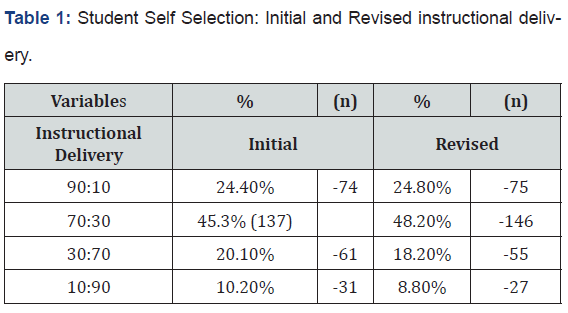
As explained previously, the study sample began with 334 eligible students enrolled in seven 200-level criminology/ criminal justice courses within a liberal arts University in the Midwest United States. Thirty-one students were removed from the study for (i) having dropped or withdrawing from the course or not completing their self-administered surveys. Therefore, 303 students were used for the analysis of this study. Table 1 below illustrates the self-selection of instructional delivery that each student has chosen. As explained previously, students initially chose their preferred instructional mode within the first few days of the beginning of the course. However, each student was also able to revise this choice at any time between the beginning of the course and the first examination (one month later).

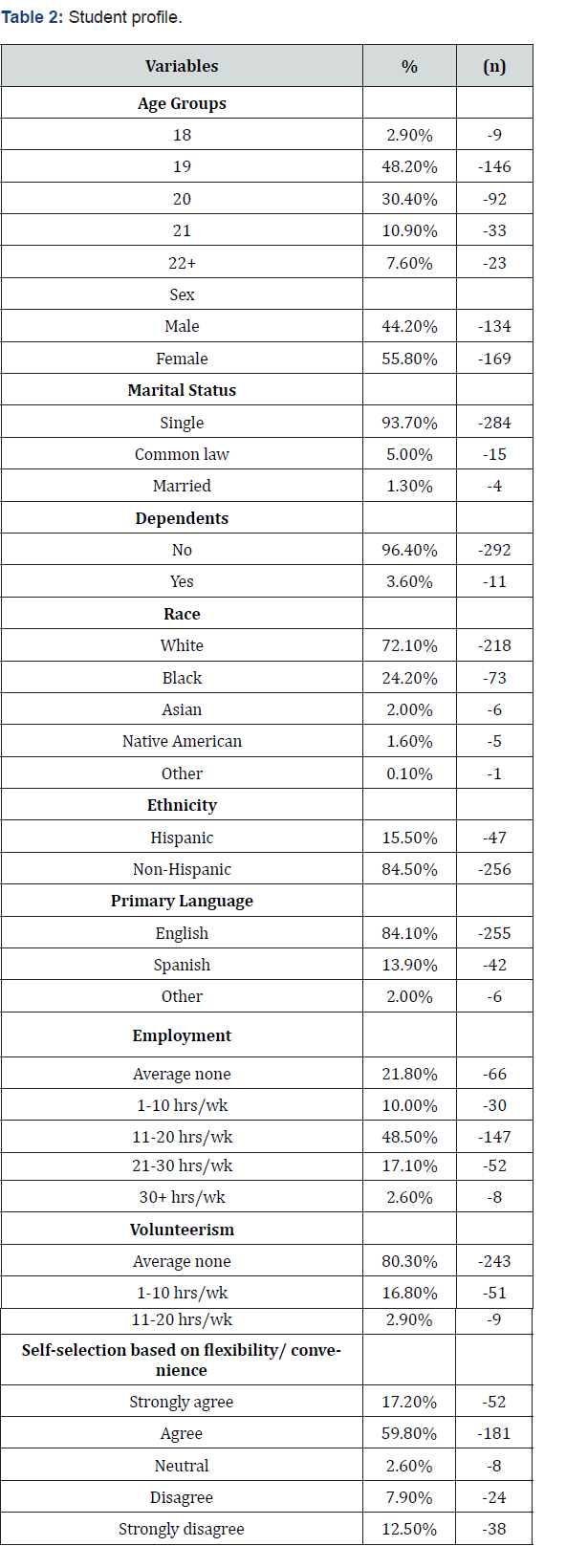
When given the opportunity, a large majority of students initially selected an emporium approach (as explained by Twigg [40]). Nearly half of the seven classes of students (45%) preferred the 70:30 blended option; giving them more flexibility than the 90:10 traditional course (24%) or the more online 30:70 blended (20%) option. One in every ten students selected the almost entirely constructed course where 90% would be instructed online. However, the decisions of students became clear after one month of the course had been completed. Of those 31 students who initially chose the 90:10 option, four students re-selected to the 70:30 option. Of those selecting the 30:70 instructional delivery (61 students), six students revised their decision with one student returning to the most traditional instructional method and five moving to a 70:30 mode of delivery. It was clear that students did appreciate more of an emporium approach (64%) to traditional (25%) or almost solely online (9%) instructional delivery. The ten students who re-selected and/or revised their initial decision all had said in some form that they wanted more opportunities to interact with other students and/or attain more detail in understanding key concepts and themes. It should be noted that the revised selection options were used for further analysis. In addition to choosing their desired instructional delivery medium, students were asked to complete a short open-ended self-administered questionnaire at the beginning of the course. Responses were relevant to establishing a baseline of data points to understand the profile of the sample. Responses of the variables of interest were coded to generate the appropriate values; as seen below in Table 2.

The profile of the students studied would suggest this is a typical, traditional 200-level undergraduate course where a majority of students are young and progressing to determine their career trajectory. In terms of age, a significant majority (92%) of students who participated in the study were generally 21 or under, Similar to the University demographics, women represented a larger percentage (55%) of the students enrolled in the courses. Students represented in the sample are young, single (94%) and are without children or dependents (96%). Similar to the University’s student body demographics, the majority of students self-identified as White (72%), a large concentration of students self-identified as Black and/or African American (24%). Furthermore, those who identified as Hispanic were approximately 16% of the sample and typical of the student body at the University where this study was conducted. English was the primary language spoken and was not a limitation to this study as all students had a proficiency in English despite 16% of respondents suggesting English was their second language.

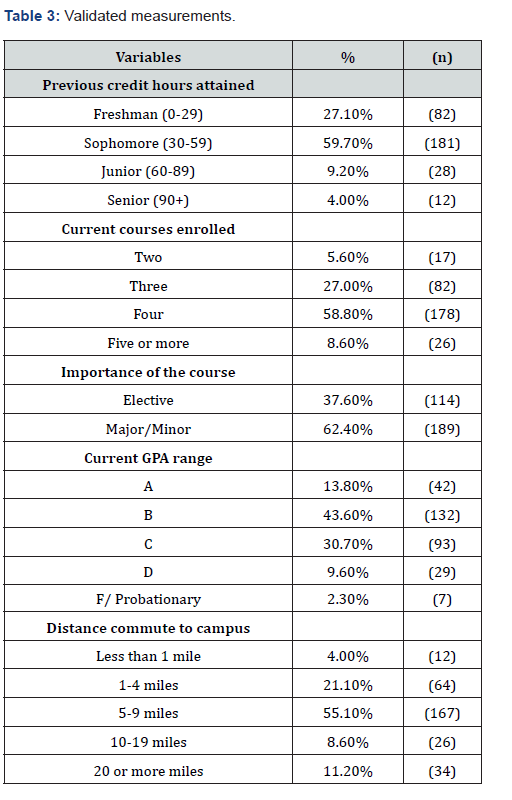
The open ended pre-test also encouraged students to explain some of their current and/or situational factors that may be impacting their self-selection of instructional delivery. As denoted within the scholarship of teaching and learning research, students are often employed and/or volunteering outside of the classroom to supplement their career aspirations. Almost eight in ten students in courses reported being employed at the time of being enrolled in the course. A large majority of students (58%) reported working part time while as many as 19% of the students reported working over 20 hours a week in addition to their coursework. A large percentage of students (80%) were not involved with volunteerism and/or internships at the beginning of the course. This is likely due to their workload in and out of the classroom. A further question asked students to report whether time flexibility and/or convenience would impact their decision to self-select into a specific instructional method. Three-quarters of students reported that they agreed (60%) or strongly agreed (17%) that flexibility and convenience would have an impact on their decision. These findings would substantiate the literature as to why students may consider blended or online learning. In addition to the self–reporting of the students, it was also important to attain other validated measurements. Student consent to the study allowed for the use of their University student number to access other variables of interest (Table 3).

Validated measurements of students were able to supplement the knowledge attained by students while also ensuring more validated measurements focusing on accuracy. As such, it appears that these measurements validated the data that was self-reported by undergraduate students in the study. Consistent with the previous table, the ages of students and credits attained matched to substantiate that students enrolled in the 200-level criminology/ criminal justice courses were typically freshmen (27%) and/or sophomores (60%), thereby not having significant progress towards their degree. This would explain why a low percentage of students may not be as active in volunteerism and/ or internships (as they are still deciding on their career path).

Furthermore, a large majority of students were taking larger numbers of classes simultaneously. Less than 6% of the students were taking courses on a part time basis while a remarkable 94% of students were taking three or more classes (considered full time employment). This is particularly troubling as nearly 8% of the sample were taking the most courses allowed (without permission) at five courses within the same semester. If we consider that nearly 60% of students are also employed part time and another 20% of students are working over 20 hours a week, this could be considerable strain on many students within the sample. The relative importance of the course was another variable of interest that is often not considered particularly pertinent in the literature. Perhaps students who are more likely to engage in a their designated career path (in this case criminology/ criminal justice) feel that face to face course work might be more ideal versus students who perceive the class as simply an elective (and/ or perhaps a class they simply have to complete their liberal arts degree). A majority (62%) of the students enrolled in the seven courses were utilizing the class as a chosen major or minor of their study while 38% of students were taking the class as an elective and/or general course (not having declared a major or minor in criminology/ criminal justice).

Two variables of interest that are often self-reported and not necessarily validated in the literature were two of the final variables of interest. Preferring precision and accuracy, University Registrar records report that a large percentage of students (74%) were in the grade point average (GPA) range of a B to C. A lesser number of students had an A average (14%) while one in ten students (11%) were considered more high risk (having attained a D, F and/or probationary score). The second variable of interest was meant to assess and test the effect of commuting distance to determine if a longer commute to campus had an impact on self-selection. The University is considered more a of a commuter campus and as such, the student data was supportive of this analogy. Three of four students lived further than 5 miles from campus making the commute particularly more time consuming. This study did not address parking or public transportation. However, it appears that a substantial percentage of students would require time to commute as nearly one in five students commute over 10 miles each way, as per their schedule (which is predominantly two to three times a week) which could be five days a week. It would be expected that the longer the commute, the more likely students may select a more online based course. However, as illustrated above, a majority of students are taking a full-time course load so they may likely need to commute to campus for other courses. This should be considered when considering self-selection. The following section examines how self-reported and further validated motivating factors predicted a student’s self-selection of blended or hybrid instructional delivery. Due to a lack of variation in responses, several variables were unable to be included in the multivariate analysis. This includes one of the dependent variables (the 90% face to face to 10% online instructional delivery). For this reason, these variables were excluded to ensure a reduced level of error and multicollinearity. With a sample size of 303 students, the data analyses attempted to control error and multicollinearity with a tolerance level of 2 and a variance inflation factor of 4.0 to ensure that data outliers would be removed from the analysis.

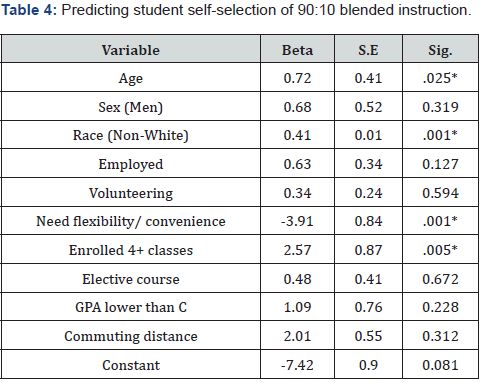
Table 4 below examines the predictive power of motivating factors that influence students’ self-selection of rhe most traditional form of instructional delivery where 90% of the course is face to face with 10% of the course within an online environment. This model was found to be statistically significant (.001 with a confidence level of 95% with the p < .05 being significantly different than zero). The motivating factors within the model explained 36% of students selecting a 90:10 more traditional instructional delivery (versus other delivery methods) based on a Nagelkerke R Square. The regression reported a Chisquare of 184.32 and a model -2 Log likelihood of 243.49 (with 10 degrees of freedom).

Findings suggest that while the model was good at predicting a 90:10 delivery of course instruction, only four variables were statistically significant at the .05 level. Those who were older were more likely to take a traditional face to face instructional method than a more blended or online approach. This is an interesting finding as you would expect that the older a student is, the more responsibilities they may have outside of taking courses at the university. However, the limitation of the study is that the range of the students who took this course was from 18 to 37. As such, it may not be representative of students in their mid to late 20s as a large percentage of students were below the median of 20. Students who self-reported as non-White were more likely to take a 90:10 delivery method than students who were White. While race has been considered a variable of interest, it may be difficult to determine why this could be the case in this model. The two most significant variables in the analysis (based on the Beta values) were those who did not require flexibility/ convenience and students who were enrolled in four or more classes within the same semester. It appears that students who did not require additional flexibility in their schedules were more likely to take a 90:10 deliverable course. This is consistent with some of the research that has been conducted. Furthermore, students who were enrolled in four or more courses within that particular semester (equating to 12 credit hours or more) were more likely to consider a more face to face instructional delivery. While this appears to contradict the idea of flexibility and convenience, this finding could be a result of students having to attend other classes on campus and therefore, simply chose to attend class because they were on campus already. This finding would require further research to substantiate.

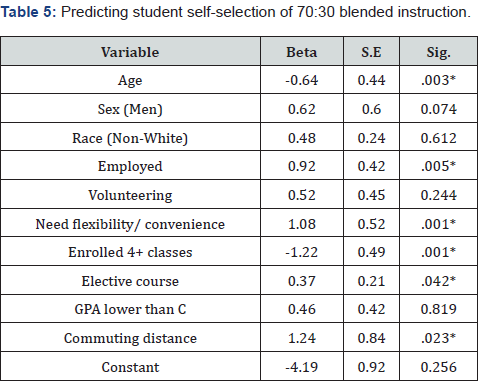
The Table below examines the strength of ten motivating factors influencing students’ self-selection of the most prevalent 70:30 instructional delivery. In this mode of instructional delivery, 70% of the course is face to face and 30% of the course is available within an online environment. This model was also found to be statistically significant (.001 with a confidence level of 95% with the p < .05 being significantly different than zero). The motivating factors within the model explained 51% of students selecting a 70:30 instructional delivery based on a Nagelkerke R Square. The regression reported a Chi-square of 244.81 and a model -2 Log likelihood of 314.26 (with 10 degrees of freedom). It should also be noted that three cases/outliers were removed from the analysis to ensure there was no multicollinearity.

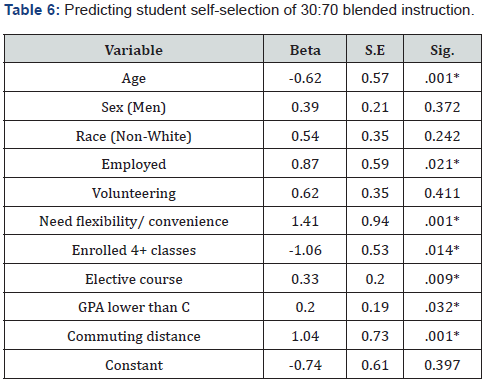
The model explained in Table 5 finds that half of the variables of interest are significant when understanding a blended form of instructional delivery (versus other modes of delivery). Findings suggest that there is considerable differentiation as to why students in this sample chose blended learning versus a traditional form of instructional delivery (Table 4). Age remained a significant demographic variable of significance. It appears that the younger the student, the more likely they would enroll in a 70:30 blended instructional delivery of a criminology class. This could be due to a number of other corresponding factors such as comfortability of online environments or different priorities (versus older students). More study would be needed.


Employment, or the more a student works per week was found to be significant in determining if a student selected a 70:30 blended instruction. It also appears that other factors or a complex set of factors is having the most impact on a student’s selection of 70:30 delivery. The Beta values above would suggest that the three most significant motivating factors was the commuting distance of students, enrollment of fewer than four courses per semester and the need for flexibility/ convenience in their scheduling. These variables of interest have all been found to be significant in other research studies. In this particular study, it would appear that the longer the commute a student has to the University (from their primary listed address), the more likely they would consider enrolling in a 70:30 blended instruction. This would also correspond to the relevance of taking fewer classes and perhaps not being on campus as often, providing them more flexibility and convenience. As we know, most students will select courses on particular days (Monday, Wednesday, Friday or Tuesday, Thursday) rather than five days a week. It also becomes apparent that students who take the course as an elective were more likely to consider the 70:30 blended instruction than those students who enrolled in the course to fulfill their major or minor liberal arts degree requirements. Therefore, with a commuting distance, higher levels of employment per week and convenience, it would not be self-serving if students selected a traditional method especially considering that they are taking fewer classes.

Table 6 illustrates the predictive power of ten motivating factors that influence a student’s selection of a 30:70 blended instructional offering (versus other instructional deliveries). The model was found to be statistically significant at a .001 with a confidence level of 95% (with the probability < .05 being significantly different than zero). The variables of interest within the model explained 52% of students selecting a 30:70 instructional delivery based on a Nagelkerke R Square. The regression reported a Chi-square of 219.65 and a model -2 Log likelihood of 307.24 (with 10 degrees of freedom). It should also be noted that the same three cases/outliers were removed from the analysis to ensure there was no multicollinearity.


The model represented above substantiates the previous model of why students may consider enrolling in a more blended learning environment. Of the 10 variables of interest, seven variables were found to be significant in predicting enrollment in a 30:70 instructional delivery mode (versus other modes). Age remains a constant within the three tables. It appears that the younger the student, the more likely they may consider a blended option. Sex, race and volunteering do not seem to have any impact on student selection of course instruction. Students who reported higher levels of hourly employment (per week) were more likely to consider a 30:70 online instructional deliverable who may obviously require more flexibility and convenience.

It also appears that the number of classes and which classes students are enrolled in becomes a more significant variable as blended instruction applies. Students who were enrolled in three or fewer courses, considered the criminology course as an elective course and also having a lower GPA (corresponding to a C or lower) were more likely to choose the 30:70 option. Might this be due to students simply prioritizing other classes over this particular criminology course? Perhaps students registered for fewer courses equates to a lessening engagement of traditional materials if given the option. Unfortunately, it appears that these findings while being interesting does not explain the complexity surrounding the inter-connectivity of these variables. It also appears that a longer a student commutes to the university (from their primary residence) is also having an impact on their selection of instructional delivery. This variable in combination with taking fewer courses may be driving a student’s selection or preference to stay at home more or working more hours (where university courses are less of a priority).

The findings of these three tables offer some insight in how a student may be motivated to select a particular course instructional delivery. Linear and logistic regressions are often performed with sample sizes over 400 to ensure reduced multicollinearity. While three cases were removed from two analyses, results should be taken cautiously. Several variables were also not included from the sample profile due to a lack of variation in responses. A final anticipated discussion on a student’s motivations to take an almost completely online 90:10 course was also not analyzed due to a low sample size. These findings are conclusive however, it should be noted that due to a low size of this population, results should be taken as exploratory [41-50].

Implications

As other researchers have maintained, there is certainly a complexity surrounding how students select traditional, blended/ hybrid or online classes. While many of these motivations are often situational and/or circumstantial, this study offers an exploratory view on why students may self- select into one particular instructional delivery over another, if given the opportunity, It appears that age and race are demographic groups which were considered significant and require more research. We know that age could be directly correlated with confidence in computer literacy and/or more traditional face to face methods. However, more study is needed with perhaps more attention explored within what we know about distance learning. This study sought to learn more about commuting and distance education and it appears that a student’s commute to campus (the longer the commute) has an impact on their decision to choose a more blended offering of course instruction. The higher number of hours a student was employed through any given week in a semester was also a significant factor in blended learning instruction versus a lack of it. Flexibility and convenience was found to be a significant predictor of blended learning while also found to impact a more traditional face to face delivery (in a negative correlation). This might suggest that convenience may have more of an impact with blended learning rather than traditional face to face courses which is consistent with the literature. A student’s motivation to take more blended learning could be derived from the necessity of the class itself. It appears that students who enrolled in the class as an elective were more likely to consider more blended (70:30 or 30:70) options. This finding may have more to do with a student’s perception of how important the course is and the priority it is within a student’s liberal arts education within the institution studied. These findings offer a glimpse into self-selecting into an online learning environment. There are few studies that have offered such an insight into selecting one instructional method versus another and as such, more study is needed. 


To Know more about our Juniper Publishers

Wednesday, July 1, 2020

Is Reinforcement Learning a Panacea for Solving All Contingencies in UAVs? - Juniper Publishers

Robotics & Automation Engineering - Juniper Publishers


Introduction

Reinforcement learning (RL) has two important elements: “critic” and “reward” based on performance. As shown in Figure 1, the “reward” is generated based on a performance evaluator for a system and the “critic” element generates proper actions to a system. In recent years, RL has gained a lot of attention because of its success in games such as the Alphago, which beat the human world champion in straight sets [1]. However, there are several recent blogs [2-4] by researchers in artificial intelligence (AI), who heavily criticized the capability of RL in numerous applications. Some notable criticisms include the requirement of huge amount of training data, lack of mechanism to incorporate metadata (rules) into the learning process, the requirement of starting from scratch in the learning process, etc. In short, those researchers think that RL is not a mature technology yet and has found success in only a few applications such as games, collision avoidance, etc.

Drones, also known as Unmanned Air Vehicles (UAVs), have much higher failure rates than manned aircraft [5]. In 2019, there is a Small Business Innovative Research (SBIR) topic [6] seeking ambitious ideas by using RL to handle quite a few contingencies in drones, including 1) preset lost-link procedures; 2) contingency plans in case of failure to reacquire lost links; 3) abort in case of unexecutable commands or unavoidable obstacles; 4) terminal guidance. After carefully analyzing the requirements in this topic, we believe that a practical and minimal risk approach is to adopt a hybrid approach, which incorporates both conventional and RL methods. Some of the requirements in this topic can be easily handled by conventional algorithms developed by our team. For instance, we have developed preset lost-link procedures to deal with lost links for NASA. Our procedures can satisfy FAA and air traffic control (ATC) rules and regulations. We also have systematic procedures to deal with contingency in case of failure to re-acquire lost links. All these procedures can be generated using rules and do not require any RL methods. We believe that RL should be best used in collision avoidance in dynamic environments be cause there is mature development in using RL to tackle clutter and dynamic environments for mobile robots.


Practical Approach

In the past seven years, our team has been working on contingency planning for UAVs to deal with lost links for NASA and contingency planning for engine failures, change of mission objectives, missed approach, etc. for the US Navy. We also have a patent on lost link contingency planning [7]. To tackle the contingencies in drones, a practical approach has several components. First, we propose to apply our previous developed system [7-10] to deal with lost-link and other contingencies. Our system requires some pre-generated databases containing FAA/ATC rules, locations of communication towers, emergency landing places, etc. for a given theater. Based on those databases, we can generate preset plans to handle many of the contingencies related to lost-link, engine failures, mission objective changes, etc. Our pre-generated contingency plans can also handle terminal guidance. We plan to devise different plans to handle different scenarios in the terminal guidance process. For example, if the onboard camera sees a wave-off signal, the UAV can immediately activate a contingency plan to guide the UAV to an alternative landing place. Second, we propose to apply RL to handle some unexpected situations such as dynamic obstacles in the path. RL has been successfully used in robot navigation in clutter and dynamic environments and hence is most appropriate for collision avoidance in UAVs.

Figure 1 shows the relationship of our Advanced Automated Mission Planning System (AAMPS), Joint Mission Planning System (JMPS), and Common Control System (CCS). Our AAMPS first uses JMPS to generate a primary flight plan for a given mission. JMPS has the advantage of containing airport and constraint zone information in its database. Second, we applied Common AAMPS to generate contingency plans for the primary flight path. The Ground Control System contingency plans can deal with major situations such as engine out, lost communications, retasking, missed approaches, etc. To avoid damage to ground structure, we propose to apply an automatic landing place selection tool, which selects appropriate landing places for UAVs so that UAVs can use these landing sites during WEB Route normal flight or emergencies.

JOJ Urology & Nephrology
In our approach, RL is used for path planning to avoid dynamic threats and obstacles. Recent works showed that RL could be used for autonomous crowd-aware robot navigation in crowded environments [11-12]. However, the performance of these techniques degrade as the crowd size increases since these techniques are based on a one-way human-robot interaction problem [13]. In a recent paper [13], the authors introduces an interesting work which uses RL for robot navigation in crowded environments. The authors of [13] name their method Self- Attention Reinforcement Learning (SARL). They also use the name local map SARL (LMSARL) for the extended version of SARL. The authors approach the crowd-aware navigation problem different than other techniques and the human-human interactions which affects robot’s anticipation capability for navigation are also considered in their method, SARL [13]. SARL can anticipate crowd dynamics resulting in time-efficient navigation paths and outperforms three state-ofthe- art robot navigation in crowded scenes methods which are Collision Avoidance with Deep Reinforcement Learning (CADRL) [11], Long Short-Term Memory-RL (LSTM-RL) [12], and Optimal Reciprocal Collision Avoidance (ORCA) [14]. We find similarities between the crowd-aware robot navigation application and the autonomous collision-free UAV navigation in crowded air traffic and SARL can be used as a promising technique along this line. We believe that we can customize SARL for autonomous collision-free UAV navigation in contingency situations such as when the link between operator and UAV is lost and the UAV needs to make a forced emergency landing.

JOJ Urology & Nephrology


Conclusion

It was argued that RL may not be able to solve contingency planning for UAVs. Instead, we advocate a practical approach to solving this problem.


To Know more about our Juniper Publishers

Use of Aqueous Extract and Essential Oil of Citrus Aurantifolia Leaves in the Protection of Vegetables- Juniper Publishers

  Nutrition and Food Science- Juniper Publishers Summary Our study is devoted to the valorization of the essential oil and the aqueous extra...