Thursday, June 11, 2020

Substance use Disorder: A Burning Issue - Juniper Publishers

Addiction & Rehabilitation Medicine - Juniper Publishers


Abstract

Substance use disorder (SUD) has infiltrated all socio-cultural and economic strata causing loss of productivity. Mental and substance use disorders are a major public health concern everywhere and responding to the burden they cause is a challenge for health systems in both developed and developing regions. Treatment rates for people with mental and substance use disorders remain low, with treatment gaps of over 90% in developing countries. Developing countries are facing an escalating burden of non-communicable disease, with mental and substance use disorders among the most significant. Many developing countries spend less than 2% of their health budgets on mental health. Drug dependence produces significant and lasting changes in brain chemistry and function. Effective medications are available for treating nicotine, alcohol, and opiate dependence but not stimulant or marijuana dependence. Medication adherence and relapse rates are similar across these illnesses. Studies suggest that long-term care strategies of medication management and continued monitoring produce lasting benefits patients with substance use disorder. In this article, we will give a brief overview about substance use disorder.

Keywords: Substance use disorder; Alcohol; Nicotine

Introduction

Substance use disorders are important health concern worldwide. Substance use is a chronic disorder which is associated with significant mortality and morbidity. These disorders also account for significant health care utilization and medical costs. Substance use disorders occur when a person’s usage of alcohol, prescription drugs, or illegal drugs causes problems in his or her life and daily activity [1]. Treatment of substance use disorder involves detoxification and prevention of relapse. The major problem in treating patients with substance use disorders is relapse. Addiction is a chronic disorder that requires long-term treatment. Anticraving agents play the key role in the prevention of relapse. These medications generally reduce drug craving and reduce the likelihood of relapse to compulsive drug use. Anticraving agents along with other psychotropic drugs are used for management of the substance use disorders [2]. In India, substance abuse has infiltrated all socio-cultural and economic strata causing loss of productivity. Mental and substance use disorders are a major public health concern everywhere and responding to the burden they cause is a challenge for health systems in both developed and developing regions. Treatment rates for people with mental and substance use disorders remain low, with treatment gaps of over 90% in developing countries [3,4]. Developing countries are facing an escalating burden of non-communicable disease, with mental and substance use disorders among the most significant. Many developing countries spend less than 2% of their health budgets on mental health [5]. Drug dependence produces significant and lasting changes in brain chemistry and function. Effective medications are available for treating nicotine, alcohol, and opiate dependence but not stimulant or marijuana dependence. Medication adherence and relapse rates are similar across these illnesses. Studies suggest that long-term care strategies of medication management and continued monitoring produce lasting benefits patients with substance use disorder [6]. Substance abuse causes acute and chronic physical, psychological and social effects in varying amounts along with serious social problems in the form of crime, unemployment, family dysfunction and disproportionate use of medical care. Science has not yet explained fully the psychological processes leading to drug abuse. Substance abuse affects above 50 million people worldwide. Abuse of legally prescribed drugs is also increasing rapidly [7]. In India, the abuse of alcohol, cannabis and raw opium has been traditionally known. The abuse of synthetic narcotic drugs and psychotropic substances is comparatively new. Substance abuse has affected all socio-cultural and economic classes causing loss of productivity [8]. Family stress, lack of coping skills, peer pressure, personality disorder, co-morbid psychiatric illnesses, social stress and market forces act as risk factors [9].

Survey shows that around 20-30% of adult males and 5% of adult females use alcohol while 57% of the male and 10.8% of the female drug users consume opiates in some form or other. Rapid assessment survey on substance abuse shows that the primary abused drugs are heroin (36%), other opiates (29%) and cannabis (22%); 75% of addicts start drug abuse before 20 years of age; in urban areas heroin abuse is more while in other sites cannabis abuse is more [10,11]. The family remains the primary source of attachment, nurturing, and socialization for humans in our current society. Therefore, the impact of substance use disorders (SUDs) on the family and individual family members merits attention. Each family and each family member are uniquely affected by the individual using substances including but not limited to having unmet developmental needs, impaired attachment, economic hardship, legal problems, emotional distress, and sometimes violence being perpetrated against him or her. For children there is also an increased risk of developing a SUD themselves.

Thus, treating only the individual with the active disease of addiction is limited in effectiveness. The social work profession more than any other health care profession has historically recognized the importance of assessing the individual in the context of his or her family environment. Social work education and training emphasizes the significant impact the environment has on the individual and vice versa. This topic was chosen to illustrate how involving the family in the treatment of a SUD in an individual is an effective way to help the family and the individual. The utilization of evidence-based family approaches has demonstrated superiority over individual or group-based treatments [12]. Substance use disorder (SUD) is a disease whose social costs are high. The negative effects of drug abuse go well beyond the health and condition of the person who suffers from SUD. Research has shown a strong link between addiction and the disruption of family relationships, including severe psychosocial and physical effects on family members described as depression, anxiety, and stress. Parents’ depression when living with a partner suffering from SUD can contribute to the mental, physical, and social neglect of the family’s children, further aggravating the family’s anxiety and stress [13].

Management of substance use disorders

Substance use disorder (SUD) has been conceptualized as a chronic relapsing medical illness with relapses and remissions and a strong genetic component similar to diabetes type II and hypertension [6]. Risk for relapse is heightened because the neurobiological changes in brain pathways created by many years of alcohol and/or drug use do not completely revert to normal after the detoxification process. The intensity and nature of the behavioral intervention can influence the outcome of treatment for patients with SUDs. The use of medications in the treatment of SUD can also play a major role in preventing relapse and facilitating longer periods of abstinence. More effective medications have been developed over the past 30 years, and subsequently, pharmacotherapy has progressively played a more important role in the treatment of addictions. Medications are mostly used as adjuncts to psychosocial treatments and the role of pharmacotherapy in treatment depends on the specific type of SUD [14]. Pharmacological agents have three broad objectives: management of acute withdrawal syndromes through detoxification, attenuation of cravings and urges to use illicit drugs (initial recovery), and prevention of relapse to compulsive drug use [2].

Conclusion

Treatment of substance use disorder involves detoxification and prevention of relapse. The major problem in treating patients with substance use disorders is relapse. Addiction is a chronic disorder that requires long-term treatment. Anticraving agents play the key role in the prevention of relapse. These medications generally reduce drug craving and reduce the likelihood of relapse to compulsive drug use. Anticraving agents along with other psychotropic drugs are used for management of the substance use disorders.

Wednesday, June 10, 2020

Animal Hosts of Coronavirus: Unsung Reason behind Recurring Outbreaks- Juniper Publishers

Cell Science & Molecular Biology - Juniper Publishers

Abstract

The world has witnessed severe recurrent outbreaks of highly infectious human diseases caused by deadly coronaviruses such as severe acute respiratory syndrome coronavirus (SARS-CoV), Middle East respiratory syndrome coronavirus (MERS-CoV) and novel coronavirus (2019-nCoV). Compared to the previous incidence of coronavirus diseases, the ongoing outbreak of COVID-19 caused by 2019-nCoV is more severe, spreading rapidly all over the globe and has been declared as a pandemic by WHO. Previously, SARS-CoV and MERS-CoV was reported to have originated from their natural ecological reservoir i.e. bats, and then passed to humans through intermediate hosts palm civets and camels, respectively. While many reports suggest the bat origin of 2019-nCoV, but substantial evidence for animals as intermediate hosts is still lacking. Understanding of how a virus from a reservoir adapts to new host (s) is essential for disease management. The present review provides the latest results on animal hosts of human coronaviruses. As the new coronavirus is rapidly spreading around the world, future research should aim to investigate for the next potential coronavirus animal hosts.

Keywords: COVID-19, 2019-nCoV, SARS-CoV, MERS-CoV, Intermediate host, Pandemic

Introduction

The world is now facing a massive emergency due to the biggest ongoing outbreak of COVID-19 caused by a highly infectious and pathogenic novel coronavirus designated as severe acute respiratory syndrome coronavirus 2 (2019-nCoV). The virus emerged in Wuhan, China in December, 2019 and eventually spread all over the countries to become pandemic as declared by WHO. There is no drug developed yet for COVID-19, but innovative research on development of specific drug primarily based on the knowledge of viral association with host receptor (Ace2) by its spike protein is expanding in many countries [1]. Bats are thought to be the source of 2019-nCoV which transmitted to humans possibly through another animal as intermediate host [2].

Like 2019-nCoV, Ebola, Sars, Nipah viruses are also believed to have reached humans from their probable natural reservoir, the bats. In November 2002, a viral respiratory disease that led to the first major pandemic of the new millennium originated from southern China and crossed the boundaries of other countries, with over 8,000 confirmed cases at the end of June 2003, with a mortality rate of ∼9.6% [3]. The etiologic agent of this respiratory disease identified as SARS-CoV was found to be a betacoronavirus of bat origin that adapted to infect the intermediate host palm civet and finally jumped into humans [3]. A decade after the SARS-CoV outbreak, in June 2012, MERS-CoV, emerged in Saudi Arabia, causing similar respiratory disease as SARS [3]. In comparison to SARS-CoV, human-to-human transmission was considered limited, but two major outbreaks in 2012 (Saudi Arabia) and 2015 (South Korea) occurred with more than 2000 cases (mortality rate of ∼35%), globally. Like SARS-CoV, MERS-CoV was found to have originated from bats, whereas unlike SARS-CoV, it was adapted to dromedary camels as intermediate hosts [3].

During the SARS outbreak, raccoon dogs (Nyctereutes procyonoides) and masked palm civet (Paguma larvata) were identified to carry SARS-CoV like viruses, before the virus was detected in bamboo bats (Tylonycteris pachypusa and Pipistrellus sp.). Until recently, civets are considered as a “bypass” reservoir and the immediate zoonotic source of SARS-CoV in the Guangdong SARS outbreak [4]. The emergence of MERS-CoV, has identified dromedary camels as a potential intermediate host and also indicated the mode of zoonotic transmission from camels to humans via three possible ways: organs, flesh, and discharges such as faeces and camel milk, since serum evidences revealed that butchers and shepherds have higher infection rates than individuals in other occupations [5]. Alpacas, centrally housed with camels were also identified with MERS-CoV and it was further observed that the MERS-CoV effectively interacts with alpaca- DPP4 (dipeptidyl peptidase 4, receptor of MERS-CoV) followed by infection. Though the role of alpacas is not clear in the MERS-CoV outbreak, but it can be hypothesised that the increasing export of alpacas might have handsome contribution in increasing the risk of 2012 outbreak [5].

Not only SARS-CoV and MERS-CoV, several coronaviruses like HCoV-NL63, HcoV-229E and a majority of alphacoronaviruses and betacoronaviruses, also found to have originated from diverse bat species, whereas HCoVOC43 and HcoV-HKU1 likely to have originated in rodents [6]. Compared to the outbreak from these viruses, the recent outbreak of 2019-nCoV has become so severe that the world is now under complete lockdown. Global confirmed cases as of today stands 3,015,298 with 207,933 fatalities [7]. Despite the severity and fatality associated with the repeated outbreak of such diseases, coronavirus vaccines and antiviral drugs are not yet available. The animal model that mimics human disease is thus of an urgent need. Several studies showed that 2019-nCoV shares 96.2% amino acid sequence similarity (taking all the ORFs) with coronavirus isolated from bats and likewise bats are considered to be the natural source of 2019-nCoV [8]. Apart from bats, snakes were thought to be the source or intermediate host of 2019-nCoV but further investigation obliterated the probability [9]. The high sequence similarity (99%) of 2019-nCoV with the coronavirus isolated from pangolin and the presence of typical novel coronavirus granules observed in the animal, suggested pangolin to be the potential intermediate host of the 2019-nCoV [10]. Recently Xuhua Xia [11] has even claimed the dogs to be an intermediate host of 2019-nCoV. Though adequate evidences have proved the animal origin of 2019-nCoV, the natural and intermediate host is still under question. To gain insight into the animal reservoirs of 2019-nCoV and animal management for COVID19 control, Shi et al. [12] evaluated the susceptibility of different animals including model laboratory animals with intranasal application of SARS-CoV-2. From quantification of viral RNA by qPCR and virus titration in Vero E6 cells, it was concluded that 2019-nCoV replicates efficiently in ferrets, but poorly in dogs, pigs, chickens, and ducks. In contrast, many researchers point to its transition to human through an animal such as pig. One report pointed to snakes, for which bats are food [13]. As a natural reservoir of coronavirus, a search for the presence of SARS-CoV, MERS-CoV and 2019-nCoV in bats, concluded that there is no contradiction for bats being the source of these viruses which apparently passes on to humans via an intermediate animal host. Recently, coronaviruses similar to 2019-nCoV were reported from Rousettus spp. and Pteropus spp of bat in India [14].

In this global pandemic situation, caused by 2019-nCoV, though the intermediate host is still unidentified, several reports for animals getting infected suggest inter-species transmission, which significantly raise the risk of rapid dissemination and infection among wild animals as well as humans. Recently, a cat in Belgium, two dogs in Hong Kong, and five tigers, eight wild cats and three lions in the Bronx Zoo, New York, were found to have Covid19 disease [15,16] Also, two pet cats in New York were tested positive for the new coronavirus
(https://www.aphis.usda.gov/aphis/ourfocus/animalhealth/sa_one_health/sars-covanimals- us).
Previous study with related virus, SARS-CoV showed that cats can be infected and pass it on other cats [17].

It appears that 2019-nCoV may infect a number of domestic and wild animals, however, which animal(s) acts as intermediate host for transmission of the virus in human is still unclear. It also remains a question whether a single strain of 2019-nCoV is capable of infecting different animals or mutational consequence of 2019-nCoV while residing in human expands the host range. Since cats, dogs and other animals are in close contact with humans, emphasis should thus be given to frequent surveillance for 2019-nCoV perhaps or evaluation of their susceptibility to any new coronavirus so that appropriate precautionary measure can be taken before the onset of any severe devastating outbreak causing economic, social and political disruption. The major reason for the emergence of deadly animal viruses like 2019-nCoV perhaps lies in the destruction of natural habitat of wild animals, it is something like ‘throwing stones at a beehive’, so let us pay respect to wild animals. 

Tuesday, June 9, 2020

Unintended Consequences of Premature PSA Utilization - Juniper Publishers

Urology & Nephrology - Juniper Publishers 

Commentary

The premature use of some medical innovations has led to unintended negative consequences. One example of unintended consequences was Prostate Specific Antigen (PSA) screening for prostate cancer. Without a full understanding of PSA normal values there was indiscriminate over use of prostate biopsies. Frequently these biopsies diagnosed nonaggressive prostate cancers which cause no harm. As a result, thousands of men underwent unnecessary treatments.

PSA 20 years Later

In every Urology practice today, refined use of PSA testing is an important component in assessing for prostate cancer. PSA baseline, PSA Progression, PSA Density and PSA analogs are key in evaluating men at risk of cancer. After prostate cancer treatment PSA is the gold standard monitoring blood test.

PSA Refined

PSA is a good test for indicating prostate cancer when utilized as part of a patient’s prostate cancer risk assessment. (PSA is available, widely used and inexpensive)
a) There is no upper limit of normal value for PSA.
b) Always repeat an unusual PSA. PSAs can vary greatly over time and between laboratories.
c) Most PSA’s reflect benign prostate growth of aging. Cancers cause PSAs to increase higher, faster.
d) Obtain Baseline PSA-men at risk, age 30’s (African Am, Family-Genetic History, asymmetric prostate) -- other men age 40’s
e) As prostate cancer indicators PSA alone is OK, PSA progression good and PSA density very good. (PSA Density is PSA divided by prostate volume obtained from prostate ultrasound or MRI)

Prostate MRI

Men with high risk for prostate cancer benefit from a diagnostic MRI. Prostate MRI decides which men to biopsy, defines the size and location of the suspicious nodule(s) to biopsy, predicts the grade of malignancy and locally stages the cancers. For prostate MRI to be accurate the exam has to be high quality imaging and interpreted by an experienced radiologist. Prostate MRIs are 90% accurate in diagnosing prostate cancer. Prostate cancers when diagnosed in their early stages with PSA and MRI can be treated and cured.

To Know more about Urology & Nephrology 

Monday, June 8, 2020

Static and Dynamic Balancing and Gait Training in Shooters Leading to a Better Efficacy-A Prospective Study - Juniper Publishers

Physical Fitness, Medicine & Treatment in Sports - Juniper Publishers


Abstract

Shooting is a sport of precision that requires balance, and due to the repetitive nature of the sport it needs high endurance as well. Although it is static sport injuries may be experienced from doing the same thing repeatedly, thus putting a toll on the body physically. Interventions provided by orthopaedicians /physiotherapist can be very beneficial for a shooting athlete. Postural alignment, flexibility, strength, postural stability, biomechanics and the evaluation and treatment of acute and chronic musculoskeletal impairments are important considerations to a high performance in sports shooting. Postural alignment and gait analysis are very important. A misalignment of the foot and ankle can cause injury of the ankle, shin, knee, hip, and lower back. In our study at ABHINAV BINDRA TARGETING PERFORMANCE we have taken into consideration the professional shooters on which gait assessment was done before and after the training session. This study will help us know the benefits of training a specific group of muscles for strengthening and improves the efficacy of the athlete.

Abbreviations: Abhinav Bindra; Musculoskeletal; Shooting Athlete; Alignment; Flexibility;  Strength; Postural Stability; Biomechanics; Neuromuscular Disorders; Terminal Swing; Center of Mass; Dynamic Balance

Introduction


The ability to walk upright is a defining characteristic of man. Gait is the way walking is performed and can be normal, antalgic, or unsteady [1]. Gait analysis can be assessed by various techniques but is most commonly performed by clinical evaluation incorporating the individual’s history, physical examination, and functional assessment. Gait abnormalities can be more precisely examined using gait laboratories. These laboratories utilize surface EMG activity of muscles, force plates, and kinematic evaluation of the lower limbs. They are highly specialized units that assess various gait abnormalities from individuals with neuromuscular disorders to high-level athletics. A proper clinical evaluation should always precede any gait lab assessment [2]. The determination of abnormal gait requires one to first understand the basic physiology and biomechanics of normal gait [3]. The gait cycle is a time interval or sequence of motion occurring from heel strike to heel strike of the same foot. The gait cycle has been broadly divided into two phases: stance phase and swing phase. These phases can then be further subdivided and discussed in terms of percentage of each within the gait cycle (Figure 1).

The stance phase is 60 percent of the gait cycle and can be subdivided into double-leg and single-leg stance. In double-leg stance, both feet are in contact with the ground. At an average walking speed, it represents 10percent of the entire gait cycle, but decreases with increased walking speed and ultimately disappears as one begins to run. At slower walking velocities the double-leg support times are greater. Single-leg stance comprises up to 40 percent of the normal gait cycle [4]. The muscles that are active during the stance phase act to prevent buckling of the support limb. These include the tibialis anterior, the quadriceps, the hamstrings, the hip abductors, the gluteus maximus, and erector spinae. The swing phase is described when the limb is not weight bearing and represents 40 percent of a single gait cycle. It is subdivided into three phases: initial swing(acceleration), mid swing, and terminal swing (deceleration). Acceleration occurs as the foot is lifted from the floor and, during this time, the swing leg is rapidly accelerated forward by hip and knee flexion along with ankle dorsi flexion. Midswing occurs when the accelerating limb is aligned with the stance limb. Terminal swing then occurs as the decelerating leg prepares for contact with the floor and is controlled by the hamstring muscles.


Determinants of Gait and Energy Conservation

During gait, three main events occur in which energy is consumed. This includes controlling forward movement during deceleration toward the end of swing phase, shock absorption at heel strike, and propulsion during push off, when the center of gravity is propelled up and forward. A human’s center of mass (COM) is located just anterior to the second sacral vertebra, midway between both hip joints [5]. The least amount of energy is required when a body moves along a straight line, with the COM deviating neither up nor down, nor side to side. Such a straight line would be possible in normal gait if man’s lower limbs terminated in wheels instead of feet. This obviously is not the case, thus, our COM deviates from the straight line in vertical and lateral sinusoidal displacements. With respect to vertical displacement: the COM goes through rhythmic upward and downward motion as it moves forward. The highest point occurs at midstance, the lowest point occurs at time of double support. The average amount of vertical displacement in the adult male is approximately 5cm. With respect to lateral displacements: As weight is transferred from one leg to the other, there is shift of the pelvis to the weight-bearing side. The oscillation of the COM amounts to side-to-side displacement of approximately 5cm. The lateral limits are reached at midstance. Any pathology that increases the vertical distance between the high and low points, increases the energy cost of ambulation (Figures 2 & 3).

Methodology

A total of 32 shooters were examined clinically and gait analysis was performed on them thereafter with a proper consent for participation in the study at ABHINAV BINDRA TARGETING PERFORMANCE, INDIA from a period of January 2019 to May 2019 (Figure 4).

Aims & Objectives

Gait analysis and pelvis muscles assessment for shooters prior to training and comparing the assessment post training, effect of stability and strengthening for improving the efficacy of the shooters.

Discussion

The analysis of pre and post static balance as well as dynamic balance for both groups and the comparison of the post balance test of two groups were analyzed by using independent sample t-test. First, the GAIT assessment scoring of firm surface before the study among the control group was 5.14±1.069 and increased to 5.39±1.704, which did not show significant at 5% level of significance (ρ>0.05). while the scoring of foam surface before study was 7.79±0.851 and increased to 7.53±1.372, therefore it was not significant at 5% level of significance (ρ>0.05). On the other hand, the scoring of GAIT assessment for firm before the intervention among the experimental group was 5.34±1.269 and after the intervention training program, it reduced to 2.90±1.190 which showed significant improvement with ρ<0.05. The dynamic balance results were reported on left and right stance. The higher the score the better the dynamic balance of the individual.

The shooters scores of mean and standard deviation of left stance before the study among the control group before test was 77.36±4.137 and after test score was 74.79±7.156, which the improvement did not show statically significant; whereas in right stance, before test was 76.37±6.785 and after test was 72.58±7.960 after four weeks of study and the improvement did not show statically significant. However, the score for experimental group in left stance was 75.31±5.334 before the intervention and improved to 82.14±5.661 after a month intervention training, and it was significant at 5% level of significance (ρ<0.05). Meanwhile, the scoring of in right stance increased from 77.12±7.015-86.29±5.795 before and after intervention respectively. Thus, this showed that the result of left stance and right stance in SEBT indicated significant improvement (ρ<0.05). Meanwhile, for standing on firm surface, the mean score for the experimental group was 3.20±1.191 and for the control group was 5.79±1.504. The result indicated there was significant difference between the pre training and post training after a month’s study.

Result

The combination of the two exercises components in current study which were the balance exercises and jump landing training, gait training and static and dynamic balancing on firm and foam surface have drastically improved the ability of shooters to balance and aim accurately [6]. Thus, it is crucial that balance training should continue to be studied and promoted to ensure the improvement in static and dynamic balance and thus reducing the risks of injuries such as knee and ankle injuries and ensure the accuracy of shooters.

Friday, June 5, 2020

Review of Pembrolizumab and other Anti PD-1/PD-L1 Antibodies - Juniper Publishers

Pharmacy & Pharmaceutical Sciences - Juniper Publishers  


Abstract

Immunotherapies are rapidly becoming favored amongst physicians for the treatment of various oncologic process due to their more favorable adverse reaction profile in addition to their increased ability to target specific cancer tissue as opposed to the usual widespread devastation of healthy tissue that can accompany chemotherapy and radiation therapy. One class of immunotherapies that has shown exquisite promise in terms of efficacy and limited immune related adverse events is the anti-PD-1/PD-L1 antibodies, which falls under the immunotherapy classification of check point inhibitor. In this paper, we will give a brief review of the background, mechanism, and side effects common to PD-L1/PD-1 inhibitors as a cancer therapy.

Keywords: Anti PD-L1/PD-1; Pembrolizumab; Immunotherapy; Checkpoint inhibitor

Background

Immunotherapies are rapidly augmenting, sometimes even supplanting, the previously commonplace tactic of chemotherapy and/or radiation therapy in the treatment of several cancers. These treatment modalities are favored due to their heightened ability to specifically target cancer cells while simultaneously sparing healthy tissue that is usually considered to be standard collateral damage when using the less-specific treatments of chemotherapy or radiation. This can result in less severe side effects for the patients, while also reducing many of the complications attributable to less specific therapies.

In recent years the use of pembrolizumab, and other PD-1/PD-L1 inhibitors, as a therapeutic agent for a variety of cancers has become more pronounced. Beginning in May of 2017, the FDA approved pembrolizumab for the treatment of non-small cell lung carcinoma after demonstrating an overall response rate (55%) that was twice as effective as the previous standard of care therapy.1 In addition to the treatment of non-small cell lung cancer, anti PD-1/PD-L1 antibodies are also approved for the treatment of melanoma, bladder cancer, renal cell carcinoma, and Hodgkin lymphoma [1]. Several studies have gone on to validate the positive response rates seen in the initial studies of pembrolizumab in cases advanced melanoma as well as non-small cell lung carcinoma. Studies are also being conducted investigating the response rate that other cancers will show when treated with pembrolizumab in a series of trials called KEYNOTE clinical trials, which is still ongoing.

Mechanism of Action

Study Design and Setting

One commonly found feature in cells of a tumor compared to cells of normal tissue is an aberrancy in the progress through the cell cycle. Generally, a mutation in the regulatory components of this intracellular process will experience a mutation resulting in either over-expression or under-expression of proteins that will allow for unregulated progression through the cell growth cycle. The mechanism of action of pembrolizumab is that of a monoclonal antibody that acts to target against the PD-L1 protein. This inhibits said protein’s interaction that normally occurs between the PD-1 protein expressed on the surface of host T-Cells [2]. Under normal circumstances the interaction of these two proteins, PD-1 and PD-L1, would result in an inhibitory cascade within the cells expressing PD-L1, halting an apoptotic process and effectively allowing these cells to “hide” from the host immune system; Pembrolizumab acts to inhibit this inhibitor which leads to the continuation of the apoptotic process.

One somewhat debated topic in the use of this therapy is the patient population that this drug is indicated for. An invaluable tool that has FDA support and is widely accepted in the treatment community is the use of the Tumor Proportion Score (TPS). This is calculated using immunohistochemical testing of the tumor specimen for relative expression of the PDL1 surface protein. If the sample shows greater than or equal to 50% of viable tumor cells displaying membrane staining of any intensity, this is a properly indicated situation likely to result in the desired response. A recent publication by Sunshine et. al. however summarized data from 1400 patients, which showed that demonstrable responses have been seen in 15% of patients who have been treated with anit-PD-1/PD-L1 therapies who have been considered PD-L1 negative on immunohistochemical testing [1].

Side Effects

Side effects of using this drug have been well documented, often presenting as fatigue, anorexia, dermatologic manifestations, endocrine derangements, pulmonary deficits or inflammatory changes of visceral organs such as liver or kidney [2-5]. The most common dermatologic and soft tissue manifestations consist of pruritic rash, hypopigmentation or myalgias with one report of eosinophilic fasciitis and vasculitis found in the literature [5-7]. Smoking is an important factor to consider regarding the likelihood of side effects associated with pembrolizumab therapy. Pembrolizumab, along with the other drugs in the anti PD-1/PDL1 monotherapy class, are known to have a less severe side effect profile in general when compared to standard therapies, but when side effects do arise are severe and can even be deadly. Naidoo et al recently published a paper looking at the incidence of pneumonitis, an uncommon but serious side effect seen after anti PD-1/PDL-1 treatment. Of these cases that were reported, the majority occurred in those patients who had recently stopped or were current smokers. Most cases have shown resolution with a hiatus in administration of the therapy [8-10].

Some cases of infusion reactions have been reported with the use of pembrolizumab, but most of the adverse reactions associated with the use of this therapy are thought to be immune mediated. Very few serious reactions have been reported, with as few as 5% considered high grade adverse events. Because this is still a relatively new drug under the early phases of investigation, however, more information is needed to fully understand the range of adverse events. There is no currently published definition on the optimal length of treatment, but it has been given up to two years. Across all published clinical trials, there is consistent reporting of the rates of adverse events showing very few mortalities and generally close to 10% severe (grades 3-5) adverse events [11,12].

Predictors of the occurrence of medication errors

Predictive factors of medication errors are summarized in (Table 3). The significant predictors in the bivariable analysis were age, total number of medications, insurance type, comorbidities, and medication reconciliation (p< 0.05). The adjusted multivariable model showed that total number of medications and medication reconciliation remained significant predictors of medication errors occurrence (Table 3). The findings showed that for each additional medication a patient was taking, the odds of medication errors increased (adjusted OR=1.30 [95%CI: 1.24 – 1.37]). Also, the study found that profiles that were reconciled were less likely to have medication errors compared to profiles that were not reconciled (adjusted OR=0.18 [95%CI: 0.13 – 0.26]).

Conclusion

Immunotherapies, such as check point inhibitors, offer a new and exciting prospect in the treatment of cancer. These therapies can impart more specificity in their ability to target tumorigenic tissues thereby sparing healthy tissues that are often damaged in traditional treatments. The PD-1/PD-L1 inhibitors are a relatively new class of checkpoint inhibitors that have shown great promise in clinical trials and early reports with a high efficacy and a low serious adverse event profile. Its novel mechanism of action has made it a great candidate for several types of cancers, namely non-small cell lung cancer as well as advanced melanoma. Generally, those tumors with a tumor proportion score of greater than 50% on immunohistochemistry show the best response. More investigation is needed to optimize treatment protocol as well as test the boundaries of its efficacy regarding unexplored cancer phenotypes.

To Know more about Pharmacy & Pharmaceutical Sciences  

Thursday, June 4, 2020

Deep Meditation Model based-on Polariton Successive Filtering Method - Juniper Publishers

Yoga and Physiotherapy - Juniper Publishers


Abstract

Generally, the best method to improve the human spiritual signals can be practically done by high-level meditation, which is the combination of the spiritual signal filtering method, self-adjoint projection and unitary transformation. By using such combination Background, the energy conservation of the spiritual energy bounded by the unitary transformation, which is ≤ 1. Firstly, spiritual development obtained by the spiritual filtering signals. Secondly, the aura signals are obtained regarding the blue shift signals within the closed and bounded system. The mathematical details and manipulation of the model are simulated and discussed in detail.

Keywords: Meditation science; Quantum meditation; Successive filtering; Polaritons

Introduction

Human brain signals can be configured by the electromagnetic waves that circulate within the brain and connect to cells throughout the body, in which the communication between the brain and cells can be performed [1-4]. Principally, the coupling between the strong electromagnetic field which is a very short and intense pulse and the ionic dipole can introduce the wave-particle duality form called a polariton [5-8]. The polariton is a quasi-particle having two Rabi oscillation frequencies generated by a two-level energy system [9-11], which has two Rabi oscillation frequencies. Recently, Porn suwancharoen et al. [12] have proposed the very promising concept that the brain signal is the same as the spiritual signal that can be filtered by the closed system operation, which is the combination of meditation and mindfulness. Such a method can lead to having the spiritual signal and of course the human health development. In this article, we will describe the most essential brain signal filtering methods, which is the combination of the spiritual self-adjoint operator projection and unitary transformation. The high-level meditation is configured by the spiritual self-adjoint operation [13,14], while the spiritual unitary transformation bounds the spiritual signal energy reduction. The brain signal manipulation and interpretation will be demonstrated in the following paragraphs. Additionally, the spiritual self-adjoint and the unitary transformation will also be discussed in detail.

Background

We have proposed model of the high-level meditation manipulation as shown in (Figure 1 (a)) [12], in which the electric fields are circulated within the human brain and body described by E_(Z= ) E_0 e^(-ik_z Z-ωt), E_0is the initial electric field amplitude [12], where E_0is the electric field amplitude, k_z = 2π/λis the wave number in the direction of propagation (z-axis) and ω is the angular frequency, where ω=2πγ,γis the Rabi frequency [10, 11]. In this case, the wave functions are ψ and ψ *, where ψ * is the complex conjugate of ψ. The self-projection of the wave functions( ψ.ψ^(* )) is equal to the unity (1). The new form of the time-dependent wave function is ψ =Ae^(-i E_n/ђ t),where A = E_0 e^(-ik_z ). The particle (photon or polariton) energy is E_n=nhγ, where n=1,2,3,.. and h is the Plank’s constant. Regarding the de Broglie-Bohm theory [5], where the wave function defines the evolution over time of the configuration by a guiding function, which is given by the Schrodinger equation. The normalized spiritual energy (intensity) is the equivalence to the unitary transformation, in which the conservation of energy is the unity (1). The ratio (t/Δt)is some of cycles between life and death. The suddenly stopped (Δt→0) will be gone to the death and birth paradox, where such a condition is called a singularity [12, 15]. The polaritons are then input into the successive filtering system. The resonant filtering signals within the two-level system are generated, from which the ground and excited energy states are split and obtained. The Rabi oscillation frequencies are 190.4 and 196.4 THz for the ground and excited states, respectively.

The slowly stopped dead will be left from the reborn forever. The temporary situation at the singularity point of time will be gone forever (nirvana) [13]. In a manipulation, the polariton signal filtering system can be modeled and similarly found in the references [8,12]. By using the almost closed system operation, from which the required polariton signals generated by the coupling between the strong electromagnetic fields and the ionic-dipole-like charges, in which the optical field propagation through the gold grating within the system can generate the quasi-polariton, which is the wave-particle aspect. Regarding the proposed work, the output polaritonic signals can be obtained at the add port regarding time and frequency. The simulation results of polariton self-adjoint projection, successive filtering, and unitary transformation are obtained as shown in (Figures 1-3).


The input light pulse power is 50 mW, the center wavelengths is at 1.55 μm. The ring system parameters are R_L = R_R = 1.0 μm, R_D = 1.55 μm. All κ_1 to κ_4 = 0.5. The refractive indices are n_0ChG= = 2.90, the nonlinear refractive index ( n_2ChG) is 1.02×10⁻¹⁷ m2W-1, n_Si = 3.47 (Si, a crystalline silicon). The reflector (TiO_2)dimensions are wide x length x depth = 0.1μm x 0.1μm x 0.3 μm. The gold grating dimensions are 0.1 x 0.1 x 0.3 m, and the grating pitch is 60 nm. The used waveguide loss is 0.10 dB〖mm〗^(-1), and the core effective area is 0.30〖 μm〗^2. The Rabi oscillation frequencies of the polariton successive filtering and self-adjoint projection are as shown in (Figure 1(b)), where the two obtained Rabi frequencies are 190.4 and 196.4 THz, which present the ground and excited states, respectively. (Figure 2) shows the unitary transformation of the polariton that obtained by the time-dependent signal oscillation within the system. The unitary transformation and change in time are the required results, the obtained smallest Δt is 5.0 fs. (Figure 3) shows the lack in time between the center peak and the blue shift signals during the successive filtering of the polariton within the conditions in (Figures 1 & 2) in which the aura signals (blue shift signals) are seen, where the shift in time of 2 as is obtained. When the stopping condition (Δt→0) is applied, the switching between life and death will be transferred. 

The situation of this aspect is the paradox between death and birth is transferred via the singularity condition (Δt→0). By combining the polariton filtering, self-adjoint and unitary transformation, the high-level meditation can be achieved. In this case, energy conservation is maintained. Moreover, the energy can be reduced and transferred to human cells, which will lead the aura cells being established (Figure 2) Shows the result of the polariton successive filtering signals, where the longer successive filtering time gives the shorter pulse (Δt), which is faster and faster with the undergone successive time. After the two-level system is resonant, the successive filtering is applied. The nonlinear effect is induced into the center ring by the coupled two side rings, which introduced the shorter pulse width of the current output than the previous input signals. It is the transformation state. However, it is bounded by the normalized value. The time evolution is continued until the stopping condition, i.e. Δt is approaching zero. (Figure 3) Shows the results of the blue shift signals obtained by the successive filtering signals. The different input energy is applied, the blue shift of the Rabi oscillation frequencies is obtained. The difference in time of the center peak and the blue-shift signals of 2 as is obtained. It is formed by the Lorentz transformation effect [12]. Eventually, the pulse width of the blue shift signal is not changed, it is the stopping state. Here, the change in time of the blue-shift signals is from 2.0-0.3 THz, which is equal to 10 ps in time.

Conclusion

We have shown that the polaritonic signals generated by the meditation-like system can be manipulated and used for meditation investigation. The projected polariton signals by themselves (Self-adjoint operation) are plotted and discussed, in which the conservation of energy is maintained under the unitary transformation. The system total energy is less than or equal to unity (1), which means that the quantum meditation based-on self-adjoint operation and unitary transformation is bounded within the closed meditation-like system, which is ≤1. The Rabi oscillation frequencies and the blue shift signals are also obtained and plotted, which means that the high-level meditation can succeed by the proposed combination methods. Further, the spiritual total energy can reduce with the successive filtering method. However, the spiritual energy will transfer to cells and conserve, while the actual spiritual energy will be decreased. When Δt is approached 0 called a stopping state, in which the change in time from life (+Δt) or death (-Δt) is approaching zero. Generally, the paradox pairs such as lifedeath and black hole-universe will transfer or switch the state, which is called a singularity point. If the (|Δt|→0) is the absolute singularity, then there is no transferred state, which is called the absolute singularity (nirvana in Buddhism). In this study, when Δt →0, the polaritons generally are transferred to the other side of the paradox state.

To Know more about Yoga and Physiotherapy

Click here: https://juniperpublishers.com/jyp/index.php

Wednesday, June 3, 2020

Respect for Corneal Astigmatism - Juniper Publishers

JOJ Ophthalmology - Juniper Publishers  


Opinion

A high degree of attention is commonly paid to the accuracy in determining the amount of corneal astigmatism for toric IOL implants, however when it comes to refractive laser surgery corneal astigmatism does not receive such a high consideration in either the treatment or the postoperative result. Most refractive laser treatments are based on the refraction exclusively – manifest or wavefront, regardless of pre-existing corneal astigmatism. Consideration of the magnitude and the orientation of the astigmatism on the cornea preoperatively should be done routinely so that the patient can be advised if all the astigmatism can be corrected and the likely astigmatic target outcome.

The difference between the refractive cylinder at the corneal plane and the corneal astigmatism is termed the Ocular Residual Astigmatism (ORA) [1,2] and is expressed in diopters together with an axis. An ORA greater than 0.75D is considered significant [1,2]. If the refractive laser treatment is based on refractive parameters alone then all the ORA will be left on the cornea postoperatively to neutralise this internal aberration. The effect of leaving excess astigmatism on the cornea, and in 7% of cases this can be greater than the corneal astigmatism measured preoperatively [1], is that the quality of vision can be impaired due to glare, ghosting, starbursts and halos (known as GASH). So, the patient may end up having 20/20 unaided vision in daylight, however, is unhappy as a result of the quality of vision, particularly under low light where these symptoms become more problematic with a dilated pupil. The method of Vector Planning systematically combines the corneal astigmatism and the refractive cylinder in the treatment plan by first calculating the ORA and then apportioning this to the cornea and the refraction to minimize the amount of corneal astigmatism postoperatively without compromising the refractive cylinder [3,4].

The combination of a high ORA preoperatively (>1.00D), high corneal astigmatism (>1.00D) postoperatively and any one or more of these symptoms of GASH comes under the condition known as PALS: Predictable - astigmatic outcomes if the ORA is calculated preoperatively, Avoidable – as incorporating corneal astigmatism into the refractive treatment, such as in Vector Planning, which will reduce the corneal astigmatism remaining, LASIK - can apply to PRK and SMILE procedures as well as LASIK, Surprise - unexpected GASH symptoms. There have been a significant number of unhappy patients with symptom(s) of GASH writing to the FDA and the New York Times expressing their dissatisfaction after LASIK [5].

Dr Alpins presented a case study at the recent AECOS meeting in Aspen to demonstrate this condition. A 34-year-old male attended complaining of symptoms of glare, ghosting, starbursts and halos as well as a reduction in contrast sensitivity after bilateral LASIK. To reduce his symptoms, he shone his cell phone torch light directly at his eyes to constrict his pupils and be able to drive at night. His unaided vision was 20/20 in each eye however the amount of corneal astigmatism postoperatively was >1.00D in each eye (Figure 1).


To reduce the incidence of PALS post excimer laser surgery it is imperative that the ORA is calculated routinely preoperatively and addressed using Vector Planning. Currently none of the excimer laser systems consider how much astigmatism will remain on the cornea after LASIK and don’t place any limit on corneal astigmatism post LASIK. This can be achieved by employing Vector Planning. The laser manufacturers need to make this paradigm available to the surgeon so that the maximum amount of astigmatism can be treated, reducing the amount of corneal astigmatism remaining postoperatively. Only then will the satisfaction rate of laser surgery consistently improve closer to 100%. Until this facility is provided by lasers currently in use, refractive surgeons can use a free application at www.assort.com to calculate the ORA and the appropriate Vector Planning treatment.

Prof. Noel Alpins and Mr George Stamatelatos report a financial interest in ASSORT Surgical Management Systems which holds trademarks in Vector PlanningTM.

To Know more about JOJ Ophthalmology 

Tuesday, June 2, 2020

Structural Fire Design-Statement on the Design of Cross-Laminated Timber (CLT) - Juniper Publishers

Civil Engineering Research - Juniper Publishers

Abstract

Recently, some comments about Cross-Laminated Timber (CLT) appeared in journals, online press and lobby documents that highlighted “inconsistencies” of the product when it comes to its fire safe use. The actual document summarizes relevant fire characteristics of CLT, which were brought up, and addresses them accordingly with respect to common understanding, established experience, European standardization and available design guidance. This document shows that currently fire design is not fully covered by codes, but safe design is possible using additional sources as guideline and state of the art documents. The authors of this document share the opinion with CEN/TC 250/SC5/WG4 that fire safe design of CLT is achieved when actual state of the art guidance is followed.

General

Currently, the most important European fire design code for timber structures, Eurocode 5 (EN 1995-1-2 [1]) is under revision and the next generation is being drafted by the CEN/TC 250/SC5 Project Team working on task SC5.T4 according to the mandate M/515. One of the tasks is to include the fire design of Cross-Laminated Timber (CLT) in the Eurocode 5. The fire performance of CLT as one of the newer timber products was addressed in countless research projects since the year 2000 but is currently not explicitly covered in the Eurocode 5 from the year 2004. Aim of this document is to address the actual comments about fire design using CLT. The overview given in this document can be used as starting point for guidance about current CLT fire design. These state-of-the-art documents will be used in currently executed updating of European design standards.

Building Product Description CLT

Cross-Laminated Timber (CLT) is a structural timber consisting of at least three bonded layers of which a minimum of three are orthogonally arranged. The product is characterised in a EAD [2] (European Assessment Document, ETAG 019) by EOTA (European Organisation for Technical Assessment) and the product standard EN 16351 [3] by CEN (European Committee for Standardization). Member of these committees are representatives from engineering offices, industry, authorities and research. The reaction to fire properties and the fire resistance design are addressed in the above-mentioned standard documents [2,3] together with the current design standard for timber structures, the Eurocode 5 [1]. Reasons for some shortcomings of the actual Eurocode when it comes to the design of CLT is the issuing date of the Eurocode in the year 2004. In the meantime, European building associations and research consortia have been providing complementary knowledge and design rules with respect to CLT design which should be used until the revised Eurocode will be released in 2022, as currently planned. Several guidance documents were drafted by industry representatives and researchers from among others UK, GER, SE, CH, AT, FR, e.g. [4-7].

Fire design basics for CLT

The fire resistance is either tested and classified by EN 13501 [8] or calculated in accordance with Eurocode 5 [1]. As for other timber products, the structural fire design of CLT is mainly based on the reduction of its cross section due to char resulting in a residual (virgin) cross section. Charring rates have been studied extensively for timber members in general and are given in Eurocode 5 for various phases and fires. Also, for CLT numerous studies have been conducted. In most of the applications, charring rates under standard fire are used to estimate the residual cross section for initially unprotected or protected members or layered assemblies. Standard fire exposure is considered as a measure of comparison and its fire exposure conditions corresponds to a post flash over fire (a fully developed fire is typically ventilation controlled, i.e. the compartment oxygen concentration is close to zero as all inflowing oxygen is consumed) [9]. If required, e.g. due to authority requests, additional fire load by the compartment structure (combustible parts of walls and floors) could be considered using parametric fire exposure (Annex A of Eurocode 5). These models can be applied also for CLT structures [12,30].

Recently raised questions

Recently raised questions on the fire performance of CLT concern (a) the charring rate of CLT, (b) the fire protection of CLT by linings, (c) the possibilities for extinguishing by fire fighters, (d) the fuel by the member, (e) the influence to external fire spread and (f ) about the detailing in CLT structures.

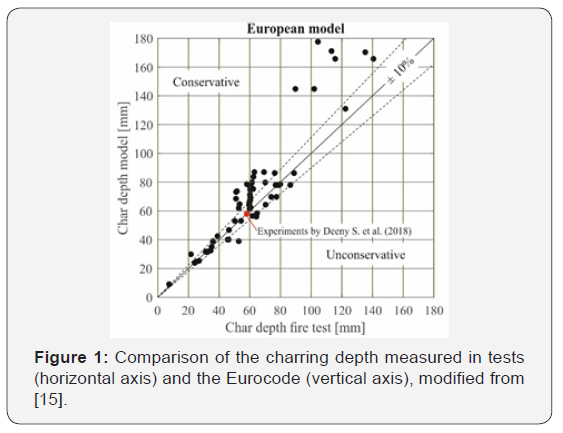
A. The charring behaviour of CLT: Charring rates of CLT are in agreement with the actual model in Eurocode 5. As for any timber member exposed to standard fire, the charring rates for CLT vary between zero millimetre per minute (encapsulated) and about 1.3 millimetre per minute (after failure of a protective layer or fall-off of charring layers until a protective char layer has been formed again). There are numerous of studies available, e.g. [10-14]. In general, CLT is considered as either a solid timber product or as a layered timber assembly if a fall-off of charring layers can be expected during a fire. This is when the adhesive is not able providing glue line integrity during the fire exposure. In this case (fire induced debonding), the so-called stepped model [15] combines a basic charring rate with a doubled value to consider exposure of fresh, virgin wood if fall-off of charring layers would occur. Figure 1 shows the agreement of the model and furnace tests (45°-line corresponds to a perfect fit). Recent compartment experiment results fit the model although the fire exposure is different [16]. Investigations by the same authors show charring of 0.4 to 0.7 millimetre per minute for nonstandard heating [17].


B. The fire protection of CLT by linings

Fire protection by linings made from gypsum plaster and -fibre boards use the advantage of the high amount of bound water and are typically applied to steel or timber structures [18,19]. The protection ability is a characteristic defined by the assembly including the fire protection system, the fixation (e.g. screws) and the material backing the lining (substrate). The encapsulation function of linings is currently assessed on low and medium density wood-based boards according to EN 14135 [20] resulting in K-classes preventing charring behind the covering. Further, the contribution of the protection to the fire resistance can be assessed by means of EN 13381-7 [21] describing the eventual charring behind the protection system and its failure. Crucial for any lining used as fire protection is the fall-off allowing for a significant temperature rise of the element behind. Around the globe, linings as fire protection are well researched, e.g. [22- 23]. The future Eurocode 5 will improve generic protection data already available in the current version which will be based on minimum provided protection. In compartment fires, fall-off of linings occurs generally later compared to standard fire testing [24,25]. In comparison to steel or timber frame structures, the fall-off of linings applied to CLT is later due to the lower heat accumulation in the protective lining and the possibility for improved fixation by screws (increased offset from the edges). If the spacing and anchorage of screws is done properly, double layer fire rated boards Type F [18] prevent direct fire exposure for more than 60min. Fall-off at 22.6min as specified in [16] indicates severe fixation problems or other wrong application of the lining used.

C. The extinguishing of CLT structures

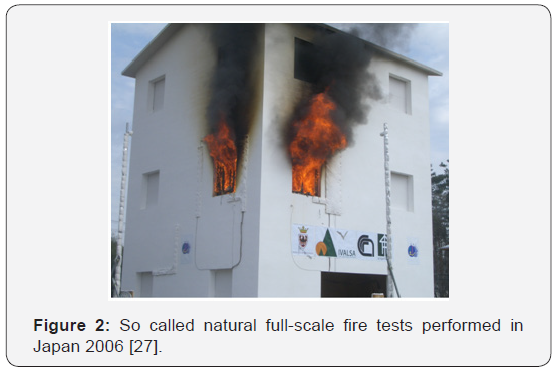
Fire accidents do not follow a plan and are difficult to predict. Reasonable measures should be taken to limit the consequences. Due to the nature of fires their development may vary significantly independent on the structural material. Thus, fire resistance tests following standard fire exposure are a commonly accepted measure of comparison as they provide a defined fire exposure for the tested product - independent of the material - similar to a post flash over fire [9,26]. The repeatability of compartment tests is low as the test boundary conditions cannot be controlled entirely. However, numerous compartment tests have been performed also with CLT with various purposes. Introducing CLT on the market, experiments have been performed in coordination with fire services to assess the capability to extinguish these compartments with common methods (Figure 2). It was found that these fires are typically not more difficult to extinguish as other fires, e.g. [27-28]. The solid nature of CLT contributes to this behaviour by excluding internal flame spread. To experts, it is known that wood as compartment boundaries leads to a faster temperature rise and insignificantly higher maximum temperatures due to the lower thermal inertia of wood compared to e.g. concrete [9,29]. This behaviour is not connected to the combustibility of the product.


D. The fuel by the structure

Depending on the design requirements, the available fuel (fire load) can be considered and, thus, design fires for the particular project can be determined. The movable fire load (combustible interior) in an compartment is a statistically distributed number; normally values with a reasonable safety margin are used. In contrary, eventually available fire load provided by wood linings or wood structures can be assessed accurately. Proposed procedures base on the iteration of fire duration and char depth [12,30]. Guidance to consider the influence of exposed timber to the fire scenario are also included in the Finnish building regulations, based on extensive investigations [31]. A significant share of the structure’s pyrolysis products will not combust in a post flashover fire (phase with very limited oxygen availability) but outside the compartment at the façade, see (E).

After the introduction of CLT, in numerous studies the glue line integrity (fire induced debonding) was studied intensely in furnace and compartment tests, e.g. [15,28]. It was found that some products tend to show debonding. Debonding results in accelerated charring as the product loses its protection by the char layer which is added to the fuel, exposed virgin wood undergoes accelerated charring and guidance was given to engineers addressing this behaviour using the stepped model for charring, see (A). However, extinguishing experiments, see (C), showed that no problem was found to extinguish compartments where debonding had occurred. In 2018, a method was introduced to test CLT with respect to the assessment of fire induced debonding for CLT [32], which may result in extended compartment fires. A European test method is currently under development by the industry based on available research [33].

E. The external fire spread

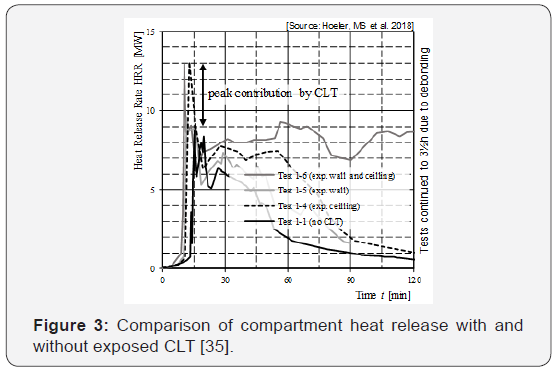
Fuel, regardless its origin, which is not ignited within a fire compartment during a post flashover fire (where only very limited amount of oxygen is available) will be pushed as gas through the compartment openings where it will ignite at the façade. Depending on the fire load in the compartment and availability of oxygen (characterised by the openings), the share of the fuel combusting at the façade can be 30% to 70%. The effects on the external flaming at the façade of combustible compartment surfaces have been studied before the introduction of CLT [34]. The peak heat release rates in front of the facades of compartments with various parameters (size of compartment and window openings, shares of linings) were investigated and typically values between 8 and 15MW were found [34]. The peak contribution by CLT was determined to be between 2 and 6MW [25,35]), see also Figure 3. For fire design experts the consequence of the increase is the application of noncombustible facades which should be a standard procedure for any high rise building regardless the main structural material. In an analytical performance-based design some countries allow for modification of this standard procedure.


F. Detailing in CLT structure

The general fire safety objectives have to be fulfilled by the entire structure and for each type of construction. Beside the structural elements - in-plane joints to neighbouring elements, joints in junctions to other building parts and joints resulting from service installations shall be designed accordingly. The prejudice of an insufficient fire safety detailing within CLT structures due to the lack of experience can be refuted by the performed extensive test series on CLT elements and in CLT compartments with standard and natural fire exposure within the last years [36]. Especially measures like the exclusion of continuous joints, the reduction of joint tolerances, the filling of larger gaps, the application of structural connections like step joints, tongue and groove and external splines in combination with the exclusion of convective paths by applying air tightness can be mentioned as relevant measures to ensure an overall fire safety. Also, the fire safety for service installations was investigated extensively in combination with CLT and general concepts, like the lining of the reveal area and approved producer specific systems were developed and introducedin the market [4,37]. Design guidance is available in several national publications and the international online catalogues like dataholz.eu [10,38,39].

Conclusion

The presented summary shows that substantial knowledge about the fire safe design with CLT is available in standards, guidelines, design documentation and online catalogues. The product standard and technical assessment documents provide the legal basis in the application of CLT. Whilst the structural fire design of CLT elements under standard fire exposure can be covered by the knowledge and design rules in Eurocode 5, recommendations for detailing are currently included in national specific guidelines. Also, the knowledge about the interaction and contribution of CLT to the fire scenario is existing and was used within the design of innovative multi storey timber buildings around the world in the last years Kaufman et al. [38]. Even if the fire safe design product specific knowledge of CLT is existing, further optimisation and standardisation is needed for an improved fire design which is content of actual and planned research projects. It seems essential that these research consortia are of international origin to address the building design traditions in various countries and spread the knowledge globally.

To Know more about Civil Engineering Research  

Click here: https://juniperpublishers.com/cerj/index.php

Monday, June 1, 2020

New-born with Cervical Ectopic Thymus: An Uncommon Developmental Disorder Which Has to be Consider in the Differential Diagnosis of Unilateral Neck Mass in Children - Juniper Publishers

Pediatrics & Neonatology - Juniper Publishers 

Case Report

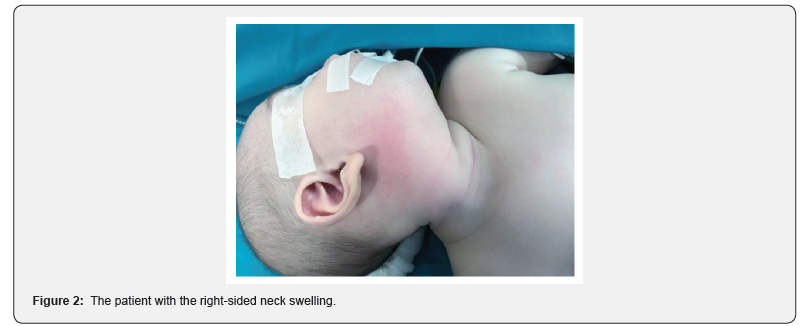
The aim of this paper is to report an unusual case of ectopic cervical thymus (CET) in a one-month-old infant and to underline the importance of considering it in the differential diagnosis of neck masses in children. A one-month-old male infant was referred to our Emergency Department for evaluation of a right-sided neck swelling, which was noted by his parents about 2 days before. The mother’s pregnancy (medically assisted procreation) was full term and uncomplicated. The patient had never required admission to the hospital or surgery. Family history was negative for thyroid disease and malignancy. On physical examination, his height and weight were normal in his peers. Vital signs were normal. The cervical mass was soft, mobile, painless, and 4×3-cm rounded, in the right submandibular region without a palpable margin. No overlying skin changes, or pits were evident. No palpable cervical lymph nodes and history of difficulty in feeding, breathing, and crying were present. Past medical history was unremarkable and without a history of radiation exposure. His thyroid gland was not enlarged. 

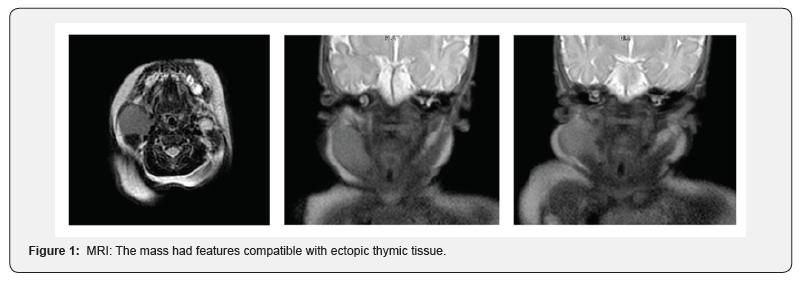
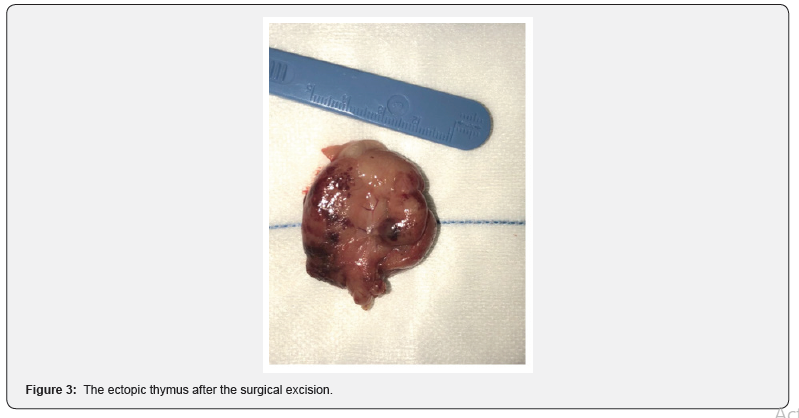
Bio humoral work up included full blood count, electrolytes, tumour markers (aFP, bHCG, CEA, Ca 19-9), thyroid function, inflammatory parameters; we did also the immunological exams (lymphocyte and NK population, Ig G, Ig A, Ig M count, vanilmandelic acid and T cell receptor excision circles); all values resulted within range whereas ultrasonography revealed a nonhomogeneous, mainly cystic structure. On magnetic resonance imaging (MRI) examination (Figure 1), a homogenous mass was identified. The mass was 4 x 3cm in diameter, slightly hyperintense on T1-weighted images and was markedly hyperintense on T2-weighted images. The signal characteristics reflected that of the normal-appearing thymus gland in the right upper mediastinum. The lesion determined moderate compression of adjacent structures, particularly the parotid gland behind. The mass had features compatible with ectopic thymic tissue. Initially, agree with onco-haematologists and radiologists, we decided to wait and to follow up the baby clinically and with an ultrasound after two and four weeks. During the second check, we noticed that the mass slightly grew up and at the ultrasound the dimensions were increased. Therefore, after careful preparations, at the age of 3 months, the patient underwent a complete excision of the mass under general anesthesia (Figure 2). We used routine cervical approach, and found the mass was soft, yellow white (Fig. 3), with clear margins and located in the carotid triangular area, posterior to the sternocleidomastoid, deeper to it are arteria carotis communis, carotid artery bifurcation and jugular vein. The postoperative course was unremarkable, and the wound healed well. The patient was discharged on the 6th postoperative day. The final histopathological report confirmed the diagnosis of ectopic thymus.

Academic Journal of Pediatrics & Neonatology


Brief Discussion

Ectopic thymic tissue may be placed anywhere along the cervical pathway of the thymopharyngeal duct [1] from the mandible angle to the manubrium of the sternum. These migrational anomalies may represent an unusual cause of pediatric neck lump but it is rarely considered in the differential diagnosis of neck swellings. To date, the real incidence of CET is still unknown yet; to our knowledge, there are not more than 130 cases reported till now, with about 10% occurring in infants [1]; it has unusually been reported preoperatively in the literature, in fact it is generally identified incidentally at autopsy or postoperative pathologic examination. Histologically, an ectopic thymus can either be cystic or solid. Nowak et al. [2] reviewed 91 cases of CET: 65 cases were cystic forms, more common than the solid forms (26 cases). They also reported that CET usually occurs between the ages of 2 and 13 years. In a review of 46 CET cases, 39 (85%) were male, and in 22 (56%) of these, the mass was detected on the right side [3]. 

The most frequently presenting symptom is painless swelling. Other symptoms, such as stridor, dyspnea, and/or dysphagia caused by compression of the trachea and/or oesophagus, may occur in 10% of cases [4]. The thymus is a specialized organ in the immune system: its functions are the “teaching” of T-lymphocytes and the production and excretion of thymosin’s and hormones [5]. In patients with a CET, only half or less of the organ can be present in the chest, particularly on the side of the mass: presurgical recognising of existence of normal mediastinal thymus is imperative to avoid over-investigation, or biopsy/surgery with unintended total thymectomy, and subsequent immunodeficiency, specifically in infants and children. The clear preoperative diagnosis of CET is difficult and hardly made preoperatively. In almost all reviewed children, definitive diagnosis has relied on histopathologic examination after surgery [5]. CET is usually misdiagnosed as cystic hygroma, cystic teratoma, lymphoproliferative disorders, reactive adenopathy, and vascular tumours [1]. MRI can help as in the diagnosis of CET, determining if the mass’s density is similar to that of normal thymus, as to demonstrate the presence of a mediastinal thymus. Fine-needle biopsy combined with flow cytometry analysis have been used in the pediatric population [1,6]. But the sensitivity and specificity for fine-needle biopsy of thymic tissue are not known in the children.

The natural history of the CET is unknown. Nearly all cases reported in the literature have been surgically removed. Schloegel and Gottschall [7] proposed a clinical algorithm for the management of CET and suggested that “wait and watch” is the ideal choice for these patients. But due to the lack of reports demonstrating that CET would atrophy after puberty, we consider that pathological examination at the moment is still the definite method of diagnosis. In view of this, we advise that excision is a good option for CET, not only to obtain pathology specimens but also to correct facial asymmetry and avoid clinical symptoms. The best age above which safe removal of the thymus can be performed has not been determined. Accordingly, an accurate evaluation of thepresence of the normal mediastinal thymus should be undertaken prior to removal of an ectopic cervical thymus, especially in children younger than one year of age, to prevent the risk of immunocompromised [8-10]. For our patient, we chose to conduct the total excision of the lesion based on what previously declared, but also because of the growth speed of the mass, which was rather rapid. Moreover, in our department, this kind of neck tumour was usually resected, and other conservative management methods were not generally practiced. To conclude, ectopic cervical location of the thymus is a very rarely diagnosed developmental disorder in children. Our case highlights the role of histopathology to confirm the correct diagnosis, the importance of investigating the mediastinal thymus and immunology status before surgery. Although difficult to differentiate from other conditions, it is important for clinicians to be aware of its rarity and it has to be considered in the differential diagnosis of unilateral solid–cystic neck mass in pediatric age.r fine-needle biopsy of thymic tissue are not known in the children.


Learning Points

1. Ectopic cervical thymus must be considered in the differential diagnosis of unilateral neck masses in children.
2. Before surgery, it is mandatory to scan the presence of a mediastinal thymus to avoid a total thymectomy; the best radiological exam to demonstrate it is the MRI.Consider, before surgery, to make all immunology tests. 
3. Consider, before surgery, to make all immunology tests.

To Know more about Pediatrics & Neonatology  

Click here: https://juniperpublishers.com/ajpn/index.php


To Know more about our Juniper Publishers

Click here: https://juniperpublishers.com/index.php

Planned Abortion Post COVID-19 - Juniper Publishers

  Public Health - Juniper Publishers Abstract Reproductive health policies, focused on the decriminalization of abortion, have effects on th...