Thursday, October 10, 2019

Evidence-Based Instructional Strategies in Learning Review-Juniper Publishers

Trend in Technical & Scientific Research

Introduction

Active learning instructional strategies include a wide range of activities that normally share some common elements that entail involving students in doing things and thinking about the things they are doing [1]. Essentially, active learning must engage the learners actively as failure to do so may lead to low rates of comprehension. At the high school level, learners have already developed different learning methodologies, but the teacher should not assume they will involve themselves in active learning without being guided effectively [1]. A robotics and computer programming teacher need to guide learners closely and actively so that they can grab applicable knowledge and skills in robotics as well as computer systems and programming.
As a teacher of the said subject, learners cannot completely comprehend without being involved in real work such as programming and coding. Robotics and computer programming must involve some practical work so as to improve the rates of comprehension. More so, the teacher needs to make them think about what they are doing before they can evaluate the outcomes such as running a program through a text editor. Doing so enables the learners to understand the theory behind the practical sessions [1]. It is worth point out that active learning not only involves active engagement of the learner but also other processes and strategies such as exploring personal attitudes, thinking critically, and giving feedbacks among others as will be looked into in the following sections.

Discussion

Active learning instructional strategies encompass numerous methodologies that may be applied by a teacher or an instructor. The methodologies applied may vary from one subject to another, but the teacher should be able to choose the most effective for the learners [2]. For instance, for a robotics and computer programming teacher, he or she must be able to choose strategies that will boost the comprehension rates. Learners have negative attitudes towards robotics and computer programming and hence the teacher should be able to motivate them effectively. In order to do so, one needs to introduce topics and allow learners’ time to reflect and analyze while also allowing them time to ask questions they may have [2]. More so, it is imperative to allow learners to shortly discuss among themselves the topics and concepts as a means of making them feel motivated and involved.
It is imperative to point out that active learning instructional strategies can be created and used to engage students in various processes as follows. First, they must be involved in thinking critically and creatively [2]. Robotics and computer programming is a field that calls for creative and critical thinking so that one can understand and apply the theory and basic skills learnt. For instance, computer programming starts with designing algorithms which are then translated to a computer program. In order to do so, the learners must be made to think critically and creatively. A teacher will need to motivate learners through a number of approaches such as guiding them through examples while allowing them to ask any questions, allowing group and peer discussions, and providing them with extra materials that will boost their creativity such as reference books [2]. Additionally, it is important for a teacher to ensure that the learners get rid of their negative attitudes that may hinder their creative and critical thinking.
Second, active learning can also be attained through giving and receiving feedback. This process should take place as early as learning begins so as to ensure that any issues are sorted out before they transition to bigger issues [2]. For instance, learners may want to suggest new reference materials or approaches that may seem better during class work. In this regard, the teacher should pay attention to the learners’ feedbacks and suggestions which may be helpful in the whole learning process. In doing so, the teacher is able to learn about students’ concerns and issues and hence adopt strategies and mechanisms which will effectively address their needs. Further, when an instructor or a teacher attends to suggestions and feedbacks of the learners, the latter feel motivated and inspired to learn and hence will develop a very positive attitude about the course. It is worth pointing out that receiving feedbacks from learners is one of the major ways through which the teacher and the students should communicate. Through communication, the teacher learns much about the students which is highly important [2]. However, a teacher should implement other methodologies that will improve the communication such as encouraging learners to ask more questions in class as well as making any new suggestions.
Third, active learning instructional strategies also involves involving learners in reflecting upon the learning process [3]. Learning about robotics and computer programming must involve reflection so that students will not quickly forget about concepts learnt in class. Notably, reflection should not only be done in class but also out of class. While in class, the teacher should engage learners in quick tests and note taking as a means of reflection. However, it is imperative to point out that learners should be allowed to interact among themselves so as to share concepts and ideas. While out of class, the teacher should allow interactions with the learners through emailing and should be there to answer questions that may be asked while also guiding them through personal tests and exercises as a means of reflection.
Fourth, active learning instructional strategies also involve spending greater proportion of time helping students develop their understanding and skills [3]. In robotics and computer programming learners must be made to effectively understand and gain skills. In order to attain such a goal, the teacher needs to support surface learning while also providing opportunities for learners to apply and demonstrate their understanding. Without making them demonstrate their understanding, it may be challenging for the teacher to evaluate learners’ strengths and weaknesses which need to be known before going forward. Essentially, the teacher needs to be ensure that the learners completely understand the basics which are very important in the robotics and computer programming field.
For a robotics and computer programming teacher, he or she must be able to transform a traditional classroom into an interactive classroom so as to promote active learning instructional strategies. The course is about gaining skills and in-depth understanding and hence a teacher must be able to promote interactions in classrooms. In order to do so, the following approaches will need to be employed.
First, the teacher can adopt the pause procedure which normally entails promoting greater student engagement through pausing procedure where the instructor pauses for a few minutes to allow students to work in pairs to discuss concepts and rework their notes [3]. For instance, in Robotics, there are concepts such as software-hardware integration that may seem challenging to the learners. However, if learners could be allowed to discuss among themselves, it may seem easier for them to comprehend. When using the pause procedure, it imperative to point out that the instructor or the teacher should pause in intervals that will bring about the best outcomes [3]. For instance, pauses should be made after introducing new concepts and topics so as to allow learners enough time for reflecting. More so, pauses should be made to allow discussions before learners can undertake individual short tests. The pause procedure is highly effective in promoting class interactions which are highly needed in a classroom setting.
Second, the teacher can adopt the think-pair-share methodology which also promotes active interactions in learning. It often begins when information is shared through reading an assignment and then a teacher poses a single questions and students are instructed to reflect and note it through note taking [3]. They are then instructed to pair with peers so as to share their responses. The pairs can then join creating groups which then reflects and discusses their responses. The approach is very effective in making learners to get used to group work and helpful interactions that tend to promote their understanding. More so, the approach is also applicable when dealing with large classes where attending to the needs of each and every learner may not be possible during class work [3]. Further, the approach enables learners to improve their interpersonal and communication skills.
Third, the teacher can also use concept tests as an approach towards attaining active learning. In robotics and computer programming, learners should be encouraged to understand the concept as opposed to memorizing them. Concept testing enables conceptual understanding and it is done at predetermined intervals where a challenging conceptual question is posed in a multiple-choice format [4]. Learners are encouraged to work together so as to come up with the final answer collaboratively. They can share their answers and responses with other groups as a means of interaction. In order to fully promote conceptual understanding, the teacher should make a follow up and explain to learners why a certain answer is the most suitable. In case of robotics and computer programming, the teacher can offer some practical tests that aim at testing conceptual understanding.
Additionally, the teacher can implement a personal response system, which is an exciting new way of engaging learners closely. For instance, clickers can be used as avenues for facilitating personal responses. Currently, the teacher can apply other approaches that can attain better personal responses in a timely manner so that the teacher can learn about the plight of every student. It is important to note that personal response systems cannot work effectively while in class as they are prone to more time consuming which may not be available [4]. Hence, the teacher can make a follow up to learn more about students especially those with negative attitudes about class projects and assignments.
Further, classroom demonstrations have become subtle in teaching robotics and computer programming. A teacher needs to explicitly demonstrate about computer systems and robotics in class so that learners can harmonize theory with practicals. During introduction, demonstration may not be necessary as such, but the teacher must be able to make the learners understand what specifically the course will entail [4]. As learners gain an in-depth knowledge about computer programming and robotics, it is imperative for the teacher to demonstrate meticulously. For instance, in computer programming, the teacher must be able to demonstrate how a program is compiled and debugged. Doing so enables the learners to quickly grab what the whole procedure entails. On-screen demonstrations to the students will be most applicable. Every step and process should be explained and learners encouraged to ask questions regarding what is being demonstrated [4]. During demonstrations, the instructor or the teacher should ensure that all learners are keenly paying attention and focusing on what is being demonstrated. Doing so will allow uniformity in the learning process.
On the other hand, it is always good practice when a teacher employs illustrative excerpts in stimulating critical and creative thinking. In today’s classrooms, learners are looking for new ways of doing things and hence any creativity will be welcomed warmly [4]. For instance, an illustrative excerpts may be used to explain how a certain program is compiled and debugged. More so, they can be used to explain how software and hardware relate in a robotic system. Illustrative excerpts help make the classroom lively while also making learners feel motivated and excited. In most cases, popular film excerpts and video-vignettes may be used before a concept can be explained so as to promote conceptual understanding.
In addition, use of illustrative excerpts in classroom should also involve making learners connect course content to current events. Doing so enables learners to develop a clearer sense of personal relevance and significance of the course [4]. It has been established that learners’ are likely to develop a negative attitude towards a course if they feel it has no practical relevance in their daily lives. It is the duty of the teacher to make the learners connect the course content to the outside world so that they can feel the urge and need to understand the concepts introduced through the course [4]. Learners with a positive attitude are more eager and motivated to learn and hence will effectively cooperate.
Research findings have pointed out that students’ concentration and focus tend to decline after 10-15 minutes of the session [4]. In this regard, it is the duty of the teacher to effectively exploit the time when learners are most attentive. This is the time when learners are most likely to understand the concepts introduced. After this time, the teacher needs to introduce demonstrations and practicals which will basically entail connecting the concepts to real work [4]. For instance, in robotics and computer programming, there are numerous concepts that need to be understood by the learners. However, the teacher needs to come up with strategies that will ensure learners are able to effectively comprehend a concept and apply through the following active learning instructional strategies.
In a classroom setting, it is important for the teacher to ensure that there are sufficient resources such as computer desktops needed for the coding. If resource-sharing is to apply, the teacher should ensure the resources have been shared optimally. More so, it is imperative for the teacher to ensure that all learners are keen and ready for the class session. A quick and random check is enough to enough to ensure that learning can begin. A teacher should not enter a classroom and immediately start introducing new concepts. Normally, he or she should first involve the teachers in some form of interaction as a means of drawing their attention to the class session.
Use of video-vignettes among other illustrative excerpts can also apply in drawing the learners’ attention in a manner which does not make them feel challenged or demotivated [4]. A teacher should be able to choose materials that relate to the learners’ experiences and expectations. Essentially, the teacher must hook up learners before new concepts and practices can be introduced. Doing so prepares the learners for a class session. As earlier highlighted, active learning does not only encompass methodologies applied in classroom but also approaches that aim at closely engaging the learners and making them feel motivated.
Teaching robotics and computer programming should also entail application of technological tools that will boost the learners’ conceptual understanding. Currently, most high schools are already deploying technological tools in learning but have not keenly examined the applicability of those tools. In this regard, it is highly important for the teacher to choose technological tools that will help learners develop a new interest and creativity while learning. For instance, the teacher can guide the learners through internet resources that have additional information, questions, answers and links that will complement the content learnt in class [4]. However, it is imperative to point out that the teacher must discern legitimate and illegitimate sources and should guide the learners in distinguishing between the two sources. More so, the teacher can ask the learners to confirm with him or her when seeking additional resources from the internet.
It is important to note that the internet cannot be overlooked when it comes to active learning instructional strategies especially in courses such as robotics and computer programming [5]. The internet is a powerful tool that has diverse resources that will be applied in complementing what has been learnt in class. In order for the teacher to avoid unlikely outcomes such as learners spending time on the internet on materials that may not help them complement classroom content, he or she should guide the leaners in exploiting the internet resources [5]. More so, the teacher ought to do so in line with school’s policies. Essentially, so that a teacher can effectively promote conceptual understanding, he or she must involve learners in doing things while also making them think about what they are doing.
Active learning instructional strategies are helpful in learning but lead to a number of challenges as follows. First, one cannot cover as much content within the time available [6]. This means that a teacher needs to strike a balance between using the tools and covering as much course content as possible. This can best be done through planning and scheduling which will enable effective time allocation. Second, it has been established that using the tools requires extensive pre-class preparation. A teacher should have enough time for the preparations to avoid shortcomings that may hamper effective learning. In order to prepare sufficiently, the teacher should also plan and schedule for activities [6]. Third, large class sizes have also been established as challenges to active learning instructional strategies. Employing tools such as personal response systems cannot be effective when the class size is larger than normal. In such a case, the teacher must create groups whose collective concerns and needs will be addressed during classwork [6]. Additionally, insufficient materials and equipment to support active learning instructional strategies negatively impacts the learning process. A teacher should be able to share resource available optimally among learners. Other additional challenges are students’ resistance to new approaches and some teachers lacking enough time to prepare for class sessions [6]. It can be seen that most of the challenges can be addressed through school’s administration collaborating with teachers to formulate working strategies.

Conclusion

Active learning instructional strategies encompass tools that aim at engaging students actively while also making them think critically about what they are doing. The strategies cannot be attained without the teacher transforming a traditional classroom into an interactive one where learners are able to interact not only with their peers but also teachers. A teacher needs to choose tools that will be applied in demonstrations and collecting feedbacks from learners as well as motivating them. Students must be motivated so as to get rid of negative attitudes that may hamper their conceptual understanding. In courses such as robotics and computer programming, the teacher must demonstrate and must involve learners in sessions that help them acquire skills as opposed to memorizing concepts. The teacher should design strategies and methodologies that will help engage learners both in classroom and outside classroom. He or she must also guide them in exploiting resources such as internet in complementing the course content. On the other hand, implementing active learning instructional strategies faces some challenges such as large class sizes, limited time, and insufficient resources and materials which must be dealt with through a teacher’s collaboration with the school’s administration.

To Know More About Trend in Technical & Scientific Research Please click on:
 
To Know More About Open Access Journals Please click on: ttps://juniperpublishers.com/index.php

Wednesday, October 9, 2019

Biogas Energy Production Potential of Grass under Anaerobic Digestion: Review-Juniper Publishers

 Agricultural Research & Technology: Open Access Journal  

Abstract

Because of the recent increase demand of energy, interest in environmental issues and depletion of fossil fuel, the demand of renewable energy sources as substitute of fossil fuel is rapidly increasing. Production of biogas under anaerobic digestion as methane can be used to replace nonrenewable energy resources in both heat and power generation and as a vehicle. For biogas production various organic feedstocks are used. Most often used are animal manure, food waste, agricultural wastes and crop residues, aquatic waste, forest residues, municipal solid wastes and grass. The review is based on secondary data obtained through various sources such as textbooks, journals, documents and conference papers with the objective of providing an overview of biogas energy production from biomass, thus providing information toward anaerobic digestion contributing to methane rich biogas production. The review shows that biogas production from biomass as a good fuel alternative because the source biomass can be grown renewably and decrease environmental stress.
Keywords: Anaerobic digestion; Biogas; Methane; Feedstocks

Introduction

Energy is an essential factor in development since it stimulates and supports a country’s economic growth and development [1]. The global energy demand is growing rapidly, and about 88 % of this demand is met at current time by fossil fuels. The depletion of fossil fuel and the impact of greenhouse gases on the environment initiated the concern in searching and exploring alternative sources of energy [2]. These sources are described as renewable energies such as solar energy, wind energy, different thermal and hydro sources of energy, and biomass [3]. Biomass residues available from agricultural and forest processing constitute a potential source for biofuel production. Currently there exist five forms of biofuels such as bioethanol, biodiesel, biomethanol, biohydrogen and biogas [4].
The production of methane rich biogas (biomethane) involves a complex biochemical reaction that takes place under anaerobic conditions in the absence of oxygen and the presence of highly pH sensitive microbiological catalysts that are mainly bacteria [5]. The anaerobic digestion process is a fermentation process where organic raw materials such as manure, food waste, and sewage sludge, organic industrial waste and energy crops used as substrates for biogas production. From energy crops the grass has the greatest potential for biogas production (587.5m3 methane production/tone of dry organic matter) [6]. The production of biogas through anaerobic digestion offers several environmental advantages compared to fossil fuels, because available and cheap resources to feedstock, relatively easy and cheap technology for production, extra values of digestate as a fertilizer [7], avoiding health problems, reduce greenhouse gas (GHG) emissions , reduce deforestation , reduce workload from women and children [8]. The objective of this review is to provide an overview of biogas energy production from biomass, thus providing information toward anaerobic digestion contributing to methane rich biogas production.

Biogas Energy Production Under Anaerobic Digestion

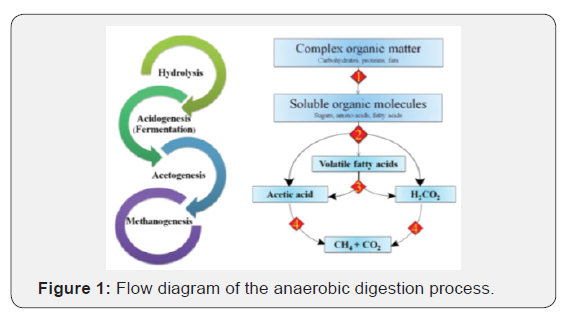
Anaerobic digestion is a natural decomposition processes in which microorganisms break down biodegradable material in the absence of oxygen [3]. Anaerobic digestion is widely used as a renewable energy source because the process produces a methane and carbon dioxide rich biogas suitable for energy production, helping to replace fossil fuels. The nutrient-rich digestate which is also produced can be used as fertilizer. Fig .1 shows that the digestion process begins with bacterial hydrolysis of the input materials in order to break down insoluble organic polymers such as carbohydrates and make them available for other bacteria. Acidogenic bacteria then convert the sugars and amino acids into carbondioxide, hydrogen, ammonia, and organic acids. Acetogenic bacteria then convert these resulting organic acids into acetic acid, along with additional ammonia, hydrogen, and carbon dioxide. Finally, methanogens convert these products to methane and carbon dioxide [9] (Figure 1).

Substrates for Biogas Energy Production

Biogas can be produced from biodegradable substrates such as animal manure, food waste, agricultural wastes and crop residues, aquatic waste, forest residues and municipal solid wastes [10]. According to [11] a brief description of the various feedstocks is provided in this section.

Animal manure

Animal manure is considered a promising way for biogas production and fertilizers through the anaerobic digestion process [12]. There are significant populations of livestock in many countries. Livestock produce large amounts of manure which are suitable substrates for AD. Manure is a mixture of faeces and urine, and its chemical composition varies markedly depending on the chemical characteristics of the feed consumed by the animal. Animal manure comprises huge amounts of lignocelluloses, polysaccharides, proteins, and other biomaterials.

Municipal solid waste (MSW) and food waste

The food industry and municipal authorities produce a wide range of lignocellulosic waste types. These include food waste and municipal waste which can be used as substrates for biogas [2].

Crops and their residues

A number of crops and activities produce residues that can be used as a feedstock for biogas production [10]. Many forage and sugar beets, due to their high organic dry matter yield per hectare which produce high biogas yield [13]. Biogas also produced from non- food crops like Justicia schimperiana (Hochst. ex A. Nees) T. Ander (JS) [14].

Sewage sludge

Production of biogas from sewage sludge provides dual benefits such as biogas energy and waste management [11].

Biogas Energy Production from Grass

Compared with other feedstocks, grass has suitable and promising characteristics as energy. Crop for biogas production due to their fastest growing rates even in infertile land, low cultivation costs, higher accessibility, and consumption of whole plants. In addition, the usage of grassland as a renewable source of energy during biogas production will provide considerable quantity of environment protection, owing to the capability of grass to sequester carbon into the soil [15].

Biogas production potential of napier grass

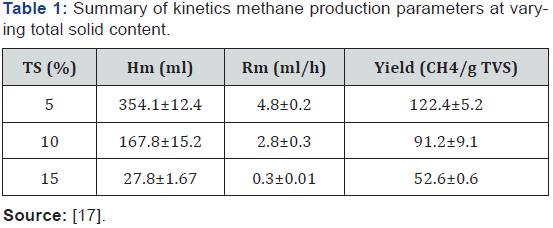
Napier grass is a complex material that is composed of cellulose, hemicellulose and lignin. Commonly, cellulose and hemicellulose primarily contain glucose and xylose, respectively. They can be fermented to produce renewable energy using several microbial processes [16]. As shown in Table 1, the maximum methane content and methane yield of 5% and 122.4ml CH4/g- TVS remove was obtained using napier grass as the substrate [17].

Biogas production potential of vetiver grass

Vetiver (Vetiveria zizanioides) is a perennial tufted grass belonging to the Poaceae family and the common domesticated cultivars used around the world are non-invasive. It has become known as a miracle grass with diverse environmental applications, including: a source of scented oil from its roots, fodder for livestock, soil and water conservation, rehabilitation, remediation, waste water treatment and a raw material for biogas production [18].
Experiment conducted in China on vetiver grass as raw material for biogas production and the result point out that the production potential of biogas were 310mL.Ts and 332Ml/g. vs of the grinding process group and 322 and 349 of the shearing process group [19] (Table 2).

Biogas production potential of elephant grass (Pennisetum Purpureum)

Elephant grass is a species native to African grasslands and is low in water and nutrient requirements, allowing it to make use of otherwise uncultivated lands [1]. Elephant grass possesses several advantages that make it suitable as bioenergy crop; elephant grass is perennial, it can be vegetative propagated and it can withstand repeated cutting/harvesting and regenerates [20] other features that made elephant grass suitable for bioenergy purposes include the possibility of multiple harvest per year.

Conclusion

Demand and dependency on fossil fuels have namely been increasing since the industrial revolution. It has become clear that fossil energy sources of the earth are finite, moreover, their use causes more and more damages to the environment (climate change, air pollution, greenhouse effect, etc.). In this context, biogas from biomass will play a vital role in future. Biogas is a versatile renewable energy source, which can be used for replacement of fossil fuels in power and heat production, and it can be used also as gaseous vehicle fuel. Grass biomass growing is importance as it offers extensive environment protection, owing to the capability of grass to sequester carbon into the soil matrix as a result CO2 emissions reduced. Furthermore, various socioeconomic profits are possible to achieve without compete with food production. Due to their fastest growing rates even in infertile land, low cultivation costs, higher accessibility, consumption of whole plants.
On the other hand, farmers can use grass for biogas production feedstocks and its digestate as fertilizer because it is readily available, it doesn’t require any pretreatment, thus helping farmers to reduce their energy cost. Even environmental concerns such as deforestation and ecological damage will not be an issue as the grass which will be cut will grow in a short span of time.

To Know More About Agriculture Research and Technology-Open Access Journal Please click on:
To Know More About Open Access Journals Please click on: ttps://juniperpublishers.com/index.php 


Thursday, October 3, 2019

From Corn to Rice: Cultural Conception of Food among the Madurese Community Indonesia-Juniper Publishers

Global Journal of Archaeology & Anthropology

Abstract

Food is closely linked to culture. The choice of food is not solely based on nutritional considerations, but also involves far more complex considerations such as group identity and symbolical function. This paper discusses the meaning of food for Madurese ethnic group, Indonesia. More specifically it will be studied the adoption of corn as a staple food and shifting staple food from corn to rice in the Madurese ethnic group. It is argued that for Madurese community the shifting of staple food is a reasonable historical process and takes place for various reasons.
Keywords: Corn; Rice; Cultural conception; Food shift; Madurese Community

Mini Review

The Madurese people have been familiar with a variety of foods. There are three foods that are most often mentioned in colonial reports, namely corn, rice, and cassava [1]. Among the three foodstuffs, corn once occupied an important position before later being replaced by rice. Corn has been seen as an integral part of the Maduerese ethnic identity. The significance of corn is evident from the stereotype that developed and is often attached to the Madurese as corn eaters [2]. The important position of corn for the Madurese ethnic group is reflected in various Madurese folklore. In a collection of folklore from Madura, for example, corn is part of it [3]. In other traditional Madurese story, Lesap, corn is also mentioned. When facing Prince Tjakraningrat and giving an explanation of the king’s questions, Patih Ardja Mantjanegara, among others, replied, “The people prospered, the conditions of the countryside were safe, the corn trees had begun to flower ...”. In another part, when asked by the king about his work, Lesap replied, “The servant does not have a job, except planting corn [4]....” In both Madurese literature, rice does not appear at all.
In Madurese society, corn has various functions. In addition to consumption item, corn is also used as a means to strengthen kinship and social relations. Even until 1980s when people die, mourners, especially mothers, always bring corn to be handed over to the bereaved family [5]. Corn also has an important position as a means of ritual activities. Corn is one of the ingredients in the offering when establishing a house [6]. Despite its importance, corn which was once the identity of Madura is not native to the island of Madura. Corn is believed to originate from the American continent and is generally known as a staple food of Indian tribes [7]. From the Americas, corn spread throughout the world during the post-Columbian food exchange process along with the colonization of Westerners. In new places, a number of new plants were even expanding widely. Even on Madura island, corn was the most important food crop [8]. It is estimated that corn has been widespread in Madura since 1550 and at the beginning of the 19th century Thomas Stamford Raffles intended to make corn as a measure to set taxes on dry land [9].
There are several basic reasons that made corn a popular crop among the Madurese ethnic group. First, corn offers higher productivity per unit of land and labor. Compared to rice, corn provides a higher yield ratio, guaranteeing greater crop success, with relatively low labor requirements. Second, corn has several advantages. The needs of the growing environment of this plant are more flexible, including less fertile areas. To grow corn requires irrigation in a much less volume than rice. In terms of cultivation techniques, corn planting can be done intercropping with other plants, so as to reduce the risks and losses due to crop failure [10]. Similar reasons also underlie why corn is popularly accepted in African regions [11]. Because the expansion of agricultural land was mostly in the dry land areas and investment in irrigation networks requiring large costs, one of the most appropriate adaptation patterns was through the choice of plants suitable for limited irrigation environments. In such an ecological context, the choices of commodities available were corn and cassava. The advantages of corn compared to cassava were among others in terms of prices that were much higher and easier to store for a long period of time. Unlike corn, cassava must be consumed immediately a few days after harvesting. For long-term consumption, the cassava preservation process was more complicated and without adequate handling the quality decreases quickly. Another reason was more important, corn plants provide feed for livestock, especially cattle, domestic animals that are very important among Madurese. The importance of cattle for them leads to a stereotype that the Madurese love cows more than their wives [12].
Madurese preferences for corn began to shift in the New Order era. With the food crisis backround in the 1960s, the New Order government targeted increasing rice production through a green revolution policy. Besides providing various components of production, including seed technology, fertilizers and pesticides, irrigation sector development was one of the pillars. In Madura, the expansion of rice plants or what Kuntowijoyo termed a “process of ricefication “ was inseparable from the introduction of water pumps for agriculture and the discovery of various short-lived rice varieties [13]. The reduced area of corn cultivation reflected the shift in staple food preference among the Madurese. The position of corn as staple food began to be replaced by rice. This shift can be recognized by comparing the two phenomena that contradict the tendency. On the one hand, the Madurese population continues to grow and food needs are increasing. On the other hand, corn cultivation has actually decreased in area and corn production has also declined. It can be ascertained that the food needs of the Madurese are fulfilled by the consumption of non-corn food, and in this case rice. A historian who is an expert on Madura describes, “food stalls in Madura now also no longer provide corn food but rice [14]...”
In addition to ecological changes, the shift in consumption of staple foods from corn to rice among Madurese is related to a number of factors. Economically the government policy of providing subsidies for production facilities and fixing the price of rice on the market, which is also supported by the rice import policy, succeeded in suppressing seasonal fluctuations in rice prices. Rice becomes relatively stable in price and, no less important, can be affordable by people’s purchasing power. The combination of various policies is an important incentive that drives the transition of eating patterns with rice as the main component. Another advantage of rice is the ease in the preparation process compared to corn which requires more time and is complex. The shift to rice is also related to the flow of Madurese migrants to Java who play an important role in introducing rice culture to its original place when going home [15].
From a sociological perspective, rice consumption is considered to have a higher prestige than corn. Rice has a special position. In the 1990s for the purposes of ceremonies and weddings, the standard is rice [16]. Symbolically corn consumption as well as cassava as a basic component of the diet is often considered in Indonesian society in the past as a sign of poverty [17]. The same thing was expressed in a statement that appeared around 70 years ago that the replacement of rice with other foods was seen as a setback [18]. In several other places in the world including France and Italy, only the poor people used to adopt corn as a staple food [19]. Changes in the pattern of consumption of staple food from corn to rice are regarded as a sign of success in vertical social mobility from the lower strata to the higher social strata. This is parallel with Lury’s view that the practice of consumption is also closely linked with cultural and symbolic nuances. Consumption practices are part of the struggle of individuals to reach social class positions, not merely a means of meeting biological or economic needs. In other words, through food people also intend to define their social status in society [20]. The Madurese also don’t seem to be different. For them a shift from corn to rice is part of an effort to prove success in improving class position. 

To Know More About Global Journal of Archaeology & Anthropology  Please click on:
 
To Know More About Open Access Journals Please click on: ttps://juniperpublishers.com/index.php

Rank Estimators Versus Least Square Estimators for Estimating the Parameters of Semiparametric Accelerated Failure Time Model-Juniper Publishers

Biostatistics and Biometrics Open Access Journal

Abstract

Rank-based method and least square approach are the most common techniques for estimating the regression parameters of accelerated failure time model. In this paper, both inference procedures are considered, their advantages and disadvantages are explained, and their similarities and differences are discussed.

Keywords: Accelerated failure time model; Rank-based inference; Least square method; Semiparametric method; Censored data; Linear regression; Biostatistics

Introduction

Accelerated failure time model is an appealing regression model to biostatistics researchers due to its simple interpretation [1]. Estimating the regression parameters of the model through parametric methods is quite challenging in the presence of censored observations [2]. In such cases, semiparametric approaches are very common. Two main semiparametric methods for estimating the unknown parameters of the model are rank-based method [3], and least square method [4]. In this paper, both inference procedures are briefly explained and their main theoretical and computational aspects are considered. Both approaches are also compared and their advantages and disadvantages are discussed. The main focus of this study is on investigating the similarities and differences of two methods in theory as well as their performance in applications.

Inference procedures

Accelerated failure time model: For the ith subject of a random sample of n subjects let Ti denote the failure time, iC denote the censoring time, and Zi denote the 1p× vector of corresponding covariates. Assume that conditional on covariates ,Zi failure times Ti and censoring times Ci are independent. The accelerated failure time model takes the form
Where β is a p-vector of unknown model parameters, and i∈ are the error terms of the model for 1,,in= with a common distribution function F which is unspecified [5]. The data consists of and otherwise. The introduced model is a semiparametric linear regression model which relates the log-transformed failure times to the covariates.

Rank estimators

Define is the indicator function, and The weighted log-rank estimating function for the unknown parameter β is given by


Where is a weight function. The estimating function correspond to Gehan Let ˆRβ denote the rank estimator for the unknown parameter of the model which is the solution of (){}0.Ubφ= For estimating the unknown parameters of the model Jin et al. [3] proposed an iterative algorithm on the basis of the general weighted estimating function. The algorithm at its kth iteration is given by

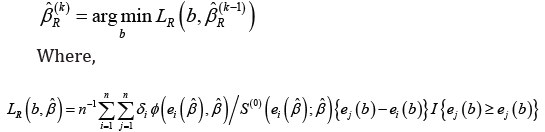
According to Jin et al. [3] the rank estimator is asymptotically normal for any .k

Least square estimators

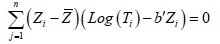
When there is no censored observations the least square estimator of the unknown model parameters is obtained by solving the following estimating equation:
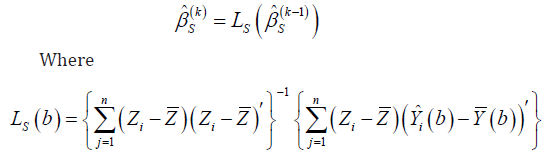
This estimating equation cannot be used when data contains censored observations since the actual value of iT is unknown for subject i when 0.iδ= For obtaining the least square estimators in the presence of censored data Jin et al. [4] proposed an iterative algorithm which at its kth iteration is given by
In this equation,which is proposed by Buckley & James [8] and can be approximated by
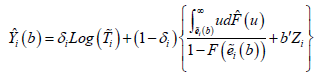
Where ˆF is the Kaplan–Meier estimator of .F According to Jin et al. [4] the least square estimator ()ˆkSβ is asymptotically normal if the initial value ()0ˆSβ is asymptotically normal.

Discussion

Both the rank-based method and the least square approach are semiparametric inference procedures since the probability distribution of error terms of the model is completely unknown. One advantage of rank-based inference over the least square method is that it does not involve estimating the distribution of the error terms, while obtaining least square estimators requires the Kaplan–Meier estimator of the distribution of the error terms. This makes the least square method and its corresponding algorithm more complicated than the rank-based method, both theoretically and computationally. Note that, both algorithms need a consistent estimator of the model parameter such as Gehan estimator for their initial values. Thus, the least square approach requires to obtain a rank estimator prior to the computational stage of its associated algorithm. In addition, it has been established that rank estimators are always asymptotically normal [9,10] while the asymptotic normality of least square estimators strongly depend on the asymptotic normality of the initial value of their corresponding algorithm. However, the results of the simulation studies by Jin et al. [4] illustrated that there was no significant difference between the efficiency of rank estimators and least square estimators. More precisely, the rank estimators were slightly more efficient under extreme-value error, and the least square estimators were slightly more efficient under logistic and normal errors.

Conclusion

For estimating the regression parameters of semiparametric accelerated failure time model both rank estimators and least square estimators are common. From a theoretical point of view, rank-based inference procedure involves less technical difficulties since it does not require estimating the probability distribution of the error terms while least square approach involves Kaplan–Meier estimator of the distribution of the error terms. Moreover, the asymptotic normality of rank estimators does not depend on the distribution of the initial value of its associated algorithm. In application, the results of simulation studies show that there is no significant difference between the efficiency of rank estimators and least square estimators. Therefore, in studies that researcher is free to choose between these two methods rank estimators are definitely more recommended than least square estimators.

To Know More About Biostatistics and Biometrics Open Access Journal  Please click on:
 
To Know More About Open Access Journals Please click on: ttps://juniperpublishers.com/index.php


Tuesday, October 1, 2019

Stem Cells to Improve the Wound Healing-Juniper Publishers

Journal of Head Neck & Spine Surgery

Abstract

The cellular therapy using Mesenchymal Stem Cells, specially its two subtypes - Bone-marrow Mesenchymal Stem Cells and Adipose Derived Stem Cells - can benefit by virtue of the possibility of differentiating in specialized cells that secrete and suppress growing factors and cytokines necessary in the lesion niche. When attracted by the pro-inflammatory sinalization of the lesion, they act using the paracrine signaling, decreasing the inflammation, increasing the angiogenesis and the cell migration and proliferation. The development in the researches regarding the association of the application of MSCs, with reconstructive surgery practices, leads to effective future results that can bring more benefits to the clinic practice of this field. This paper has the objective of briefly reviewing the literature about the usage of MSCs and its subtypes, the ADSCs, to improve the skin cicatrization.
Keywords: Mesenchymal stem cells; Adipose derived stem cells; Bone-Marrow Mesenchymal Stem cells; Skin flaps; Skin grafts; Wound contraction; Paracrine signaling; Pro-inflammatory Interleukins; Anti-inflammatory Interleukins.
Abbreviations: MSC: Mesenchymal Stem Cells; HLA-DR: Human Leukocyte Antigen; ADSC - Adipose derived stem cells; BM-MSC: Bone-Marrow Mesenchymal Stem Cells; SDF1: Stromal Cell-Derived Factor; PDGF: Platelet-Derived Growth Factor; IL: interleukin; TNFα: Tumor Necrosis Factor-α; IFNγ: Interferon-γ; VEGF: Vascular Endothelial Growth Factor; BFGF: Basic Fibroblast Growth Factor; EGF: Epidermal Growth Factor; KGF: Keratinocyte Growth Factor; HGF: Hepatocyte Growth Factor; PDGF: Platelet-Derived Growth Factor; TGF-β: Transforming Growth Factor-β; FGF: Fibroblast Growth Factor; α-SMA: Alpha-smooth muscle actin's; IRI: Ischemia-Reperfusion Injury

Introduction

Mesenchymal stem cells (MSCs) were first described by Friedenstein et al. [1,2]. MSCs are heterogeneous cell populations, called multipotent adult cells or somatic stem cells [3,4], capable of differentiation in most cell types in order to maintain and repair the organism. They are resident in different organs and tissues such as adipose tissue [4,5], bone marrow, umbilical cord, amniotic membrane [2,4], kidneys, liver, spleen, lungs, pancreas, tendons, synovial membranes, placenta, amniotic fluid and dental pulp [4]. The International Society for Cellular Therapy proposed three minimal criteria for defining MSCs:
    a) Plastic adherence;
    b) Positive expression (greater than 95% of the cell population) for CD105, CD73 and CD90 markers and negative, (maximum 2% of the population) for CD45, CD34, CD14, CD11b, CD79a, CD19 and Human leukocyte antigen (HLA-DR) surface molecules, and
    c) Ability to differentiate into osteoblasts, adipocytes and chondroblasts under standard in vitro differentiating conditions [2,6].
    Later, others researchers complemented this characterization with new markers: CD13, CD44, CD54, 106 and Stro-1 [4] and the presentation of fibroblast cellular morphology [3,4].
MSCs have a great potential to the tissue repairment and regeneration in reconstructive plastic surgery, preventing ischemic lesions in skin flaps [7-14] and in skin grafts [15,16]. MSCs are capable of reducing severe atrophy, retraction, fibrosis and ulceration skin signals, caused by radiotherapy [17,18]. Combined with the lipoinjection in face and body defects and in rejuvenating esthetic treatments, MSCs raise in 35% the survival rate and the microvasculature from the injected fat [18]. Also, diabetic patients with ischemic wounds show greater survival rates and lower number of amputations in affected limbs, when treated with Adipose derived stem cells (ADSCs) [19]. The MSCs improved the skin healing at induced burns in rats [20,21]. In dermatology, the MSCs are being clinically used for inflammatory diseases [22-28], Graft-Versus-Host Disease [23,25], Chrown Disease [29], Systemic Sclerosis, Lupus or dermatomyositis [24,28,30].
When compared with the usage of Growing Factors, that like any drug has a limited half-life, the cellular therapy using MSCs, specially in its two subtypes - the Bone-Marrow Mesenchymal Stem Cells (BM-MSCs) and ADSCs - can bring greater benefits because of: their expansion capacity in cellular culture; stable phenotypic expression; and possibility of differentiating in specialized cells, that secrete and suppress cytokines and growing factors in the injury [13,31-33]. However, long expansion periods of the cellular culture, to achieve effective therapeutic doses, raise the possibility of infection from the host. Because of that, the ADSCs still have to be heavily studied to the application in the clinic routine [2]. This way, this study has as objective briefly review the literature about the usage of MSCs and its subtypes, the ADSCs, to improve the skin healing.

Discussion

The MSCs are capable to answer and adjust their functions, when exposed to cells or typical factors of the lesion environment [33,34]. They have an attraction capacity to the inflammation areas [33-35] or tumors, because of the molecules CCL21 or HMGB1, known as homing. In case of lacking of this signalization, they are attracted in order of preference to the lungs, liver and spleen [35]. The MSCs show chemotaxis in vitro by the Stromal Cell-Derived Factor (SDF1), Platelet-Derived Growth Factor (PDGF), Insulin-Like Growth Factor-1, Interleukin-8 (1L-8) and Tumor Necrosis Factor-α (TNFα). In murine models, the MSCs used in the systemic administration are capable of getting into the damaged tissues [14,34,36].
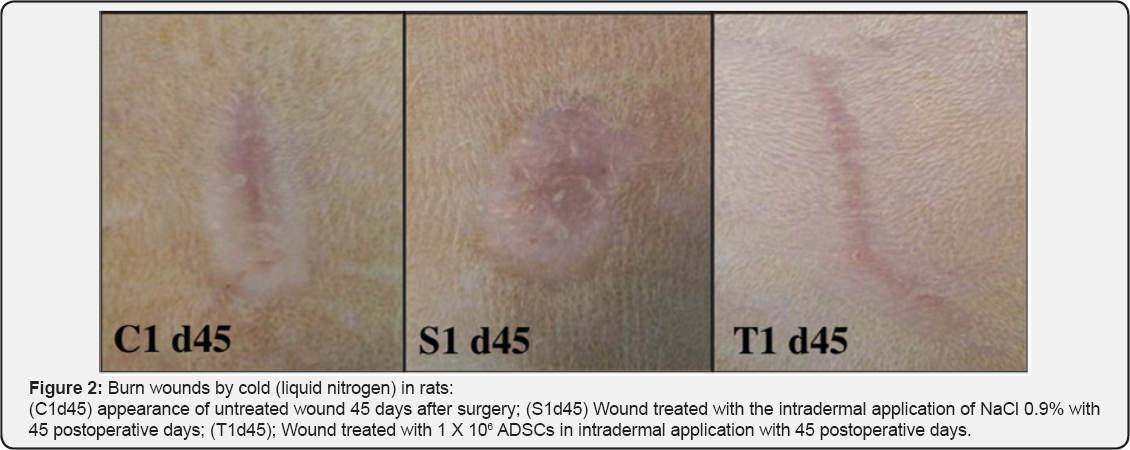
The MSCs act, in many levels, in the three healing phases: inflammatory, proliferative and remodeling phase. Current studies indicate that the differentiation of the MSCs, that contributed to the tissue regeneration, is limited by the small survival rate of these cells in the damaged area. However, the paracrine signaling to the cells from the injury is the main mechanism of the MSCs, reducing the inflammation, stimulating the angiogenesis and inducing the cell migration and proliferation [33,37]. Nevertheless, other authors suggest that the differentiation of the MSCs in keratinocytes and endothelial cells have the same function as the paracrine signaling to accelerate the neovascularization and the reepithelialization of wounds [32] (Figure 1 & 2).

Some studies suggest that immunosuppressive potential is the same of both types of MSCs, ADSCs and BM-MSCs, in an inflammatory environment. Their local administration inhibited the T cells recruitment and proliferation [37-41] and decrease Interferon-γ (lFNγ),Tumor Necrosis Factor-α (TNFα), 1L-6 and IL-1β expression in the skin grafts [39-41]. In the inflammatory phase (one to three days), the expression of anti-inflammatory cytokines 1L-4 and 1L-10 is increased while 1L-2 pro- inflammatory cytokines, TNF-α and 1FN-γ are decreased, causing less local inflammatory reaction [37,42]. MSCs can also regulate macrophage activation and convert phenotype expression of M1 macrophages to M2 anti-inflammatory macrophages [39-41], which accelerates the wound healing. Additionally, MSCs act over the innate immunity to prevent the rejection of transplanted allografts, inhibiting the complement system activation [39]. The decrease of TFN-α also helps the reepithelialization after the proliferation phase [43]. The antimicrobial action from the MSCs are also important to limit the infection occurrence [37].
With the utilization of cell therapy in the proliferative phase (14 days) the production of important growth factors is increased: Vascular Endothelial Growth Factor (VEGF), Basic Fibroblast Growth Factor (bFGF) [32,37,42,43], Epidermal Growth Factor (EGF), Keratinocyte Growth Factor (KGF), Hepatocyte Growth Factor (HGF), Platelet-Derived Growth Factor (PDGF) and Transforming Growth Factor-beta (TGF-β). Through their paracrine action, the MSCs raise the migration and proliferation of keratinocytes, endothelial and epithelial cells. The fibroblasts proliferation is also enhanced, as well as the blood vessels' formation. This way, there is a better growing of a more vigorous granulation tissue [33,37,42,43]. The angiogenesis is a very important factor to the wound's healing, and the VEGF and the Fibroblast Growth Factor (FGF) are very important angiogenic factors [32].
Through the paracrine signaling, from the MSCs in the remodeling phase (21 days to one year), the fibroblasts produce collagen fibers in greater quantity and density, generating an increase in wound tensile strength [37,42,43]. At the same time, there is a smaller wound contraction and increased matrix-metalloproteinases production, that control the collagen deposition exacerbation, improving the aesthetic result and keeping the skin's function [33,42,43]. MSCs also contribute to the scar's appropriate remodeling with the increased secretion of VEGF and HGF, the adequate balance between TGF-β1 and TGF-β3 [37] and the increase of bFGF and TGF-β which inhibit the Alpha-Smooth Muscle Actin (α-SMA) expression, responsible for myofibroblast phenotype [32].
Studies indicate that there is also the possibility of using BM-MSCs and ADSCs to protect the damaged tissues caused by the 1schemia-Reperfusion 1njury (1R1) and to decrease the dysfunction of organs undergoing ischemia. The ADSCs are able to protect axial flaps from the 1R1 with results as satisfactory as the ones obtained in procedures without ischemia, because of the improvement in the angiogenic response and the blood perfusion elevation [10]. Many studies use the ADSCs to prevent ischemic injuries in skin flaps [7-14], as others [15,16] used them to improve the quality of skin grafts.

Conclusion

The MSCs - both BM-MSCs and ADSCs - are capable to answer and module their functions, when exposed to cells or typical factors of the lesion environment, attracted by the cell signaling to the inflammation areas. The researches developed till the moment point the paracrine signaling as the main mechanism from the MSCs, decreasing the inflammation, benefiting the angiogenesis and inducing the cell migration and proliferation in the damaged area. The progress on the researches about the association of MSCs with reconstructive surgery practices indicates good and productive results, which can benefit the clinical practice in this field.

To Know More About Journal of Head Neck & Spine Surgery Please click on:
To Know More About Open Access Journals Please click on: ttps://juniperpublishers.com/index.php


Friday, September 27, 2019

Highland Agricultural Knowledge in Migrant Families (Argentina)-Juniper Publishers

 Agricultural Research & Technology: Open Access Journal    

      Abstract

Migrant families are key to observe the dynamic relationship between social groups and their territories. We have analyzed different aspects of the migration process of a large group of people in Argentina that currently dwell in a lowland’s peri-urban location (Buenos Aires Metropolitan Area) but whose genealogical origins are placed in Jujuy Province rural highlands (Humahuaca and Tilcara Departments). This paper presents a brief communication about our results and findings of a long-term research on agricultural practices and knowledge deployed in both geographical areas, which are united by a considerable migrant flow intensified during the last three decades. Regularities and changes in family farming type of organization and food knowledge and practices, are key to understand the cultural heritage firmly rooted in these families and the strength and sustainability of the migration process.
Keywords:Upland to lowland migration; Agricultural knowledge and practices; Knowledge transmission; Argentina


Introduction

This case study presents the analysis of knowledge transmission related to agricultural practices and representations of rural migrant families in Argentina, from an anthropological approach, with emphasis in two articulated issues. On the one hand, the material aspect regarding the agricultural productive practices and, on the other hand, a symbolic aspect which informs the agricultural knowledge system. We consider the agricultural practices as the link connecting territory - identity - food [1]. In addition, it comprises particular inherited representations, beliefs, knowledge and practices that those individuals within a specific socio-cultural group learn and share, in which certain regularities and features are established [2].
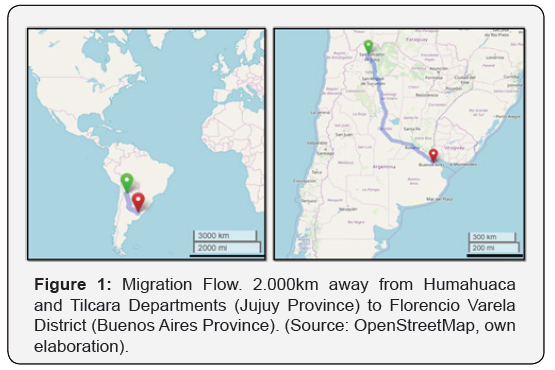
The study includes two different geographical areas (Figure 1). The first of them is in Florencio Varela District, in the Southern Metropolitan Area, in the Buenos Aires City’s peri-urban border. Great amounts of migrant families from very different origins form part of the population, making it a large reception area. In this region, there is no cattle raising activities. The second one, is in Humahuaca and Tilcara Departments (Jujuy Province), in the Northern area of Quebrada de Humahuaca, a narrow mountain valley. In this Province the population in the rural area’s accounts for 40% [3]. The more relevant economic activity is horti- floriculture production complemented by herding for self-supply and exchange.
The study of migrant mountain families’ agricultural practices and representations presents a privileged stage to understand those strategies they displayed in the lowlands, which combine knowledge transmission and adaptability to the current location. The results of the analysis led us to understand a) the identity building process in migrant context through the production, elaboration and consumption of specific meals; b) the reproduction in lowlands of similar agricultural patterns (family farming); c) social health through a culturally adequate food. To address these issues, we have been doing ethnographic fieldwork for the past ten years, carrying out different activities: observations and participant observations of agrarian productive system : in-depth interviews to families through snowball methodology [4] : geographic information analysis. In addition, we have used other data such as national population and agricultural censuses, photographic and historic documents, among others.


Case Report

Along the last 3 decades, a profound change in food practices has taken place. It included, for lowlands and highlands, new food supply in everyday diet (fresh or industrial). This process made people slowly abandon traditional and local food practices, which has negatively affected social local health. However, both in rural and urban areas there is a strong cultural memory regarding local foods as a central element for their personal and community territorial identity [5,6], and many people recreates, for special occasions, those meals they remember having made by their mothers or grandmothers in highland homes. In Florencio Varela, highland families have abandoned quite significantly daily food practices of their home territory, incorporating new elements within the migration context. However, meals from their family territory are made by replacing ingredients and modifying the cooking base, trying to keep the seasoning base as similar as possible. Although the production of the same vegetal species (e.g. certain varieties of potatoes, maize or “ajies”) from the place of origin does not have the same characteristics in the new context (like performance, size or flavor), it is important to emphasize that migrant people continue consuming the same products from purchase, exchange or shipment through family. In this sense, consumption has an important role, giving the possibility to reproducing a particular family farming type of organization.
Thus, availability and access to raw materials are key issues that different communities have managed to overcome, especially through fairs and “ethnic” retailers (often first generations of migrant) [7] who provide the community with their own cuisine elements. Migrant families always mention their constant craving for local food (even those family members of the following generations who have never been there). The community memory of meals made of maize, potatoes or peppers is one of the substantial elements that link all those families together and strengthen the connection with their home territory.


Discussion

Given the geographical features of Florencio Varela, a fundamental aspect of highland families’ migration process is the replication of productive structures that respond to Andean patterns of family farming (type of organization, predominantly reliant on family labor, technology, cultivated species, farming techniques, among others) [8]. The characteristics of this replication enhance the possibility to produce much of those foods that remain in the community’s representation of their territory. In this sense, migrant families carry certain knowledge along and are connected to the new territory through practices and representations taken from the highlands, but with added meanings regarding their migrant trajectory. The fact that migrant families are able to obtain farming smallholdings in peri-urban lowlands, and hence the possibility of job opportunities in which they are able to use knowledge and memories from their home territory, consolidated the migrant process through family farming practices. This case study shows the importance of family farming in both an economic dimension, and in terms of cultural heritage, including notions of healthy and suitable food with strong identity ties, that keeps both territories connected.

To Know More About Agriculture Research and Technology-Open Access Journal Please click on:

To Know More About Open Access Journals Please click on: ttps://juniperpublishers.com/index.php  

Lower Psoas Muscle Area is associated with increased mortality after endovascular aneurysm repair in older adults - Juniper Publishers

  Gerontology & Geriatric Medicine - Juniper Publishers Abstract Lower Psoas Muscle Area is associated with increased mortality after en...