Wednesday, April 3, 2024

On the alchemy of cooking with ashes: an exploratory review on global practices and a Portuguese perspective provided by cookbooks and vernacular cuisine - Juniper Publishers

 Nutrition and Food Science- Juniper Publishers

Abstract

The article explores a world-wide selection of historical recipes and dishes that highlight the culinary versatility of ashes application, the nutritional and flavor value, stressing their role in transforming, preserving, and enhancing food products across cultures and over different time periods. A particular analysis is then made regarding the culinary use of ashes in the Portuguese context, through a cookbook analysis as well as vernacular cuisine’ procedures identification. Ashes have been employed by various cultures for millennia. Among other social functions, ashes are a circular, versatile technological advancement tool for transforming and preserving food products, either in vernacular or haute cuisine. They ease the effort of preparing food, reducing cooking time and enhancing flavors. In haute cuisine, ashes are used with the purpose of creating novelty, improving aesthetics, and expressing creativity. A comprehensive analysis on ashes’ functions have been performed, aiming at presenting an analysis framework. The search has been performed through a thorough bibliographic analysis of ashes in culinary practices.

Keywords: Traditional cooking; Lime; Lye; Cooking techniques; Portuguese traditional cuisine

Introduction

The use of ashes by humans has always depicted interest due to its many significances and circular applications, namely due to its connotation and interconnections with renewal and rebirth. Ashes, as a termination point of a burned material, would either retain a symbolic and/or religious significance, associated or not with rites of passage but also as a medicine, as an insect repellent, as a stain remover on clothes, among many others. Its usage is culturally determined and geographically differentiated. However, ashes have been extensively incorporated in culinary processes throughout the world and for centuries, namely as a transformative technological resource that would either modify or change the texture and the final appearance of a dish’s components. Ashes have been used in culinary both as a heat source, when hot, allowing slow cooking processes over ashes and ember, but also, which we tried to focus, the use of ashes as an ingredient itself, by integrating ashes as a part of the dish or delicacy. This introduction of ashes has been made to ease the consumption of food products, with the immediate cases arising from Mesoamerican nixtamalization procedures or from the ancient preparation methods of noodles, where alkali, ash-based water was used to provide attractive rheological properties to the final product.

The technological evolution of culinary techniques and the improvement of raw materials utilization have always resulted from the need, mostly from the physiological need, from hunger [1]. Currently, many concerns are rising to a safer, more transparent way of using culinary products, being the reason ashes are being converted to more stable, alkaline-wise products, such as lye water. In Portugal, ashes have been thoroughly used over many centuries, on many everyday aspects and on the preparation of food products, including at the Michelin-star restaurants. In our research, we have tried to bridge a gap in literature regarding the culinary uses of ashes, not only in the case of Portugal, our research object, but as a systematized and structured work on the topic. In this article we aim to answer to the following research question “What are the historical and contemporary culinary processes and recipes that uses ashes and how has their usage evolved in the context of historical cookbooks, vernacular cuisine and haute cuisine?”.

Theoretical background

Hunger is understood as one of the reasons for culinary technique evolution and culinary technological adaptations [1]. Those techniques are developed to either preserve or transform food products so that the effects of time would not pose a barrier to food edibility [2], but also to allow taste improvements, efficiency in the culinary preparation and to tackle digestibility concerns, as seen below. In its evolution, cuisine has met, according to Jack Goody, a British anthropologist, a binomial evolution. On one hand, low, popular cuisine, practiced by low-income classes, was characterized by the generational culinary knowledge transmission on an oral basis, according with customs and the final cooked product reached based on imitation, whereas on the other hand, an elitist cuisine, practiced for elites and soon performed by public cooks (chefs) was characterized by its structured composition and cosmopolitanism based on the written transmission of knowledge, allowing home techniques to be monetized and sold to a not less elitist public. Each of the ways had its own path. The first very dedicated to subsistence while the latter specially turned for socialization through exceptional, high-standard techniques and food [2,3]. Even though the cooking techniques are sometimes the same as the ones practiced in the household environment, those get slightly ameliorated to a more creative and distinctive goal: to impress guests [4]. This is important to denote as the uses of ashes faced two-fold ways, both in terms of household items culinary preparations and in luxurious, exquisite high-cuisine environments in order to delight the customer with culinary technique.

Although the ethnographical work “Codex Florentino” (1570) by friar Bernardino de Sahagún (1499-1590) spread the information on the use of ashes in corn processing in the Mesoamerican cultures [5], ashes were already in use for centuries as a technological advancement in several parts of the world. This was the case during the Roman empire in which ashes were used in white wine clarification, something that has been considered as quite common [6]. Also, evidence points out to the baking of a specific type of bread, known in Portuguese as “pão de soborralho” (bread over ashes) or “fogaça” (bread), a bread directly baked under the heat of remaining ashes would already be known before the appearance of ceramics [7]. By accepting this thesis, we could frame the use of ashes in the ancient forms of baking some millennia ago.

Concept of ashes, vegetable ashes and ashes substitutes

Ashes are the “non-volatile products and residues that remain after a combustion process” [8], which “consists mainly of minerals in oxidized form” [9]. Besides the culinary use, ashes have also been used by humans for a wide range of purposes, such as in human healing or treatment [10,11] in religious and magic rituals [10,12], in wastewater treatment [13], in construction products [14], as an insect repellent [15], as an agricultural fertilizer [16] clothes treatment [17], or also in the production of soap [18,19], just to cite some examples.

Ashes are rich in soluble salts, mostly the vegetable ashes coming from the burning of of Zea mays L., Hygrophila auriculata L., Carica papaya L., Sorghum bicolor L. and Ficus carica L. ashes are mostly composed of sodium, potassium, magnesium, calcium, chromium, manganese, iron, nickel, copper, zinc, cadmium, lead, and mercury ions [10,20] The chemical composition of ashes differs due to variations in the burnt materials, leading to differences in the end results and thus its adaptation to different culinary uses.

Technologically, ashes are sometimes substituted by limestone, quicklime, and lye, even for cooking purposes. Limestone refers to calcium carbonate CaCO3 (s) and is not soluble in water, quicklime refers to calcium oxide CaO (s) and is obtained by heating calcium carbonate – carbon dioxide (CO2 (g)) is also released [21]. When calcium oxide is added to water calcium hydroxide (Ca(OH)2 (s)) is formed [22]. Calcium hydroxide is marginally soluble in water, but it is more alkaline than a potassium carbonate or sodium carbonate solutions. Lye (sodium hydroxide NaOH) can be obtained from calcium oxide and sodium carbonate. The result gives rise to sodium hydroxide and calcium carbonate: while sodium hydroxide is more alkaline than calcium carbonate, when reacted together they produce a stronger alkali than either of the two separately. Calcium oxide is often used when large quantities of a strong but inexpensive base is required [23].

Methodology

As this paper endeavours to explore the multifaceted and diverse applications of ashes, the incorporation of comprehensive and diverse documental sources becomes paramount in attaining its objectives to understand the use of ashes in cooking world-wide, focusing later on the Portuguese scenario displayed both in cookbooks as in the vernacular cuisine. In this regard, an extensive bibliographic analysis and review has been conducted, departing from Google Scholar database, in the period March-April 2023. The researched keywords and expressions (and also the Booleans used) were: “culinary use of ashes”, “ashes”+“culinary”, “ashes”+ “food”. This research comprehended the investigation and the synthesis of existing literature pertaining to the culinary utilization of ashes. The inclusion of grey literature in this study has been decided acknowledging its significance in transmitting invaluable insights from everyday practices and traditions that are not always communicated in a scientific way [24].

Besides, the historical significance of ashes usage in Portuguese culinary was also sought. In this regard, four classic Portuguese cookbooks have been selected to understand the use of ashes in their recipes. The criteria to choose the cookbooks resided on the high-distribution, high-reconnaissance of those cookbooks, and besides the centurial representativeness was also a reason to choose the sources. With this criteria in mind, the books that have been selected were “Livro de Cozinha da Infanta D. Maria de Portugal” (15th-16th century, no exact date) [25], “Arte da Cozinha” (by Domingos Rodrigues [1637-1719] and the first printed Portuguese cookbook, published for the first time in the 17th century in 1680) [26], “Cozinheiro Moderno ou Nova Arte da Cozinha” by Lucas Rigaud published in the 18th century (1780) and the book “Thesouro do Cosinheiro, Confeiteiro e Copeiro” published by the widow of Jacinto da Silva [27] in the 19th century. A participant observation approach was also included. By incorporating both established academic sources and more elusive yet culturally significant materials, this research aims to provide a holistic and nuanced understanding of the widespread and eclectic use of ashes in various contexts.

Results

Culinary use of ashes

The versatility and the alkali properties of ash got widespread in food products and evenly contributed to the creation of food additives and products. From here, it is important to differentiate the cooking process that happens over ashes (used, for instance, in the case of the Moroccan Tanjia dish (International Information and Networking Centre for Intangible Culture, 2019)) or the actual use of ashes within the cooking processes. In this article we focus on the latter. Ashes, namely those resulting from wood or vegetable matter burning, have been used in popular cooking as a technological advancement in three main ways: either 1) on the transformation of food products, but also 2) to preserve (or help preserving) food products and finally 3) to simplify the cooking process. The use of ashes in haute cuisine is explored. Finally, the Portuguese findings are presented.

Ashes on the transformation of food products

On the first dimension –transformation of food products – ashes have been used in the preparation of cereals, pulses, fish, lichens, noodles, baked goods, fruits and vegetables, but also in other subproducts such as salts, to be used during cooking processes. One of the classiest examples and direct use of ashes to transform food is well-known in alkaline corn preparation in ancient Mesoamerican civilizations. Traditional nixtamalization consisted of boiling corn in an alkaline solution composed of volcanic ashes and water, being lime (calcium hydroxide) also used for the same purpose [28]. This process would soften up its skin (pericarp), being the reason behind this technological exploration, as it foremostly happens, by Mesoamerican woman [2]. Besides, nixtamalization also develops additional aromas and flavor [29,30]. While performing changes in the corn structure, this technique would also release lysine, tryptophan and niacin (vitamin B3) allowing the consequent absorption by the human body, also benefiting its digestibility [5, 30-34]. Nixtamalization could also be applied to pulses and other cereals such as sorghum and chickpeas [35].

Ashes have also been historically associated with transformation of fish. In the Lutefisk - a Christmas fish dish from Norway, Sweden and a part of Finland - is traditionally transformed and prepared with an infusion of burned broad-leaf trees wood ashes or birch-wood ashes in water, an alkaline water, in which fish was traditionally soaked and cured [31,36,37]. Today ash water is substituted by mixing quicklime and lye in water [37]. Other direct applications of wood ashes in food products’ transformation include the Icelandic moss, which used to be soaked in ash water before consumption to enhance its digestibility and the Nigerian use of wood ash for cooking legumes to reduce the amount of cooking time or even to produce akanwu, limestone (sodium carbonate) that will be used, as well as wood ash in the cooking of local dishes, such as soup, cereals and also salad dressings [38].

The use of ashes has also been historically associated with doughs and baking processes. It is the situation of yellow noodles, also known as alkaline noodles, trace back to the 17th century to southeast China, from where it started its diffusion in the Asiatic continent [39]. They owe their name to the chemical reactions allowed between the flour components and the alkali, traditionally made using decanted ash water [40]. Its modern substitute, kansui (or lye water), rich in soluble salts such as sodium hydroxide (NaOH) and potassium hydroxide (KOH), helps create a yellowish color in the noodles, while easing the kneading and dough works process. Kansui is used in noodles making [39]. The soluble salts resulting from the alkaline compounds allowed a more intense flavor and aroma while improving its texture [39-41].

Besides, the center-European pretzel was traditionally cooked in an alkali solution made from lye obtained from ashes, as this will habilitate starch degradation on the surface of pretzels and enhance oven-browning [31,42]. Pretzels’ bath is today made either with food-grade sodium hydroxide tablets, which are easier for bakeries [43] or using lye water [40]. Also, regarding baked goods, ashes could be found in the traditional making of Greek Christmas honey cookies (“melomakarona”) [44]. Other example of ash usage in Greek cuisine is “moustalevria” (a wine must jelly sweet) [45], in which ashes are used to clarify the must. Ash water has also been described to transform properties on fruits and vegetables [40]. This was the case of the 19th century technique to remove unwanted sticky texture from unripe figs [46], to make orange blossom or lemon preserves and to remove whole-peaches skin to make preserves.

Finally, ashes have also been used to obtain food raw materials. It is the case of culinary salts obtained from vegetable ashes in Africa, wood would be burned to produce salts after ashes lixiviation, namely in the pre-colonial era and before the mineral sodium chloride distribution [10].

Ashes on the preservation of food products

On the second dimension – preservation of food products – literature points out its usage as food preservatives due to their alkaline pH and antimicrobial properties [30]. Vegetable ashes have been used to preserve cheeses both in the inside (e.g., Morbier AOP cheese, France) and also on the outside (e.g., Valençay Frais Cendre AOP cheese , France), being gradually substituted by activated charcoal [30,47]. Ashes are also used in the preservation of eggs [48] and were used in the fermentation of duck eggs to obtain either xian dan (salted eggs) or pidan (the so-called thousand-year-old eggs), where buckwheat ash or chestnut wood ash would be traditionally used [39,49,50].

Meat curing and meat preservation also relied in ashes to preserve salumi [48] and some experimental work has been done in producing ash cured meats, such as duck meat [30,51]. In this situation, ashes allow both the transformation and preservation of food products. Finally, the use of ashes is also identified as a preservative in olives and a Roman technique to avoid spoilage [31,52], which was also present in the preservation of walnuts to allow the degradation of the outer skin [53].

Ashes as a culinary helper

The introduction of ashes in corn nixtamalization intends to “(…) softening the pericarp and endosperm and facilitating grinding” [35]. This finding is in line with the process of ashes addition (namely fig tree wood ashes) in the making of “milhos aferventados” dish, which comprises a corn nixtamalization process, in the Algarve (Portugal) [54]. Ashes would prevent corn nixtamalization from sticking to the pot as well as would ease the stirring process [55].

Use of ashes in haute cuisine

Differently from the usage of ashes in the popular cuisine, which techniques are learnt and generationally transmitted mostly by observation, haute cuisine works specifically to impress and delight its guests, while recoding and mobilizing some traditional practices with the usage of more advanced technologies [2,4]. Thus, to work on skills mastering and on aesthetical aspects is the quintessence of “high cuisine" [56]. Ashes started being used in the kitchen not as a matter of “incompetence in the kitchen” [57] but exactly on the other way around: as a sign of transformation of a traditional technique, and to introduce some creativity and drama to the restaurant experience (idem). This was the aforementioned duck meat case of Chef Andreas Rieger (from einsunternull restaurant) with his ash-coated duck.

It is challenging to chronologically frame the first use of ashes in the global haut-cuisine scene. However, one of the firs records of ashes usage in haute cuisine dates back to 1997 when Chef Ferran Adriá at elBulli restaurant would serve its dishes of charcoal-oil flavored lambs’ brains and the “vegetables on the grill” dish where charcoal-oil was also used [57]. Although this was an infusion, ashes resulting from combustion of vegetables gave the motto to a lot of different dishes coming up from several restaurants, establishing a trend that lasts until today.

From the most renowned ash users, NOMA, the three-Michelin stars Danish restaurant by the hand of Chef René Redzepi, would stand up due to their use of leeks ash. NOMA launched in the period before 2007 dishes such as “Norway king crab and ash-dusted leek” (and other variations), the “Hay-baked celeriac, hay ash, Bornholm wood ants, sturgeon caviar, sauce of last year's fermented white asparagus and buttermilk” dish or the charred meringue and leeks coated in its ashes would be some of the more important usages of the technique [57]. Besides, they are also known for the “Cooked leeks and caramelized pork stock, ashes and hazelnut” dish.

Some other Chefs and places are known for their ash-containing dishes: Spanish Chef Andoni Luis Aduriz (from Mugaritz restaurant, Errenteria, Spain) developed a dish called “Charcoal, Ashes and a 64ºEgg”, a “brined squid and ginger, garlic paste and a broth of burnt vegetables” and a “grilled toast of bone marrow with herbs and horseradish ash”. Years before, Chef Andoni presented at Madrid Fusión an ash-coated beef dish. Moreover, Chef Pascal Aussignac also produced (at Club Gascon restaurant, London, United Kingdom), a juniper ash-flavored olive oil for his dish “Confit line-caught cod with juniper ashes, butternut squash and liquorice sabayon”. Chef Juan Mari and Chef Elena Arzak (at Arzak restaurant, San Sebastián, Spain) took “seabass with leeks ash” to Madrid fusion in 2010. Chef Ronni Mortensen also produced at AOC (Copenhagen, Denmark) an ashes bread composed of hay, leeks, and onion ash. Chef Yoshihiro Narisawa (at Narisawa restaurant, Tokyo, Japan), produced two ash-based dishes called “Sumi” and “Sumi 2009”, mentioning the year of appearance of the dish on the menu. The dishes were composed of a steak coated in leeks “sumi”, an ash produced from charred vegetables or charcoal, and a deep-fried onion coated with charcoal and leeks ash, respectively [58].

The context of culinary use of ashes in Portugal

In Portugal, the utilization of ashes in food transformation processes is observed both in popular cooking preparations and in haute cuisine. The examination of written sources allowed us to understand that the word "decoada" seems to have been used for the first time in the 16th century [59]. In Portuguese sources, the use of ashes is generally described as "cenrada" (or "senrada"), "decoada," or "barrela." In this article, "cenrada" refers to the water that has boiled with ashes (the same as "decoada"), and "barrela" refers to water that is poured over a layer of ashes. These terms can be used in relation to the preparations made for dishwashing and bleaching clothes, respectively [60-62] also applying for the blanching treatment of linen thread and fabric [63].

Ashes in classic Portuguese cookbooks

Livro de Cozinha da Infanta D. Maria de Portugal

In an analysis of the most relevant literary work in Portugal, one of the earliest chronological written references to the use of ashes in Portuguese cuisine, including in noble households, is found in the culinary notes of Infanta D. Maria de Portugal (1538-1577). This work was published as "Livro de Cozinha da Infanta D. Maria de Portugal" is chronologically framed in between the 15th-16th century [25] and includes the treatment of fruits, particularly in recipes XLIII (“Receita para fazer pêssegos” [recipe to make peaches], p.93) and XLIV (“Para fazer limões” [to make lemons], p.95). In the first recipe, a preserve for whole peaches, the unripe fruit is submerged in water with ashes to remove the skin. Afterward, it should be washed in several waters and then cooked [25]. In the second recipe, a method for preserving lemons, the lemons will be cut in half without separating the two halves and placed in a “decoada” and then thoroughly washed and boiled in a 15-day long sugar simmering sugar syrup. The authors also refer a type of bread related to this cooking method, the "fogaças" - "balls of/or thin bread," which has been “baked under ashes since the Middle Ages” (idem, p. XXVI) .

Arte da Cozinha

In the book "Arte da Cozinha" by Domingos Rodrigues, a 17th century royal cook, considered the first cookbook in Portugal from the endings of the 17 th century, the technique of "cenrada" is also mentioned as "água de cinza a ferver; barrela; senrada; decoada" (water of boiling ashes, “barrela”, lye water and water obtained from the ashes) [26] which technique is employed to remove the peaches and apricots’ exocarps. With the purpose of preserving them, the recipe "IX Pêssegos secos" initially instructs to “Limpos os pêssegos em uma senrada (…)” (“once the peaches are cleaned in a senrada (...))” [26] the recipe instructs to place the fruit in a sugar syrup to initiate a process of crystallization and preservation (idem).

Cozinheiro Moderno ou Nova Arte da Cozinha

Published in 1780 by Lucas Rigaud, the book "Cozinheiro Moderno ou Nova Arte de Cozinha (...)", mentions the culinary use of ashes in the recipe for "Receita para preparar azeitonas à moda francesa" (Recipe for preparing olives in the French style) and in the "Compota de amêndoas e damascos verdes" (Almonds and green apricots jam). In the first recipe, olives are soaked in water with ashes for at least twenty-four hours, allowing for their preservation and subsequent flavoring. Rigaud refers to this method as "À francesa" (the French way), as it originates from France, his country of origin (Rigaud, 2004, p. 286). In the compote of almonds and green apricots, the use of ashes is intended to remove the fruits' skins.

Thesouro do Cosinheiro, Confeiteiro e Copeiro

One of the most noteworthy works that extensively report the use of ashes is the "Thesouro do Cosinheiro, Confeiteiro e Copeiro (…)" book, which was released by the widow of Jacinto Silva [27]. In this book, several recipes that incorporate ashes are presented. Firstly, it provides instructions for olive preparation, specifically the "Receita para preparar azeitonas à moda Francesa" (recipe to prepare olives in French-style, p.9) and "Conserva de azeitonas" (olives preserve, p.176), both involving the use of ashes. Secondly, the book includes a charcuterie and egg-related recipes part. "Modo excelente para conservar os presuntos" (a good way to preserve hams, p.110) offers an excellent method for preserving hams by covering them with sieved vine ashes, after it is coated with vinegar, to ensure safe meat transportation. The process also includes "Conservação dos ovos em cal" (lime-preserved eggs p.11). Furthermore, the publication addresses the salvaging of food that is nearing spoilage. The recipe for "Restabelecimento da carne ou peixe que começa a apodrecer" (reestablishment of meat and fish that starts to get rotten, p.161) outlines a method for restoring meat or fish that is beginning to decay by cooking the protein with a sachet made of wood ashes [27]. Lastly, the work delves into the restoration of wine. The "Processo para tirar o azedume do vinho" (process to remove sourness from wine) outlines a method for removing sourness from wine using incandescent walnut ashes. Additionally, the "processo para conservar os vinagres" (process to preserve vinegars) involves the use of vegetable ashes to preserve vinegars (idem).

Vernacular and popular cuisine

In terms of vernacular cuisine, there is evidence of two nixtamalized corn dishes in Portugal, one in the Algarve and the other on the island of Madeira. The first one, known as "milhos aferventados" or "milhos de barrela", is a dish primarily prepared by women and consumed in a region situated between Barrocal and Algarvian mountains, in the south region of Algarve [54,55, 64-67]. It consists of nixtamalized corn, which is then mixed, according to the specific area where it is consumed, with salted-cured meats, pork sausages, and other starchy ingredients such as potatoes, beans, or pasta. The advantage of nixtamalization, from the cook’s perspective, lies in removing undesired organoleptic properties from the final dish, such as the fibrous texture of the husk (pericarp) and the taste associated with tip cap (“olho preto”) [54]. According to our research, the process is conducted in order to ensure that the dish does not taste like straw, being considered one of the ways to measure the skills mastering by the cook [55,67,68]. Dias [69] identified this dish as the only using whole corn in the country referring to it as "milhos de barrela". This is the oldest written reference to the dish, and the author mentions that the dish is "not very tasty".

Also in Madeira Island, nixtamalization is employed to prepare "boiled" corn, which is used to make a traditional soup known as "Sopa de Milhos Escaldados" (scalded corn soup) [70,71]. Castilho frames the "Sopa de Milhos Escaldados" in the parish of Faial, municipality of Santana, on the island of Madeira [70] and its complete recipe can be found in the local ethnographic group [71] and in the book “Sabores: receitas tradicionais madeirenses” [72] . Additionally, references have also been made to the seasoning of corn with “escabeche” sauce (a sauce made with garlic, vinegar, olive oil, bay leaf, and parsley) or simply with salt to be consumed as an appetizer. The “Sopa de Milhos Escaldados” would be prepared in times of bean scarcity and corn availability, and its ingredients would include white corn, cabbage, and other vegetables such as potatoes, sweet potatoes, chayote, and fresh or salt-cured pork. The wood used in the nixtamalization process would typically come from heather, laurel, or beech-tree. There is no specific festive or social context associated with this soup.

Besides, it is also mentioned that “cenrada” (water with ashes) was used in Portel (Alentejo) to soak chickpeas, to which orange or mandarin peels were added, in the late 19th and 2 th centuries [61]. Regarding olives, contemporary references to olive preservation can still be found in the present . This technique was pointed, by the early 20th century, as having Roman origins and having already fallen out of use, both in domestic and industrial settings [73]. Finally, from an industrial point of view, ashes are present since the 15th century in the making of cane sugar, mostly to purify cane juice, whitening it, which could be used in associated with herbs (being lime also used as ashes substitute) [59,74]. Its use had the additional objective of “neutralizing the sugar cane acid” [74], a procedure that is also reported in the 18th century on sugar mills in Brazil, allowing for the fortification of sugar (idem). Nunes also presents a summary of the evolution of the term “decoada”, as well as its Spanish variants “lejía” or “lexía” with origins in the 15th century.

Usage of ashes in Portuguese haute cuisine

In Portuguese haute cuisine, ashes have also been introduced. In 2015, Chef José Avillez (from the restaurant Belcanto, Lisbon, Portugal) presented his “Carabineiro com cinzas de alecrim” dish (carabineiro shrimp with rosemary ashes).

Discussion

Amidst the COVID-19 lockdown, a significant essay penned by Monica Truninger, a Portuguese sociologist, has raised concerns about the apparent decline in the intergenerational transmission of culinary knowledge in Portugal, specifically pertaining to the daily popular cuisine [75]. This essay marks, in our vision, the first instance in history where such apprehensions have been explicitly articulated and documented, at least from our work point-of-view. Indeed, our research demonstrates that knowledge of the operational methods of popular and accessible culinary technologies – in the case, the use of ashes – has been disseminated through various means, including through popular cuisines, aristocratic culinary practices as evidenced in cookbooks, and haute cuisine, the one practiced in restaurants.

This dissemination and diffusion of culinary knowledge played a vital role in societal progress, facilitating culinary, flavor, mechanical and nourishing advancements that improved communities’ health (sometimes in a serendipitous manner) and hypothetically ensured their continuity [2,5,76]. It is of central importance to state that ashes, as a culinary technological improvement, have accompanied social evolution, being developed as a technology for dishwashing, clothes washing, sugar production, workbenches cleaning [53], and associated with woman household burden. Indeed, some evidence is found that some nixtamalization procedures are kept as feminine work [77].

Although it remains unclear, for each use of ashes, the way human beings arrived in the conclusion that it could be an added value in their daily life, there could be a causality effect between that empirical use and its culinary adaptation. In this culinary field the use of ashes permitted significative advancements in what comes to transformation, preservation, and simplification of cooking processes. In Portugal, those three aspects could be found in the several cases, such as the “milhos aferventados” dish, olives, etc. Besides, there is evidence to suggest that in 21st century, culinary knowledge concerning the use of ashes in cooking continues to be generated and explored, however at a slow pace [77,78]. This latter observation is supported by our findings that suggested that, in the Algarve, the recipe of “milhos aferventados” is being done in the same way for more than one hundred years. Here the conventional ratio of ashes to water is typically 1:10 [54], whereas in Ecuador, people have already grasped that a more effective ratio of almost 1:2 yields better results [78]. These disparities in the application of ash-related culinary practices indicate a variability in the adoption and diffusion of culinary knowledge across different cultural and geographic contexts.

Those findings are particularly relevant in the scope of this work. If, for one side, we have understood that ashes started to be substituted by other chemically refined and more stable products (such as lye, lime, soda bicarbonate, etc.), haute cuisine for instance has been incrementally recuperating such popular technique and expanding it. This incrementalism, associated with the study of a technique like the use of ashes, allows its full comprehension, its expansion to other raw materials transformation, and create a Restaurant-Nature bond that transport guests to a down-to-earth connection with elements (in this case, the product of fire) [79].

Moreover, in the Portuguese case, the presence and use of ashes is still being made in the “low” and in the “haute cuisine”, in Portugal. Indeed, the use of ashes is still being made, as a popular technique to transform corn, as well as in olives preservation (even though Affonso stated, in 1905, that this technique had disappeared from Portuguese household and industrial environments [73]), as a fertilizer. Also, a Portuguese haute cuisine case of culinary use of ashes has been found. Finally, ashes replacement for other industrial, food-grade products should be further researched. The reasons for that replacement has not been scrutinized by our research. However, looking for some of the identified cases, effectiveness and food safety concerns seems to be some of the reasons to its substitution. It is important to denote that in the Portuguese cases it remains unclear if ashes could or could not be used by the restaurant industry, more precisely in the case of “milhos aferventados” as there is no official statement with this regard. This could be generating the fear in having such recipe in restaurants and consequently being contributing to its disappearing [80,81].

Conclusion

The use of ashes as a supporting tool for life development has been practiced since time immemorial times by numerous cultures. From the Ancient Rome to Mesoamerican civilizations. Its modus faciendi has been transmitted both through an elitist, aristocratic way, in specialized literature, and complemented by the work of Chefs who employ and study the technique but also it has been passed down through imitation and oral tradition in the realm of popular cuisine or "low cuisine". From the daily life routine, where ashes are used to aid in the cleaning of clothes and spaces, to a more intimate context, as an assistant in magic practices and rituals, ashes have played a significant role in human adaptation across diverse regions of the world. This fact also applies, in an equal manner, to its culinary uses.

Evidence of ash utilization has been found on almost every continent (except Oceania) concerning the dispersion of ashes for food preparation purposes. Whether as a tenderizer, cooking facilitator, preservative, or flavor enhancer, ashes have been relevant in culinary technological evolution. The versatility of ashes usefulness is also evident in the variety of products they are associated with vegetables, legumes, cereals, meat, fish, fruits, eggs, sugar, among others. While our study addresses a gap in the literature regarding the lack of exploration of this product in various contexts, with a particular focus on the culinary aspect and specifically in Portugal, it also gathers information that was previously scattered (demonstrated by the revision of an extensive bibliography), concerning the methods of operation and products that have benefited (and continue to benefit) from its use.

The primary contribution of our study lies in the systematic view, including the Portuguese case, of the use of ashes in cooking processes, transformation, and food preservation. We conclude that further studies are necessary, particularly from the perspective of food safety. In summary, the study on the utilization of ashes in food, which we have undertaken, exemplifies the diversity and historical richness of dietary practices and foodways, evolving with regards to cultural, social, and gastronomic needs. Documenting and elaborating on these practices are essential for preserving culinary heritage and contributing to the understanding of gastronomic evolution, bearing in mind that eventually part of this knowledge is not applicable nowadays due to new visions on ethical, environmental, cultural issues.

Study limitations

The technical limitations of this study are related, as in any exploratory work, to the limited scientific production on the subject, which entails extensive bibliographic research. We are convinced that much information will remain beyond the scope of this article. Furthermore, the historical information collected from reputable sources lacks a broader (sometimes cultural) context, which is necessary for understanding the facts. Besides, the lack of regulatory and food safety information leads to uncertainty about the true purpose that motivated the replacement of ashes with other food products. Finally, a major limitation of our work is linked with the culinary uses of ashes in haute cuisine. Despite having empirical knowledge of the distribution of the technique, especially in restaurants with contemporary cuisine, its documentation is extremely limited.

To Know more about Nutrition and Food Science International Journal
Click here: https://juniperpublishers.com/nfsij/index.php

To Know more about our Juniper Publishers
Click here: https://juniperpublishers.com/index.php


Tuesday, April 2, 2024

Impact of Non Scheduled Public Mini Bus Stops on Transit Trip Time: A Case Study Amman-Jordan - Juniper Publishers

 Civil Engineering Research - Juniper Publishers

Abstract

Public transport services face many challenges around the world. Due to the rise in demand for public transport, authorities desperately need to develop the systems, and it provides a service to be the same level for private cars in terms of service reliability measures. This research aims to study the influence of the non-scheduled random public mini bus stops on travel time for a specific mini bus route. These non-scheduled stops became a habitual behavior for Public mini buses, which affects the daily users of this transportation service in Jordan. In this study, a comprehensive plan was designed to collect data regarding the mini bus behavior along a selected bus route, using a transit on- board survey, GPS and questionnaires. The data collection involved locations of non-scheduled stops, number of stops, distance and speed. The data was then used to develop a trip time model. The developed model detects the delay time due to the non- scheduled mini bus stops. The analysis of the data indicated that passengers mainly depend on random mini bus stops because there aren’t scheduled stops, thus a large impact on traffic jam. Furthermore, it was found that the main variables that affect the trip travel time are the total delay time due to stopping randomly to board and alight passengers. The study concluded that eliminating the non-scheduled mini bus stops will reduce the trip time, thus get improve he service reliability.

Keywords: Public transport; Non-scheduled stops; Service reliability; Minibus

Introduction

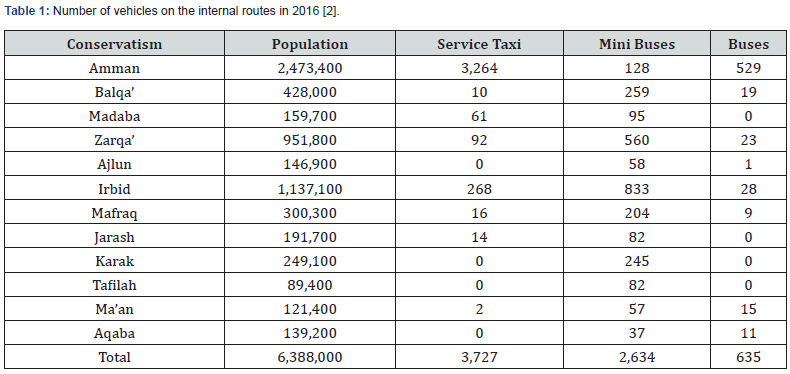
All urban areas, especially the Amman increasing growth in the last years was reflected by the rising numbers of population and expansion of built area. This growth has been accompanied by an increase in the volume of traffic in the city, as is clear in the rising number of vehicles, volumes of traffic and the number of public transport users, which began to adversely affect the ability of citizens to move plus costs and the negative effects of traffic congestion that have become a general phenomenon on the streets of Amman. It is possible to measure the level of demand for mobility by relating two main factors: Population and the number of daily trips per person. for 1000 inhabitants which is nearly two times rates of other Middle East and North Africa (MENA)’s countries such as Morocco, Tunisia and Syria [1]. To improve the public transport need to develop a legislative and institutional framework, staff transport, traffic sector to identify needs, strategies the master plan for transport, traffic and direct the improvement of the public and the development of transport in a modern and effective system of transport services such as Bus Rapid Transit (BRT) Light Rail Transit (LRT), metro, restructure routes and major services. The transportation means for public transportation with population for each governorate in Table 1 which shows the numbers for many transportation means utilized for routes in the many Jordanian provinces in 2016, furthermore shows the population each governorate [2].

Service reliability measures include arriving on time, short travel/run time, and low variance in travel time [3,4]. The random stops affect the travel time of the bus intensely and make it difficult to stick to the original fixed schedule. This leads to unreliable arrival and departure times that were found to be one of the main factors unfavorable people to using public transport [5].

There are several factors affecting the running time and determined as follows:

a. Segment length: distance between two point

b. Bus stops: the number of bus stops

c. Intersection: Number of signalized intersections

d. Road: the road geometry and characteristics

e. Boarding: passengers boarding from the bus

f. Alighting: passengers get off from the bus

g. Weather: weather conditions as snow, etc.

h. Time: period of time.

i. Driver: the driver practice and experience on driving.

j. Stop delay time: Lost time at the bus stop and this depends on the bus itself.

k. Departure delay: Departure time subtract the scheduled time.

l. Period of service: For how long the driver was on service during the duration of the study.

m. Direction: Internal and external service.

n. Nonrecurring events: such as bridge opening, etc. [6]

Elhabib it his research paper study the influence of the positions of non-regular buses in Egypt, Cairo, where she worked this research paper on the collection of data relevant to a specific route by using the global poisoning system(GPS), these data include time, location and speed, which the use of such data to make trip time modal, shows of this model that people do not trust the positions of bus stops and time delays due to unscheduled positions specified timetable [7]. In this study will focus on transit travel time and service reliability which effect on public transport. One of the problems that affect the random stand for buses, the unfavorable influence of the non-scheduled random public minibus stops on trip time for a specific minibus route will be studied in Amman.

Abojaradeh Mohammad it his research paper presents a travel time and delay study on the public transit system inside Amman area in Jordan. Amman–Sweileh line is a busy and vital line connecting major areas inside Amman [8]. The main importance of this study is to convince and attract the public to use the public transit system for travel instead of using their private cars. If that can be achieved, many advantages can be attained. By using the public transit system instead of using private cars, the following advantages can be attained: reducing the congestion on the road network especially during peak hours, reducing the cost of traveling for the public, increasing the efficiency of the road network, increasing safety, reducing the maintenance cost of the roads, improving traffic flow and traffic operations, and reducing air pollution and preserving the environment. It was found that there is a major difference in travel time between using the public transit system and using the private car. Also, it was found that the main variables that affect the trip travel time are: The total delay time due to stopping to pick up and discharge passengers and due to stopping at fixed interruptions, the bus model, and the bus size.

These non-scheduled stops became a habitual behavior for Amman public mini buses, that effects on daily users of this transportation service in Amman. Nonscheduled random stops, are those stops done by the minibus drivers to pick up and drop off passengers at anywhere points on the route rather than the official mini bus stops. In this study, a comprehensive plan was designed to collect data regarding the mini bus behavior along a selected bus route, using a transit on-board survey, GPS. The data collection involved locations of non-scheduled stops, number of stops, distance and speed. The data was then used to develop a trip time model. The developed model detects the delay time due to the non- scheduled mini bus stops.

Material and Methodology

Case Study

The Jordanian public transit systems are managed by the Ministry of Transportation through the of the Amman Governorate with a population of approximately 4,000,000 people and an area of 1,680 square kilometers. Amman has frequent bus connections to other governorate in Jordan, in addition to main cities in neighboring countries also served by service taxis. Internal transport is served by a number of bus routes also by mini bus and service taxis. Amman has been selected as the case study for this research depends on many reasons; these reasons are as follow:

Significant rise in demand because of the increased:

• Population growth and socio-economic factors

• Increase in intensity of land use

As well as expanding urbanization area, road system is formerly overburden badly public transport system as follow:

• Public transport mode share of 14% according to GAM

• Larger number of public transport trips are made by car-based services, either shared taxi

In addition to no rapid transit or high-capacity passenger transportation, on the other hand limited funding partition for transportation projects.

North terminal - Jordan University line was chosen, due to the large number of passengers and the demand on the route as well as a very essential line that connecting to the major rejoin inside Amman, thus it represents most of the lines.

Methodology

On-board transit survey was conducted to measure the existing conditions of the selected route, where the survey aimed to collect data from routes. The survey includes gathering data about the trip length, numbers of picked and discharged passenger, numbers of randomly stops during the trip, travel time, running time and delay. In order to achieve the thesis purposes that estimate the delay time due to the non-scheduled random stops. Selected north terminal - Jordan university route for the study. This line begins from North terminal and ends at Jordan university terminal. There are 24 buses on this line, the route around 10 km length consist of segments of several road classes with different width and there is no scheduled minibus stop. This line is an interrupted line which consists of two roundabouts, Interior circle and Sport City circle.

Position (longitude and latitude) of non-scheduled stops data had been conducted by Global Positioning System (GPS). Starting in the early morning many runs on the route for on direction from North terminal to Jordan University by public transit system to develop a trip time model. The developed model then uses to assess delay time due to the non-scheduled minibus random stops.

Data Collection

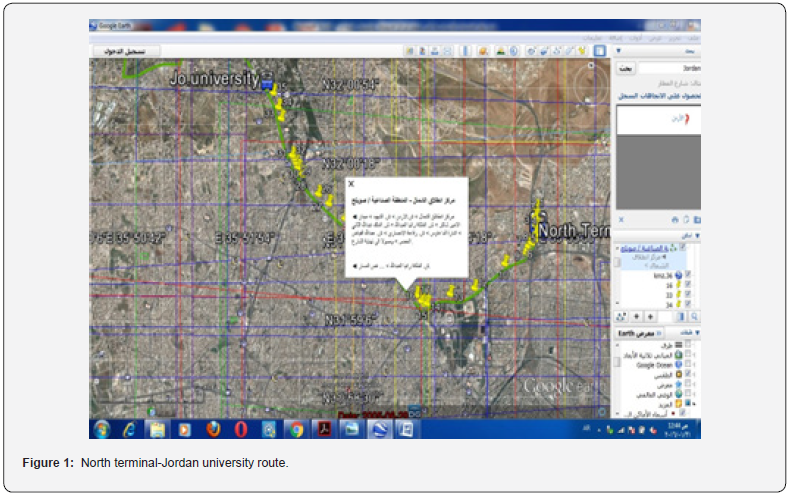
The position of non-scheduled random stops data was collected using a GPS (Global Positioning System) instrument. GPS was used with accuracy of 3-5 m, which is a relevant reliable accuracy for this study. The collected data included position and time of pickup and discharge of passengers. The positions of the non-scheduled stops were logged in as points of interests. Table 2 gives the GPS output data, and their representation on Google Earth in Figure 1.

Twenty runs were undertaken on the specific route starting 6:30-7:00 A.M.; the runs were performed on the same route therefore that the road characteristics variations are constant in all runs. At 6:30 A.M. in the early morning, traffic volume in Amman streets tends to be approximately at free flow condition. The congestion factor does not affect the bus route as well as there is no signalized intersections. Finally, the effective factors used in the thesis are the number of the non-scheduled random stops, in addition to the distance covered by the minibus at an average speed. Data was collected for the line using the public transit system on different days mainly on Saturday as weekend and Monday, Tuesday and Wednesday as weekdays for one trip direction.

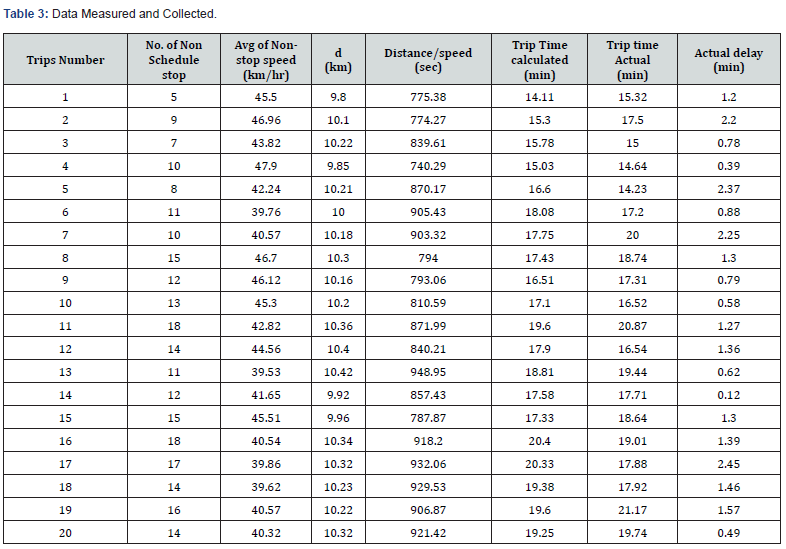
The following data was measured and collected:

i. The travel time

ii. The running time

iii. Total delay time from dwell time, reentering of the traffic and acceleration deceleration time.

iv. The numbers of stopping for boarding and alighting of passengers.

v. Dwell time due to stopping for boarding and alighting of passengers

vi. Average of nonstop speed.

All these data shown in the Table 3.

Data Analysis

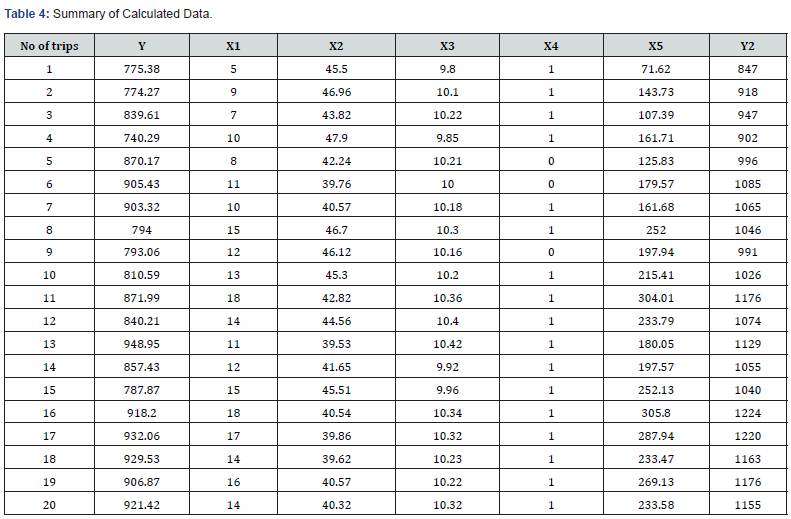
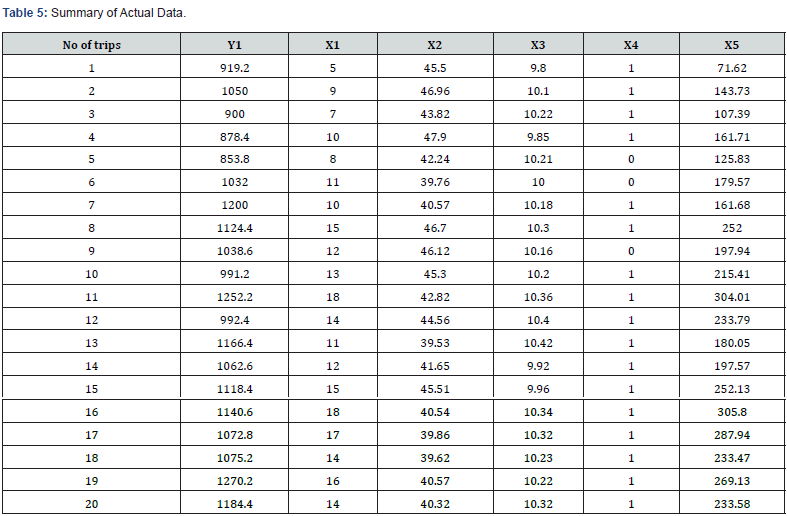
The collected data was analyzed to get the number of nonscheduled stops, route distance and the non-stop average speed. These variables used in developing the trip time model. list for analyzed runs, all these data are summarized and shown in Table 4 & 5 These different variables were labeled as follows:

Y= Running time calculated (sec).

X1= No. of non-schedule stops.

X2= Average nonstop speed (Km/hr).

X3= Distance (Km).

X4= Bus model (1 for new Bus,0 for old)

X5= Delay time computed (sec).

Y1= Trip time Actual (sec).

Y2= Trip time calculated (sec).

To find the relationship between several variables, regression analysis was used. Regression analysis is a statistical technique for modeling as well as investigating the relationship between more than one variables. SPSS (Statistical Package for Social Sciences) software was used in building the Regression Models in this thesis. SPSS is considered one of the most frequently used program for researchers in several fields.

The multiple regression models are as follows: The General Linear procedure in SPSS was done for the following:

Model between running time Y as dependent variable, and independent variables X1, X2, X3, and X4. With R2 = 0.90, R-adjusted =0.88

Y= 0.048X1 -19.68 X2 + 79.73 X3 +1.387 X4+889 (1)

Model between trip time calculated Y2 as dependent variable, and independent variables X1, Y and X3. With R2 = 0.94, R-adjusted = 0.85

Y2 = 1.003Y + 17.968 X1- 0.079 X2 +24.162 (2)

By using the selection of variables in multiple regression to find the best variables to in the model, Stepwise Regression Procedure was used for this objective. The best multiple regression models are as follows:

Y = -21.78 X2 + 1792 (3)

With R2 = 0.905, R-adjusted=0.82

Y= -19.67X2+ 80.76X3+880 (4)

With R2 = 0.90, R-adjusted=0.84

The multiple regression models are as follows:

Y1 = -12.82 X2 +14.91 X3 +68X4 + 0.69 X5+1210 (5)

With R2 = 0.62, R-adjusted =0.56

Y1 = 83.12 X3 + 19.66 X5+17.5 (6)

With R2 = 0.77, R-adjusted= 0.65

T

he best Stepwise regression models are as follows:

Y1 = 22.39X1+787 (7)

With R2= 0.55, R-adjusted =0.50

Results

Trip Time Model

The trip time model as shown in the following, is a function of number of non-scheduled stops, travel time calculated from distance/nonstop speed as well as the average nonstop speed.

Trip Time = F (Nnon.SC×Dt +D/S) (8)

Where D/S= travel time, Dt = delay time, Nnon.SC= Number of Nonscheduled stops, D=distance, S= Average Nonstop Speed.

The delay time in this study involves, deceleration and acceleration time, dwell time as well as reentering traffic delay. Linear Regression analysis was used to develop the following best fit model for this route as shown in the following:

T(s)= 1.003D/S + 17.968 Nnon.SC - 0.079 S +24.162 (9)

With R2 = 0.94.

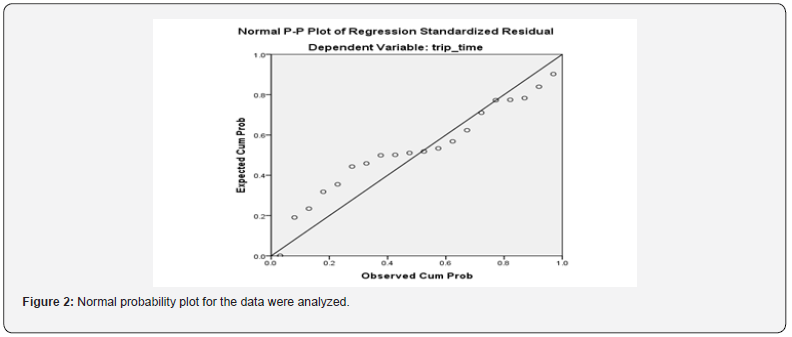
The results represent that for this route, When the bus stops random that will be increase in the delay time, thus increase trip time. The data analysis R2= 0. 94, with 95% significance level for the coefficient. The normal probability plot of the data analyzed is shown in Figure 2.

Model Validation

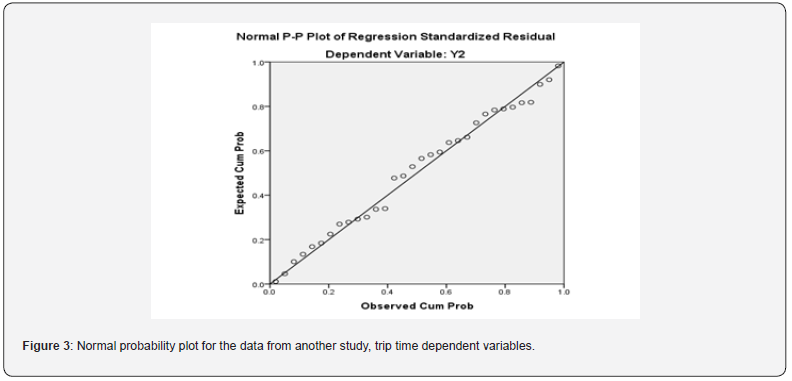
To compare the results of my study and the accuracy of the data collected also the accuracy of model needed a new line of another study to be few differences, so choose Amman-Sweileh route (Abo jaradeh Mohammad) and illustrated by the following Figure 3.

From the calculated trip time model for this study, the value equal 888.5 sec and from another study data equal 998.7 sec, thus the error = 11%.

Conclusion

i. It is clear from the study that the most delay time because of the number of non-scheduled random stops and there are no scheduled stops for mini buses, that means the random stops has a considerable effect on the trip time. Based on the model for this route, where the coefficient of number of non-scheduled stops equal 17.968.

ii. The waiting time for the public transit mini bus for route North Terminal-Jordan university isn’t high value. Where 125 agree that there are relatively long waiting times and many random stops during the bus route from questionnaire survey.

iii. Delay problems happen at any time of the day in Amman, this situation can be solved by making a specific stop for boarding and alighting along the line, also period of time for waiting not exceed to 1 minute.

iv. Obviously the most important reasons for the delay time in Amman that does not have a specific timetable for buses as well as scheduled stops for passengers.

The improvement and development of the public transit system is important to attract people to use it and it has relied upon great. The improvement by the following:

• Make fixed stops in the line.

• Make safe, comfortable and shaded location for passengers Bus stops.

• Make specific time for buses on fixed stop to waiting passenger.

Installing tracking device on the bus(GPS) in order to bus driver commitment to stop only on the scheduled stops with a specific time and specific speed.


To Know more about our Juniper Publishers

Monday, April 1, 2024

Systemic Morphine but Not Local Administration Shows Preventive Anti-Inflammatory Effect in a Rat Model of Capsaicin-Induced Paw Edema - Juniper Publishers

 Complementary Medicine & Alternative Healthcare - Juniper Publishers


Abstract

Peripheral opioids and analogues have demonstrated their efficacy in controlling inflammatory response and hyperalgesia. However, it is not yet clear whether the effect on edematogenic response is determined by the action at peripheral level or by systemic opioid receptors.

Methods: In this study we investigated the effects of subcutaneous, intraplantar and intraperitoneal morphine injection in rats with acute capsaicin-induced hind paw inflammation. The experiment was conducted on 50 male Sprague-Dawley rats randomly divided into 5 groups of equal numerosity. Group 1 was control group; group 2 was treated with 5 mg/kg morphine by intraperitoneal injection; group 3 with 5 mg/kg morphine injected in the back subcutaneously; group 4 and group 5 were treated respectively with 0.05 mg/kg and 0.1 mg/kg morphine locally injected in the paw before induction of neurogenic edema. Neurogenic edema was induced by the administration of 50 mcg capsaicin in 50 mcl saline in the paw. The edema was measured using a calibrated plethysmometer.

Results: Intraperitoneal injection of 5 mg/kg morphine 30 minutes before administration of capsaicin efficaciously inhibited the edematogenic response and statistically significant different variations in paw volume to the control group were measured at all observation times. The same doses of subcutaneous morphine reduced edematogenic response as well, even though to a lesser extent. Intraplantar morphine (0.05 mg/kg or 0.1 mg/kg) did not seem to have any effect on the edematogenic response at either dose or no significant difference was observed with respect to the control group.

Conclusions: the action of morphine on capsaicin-induced neurogenic edema appears to be related to a central rather than a local control mechanism.

Keywords:Morphine; Peripheral Opioids; Neurogenic Inflammation; Capsaicin

Introduction

Opioid peptides have demonstrated their efficacy in controlling inflammatory response. They exert their therapeutic action by binding to receptor sites in the central nervous system and to peripheral opioid receptors [21]. In the periphery the opioid receptors are located on sensory fibres and post-gangliar sympathetic endings [28], and on other non-nervous structures, such as vascular endothelium [4,19], immunocompetent cells as lymphocytes and macrophages [8], and keratinocytes [2]. The efficacy of endogenous opioids in reducing hyperalgesia and inflammatory response is extensively described in the literature [10]. Their anti-hyperalgesic and anti-inflammatory effect in experimental rat models [22, 28] has also been demonstrated by local administration of mu agonists, morphine, and fentanyl. Similar results have been observed with the intraplantar injection of tramadol, whose analgesic potency has been shown to be greater and more durable than treatment with lidocaine [9]. These effects are linked to tolerance and anti-hyperalgesic, anti-allodynic and anti-exudative actions are reduced when administration is prolonged [7]. Morphine’s site of action for edematogenic response is not well defined. According to some authors, morphine reduces neurogenic plasma extravasation induced by carrageenan with a mechanism, which does not seem to be dose-dependent, and this action is mediated primarily by peripheral opioid receptors [17]. Other authors report that activation of brain receptors inhibits carrageenan-induced edema, suggesting that the anti-edematous effect of morphine is due to action at central receptors alone (12). Sacerdote et al. [18] assessed the effects of a single dose of morphine (10μg) administered into the inflamed paw in a yeast model of acute inflammation and observed no effect on paw edema. Perrot et al. [13] administered morphine locally (50-200μg), both before and after intraplantar carrageenan, concluding that neither preventive nor curative administration of morphine could affect paw circumference.

The aim of this study is to test whether the preventive action of morphine on edematogenic response during acute inflammation capsaicin-induced is governed primarily by a systemic mechanism.

Materials and Methods

In this study we investigated the effects of morphine after subcutaneous, intraplanar and intraperitoneal administration in rats with acute capsaicin-induced hind paw inflammation. The experiment was conducted on 50 male Sprague-Dawley rats weighting 100-140 g (Morini Laboratories, Italy), randomly divided into 5 groups of ten animals each. Group 1 was the control group; group 2 was treated with 5 mg/kg morphine by intraperitoneal administration; group 3 was treated with 5 mg/kg morphine injected subcutaneously in the back; group 4 received 0.05 mg/kg local morphine in the paw before induction of neurogenic edema and group 5 was treated with 0.1 mg/kg local morphine in the paw.

Experimental Design

The study obtained the consent of the Committee for experimentation and was carried out at the Department of Experimental Surgery of the University of Padua. After mild anesthesia with ether, all the animals were given an initial intraperitoneal injection of 400 mg/kg of chloral hydrate, and, if necessary, received a supplemental dose of 30 mg of chloral hydrate. After anesthesia we shaved the right hind paw of all the animals using a hypoallergenic, non-irritant depilatory cream and made an indelible reference mark for the volume measurements. We then made the baseline measurement of paw volume. We treated all groups, except the control group, with morphine at the dose and by the administration route indicated in the protocol. Thirty minutes later we induced neurogenic edema by injecting 50 mcg of capsaicin in 50 mcl saline in the paw. The control group rats remained untouched for 30 minutes before the induction of neurogenic edema.

Measuring Paw Volume

We measured the edema with a calibrated plethysmometer (U. Basile, Mod 7150) [25], consisting in two interconnected Perspex cells filled with a specially prepared solution. This solution is composed of bidistilled water, 3g/l sodium chloride, and 5ml of a surface-active agent to reduce surface tension. The rat paw under study is dipped in one cell while the other cell, containing an electrode, detects variations in volume. A digital transducer indicates small variations in volume on a luminous display. We made three measurements for each recording and calculated the mean of the three values. The measurements were made before the start of treatment and every 15 minutes after induction of edema with capsaicin for two hours.

Statistical Analyses

The percentage variation with respect to baseline measurements at the various times was calculated for each group, according to the following formula:

%V = (Vbaset + n −Vbaset) /Vbaset ×100

The mean and standard deviation of the data collected for various treatment groups were compared with the controls. The statistical significance of the differences was calculated by variance analysis (ANOVA) and t-test.

Ethical Issue

The treatment of animals conformed to the guidelines contained in the “European Convention for The Protection of Vertebrate Animals Used for Experimental and Other Scientific Purposes” published on March 18, 1986, and successively modified by the European Commission and published in the European Official Gazzette, June 18, 2007.

The protocol was approved by the Italian Ministry of Health.

Results

Table 1 summarizes the results, given as mean and standard deviation (SD) of the percentage of variation of paw volume. As shown, the edematogenic response observed after administration of capsaicin in the control group reached its highest level after approximately 60 minutes, remaining stable for the entire duration of the experiment. Pre-treatment with systemic morphine inhibited the edematogenic response. Intraperitoneal administration of morphine (5 mg/kg) thirty minutes before inducing edema demonstrated its efficacy by inhibiting the edematogenic response: statistically significant differences between this group and control group were recorded at all observation times (Figure1).

The edematogenic response to capsaicin was reduced also in the group, which received the same dose of morphine (5 mg/kg) subcutaneously: also, this group showed a statistically significant difference (p<0.05) compared to the control group at all observation times, though the effect was less marked than the group treated with intraperitoneal injection (Figure 1). Intraplantar morphine did not seem to have any effect on edematogenic response at either administered dose (0.05 mg/ kg and 0.1 mg/kg), as no statistically significant difference could be detected when these groups were compared to control group (Figure 2). On the contrary a statistically significant difference was present when these groups were compared to rats treated either with intraperitoneal or subcutaneous injection (Figure 3).

Discussion

The results of our study seem to confirm that systemic morphine has a preventive effect on capsaicin induced edema. In fact, all the rats receiving 5 mg/kg morphine showed a reduced edematogenic response to capsaicin injection if compared to control animals. Intraperitoneal route seemed to be more effective than subcutaneous injection, maybe for a lower bioavailability of the latter due to slower absorption.s

Local intraplantar injection of morphine (0.05 mg/kg or 1 mg/kg) did show no preventive effect on edematogenic response to capsaicin. The effectiveness of local opioid administration in controlling pain of neurogenic inflammation is well documented and is due to opioid binding to receptors present on nervous endings of the inflamed part [20].

In the experimental model of the present work edema is due to the direct action of the irritant on the capsaicin-sensitive nervous fibers, which are small peptidergic neurons (50 μm) functionally corresponding to unmyelinated (C) fibers [23]. Capsaicin binds to the transient receptor potential vanilloid-1 (TRPV1) on primary nociceptive fibers and stimulates the release of substance P and calcitonin gene-related peptide [24] by a centrally mediated antidromic activity of Aδ and C primary afferent fibers [15, 16].

Dorsal root reflexes (DRRs) play a foundamental role for antidromic activity of small sensitive fibers during neurogenic inflammation induced by capsaicin. Capsaicin also exerts a direct action on small fibers: it elicits axo-axonic reflexes possibly contributing to inflammation at the site of injection [14]. So, peripheral administration of opioids can be effective in controlling pain but inadequate to prevent the reflex edematogenic response. As reported by Obara, in an experimental model of carrageenaninduced inflammation, the use of peripherically acting opioids, intraplantar morphine or 6-amino acid-substituted derivatives, elicits a potent, long-lasting analgesic response, but does not show any significant influence on the extent of the edematogenic effect [11]. Our results seem to confirm these data as local injection of morphine did not have any influence on the edematogenic response to capsaicin. Otherwise, the acute systemic administration of morphine can act on the tissue inflammatory response to surgical incision by modulating neutrophiles infiltration and cytokines accumulation in the tissue surrounding the surgical wound [5]. These results point to the foundamental role of central mechanisms in eliciting and maintaining neurogenic inflammation. The concept of preventive analgesia is based on the observation that an intense stimulation of the nociceptive primary afferent fibers, due to tissue damage and inflammation, increases the eccitability of the nociceptive spinal dorsal horn neurons so contributing to post-injury pain and hyperalgesia [3,6] and [27]. An early preventive action on the nociceptive inputs to the spinal cord decreases hypereccitability, hence pain and hyperalgesia. Therefore, the preventive use of systemic morphine exerts its analgesic effect and, by acting on neurons of the dorsal horns, modulates neurogenic inflammation triggered by capsaicin sensitive fibers through reflexes at this anatomical level [15].

The clinical implication of this observation is that preventive morphine may prove useful in the treatment of pain associated with inflammation, such as after surgery, in which the combination of these effects probably takes part to the observed improved functional recovery.

To Know more about Journal of Complementary Medicine & Alternative Healthcare

To Know more about our Juniper Publishers
Click here: https://juniperpublishers.com/index.php

Friday, March 29, 2024

The Effect of Warmed Irrigation and Intravenous Fluids on Body Temperature During Photo-Selective Vaporization of the Prostate - Juniper Publishers

 Anesthesia & Intensive Care Medicine - Juniper Publishers

Abstract

Introduction: A significant number of men with benign prostatic hyperplasia (BPH) will require surgical therapy. The technique of photo-selective vaporization of the prostate (PVP), using the Greenlight laser™, is one of the most employed procedures to treat BPH. A frequent complication among patients undergoing surgery is intraoperative hypothermia (body temperature < 36.0°C). The aim of the current study was to determine if warming the irrigation and the intravenous (IV) fluids can mitigate hypothermia during PVP surgery.

Methods: This was a prospective, single blind controlled trial, which included participants scheduled for PVP surgery because of BPH. The patients were randomized to four treatment groups:

(1) Warm irrigation fluid and IV fluid.

(2) Warm irrigation fluid and IV fluids at room temperature.

(3) Irrigation fluid at room temperature and warm IV fluids.

(4) Irrigation fluid and IV fluid at room temperature.

The patient's body temperature was taken upon entering the operating room and subsequently every thirty minutes throughout the surgery.

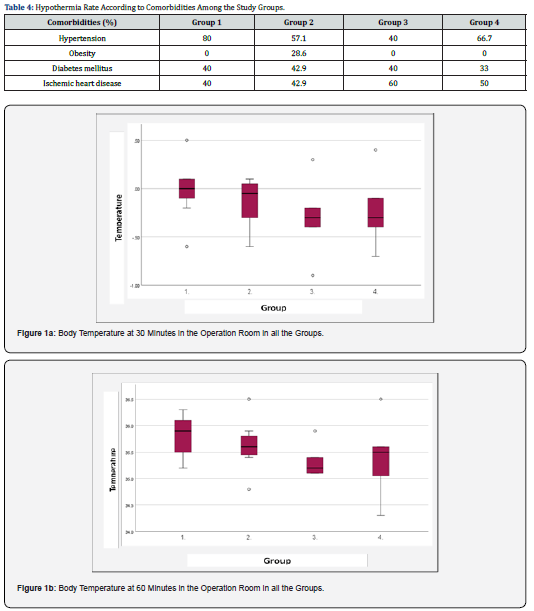
Results: 29 patients were included in the study. Thirty and 60 minutes after the surgery began, 44.4% and 22.2% of the patients in group 1 developed hypothermia whereas 75.0% and 87.5%, 100.0% and 100.0% and 71.4% and 83.3% of the patients in groups 2, 3 and 4 developed hypothermia. However, there was no significant difference between the groups (p=0.236 and p=0.212, respectively).

Conclusion: The data pointed out that the use of both warmed IV and irrigation fluids could prevent the development of hypothermia during surgery.

Key words: Benign Prostatic Hyperplasia; Photo Selective Vaporization of the Prostate; Intraoperative Hypothermia; Warm Irrigation Fluids; Warm Intravenous Fluids

Introduction

Among aging men, clinical benign prostatic hyperplasia (BPH) is a prevalent condition, often resulting in lower urinary tract symptoms (LUTS) [1]. Studies show that as many as 50% of men over the age of 50 and 80% of those over 80, suffer from LUTS due to BPH [2]. LUTS is characterized by a range of symptoms, such as an urgent need to urinate, nocturia, frequent urination, dysuria, trouble fully emptying the bladder, difficulty starting urination and experiencing a weak or broken stream during urination [3]. Pharmacology treatments, such as alpha-adrenergic antagonists, beta-adrenergic agonists, and 5-alpha-reductase inhibitors, are often used as a first line standard of care in those patients. Nevertheless, a significant number of men experience a progression in their condition that requires the subsequent step of surgical therapy. For many years, the surgical standard for treating BPH has been either transurethral resection of the prostate (TURP) or open prostatectomy (OP).

However, both TURP and OP are followed with sets of challenges of intraoperative and postoperative complications. These may include bleeding, the need for intervention due to clot retention, genitourinary infections, fluid absorption, and TURP syndrome [4]. Not only that, but many of these patients might also be managing heart disease with anticoagulants or coping with other comorbidities, such as hypertension, kidney insufficiency, or diabetes mellitus which could increase the chances of developing complications. Moreover, especially in elderly patients or those dealing with multiple health issues, these procedures may lead to a decrease in quality of life. Thus, alternative procedures that are less invasive than TURP and OP might offer a safer treatment option for such patients. The technique of photo-selective vaporization of the prostate (PVP), using the GreenLight laser™ (GLL), is one of the most employed procedures.

It has been demonstrated that the GreenLight laser™ is an efficacious solution for managing LUTS because of BPH, with a notable safety profile, particularly in men who are on anticoagulants and have an increased risk of bleeding. Moreover, PVP offers added benefits including cost-effectiveness due to shorter duration of catheter use and length of hospitalization [5]. A frequent complication among patients undergoing surgery is intraoperative hypothermia, which is characterized by a core body temperature dropping below 36.0°C during the operation [6]. Initiation of either general or neuraxial anesthesia leads to vasodilation, facilitating the transfer of heat from the body's core to its peripheral regions. Such heat redistribution is the predominant factor for hypothermia within the initial hour of anesthesia, even when patients are actively being warmed. Furthermore, it can result in severe complications such as coagulopathy, potential myocardial issues, and surgical wound infections. Additionally, hypothermia can delay drug metabolism, extend recovery periods, and cause the patient to feel uncomfortably cold [7].

PVP surgery is carried out under general anesthesia, using physiological irrigation solutions (0.9% saline) at room temperature. Although the utilization of an isothermal solution lowers the risk of hypothermia, it does not eliminate its possibility. Numerous studies have demonstrated that employing warm intravenous (IV) or irrigation fluid can help in maintaining body temperature. In addition, it was found that warm IV irrigation fluid during surgery could minimize cardiovascular complications [8]. However, currently, to the best of our knowledge, there's no standard practice of combining warm IV and irrigation fluids administered during a PVP surgery to avoid hypothermia. In our research, we aimed to determine if warming both the irrigation and the IV fluids can mitigate the risk of developing hypothermia during PVP surgery.

Methods

The Research took place at Shamir Hospital in Israel during the years 02.2020-02.2023 upon approval of the institutional ethical committee (0050-20-ASF). All patients have signed an informed consent prior to surgery.

Study Design

This was a prospective, single blind controlled trial, which included male participants aged 50 and above, all scheduled for PVP surgery because of BPH. Patients who underwent any previous or alternate prostate surgeries or prostate embolization were excluded from the study. The patients were randomized to four treatment groups:

(1) Warm irrigation fluid and warm IV fluid (in both, heating chamber temperature was 38.5°).

(2) Warm irrigation fluid (heating chamber temperature was 38.5°) and IV fluids at room temperature

(3) Irrigation fluid at room temperature and warm IV fluids (heating chamber temperature was 38.5°).

(4) Irrigation fluid and IV fluid at room temperature. The irrigation fluid was administered using an orthopedic pump maintaining a pressure of 150 ml/min. The patient's body temperature was taken upon entering the operating room and subsequently every thirty minutes throughout the surgery. In addition, details about the patients' age, comorbidities, prostatic size, and laser time were collected.

Statistical Analysis

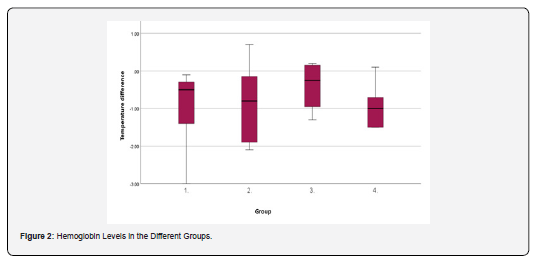
Analysis was conducted using IBM SPSS Statistics version 29.0. Descriptive statistics were performed mainly with medians and rates, and non-parametric tests were performed. Comparing continuous variables (age, prostate size, treatment time, duration of operation, body temperature and hemoglobin levels) between the treatment groups was performed using Kruskal–Wallis H one-way ANOVA with Bonferroni correction, as appropriate, categorical variables (background diseases and hypothermia rates) were analyzed using Chi-square test. Boxplot diagrams were used for descriptive demonstration of the distributions. Pearson correlation coefficient was performed to estimate the correlation between prostate size and laser time. Differences were considered statistically significant at p value of < 0.05.

Results

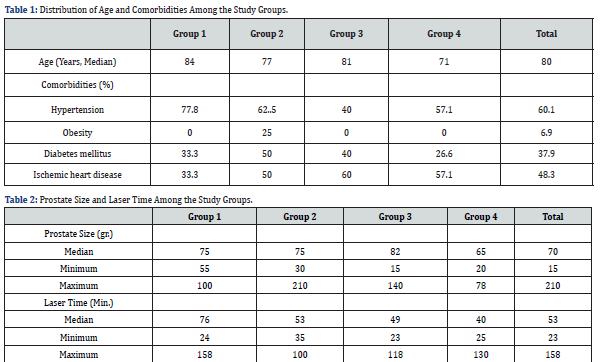
During a period of 2 years only 29 patients were included in the study. The median age was 80.0 years (range 52-92) with no difference between the groups. Most of the patients suffered from hypertension (60.1%). Details about age and comorbidities distribution among the various study groups are presented in (Table 1). Median prostate size was 70.00 gr. (range 15-210), and median laser time was 53 minutes (range 23–158) (Table 2). The Pearson correlation test revealed a week trend of relationship between prostate size (mean: 77.8 gr) and laser time (mean: 63.7 minutes) (p=0.051, r=0.373).

The presence in the operating room varied from 1 to 3 hours. Since it is not possible to compare the decrease in body temperature between a patient who stayed in the operating room for an hour and a patient who stayed for 3 hours, a comparison was made between the patients during their first hour in the operating room. Thirty minutes after the surgery begun, 44.4% of the patients in group 1 (Warm irrigation and IV fluid) developed hypothermia whereas 75.0%, 100.0% and 71.4% of the patients in groups 2 (Warm irrigation fluid), 3 (Warm IV fluids) and 4 (Irrigation and IV fluid at room temperature) respectively, developed hypothermia. Interestingly, after one hour, only 22.2% of patients from group 1 presented hypothermia and 87.5%, 100.0% and 83.3% of the patients in groups 2, 3 and 4 respectively, developed hypothermia (Table 3). Nevertheless, due to small numbers, Chi-square tests showed no significant difference between the groups regarding hypothermia.

The lowest temperature measured at 30 and 60 minutes of surgical time was observed in group 3 (warm IV fluids) while the highest was demonstrated among group 1 (Warm irrigation and IV fluid) (Figure 1a and 1b). However, independent samples of the Kruskal-Walli’s test revealed no significant difference between the groups (p=0.236 and p=0.212, respectively). Hemoglobin levels were measured before the surgery (upon admission) and before discharge (about 24 hours after surgery). The difference between the first and the second measurements was -0.5 in group 1 (Warm irrigation and IV fluid), -0.8 in group 2 (Warm irrigation fluid), -0.3 in group 3 (Warm IV fluids) and -1.0 in group 4 (irrigation and IV fluid at room temperature) (Figure 2). Independent samples Kruskal-Wallis Test revealed no significant difference between the groups (p=0.621). As for the relation between the comorbidities and hypothermia, patients with obesity, diabetes mellitus and ischemic heart disease demonstrated hypothermia upon 1 hour in the operating room (a drop in temperature below 36.00C), however Chi-square test revealed no statistical significance. In groups 1 (warm irrigation and IV fluid), 2 (warm irrigation fluid) and 4 (irrigation and IV fluid at room temperature), most of the patients who presented with hypothermia also suffered from hypertension (80%, 57.1% and 66.7%, respectively), while in group 3 (warm IV fluids) 60% of the patients who developed hypothermia suffered from ischemic heart disease. (Table 4).

Discussion

Body temperature is one of the most important vital signs, as it ensures the proper functioning of cellular and molecular processes in mammals. The regulation of body temperature, or thermal homeostasis, hinges on a delicate equilibrium between the generation and loss of heat. Yet, during the operation period, this balance can be unsettled by the effects of anesthesia, surgical procedures, and low surgery room temperature, making unintentional hypothermia occur frequently among patients under anesthetic and surgical procedures. When patients undergo general anesthesia, not only does inadvertent perioperative hypothermia represent a decrease in body temperature, but it also poses a risk as an adverse event that can negatively impact the intra- and post-operative outcome. This can result in a range of consequences, from uncomfortable shivering to serious complications such as infections, increased bleeding, prolonged recovery times, and even severe cardiovascular events. It is critical to monitor the core temperature of these patients and to implement active warming procedures from the pre-induction phase through to the recovery period [9].

In this study, we utilized the PVP surgical model, a technique frequently employed in today's urologic surgeries. The PVP procedure is executed with the patient under general anesthesia, employing room temperature physiological irrigation solutions (0.9% saline). The study included 4 treatment arms: warm irrigation and warm IV fluids; warm irrigation fluids and IV fluids at room temperature; irrigation fluid at room temperature and warm IV fluids; and irrigation fluid and IV fluid at room temperature. Our results show that at 30 and 60 minutes through the operation less patients who were treated with warm irrigation fluid and warm IV fluids, developed hypothermia compared to the other groups. In addition, the highest body temperature was observed between 30 and 60 minutes through the operation among patients who were treated with warm irrigation fluid and warm IV fluids than the other groups. Yet, most probably due to a small cohort size, the results did not reach statistical significance. Nevertheless, the current study demonstrated that warm irrigation and IV fluids at one hour into the operation could serve as a modification to prevent the development of hypothermia.

In the past, attempts have already been made to test the effectiveness of heating IV or irrigation fluids to prevent the development of hypothermia during surgery. The effects of warmed IV fluids on body temperature were examined by 105 patients who underwent TURP surgery. Body temperature was significantly higher in patients who received warmed IV fluids compared to the control group which was treated using a cotton blanket. A meta-analysis was conducted to exhibit the effect of warmed bladder irrigation fluid on the development of hypothermia in patients with BPH treated by various surgical procedures. Data collected from a total of 28 clinical studies with 3858 patients revealed that the group treated with room-temperature irrigation fluid resulted in a greater dropped body temperature compared to the warm irrigation fluid group [10]. An interesting meta-analysis was published by Campbell et al., who collected data from 17 studies that examined the effect of warming IV and from 5 studies in which irrigation was used to prevent hypothermia during surgery in adults and compared between the results. Although the collected data was of moderate quality, it demonstrated that warm IV fluids kept the body temperature about half a degree warmer than that of participants who were treated with room temperature IV fluids. No statistically significant difference was reported in the body temperature between patients treated with warm and room temperature irrigation fluids [11].

Most of the published studies dealing with the use of warmed IV fluids or warmed irrigation fluids to prevent hypothermia, do not compare the two treatment arms. Nevertheless, the only study we found that investigated the effect of using warm IV fluids together with warm irrigation fluid on body temperature was conducted by Okeke et al. In this study, 120 patients with obstructing BPH who were about to undergo TURP were randomly divided into 3 groups; patients treated with irrigation and IV fluids at room temperature, patients treated with warmed irrigation fluids at 38°C administered along with IV fluids at room temperature and patients treated with warmed irrigation fluid and IV fluids at 38°C. It was found that there was no significant change in the mean body temperature among patients treated with both warm IV and irrigation fluids than that observed in the groups that were treated with only warm IV or only warm irrigation fluids [12]. Our study is not without limitations. The main limitation of our study is the small sample size. Also, the older age of our patients could be a risk of bias distressing the effect of the treatment arms on the body temperature. Thus, larger studies with a higher sample size and a wider age range should be conducted to evaluate the effect of warming IV and the irrigation fluids on body temperature during surgery.

Conclusion

The data from our study pointed out that the use of both warmed IV and irrigation fluids could prevent the development of hypothermia during surgery. However, wider studies should be performed to establish this finding.

To Know more about Journal of Anesthesia & Intensive Care Medicine
Click here: https://juniperpublishers.com/jaicm/index.php

To Know more about our Juniper Publishers
Click here: https://juniperpublishers.com/index.php


Understanding The Acute Interventions for Complicated Pleural Effusions - Juniper Publishers

  Pulmonary & Respiratory Sciences - Juniper Publishers Abstract Pleural effusion affects approximately 1.5 million individuals in the U...