Monday, January 13, 2020

Further Developments on the T-Transmuted X Family of Distributions II-Juniper Publishers

Biostatistics and Biometrics Open Access Journal


We review the exponentiated generalized (EG) T-X family of distributions and propose some further developments of this class of distributions [1].
AMS subject classification: 35Q92, 92D30, 92D25.
Keywords:T-XW family of distributions; Transmuted family of distributions; Exponentiated
Abbrevations: EG: exponentiated generalized; QRTM: Quadratic Rank Transmutation Map;

Introduction

Transmuted family of distributions

According to the quadratic rank transmutation map (QRTM) approach in Shaw W, et al. [2], the CDF of the transmuted family of distributions is given by

Where, 11λ−≤≤ and ()Gx is the CDF of the base distribution. When 0λ= we get the CDF of the base distribution
Remark 1.1. The PDF of the transmuted family of distributions is obtained by differentiating the CDF above.
A plethora of results discussing properties and applications of this class of distributions have appeared in the literature, and for examples see Faton Merovci, et al. [3] and Muhammad Shuaib Khan, et al [4].

T-XW family of distributions

This family of distributions is a generalization of the beta-generated family of distributions first proposed by Eugene et al. [5]. In particular, let ()rt be the PDF of the random variable T∈[a,b] ,−∞ ≤a< b ≤ ∞ and let WF((x)) be a monotonic and absolutely continuous function of the CDF F(x) of any random variable .X The CDF of a new family of distributions defined by Alzaatreh et al. [6] is given by
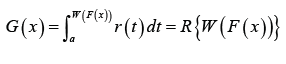
Where R(⋅) is the CDF of the random variable T and a≥ 0
Remark 1.2. The PDF of the T-X(W) family of distributions is obtained by differentiating the CDF above
Remark 1.3. When we set W(F(x)):=-ln(1-F(x)) then we use the term “T-X Family of Distributions” to describe all sub-classes of the T-X(W) family of distributions induced by the weight function W(x):=-ln(1-x) A description of different weight functions that are appropriate given the support of the random variable T is discussed in Alzaatreh A, et al. [6]
A plethora of results studying properties and application of the T-X(W) family of distributions have appeared in the literature, and the research papers, assuming open access, can be easily obtained on the web via common search engines, like Google, etc.

T-Transmuted X family of distributions

This class of distributions appeared in Jayakumar K, et al. [7]. In particular the CDF admits the following integral representation for a≥0
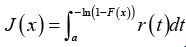
Where ()rt is the PDF of the random variable T and ()Fx is the transmuted CDF of the random variable ,Xthat is,

Where -1≤λ≤1 and ()Gx is the CDF of the base distribution.
Remark 1.4. The PDF of the T-Transmuted X family of distributions is obtained by differentiating the CDF above.

The exponentiated generalized (EG) T-X family of distributions

This class of distributions appeared in Suleman Nasiru, et al. [1]. In particular the CDF admits the following integral representation
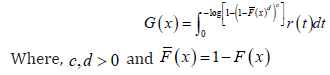
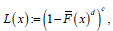
Remark 1.5. Note that if we set  where ,0cd> and ()()1,FxFx=− then ()Lx gives the CDF of the exponentiated generalized class of distributions [8]
Further developments

In this section, inspired by quantile generated probability distributions and the T transmuted X family of distributions [6,9], we propose some new extensions of the exponentiated generalized (EG) T-X family of distributions. We give the CDF of these new class of distributions, only in integral form. However, the CDF and PDF can be obtained explicitly by applying Theorem 2.2 and Theorem 2.3, respectively.

The TqX− family of distributions

Definition 2.1. Let V be any function such that the following holds:
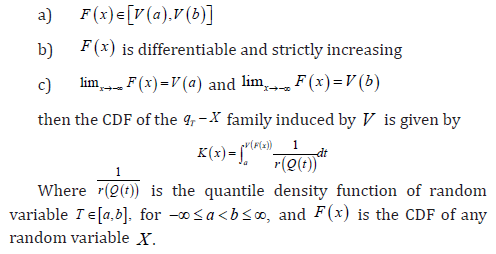
Theorem 2.2. The CDF of the TqX− family induced by V is given by ()()()KxQVFx
Proof. Follows from the previous definition and noting that 
Theorem 2.3. The PDF of the TqX− family induced by V is given
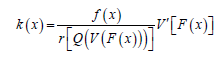
Proof. ,k=K′,  F′=f and K is given by Theorem 2.2
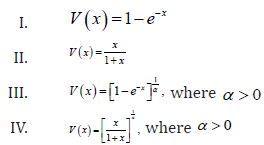
Remark 2.4. When the support of T is [),,a∞ where 0,a≥ we can take V as follows
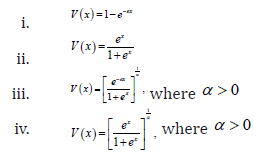
Remark 2.5. When the support of T is (),,−∞∞we can take V as follows
Definition 2.6. A random variable W (say) is said to be transmuted exponentiated generalized
distributed if the CDF is given by

Some EG Tq transmuted X family of distributions

In what follows we assume the random variable T has PDF ()rt and quantile function ().Qt We also assume the random variable X has transmuted CDF

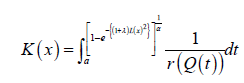
Families of EG Tq-transmuted X distributions of type I

The CDF has the following integral representation for α>0 and a≥0
Families of EG Tq transmuted X distributions of type II

The CDF has the following integral representation for α>0 and a≥0
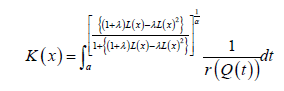
Families of EG Tq transmuted X distributions of Type III

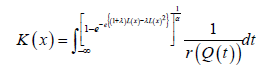
The CDF has the following integral representation for 0α>
 
To Know More About Open Access Journals Please click on: ttps://juniperpublishers.com/index.php

Thursday, January 9, 2020

Gasoline Compounds Removal from Wastewater by UV& UV/H202 Process-Juniper Publishers

Civil Engineering Research Journal

Introduction

General

Most of the synthetic organic chemicals and naturally occurring substances, enter the aquatic medium in several different ways and, according to their water solubility, can be transported and distributed in the water cycle. The effluents of urban wastewater treatment plants are among the major responsible for the release of this kind of contaminants into the environment. Although conventional biological processes are usually efficient for the degradation of pollutants occurring in wastewater, refractory compounds are not effectively removed. In such cases the use of Advanced Oxidation Processes (AOPs) may improve the overall removal efficiency of such compounds. In the Past two decades, advanced oxidation processes (AOPs) have been proven to be powerful and efficient treatment methods for degrading recalcitrant materials or mineralizing stable, inhibitory, or toxic contaminants. Advanced oxidation processes are those groups of technologies that lead to hydroxyl radical (_OH) generation as the primary oxidant (second highest powerful oxidant after fluorine). Hydroxyl radicals are non-selective in nature and they can react without any other additives with a wide range of contaminants. These hydroxyl radicals attack organic molecules by either abstracting a hydrogen atom or adding a hydrogen atom to the double bonds. It makes new oxidized intermediates with lower molecular weight or carbon dioxide and water in case of complete mineralization.

Gasoline compounds

1. BTEX: Benzene Toluene Ethyl Benzene and Xylene
2. MTBE: Methyl Tert-Butyl Ether
3. TBA: Tertiary Butyl Alcohol

Advanced oxidation process

Advanced oxidation processes (AOPs) refer to a set of chemical treatment procedures designed to remove organic (and sometimes inorganic) materials in water and wastewater by oxidation through reactions with hydroxyl radicals. AOPs involve two stages of oxidation:
1) The formation of strong oxidants (e.g., hydroxyl radicals)
2) The reaction of these oxidants with organic contaminants in water
However, the term advanced oxidation processes refer specifically to processes in which oxidation of organic contaminants occurs primarily through reactions with hydroxyl radicals. In water treatment applications, AOPs usually refer to a specific subset of processes that involve O3, H2O2, and/or UV light. However, in this analysis, AOPs will be used to refer to a more general group of processes that also involve TiO2 catalysis, cavitation, E-beam irradiation, and Fenton’s reaction. All of these processes can produce hydroxyl radicals, which can react with and destroy a wide range of organic contaminants.

UV/H2O2 Process

AOPs based on the UV/H2O2 system have shown high efficiency in the degradation of several organic compounds of environmental relevance. The UV/H2O2 process has additional advantages in that there is no sludge production and high rates of chemical oxygen demand (COD) removal can also be achieved. The oxidation products are usually low molecular weight oxygenated compounds that are easily biodegradable or, in some instances, the organic compound reduces to carbon dioxide and water. In the UV–H2O2 process the photolysis of hydrogen peroxide generates an effective oxidizing species hydroxyl radical (-OH). The oxidation potential of hydroxyl radical is 2.8eV, which can completely destroy the pollutants present in wastewater or convert them into simple harmless compounds. Combined AOPs are more effective than any of the individual agents (eg: ozone, UV, hydrogen peroxide).

Need for the study

Gasoline compounds (BTEX, MTBE, TBA) are very difficult to treat, due to their resistance to biodegradability, stability to light, heat and oxidizing agents. AOPs have been developed to degrade the non-biodegradable contaminants of drinking water and industrial effluents into harmless species (CO2, H2O, etc.). Combined UV and hydrogen peroxide oxidation are one of the advanced oxidation processes which have been successfully applied to the treatment of various water pollutants. This process implies such simple reactions as UV photolysis of H2O2. It is characterized by the generation of a very powerful oxidizing species, well known as hydroxyl radicals, in relatively high steady-state concentrations. These reactive radicals can decompose and even mineralize the gasoline compounds with high efficiency.

Objectives of the study

study the performance of process on the degradation of Gasoline compounds (BTEX, MTBE & TBA) present in the wastewater. To determine the optimal operating parameters such as Hydrogen peroxide dosages, Gasoline compounds concentration, Hydraulic retention time for the effective degradation of gasoline compounds.

Materials and Methodology

Synthetic sample preparation

BTEX: A 5ml of Benzene, Toluene, Ethyl benzene, Xylene was taken and made into 5000ml with distilled water. This is kept as synthetic solution from which the required concentrations of sample are obtained.
MTBE: The stock solution from which the sample is to be obtained was prepared by the following procedure. 13.5ml of MTBE was taken and made into 100ml with distilled water. This is kept as stock solution from which the required concentrations of sample are obtained. Initially 125ml of stock solution was taken and made to 5000ml with distilled water and this sample was used for further trails. The samples were prepared based on knowledge acquired from the literature review.
TBA: The stock solution from which the sample is to be obtained was prepared by the following procedure. 13.5ml of MTBE was taken and made into 100ml with distilled water. This is kept as stock solution from which the required concentrations of sample are obtained. Initially 125ml of stock solution was taken and made to 5000ml with distilled water and this sample was used for further trails. The samples were prepared based on knowledge acquired from the literature review.

Experimental procedure

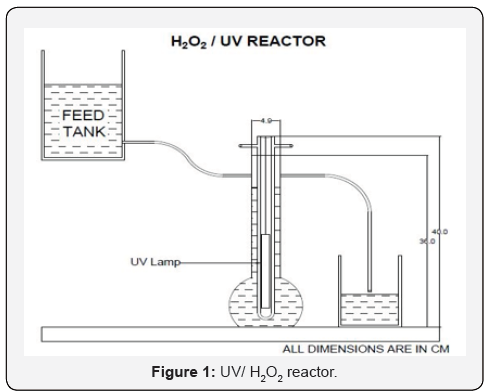
The reactor setup consists of a round bottom glass vessel 1.1 liters with inlet and outlet. UV lamp of 11W is inserted inside the glass vessel. The experiment is conducted for the gasoline concentrations by adding various hydrogen peroxide dosages 0.5ml, 1ml, 2ml, 5ml, etc. In the feed tank hydrogen peroxide dosages is added to produce powerful hydroxyl radicals. The BTEX, MTBE & TBA solutions are continuously flow through the reactor at a flow rate of about 9.12ml/min at the detention time of 120 minutes and it is irradiated with UV light inside the reactor. The reactor setup is kept inside the black box to avoid UV leakages. The treated samples are collected for every 10 minutes for 2 hours. Then the collected samples were tested for COD concentrations Figure 1.

Sample analysis

BTEX, MTBE, TBA samples were collected from the reactor at every 10 minutes interval for entire reaction period. The collected samples were tested for their COD values.

Results and Discussions

BTEX compounds cod reomval

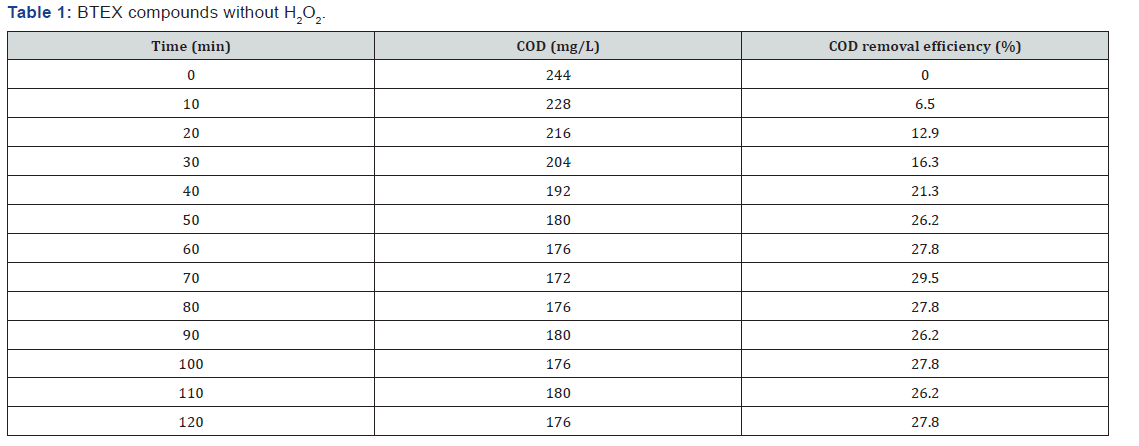
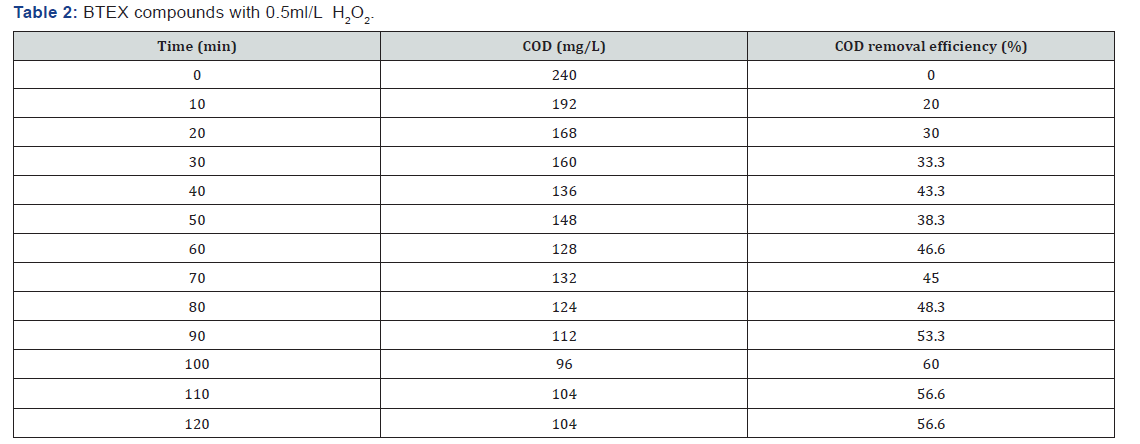
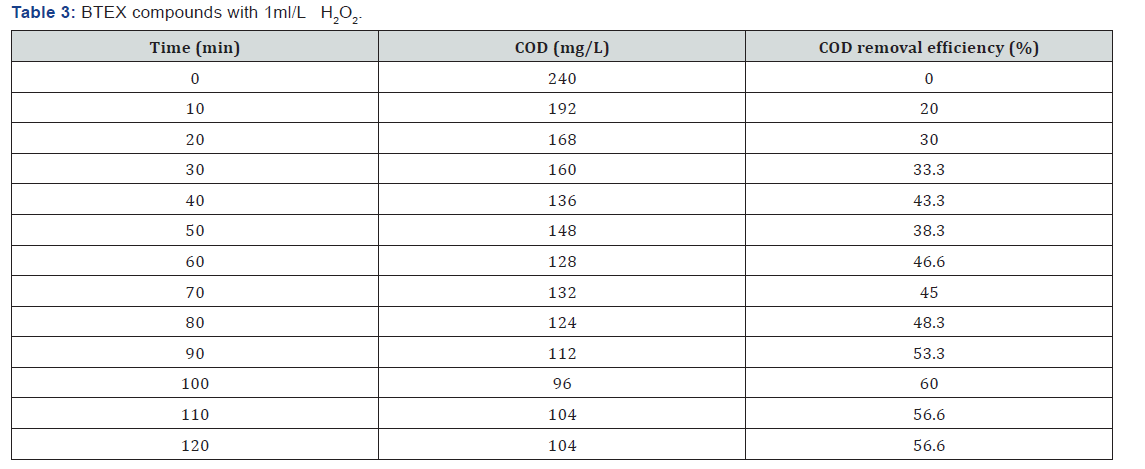
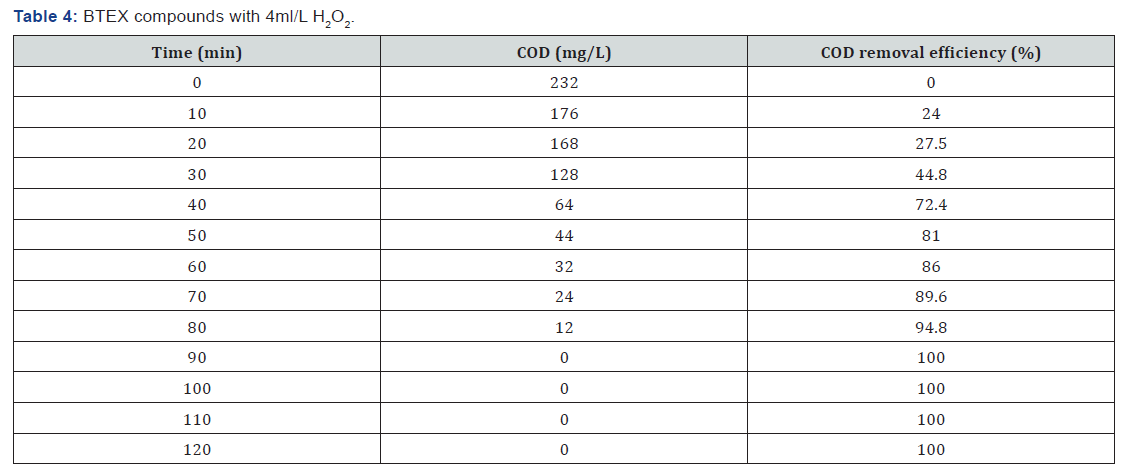
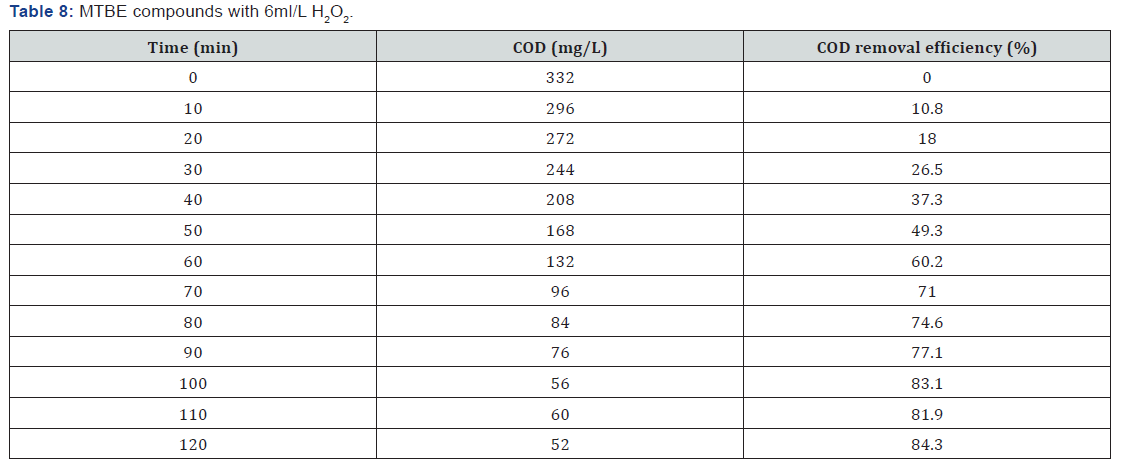
(Table 1-Table 8)

Conclusion

It can be concluded that in the wastewater treatment process of gasoline compounds presented sample the use of H2O2 in combination with UV resulted in an enhanced extent of COD removal. The COD removal efficiency of gasoline compounds decreased with increasing hydrogen peroxide dosages. When H2O2 concentration was increased the COD removal efficiency also increased. From the table 1,2,3,4 the optimized condition for H2O2/UV process was found at H2O2 dose of 4ml/L of wastewater, BTEX compounds concentrations maximum COD removal 100% achieved. From the table 5,6,7,8 the optimized condition for H2O2/UV process was found at H2O2 dose of 6ml/L of wastewater, BTEX compounds concentrations maximum COD removal 85.5% achieved. TBA compound will be treated enhanced results from the same process of other two compounds. It can be found that in the wastewater treatment process of Gasoline compounds (BTEX, MTBE, TBA) the use of H2O2 in combination with UV expected to result in an enhanced extent of COD removal.
 
To Know More About Open Access Journals Please click on: ttps://juniperpublishers.com/index.php

Wednesday, January 8, 2020

Intrapartum Management of Glucose for Diabetes in Pregnancy-Juniper Publishers

Journal of Gynecology and Women’s Health


Diabetes mellitus (DM) in pregnancy can be classified into either pre-existing diabetes or gestational diabetes mellitus (GDM) [1]. Gestational diabetes is defined as glucose intolerance with onset or first recognition during pregnancy [2]. Several adverse outcomes have been associated with diabetes during pregnancy and controlling blood glucose during pregnancy minimizes the risk of complications.
Furthermore, intrapartum glycaemic control is important for the foetus as factors such as foetal academia and hypoglycaemia are strongly related to maternal hyperglycaemia during labour. There is no clear recommendation regarding target blood glucose during labour. The National Maternity Hospital (NMH) is a tertiary level unit in Dublin, with more than 9000 births per year. A weekly multidisciplinary clinic is provided by endocrinologists, obstetricians, midwife diabetes specialists and dietitians. In this article we share our experience in the management of blood glucose during labour for patients attending the NMH with five different cases. These cases involve the spectrum of diabetes in pregnancy which include: Type 1 DM treated with insulin pump, Type 1DM on subcutaneous (SC) insulin, Type 2DM treated with subcutaneous insulin, GDM treated with Metformin and GDM treated with SC insulin. A specific labour protocol was used for each of the above patients which we believe contributed to good maternal and foetal outcomes and good blood glucose control.
Keywords: Pregnancy; Diabetes; Insulin labour management

Cases

Case 1

33 year old female para 1+0 with a history of gestational diabetes during her first pregnancy controlled with diet only with no complications. GDM was diagnosed at 21 weeks of gestation and treated with diet initially. At 22 weeks of gestation she required metformin 500mg twice daily and was under regular follow up in the maternity multidisciplinary diabetes clinic. Our patient had excellent blood glucose control until the end of pregnancy with a HbA1c of 31 mmol/mol and a fructosamine level of 183-185.
μmol/L. Her foetal scan at 36 weeks showed polyhydramnios and foetal abdominal circumference > 95th centile. At 39 weeks of gestation she went into labour and was started on protocol 1 for blood glucose control. She was prescribed to receive 2 units of aspart (SC) if glucose ≥ 6mmol/L and 3 units of aspart if
≥ 8mmol/L. She underwent a normal vaginal delivery and her labour lasted 4 hours and 34 minutes. Her blood glucose readings during labour were 5.3, 4.4 and 5.6mmol/l. She had a healthy 3.8kg baby boy with no neonatal hypoglycaemia. Post labour her blood glucose was checked only before meals for 48 hours and she was booked for an elective 2 hour 75g oral glucose tolerance test in the 6-12 weeks post-delivery.

Case 2

2 year old female para 0 diagnosed with gestational diabetes at 23 weeks of gestation. Initially started on diet control for two weeks but her control was suboptimal. She was commenced on insulin in the form of aspart and insulatard with regular follow up in the multidisciplinary diabetes in pregnancy clinic. The insulin doses were escalated to reach the target blood glucose and the patient required up to 30 units of insulin daily in the third trimester of pregnancy. The patient showed excellent blood glucose control, mostly on target, and had a HbA1c of 35-37mmol/mol and a fructosamine level of 187-189 μmol/L. Her foetal scan at 36 weeks of gestation was normal. At 37 weeks of gestation our patient went into labour and was started on protocol 2 for blood glucose control. She was prescribed one litre of Solution 18 with 20 mmol potassium chloride and 5 units of actrapid at an infusion rate of 125ml/h. A supplementary SC sliding scale was also prescribed with 3 units of aspart if blood glucose ≥6mmol/L and 4 units of aspart if ≥8mmol/L. She underwent normal vaginal delivery and her labour lasted 5 hours and 27 minutes. Her blood sugars during labour were 4.9, 5.5 and 4.4mmol/l. She had a healthy 2.6kg baby girl with no neonatal hypoglycaemia. Her insulin was held post delivery and blood glucose before meals was monitored for 48 hours. She was booked for an elective 2-hour 75g oral glucose tolerance test 6-12 weeks post delivery.

Case 3

29 year old female para 1+0 with a history of gestational diabetes during her first pregnancy and postpartum type 2 diabetes for 2 years duration. She was maintained on metformin 500mg twice daily with excellent control. She was evaluated by our team at the maternity diabetes clinic at 5 weeks of gestation, her initial HbA1c was 44mmol/mol and fructosamine level was 208μmol/L. Her blood glucose readings were above target and therefore her metformin was increased to 1000mg twice daily and she was started on insulin in the form of aspart and insulatard. She had regular follow up in the multidisciplinary diabetes in pregnancy clinic. The insulin doses were escalated to reach the target blood glucose and she required up to 47 units of insulin daily. Our patient showed excellent blood glucose control with the lowest HbA1c being 34 mmol/mol and a fructosamine level of 187-194μmol/L. Her foetal scan at 37 weeks of gestation was normal. At 38 weeks of gestation she went into labour and was started on protocol 2 for blood glucose control. She was prescribed one litre of Solution 18 with 20mmol potassium chloride and 8 units of actrapid at an infusion rate of 125ml/h. A supplementary SC sliding scale was also prescribed with 3 units of aspart if blood glucose ≥6mmol/l and 4 units of aspart if ≥8 mmol/L. She was delivered by caesarean section which lasted 35 minutes with a blood sugar of 4.9 mmol/l one hour prior to surgery, 6.1mmol/l during and 4.8mmol/l post-delivery. She delivered a healthy 2.8kg baby girl with no neonatal hypoglycaemia. Her insulin was stopped post delivery and her blood glucose was monitored for 48 hours. Her metformin dose was reduced to 500mg twice daily with a plan to follow her in a general diabetic clinic.

Case 4

35 year old female with a history of type 1 diabetes for 13 years duration. She was para 2 with two previous caesarean sections. She had uncontrolled diabetes pre pregnancy with a booking HbA1c of 67mmol/L and fructosamine level of 348μmol/L . Her pre-pregnancy diabetic regime was detemir 16 units daily and aspart 6 units with breakfast and lunch and 8 units with her evening meal. She was evaluated by our team at the maternity diabetes clinic at 5 weeks gestation and her insulin dose was adjusted according to her blood glucose readings on a regular basis. Her cetemir dose at its highest was 20 units per day and her aspart dose was escalated to a total of 48 units daily. This resulted in significant improvement in her diabetes control with her lowest HbA1c being 47mmol/L and her lowest fructosamine level being 241μmol/L. Her foetal scan at 37 weeks of gestation was normal. At 38 weeks of gestation she went into labour and was started on protocol 2 for blood glucose control. She was prescribed one litre of Solution 18 with 20mmol potassium chloride and 10 units of actrapid at an infusion rate of 125ml/h. A supplementary sliding scale was also prescribed with 3 units aspart if blood glucose was ≥ 6mmol/L and 4 units of aspart if ≥ 8mmol/L. She delivered via caesarean section which lasted one hour with a blood glucose of 6.9mmol/l prior to surgery, 6.2 and 6.9mmol/l during and 7.2mmol/l post-delivery. She had a healthy 3.9kg baby boy with no neonatal hypoglycaemia. Her insulin was reduced post labour to detemir 15 units and aspart 5 units with each meal. It was arranged that she be followed in a general diabetes clinic post delivery.

Case 5

39 year old female with type 1 diabetes for 24 years. Her diabetes was complicated by proliferative diabetic retinopathy and nephropathy. Our patient was commenced on continuous subcutaneous insulin infusion (insulin pump) with aspart insulin three years ago due to frequent hypoglycaemic episodes. This was her first pregnancy, and she was seen in our maternity diabetes clinic at 4 weeks of gestation. She had three basal rates per day with a carbohydrate correction ratio with all meals and an insulin sensitivity factor of 1:2. The patient required an average of 30 units of insulin per day. Her initial HbA1c was 79mmol/L and her fructosamine level was 325μmol/L. Her insulin dose was adjusted to reach the target for blood glucose control, requiring up to 5 basal rates of insulin and an average of 55 units of insulin per day. This improved her HbA1c to 41mmol/L and her fructosamine level to 240μmol/L. Her foetal scan at 34 weeks of gestation showed an abdominal circumference > 95th percentile. At 38 weeks of gestation she went into labour and was started on protocol 3 for blood glucose control. She was prescribed one litre of solution 18 with 20mmol potassium chloride at an infusion rate of 125ml/h and an insulin pump rate of 0.5 units/hour. A supplementary sliding scale was also prescribed with 3 units aspart if blood glucose ≥6mmol/L and 4 units of aspart if ≥8mmol/L. She delivered via caesarean section which lasted 40 minutes with a blood glucose of 4.4mmol/l prior to surgery, 6.2mmol/l during and 7.8mmol/l post-delivery. She had a healthy 3.8kg baby girl with no neonatal hypoglycaemia. Her insulin was reduced post labour with regular follow up in a diabetic clinic.

Discussion

Diabetes mellitus (DM) in pregnancy can be categorized into either pre-existing diabetes or gestational diabetes mellitus (GDM) [1]. In both categories there is a higher risk of complication to the mother and the foetus. Preeclampsia, macrosomia, maternal and infant birth trauma, fatal hepatomegaly or cardiomegaly, operative delivery, perinatal mortality amongst others are all complications of hyperglycaemia during pregnancy [3]. Management of diabetes during pregnancy depends on the type and severity of diabetes. Pregnant women with pre-existing type 1DM can either be treated with subcutaneous insulin or continues subcutaneous insulin infusion (CSII). Those with pre-existing Type 2DM can either be managed with insulin, oral hypoglycaemic agents or diet. GDM can also be managed with diet alone, oral hypoglycaemic agents and/or insulin. The main goal with any management plan is to achieve normoglycemia and to prevent maternal and foetal complications.
The occurrence of foetal acidaemia and hypoglycaemia is strongly associated with maternal hyperglycaemia during labour due to foetal hyperinsulinemia [4]. The reduced calorie intake and cessation of oral intake during the latent phase of labour and the higher energy requirement during the active phase of labour are both implicated in the lower insulin requirement during labour. Fluid solutions containing dextrose can also be important for optimal myometrial function during labour [5,6].
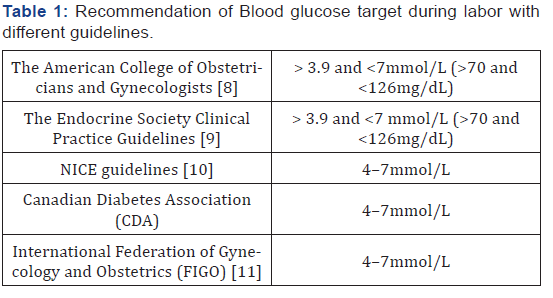
The metabolic changes during labour require close glucose level monitoring. However, the ideal blood glucose target during labour to prevent foetal complications is still unclear. The frequency of monitoring of blood glucose during the intrapartum period depends on the phase of labour. It is recommended to monitor capillary blood glucose 2-4 hourly during the latent phase of labour and 1-2 hourly during the active phase to achieve good glycaemic control [4]. Several guidelines and recommendations for target blood glucose have been summarised in Table 1. It’s important to note that a maternal blood glucose value of more than 10mmol/L (180mg/dl) during labour has been proven to be associated with a high risk of neonatal hypoglycaemia [7].
The diabetic management plan during labour should be individualized for each woman due to the differences in the type and severity of diabetes, beta cell reserve and the severity of insulin resistance. Unfortunately, a recommendation of optimal approach to achieve normoglycemia intrapartum does not exist due to the lack of well-designed, sufficiently powered, randomized trials. Here we share our experience of managing blood glucose levels during labour using fixed protocols. These protocols are individualized according to the type of diabetes during pregnancy, pre-delivery diabetic management and blood glucose control [8-11].

Compliance with Ethical Standards

a) This paper was not funded
b) Author Sulaiman Haji Ali declares that he has no conflict of interest
c) Author Recie Davern declares that she has no conflict of interest
d) Author Mensud Hatunic declares that he has no conflict of interest
e) Ethical approval: This article does not contain any studies with human participants or animals performed by any of the authors
f) Informed consent was obtained from all individual participants included in the study (Protocol 1-3).


To Know More About Open Access Journals Please click on: ttps://juniperpublishers.com/index.php

Tuesday, January 7, 2020

Results of a Student Survey on the State of Digital Transformation in Austrian Secondary Colleges for Agriculture and Forestry (HBLAs)- Juniper Publishers

Agricultural Research & Technology: Open Access Journal

Introduction

At the HLBAs the digital transformation is already in full swing. It means the transition from analogue to digital teaching, away from paper and pencil to the keyboard, mouse and touchscreen. Digital devices and media are more and more used in teaching the learning content. This can increase motivation and collaboration in the classroom, in class preparation, in project work, in homework, and in exam study, and also improve learning outcomes. But the place and time of learning also change from being bound to a classroom to a virtual, independent learning. Digital devices and media determine the lessons. For the students, digital learning becomes interesting because of digital devices, e.g. PC (standalone unit). A more accurate shows that in the classroom with a daily and weekly use so far Beamer (92%), Internet (91%), PC as stand-alone unit (80%) as well as Whiteboards / Smartboards (46%) arrived. In contrast, cell phones, smartphones (33%) and learning platforms (34%) play a lesser role. Notebooks are used by a third. Almost half (48%) of the students use learning software, online quizzes and tests. Also, digital media are used for communication. At school, 80% of learners use email, followed by WhatsApp (63%) and the class folder (53%).

Which Risks are Moving?

The students’ responses express a clear awareness of the risks associated with the use of digital devices and media. The students see more and more online risks that unsettle them in the Internet use. The topics of data security and data protection have a high priority. The majority of students do not believe in the security of data on the Internet. Currently, 70% of respondents believe that their data is uncertain. In this context, with increasing digital transformation, data protection also becomes a challenge for HBLAs. For many students, the unauthorized disclosure of their data and the threat of viruses and malicious programs as well as the spying of their data is the greatest risk of Internet use. Surpris -ingly, the traditional media, such as radio, television and newspapers, are rated rather positively by the students overall.

Digital Lessons between Expectations and Wishes

Another result of the survey was not surprising, 57% of the students advocate increased use of digital media in the classroom. Learners would like to see the use of digital media in learning and teaching, especially where it makes sense. One of the reasons for this is that digital media can make teaching more diverse and interesting (87%). Also, regarding a future job, they see the integration of digital know-how in the classroom as necessary preparation (70%). In addition, 70% of students believe that digital media should be used more widely, i.e. teachers should try something new more often. In this regard, 63% of students agree that teachers are well prepared to use digital media for teaching. On the other hand, half (49%) of learners emphasize that teachers should be more interested in using digital media. Furthermore, the digital transformation of teaching also presents a challenge to teachers who should use digital devices and media authentically and meaningfully. The survey results also show that 78% of students agree that the teaching materials should be available digitally. According to the answers, the learners also believe that a transcript is valuable and useful and that the use of the board should not be neglected.

The Mixture makes it

The main finding of this survey is that the majority (80%) still favor a mixture of analogue and digital forms of learning. Thus, in many classrooms, the blackboard and textbooks are still the linchpin of the time-bound instruction. Nevertheless, half of the students still hope that in the future learning will take place more and more in virtual spaces. Digital devices and media are tools to make not only learning, but also teaching more student-friendly, diverse and modern. Another important outcome of this survey was that the students see in the digital transformation a way to improve their current learning model both inside and outside the school. For example, every fourth student uses social media and blogs for homework and lesson preparation outside class hours

These Challenges are Brought about

The digital transformation at the HBLAs is seen as a central task by the school management and policy makers. The learners respond to this challenge in different ways: on the one hand, there are the digital enthusiasts who really invest time until digital excellence and, on the other, those who hardly or only moderately care and feel motivated. This is also reflected in the learners’ assessment of their knowledge: 62% of students say they have a basic digital knowledge, 34% have user proficiency and 4% expert knowledge. Also, according to the subjective assessment of the students almost two-thirds of teachers have a positive attitude towards digital media
One of the strengths of digital transformation is undoubtedly that teaching materials can be exchanged quickly and easily. In addition, multimedia, interactivity and the possibility of networking and communication extend the possibilities of teaching and learning independently of time and place. To ensure this, however, the technical requirements must be met. According to the proportion of students, it becomes clear that one in two (52%) points to the lack of professional support and maintenance of the technology
Digital transformation at the HBLAs is often understood to merely exchange pencil, paper and books for computers, notebooks or smartphones. However, this assessment fails to recognize that this change requires pedagogy adapted to digital education. The learners at the HBLAs, in turn, are challenged to deal with the digital transformation in order to use it to their advantage. This should lead young people to a responsible use of digital devices and media.

The Digital School Life is already a Reality

The students have already settled in the digital school life. They realize the potential and opportunities of digital learning but are also aware of its risks. Digital devices and media can be a useful tool for individual support of students and enrich the everyday school life at the HBLAs. As a result, students can be better promoted in their individual learning process and encouraged to become more responsible and self-reflective. Digital devices and media, modern pedagogical concepts and accompanying teacher training should be linked in such a way that the learners at the HBLAs can be guaranteed an optimal learning environment. The fact is: The HBLAs as a learning and educational institution prepare students for life in society and a professional activity. The future depends on promoting the potential and talents of the students. Digital competence plays a key role here. A society in technological change needs changing HBLAs. Current pedagogical patterns of action must also be measured against the new social requirements of the digital transformation
This article is based on select results of the study ‘Digital transformation in Austrian secondary colleges for agriculture and forestry’[1]. The aim of the study was to present the current state of digital transformation at the HBLAs and to explain the further need for action. You can find this study on the homepage of the Federal Institute of Agricultural Economics, Rural and Mountain Research. It was commissioned by the Federal Ministry of Sustainability and Tourism and coordinated by Pres. 4, Schools, Teaching and Research Centers. Special thanks go to the students who have taken the time to participate in the survey and to all those who contributed to the success of this study.

To Know More About Agriculture Research & Technology: Open Access Journal Please click on: https://juniperpublishers.com/artoaj/index.php
 
 
To Know More About Open Access Journals Please click on: ttps://juniperpublishers.com/index.php

Artificial Intelligence System for Value Added Tax Collection via Self Organizing Map (SOM)- Juniper Publishers

  Forensic Sciences & Criminal Investigation - Juniper Publishers Abstract Findings:  Based on our experiments, our approach is an effec...