Wednesday, July 21, 2021

A Rare Case Report of Granular Cell Tumor Involving the Cecum - Juniper Publishers

 Gastroenterology & Hepatology - Juniper Publishers

Abstract

Granular cell tumor arises from Schwann cells. It is common in females than males. It affects the age group from 10 to 50 years of age. It can arise anywhere in the body but commonly involves the oral cavity, skin, and subcutaneous tissue. Granular cell tumor involving the cecum is very rare. Here, we report a case of Granular cell tumor involving the cecum in a 58-year-old male..

Keywords: Granular cell tumor; Cecal tumor; Benign tumor

Abbreviations: GCT: Granular Cell Tumor; EMR: Endoscopic Mucosal Resection; ESD-Endoscopic Submucosal Dissection

Introduction

Granular cell tumor was first described by Russian pathologist Alexei Ivanovich Abrikossoff and is also known as Abrikossoff’s tumor. It arises from Schwann cells based on immunohistochemical studies. It is usually benign with 1 - 2% of the cases being malignant. The common sites of involvement include skin, subcutaneous tissue, and the oral cavity. Granular cell tumor involving the gastrointestinal tract is uncommon. Here, we describe a case of Granular cell tumor involving the cecum [1].

Case Report

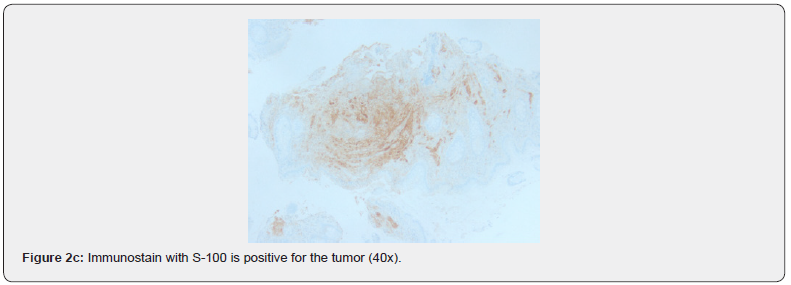
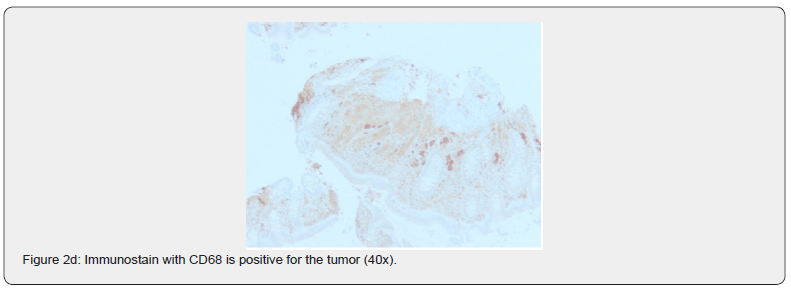
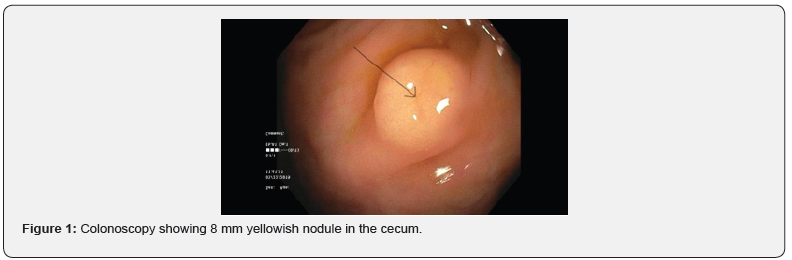
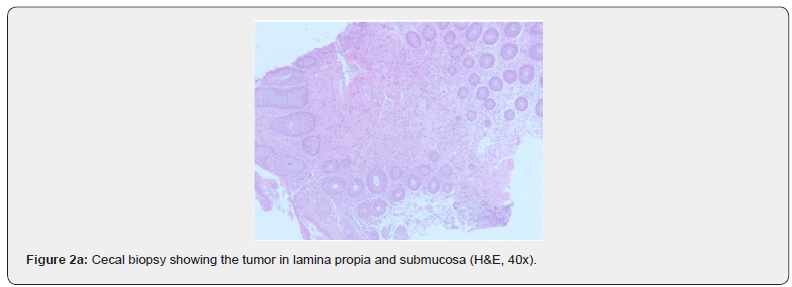
A 58-year-old male with no known past medical history underwent a screening colonoscopy. Colonoscopy showed an 8 mm nodule with yellowish discoloration in the cecum (Figure 1). Biopsy (Figure 2 a & b) was done which revealed a Granular cell tumor. Immunohistochemical stains are positive (Figure 2 c & d) for S-100, Calretinin, CD 68 and negative for AE 1/3, CK7, CK20, CD117, SMA, vimentin, and design. Ki-67 labeling index is <1%. PAS stain is positive for tumor cells [2].

CECT chest abdomen and pelvis were done which showed multiple mesenteric lymph nodes largest of which measures up to 7 mm but are within normal limits in size, with no evidence of metastatic disease in the chest, abdomen, and pelvis. The Tumor within the cecum was not visualized [3].

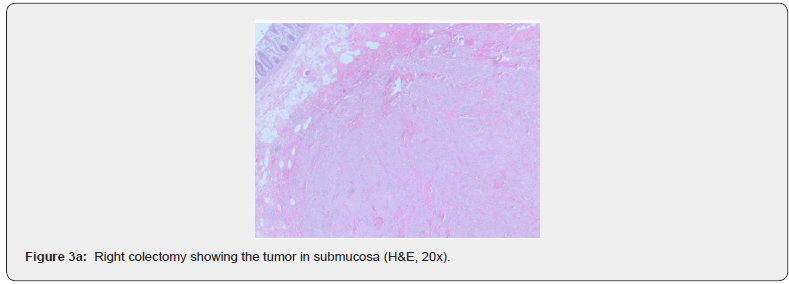
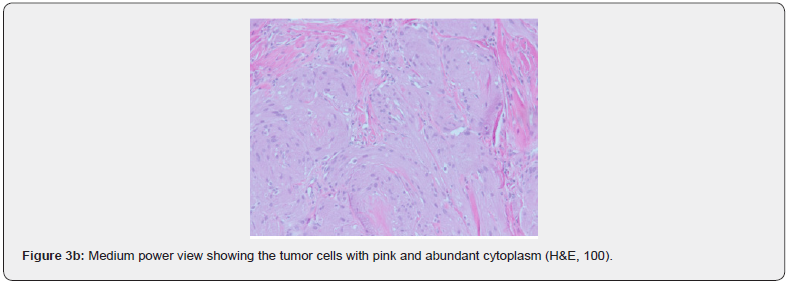
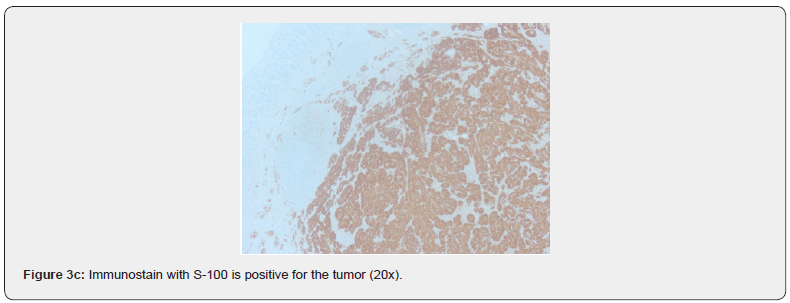
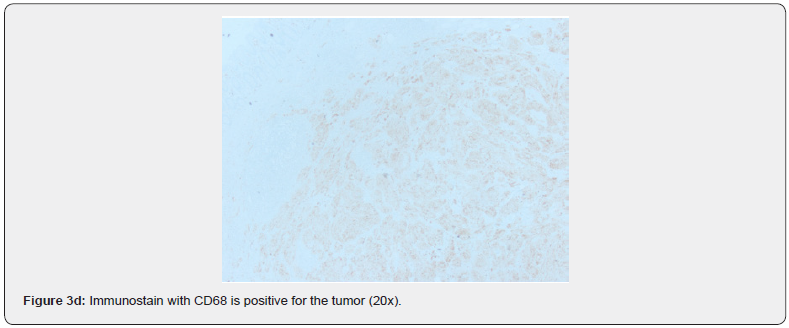
The patient subsequently underwent a right hemicolectomy. Histopathology revealed a Granular cell tumor (0.5x0.3 cm), in the submucosa (Figure 3 a & b) of the cecum. Immunohistochemistry cells positive for CD 68, S-100, negative for calretinin, ki-67 <1%, (Figure 3 c & d) with no muscular propria invasion. Twentyeight reactive lymph nodes were removed and were negative for metastatic carcinoma. Bilateral small bowel, colonic, and soft tissue margins are free of tumor. The patient was discharged without any complications [4].

Discussion

Granular cell tumor can occur anywhere in the body but rarely involves the Gastrointestinal tract. The common site of involvement in the gastrointestinal tract is the esophagus. Most cases of Granular cell tumors involving the Gastrointestinal tract are found incidentally on endoscopy. It presents as a solitary submucosal mass but can be multifocal as well [5].

Colonic GCTs tend to be asymptomatic and usually follow a benign course. Patients who had discomfort may exhibit larger lesions. However, this association is not strong regarding colonic GCTs. Common symptoms are non-specific, including abdominal discomfort, hematochezia and changes in bowel habits [6].

The microscopic criteria as per Fanburg-Smith et al for Granulosa cell tumors include spindling, necrosis, nuclear pleomorphism, high mitotic activity (2 per 10 high power fields at 200 magnification), high nuclear to cytoplasmic ratio, vesicular nuclei with large nucleoli. Tumors that meet 3 or more of the criteria were classified as malignant(histologically), tumors that meet 1 or 2 criteria were classified as atypical, and tumors that don’t fulfill any of the criteria were classified as benign [7].

Malignant tumors are usually larger than 3-4 cm in size, exhibit rapid growth, and ulcerated. The diagnosis of Granular cell tumors is made by endoscopic biopsy, histology, and immunohistochemistry.

Immunohistochemistry stains are positive for S-100, myelin basic protein, and CD 68. Benign granular cell tumors are usually treated with endoscopic resection.

Since there are no established guidelines for the treatment of colorectal GCT, some physicians recommend performing endoscopic mucosal resection (EMR), endoscopic submucosal dissection (ESD), or polypectomy for tumors less than 2 cm. Follow-up colonoscopies seem appropriate after resection if multiple tumors or risk of malignancy exists.

Conclusion

Granular cell tumors involving the cecum are very rare. Most of the tumors involving the gastrointestinal tract are noted incidentally on endoscopy. Although granular cell tumor is predominantly benign, 1-2% of tumors are malignant. Benign granular tumors are treated by endoscopic resection. Here, we report a rare case of Benign Granular cell tumor involving the Cecum.

To Know more about Gastroenterology & Hepatology


To Know more about our Juniper Publishers

Click here: https://juniperpublishers.com/index.php   


Tuesday, July 20, 2021

School and Vocational Guidance Through Graphology: A New Opportunity to Reverse from an Informative Approach to A Self-Assessment Approach - Juniper Publishers

 Psychology and Behavioral Science - Juniper Publishers

Opinion

This paper describes the results, in terms of appraisal and effectiveness, of the project “At school in continuity… with Graphology”, carried out in Bologna in 2010-2011. This project was allowed by USR ER, Office IX, Cultural and Educational Services and School Net of Area 3 and led by “Istituto Comprensivo 9” as leading school. This research focused on teenagers mental stress and learning disabilities, studying disorders ranging from mild to critical, including school dropout issues and potential treatments.

Background and Ratio

“Orientation” is the word we use when talking about “educational guidance”, especially when referring to middle and high schools support, where students will choose their further education. Hence comes the concept of "self-orientation", by which using given landmarks should help improve one’s awareness of their own place in time and space. However, these landmarks are being undone by quickly changing socio-economic realities, new, different criteria for defining “success”; and what schools have to offer. The landmarks we used to help us think about our future are no more, which makes it increasingly difficult for someone, especially if young, to “know what to do”.

Educational guidance within the Italian school system can be described as part of the education process. Educare comes from the latin “ex-ducere” which means to ”extract” or “elicit”; in other words, it provides students with the means to express themselves to their fullest through the use of the appropriate tools. This comes in terms of skills, competence and self-awareness, which will stay from school until one’s own professional life and beyond, making us ourselves and laying the groundwork for our personal development. It is exactly in this respect that the analysis of handwriting can be a useful and powerful instrument to pin point the fields where young people might do better academically, for instance languages or mathematics, and reveal their endowment of personal resources, such as good memory, social intelligence, intuition, or even highlight unknown potential. These skills will not only help young people to improve their grades, but also their lives. We can see how graphological investigation could become a powerful educational self-guidance instrument to help young people understand themselves in a simple, objective way. This will help them evaluate the best choice and when to make it by pondering the risks and benefits of every decision, increasing their self-awareness and their chances of success, as well as improving their self-esteem. It will also help them harness their own innate resources and, of course, prevent excessive expectations, and thus potential disappointments in the future.

In the field of education, school and vocational guidance may play two roles. It offers information about local job opportunities, and it deals with learning assessment from external examining boards in the form of multiple choice tests like SAT in the final years of middle and high school - 8th and 13th grade. However, it is common knowledge that academic achievement depends on how well individuals assimilate and adapt themselves to a given teaching system, which is standardized after given national curricula. This leaves no room for the individual’s personality.

Aim of the Study

The main purpose of this project is to show students, but also teachers and families, what a powerful tool graphology can be. The insight they gain will allow them not only to recognise the markers, but to also see them in a new light, and this will start a change in both roles and goals of school and vocational guidance, and also about when and how the guidance should be given. The result would be a better awarness of “external information”, often offered by schools and universities, which may be confusing or even misleading for someone young who has not a clear idea of what they want. However,a student who has acquired “inner information”,which is self-awareness and individuality, through graphological analysis, will be able to confidently develop their own project of self-realization using both “inner” and “outer” landmarks.

One of the major concerns for the graphological counselors in the project was to stop students and parents from making so called “value judgments”, showing them the importance of gaining SELF-AWARENESS of one’s own strengths and weaknesses, and even of what could come with a little practice. The aim of the project was to straightforwardly prompt to the awareness of one’s limitations and how to turn these into new strength, also to develop healthy SELF-EVALUATION criteria, useful both at school and for the rest of one’s life.

Casistic and Methods

The project was led and promoted by Istituto Comprensivo 9 “Il Guercino”, Longo Street, Bologna (Italy), and joined by Istituto Tecnico Agrario “Arrigo Serpieri”; Istituto Tecnico “Manfredi – Luigi Tanari”; Istituto Comprensivo 18 - Scuola secondaria di primo grado “Fabrizio De Andrè”; Istituto Comprensivo 16 – Scuola secondaria di primo grado “Guido Reni”; Istituto S.Domenico-Farlottine - Scuola secondaria di primo grado “S. Tommaso d’Aquino”; Scuola secondaria di primo grado “Guido Guinizelli-Annibale Carracci”, Istituto Tecnico “Rosa Luxemberg”.

The goal was to test the new method on 149 students, but despite the effort to get samples also from the students who had not been at school on the test days, the final number who took part was 127; 83 from middle school and 44 from high school. Once the professional graphologists had completed feedback interviews with either the students’ parents, or with the students, if they were legals, each of them was given a satisfaction questionnaire with the following questions (attachment 1):

a) Before experiencing graphology first-hand by taking part in the project “At school in continuity… with graphology”, whose aim was to carry out school and vocational guidance through the interpretation of handwriting movement, what did you know about graphology in terms of actual knowledge?

b) Were you aware of its application in schools In terms of knowledge?

c) How did you feel before taking part in the project? Were you keen to participate in the project, and if not, why?

d) What is your opinion about employing graphology as a tool for educational purposes in order to improve communication between family and school?

e) What do you think about employing graphology at school in order to learn more about the boys and girls’ preferences, their potential, temperament and character and its benefit for teachers and parents?

f) How satisfied were you with the graphology counselors’ work in the feedback session after your evaluation?

g) Do you think a parent will find it useful for their child to take part in a project aimed at establishing new criteria for school and vocational guidance that will help to choose their future education through and as a form of self-guidance?

For each question, the writer could choose from the following:

Absent low medium high very high the student could also express an opinion in a separated blank space. The questionnaires were filled in anonymously and collected by a teacher in each class and then delivered to the project designer and coordinator, PhD Mara Massai.

Data Analysis and Discussion

Of the initial 149 students enrolled, 127 finally received the questionnaire and 104/127 (82%) gave it back properly completed, representing the ‘study sample’. All the questionnaires collected were complete and each part correctly filled in. Out of 104 questionnaires, 33 were filled in by over-18-year-olds in 3 different schools, 71 by parents of middle school students. Very few added a comment, and some expressed their perplexity about the whole ordeal, which is hardly surprising given that little is known about graphology and its effectiveness. However, many expressed favor and a wish to continue on this line of experimentation in the future, possibly involving more classes.

At the end of this engaging experience, we deemed it opportune to re- elaborate the collected questionnaires in order to assess the real effect of the project on the people involved. We believe the feedback from the people who were directly involved in both their first encounter with an in-depth and precise graphological analysis, and their perceived feelings of well-being, or possibly discomfort, during the feedback interview would be the most likely to give us a qualitive measure of the whole experiment. So after re-examining the comments about the “graphology approach”, we decided to read the evaluation in qualitative terms of “effectiveness” rather than “satisfaction”.This would show how useful the approach was to obtain:

a) a better understanding of oneself and/or one’s children

b) better School and Vocational Guidance and guidelines for future

c) acceptance of oneself (self-acceptance?)

d) focus on one’s own personal resources to rely on

Although the collected material may not be enough to stand for an exhaustive and universal response, it is undoubtedly significant. It reflects the opinion regarding the perceived validity, usefulness and effectiveness of graphological investigation as a tool in School and Vocational Guidance, as supported by of the 82 % of the participants of the whole sample. It also acts as a valuable, effective and non-intrusive way to give both parents and teachers a better understanding of a child’s aptitudes and qualities, which will only improve the dialogue between parents and teachers.

Our main focus was the very aspect of "satisfaction" expressed both by the students’ parents and students themselves involved in the experimentation. According to average responses to question 1,72% stated a limited and partial knowledge of graphology, with approximetly 18% reporting NO KNOWLEDGE at all of this discipline. In response to question 3,63% wrote they were unwilling and even skeptical about the idea of participating in the experiment, while 55,76 % reported a MEDIUM, and 7,69% a LOW level of willingness. Despite this, the final outcomes of the experiment yielded really encouraging, and certainly satisfactory, qualitative data in terms of participant satisfaction when considering the usefulness of implementing this project at school. Question 6, which asked respondents for an evaluation in terms of experience satisfaction, registered positive answers in 83% of the whole sample, with 55.76% of the whole sample showing a HIGH satisfaction level, and roughly 28% VERY HIGH.

The most interesting findings, however, only came during the feedback interviews. It was then that the results, developed by the graphology counselors, could be compared to the expectations and self-awareness of students and of parents about their children. There is absolutely no doubtthat there were cases that rose concern, for instance those where the handwriting samples revealed unexpected differences between the hoped achievement and the actual results; or when talents, character traits, or attitudes did not correspond to the image the child or their parents had of them.

In order to achieve self-awareness, we should take the following steps:

a) scale back our expectations and dreams;

b) Recognize that there may be qualities and characteristics that we do not like about ourselves, or our children;

c) Accept our uniqueness as something positive, and that one’s limits can be turned into a resource

Then we will experience a true moment of evolution and start accepting responsibilities. This process can happen anytime, carefully built and day after day in full awareness, with a serene and mature attitude and the help of experts who will help us see and comprehend ourself without judgments. Bearing this in mind, 45,45% of 18-years-old boys and girls, whom the graphologist interviewed directly, rated HIGH and 36% VERY HIGH, giving a positive evaluation of about 82%. The same can be said for middle school pupils’s parents, whose percentage was about 60% for HIGH satisfaction and 23,9% for VERY HIGH, on a total of 84,5% positive responses in terms of satisfaction.

Another interesting point is that everyone’s overall responses to items 4) to 7) in the questionnaire (i.e. to items concerning the evaluation of one’s personal encounter with the graphological approach and of what kind of impact it had on both the school environment and family relationships) consistently rate HIGH and VERY HIGH satisfaction levels:

a) regarding positive feedback on Graphology as a tool that improves School-Family relations (question 4), yielded rated 63% of very favorable feedback (50 HIGH, i.e. about 48% and 16 VERY HIGH responses, equal to 15,38%)

b) the positive feedback increased when asked about the validity of Graphology and its applications as a functional tool to improve the knowledge of aptitudes and individual limits (question 5) with 75% highly favorable responses (57 responses with HIGH, equal at around 55% and 21 with VERY HIGH, equal at 20%);

c) the percentage of positive answers increases when asked to give satisfaction indexes at the end of the interview and of the experience itself (question 6) (83% favorable results, which include 58 rated it HIGH equal to over 55%, and 29 - approximately 28% - with VERY HIGH satisfaction);

d) 67% positive evaluation was attained from parents when answering question 7aboutthe usefulness of Graphology in obtaining an additional point of reference for their children as a means of self-guidance (56 rated it HIGH – slightly under 54%- and 14 rated it VERY HIGH).

The decidedly negative feedback to questions 4) to 7) is based on small figures:

a) To Question 4, on graphology at school as an instrument to obtain an improved school-family relationship, we registered 8 highly negative responses (2 stated the usefulness was ABSENT and 6 responses rated it as having LOW utility), corresponding to 7.8% of the answers.

b) Question 5, on the validity of graphology to identify talents and/or limits that might still be unknown to the young person, received 8 very negative responses, again equaling 7.8% (3 responses rated ABSENT the graphological analysis’ capacity to outline an accurate profile of the writer as, while 5 rated it having LOW validity).

c) Question 6 - on the level of satisfaction reported at the end of the experience, showed only 1.9% negative feedback, corresponding to 2 responses in total, of which one wrote ABSENT satisfaction and the other one LOW satisfaction.

d) With regards to question 7, it should be pointed out that 2 out of 3 responses that rated ABSENT (2.8%) to the question that asked whether parents perceived the usefulness graphology as a tool to provide reference points for self-guidance, were from 18-year-old high school students who wanted their parents excluded from the experience. (see Attachment 2- Numeric data analysis and Attachment 3- Percentage data analysis)

Conclusion

Despite the limited number in research terms, as stated above, the collated sample data shows an interesting and encouraging outcome to the “At school in continuity… with Graphology" experience carried out in the 8 selected schools in Bologna and nearby outskirts. It is worth mentioning that none of the people involved felt that taking part in the project was an imposition or sterile. In spite of 72% claiming to have little or very little knowledge of the graphological discipline, no respondents expressed an ABSENT willingness to participate in the trial. Also, it is significant that the responses, in general and in terms of satisfaction, from students of age 18, who were personally interviewed by the graphologists, more or less coincide with those of the parents of minors.

This suggests that the study of aptitudes, abilities, tendencies and temperaments is worthwhile and that graphology is the right instrument for the job, offering precision, depth and substance. Parents found that the graphological analysis corresponded with their own ideas about their child; but more importanly the young people directly involved identified with the profile that emerged, unhesitatingly recognizing and acknowledging those aspects of themselves that might hinder or facilitate the achievement of their goals. All the types of behavior that parents often call "irritating" or "unfathomable" such as poor concentration, anxiety, restlessness, listlessness, disengagement, as well as types of behavior though negative may produce good results, such as fear of failure, over-achieving, or addicts to studying can be identified by the professional graphologist based on the study of graphical gesture (in writing and drawing). Indeed, the parents of pupils in junior high in our study found the professional graphologists’ explanations regarding the origin and development of their children’s behaviour effective and fruitful. It seems clear that this type of exchange can but promote good relations between parents and children.

We also believe that carrying out this project in the school environment was effective and fruitful to promote sound self-awareness and to provide positive input into the self-guidance process for the more mature young people, approaching the end of the fifth year of high school, about to make important career decisions. The results extrapolated from the re-processed and analyzed satisfaction survey questionnaires of the "At school in continuity ... with Graphology" experiment bear witness to the validity of the project, and more specifically that Graphology can set us on a path of self-realization, with its positive support our relationships in the school/family context are healthier and more enlightened, and that it might serve as an effective tool to check the number of school dropouts, which is worrying social phenomenon. We suggest the possibility to update these results, which might represent an appropriate research tool to better define the increasing social and personal uneasiness among adolescents especially in this particular post lockdown period.

To Know more about Psychology and Behavioral Science


To Know more about our Juniper Publishers

Click here: https://juniperpublishers.com/index.php  


Monday, July 19, 2021

Ldl-c Levels In Secondary Prevention: The Lower The Better and The Sooner The Better - Juniper Publishers

Cardiology & Cardiovascular Therapy - Juniper Publishers


Abstract

Ischemic heart disease continues to be the leading cause of death worldwide. Low-density lipoproteins cholesterol (LDL-c) is the main responsible factor in its pathophysiology. Despite the great farmacological advance in lipid-lowering treatments (estatins, ezetimibe, PCSK9 inhibitors and those that remain to come bempedoic acid and inclisiran) most of our patients in secondary prevention present LDL-c levels over the recommended by the Clinical Practice Guidelines. For this reason, we developed a specific program in an attempt to achieve the goal of lowering LDL-c the lower and the sooner the better.

Keywords: Low-density lipoproteins cholesterol; LDL-c; PCSK9 inhibitors; Acute coronary syndrome; Secondary prevention

Abbreviations: ACS, acute coronary syndrome; CPGs, Clinical Practice Guidelines; LDL-c, low-density lipoproteins cholesterol; PCSK9i, inhibitors of proprotein convertase subtilisin/kexin type 9

Introduction

The WHO reminds us that ischemic heart disease continues to be the leading cause of death worldwide. Over the last few years, a relevant scientific impulse has been developed aimed at investigating its pathophysiology, managing to identify different causes that, to a greater or lesser extent, are responsible for it. However, up to date, its main causal factor continues to be low-density lipoproteins cholesterol (LDL-c) [1-6].

For this reason, LDL-c reduction therapies are postulated as the best tool available for the secondary prevention of patients who have suffered an acute coronary syndrome (ACS). Since the initiation of statin therapy with lovastatin in 1987, great scientific evidence has been built on cholesterol-atheroma plaque causality in parallel with the therapeutic arsenal used, with the incorporation of ezetimibe [4,7] and inhibitors of proprotein convertase subtilisin/kexin type 9 (PCSK9i) [5,8], capable of reducing LDL-c levels to unusual values with previous therapies. In a few months we will have two new molecules: benpedoic acid [9], for patients intolerant to statins or as a complement in those patients bordering on the fulfillment of objectives and Inclisirán, a new drug based on RNA interference technology with promising results to change the routine of lipid-lowering treatment, with a biannual dosage [10].

Keeping in mind this impressive advance in cardiovascular prevention, it should be considered that clinical practice has already internalized that, when it comes to a reduction in LDL-c, “the lower the better”. Consequently, it should have resulted in a higher success rate in achieving the lipid targets recommended by the Clinical Practice Guidelines (CPGs) based on the patient's risk score [11]. However, the latest multicenter secondary prevention studies such as EUROASPIRE [12] and DA VINCI [13] show poor lipid control in our patients despite the disponibility of drugs capable of achieving this goal. This is due to an inappropriate use of available treatments with an insufficient number of combination treatments (statins with ezetimibe) and a low use of PCSK9i.

In addition to the paradigm of "the lower the better", it is necessary to reduce LDL-c levels "the sooner the better". Obviously, this requires a closer follow-up of patients, with more frequent analytical controls and a greater dedication to meeting the lipid threshold, than is usually used in a conventional cardiology consultation. In this sense, in the Cardiology Service of the Puerta del Mar University Hospital, we have developed a specific program called “Post-ACS Virtual Consultation”. It is aimed not only at achieving the LDL-c levels recommended by the CPGs [11] in the majority of patients in post-ACS secondary prevention, but also to accomplish it “the sooner the better”. This idea emerged as an improvement action after analyzing our results from a previous series (2018). In this series, we achieved the goal of LDL-c <70 mg/dL (still in force in 2018-2019) in 52% of our post-ACS patients, after 1 year of follow-up [14]. Although these results improved those of the Euroaspire V study, they were insufficient, especially if we take into account the time elapsed until its achievement (almost 1 year) and that the new 2019 CPGs lowered the lipid target for LDL-c from 70 to 55 mg/dL. Therefore, a more energetic and faster lipid control strategy was required than the one we had been using.

In 2020, we developed the “Post-ACS Virtual Consultation” and despite the COVID pandemic, we included more than 300 patients in this program. It basically consists of monthly monitoring and analytical control of patients who have suffered an ACS. These patients are discharged from hospital with high intensity statins, together with a request for a lipid profile within 1 month post ACS and are also included in a specific database. Analysis and telephone consultation are carried out every month. In these monthly telephone consultations, the treatment is escalated (increase in statins and/or ezetimibe and/or PCSK9i) until the lipid goal of LDL-c <55 mg/dL is achieved. At this time, the “time until reaching the lipid goal” is computed, which is the main variable of this program.

We are currently finalizing the follow-up of the last patients included, but, in a preliminary way, we can anticipate that the vast majority of them achieved an LDL-c <55 mg/dL and that the average time for this was around 3 months. Although this results are still preliminary, we believe that this more committed approach in the control of LDL-c will allow the achievement of the recommended objectives by the European CPG [11] in a greater percentage of patients and, especially, in a much shorter time than usual.

Conclusion

Given the known causal relationship between LDL-c and cardiovascular risk, a more conscientious strategy to reduce LDLc the lower and the sooner the better should help reduce the incidence of new ischemic hospitalizations after ACS.

To Know more about Cardiology & Cardiovascular Therapy


To Know more about our Juniper Publishers

Click here: https://juniperpublishers.com/index.php  
Friday, July 16, 2021

Cervical Cancer Prevention: Unearthing the Unspoken Barriers for Caribbean Women - Juniper Publishers

Gynecology and Womens Health - Juniper Publishers

Abstract

Despite the introduction of effective screening mechanisms and the HPV vaccine in the Caribbean, the incidence and mortality from cervical cancer remains disproportionately higher than the rest of the world; the average incidence almost double the global average and is estimated to rise by more than 75% in the next 20 years. This review aims to explore the reasons that cervical cancer prevention services are underutilized within the region. A search of PubMed and Cochrane databases, and Google Scholar was done to identify relevant articles. Results showed that a lack of awareness and the resulting misconceptions about cervical cancer and its prevention; low literacy levels; fear of the procedure; and a negative diagnosis were factors that influenced use of prevention services in the Caribbean. Additionally, social factors such as stigma attached to HPV and cancer, physician-related barriers such as communication style and gender, and the health system defects were prominent contributors to the problem. Widespread and aggressive education beginning at the secondary school level; open discussion of cancer-related topics to dispel stigma; reconsidering materials used for dissemination of information; and addressing physician related barriers through use of female chaperons are some of the ways to improve utilization of services. These interventions can increase cervical cancer prevention programs’ effectiveness and women’s participation in the Caribbean, thus reducing the incidence and mortality from cervical cancer in the region.

Keywords: Uterine cervical neoplasms; Caribbean women; Prevention; Papanicolaou test; Papillomavirus infections; HPV vaccination

Introduction

Cervical cancer ranks globally as the fourth most common malignancy in women with over 570,000 new cases and 311,000 deaths annually [1,2]. This follows breast, colorectal and lung cancer [1]. In Latin America and the Caribbean (LAC), cervical cancer is ranked third, though ranking may vary by individual countries [2]. The LAC region has reported some of the highest incidence and cause specific mortality rates from cervical cancer in the world [3]. The latest estimate from 2019 noted that annually over 56,000 women are diagnosed with cervical cancer, an incidence of 13%; this is projected to rise by over 75% in the following 20 years [4-6]. Moreover, annually 28,000 deaths occur which represents a cause-specific mortality of 10.4% [5,6]. The LAC region represents 14.6% and 11.9% of global cervical cancer cases and deaths respectively; the average incidence rate double that of the worldwide average [4].

In the Caribbean, cervical cancer accounts for a significant number of cancer-related deaths. It is ranked in most Caribbean countries as the second most common cause of cancer-related deaths. Exceptions include Antigua and Barbuda where it is ranked number four, Barbados and Bahamas which ranks it number three, and in Belize and Suriname where it is the number one cause of cancer-related deaths [7]. Amongst the English- and Dutch-speaking Caribbean countries in particular, cervical cancer accounted for 4.5% to 18.2% of all cancer related deaths from the period 2003 - 2013 [8]. Additionally, cervical cancer is a significant cause of lost years of life as cervical cancer mainly affects women 20-64 years old. It accounted for 314,000 lost years of life in 2000 in the LAC, more than twice the global average and more than diseases like breast cancer, or maternal illnesses [9]. Estimates on the burden of cervical cancer in the Caribbean region beyond 2013 are very limited; however, based on the available statistics and the projected increase, it can be concluded that this burden is a public health concern warranting emergent attention.

The development of the human papillomavirus (HPV) vaccine, and screening techniques such as Pap Smears and Colposcopy have made cervical cancer one of the most preventable cancers to date [3]. Since their introduction on the global market, several Caribbean governments have implemented them, beginning in 1987, to reduce cervical cancer rates in the region [5]. National screening programs are present and widely accessible in most Caribbean islands. The Pap Smear is the most common screening modality though Visual Inspection with Acetic Acid is also used in Belize and Guyana [5,7]. Barbados has replaced the conventional Pap Smear with the ThinPrep Pap test, a more sensitive and specific test for Cervical cancer than the conventional Pap Smear [3]. HPV testing is yet to be included as part of the national screening program in Caribbean [7]. With respect to immunization, many of the English-speaking Caribbean states have included the HPV vaccine into their national immunization program [7,10]. Table 1 gives a summary of the prevention services and their coverage currently available in the Caribbean. Additionally, Belize and Surinam have implemented a dedicated budget to finance cervical cancer prevention and treatment services [5].

Despite these initiatives, women are opting out of screening or vaccination which has slowed efforts to reduce cervical cancer mortality. The percentage of women in LAC eligible for cervical cancer screening who have received a Pap smear was noted to be under 50% [11]. Within the Caribbean, screening coverage rates between 10% and 50% were reported in 2016 in St. Kitts & Nevis, Jamaica, Guyana, and Belize. St. Lucia’s coverage was less than 10% and Dominica reported the highest coverage of 70% in 2016 [12]. Trinidad and Tobago’s last reported coverage was 35.4% in 1987 and data from other Caribbean islands were unknown or not available [12,13]. Several studies have been conducted globally evaluating the reasons for underutilization of these prevention services in women and have listed a number of contributing factors [14-17]. Chidyaonga et al. [17] noted that these factors occur at three levels: individual, community and at the health system level.

Individual level factors include fear and embarrassment; level of awareness or knowledge of prevention services; socioeconomic status; age; marital status; literacy; cultural and religious ideologies. At the community level, discussion around reproductive health issues is taboo; and language barriers of immigrants affect their awareness and utilization of services. Health system factors include center location, cost and delivery method of services; lack of female physicians for test administration and limited health provider recommendations [3,14,15,17,18]. This paper seeks to bring to the forefront the factors affecting Caribbean women’s desire to readily utilize the cervical cancer prevention services in their community. Knowledge and understanding of these barriers can assist with the formulation of effective cervical cancer prevention programs in this region (Table 1).

Methods

A review of the literature was conducted to determine the factors contributing to the underutilization of cervical cancer prevention services by Caribbean women. Several databases and search engines were searched including PubMed, Google Scholar, and Cochrane databases and Google in September 2020, using key words with Boolean operators: cervical neoplasm, Caribbean, prevention, prevalence, incidence, socioeconomic, psychological factors, pap smear. No date or language filters were applied on initial search. Moreover, references of acquired articles were screened for supplemental publications relevant to our study, leading to a total of 157 articles. These articles were then screened to see if they met the inclusion criteria.

Publications were included if they were peer-reviewed publications or publications from governmental or regional health department, contained full text, and data on Caribbean women. Publications were rejected if they were not in English as full text translations were not available; had no full text; were letters to the editor or books; contained duplicated data on the same population; or did not contain data on our target population. For the purposes of this study, Caribbean women were defined not only as women living within the geographical boundaries of the Caribbean, but also included those who self-identified as belonging to the Caribbean diaspora. After screening, 33 articles were selected for this analysis.

Discussion

Traditionally, Caribbean society depends on women filling vital roles as primary caregivers, household leaders and contributors to the workforce. As such, the increased mortality caused by cervical cancer in young women negatively impacts family life along with national productivity and sustainability. Addressing cervical cancer mortality and promoting greater use of cervical cancer prevention services is needed. However, this is not possible without a thorough understanding of the unspoken barriers influencing women’s decisions to not utilize these services [3]. Barriers to participation noted amongst Caribbean women include lack of awareness or knowledge about cervical cancer and its prevention, fears and attitudes towards cervical cancer, societal expectations, socioeconomic status, health system factors and costs of services. Additionally, religious beliefs, gender perspectives and socio-cultural factors are also influential [19].

In examining Caribbean women’s awareness of the factors causing cervical cancer, the following was found. Studies in the Caribbean show that approximately 76.5% and 17.9 - 80% of women knew about cervical cancer and pap smears respectively, but only 5.6% were aware of the HPV vaccine [19,20]. Lack of awareness has led to the formation of many misconceptions about cervical cancer’s etiology, prognosis, and prevention. Some women believe that cervical cancer is caused by poor hygiene and dietary choices, miscarriages, vaginal infections, intra-uterine contraceptives, sexual abuse and by semen [21,22]. Additionally, some believe that it is hereditary or that the diagnosis means inevitable death [3,19].

With respect to pap smears, there is the misconception that it identifies abnormal bacteria in the body, and detects sexually transmitted infections, bacterial and yeast infections. It is also believed to indicate the status of women’s reproductive and sexual health, an association that Christian & Guell [3] found unique to Caribbean women. One explanation for this belief is that most pap smears are done during routine postnatal clinic appointments. As such, nulliparous women did not see the need for pap smears [3]. Moreover, some women are unaware that pap smears detected precancerous lesions and thus helped prevent cervical cancer [23]. Many teenage women between 15 to 17 years old are also unaware of the link between HPV and sexual intercourse and the subsequent importance of the HPV vaccine in preventing cervical cancer [24]. These findings suggest that the knowledge women possess about cervical cancer is not only limited but, in some cases, inaccurate. Consequently, prevention services will not be adequately utilized if women are not convinced of its importance, or aware of the facts pertaining to cervical cancer. It is therefore imperative that education on disease risk, transmission and prevention should be at the forefront of any cervical cancer prevention strategy

The lack of education on cervical cancer and its prevention has been associated with the level of formal education received by women. Women with higher education are more knowledgeable on cervical cancer, and more likely to have screenings done than women with less formal schooling [15,20,25,26]. One explanation for this phenomenon is that increased education tends to improve cognitive functioning, and thus more educated women make more informed decisions toward their healthcare and lifestyles [25].

Low literacy levels impair doctor-patient communication and patients’ inability to follow healthcare provider recommendations as these persons lack comprehension or knowledge of healthrelated concepts [25,27]. Low literacy also renders cancer prevention information given ineffective as they are most often disseminated via written materials, such as brochures and postures, in grade 11 and upwards language. Women who are unable to read would be less likely to take the necessary action advised in the written material [25,27]. Hence, addressing literacy levels in Caribbean women is important, and should include studies examining the association between low literacy levels and Caribbean women’s response to cervical cancer related topics. It should also prompt physicians and public health officials to reexamine their campaign and information dissemination methods in areas with low literacy.

Fear and stigma also negatively affect the use of screening services. Unpleasant previous medical encounters: negative anecdotes provided by family and friends; and the taboo nature of HPV and cancer contribute to the fear of screening. Women are fearful of the procedure which they have described as painful, uncomfortable, and embarrassing [15,28,29] Due to the taboo nature of HPV and cancer, there is a stigma attached to persons who receive abnormal results. HPV is associated with promiscuity and infidelity; it can result in disrupted relationships to the point of divorce [30].

On the other hand, cancer may also be associated with inevitable death and few women are aware of the possible treatments available once diagnosed [19,30,31]. For this reason, many women prefer to remain oblivious about their cervical cancer status even if cancer could be present and thus delayed getting screening [31]. Older women appear to be more concerned with the opinions of their peers and the anticipated shame acts as a barrier to screening [22]. These studies, however, do not provide an in-depth analysis into the origins of the misconceptions and taboo surrounding cervical cancer and HPV in the Caribbean. By understanding why these attitudes exist, it will be possible to formulate targeted educational programs to treat with these issues.

Another reason for low uptake is physician-related barriers [31,32]. Physician related barriers include the gender of the physician; communication style; and the lack of recommendations or reminders provided by the physician to patients. Women are more comfortable discussing body-related matters with female health providers than with male health-providers [32]. Communicating information about cervical cancer to patients in an impersonal manner also acts as a deterrent for many women [19]. Moreover, according to Hyman et al. [32], female physicians are more likely to recommend screening services to women but, even when they do, adequate reminders are not given.

Lastly, Ncube et al. [29] and Hyman et al. [32] noted that system level factors such as screening or vaccination costs; lack of knowledge on screening sites; distance from testing site; and socioeconomic and marital status influenced women’s use of these services. In countries where pap smears are not available to women free of charge, paying out-of-pocket can be costly especially if reimbursements are not provided [32]. With regards to socioeconomic status, women in the lower socioeconomic classes are less likely to have a Pap smear than women of a higher status [11]. The same was also noted for unemployed women; women from larger households; and older women who led households [26]. Similarly, with regards to marital status, Ncube et al. [29] noted that married women were much more likely to get a pap smear than single women, largely due to support from their spouses (Table 2).

Recommendations

The low uptake of cervical cancer prevention services by Caribbean women is disturbing. Encouraging the utilization of these services is crucial to early detection and treatment. The barriers identified within the Caribbean are remarkably similar to those experienced globally. Research conducted outside the region has suggested several successful interventions that may be used to improve utilization of cervical cancer prevention services with similar success in the Caribbean. These interventions seek to better inform women on the topic and create a more comfortable patient care experience. Educational programs have been found to be significantly effective at increasing uptake [33]. Widespread education particularly at the community level can dispel misconceptions about cervical cancer causes, cancer diagnosis, and screening [22]. Additionally, information on HPV and cervical cancer should be included in secondary school health education programs to increase awareness at an earlier age [24]. Topics related to cervical cancer, HPV, pap smears, and the HPV vaccine should be discussed openly in communities and homes to dispel the stigma associated with them. For women opposed to pelvic examinations because they are painful or uncomfortable, vaginal sampling collected by the patient at home was an alternative explored by a Chilean study that can be used to increase participating rates [34]. Additionally, it was also noted that having a health provider with whom patients have a good rapport can help women feel more relaxed and comfortable during the procedure [22].

Addressing physician related barriers by providing female chaperones; and screening recommendations at clinic visits with sufficient reminders can potentially increase use of cervical cancer services by Caribbean women. Recommendations for screening should not be limited to postnatal visits but should also be an integral part of women’s well-visit appointments. Additionally, investment into training programs on communication and patient education for healthcare professionals should encourage compliance with preventions measures [22]. More information on the policies and interventions currently used by Caribbean governments to increase use of cervical cancer prevention services needs to be made public. To date, available information is sparse, and hence policy cannot be properly formulated. For example, Barbados has announced plans to decrease the number of times that women visit health care facilities for screening, however, additional information about the implementation or outcome of these plans was not publicly available [5]. Belize and Guyana introduced visual inspection with acetic acid screening program into the population, but information on the effectiveness and its impact on improving cervical cancer screening coverage were not publicly available [7]. If Caribbean governments provide data and/ or information on their initiatives, it would be possible to measure the impact of different strategies and thus develop more effective policies in the future.

The literature also identified the need for investigation into the effectiveness of intervention strategies used to prevent cervical cancer within the Caribbean. Several of the studies examining effective interventions were done in developed countries. Given that the resources, culture, and population demographic of developing countries vary from developed countries, proposed interventions may not be as effective or implementable in developing countries [33]. Thus, before adoption of proposed interventions, research is required on the cost effectiveness, cultural appropriateness and applicability of these interventions within the socioeconomic context of the Caribbean. Furthermore, insufficient information is available in the literature on the most effective types of educational interventions for increasing uptake. Research examining different programs and methods of information dissemination and their effectiveness across different ethnic groups, socioeconomic class and geographical location is required. Future studies should also explore new intervention strategies for increasing uptake and evaluate if these strategies influence the decision-making process [33].

The barriers mentioned in this review are not exhaustive. There is a need to not only identify additional barriers not previously mentioned in the literature, but to also provide an indepth analysis into the historical origins of the misconceptions and taboo surrounding cervical cancer, and HPV in the Caribbean. Furthermore, international, and local studies investigating new approaches to cervical cancer screening can be done to make screening and vaccination simpler and more attainable [34,35].

This review also has limitations with the most significant being insufficient up-to-date data. The available data came from Trinidad and Tobago, Jamaica, Barbados, Grenada, and the Caribbean diaspora. Consequently, any generalization from this population to the wider Caribbean is limited, as many states were not accounted for. Additionally, the available data was outdated with the most recent statistic on cervical cancer in the Caribbean reported in 2015. Furthermore, many of these statistics came from non-governmental resources and as such, the validity of the data is limited. For a more generalized assessment research on the factors hindering women from accessing screenings and vaccination, a publicly available dataset by Caribbean governments should be created and consistently kept up to date. Despite these limitations, this review brings light to the perceptions, socioeconomic and cultural factors that act as barriers to Caribbean women getting screened or vaccinated for cervical cancer.

Conclusion

Cervical cancer has a high prevalence among Caribbean women although it is regarded as a preventable cancer due to the availability of screening and vaccination. Though these services are to a great extent available to Caribbean women, the uptake is low. This has been attributed to the many misconceptions secondary to lack of knowledge, literacy levels, attitudes and beliefs towards cervical cancer, physician-related and organizational barriers that exist. Understanding these barriers can lead to the formulation of strategic policies and social marketing initiatives which address these barriers to encourage increased participation. This study has underscored the need for further research on effective strategies that are relevant to Caribbean women and in a larger patient population to gain a more generalized picture. Additionally, future studies are needed on novel screening methods and additional barriers for low uptake. Lastly, this study highlights the need for current statistics and government policies which are publicly accessible to assist with the research process.

To Know more about Gynecology and Womens Health

Click here: https://juniperpublishers.com/jgwh/index.php


To Know more about our Juniper Publishers

Click here: https://juniperpublishers.com/index.php  


Planned Abortion Post COVID-19 - Juniper Publishers

  Public Health - Juniper Publishers Abstract Reproductive health policies, focused on the decriminalization of abortion, have effects on th...