Reviews & Research - Juniper Publishers

Abstract
A review of reports on mycotoxins demonstrates that
aflatoxins, fumonisins, and deoxynivalenol are the most important while
zearalenone and ochratoxin also were found frequently in Iran. Natural
mycotoxin contaminations of the most important plant grains and
commodities have been reported during the recent decade. In 2013 more
than 90% of wheat samples collected at harvest time in Ardabil province
was contaminated to deoxynivalenol, with the average amount of 1.7μgg-1. Wheat, barley, maize, and rice were tested for zearalenone contamination but generally, contaminations were below than 200μgkg-1.
Fumonisin contamination was reported in many research and maize is one
of the most contaminated cereals to fumonisin, in some maize samples
10μgg-1 of this carcinogenic compound was detected.
Aflatoxins, the most thoroughly studied and the best understood of
mycotoxins have occurred in foodstuffs commonly all over the world. Tree
nuts, particularly pistachio nuts, are highly susceptible to
contamination by aflatoxins, 32% of the 122 isolates of A. flavus isolates from pistachios, produce more than 2μgkg-1
aflatoxins, also aflatoxin contamination also was detected in fig,
almond, and hazelnut. Cereals could also be contaminated to aflatoxins
and sometimes 100% of samples were contaminated to aflatoxins. AFB1 was
detected in 43.6% of maize samples, in which only 22.5% were
contaminated to higher than MRL level. Barley, grape, raisin, and coffee
are the major commodity that could contaminate to ochratoxin A; heavy
contamination of raisin was reported in damaged raisin sample in Iran.
There are a few works on herbal medicine contamination to mycotoxin and
natural occurrence of AFs in herbal medicines was less than tolerance
level. Contaminations of the most important mycotoxins in food have been
reviewed in this article.
Keywords: Important mycotoxins; Iran; Nuts; Cereal; Dairy food; Management
Introduction
Mycotoxin contamination of food occurs as a result of crop invasion by some fungi, including Fusarium spp., Penicillium spp. and Aspergillus spp.
These fungi produce highly toxic secondary metabolites, the so-called
mycotoxins. They can be very harmful to man and animal. In 1960 the
Turkey “X” disease was caused by a mycotoxin (aflatoxin) produced by
molds belonging to the Aspergillus flavus group. It resulted in
the death of 100,000 turkeys in the United Kingdom. Here with the search
for mycotoxins began. Today, approximately 700 mycotoxins are known,
having different
negative effects on one or several organs in the human or animal body
[1]. Consumption of undesirable levels of mycotoxins such as
trichothecenes, fumonisins, zearalenone, and aflatoxins has
carcinogenic, mutagenic, teratogenic and estrogenic effects for human
and animal health. Different kinds of mycotoxins have been identified
and reported on a wide range of host plants especially cereals and nut
including wheat, rice, barley, pistachio, almond etc. which are Iran’s
major crops. Several investigations have been done on mycotoxin
contamination levels of wheat, maize, rice, and barley during the past
decade in Iran.
Mycotoxins in wheat and barley
Wheat (Triticum aestivum L.) and barley (Hordeum vulgare
L.) are the most important crops in Iran. The cultivation of wheat and
barley in Iran goes back to the origin of agriculture itself. Based on
Ministry of Jihad-e-Agriculture of Iran [2] statistics, Iran wheat’s
production was about 12400000 t, in 2016, and barley’s production was
about 2974039 t. Both wheat and barley are susceptible to Fusarium head
blight (FHB) disease caused by members of the Fusarium graminearum
complex group [3]. These fungi infect the crop in wet and cool weather
during flowering and grain filling stages and produce mycotoxins that
accumulate in the developing kernels. The most-often reported mycotoxins
in raw agricultural commodities (after aflatoxins), are those produced
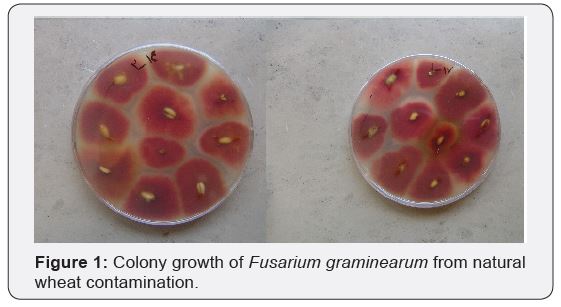
by various Fusarium species. In all the world grain contamination by
Deoxynivalenol (DON) and zearalenone (ZEA) frequently is encountered
(Figure 1).
DON is a type B trichothecene mycotoxin produced by several
Fusarium species, especially the F. graminearum complex group.
The synthesis of protein and DNA is inhibited by trichothecenes
and many of their toxic effects stem from this mechanism.
General signs of trichothecene toxicity in animals include
weight loss, decreased feed conversion, feed refusal, vomiting,
bloody diarrhea, severe dermatitis, hemorrhage, decreased egg
production, abortion, and death. When the advisory levels were
issued, there was great concern about the safety of this sort of
wheat contamination, which might be used for human food as well
as animal feed. The maximum limit level for DON, ZEA, OTA, and
AFs in wheat is 1000, 200, 5, and 15ng/g and in barley is 1000, 400,
50, and 50ng/g, respectively [4]. Mirablolfathy et al. [5] surveyed
DON contamination of 227 wheat samples from Golestan, Ardabil,
Azarbaijan, and 154 barley samples from Golestan province all
located in the north and northwest of Iran, each 10-20kg sampled
was ground and sub sampled by Romer mill, all samples collected
through different stages including pre-harvest, harvest, enter to
silo and exit from silo produced in 2006. Competitive enzymelinked
immunosorbent assay and HPLC+ IAC methods were
used for evaluating the natural mycotoxin contaminations in
that survey. DON was detected in 44.9% of the wheat samples
collected from Golestan province at levels from 18.53 to 192.81ng
g-1, with an average level of 40.99ng g-1. DON was not found in
wheat samples of West Azarbaijan and only one sample from East
Azarbaiejan was contaminated in this year. DON contamination of
wheat and barley produced at north and northwest of Iran in 2006
was much lower than the world regulatory limit for cereals. US
Food and Drug Administration advisory level for DON in wheat/
derived products like flour, bran, and germ that may be consumed
by a human is 1μgng-1. So, the contamination level of Golestan
wheat and barley product was lower than the advisory level for
deoxynivalenol.
The severe epidemics of Fusarium head blight (FHB) as a
devastating disease of cereal crops has occurred on wheat in North
and Northwest Iran. Following the outbreak and heavy losses of
wheat scab disease at Ardabil province in 2011, forty samples of
wheat were collected from Parsabad and Bilesavar at Moqan area
(Ardabil province) at harvest time and five samples after three
months storing in local storages. Natural contamination of wheat
samples to DON was determined by using HPLC method [6], DON
was detected in 90% of samples collected at harvest time ranged
from 1.06 to 2.06μgg-1, with the average amount of 1.7μgg-1. Mean
of the incidence of F. graminearum was 70.91% in irrigated system
cultivars. DON potential production of the 29 F. graminearum
isolates obtained from wheat samples of this area ranged from
17.82 to 2397.33ngg-1. Levels of DON in the samples collected
after two months storing ranged from 3.08 to 7.49μgg-1. In Iran
advisory level for DON in wheat derived products are consumed
by a human is 1μg/kg. Population analysis of the F. graminearum
species complex isolated from the wheat crop of this area was
considered as the purpose of the study of Mianabi et al. [7].
During Jun till July of 2011, the FHB wheat contaminated samples were collected from wheat fields and harvested wheat crop through Ardabil area. The 321 F. graminearum isolates were identified based on morphological characters. The identification of all 321 isolates was confirmed molecularly using Nicholson’s specific F. graminearum primers. The results of PCR products showed that 90% of F. graminearum isolates (287 out of 321 isolates) were F. asiaticum while in 10% of isolates were not F. asiaticum but they were in the clade of F. graminearum. The results showed that F. asiaticum was the predominant species causing Fusarium head blight (FHB) of wheat resulting in DON production throughout all regions of Ardabil province. Sixty isolates of F. graminearum obtained from infected wheat farms of Iran were tested for the ability of DON, nivalenol, and acetylene derivations production using HPLC-SPE method [8]. The results showed that among representative tested isolates, 77% produced 15-AcDON and 46% produced NIV. Also, none of the DON-producing isolates was able to produce NIV. Whereas the low levels of DON (10- 90ngg-1) were observed in F. graminearum isolates producing high levels of NIV. In another study, the in vitro production of DON was evaluated in 41 Fusarium isolates collected from wheat kernels associated with the scab disease, in Moghan area/Northwest Iran [9]. According to morphological characteristics and using valid descriptions, all isolates belonged to F. graminearum species complex and F. culmorum of which the former was dominant, results indicated that 54.5% of studied isolates produced DON but there was no significant relationship between this property and cultivars or subregions or years. The maximum content of DON was detected in F. graminearum isolates. The highest level of DON was produced by the F. graminearum isolate from cv. Izen green growth in Moghan Agro-industry company fields in 2014 at the rate of 5827.11μgkg-1.
During Jun till July of 2011, the FHB wheat contaminated samples were collected from wheat fields and harvested wheat crop through Ardabil area. The 321 F. graminearum isolates were identified based on morphological characters. The identification of all 321 isolates was confirmed molecularly using Nicholson’s specific F. graminearum primers. The results of PCR products showed that 90% of F. graminearum isolates (287 out of 321 isolates) were F. asiaticum while in 10% of isolates were not F. asiaticum but they were in the clade of F. graminearum. The results showed that F. asiaticum was the predominant species causing Fusarium head blight (FHB) of wheat resulting in DON production throughout all regions of Ardabil province. Sixty isolates of F. graminearum obtained from infected wheat farms of Iran were tested for the ability of DON, nivalenol, and acetylene derivations production using HPLC-SPE method [8]. The results showed that among representative tested isolates, 77% produced 15-AcDON and 46% produced NIV. Also, none of the DON-producing isolates was able to produce NIV. Whereas the low levels of DON (10- 90ngg-1) were observed in F. graminearum isolates producing high levels of NIV. In another study, the in vitro production of DON was evaluated in 41 Fusarium isolates collected from wheat kernels associated with the scab disease, in Moghan area/Northwest Iran [9]. According to morphological characteristics and using valid descriptions, all isolates belonged to F. graminearum species complex and F. culmorum of which the former was dominant, results indicated that 54.5% of studied isolates produced DON but there was no significant relationship between this property and cultivars or subregions or years. The maximum content of DON was detected in F. graminearum isolates. The highest level of DON was produced by the F. graminearum isolate from cv. Izen green growth in Moghan Agro-industry company fields in 2014 at the rate of 5827.11μgkg-1.
DON contamination of 153 barley samples 2004 to 2005 in
Golestan, collected through different stages including pre harvest,
harvest, enter to silo and exit from silo were determined by
competitive enzyme immunoassay method for the quantitative
analysis of deoxynivalenol. Seventy percent of barley samples
were contaminated to DON with the range of 15.19 - 280.6μgkg-
1and the average amount of contamination was 58.54 μgkg-1 [10]. ZEA and its derivatives are oestrogenic mycotoxins produced
only by Fusarium spp., primarily by F. graminearum and F.
culmorum. ZEA is a b-resorcylic acid lactone that can bind, albeit
poorly, to oestrogen receptors and stimulate female sex hormone
responses. Therefore, feedstuffs containing ZEA may cause
problems such as hyperoestrogenism in raising livestock. Swine
are the most sensitive large animal species, but ZEA also causes
problems in dairy cattle, chickens and turkeys. Adverse effects have
been observed at ZEA concentrations as low as 1.8μg g-1, but they
are usually observed at 10-20μg g-1. Generally, ZEA concentrations
are well below 1mgkg-1 (the level in the feed that can cause oestrus
in swine) in processed cereal foods, but higher amounts can be
encountered in some feeds. The maximum tolerance level of ZEA
in different countries varies from 30 to 1000μgkg-1and is 200μgkg-
1 in Iran.
Based on the results obtained from a survey [11] on wheat
samples collected from Golestan province, the mean level of
ZEA contaminated samples were 72μgkg-1 and the range of
contamination was 39-104μgkg-1. Aflatoxins (AFs), the most thoroughly studied and best
understood of the mycotoxins, are a group of structurally similar
polysubstituted coumarins. These extremely toxic metabolites
are produced by common molds, Aspergillus flavus, Aspergillus
parasiticus, and Aspergillus nomius. There are 4 majors naturally
occurring AFs, the most hepatotoxic being aflatoxin B1 (AFB1),
and 3 structurally similar compounds, aflatoxins B2, G1, and
G2. The principal biological effects of AFs are carcinogenicity,
immunosuppression, mutagenicity, and teratogenicity. Aflatoxins
cause liver damage; decrease milk yield, egg production, and
overall performance; and suppress immunity in animals after
the consumption of low dietary concentrations of aflatoxins. The
occurrence of AFs in foodstuffs is common all over the world.
Wheat samples from Mazandaran, Guilan, Zanjan, Kermanshah,
and Khuzestan, in different places, the average contamination and
relatively deviation of samples from the 14 cities, were 8.32μgkg-
1 and 3.78μgkg-1, respectively; indicate the presence of AFs in
newly harvested domestic wheat crops [12]. Beheshti et al. [13],
reported that between 60 barley samples, 5 samples and 2 of 22
wheat samples were contaminated to AFB1, but same as Babaei’s
research, the concentrations in contaminated samples were below
than the maximum AFB1 level of Iranian and EU regulations, both
being 5μgkg-1 [4]. The presence of ochratoxin (OTA) has been determined in
barley, malt and beer samples; during the post-harvest stage,
fungal infection of barley affects the amount of OTA in beverages
[6]. Fourteen barley samples from Golestan and Mazandaran
provinces in the north of Iran (destined for animal feed) were
analyzed for OTA and no contamination was observed [14].
Mycotoxins in rice
Iranians consume 3.2 million tons of rice a year, of which more
than 2.2 million tons are supplied by domestic farmers. The average
per capita consumption of rice in Iran is 45.5kg, which makes
Iranians the 13th biggest rice consumer. There are many reports
of rice contamination to AFs in all over the world and Iran. The
maximum AFB1 level of Iranian regulation is being 10μgkg-1 and
Iran National Standard Organization (INSO) has set the maximum
limit for OTA levels in human and animal feed and rice at 5ngg-1
[4]. 80 rice samples (62 imported and 18 Iranian) were randomly
collected in 2014 and their contamination with aflatoxin B1, B2,
and G1, OTA and ZEA were determined, OTA and ZEA were found
in none of the samples. But, 54.8% of samples of imported rice
and 22.2% samples of Iranian rice were contaminated with AFs
[15]. Among the 275 imported rice samples analyzed, aflatoxin B1
and B2 were detected in 211 samples (76.72% of total) [16]. Feizy
[5] and coworker analyzed a total of 261 rice samples, that 68.9%
of them contained aflatoxin B1 at levels greater than 0.2ngg-1 [5].
AF contamination of all 45 rice samples collected from Yasuj area
was lower than the national standard in Iran. The average amount
of total AF in types such as Gerdeh, Champa, Shamim, and Fajr, is
6.53, 6.14, 4.54 and 6.12ngg-1, respectively [17].
One hundred and twenty (120) samples of 8 kinds of rice
purchased from retail markets in Shahrekord, Iran from January
to September 2010 were surveyed for the presence of ochratoxin
(OTA) using ELISA method [18]. Analytical results showed a
frequency of contamination of 20.8% of the total analyzed rice
samples. Levels of OTA in positive samples ranged between 1.07
and 20. 83ng/g. Out of 120 total samples, 3.3% showed OTA
contamination above the permissible limits of 5(ng/g). Seasonal
evaluation of the data indicated a significant difference in
contamination levels (p< 0.05). There was no OTA in 47 (21.36%)
rice samples out of 220 samples, while in the 173 (78.64%)
remaining samples, OTA was detected at 4.54ngg-1 average level
[19]. OTA and AFB1 of 10 domestic and imported rice samples
collected from Mazandaran were evaluated using AA-DLLMEHPLC
FLD method. OTA average level was 3.87 and 3.15ngg-1
respectively in domestic and imported rice samples, but none
were contaminated to AFs [20].
Mycotoxins in maize and sorghum
Maize (Zea mays L.) is one of the major crops in Iran with the
production of approximately 1.65 million tons per year [2]. Based
on USDA estimation maize harvested area in Iran is about 210,000
HA. Mycotoxin contamination in maize grain is a worldwide threat
to both safeties of human food and animal feed [13]. The maximum
limit for DON, ZEA, OTA, fumonisins (FUM) and AFs levels in maize
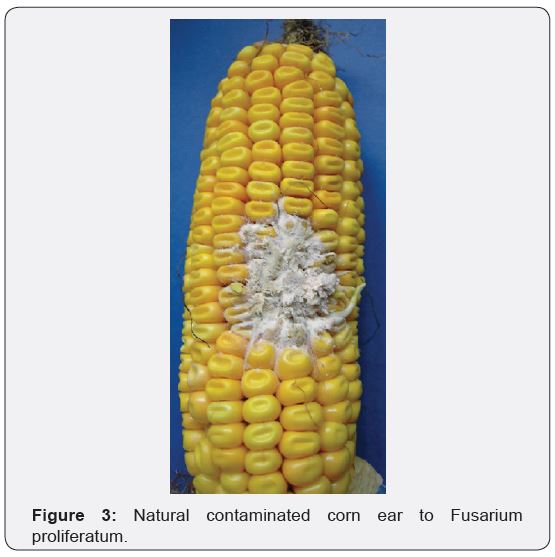
was 1000, 200, 50, 1000 and 30ngg-1 [4]. Two of the most problematic mycotoxins in maize are AFs produced
by the fungi Aspergillus flavus and A. parasiticus [21], and
fumonisins produced predominantly by the fungus Fusarium verticillioides
(Sacc.) Nirenberg (syn. F. moniliforme) (Figure 2 & 3)
[22].

AFB1 contaminations investigated in 373 maize kernel samples
by Karami-Osboo et al. [23] collected during 2006-2008 at
harvest stage, from different agro-climatic regions of the major
maize production area of Iran, including Ardabil (North West),
Khuzestan (South West) and Fars at the South of Iran. AFB1
was determined by CD-ELISA and was detected in 146 samples
(43.6%), in which only 22.5% were contaminated to higher than
MRL level. The number of AFs in maize samples varied across the
years, the percentage of contamination in 2006, 2007 and 2008
were 86.7%, 71.4%, and 100% respectively for Ardabil, 63.4%,
41.3% and 24.5% for Khuzestan, 17%, 14.8% and 27.6% for
Fars province. The mean of contamination was 15.63, 57.67 and
154.13μgg-1 for Ardabil; 14.41, 35.93 and 1.61μg g-1 for Khuzestan;
0.9, 2.12 and 36.39mg/kg for Fars province. The most contaminated
maize samples belonged to Ardabil and Khozestan provinces
with dry land and high temperatures environmental conditions
and drought stresses during the studied years. Aspergillus flavus
was isolated more frequently than A. parasiticus and the isolates
with numerous small sclerotia produced a greater number of AFs.
Fumonisins are a group of mycotoxins produced by Fusarium verticillioides
(Sacc.) Nirenberg
Studies about fumonisins in Iran [14,24-28] indicate that fumonisin
B1 is the important mycotoxin presents in maize kernels
before harvesting and during storage procedures. Fumonisin B1 (FB1) is the most abundant member of the
group. It has been shown to be hepatocarcinogenic and nephrocarcinogenic
in male rats and hepatocarcinogenic in female mice.
These toxins have been associated with high incidences of esophageal
cancer in some countries. Ghiasian et al., [26] analyzed all
maize samples collected in 2000 from Fars, Kermanshah, Khuzestan,
and Mazandaran. All samples from Mazandaran were contaminated
with fumonisins with a mean level of total fumonisins
of 10.7μgg-1. In contrast, the incidence of fumonisin contamination
above 10ngg-1 was 53% (8/15), 42% (5/12), and 57% (8/14) in
the samples from Fars, Kermanshah, and Khuzestan, respectively,
and the corresponding mean total fumonisin levels were 215, 71,
and 174ngg-1, respectively, which were significantly lower than
the fumonisin contamination in samples from Mazandaran. Mirabolfathy
et al. [27] evaluated the amount of fumonisin B1 in 46
maize samples which were collected at pre-harvest, harvest and
post-harvest stages from Golestan province in the northern region
of Iran. All samples were contaminated with fumonisin B1, the
range of contamination varied 0.261 to 6.9μg g-1 and the mean of
contamination was 2.6μgg-1. There was no significant difference in
the contamination of samples at different sampling stages.
Rahjoo [18] and coworker designated research to study on
fumonisin accumulation in different grain sorghum and maize
genotypes in Iran. To do this, they evaluated different maize and
sorghum genotypes based on an RCBD with three replications at
four locations over two years. The results of maize experiments
demonstrated that genotypes 2 and 1 with 40.9% and 13% DS
respectively were the most susceptible and resistant genotypes
respectively. Also genotypes 2 and 1 had the highest and the least
level of fumonisins with 72.6 and 8.9μg g-1 respectively in comparison
to the other maize genotypes. There was an appropriate
correlation between fumonisin contamination and disease severity
measured on different maize genotypes (r = +0.93, P < 0.01).
The results of sorghum experiments at all locations for two years
demonstrated that genotypes 1and 7 with 42.8% and 27.2% DS
respectively were the most susceptible resistant genotype respectively.
Fumonisin production measured of all genotypes was not
more than 2μgg-1 and there was a low correlation between fumonisin
contamination and disease severity measured on different
sorghum genotypes. The results of this experiment demonstrated
that fumonisin production level in maize kernels (may be as maize
kernels are the main host of this fungus) was significantly higher
than sorghum kernels. This is the first report of fumonisin analysis
of sorghum hybrids in Iran.
In order to determine fumonisins production on different
grain sorghum genotypes, Rahjoo et al. [18] carried out a field trial
based on a randomized complete block design with 10 treatments
and three replications at four locations: Karaj, Gorgan, Moghan
and Sari stations in 2011. They inoculated the sorghum panicles
by spraying of spore suspension isolates at flowering stage.
The results of fumonisins analysis obtained from the ELISA test
showed that among all sorghum genotypes, lines 6 and 10 had the
least and the highest amount of total fumonisins respectively. The
results of this experiment demonstrated that fumonisin production
level in sorghum kernels was less than 5μgg-1 at all locations
and Sari was the best location for fumonisin production on sorghum
kernels in comparison with the other regions.
Rahjoo [18] evaluated the susceptibility of 10 lines
of maize to
Fusarium ear rot and fumonisins production by inoculating maize
ears using the mixture of some virulent Fusarium verticillioides
strains in two different inoculation methods. The evaluation was
done on ears using Disease Severity Index (%DS) 4-5 weeks after
inoculation. All infected ears were evaluated by ELISA kits (Agra-
Quant; Romer Labs, Austria) for their total fumonisins production
at the physiological maturing stage. Lines B73cms and K74/1 with
2.9μgg-1 and 72.2μgg-1 had the least and highest amount of total
fumonisins respectively. The results of this experiment demonstrated
that the Tip Injection method was better than Nail Punch
based on the observed disease severity and measured fumonisins
accumulation on inoculated ears.
To determine levels of total fumonisins production of some
Fusarium isolates recovered from infected ears of maize with different
geographic origins, a total of 37 isolates (37 F. verticillioides
and one F. thapsinum) were evaluated by ELISA test [18]. 14 out
of 37 isolates were selected. Fumonisin analysis of F. verticillioides
by ELISA test showed different levels of total fumonisins B
production by grouping the isolates into three distinct levels as
high (>500μgg-1), moderate (100-500μgg-1) and low (<100μgg-1)
fumonisin producers. F. thapsinum produced a low amount of fumonisins.
There was no clear correlation between fumonisin production
levels of isolates and their geographic origins. Rahjoo [18] determined total fumonisins and AFs production
on different grain sorghum at Karaj and Gorgan stations in
2015. The results of fumonisins analysis obtained from ELISA
test showed that total fumonisins amount of sorghum genotypes
ranged from 0.75 to 3.31μgg-1, and from 1 to 60μgg-1 in Karaj and
Gorgan respectively, suggesting that fumonisin occurrence is
probably related to humid conditions in the north of Iran. Total
AFs amount of sorghum genotypes ranged from 2 to 24.23ngg-1,
and from 2.7 to 80ngg-1 in Karaj and Gorgan respectively, indicating
that AFs are also produced more under humid conditions in
the north of Iran.
The first report of natural DON contamination of maize from
Iran was reported in 2010 that Sixty maize samples were collected
from different locations of Golestan and Moqan areas. DON contamination
was found in 76.7% of samples in the range of 54.4-
518.4ngg-1 [29]. To determine the possibility of DON contamination
of maize in maize-wheat rotation crop, Moqhan region with
about 10000 hectares’ maize cultivation was selected for sampling.
To study the potential of DON production of the isolates, ten
isolates (two of each species) were selected as the representative
of each species. Fusarium species and their frequency of isolation
were F. verticillioides, 47.65%; F. proliferatum, 33.873%, 15.33%;
F. nygamai, 4.86%; F. oxysporum, 3.06%. DON was detected in 45%
of the samples. The range of contamination was 35.4- 542.55ngg-1.
The mean of contamination was 165.7ngg-1 that was less than the
maximum rate limit of DON which was recommended in the world
(1μgg-1) [23]. Also, Mirabolfathy [30] reported DON contamination
of the maize samples of Fars and Khuzestan provinces were
5% and 2% respectively and the amount of contamination was
21.3 - 97.4 (63.99) ngg-1. 55% percent of maize samples collected
from Ardabil province were contaminated with DON ranging from
35.4-542.55 (165.7) ng/g.
Mycotoxins in dried fruits and nuts
AFs contamination of nuts and dried fruits has remained as
an important problem reported from different countries. Surveys
have been conducted to measure AFs contamination level in nuts
and dried fruits in Iran despite the incidence of AFs contamination
in tree nuts is low, AFs levels can be variable and high levels and
can develop in a small percentage of harvested nuts. For example,
it has been estimated that only 1 in 28250 walnuts, 1 in 26500
almonds, and 1 in 25000 pistachios.
Iran National Standard Organization (INSO) has set the maximum
limit for OTA and AFs levels in dried fruits and nuts. 10ngg-1
for OTA in raisin, date, and fig, 5ngg-1 for AFB1 and 15ngg-1 for total
AFs [4].
Pistachio
AF contamination of pistachio nuts is undoubtedly an important
economic problem for Iran. The European Union’s banned pistachio
imports from Iran because of high levels of AFs in 1997.
The existence of AFs and fungal producing AFs in pistachio were
reported from Iran in 1970. Since then many researches was conducted
to find the fungal species produced AFs, it was reported
that up to 13 species were isolated from pistachio kernels and
shells collected from the orchard. The probability of contamination
incidence in orchard, processing stages, at storage and
shipment, were studied [31]. The results showed that the most
important stage is during the washing time at processing stage
while pistachio nuts contaminate with fungal spores and one of
the most important stage which suggesting to play an important
role for AFs contamination of pistachio nuts is orchards while the
pistachio nuts are being developed and fungal contaminations are
initiated through early split pistachio nuts. Another project was
implemented for 5 years (205-2010) in which pistachio nuts were
collected from the different storages and terminals of pistachio
producing areas of Kerman province including Rafsanjan, Zarand,
Kerman, Noogh, and Sirjan. 122 isolates of A. flavus collected using
suspension of surfactant contamination of pistachio nuts. To
detect fungal contamination at different parts of pistachio nuts,
51 samples of shells and kernels collected from 51 different storages
were disinfected using hypochlorite 0.5 % and cultured on
artificial media separately. 86% of the samples were contaminated
to A. flavus in a range of 0- 100 %. Due to AFs contamination,
32% of the samples had AFs more than 2ngg-1and 68% less than
2ngg-1. Morphological and several physiological characters of the
collected A. flavus isolates were studied and grouped based on
common characters. Representative isolates of each group selected,
cultured on rice medium and evaluated toxicologically using
TLC scanner method. 27% of isolates produced sclrotia. All the
isolates which studied toxicologically produced AFs B1 with an
average rate of 11±0.52μgg-1 and aflatoxin B2 with average rate
6.2±0.41μgg-1. No isolate produced aflatoxin G1 or G2. A criterion
morphological character related to AFs production was not found
in studied isolates [31].
Hazelnut
Approximately 12500 hectares of hazelnut trees were grown
in Guilan province in the North of Iran. AFs contamination of hazelnut
is an important exportation problem for the main producing
countries. Mirabolfathy et al. [7,11] reported the result of their
research project was conducted to clear the contamination risk of
AFs and AFs -producing fungi in the hazelnut produced in Guilan
mainly consumed locally. In this research project during two consequences
years’ AFs producing Aspergillus species were monitored
in hazelnut samples collected from Eshkevarat and Deilaman
dry land areas in Guilan province at harvest time, after two
months storing at local storages and after processing at the local
processing sites. AFs contaminations of the samples were estimated
using HPLC+IAC. Despite the high occurrence frequency of AFs
-producing fungi (45%), the contamination level of AFs producing
fungi and AFs were low (1-1.7% and 0.1-0.4ngg-1 respectively) in
hazelnuts samples collected at harvest time samples. The population
density of A. flavus and A. parasiticus increased to 2.9% in
hazelnut samples after 3 months of storing at local storages but
due to closing the shells, AF contamination did not occur, and AFs
were not found in the storage’s samples. High levels of AFs (54n
g-1) were determined and A. flavus and A. parasiticus were found
more frequently (55%) after processing stages including soaking
for 48 hours at contaminated sites. Based on the results obtained
from this project it is recommended that the traditional processing
sites must be improved using HACCP principals.
Fig
Approximately 23000 hectares of fig orchards including cultivated
and wild fig trees (Ficus caraca L.) in Fars province (Stahban
dryland area) provide 23000 tons of dried figs produced in Iran.
During recent years’ exportation of dried figs encountered a problem
due to its AFs contamination which was reported informally.
Status of AFs contamination and the mechanisms of fig infection
by A. flavus and A. parasiticus were required to reduce the risk of
fig contamination. Mirabolfathy et al. [31] carried out a two year’s
research project and monitored AFs -producing - Aspergillus species
in the samples of two cultivars of Capri fig (Ficus caricacv,
Capri) samples, including Danesefid and Pouzdonbali, collected
from Estahban and EiJ areas respectively in Jun. The edible fig
samples collected from Calimyrna trees (Ficus carica cv, Calimyrina)
located at eastern (Kezman) and western part (Tirvanjan) of
Estahbanat dry land areas during harvest time, before processing,
during processing stages, and after packaging. AFs contaminations
of the samples were determined using HPLC+ IAC. A. flavus and
A. parasiticus were not found in all the Capri fig samples for two
years. A. flavus was found in 20% of the edible figs during the first
year, the mean of contamination was 7.5% among the contaminated
samples. During the second year, fungal contamination was
not found among the edible figs collected from Calimyrna trees at
harvest time, but it was found in 20% of samples were collected
after harvest time, the mean of contamination in contaminated
samples was 5%. Aflatoxin B1 was the only AFs traced (at a level
of 1ngg-1) in thirty- five percent of edible figs which were collected
after harvest time and one sample of each before processing and
after processing stages as well. A. flavus and AFs were not detected
in a processed sample in the first year. During the second year, AFs
were not detected in edible figs.
Almond
Mirabolfathy et al. [32] conducted a research project to clear
the contamination risk of AFs and AFs producing fungi in almond
produced in Iran. Approximately 185294 hectares of almond trees
were grown in Fars, Khorasan, Chaharmahal Bakhtiari, Esfahan,
Zanjan, Lorestan and Markazi provinces located in different geographical
areas of Iran. In this research project AFs -producing -
Aspergillus species were monitored in almond samples collected
from Fars, Khorasan, Chaharmahal Bakhtiari, Esfahan, Zanjan,
Lorestan and Markazi provinces after harvesting. The natural
contamination population density of A. flavus and A. parasiticus in
almond samples was 10-80 percent. Despite the low occurrence
frequency of AFs producing fungi in samples, there is a potential
of AFs production in a favorable environmental condition to grow
the fungal agents in some storages. High levels of AFs (376ngg-1)
were determined in one sample collected from Arak area which
was also contaminated to a high level of AFs -producing fungal
spores.
Raisin
Ochratoxin (OTA) is a mycotoxin which contaminates different
plant products, including cereals, coffee, and dried grape. Known
for its nephrotoxic effects, OTA can also impact the liver. A major
renal disease of swine known as porcine nephropathy occurs in
some European countries and is associated with consumption of
OTA -contaminated barley. The presence of OTA in raisin is an important barrier to raisin
export. The grape vine is cultured through 315000 hectares
of Fars, Khorasan, Zanjan, Qazvin, Hamedan and Azarbaijan provinces.
During 2010- 2012 a research was carried out on the monitoring
of OTA and OTA - producing fungi in raisin of Khorasan,
Azarbaijan, Qazvin and Zanjan provinces [7]. 43 samples collected
from different processing stages of raisin including storages, and
factories. To study the raisin fungal contamination two methods
of plating: surface disinfected raisin and washing of raisin surface
(suspension) on artificial media were used. 14 isolates selected as
representative were cultured on PDB medium and OTA produced
by each isolate was evaluated using HPLC- IAC method. All raisin
samples were contaminated by Aspergillus section Nigri species.
The mean of the assumed OTA producing -fungi contamination of
raisin samples was 56.31 (8-100%) but it varied depending on the
processing method, raisin variety, and location. Twenty percent of
the isolates belonged to A. carbonarus species and the rest to A.
niger. 71% of tested A. carbonarius isolates produced ochratoxin
between 0.78-108.8ngg-1. Ochratoxin A was found in five samples
out of 44 (11%) raisin samples at the contamination levels of 0.4
to 100ngg-1. The highest contamination level was found in injured,
non-edible raisin. In another study 10 raisin samples were analyzed
by DLLME method, that one sample was contaminated at
6.48 ng/g [33].
Mycotoxins in dairy products
The occurrence of AFM1 in milk and milk products is a public
health concern because the International Agency for Research on
Cancer has classified it in Group 2, a probable human carcinogen
with a high risk of hepatotoxicity and mutagenicity [34]. For this
reason, milk and dairy products must be inspected and controlled
continuously for AFM1 contamination and animal feeds should
be checked regularly for AFB1 and storage conditions of feeds
must be taken under strict control. Kazemi Darsanaki et al. [34]
reviewed recent studies in aflatoxin M1 contamination in milk and
milk products like yogurt and cheese in Iran and reported that the
incidence of positive cheese samples for AFM1 seems to be widely
variable. The maximum limit for AFM1 in milk and dairy products
is ranged between 0.05 to 0.2ng/g [4].
AFM1 is a hydroxylated metabolite of the carcinogen AFB1
and may be found in the milk of lactating animals that have ingested
feedstuffs contaminated with AFB1. Rahimi et al., (2010a)
examined 100 dairy product samples consisting of pasteurized
milk (50 samples), and white cheese (50 samples), collected from
retail markets during August 2009 to February 2010 in Ahvaz.
Analytical results showed that 91 (91%) samples ranging from
14 to 209ngl-1, consisted of 44 (88%) pasteurized milk samples
(range: 11-94ng/l) and 47 (94%) white cheese samples (range:
22-209ngl-1) were contaminated with AFM1. Considering the
US FDA and Iranian national standard limits for AFM1 in milk
(500ngl-1 or 0.05ngg-1), none of the samples had levels above the
maximum tolerance limit. However, the concentration levels of
AFM1 in 3 (6%) and 11 (22%) samples of pasteurized and white
cheese were higher than the European Commission limit, respectively.
AFM1 contents of white cheese samples were higher than
those of pasteurized milk samples. No significant differences in
the concentration of AFM1 were observed for pasteurized milk
samples taken in different seasons in Ahvaz. However, significantly
higher concentrations of AFM1 (P < 0.05) were found in white
cheese samples taken in cold seasons. Although the concentration
of AFM1 in none of the examined samples exceeded the Iran regulation,
by attention to high consumption and significance of milk
and its products in Iranian dietary, survey and control of milk and
its products for a measure of AFM1 continuously has a high significance.
Mohsenzadeh et al. [35] evaluated AFM1 contamination in
raw milk samples in Mashhad, northeast of Iran by ELISA. For this
purpose, two hundred raw milk samples were obtained from dairy
plants of Mashhad city of Iran. AFM1 was found in 76% of the raw
milk samples by an average concentration of 0.061±0.004μgkg-1.
The range of contamination levels varied among between months. The highest mean concentration of AFM1 in raw milk samples was registered in February samples (0.225ngg-1) and the lowest mean concentration registered in August samples (0.0058ngg-1). The statistical evaluation showed that there were significant differences (P<0.05) between the concentrations of AFM1 of raw milk samples taken in May and August with November and February. The concentrations of AFM1 in 36.5% of the samples were higher than the maximum tolerance limit accepted by the European Union/Codex Alimentarius Commission. It was therefore concluded that the levels of AFM1 in milk samples consumed in Mashhad, Iran was high and appear to be a serious public health problem now. Riahi Zanjani et al. [36] evaluated AFM1 contamination in 45 samples of raw milk was collected randomly from Fariman, Iran. AFM1 was detected in all milk samples. The mean concentration of AFM1 was 11.61 ± 0.72ng/L with a range of 6.3-23.3ng/L. None of the samples had levels exceeding the maximum tolerance limit (50ng/L) accepted by the European Union. The results showed that AFM1 contamination of milk is not a concern in this city. However, dairy cattle feed samples of various livestock must be regularly checked for AFs and the storage conditions of feeds should be strictly controlled.
The range of contamination levels varied among between months. The highest mean concentration of AFM1 in raw milk samples was registered in February samples (0.225ngg-1) and the lowest mean concentration registered in August samples (0.0058ngg-1). The statistical evaluation showed that there were significant differences (P<0.05) between the concentrations of AFM1 of raw milk samples taken in May and August with November and February. The concentrations of AFM1 in 36.5% of the samples were higher than the maximum tolerance limit accepted by the European Union/Codex Alimentarius Commission. It was therefore concluded that the levels of AFM1 in milk samples consumed in Mashhad, Iran was high and appear to be a serious public health problem now. Riahi Zanjani et al. [36] evaluated AFM1 contamination in 45 samples of raw milk was collected randomly from Fariman, Iran. AFM1 was detected in all milk samples. The mean concentration of AFM1 was 11.61 ± 0.72ng/L with a range of 6.3-23.3ng/L. None of the samples had levels exceeding the maximum tolerance limit (50ng/L) accepted by the European Union. The results showed that AFM1 contamination of milk is not a concern in this city. However, dairy cattle feed samples of various livestock must be regularly checked for AFs and the storage conditions of feeds should be strictly controlled.
Mycotoxins in herbal drug products
A study was carried out to determine the percentage incidences
of mycoflora associated with the root samples, occurrence,
and level of AFs in fresh and marketed drug roots. Rashidi et al.
[37] selected five root herbal drugs to belong to Dashmoola for
their investigation. Qualitative and quantitative estimation of AFs
(B1,B2,G1,G2) was determined by the BGFY test and HPTLC method.
The result indicated the percentage incidence of mycoflora
especially different species of Aspergillus and the qualitative and
quantitative estimation of AFs in some drug samples of fresh and
most of the drugs samples from the market were contaminated
with AFs especially AFB1 and AFB2. The results indicate that although
the natural occurrence of AF in herbal medicines analyzed
in this study was less and it was below of tolerance level (20μgkg-1)
fixed by the World Health Organization but the contamination may
be significant due to their frequent and prolonged consumption.
Control of mycotoxins
Mycotoxins are secondary metabolites of filamentous fungi
that occur naturally in food and feed. There are limited investigations
have been studied to decrease or eliminate the mycotoxins
in foods and plant products in Iran. Some of them have been
reported to date involve the use of microorganisms and chemical
compounds to reduce the major mycotoxins. Essential oils (EOs) effect on mycotoxins was studied in many
research [38,39]. In a survey, inhibitory growth effects of Thymus
vulgaris, Satureja hortensis, Anethum graveolens, Mentha sativa
and Capsicum annum essential oils were studied on F. graminearum
and ZEA production [30]. The results showed that all the
essential oils reduced ZEA production by 87-93%, the most (93%)
and least (87%) reduction of ZEA production were observed in
C. annum (5000μgg-1) and S. hortensis (150μgg-1) treatments,
respectively. Lahoji [40] studied the effects of Zataria multiflora
and S. hortensis essential oils, and thymol and carvacrol which are
two main components of these essential oils on the growth of 10 F.
graminearum isolates and reduction of DON. Z. multiflora, S. hortensis,
thymol, and carvacrol decreased 84, 89.1, 95 and 86.6% of
DON respectively [40]. The ability of Thymus daenensis, Satureja
khozistanica, and Satureja macrosiphonia essential oils was investigated
for reducing A. flavus growth and it’s AFB1-content in the liquid culture, and results showed that T. daenensis at a concentration
of 2000mg/l reduced of 97% AFB1 (Goran et al. 2013).
Mirabolfathy et al. [7] studied the role of chemical control for
reducing the fungi and AFs contaminations at the terminal using
ozone. The objective of this study was to evaluate the capability of
electrochemically produced ozone to degrade AFs and controlling
AFs producing fungus in artificially contaminated pistachio
nuts with an aflatoxicogenic isolate of A. parasiticus. The results
showed that A. parasiticus population density of ozone treated pistachio
nuts was decreased 90-92% and AFs contaminations of the
treated pistachio nuts decreased 45-74%. One of the most important stage which suggesting playing an
important role for AFs contamination of pistachio nuts is in orchards
while the pistachio nuts are being developed and fungal
contaminations are initiated through early split pistachio nuts.
To study the role of chemical control for reducing the AFs contamination
of pistachio nuts, an experiment was conducted in a
completely randomized blocked design with 10 treatments and 4
replications in two successive years (2005- 2006) in two regions,
Koshkooie et al. in Kerman province [31]. Fungicides were including
Bordu mixture (1%) in winter, cupric chloride oxide (1%) in
spring, captan (3μgg-1) and Iprodione-Carbendazim (Rovral TS)
(2μgg-1), two times at interval one month in summer. The results
showed that the AFs contamination levels of pistachio nuts in the
experimental orchards were less than 2ngg-1. So, in which range
the effect of fungicides could not be compared, but the frequency
of incidence reduced in Rovral TS treatments, while AFS producing
fungi were considerably decreased in pistachio nuts at harvest
time in fungicide treatments. Rovral TS decreased A. flavus and A.
parasiticus contamination levels 50-70% compared with using
other fungicides.
Several microorganisms have been reported to bind or degrade
AFs in foods and feeds. During a survey was carried out by
Chegini et al. [41], four isolates of Trichoderma were studied for
their ability to reducing AFB1 produced by A. flavus on pistachio
nuts. Two Trichoderma species T. harzianum and T. longibrachiatum
were tested against A. flavus on pistachio nuts. Results
showed that all four isolates of Trichoderma have a meaningful
difference in reducing AFB1 production by A. flavus in pistachio
nut as compared with control. Specific lactic acid bacterial strains
remove toxins from media. Farzaneh et al. [42] evaluated the potential
of the four Bacillus subtilis strains, isolated from pistachio
nuts for AFB1 reduction. The results showed that one strain could
perfectly inhibit the growth of A. flavus and production of AFB1 in
the liquid culture. During recent decades’ lactic acid bacteria have
been used to prepare and improve storage of food and for ensiling
of different crops for animal feed. The binding of AFB1 of the contaminated
solution by 2 strains of lactic acid bacteria was studied
by khanaferi, and the selected strains of Lactobacillus acidophilus
(PTCC 1643) and L. plantarum (PTCC 1058) Bacteria were added
to the spiked solution of 50ngg-1. The L. plantarum strain removed
45% of AFB1 from solution for 1 hour and 100% of it during 90
hours of incubation [43]. Saccharomyces cerevisiae is one of the
major microorganisms widely used in food fermentation, and the
ability of its strains to reduce the level of AFs has been reported.
Karami-Osboo et al. [40] reported that different strains of S. cerevisiae
reduced the AFs levels in a different rate and various duration
times, and at the time 320 min the PTCC 5052 strain reduced
the AF B1, B2, G1 and G2 levels to 11.2, 13.9, 8.0 and 8.1%, respectively;
meanwhile, these results for the PTCC 5269 strain 9.5,
8.0, 2.3 and 16.2%, respectively. Results suggested that different
strains of S. cerevisiae had a different reduction rate on AFs. Moreover,
the strains need to have enough time to absorb the maximum
amounts of AFs [32]. Some physical treatment such as roasting, washing, and
cooking was studied on the reduction of some mycotoxins in
cereal and nut; these methods has reduced mycotoxin in food
matrices [44-54].
To Know more about Reviews & Research