Juniper publishers have been established with the aim of spreading quality scientific information to the research community throughout the universe. We, as Open Access publishers, strive to offer the best in class online science publications. Open Access process eliminates the barriers associated with the older publication models, thus matching up with the rapidity of the twenty-first century. Our main areas of interest lie in the fields of science, engineering and other related areas.
Telomeres are structures at the ends of eukaryotic chromosomes and consist of tandemly repeated DNA sequences. Telomeres shorten with each cell division, and it is well known that telomere length in peripheral blood mononuclear cells (PBMCs) decreases with age. High oxidative stress can lead to accelerated telomere shortening, which causes premature cell senescence. In summary, this review shows the short Telomere Length has been identified in a limited number of population studies as a risk factor for development of T2DM. Also, it is importantly to notice the antioxidant properties of Curcumin which may play a key role in the prevention and treatment of premature aging while preserving the length of the telomeres.
Diabetes Mellitus 2 (T2DM) is a multifactorial complex disorder which is emerging as a major cause of morbidity and mortality [1]. Telomeres are structures located at the extreme ends of chromosomes and are considered as indicators of biological age [2]. Increased telomere shortening has been demonstrated in several diseases, including diabetes type [3-6]. Telomere shortening increases with the diabetes duration, in our study, we established the potential importance of telomere dynamics in T2DM. We associated the time of disease duration closely in parallel to the progressive increased of inflammation and/or oxidative stress and both played a direct role in telomere shortening [7]. However, a study based on Chinese population found no relationship between Telomere Length and either the onset time or the Diabetes Mellitus 2 duration [8]. Genetic regulation of telomere could potentially explain telomere shortening and also an increased risk for Diabetes Mellitus 2. Zee et al. [9], analyzed 11 telomere pathway genes and their relationship to the development of Diabetes Mellitus 2. A total of eleven tSNPs within TERF1, TNKS, TEP1, ACD and TERF2 were associated with Diabetes Mellitus 2 risk [9]. These findings suggest that genetic variation within the telomere pathway gene loci examined may be a useful predictor for Diabetes Mellitus 2 risk assessment [10,11]. Paik JK, et al. [12], did not observe an association between the selected TL-related SNPs and the presence of Hypertension and Coronary Heart Disease in [12]. These findings tell us the great importance of telomere dynamics in T2DM and the need for translational research.
Endogenous factors that cause telomere shortening are aging inflammation and oxidative stress. Telomere attrition (expressed in WBCs) can serve as a biomarker of the cumulative oxidative stress and inflammation [13,14]. The association of UCP2 gene involved in the production of reactive oxygen species and functional promoter variant in mitochondria with the telomere length implies a link between mitochondrial production of reactive oxygen species and shorter telomere length in Diabetes Mellitus 2 [15]. Oxidative stress exerts a major influence on telomere dynamics by two principal mechanisms; firstly, the GGG triples on the telomere sequence are highly sensitive to the hydroxyl radical. Masi et al. [16] demonstrated that antioxidant defenses are important to maintain telomere integrity, potentially reducing the progression of vascular ageing in patients with T2DM. Secondly in contrast to genomic DNA, telomeric DNA was reported to be deficient in the repair of single-strand breaks. Consequently telomeres appear to be especially vulnerable to the accumulation of ROS-induced DNA- strand breaks [17,18].
Recent studies propose that telomere shortening and abnormal telomerase activity occur in patients with diabetes mellitus 2 and targeting the telomere-telomerase system has become a prospective treatment for diabetes mellitus [19]. Dietary supplementation of antioxidants has been proposed as alternative treatment to reduce oxidative stress caused by obesity and diabetes. Different studies have shown that curcumin has antioxidant and antihyperglycemic properties in diabetes and obese animal models [20-24]. Hyperglycemia modifies oxygen consumption rate, NO synthesis and increases TBARS levels in mitochondria from the liver and kidneys of diabetic mice, whereas curcumin may has a protective role against these alteration [25-27]. Antioxidant properties of curcumin could play a key role in the prevention and treatment of chronic inflammation diseases [28]. Zhou et al. [29] demonstrated that diet ingredients significantly have an impact on inflammation and oxidative stress markers, which probably also have an effect on Telomere Length. Diabetes patients with normal plasma glucose levels had longer Telomere Length [29].
Telomere Length has been identified in a limited number of population studies as a risk factor for development of T2DM, antioxidant defences are important to maintain telomere integrity, Curcumin which may play a key role in the prevention and treatment of premature aging while preserving the length of the telomeres.
This paper reviews the development of dairy cow raising in Vietnam in the last two decades. In the period 2001-2017, fresh milk production growths annually 14.7%. The households have the tendency to raise more 10 cows. Processing companies invested much in dairy cow raising with total number of cows in company farms represent about one third. Processors buy milk directly from households or through their cooperative. The contribution of rapid growth of dairy cow raising in Vietnam are increased need of fresh milk, improved income of household, increased urban population and total population, very higher profit of dairy cow raising, improved technique and high technology, support of public services and policy.
The dairy cow raising has been introduced to Vietnam from 1920s. Before 2001, the dairy cow raising in Vietnam was at a very small scale and low development level. The dairy cow raising began growing vigorously from 2001 thanks to promoting policy of Vietnamese Government. The fast increase of the income of Vietnamese people and the positive awareness of consumers create favorable condition for milk industry of Vietnam to fast develop in the last two decades. Thanks to that, the dairy cow raising also grows rapidly, resulting in positive transformations in direction of the enlargement of cow production scale and enhance the performance of the sector. This paper reviews the development of dairy cow raising sector of Vietnam, in particular in the last 10 years. Concretely, the paper presents the development of cow herd, milk production, productivity, model of production, dairy cow raising at small household, the coordination in value chains and factors affecting this development. The review is based on existing documents and analysis from secondary data.
Dairy cows raising in Vietnam registered in rapid growth since 1990s. The number of dairy cows and milk production has been incessantly increasing. In 1990, total dairy cows of Vietnam were only about 11 thousand of head, and then in 2017 is 301.6 thousand of cows. In the period 1990-2000, the cow increased every year about 2327 heads (annual growth rate is 11.6%), the equivalent numbers in period 20010-2012 are 9114 cow (9.8%), and for period 2013-2017 are 28580 cows (11.8%). The fastincreasing number of cows in the period 2013-2017 come from the increase of cows raised by big companies as TH True Milk and Vina milk. In 2017, the fresh milk production of Vietnam achieved 881.3 thousand of tons, compared to 36.0 thousands of tons in 1990 and 55.1 thousand of tons in 2000 respectively. In the period 2001-2017, annual growth rate of domestic fresh milk production is 14.7%. The increase of domestic milk production has made the contribution of increased number of cows and increased milk productivity. The increase of milk yield happens both in household farming and in big farms of companies. The data from Ho Chi Minh city, a big area of dairy cow raising, indicated the increase of milk productivity of a cow increased from 3.1 tons per milking cycle to 5.5 tons in 2013. However, milk productivity of companies is much higher because they use pure exotic breed while household mainly use cross breed of F1, F2, even F3 (Figure 1).
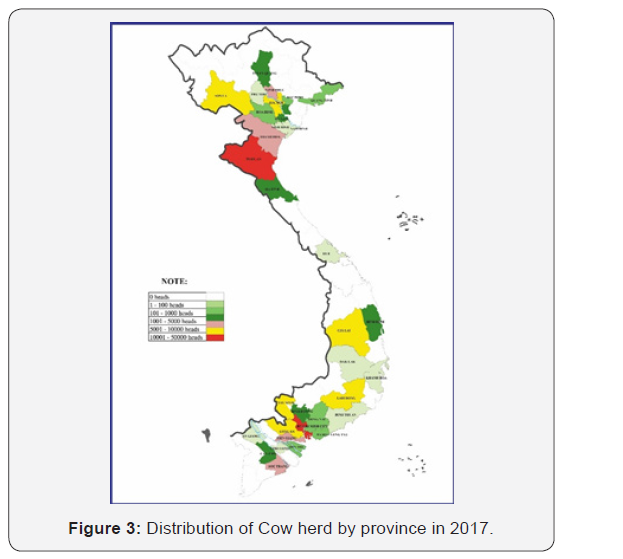
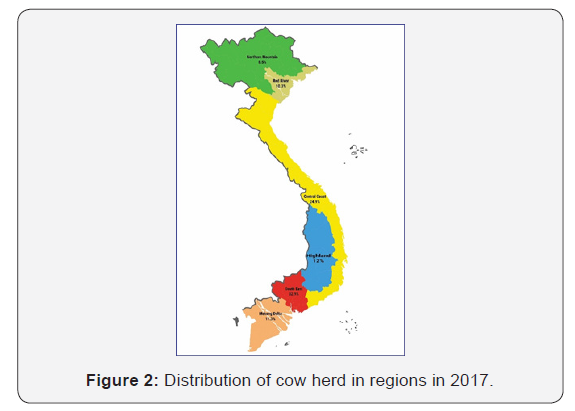
In 2001, dairy cow raising registered only in 12 provinces, in 2005, dairy cow raising was expanded in 33 provinces and stable until now. However, cow herd is concentrated in some provinces. From 2010 to 2017, 10 provinces always represent more 90% of total cow herd of the whole country. In 2017, 2 provinces have biggest cow herd are Ho Chi Minh (28.0%) and Nghe an (21.4%). Some provinces have the sharp increase of cow herd thanks to investment of big companies in dairy cow raising. For example, the number of cows increased spectacularly in Nghe an province in last years because of number of cows raised by 2 big companies as TH True Milk and Vina milk. Only TH True Milk reported its cow herd of 45000 and Vina milk has just invested a mega farm of cow. Generally, the provinces having high number of dairy cows have climate condition favorable to dairy cow raising. The distribution of cow herd by region and by province is presented in Figures 2 & 3.
Dairy cow raising in Vietnam started in 1920s by the introduction of foreigners. In this period, dairy cows only were raised in farms of foreigners in 2 cities as Ha Noi and Sai Gon. The number of cows were about 300 heads and the milk productivity were very low (2-3 kg/head/day) [1]. In the South of Vietnam, before 1975, dairy cows were mainly raised in the suburb of Saigon city and at household level with scale of 10-20 heads/household, to provide fresh milk for the restaurants and consumers. Contrariwise, in Northern area from 1960 the Government developed State farms to raising dairy cows. These State farms were developed in the provinces with favorable natural condition (weather, land) as Ha Noi, Son La, Quang Ninh, Lai Chau, Lao Cai, Thanh Hoa. Dairy cow scale of State farms is less than 1000 heads, with breed of Holstein Friesian (HF). After the reunification in 1975, State farm for dairy cow raising is established in Lam Dong province in 1976 [1]. In summary, in the period of before 1986 when Vietnam had implemented centralized and planning economic system, dairy cow raising in Vietnam were mainly in the form of State farms. The dairy cow raising at household scale was not developed. The “innovation process” has been implementing in 1986 allows the development of household economics. Then, the dairy cow raising at household scale has been developed in the suburb of Ha Noi and Ho Chi Minh cities. The model of dairy cow raising household appeared firstly at the suburbs surrounding the big cities because of locating near the milk processing plants to save the transportation cost and avoid the quality damage caused by the inconvenient traffic and unsuitable preserved tools. In period 1986-1999, the dairy herds grew at average of 11% per year.
Since the Government support policy was issued in 2001, the dairy cow raising of households has been strong developing, expanded in several provinces. In 2016, Vietnam has 32349 dairy cow raising households, representing 0.3% of agricultural – forestry - fishery households. While dairy cow raising at household level develops rapidly, the State farms operate ineffectively. Consequently, the Government had the plan to restructure State farms in 2005. State farms were either privatized or redistributed their land to households for creating joint venture companies. Then, dairy cow raising consists of both individual households and milk processing companies. According to data of Department of Livestock Production [2], in 2018 the number of dairy cows owned by companies represent about one third of total herd of Vietnam. Some companies have numerous cows as TH True Milk (45000 cows), Vina milk (27000 cows), Moc Chau (25000 cows).
Nearly 70% of cow herd is raised in small households. In 2016, there were 32349 cow raising households with an average of 6.4 cows per household [3]. The number of cows per households is very different among households and among regions. The current trend of dairy cow raising in Vietnam shows that the cow herd sized under 5 heads is now decreasing and the one sized over 5 heads is increasing. For example, in Ho Chi Minh city in 2005, households having less than 5 cows accounted for about 56 % but this figure in 2013 is only 20%. The number of households with cow herd sized from 10-49 has sharply increased (Table 1). The number of households with less 10 dairy cows reduced because unit production cost per milk kg of these households is higher than households with more than 10 cows (Table 1). Lower unit production cost of household with more 10 cows come from the exploitation of economic scale in using feed and labor [4]. In addition, in some cases, the trading companies wouldn’t like to buy the milk from households with less than 10 cows. Remark: a Family labor for dairy cow raising is priced at cost for hired labor; b Turnover includes the revenue from selling milk, calf and waste; 1 USD = 23 255 VND at exchange rate in April 2019 (Figure 4).
Source: Author’s calcul from data of Ho Chi Minh [3].
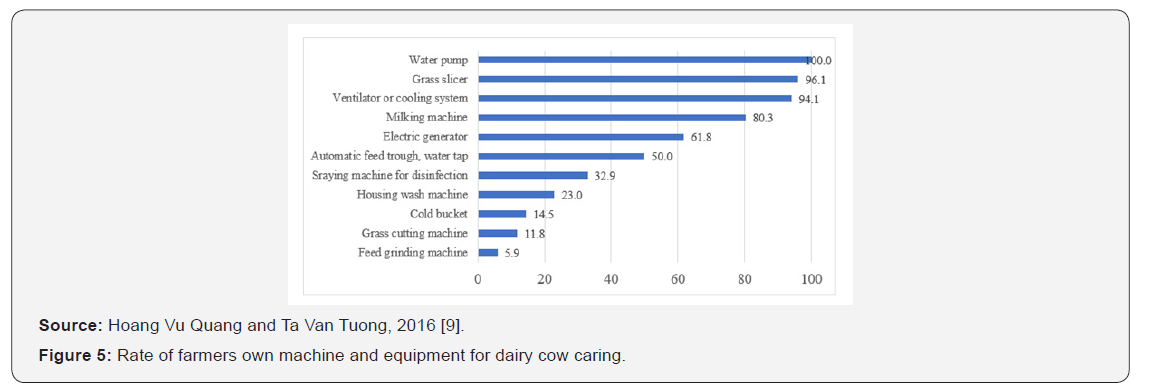
Even increased, the milk productivity of households is much less than one of companies. That comes from the fact that about 90% of dairy cows raised in households are crossbreed, mainly F2 and F3. Only about 10% of cows are pure exotic breed. About 50% of households use only calves reproduced by their cows and 50% remain households use both their calves and calved bought outside households [4]. Nearly 100% of households use industrial feed for cows, in which 50% only used industrial feed and 50% use both bought industrial feed and feed mixed by themselves (Table 2) (Figure 5).
Source: Synthesis from Hoang Vu Quang and Ta Van Tuong [10].
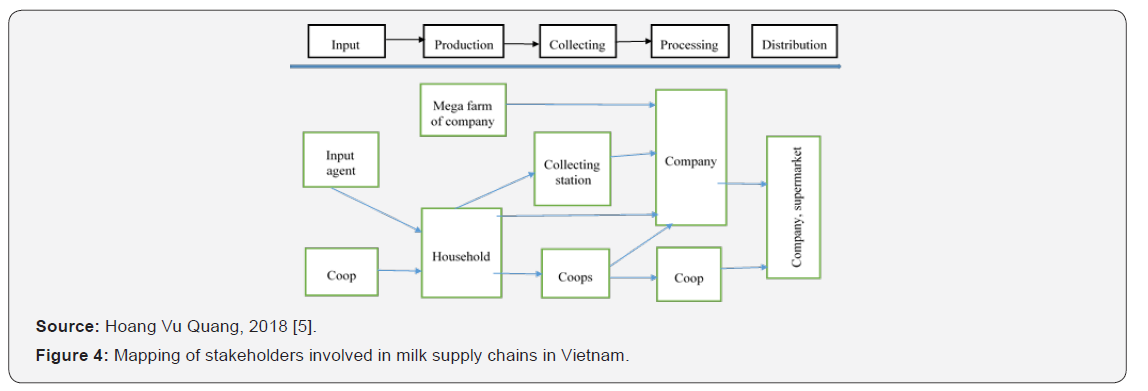
Because of characteristics of fresh milk is quickly spoiled in normal condition, fresh milk need to be preserved in cool condition just after milking, so the vertical coordination in fresh milk supply chain is very high. Nearly 100% of households have presently the contract with milk processors.
Based on stakeholders involved in fresh milk supply chain, it can classify in 5 supply chains in Vietnam in present time as following:
a. Supply chain 1: Household - local and small processor - local market. This supply chain represents a small proportion of producers and milk volume. For example, about 4% of fresh milk in Lam Dong province in 2017 were not signed the contract with processing companies. That come from new producers or households violated the engagement with buyers and are out of contract as punished measure. These producers sell their milk to small processors to produce milk cake or artisanal milk processing [5].
b. Supply chain 2: Household - processing companies - domestic market. This is important chain in term of milk volume. For example, 84% of fresh milk produced in Lam Dong provinces are sold in this chain [5]. The processing companies sign contract farming directly with individual household. The cow producers normally have to meet the requirement of processors as cow scale, used feed, hygiene and disinfection measures, antibiotic use, etc. The processing companies can support households as giving training course, support for treating diseases [6]. The companies usually put collecting stations nearly households to receive their milk.
c. Supply chain 3: Household - cooperative - processing companies - domestic market. Some processing companies purchase fresh milk from cooperative. In this case, the cooperatives like fresh milk collecting stations for the companies. These cooperatives have the infrastructure and equipment for buying, preserving milk in cooled system. However, we registered in 2018 only some cooperatives in doing that such Eve growth cooperative in Soc Trang and Tan Thong Hoi cooperative in Ho Chi Minh [7]. The companies do not want to sign the contract with agricultural cooperative because of limited capacity of cooperatives.
d. Supply chain 4: Household - cooperative - domestic market. One new tendency emerging from 2017 is that the cooperatives involves directly in milk processing and commercialize milk products. These 2 cooperatives have experience in preserving fresh milk and good operation. They want to involve in processing milk in aiming to ensure the market for fresh milk and have more added values for their members. This event happens in Eve growth cooperative in Soc Trang and Tan Thong Hoi cooperative in Ho Chi Minh [7]. However, the processing scale is very limited when the cooperatives have to compete with well-known companies and to face difficulty in looking for the market for their products.
e. Supply chain 5 (closed chain): big fames of processing company - processing companies - domestic market. Some milk processing companies organize dairy cow raising to self-supply fresh milk to their processing factories. Normally, these are mega farms with high tech application and pure exotic breed. For example, TH True Milk have mega farm of 45000 imported exotic cows and raised in housing with Israeli technology. Vina milk organizes also mega farms of exotic breeds and organic farm.
In summary, milk processors are main actor in supply chains of fresh milk when they are main buyers and producers.
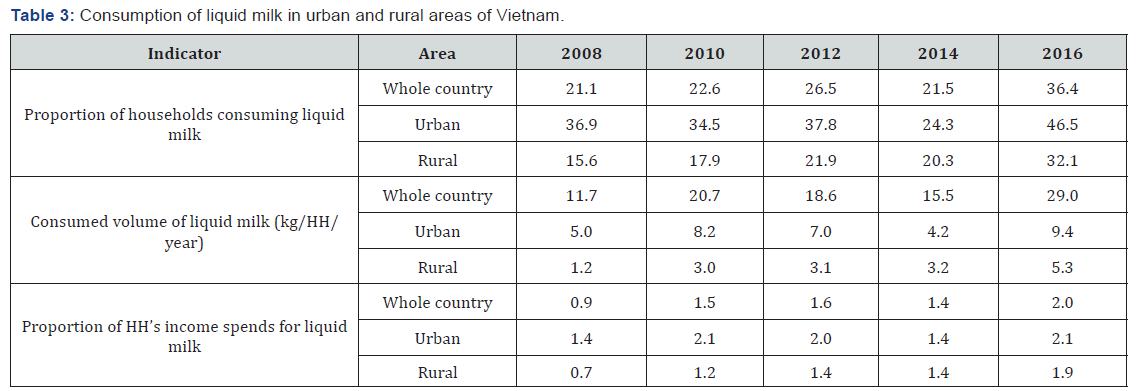
The results from VHLSS 2008 -2016 indicated that the proportion of households the consume liquid milk and consumption volume of liquid milk have been incessantly increasing in this period. Concretely, in 2008, 21.1% of households consuming liquid milk with the volume of 17.1kg/year and in 2017 there are 36.4% households consuming 29.0 kg/year [6]. The increase in consumption of liquid milk is registered both in rural and urban areas (Table 3). The awareness of the consumers on positive effects of milk on the growth, development, human health and disease prevention is an important factor in fostering the milk consumption. The communication programs given by public media, private sector, etc. play a key role in the change of consumer’s awareness. As an evidence, the study result of Hoang Vu Quang in 2019 [8] indicated that the consumption of liquid milk increases averagely every year, if all others remain unchanged, 2.33 kg/HH.
The study of Hoang Vu Quang in 2019 found positive effect of household’s income and urban population on liquid milk consumption. Accordingly, the income elasticity is 0.079 and an urban household consumes higher 6.3kg/year than rural household. The innovation of economic mechanism, the industrialization, urbanization and the depth integration into world economy allow Vietnam to have high growth rate of GDP in long period and improve the income of households (Table 4). In the period 2000-2017, the GNI per capita increase annually 4.7%. The liquid milk consumption of urban area is higher than rural area in term of household proportion, volume and share of income (Table 3). So, rapid growth of urban population (Table 4) speeds up milk consumption in Vietnam. The continuous urbanization process fosters the volume of milk for food in Vietnam in the coming time.
Source: Author’s calcul from VHLSS 2008, 2010, 2012, 2014, 2016.
Source: data on GDP, GNI per capita from World Bank [14]; data on population from GSO [13].
The dairy cow raising brings higher income for the farmers than other agricultural production activities (as poultry, pork, rice). The study in 2012 of Le Thi Phi Van [9] indicated that annual income of a dairy cow is equivalent to income of raising 106 pork’s. In Tien Giang province, profit rate is 37%, in Ho Chi Minh city, the profit rate is from 1.9 % to 27% in function of raising scale (1.9% for scale less than 5 cows and 27% for scale from 50 cows and over). Study of Hoang Vu Quang and Ta Van Tuong in 2018 [6] also indicated that a dairy cow raising brings to farmers in Northern provinces an income of 28.3 million VND and 1 ha of annual crop land can cultivate the grass and provide to 13 cows. Meanwhile, 1 ha of rice only brings to farmer from 10 to 20 million VND. So, in term of land use performance, 1 ha of land used for cultivating cow grass can bring an income of 15 time higher if this land is used for rice cultivation. In addition, in the last 20 years there was no crisis of milk price as happened with pork price [10-12]. The profitable rate of dairy cow raising is key factor for booming of dairy cow raising at household level in the last two decades.
The role of milk processing companies is manifested in 2 aspects: 1) because of domestic need to fresh milk increase rapidly, the milk processing companies have to reinforce milk purchase from farmers, support the cow farmers (providing milk cow, technique training and guidance, advance feed, etc.). This fosters the farmers to invest in dairy cow raising (increase the number of cow farmers, increase the number of cows per farmer); 2) the companies invest directly in the activity of dairy cow raising. Several provinces change suddenly the number of cows in some years due to the investment of processing companies in dairy cow raising in these provinces. With numerous cows and high milk productivity, the processing companies have big contribution into increase of milk production of Vietnam in last year’s [13,14].
Advanced technique, modern and high technology have made important contribution to the development of dairy cow raising in Vietnam. The use of industrial feed in combination with green feed allow the farmers to increase the number of dairy cow and improve milk productivity. Most dairy cow farmers use machine, equipment in caring cows, and doing hygiene, disinfection measures. That increase labor productivity and the number of cows raised by a labor. The artificial insemination is applied in all farms with exotic sperm. That helps to improve the quality of dairy cow. With companies, the tendency is to use exotic breed with high productivity, applied high technology, so milk productivity of companies is very high.
The Government has several policies and measure to support the dairy cow producers and attract the companies to invest in dairy cow raising. For individual households, the government provide training course, including trainings on caring, feed use, veterinary measure, use of antibiotics, hygiene and disinfection, milking, etc. The households are supported for vaccination, use of diet test, artificial insemination, buying equipment for caring animals (grass cutting machine, feed slicer, spraying machine, etc.). For company, they are supported in the building of infrastructure for dairy cow raising as road, electricity system, water system, animal waste treatment system, factory and buying equipment. The companies are supported by 10 million VND/head for imported dairy cow with high milk productivity. The companies also are facilitated in renting land for dairy cow farms and are exempted or reduced the tax on land use right.
The dairy cow raising of Vietnam registers a rapid transformation in the last two decades. Dairy cow raising is expanded in more than a half of provinces with 32349 dairy cow raising households. The households with less than 10 cows tend to be reduced while households with more 10 cows increase. Several big processing companies invested in dairy cow rising help to increase rapidly milk production of Vietnam. The development of dairy cow raising in Vietnam has made contribution from several factors. The consumption needs of liquid milk thanks to increased income, the increase of population and urban people, increased awareness of consumers on positive effect of milk.Improved technology helps to increase milk productivity and labor production, facilitating the farmers to increase their cow herd. The most important element can be higher profit from dairy cow raising than several other agricultural activities. The development of dairy cow households has the support of public services in providing training courses, guidance in the application.
To
Know More About Journal of Dairy & Veterinary sciences Please Click on:
This study was designed to determine whether pulsed electromagnetic field therapy (PEMFT] could alleviate common symptoms of arthritis such as pain, swelling and immobility and whether it could contribute to overall wellbeing. Five volunteers, all of whom were diagnosed with osteoarthritis, participated in the study. Subjects treated themselves with the Centurion EZY system for 20 minutes, two to three times per week for four weeks. Subjects were tested for various physiological parameters including blood pressure, heart rate variability, balance of the autonomic nervous system (ANS), and stress at the beginning of the trial and at the end. An electro-interstitial scan was conducted to provide additional wellness parameters and a photograph was taken to document range of motion. Results were assessed on a case-by-case basis. PEMFT improved mobility in two of the cases after just one treatment and reduced pain and/or swelling in four of the five cases within 4 weeks. Additionally, general wellness related to cardiovascular health and balance of the ANS of participants improved throughout the course of the study. PEMF therapy may be a useful form of therapy to promote healing and to reduce symptoms of pain, swelling and immobility among patients with osteoarthritis. Furthermore, these treatments may have overall benefits to the health of the cardiovascular and the autonomic nervous system. Further testing needs to be done with a larger sample size to confirm these initial findings.
Arthritis is a degenerative disease characterized by joint pain [1]. People suffering from severe forms of arthritis experience an impaired quality of life and are faced with few treatment options that provide long-term relief [2]. The most common types of arthritis are osteoarthritis and rheumatoid arthritis, the former of which is the focus of this pilot study.
Osteoarthritis is a dynamic but gradual disease that can ultimately lead to loss of joint function or significant disablement [3,4]. Currently, there is no cure for arthritis, and treatment options focus mainly on symptom management [1].
Traditional options for treating arthritis include oral non-steroidal anti-inflammatory drugs (NSAIDS), acetaminophen, and corticosteroid injections; which come with side effects such as abdominal pain and damage to central organs [5-7]. Non- pharmacological treatments include diet management to reduce strain on the joints, exercise to improve mobility, splints and joint protection techniques, hot and cold therapy, chiropractics, physiotherapy, acupuncture and more invasive treatments like surgery [1,6]. The relative lack of viable long-term non- pharmacological treatments for arthritis combined with the risks of drug therapy provided the motivation for this study, especially since past studies involving pulsed electromagnetic field therapy (PEMFT) have found no adverse effects on the body, even after prolonged use [8].
PEMF technology was officially approved by the Food and Drug Administration (FDA) in 1979 and has been used to treat various ailments and illnesses for the past 50 years [9]. The therapy was originally used to treat non-union bone fractures and is now used to treat rotator cuff tendinitis, peripheral nerve regeneration, and various other illnesses and ailments of the bone and ligaments causing pain and swelling [10]. Since PEMFT has been recognized to improve circulation and promote healing of inflammation-related pain [1], it shows promise as a treatment for arthritis. Using PEMFT to treat patients with arthritis is not common practice [1,6] and has not been approved by Health Canada. This study attempts to determine if PEMFT (provided by the Centurion EZY System) can alleviate symptoms of arthritis such as pain, swelling and immobility, based on a combination of subjective and objective tests.
Trent University Research Ethics Board approved this research. The study was performed as a clinical trial and participants were responsible for treating themselves following a short-introduction on how to use the PEMF technology.
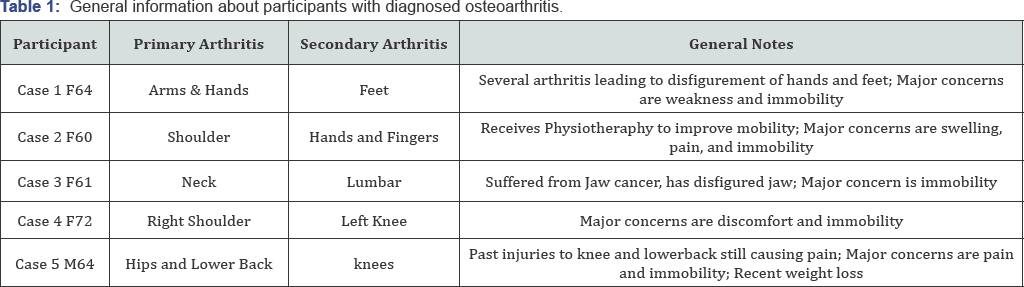
This study monitored five participants with osteoarthritis all of whom volunteered to be tested. One male and four females between the ages of 60 and 72 were included in this study. These participants were recruited at a local chiropractor's office, where the study took place. All participants were receiving chiropractic care prior to, and throughout the study. Initially, an information session was held at the chiropractor's clinic and nine potential participants arrived, but only seven were present at initial testing, five of whom had diagnosed osteoarthritis. Symptoms of the subjects differed and each participant was monitored individually. Participant codes were used to maintain anonymity throughout the study with age and gender being part of the code. Participant information is provided in (Table 1).
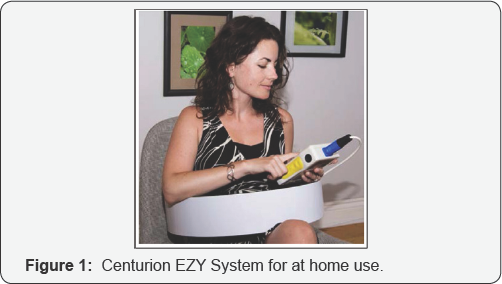
The PEMF device used in this study is the Centurion EZY system, which is intended for home use. The portion of the body to be treated is placed within the device, which is a cylinder large enough to fit around the whole body (Figure 1). The device is easy to use, which allowed participants to treat themselves. Two buttons on a remote attached to the cylinder enabled the user to adjust pulse frequency (from 2, 8, 15, and 30 pulses per second) and duration of treatment (20, 30 to 60 minutes). Participants were instructed to use the therapy two to three times each week over the course of four weeks in the local chiropractic clinic.
All participants began with a treatment at 2 Hz for 20 minutes. The frequency was increased to 15 Hz for an additional week and to 30 Hz the following week provided no adverse symptoms were experienced. None of the subjects experienced adverse symptoms related to PEMFT during the study.
In order to eliminate the placebo effect, two different Centurion devices were used (labeled A and B). Each participant was assigned to one of the two devices, and all participants were told that one device was non-functioning. In reality, both devices were fully functioning and therefore allowed us to treat all participants while minimizing the placebo effect.
Before and after each treatment, participants completed a questionnaire where they rated their symptoms on a scale of 0-10 for each location of arthritis that was being treated. For example, if a participant experienced pain, and immobility; they would rate their pain and immobility before and after each treatment on an increasing scale of 0-10 (where 10 is the most severe). Participants were also contacted weekly to document their experience. General questions asked were:
i. Have you experienced any changes in symptoms over the last week?
ii. Has the device caused any discomfort?
iii. Have you experienced any change over the course of the study?
Subjects were tested for various health parameters at the beginning and at the end of the four-week study. Devices used included blood pressure monitoring; Max Pulse to monitor heart rate variability and to provide information on stress response; ESTeck to assess the interstitial environment; and photography to document changes in mobility, swelling, and disfigurement. Each participant was monitored before exposure to PEMF therapy and at the end of the four-week study. These monitoring techniques are described below.
We photographed each subject to document changes in range of motion and deformities at the beginning and at the end of the study. We also photographed subjects after their first 20-minute treatment to determine immediate changes, if any.
Max Pulse is an FDA Class II medical screening device that provides measurements using photoelectric plethysmography, accelerated plethysmography, and other technologies to access overall cardiovascular and ANS wellness. It provides information on the relative balance of the sympathetic and parasympathetic autonomic nervous system (ANS), stress level, condition of blood vessels, and heart health (Medicore, Max Pulse User Manual).
The ESTeck electro-interstitial body-scan works in conjunction with the data from the Max Pulse to provide an assessment of overall health (www.ldteck.com). ESTeck is commonly used by healthcare practitioners to track changes in a patient's health and wellbeing. ESTeck provides information about heart rate variability, heart rate, stress, systolic and diastolic pressure, systematic vascular resistance, dissolved blood oxygen, blood volume, maximum oxygen volume, and a homeostasis score. Analysis involves bioelectrical impedance. From this, it is easy to see progression or regression in each field in order to determine if health is changing. For ESTeck assessments, the patient is seated with feet and hands placed flat on separate metal sensor plates, and with two electrodes positioned on the forehead above the eye brows. A finger pulse oxy meter probe is used to estimate percentage of hemoglobin that is saturated with oxygen (SpO2). Additional information provided for this program to operate optimally is age, gender, height, weight, blood pressure, ethnicity and level of physical activity.
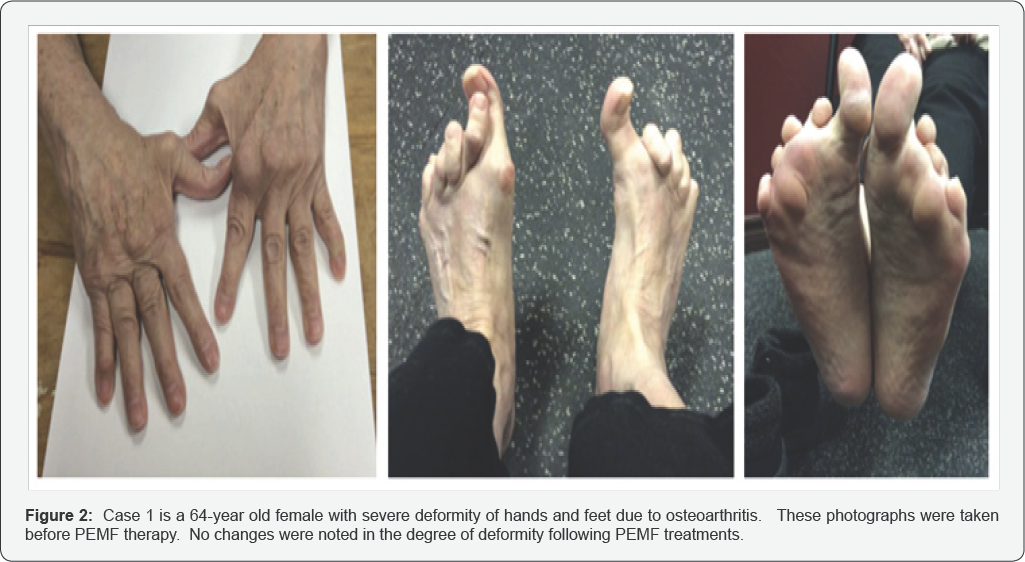
Case 1 is a 64-year-old female who was diagnosed with arthritis in the hands and feet 34 years ago. She is five feet tall, 165 pounds, and reports very light daily activity. The participant experiences symptoms of arthritis throughout her body and also experiences pain and mobility issues in her arms. Case 1 suffers from severe finger and hand and foot deformities and had the most advanced arthritis in the study (Figure 2). Her major concerns were weakness and immobility (Table 1). This individual received a total of nine 20-minute treatments to shoulders and feet.
Changes following PEMFT are indicated by symbols for better (+) and worse (-) for each case.
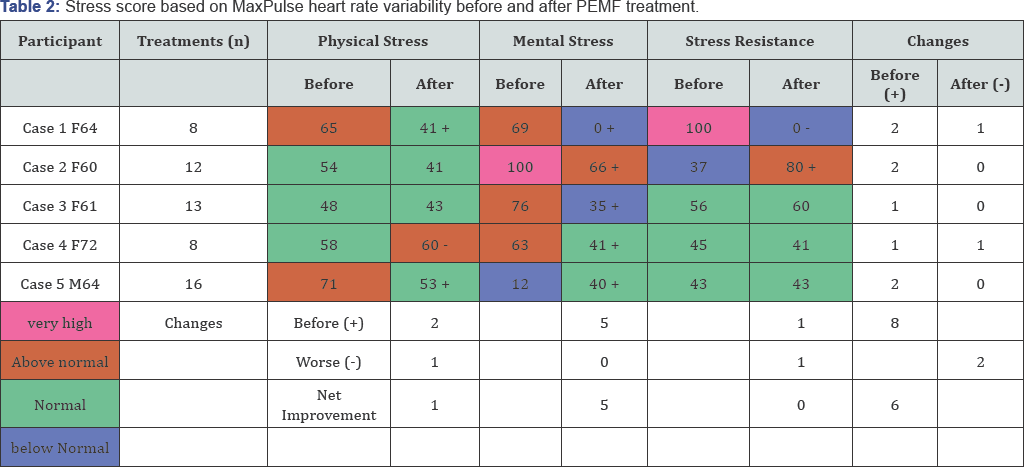
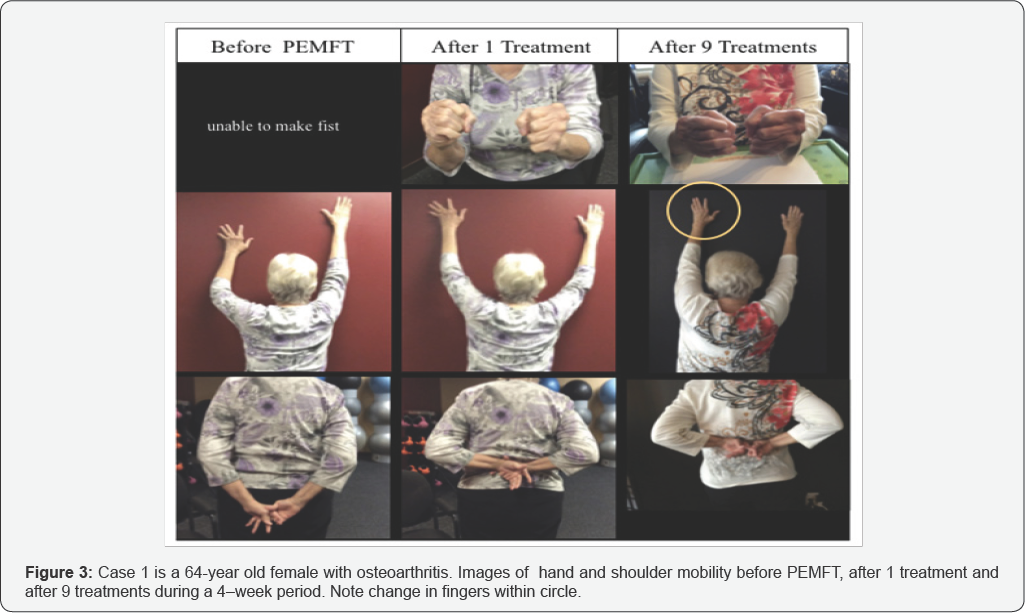
Initially, Case 1 could not form a fist and had difficulty raising her right arm above her head and both arms behind her back. After an initial treatment she could form a fist and had more mobility of her arms that continued to improve with time (Figure 3). Mobility of her feet also improved slightly. Weakness was a major concern and there was some evidence that 15 Hz frequencies alleviated some of her weakness especially in her hands and arms. Despite the fact that Case 1 had the most advanced form of arthritis, improvement in mobility was both rapid and dramatic, which shows promise for those with severe arthritic symptoms. Case 1 also experienced reduced physical and mental stress during the study (Table 2). PEMFT significantly reduced arthritic symptoms for Case 1. She has elected to continue with treatments beyond the four-week test period.
Case 2 is a 60-year old female with arthritis in the left hand and right shoulder that was diagnosed approximately seven years ago. The individual is 5 feet 8 inches and 160 pounds, and reports about two hours per week of physical activity. Arthritis in the left hand has produced a finger deformity in the pointer finger, and the Case 2 notes that the pain from this finger has been spreading to other fingers over the past several months. This individual attends physiotherapy once weekly, but did not attend physiotherapy for two weeks during this study, and upon returning to the physiotherapist the doctor noted that mobility had improved during that time. Note that this individual stopped doing physiotherapist-recommended exercises at home, and the improvement occurred while the participant was using the PEMF therapy. This individual received a total of 12 treatments.
The progression of photos for Case 2 show that her right arm was able to extend slightly further in the "after 1 treatment" photo, and was able to extend significantly further in the "after 12 treatments" photo (Figure 4). The hand images for Case 2 show improved mobility in the fingers after the first treatment and she experienced significantly less pain and less swelling of both hands and shoulder following PEMF treatment. Mental stress reduced and stress resistance increased for Case 2 based on Max Pulse HRV (Table 2). Clearly PEMFT reduced symptoms of arthritis experienced by Case 2 and also reduced her level of mental stress. She has also elected to continue with weekly PEMF treatments.
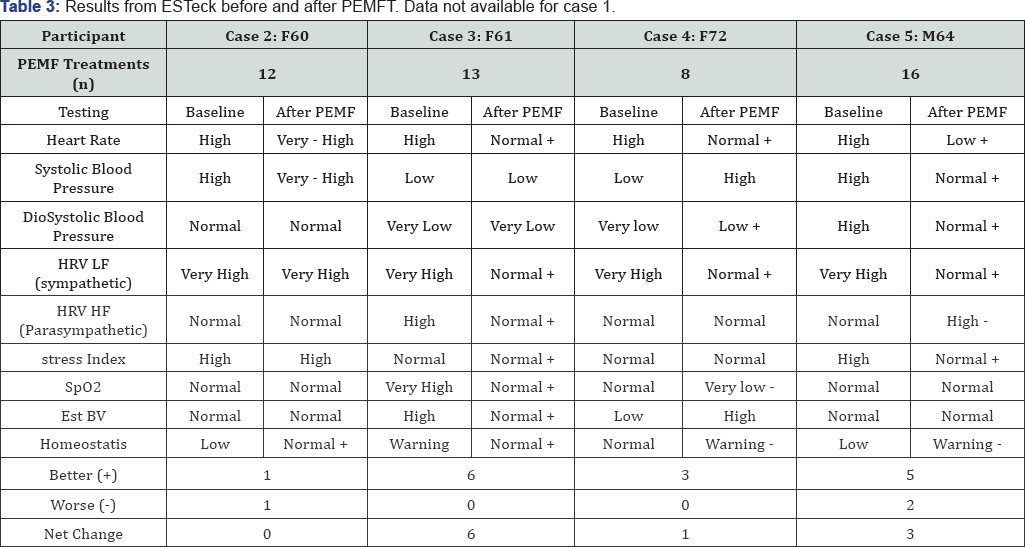
Case 3 is a 61-year-old female who was diagnosed with osteoarthritis in the neck and lumbar 12 years ago. This participant suffered from mouth cancer in the past, and the radiation treatment for this left her with chronic jaw pain. Case 3 is 5 feet 2 inches, 120 pounds and has a moderate activity level. She received 13 PEMF treatments in total. Case 3 experienced a slight decrease in pain and swelling of her neck and a decrease in swelling of her lumbar region following PEMFT but no noticeable change in mobility, which was her major concern. This subject had a significant decrease in mental stress (Table 2) and considerable improvement in six of the nine parameters for her cardiovascular and autonomic nervous system by the end of the study including a normal heart rate, a balance of her ANS based on HRV, and normalized specific oxygen, estimated blood volume and homeostasis score (Table 3). Improved heart rate variability reflects the body's ability to moderate the autonomic system and improved homeostasis score represents the body’s ability to adapt to changes such as disease or illness [11]. While PEMFT did not reduce her primary concern of limited mobility in the neck and lumbar regions, improvements in her cardiovascular health and ANS were noted during this study.
Case 4 is a 72-year old female, who was diagnosed with osteoarthritis in the right shoulder and left knee approximately two years ago. This individual is 5 feet and 148 pounds, and reports moderate daily activity. This individual experiences worse pain in the knee when walking. Case 4 received a total of eight treatments. Her major concerns were with discomfort and immobility, neither of which improved during this study. She reported no noticeable physical changes during the testing period. Mental stress was much lower at the end of the study and physical stress was marginally higher (Table 2). Her ANS was better balanced and her cardiovascular response was mixed (Table 3). Case 4 improved the least of the 5 Cases tested.
Case 5 is a 64-year old male, who was diagnosed with osteoarthritis in the hips, knees and lower back prior to 2012. He also experiences pain from past injuries, including a torn meniscus in the knee and a lower back injury and his symptoms become worse in cool, damp weather. He is 5 feet 10 inches and weighs 212 pounds. This individual received 16 treatments. He increased physical activity and changed his diet resulting in weight loss during the study, which may explain some of the results observed.
His major concerns were pain and immobility (Table 1). A slight but insignificant change was noticed in the pain associated with his hip. Case 5 stated that he experienced slightly better mobility and less pain while walking. Based on Max Pulse, subject showed improvements in both physical and mental stress (Table 2), which was supported by the ESTeck stress index. According to ESTeck, Case 5 shifted from sympathetic to parasympathetic dominance and his blood pressure changed from high to normal (Table 3), which may be due in part or entirely to his weight loss.
The use of magnets for the purpose of healing dates back to Plato, Aristotle and Homer, and during the renaissance, magnets were used to minimize inflammation [1]. In short, this is not a new technology, and is surrounded by a large field of research. The use of magneto therapy began soon after World War II in Japan, and then the technology travelled to Europe [7]. From 1960-1985 it was commonplace for European countries to design and create their own version of a magneto therapy device. During this time, literature on the topic began appearing, the most significant of which treated 2700 patients with 33 different pathologies. In the 1970's, the therapy was used to treat nonunion fractures, and since then it has been approved by the FDA for that purpose. Ten years after the initial approval by the FDA for non-union fractures, the technology was approved for treatment of pain and edema in soft tissues [7]. Prior to approval from the FDA, several trials were performed in order to monitor efficacy, and the success rate of these trials averaged from 7080% [9].
Pulsed electromagnetic field therapy (PEMFT) is a technology that uses pulsed electromagnetic fields to stimulate either a specific area of the body to improve specific symptoms, or the whole body to improve overall wellbeing. The higher the frequency used in the therapy, the more often the electromagnetic fields are pulsed through the device. For example, 2 Hz means two pulses per second, and 30 Hz means thirty pulses per second. Various frequencies and waveforms have been found to have different effects on various disorders [7,12].
PEMFT does not heal the body, but rather aids the body in repairing itself. The exact mechanisms that occur in the body are complex and not entirely understood, however, a large body of science surrounds this topic and there is a general consensus in how and why the therapy works among the research community [7,13].
PEMFs are meant to stimulate piezoelectric potentials using Faraday currents in extracellular fluid [9]. The movement of electrolytes in bone channels and fixed charges generate streaming potentials cause piezoelectric potentials, so the PEMFT is mimicking a natural phenomenon that occurs in the body [14]. In other words, PEMFT generates the same changes within cartilage and bone as natural cartilage compression produced by movement, which causes the fluid and accompanying electrolytes surrounding this cartilage and bone to circulate [14]. This circulation of extracellular fluid is believed to be key in the healing process as influenced by PEMFT.
The use of PEMFs also creates a forced vibration of free ions on the plasma membrane of each cell, which can in turn affect the cell’s electrochemical balance and also its function [15]. As free ions in the extra cellular matrix are circulated, cartilage repair should improve and pain should subside [14,16]. Along with this, mobility should improve as well as minor-to-moderate disfigurements.
PEMFT has also been shown to encourage nerve regeneration in vivo studies, caused by an up-regulation of A2A adenosine receptors, which modifies the response in human neutrophils [16]. Cells in the extracellular fluid as well as cells in nerves are altered, encouraging healthy growth and regeneration, and generally improving healing and well being [9,16].
Today, it is quite common to see PEMFT being used in doctors' offices and clinics to remedy an array of ailments [8]. Studies have confirmed that PEMFT can be helpful in treating osteoarthrosis, abnormal ossification, osteoporosis, nasosinusitis, multiple sclerosis, Parkinson's disease, spastic paresis, diabetic poly neuropathy and retinopathy, vegetative neurosis, peptic ulcers, colon irritable ulcers, trophic ulcers, and several other health complications [17].
The purpose of the current study was to determine whether PEMFT using the Centurion EZY system can alleviate symptoms of osteoarthritis. Of the five cases tested, two experienced significant improvement in mobility by the end of the study and one of these experienced improvement after the first 20-minute treatment. Slight to significant reductions in pain and swelling were reported by four of the five cases. Furthermore, improvement in cardiovascular health and in ANS balance was also observed in four of the cases by the end of the four-week test period.
Several studies have been done over the past several decades to determine if PEMF therapy would be useful to treat arthritis. Overwhelmingly, the conclusion to these studies is that PEMFT would be a valuable therapy to those suffering from various types of arthritis. Human studies that have been conducted include PEMF to treat osteoarthritis in the knee, the cervical spine, osteoarthritis in general, and treatment of various other arthritis symptoms [3,4,8,10,18-21]. Each of these studies were done differently, using different methods and different versions of technology, but all resulted in the conclusion that PEMF technology would be helpful in treating arthritis in some capacity [8]. Some of these papers also looked at the toxicity of using PEMFT, and found that there was no measurable toxicity or side effects to the use of a PEMF device [8].
Experiments have also been performed on various laboratory animals with arthritis and PEMFT is used in veterinary clinics to treat horses and other large mammals as well as small domestic pets for various ailments ranging from broken bones to soft tissue healing to pain reduction. Use of animals to test the technology provides more conclusive evidence of the effectiveness of PEMFT Again, these studies concluded that the technology being used caused no adverse effects and that PEMF therapy may be useful to treat arthritis in humans as well [13,14,22-29].
Additionally, studies have been performed in vitro to determine the effect PEMF has on cells. These studies determined that PEMF exposure could trigger cell proliferation and glycosaminoglycan synthesis in cartilage, thereby altering the extracellular fluid surrounding the cartilage, which encourages healing of the cartilage [30,31].
According to Ganesan [1], analysis of various studies conclusively shows that PEMF not only alleviates arthritic pain but it also affords chondro protection, exerts anti-inflammatory action and helps in bone remodeling and this could be developed as a viable alternative for arthritis therapy. Overall, PEMFT appears to be a promising technology to treat arthritis, and it will be used more frequently in the future.
Pulsed electromagnetic field therapy (PEMFT) is used globally for a number of ailments ranging from rapid recovery following surgery to healing of non-union bone fractures to reduced depression with no obvious side effects after prolonged use. PEMFT has been documented to improve circulation, reduce inflammation and alleviate pain and as such may be a useful treatment for people suffering from arthritis. According to this study, PEMFT, generated by the Centurion EZY system, alters symptoms of arthritis that include some combination of reduced pain, reduced swelling and improved mobility. Responses varied among the volunteers tested with some showing immediate and significant improvements after a single treatment and others are having minimal effects by the end of the test period. PEMFT was also associated with improved overall wellness related to cardiovascular health and autonomic nervous system balance and manifested itself as a form of stress reduction and sympathetic down-regulation. Use of this technology, during the four-week period, resulted in no obvious harmful effects. Clearly, this pilot study needs to be replicated with more cases and a longer test period to verify the results. Should they be verified, PEMFT may be an effective, easy to self-administer, non-invasive treatment with no known side-effects for those suffering from minor to severe osteoarthritis. Benefits in terms of patient wellbeing and reduced health care costs are likely to be considerable.
To
Know More About Novel Techniques in Arthritis & Bone Research Please Click
on: