Monday, May 9, 2022

Green Bonds Issuance and Stakeholders Governance - Juniper Publishers

 Annals of Social Sciences & Management Studies - Juniper Publishers

Abstract

By issuing green bonds, global societies attempt to solve some critical problems overflowing from noneconomic spheres such as regional governance, social security to be weakened by COVID-19 pandemic and climate change issues. Green bonds issuance occurs in a process of the digital industrial revolution and is expected to be effective for construction of sustainable community but unavoidably brings structural changes of stakeholders. We should explore the sustainable scheme of green bonds as well as the effect of each investment project so that green bonds can solve extensive problems of climate change and social infrastructure. The theoretical analysis of multi stakeholders provides some cooperative financial schemes to develop green bonds issuance. Empirical explorations verify the theoretical results. A definition presented by Chinese green bond market proves to bring a restrictive framework for inside stakeholders to increase the issuance of green bonds and to promote construction of social infrastructures. However, the green bonds issuance in some emerging countries or regions has been developed openly with cooperation of outside stakeholders.

Keywords: Green bonds issuance; Digital industrial revolution; Sustainability; Inside stakeholders; Outside stakeholders

Introduction

To achieve low carbon societies, we should promote projects of renewable energies, energy efficient buildings and electric vehicles. The projects to mitigate climate change problems are expected to have higher initial costs and business risks but indicate lower running costs than their high carbon alternatives. The climate change issues have become to be targeted commonly in global communities. Green projects purpose to solve various environmental and sustainability problems. The green projects inevitably need a great amount of funds and are financed by governmental as well as private funds1. The large environmental projects must not only effectively achieve low carbon emission but also efficiently construct a scheme of sustainable governance. It is supposed that green bonds could cover suitably and cooperatively the investment gap for sustainable communities.

Since the 1990s, global markets have been enlarged mainly by dynamic competition in the growing world market and rising innovation of ICT. The industrial revolution derived from innovation of ICT influences many fields from manufacturing to performances of financial service industries. The revolution significantly has changed the lifestyles of residents beyond the reconstruction of industrial structures. The great changes of economies and societies are expressed by digitalization of global communities.

For examples, smart cities could improve in a process of digitalization of economies. By mobilizing benefits of the digitalization, the global communities should attempt to overcome cooperatively some global problems such as Climate Change and COVID-192 [1,2]. To achieve sustainability the global communities must be involved with problems of government and market failures at a global level. The preventing policies for inflection spread of COVID-19 require each region to recover serious damages of the pandemic and global communities to restore safety network of health. Climate Change problems have revealed various natural disasters in many regions. In the process of globalization many neo liberalists had an optimistic view that enlarging market economies could improve welfare of global societies. While the digitalization moves globalized economies into an integrated system, the social and environmental problems appear to disturb the development of market economies. Global market economies are more probable to increase peril lowering sustainability of society. To prevent great crises the globalized economies should construct sustainable scheme of communities positively3 [3].

Since the decade of the 2010s, many corporations increase attempts to obtain benefits by connecting internet services4. Development of digital services reforms relations between corporation and stakeholders significantly. Corporations have become to turn the target from the price competition for market dominance brought by scale of production to efficient and prompt provision platform to correspond with diversified needs of services. Hindman [4] explores the relation between the digital economy and monopolies. Tanaka [5] theoretically discusses those behaviors of the major corporations leading the digital economy can be explored in the centralized schemes. The digitalization features enhancement of centralization of the economies and influence of stakeholders.

Employing the centralized scheme, Tanaka [6] focuses on the structural reform of stakeholders brought by the new industrial revolution. The feature of digitalization in economies and societies is explored by structure of stakeholders that are classified into inside, outside and external stakeholders. Each type of stakeholders participates communication scheme of the corporation with its own distinctive way. The digital industrial revolution reforms structure of stakeholders by accompanying the change of the communication system in global and local communities. The corporation cordially obeys the stable contacts with many stakeholders in markets and institutional relations but is possible to bring occasional connections with other stakeholders. The former stakeholders are referred as the inside stakeholders and the latter are stated by the outside stakeholders. Generally, the inside stakeholders present regular customers, business partners and employees. In green bonds issuance, the inside stakeholders imply cohesive relationships in the green projects. The outside stakeholders can connect more occasionally and freely with the corporation than the inside stakeholders. In the context of the green bonds the inside stakeholders exhibit a related organization including local governments and the outside stakeholders exhibit participants in the bonds market. Although the external stakeholders in bonds issuance are not directly concerned with the bonds market, they could improve own interests in social relations by enacting non economic initiatives such as regulations and legislations.

Development of ICT facilitates the communication between corporations and stakeholders and changes lives of the resident. The digital industrial revolution changes the feature of stakeholders in the market. However, some individuals who remain outside of the digital communication5 [7] cannot obtain enough benefit from the new industrial revolution. Tanaka [8] explores green projects in Chines communities by the voluntary contribution analysis of public goods. This paper theoretically explores the relation between structural changes of stakeholders and green bond issuance. This paper is organized in 7 sections. Section 2 focuses on the communication mechanism between the corporation and multi stakeholders in green bonds issuance is summarized as follows. The sustainable model analyses for global communities are applicable for issues of the green bonds project. Definition of green bonds influences the development of green projects. An empirical exploration on Chinese green bonds issuance indicates that the definition of green bonds determines dominant stakeholders in the market. It implies positively the relation between the volume and dominant stakeholders in green bonds issuance. Section 3 argues that the efficiency of green bonds issuance is suggested to be measured by the transaction costs of markets and societies. When total number of stakeholders is growing, the decreasing transaction cost of outside stakeholders induces the green bonds market to achieve sustainable communities.

Section 4 explores theoretically how the structural change of stakeholders influences green bonds issuance and brings the following results. Inside and outside stakeholders have incentives to increase payment from bonds issuance by improving efficiencies of communication. Consequently, the communication contribution of the stakeholders lowers transaction costs. If the digital industrial revolution raises more relative communication contribution of outside stakeholders than inside stakeholders, in the green bonds market issuance declines and prices rise. The composite system of green bonds aims to provide fund for needs of different stakeholders at the same time. The two definitions of China imply that green bonds finance domestic and global green projects and that the two ways of finance increases bonds issuance. The theoretical investigation implies that the internal networks of the corporation enhance the issuance volume of green bonds but that outside network of the corporation countervails the over issuance of green bonds. Section 5 demonstrates that the countries with undeveloped internal networks of finance depend on the outside network represented by the green bonds scheme financed with non-local currencies. These countries confront the problems brought by insufficient provision of fundraising.

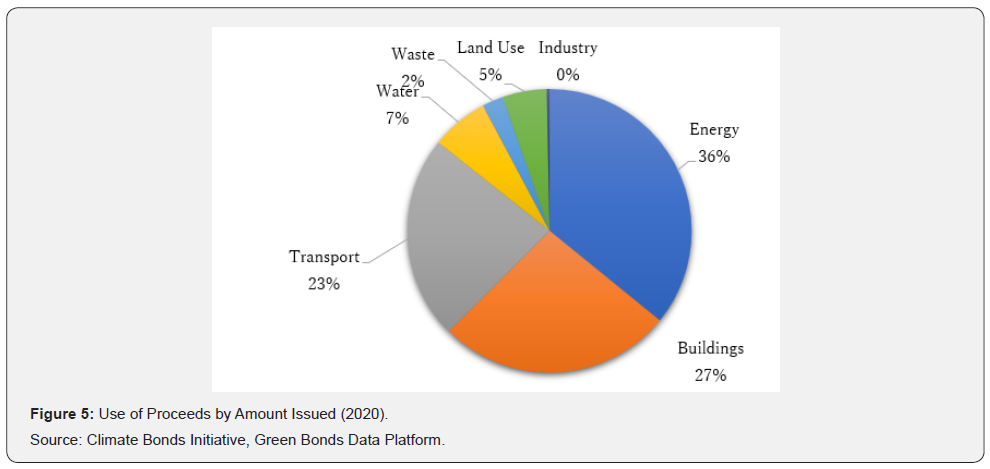
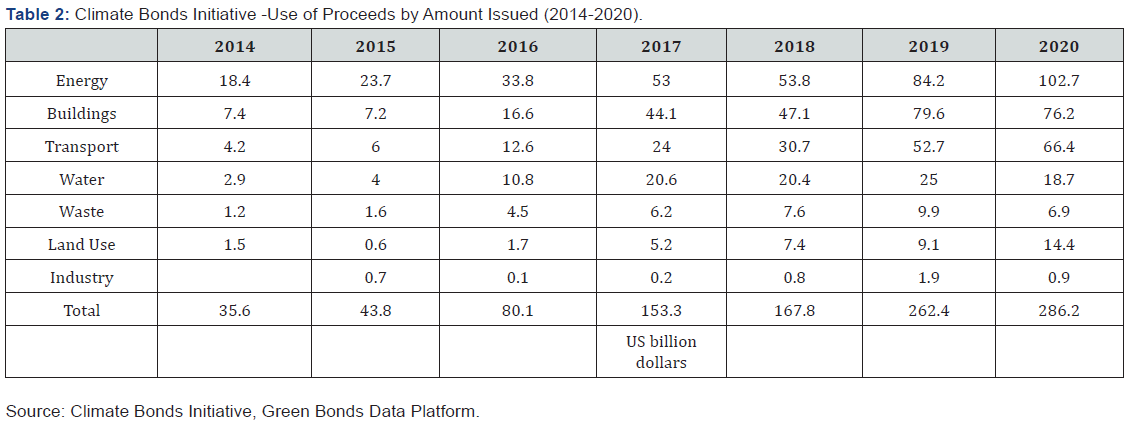
Section 6 exhibits that the digitalization of green bond market grows the outside network. Rising outside stakeholders lower issuance by declining inside stakeholders in the over issuance of green bonds and increase issuance by alleviating outflow of inside stakeholders. Section 7 provides some empirical evidence to the theoretical exploration. The results comparatively notice that OECD countries obtain a different structure of stakeholders from non-OECD countries. Although fields of energy, buildings and transport occupy over 80% of green bonds in 2020, the sustainable governance of the finance scheme is essential to perform long term investments.

The Green bonds project produces cooperative schemes with many stakeholders to achieve sustainable communities. This theoretical approach is derived from the research that Arrow [9] indicates CSR (Corporate Social Responsibility) as an issue of the economic theories. The theoretical framework is based on incentive theory of CSR that Tirole [10] explores on shareholder values. The sustainable framework of global communities needs to be funded by decentralized schemes. Tanaka [11] presents a theoretical model to analyze sustainability of the corporation with multi stakeholders. Tanaka [1-3] develop this theoretical model to explore sustainability of global communities6 [12]. Tanka [5,6] discuss that the new industrial revolution brought by globalization and digital innovation grows centralized frameworks in societies and economies. The significant concern of research becomes targeting sustainable decentralized mechanism to mitigate the market and the government failures brought by the centralized framework. Tanaka [13-15] evaluate social impacts of the new industrial revolution by relating with structural change of stakeholders. Tanaka [16] explains the implication of the Chinese definitions of green bonds issuance by based on the theoretical model of stakeholders and explores fundamental issues of the digital innovation to achieve sustainable communities. This paper constructs general theory of sustainable financing framework and fucuses on the reform of stakeholders to grow green bonds issuance.

Green Bond Definitions and Issuances

Since the 2010s innovation of ICT propels to spread utilization of internets. The efficient economic systems are separated from scale merits of mass production. Corporations raise the opportunity to perform globally7 [17-22]. Tanaka [6] demonstrates theoretically that digitalized economic systems are not able to improve social welfare without constructing sustainable schemes. Global communities could not develop economic and social systems without developing digital transformation and primarily should aim to achieve sustainable framework. The green bonds market is expected to solve climate change problems and to construct social infrastructures. This paper theoretically explores that the green bonds market is an effective scheme to improve sustainability of economies and societies.

Tanaka [6,14] present a theoretical model to explore the structural changes of stakeholders and sustainable communities in the process of digital transformation of economies. The model exhibits a principal and agency model of game theories between the corporation and the stakeholders and is described as follows. The corporation obtains net private profit  from issuing amount of green bonds. The green projects are public and private cooperative projects by using the green bonds scheme with n stakeholders. Although green projects probably need a large amount of funds to provide environmental infrastructures, in the present, governments alone cannot finance the projects under the strict budgetary condition. It is possible that the green bonds project performs in negative net profits. However, green bonds issuance presents declining marginal net profit. The green bonds scheme executes environmental projects cooperatively with inside and outside stakeholders. By using the mathematical expression, the corporation makes payment , such as wages, benefits and tax exemption, for each stakeholder i. The total payment t describes the summation. As the green project might involve not only domestic but also overseas stakeholders, each stakeholder has distinct evaluation of the project. The benefit that the stakeholder i obtains from the green project is exhibited by evaluation function. The green project enhances industries developing renewable energy but depresses products massively consuming fossil fuels. To simplify the reasoning, the stakeholder i and j are classified into positive stakeholders, and negative stakeholders. Spreading facilities of internet complete diversified connection between corporations and stakeholders. In particular, the digitalization of industries becomes to distinguish exactly positive and negative stakeholders. Consequently, digital transactions can require payments for positive stakeholders and offer benefits for negative stakeholders. The transaction pays prices for negative stakeholders and receives fees from positive stakeholders.

The development of Chinese green bonds projects illustrates an influence of stakeholders on sustainability of economic and social systems. Financial technologies have evolved greatly with innovation of ICT. Green bonds are probable to grow by facilitating the improving internet technologies to include offshore markets. Openly enlarging markets are required for trades to be fair and legitimate. However, green bonds market in China exhibits that the governance of the green bonds project can be explained by the theory of multi stakeholders. A report of Climate Bonds Initiatives (CBI) [23] describes issuance of labelled green bonds8 as follows. In 2019, China issued the largest source of labelled green bonds with USD55.8bn. However, according to ratification of the CBI Green Bond Database Methodology in 2019, USD31.3bn worth of Chinese green bonds clears both Chinese and CBI green definitions, while USD24.5bn of Chinese green bonds are only aligned with China’s local green definitions. The feature of green bonds definition implies that China aims to improve the two types green bonds at the same time. The issuance of green bonds is supposed to reflect “dual circulation strategy” that China presents in 14th five year plan (2021-25). Considering that this policy intends to raise domestic economy and to develop global activities, the theoretical model of stakeholders effectively exhibit how China needed to issue the two definitions of green bonds.

The stakeholders approach exactly prospects the development of green projects. To apply stakeholder analyses, the market of green bonds aligned by CBI rule is supposed to be organized by outside stakeholders. Corporations take various options to achieve sustainable governance. While some corporations positively perform transactions to follow global businesses rules, others mainly obey the rules in a large domestic market. In Chines green bond issuance, many large state-owned corporations cannot efficiently adapt rapidly changing global requirements of governance. The global standard of green bonds issuance requires to improve corporate governance in the domestic market. Even if green bonds issuance proceeds to obey CBI rule, inside and outside stakeholders in the bonds market grow unevenly. In the green bonds to improve the local infrastructure, the inside stakeholders are assumed to share positively the related profit with the corporation. The outside stakeholders could facilitate green bonds to improve sustainability of global communities by solving the problems of climate change. Inside and outside stakeholders participate green bonds market to seek their own merits. It is assured that the proportion of the two stakeholders influences green bonds issuance9 [15].

The displacement of decentralized systems that negative stakeholders activate in the green bonds issuance improves sustainability of communities10 [5]. In the dual circulation strategy China should initiate a method for negative stakeholders to contribute on sustainable communities. In the mathematical model, the inside and outside stakeholders are exhibited by and The external stakeholders to activate the green bonds market are expressed by . 

Green bonds market in Growing Stakeholders

The inside and outside stakeholders exhibit different communication needs for the green bonds issuance. Issuance of green bonds brings the inside stakeholders related benefits, such as rising employments and enhancing social infrastructures. The outside stakeholders seek to improve the scheme of sustainable governance in the bonds market. To achieve sustainable governance every stakeholder i should contribute effort on the communication scheme. The stakeholder i contributes to improve communication scheme. The total efforts are expressed by and indicate efficiency of communication mechanism. Inside stakeholders obtain greater influence from green bonds issuance than outside stakeholders. When a green project cannot be financed by bonds, the green development will be suspended. Consequently, some inside stakeholders lose jobs but one opportunity for investment only disappear in outside stakeholders. The communication scheme indicates efficiency indexes by for inside stakeholders and for the outside stakeholders. The inequality,  for any x, y distinguishes implication of the two indexes. It is supposed to complete mathematical discussions that the two communication index functions are increasing with x, y and that are satisfied with  and. The increasing function with x implies that the corporation becomes more cooperative with the inside stakeholders as bonds issuance is rising.

As innovation of ICT with digital transactions becomes to recognize details of digital services, improving ICT makes possible to raise efficiency of communication γ(y)11 [6], regarding outside stakeholders. The efficiency is supposed to be an increasing function of y, . As innovation of ICT raises the relative advantage of outside stakeholders, they attract member from other stakeholders. It is affordable that the structural change of stakeholders may alter the borders to classify stakeholders. The border numbers and are not constants but presented by functions  and  of variable. To descry the borders more preciously, the net benefit function of the corporation is stated by (1)12 [6]. (1)

In sustainable communities the corporation must not consider only market conditions but also evaluations exhibited by related stakeholders. We should explore the integrated system of economies and societies to coordinate the corporation and stakeholders13 [24].

The expression (1) exhibits that the development of green bonds issuance depends on social costs as well as net profit of the corporation. The social costs of green bonds issuance are burdened by both the corporation and stakeholders. The green bonds issuance brings the transaction cost as a social cost14 [25-27]. Transaction costs are different for each type of stakeholders. Tanaka [6] states the transaction costs of inside, outside and external stakeholders by ,

The transaction costs indicate how digitalization of economies changes the green bonds market. The figure y denotes progress of digital industrial revolution. In the first step, as digital transformation is supposed to bring, the transaction cost of outside stakeholders written by (3) is lowering with investment on digital technologies in green bonds issuance. The declining issuance cost of green bonds induces to raise volume of issuance. In the second, from the inequality, (2) implies that an increment of green bonds issuance brought by outside stakeholders declines transaction costs with inside stakeholders. Inside stakeholders take advantage of relatively low transaction costs. More inside stakeholders become to participate on the green bonds market. So the inside and outside stakeholders increase to be involved in green bonds market that social communication costs enhance sustainability. The digital industrial revolution is one of driving forces to propel green projects and sustainability of communities.

However, it is possible that inside and outside stakeholders do not increase at the same time. Changes of relative transaction costs may induce stakeholders to choose an appreciate type of stakeholders and reform the structure of stakeholders. Tanaka [28] discusses that the transaction costs indicate an efficiency index of digital industrial revolution. The section 4 investigates the issuance of green bonds when structural changes of stakeholders occur.

Bonds Issuance and the Structure of Stakeholders

Rising green bonds market is expected to improve sustainability of global communities. The corporations to issue green bonds are extending from government agents to private organizations. To solve increasing fiscal deficits the government encourages finance with private funds. The green bonds market aims to ensure the cooperative scheme of sustainable governance with inside as well as outside stakeholders.
The performance of green bonds issuance is expressed by maximizing function (1) regarding Differentiation of the function (1) with x brings the optimal condition of green bonds issuance by

 (5)

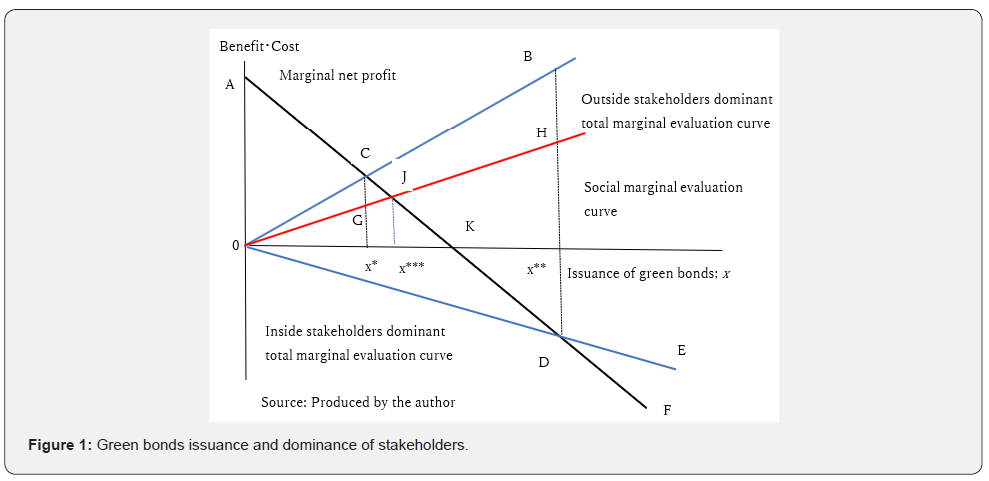
The implication of (5) is illustrated by Figure 1. The left side means marginal net profit and is depicted by the curve AF. The right side of (5) is divided into the first term to express marginal evaluation of inside stakeholders and the second term to indicate marginal evaluation of outside stakeholders. By excluding negative signs in (5), the first term presents positive, and the second term is negative. When the absolute value of the first term is greater than that of the second value, inside stakeholders dominate green bonds market. The dominance of inside stakeholders is depicted by the curve 0E. When (5) is positive, outside stakeholders dominate the green bonds market. By the similar reasoning, the dominance of outside stakeholders is exhibited by the curve 0B. (5) indicates that the optimal issuance in the market that outside stakeholders dominate is x* in the intersection point C of the curves AF and 0B. Similarly, the optimal issuance x** in green bonds market that inside stakeholders dominate is determined by the intersection point D of the curves AF and 0E. The point C is exhibited in positive marginal net profit, while the point D appears in negative net profit. As marginal net profit curve is decreasing with green bonds issuance, x** is greater than x*. The green bonds market that issues x** is probable to obey the standards and practices confirmed by inside stakeholders. Outside stakeholders guided by global and sustainable standards aim to make issuance and governance more sustainable. We summarize the above investigation by the Proposition 1.

i. Proposition 1. When inside stakeholders dominate the green bonds market, the project financed by the bonds is probable to take a risk of social welfare loss such as default. Outside stakeholders intend to reform the green bonds market so that global communities may achieve sustainability. Rising dominance of outside stakeholders in the bonds market lowers the issuance volume and arises the issuance price of the market.

Figure 1 shows that the point D with dominant inside stakeholders does not necessary bring social optimal issuance. So green projects become sustainable, that green bonds issuance should be ensured by CBI standard. As the value of (5) increasing, the optimal point D moves toward to point J. It is noticed that the value of (5) depends on parameters as well as variables. It is possible that scheme of green bonds issuance develops with a following wind in the digital industrial evolution. The improvement of communication systems between the corporation and stakeholders can bring the structural changes of stakeholders to bring sustainable communities.

The optimal conditions for payments are brought by differentiating (1) with. The optimal conditions of payments expressed by (6), (7) and (8) for stakeholders are distinguished for inside, outside and external stakeholders. 

The expression (8) states mathematically their boundary solutions for external stakeholders.

To explore social welfare, we define the social marginal evaluation by including the evaluation of the external stakeholders. The social marginal evaluation is defined to be written by the right side of the expression (9). The social optimal issuance of green bonds is the solution of (9). 

(9)

In Figure1 the social marginal evaluation is depicted by the curve 0H. As the curve 0H is expressed with a weighted summation of the curves 0B and 0E, 0H is located between 0B and 0E. The social optimal green bonds issuance x*** indicated by the intersection between curves AF and 0H is greater than x*, where outside stakeholders dominate, and lesser than x**, where inside stakeholders dominate.

Restriction of Green Bonds Issuance with Insufficient Inside Stakeholders

In the previous section we explore that structure of stakeholders influences the issuance of green bonds. In the first, many emerging countries have not obtained enough inside stakeholders with adequate knowledge and funds for green projects. As green projects are expected to raise a large industries and social infrastructures for the regions, green bonds finance funds in some offshore markets. It is assumed that outside stakeholders dominate the green bonds market. Marginal evaluation curve in the offshore market financing green bonds is approximately exhibited by curve 0B. The market issuance x* is lesser than the social issuance x*** and the social welfare loss is expressed by the area of triangle CGJ. The offshore green bonds market accompanied with immature domestic finance brings under issuance. The green bonds issuance dominated by outside stakeholders is not expected to provide enough green projects for sustainability.

Many advanced countries possibly present dominant appearance of inside stakeholders. Because legislation and regulation are incomplete, outside stakeholders do not participate green bonds market actively. In situation with the dominant inside stakeholders, Figure 1 approximates the social evaluation curve by curve 0E. Some local governments are expected to raise budget revenues from increased production of the corporation. The local governments become positive stakeholders. Although the corporation issues green bonds beyond the maximized profit point K, the local governments can compensate the decrement of profit for the corporation indicated by the area of the triangle 0DK, because they gain a remaining benefit beyond the payment by the triangle KDx**. The intensive interests that the corporation and small members of inside stakeholders share bring incentives to issue more green bonds beyond social optimal amount x*** to x**. The problem of over issuing green bonds is exhibited by social welfare loss indicated by the area of the triangle JDH. As the welfare losses include failures or defaults of green projects, faire and transparent rules aim to reduce the losses by participating with various outside stakeholders.

The above investigation discusses that sustainable issuance of green bonds could achieved by properly designed cooperation with inside and outside stakeholders and is summarized by Proposition 2.

ii. Proposition 2. Green bonds projects which are dominated by outside stakeholders issue less volume and higher rate of bonds than social optimal issuance. In this situation, growing inside stakeholders in green bond market could decline the social welfare losses on green projects. However, the green bonds market dominated by inside stakeholders probably issue green bond more beyond the social optimal amount. Rising participation of outside stakeholders contribute to construct a sustainable framework of green bonds.

CBI global definition and transformation of stakeholders

The previous sections 4 and 5 explore that the dominance of inside stakeholders or outside stakeholders brings over or under issuances of green bonds. The result implies that initiatives to transform properly stakeholders could decrease social welfare losses. Tanaka [15] argues that the digitalization of economies and societies influences differently incomes of stakeholders. Surpluses indicated in Figure 2 exhibit the transformation of stakeholders. It is supposed that inside stakeholders are organized less various than outside stakeholders. Inside stakeholders obtain the steeper marginal evaluation curve CD with payment than the counterpart curve AB with outside stakeholders. Considering that external stakeholders are connected more loosely with the corporation than other stakeholders, their marginal evaluation curve FK is located lower than the two curves CD and AB.
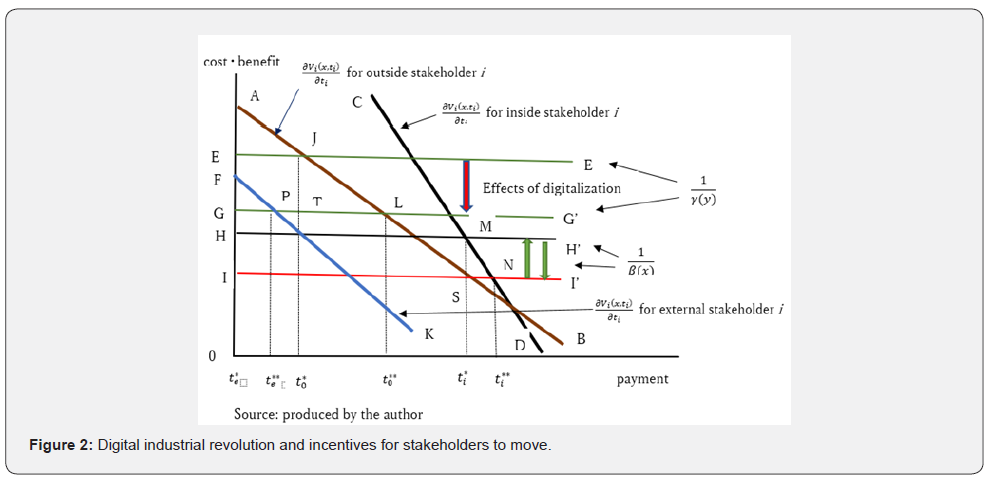
In the first, it is assumed that over issuance x** of green bonds in Figure 1 is brought by dominant inside stakeholders. As expression (5) is negative, marginal net profit is lowering. The corporation reduces issuance x without compensating support of inside stakeholders. Decreasing issuance lowers  and shifts the line II’ expressed by expression (6) upward to line HH’. However, digital industrial revolution implies increasing contribution y. Considering expression (7) and, the line EE’ moves downward to GG’. Consequently, inside stakeholders loss the surplus presented by the area of the triangle MSN and outside stakeholders gain the surplus expressed by the area of the triangle JTL. So inside stakeholders such as local governments do not go into default, that they turn into outside stakeholders to decrease risks. In particular, the municipalities alone would not like to propel governmental green projects, and plan to enlarge cooperative scheme with private funds. The marginal evaluation curve CD of inside stakeholders is altered by the curve AB of outside stakeholders. When the line EE’ moves downward the line GG’, external stakeholders become to satisfy (7) instead of (8) and to gain the surplus indicated the area of the triangle FGP. If they achieve own aims, they are willing to turn into outside stakeholders. For example, when the bonds market is available with low risk, NPO purchases green bonds to achieve purposes of the organization. The external stakeholder gains benefits by behaving like outside stakeholders. Consequently, the outside stakeholders grow by flows from other stakeholders. Figure 1 illustrates that over issuance of green bond x** approaches to social optimal issuance x***15 [16].

In the second, it is assumed that under issuance x* of green bonds presented in Figure 1 is brought by the dominance of outside stakeholders. This situation means that the domestic bonds market is immature. As the dominance of outside stakeholders expresses positive marginal net profit of (5), the domestic market financing could raise market issuance of green bonds. In Figure 2, rising x shifts the line HH’ downward to the line II’ by raising . Figure 2 exhibits also that increasing issuance of green bonds brings inside stakeholders the surplus indicated by the area in the triangle MSN. Considering that the difference between the two surpluses with inside and outside stakeholders exhibit closer in under issuance than in over issuance, the flow from inside stakeholders

to outside stakeholders becomes to be smaller amount than in over issuance situation and facilitates to achieve the social optimal issuance x***. However, in the under issuance of green bonds the flow from external stakeholders to outside stakeholders continues as in over issuance situation. The investigation of this section is summarized in Proposition 3.

iii. Proposition 3. Digital industrial revolution brings the structural transformation of stakeholders. The scheme that moves inside and external stakeholders into outside stakeholders is effective to solve problems of the over issuance of green bonds. The initiatives to grow inside as well as outside stakeholders aim to solve the problems of under issuance of green bonds.

Outside stakeholders in the green bonds market and emerging countries

Green bonds financing is expected to contribute on sustainability of local communities. And many schemes of green bonds could be formed by a global cooperation. Inside and outside stakeholders positively cooperate to the green project. If the green project cannot obtain abundant funds with inside stakeholders in domestic financial market, it should find outside stakeholders overseas to seek sustainable communities. This section 4 explores an empirical evidence in the green bonds project to form the cooperative mechanism with inside and outside stakeholders. The exploration proceeds as follows.

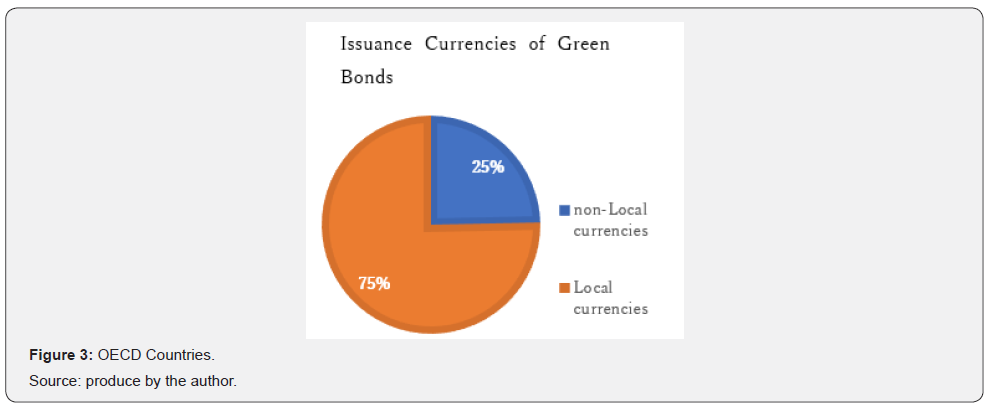
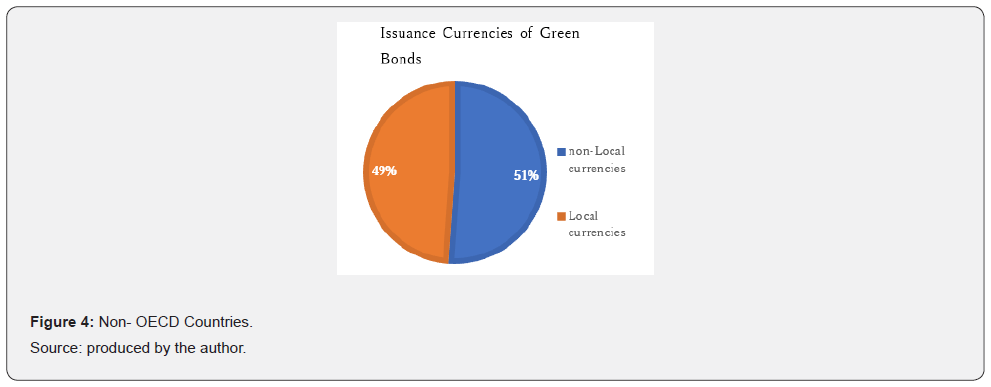
This section produces Figures 3 & 4 by processing the numerical data to be provided by Bloomberg L.P.16. Some figures regarding green bonds which are not available on the above the data source are excluded from the following investigation. This section explores all active green bonds including government and corporate bonds in this analysis. It is noticed that the securities are defined by green bonds in this date source. The values of bonds and exchange rates are estimated in 2 April, 2021. The values of bonds are calculated by USD. To compare domestic and offshore markets of green bonds issuance, we classify the green bonds according to issuances by local currencies or non-local currencies. Bonds applicants by local currencies are supposed to include inside and outside stakeholders in domestic and overseas investors. On the contrary, applicants by non-local currencies are assumed to present mainly outside stakeholders. In the previous sections we assume that the immature development of inside stakeholders regarding green bonds enhances issuances in offshore markets and that digitalization of industries facilitates transaction of outside stakeholders. To aim at proving the assumption, countries or regions which issuing identities belong to are classified into Economic Co-operation and Development (OECD) countries and non-OECD countries. As a side note, the green bonds issued by supranational organizations (SNAT) are excluded from the investigation in this section.
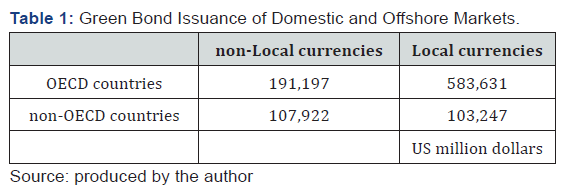
This section provides the empirical foundation on the theoretical exploration in the sections 3 to 5. The performance of stakeholders in green bonds finances is measured by classifications of applicants in the green bonds market. Figure 3 exhibits that OECD countries issue green bonds mainly in the domestic financial markets. However, Figure 4 indicates that non- OECD countries issue greater volume of green bonds than OECD countries in offshore financial markets. The results present a significant implication of green bonds issuance. The two figures show an impressive contrast of green financial markets. However, Proposition 1 demonstrates that the digital industrial revolution brings enhancing influence of outside stakeholders on the green bonds project in both OECD and non- OECD countries. In Figure 3, the domestic financial market is dominant in OECD countries. Since development of digital technologies grows outside stakeholders, the transaction of local currencies is possible to be carried by outside stakeholders. Table 1 shows that OECD countries contain about 3 times issuance of local currencies than of non-local currencies. Although we do not obtain a complete proof now, it provides an evidence that rising issuance of green bonds accompanies growth of inside stakeholders. Investigation of the section 4 indicates a reason of dominating bonds issuance by local currencies in Figure 3. Figure 4 shows that issuance of green bonds brings cooperation with large number of outside stakeholders overseas. To lower charge for risks, green projects financing green bonds are required to implement the global standard of issuance.
Climate Bonds Initiative publicly presents the recent data of green bonds issuance17 to enhance the environmental finance. Figure 5 exhibits that labelled green bonds are facilitated largely for the investment of projects with energy, buildings and transport.

Table 2 shows uses of labelled green bonds in 2014-20. By considering that the total annual issuance increases eightfold in this period from 35.6 (US bln) in 2014 to 286.2 (US bln) in 2020, it is possible to conclude that green bonds effectively lower the emission of carbon and construct sustainable infrastructures. To achieve low carbon societies, the needs of environmental investment are increasing. When one government is not possible to finance the large low carbon projects, a cooperative scheme needs to perform the environmental financing. Sustainable global communities inevitably involve the efficient scheme to prevented green bonds form defaulting.

Friday, May 6, 2022

Effects of the Origin on the Composition of Biohydrocarbons Produced by Decarboxylation of Pongamia Pinnata L. Oils - Juniper Publishers

 Juniper Online Journal Material Science - Juniper Publishers

Abstract

The objective of this work is to investigate the influence of the origin of Pongamia pinnata L. seed oil on the structure and composition of triglyceride or fatty acids and liquid bio-hydrocarbons. In this study, Pongamia pinnata L. seed oil was collected from three different locations in Indonesia, namely Kupang (West Timor), Manado (North Sulawesi) and Bogor (West Java). Through the metathesis method, the oils were converted to basic soaps with a mixture of magnesium and zinc metal compounds. Furthermore, the basic soaps were decarboxylated to produce liquid biohydrocarbon fuel. The oil content, fatty acid composition and liquid biohydrocarbon fraction had been analyzed through a series of experiments. It was found that the oil of Pongamia pinnata L. seed taken from different areas resulted in a variety of fatty acids’ composition. The composition of palmitic, stearic, oleic and linoleic fatty acids were different for each location; the seed oil derived from Kupang were 17.02, 8.40, 30.05 and 17.40% mole, the Bogor’s oil were 11.87, 4.66, 23.41 and 11.40% mole, and Manado’s oil were 15.15, 5.11, 31.93 and 11.22% mole, respectively.

Keywords: Pongamia pinnata seed oil; Liquid biohydrocarbons; Decarboxylation; Basic soap

Introduction

Nowadays, many researchers are interested to find renewable liquid drop-in fuels in view of its enormous economic, social and environmental benefits [1]. That is because fossil fuels are limited, and will be depleted in the near future [2], while its demand continues to increase [3]. For these reasons, many researchers are interested to investigate the various sources of vegetable oil to be processed into renewable liquid drop-in fuels such as green diesel, green jet fuel and green gasoline. Vegetable oils which are specifically for the manufacture of renewable liquid fuels are better derived from non-edible sources, which are widespread in Indonesia. Pongamia pinnata L. is known as one of the non-edible oil producing plants whose growth is widespread in various regions in Indonesia.

Pongamia pinnata L. is an oil seed tree species [4], which produces seeds rich in oil and is easily convertible into diesel fuel (e.g. bio-diesel) meeting international standards [5]. The trees is an important nonedible minor oilseed tree that grows in the semiarid regions [6]. Mature seeds of Pongamia pinnata L. contains about 28-40% oils [7] which can be converted to fuel for conventional diesel engines. At present, the oil of Pongamia pinnata L. seed is being explored mainly for its use as bio-diesel. The potential of Pongamia pinnata L. seed oil as a source of fuel for the biodiesel industry is well recognized [8]. However, the use of biodiesel as a fuel for conventional diesel engines is limited up to 20% only (B20) because it is oxygenate fuel.

To increase the use value of oil of Pongamia pinnata L. seed, it is best to convert the oil to produce drop-in liquid fuels (e.g. green diesel). The drop-in fuel can be used higher than 20 to 100% to be blended in the fossil fuel by this method. One method to produce the drop-in fuel is through basic soaps thermal decarboxylation. In this method, the oil is converted to produce the basic soaps, then the soaps are decarboxylated to produce liquid bio-hydrocarbons (drop-in fuel). In our previous research, it has been found that magnesium-sinc metal compounds mixture is excellent to prepare decarboxylation process feed soaps derived from palm oils [9]. In the case of the production of diesel-type liquid fuels, vegetable oil (e.g. Pongamia pinnata L. is preferable because it contains more palmitic (16:0), staerate (18:0) and oleic (18:1) acids. However, there are technical and informative challenges about data of potential and production of Pongamia pinnata L. seed oil in Indonesia. The technical challenges has mentioned above involved the identification and development of Pongamia pinnata L. plant which may resulted in more seed oil with a composition of fatty acids suitable for the production of certain renewable liquid fuels.

The content of vegetable oil (in seed) such as triglyceride structure and fatty acid composition are influenced by the area of growth (especially soil type and climatic factor) or the origin of the parent plant [10]. Meanwhile, it is well known that fatty acid composition of the feedstock (seed oil) can directly influence the type and quality of produced fuel [11]. Asomaning et al. [12] has reported that product composition and distribution of liquid fuel fraction of fat and oil (include its derivative) decarboxylation depends on the source of the fat or oil. Some data that has been reported above, suggesting that there are differences in oil content and possibly the fatty acid content of Pongamia pinnata L seeds which grow in one area with other regions as well. In particular, the differences in fatty acid content have implications for the types of renewable liquid fuels produced for transportation. However, no research data has been found on the identification and evaluation of oil and the composition of fatty acids contained in Pongamia pinnata L. seeds in Indonesia, and its development to produce renewable liquid fuels, especially drop-in types. The objectives of this work are analyzed oil content, the structure and composition of triglycerides or fatty acids and its liquid bio-hydrocarbons (drop-in fuels) of Pongamia pinnata L. seed from different areas in Indonesia (Kupang, Manado and Bogor). This research is expected to result specific data about Pongamia pinnata L. seed oil in Indonesia and its implications for making of renewable liquid fuels. Thus, these data become the sources to determine the type of fuel that is suitable for the profile of the fatty acid composition in the oil.

Materials and Methods

Seeds of pongamia pinnata L. was collected from several locations in Indonesia, namely Manado, Bogor and Kupang. Soxhlet apparatus was used to extract the oils from pongamia pinnata seeds. Petroleum ether was used as solvent to extraction. The following equation were used to calculate the yield:

Yield (wt%) = p/s x 100

where p = mass of pongamia pinnata oil (g); s = mass of kernel (sample) before extraction.

Pongamia pinnata seed oil methyl esters (PPME) were prepared following a standard procedure of two-step transesterification by methanol using catalyst sodium hydroxide [13]. Basic soap derived from Pongamia pinnata oil was pepared with Double Decomposition method. Decarboxylation of the basic soap was carried out at 370oC and atmospheric pressure for six hours in a semi batch reactor to produce biohydrocarbons.

GC-MS analysis of PPME and liquid hydrocarbons product was performed using a Perkin–Elmer GC Clarus 500 system comprising an AOC-20i auto-sampler and a Gas Chromatograph interfaced to a Mass Spectrometer (GC-MS) equipped with a Elite- 5MS (5% diphenyl/95% dimethyl poly siloxane) fused a capillary column (30×0.25μm ID × 0.25μm df). For GC-MS detection, an electron ionization system was operated in electron impact mode with an ionization energy of 70eV. Helium gas (99.999%) was used as a carrier gas at a constant flow rate of 1ml/min, and an injection volume of 2μl was employed (a split ratio of 10:1). The injector temperature was maintained at 250°C, the ion-source temperature was 200°C, the oven temperature was programmed from 110°C (isothermal for 2 min), with an increase of 10°C/min to 200°C, then 5°C/min to 280°C, ending with a 9 min isothermal at 280°C. Mass spectra were taken at 70eV; a scan interval of 0.5s and fragments from 45 to 450 Days. The solvent delay was 0 to 2min, and the total GC/MS running time was 36min. The relative percentage amount of each component was calculated by comparing its average peak area to the total areas

Results and Discussion

Based on experimental results, it was found that the oil content of Pongamia pinnata L. seeds varies between the all three origin areas. The oil content of seed for each area was shown in Figure 1. It was found that, approximately 37.75% oil was produced by seeds originated from Bogor; it was more than Kupang (36.01%) and Manado (25.78%). These variations reflect the difference in the environmental factors that influence seed oil content.

This difference in the oil content of the seeds is possibly appear as a consequence of differences in soil types and climatic factors [10] in all three areas of growth. According to Jain [14] the fatty acid composition as well as oil content in most oil crops are influenced by a combination of genetic and environmental factors. In addition, variations in oil content may be due to differences in seed maturity at harvest time. With respect to the influence of maturity level, Slack and Brows [15] reports that oil content in developing seeds varies with maturity. However, in this study there were no scientific data and in-depth investigations carried out previously to determine the level of maturity of the seeds from the time of flowering. It is due to the fact that, currently there have been no regular cultivation and observations on Pongamia pinnata L. plants. Therefore, the seeds were collected from wildly growing plants.

The fatty acid composition in oils of Pongamia pinnata L. seed showed different profile (Figure 2) depending on their own origin. These differences most likely emerge due to differences in seed growth rate [11] generated by Pongamia pinnata L. plants in their own origin. Environmental factors may modify the fatty acid pattern of plant. Thus, the seed oils of plants grown in cool climates tend to be more unsaturated than those grown in warm climates [16]. In general, seed oil from all three areas contain chiefly fatty acids having 16 to 24 carbon atoms per molecule. Experimental result shows that total unsaturated fatty acids (18:1 and 18:2) present in oil of Pongamia pinnata L. seed originated from Kupang was 47,45%, which was higher than Manado (44,44%) and Bogor (34,87%). Similarly, saturated fatty acids, mainly stearic (18:0) and palmitic (16:0) present in Kupang (25.42%) was also higher than Manado (20.26 %) and Bogor (16.53 %). In the case of C18 fatty acid composition, the oil of Pongamia pinnata L. seed originated from Kupang contained higher amount of unsaturated fatty acid compared to saturated fatty acids. However, the oil of seed originated from Manado contained higher amount of mono unsaturated fatty acid (18:1).

The presence of differences in saturated and unsaturated fatty acid composition in oil of pongamia pinnata L. seeds likely led to variations in the quality of the yielded bio-hydrocarbon (dropin) fuels. In terms of diesel fuel production, the most important essential fatty acids are palmitic (16:0), stearic (18:0) and oleic (18:1). Oleic acid is regarded as an important source of diesel fuel production because it produces fuel with low cloud point. On the other hand, stearic and palmitic acids are known to increase the cloud point because these molecules have low mobility. Furthermore, polyunsaturated fatty acids i.e. linoleic (18:2) and linolenic (18:3) are less expected in fuel because they can lead to oxidation reactions [8].

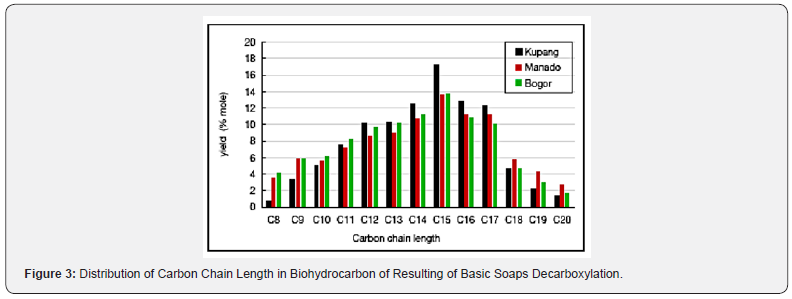
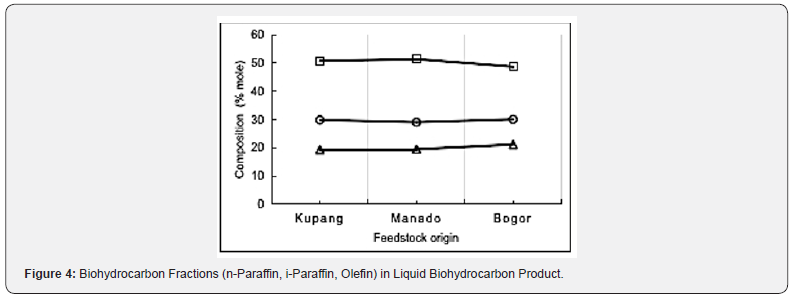
The fatty acid profiles determine the quality and carbon chain length distribution of the resultant liquid bio-hydrocarbon. Decarboxylation of basic soaps derived from Pongamia pinnata L. seed oil of all three areas, was carried out at 370°C for 5 hours in a semi-batch reactor. The reaction product is a mixture of paraffin (normal- and iso-paraffin) and olefins fractions in the ranges of carbon chain length C8 to C20. The carbon chain length distribution of liquid bio-hydrocarbons is shown in Figure 3. Specifically for bio-hydrocarbon molecule with C12-C17 chain length, it was produced more by decarboxylation of basic soaps from Pongamia pinnata L. seed oil originated from Kupang than Bogor and Manado, respectively. The most important carbon chain length for green diesel fuel are C14 to C18. Therefore, the liquid biohydrocarbon (green diesel) produced by decarboxylation of basic soaps derived from Pongamia pinnata L. seed oil originated from Kupang is better than Bogor and Manado. Liquid bio-hydrocarbon product based on the oil extracted of Pongamia pinnata L. seed originated from Manado seemed to have slightly higher isoparaffin (51.45%) than Kupang (50.78%) and Bogor (48.71%). Grouping of liquid bio-hydrocarbon products according to the hydrocarbon fraction is shown in Figure 4.

Specifically, total paraffin (n- and i-paraffin) were found slightly higher in liquid bio-hydrocarbon product produced by decarboxylation of basic soaps based on Pongamia pinnata L. seed oils originated from Kupang (80.65%) than Manado (80.51%) and Bogor (78.79%). High n-paraffin content can increase cetane numbers, whereas, high iso-paraffins can produce good cold flow properties [17]. Olefin fraction was the highest in liquid bio-hydrocarbon based on the oil extracted of seed originated from Bogor, with the highest value was 21.18, which was higher % than Kupang (19.34%) and Manado (19.49%). The liquid biohydrocarbon based on seed oil of all three areas exhibited the least variation in normal paraffin fraction. The saturated fatty acid was found to associate positively with paraffin fraction.

Therefore, to produce liquid bio-hydrocarbons with high paraffin fraction, the oils should have high content of saturated fatty acids as well. The oil with highly unsaturated fatty acid content tends to produce short chain bio-hydrocarbons (<10). This is likely due to the presence of the breaking of the carbon chains of the liquid bio-hydrocarbon molecule on the carbon bonds around the double bond, when decarboxylation takes place on the basic soaps.

Conclusion

The oil content appeared to be higher in Pongamia pinnata L. seeds originated from Bogor (37.75% weight), although it was only slightly higher than Kupang (36.01% weight). Fatty acid composition of the oils of all three Pongamia pinnata seeds appeared to be dominated by palmitic, oleic and linoleic acids. Higher content of mono unsaturated fatty acid was resulted by oil of Pongamia pinnata L. seed from Manado (31.93% mole).

Decarboxylation of basic soaps derived from Pongamia pinnata L. seed oils originated from Bogor resulted in slightly higher olefin (21.18% mole) fractions. The oil of Pongamia pinnata L. seed originated from Kupang contained more palmitic (17.02% mole) and stearic (8.40% mole) fatty acids, therefore, it is better to be used as feedstock to produce green diesel fuel. Pentadecane composition (n-C15) that was most generated in liquid biohydrocarbon by decarboxylation of basic soaps based on seed oil was originated from Kupang area. Acording to all above results, the origin of Pongamia pinnata L. seed strongly influences the oil content, fatty acid composition, carbons chain length and biohydrocarbon fraction in drop-in fuel.

Click here: https://juniperpublishers.com/index.php   

Thursday, May 5, 2022

Limitations of Jatropha Curcas Seed Oil for Biodiesel Processing in Nigeria - Juniper Publishers

 Recent Advances in Petrochemical Science - Juniper Publishers

Abstract

Scientists are looking far and wide for the raw material that will yield a new generation of advance biofuel, a source that does not divert food into energy, and is abundant enough to make a significant change in the oil market. In this paper, the process of refining the raw Jatropha curcas oil before transesterification was investigated. The study of its oil yield was also investigated with values of 17.43, 11.87% and 10.05% from different sources. The financial viability of Jatropha curcas seed oil for biodiesel production was evaluated and it revealed that the process consume much time and energy. This investigation revealed that, the use of Jatropha curcas oil for biodiesel production is not financially viable in Nigeria as at now. It was also found that the longer the oil is kept the more it deteriorates.

Keywords: Biodiesel; Jatrophacurcas oil; Limitation; Nigeria; Production

Introduction

Energy security, dependence on fossil oil and gas resources, and the negative consequences associated with global warming due to continuous greenhouse gas emissions have indicated serious concern. These have prompted significant interest in the development of low carbon and sustainable advance biofuels [1]. like biodiesel from nonfood feedstock. The Biofuels comprise of Solid, liquid and gas. The most commonly used of biofuels is the liquid among which are biodiesel, bioethanol and biobutanolin transportation sector. There is an increasing interest in alternative energy sources [2] because of their sustainability and environmental acceptability. Biodiesel has being discovered to be a good replacement for petroleum diesel because it has properties similar to fossil diesel [3]. In addition it lubricates the engine better than petro-diesel which can increase the engine life. Biodiesel reduces the lifecycle of carbon dioxide emissions by almost 70% compared to conventional diesel fuel [4]. The use of biodiesel will reduce the emission of greenhouse gas which is a major concern of scientists today. The use of biodiesel has been accepted worldwide in diesel engines though not 100% but as blend B20 in U.S and B10 in EU. With this blending formula the reduction in greenhouse emission is still achieved.

The first generation of biodiesel feedstock such as edible vegetable oils, remains highly contested and is currently the source of a heated debate on the threat that energy security poses to food security. This debate has stimulated a new interest in the exploration of the second generation of biodiesel feedstock, based on the conversion of non-edible vegetable oils biomass into energy. The second generation biodiesel feedstocks are sourced mainly from non-edible sources such as Jatropha, algae and Ceiba pentandra. A lot of nonfood feedstocks such as Simmondsiachinesis, Pongamia (Derris indica), Garcinia indica, Madhuca indica, Ricinuscommunis, Simaroubaglauca, Citrulluscolocynthis, Algae, etc. have been identified by centre for biodiesel production by renewable energy research scientists [5]. The second generation feed stocks are considered more sustainable as they generally offer greater levels of GHG reduction and do not use food crops as a feedstock. Scientists are looking far and wide for the raw material that will yield a new generation of advance biofuel, a source that does not divert food into energy, and is available abundantly enough to make a significant impact in the oil market.

Jatropha curcas Linnaeus, is a shrub and toxic tree with smooth gray bark, belongs to the family Euphorbiaceae [5]. Jatropha, a crop native to North American region is now distributed in several regions across the World [6]. The production of biofuel is driven by geopolitical concerns of fuel prices, realization that fossil fuel supply is finite and benefits for rural economies [7]. Since Jatropha curcas oil is non-edible the development of biodiesel in Nigeria has focused around Jatropha curcas seed oil. Cultivation of Jatropha for biodiesel production is desirable however; there are currently concerns about the low quantity of oil yield [8]. So far Jatropha boom has produced more losers than winners [9]. According to Matlack [7], Jatrophacan indeed grow on barren land, it doesn’t flourish there. Without moisture it does not seed or it seeds extremely poor. Jatropha curcas seed oil has a lot of free fatty acid [10] and phorbol ester a toxic substance which rendering it non-edible as presented in Table I.Jatropha curcas has two major genotypes; the toxic and non-toxic. The toxic genotype has phorbol ester a toxic substance. The non-toxic Jatropha curcas variety is only found in Mexico and is phorbol ester free [9].

Phorbol ester (phorbol 12-myristate acetate) has been identified as the major toxic compounds in Jatropha curcas seed and seed oil [11]. According to Ahmed and Salimon, [10] this phorbolester can cause biological effect in man and animal such as growing tumor. According to Li et al. [11] phorbol ester promotes tumor growth following exposure to sub carcinogenic dose of carcinogen. It has also been reported that phorbol esters in Jatropha curcas oil exhibit insecticidal and mulluscicidal activities over wide range of living organisms [11]. Other toxic substances in Jatropha oil including; saponins, lectins (curcin), phtates, protease inhibitors and carcalonic acid which is a strong purgative [10].

In this study, Jatropha fruits were harvested from the farm of National Research Institute for Chemical Technology (NARICT), Zaria Nigeria, shelled and oil was pressed out. The oil yield and the oxidation of un-kept oil were investigated. Also, some quantity of Jatropha seeds was bought from Institute for Agricultural research (IAR) Ahmadu Bello University, Zaria and Kano-Nigeria and their oil yields were also investigated. The Investigation on the process of refining the oil for biodiesel production was carried out. Also the cost per litre of its oil was investigated at the time in this study.

Materials and Methods

Materials

The materials used in this study include; mortar and pestle, grinding machine, oil pressing machine, weighing balance, sulphuric acid, methanol and CaO catalyst.

Method

Seed processing: After harvesting from the farm the fruits were shelled to obtain the seeds. These were done manually by breaking the hull and free the seeds. The seeds were pilled to obtain the kernels which were weighed and bagged ready for pressing.

Oil Processing: 30kg mass of freshly harvested seeds were mechanically pressed to obtain oil direct from oil pressing machine shown in Figure 1. The oil obtained direct from the pressing machine contained particles of the cake which was kept for two days to settle. After settling, the oil was decanted and filtered to obtained clean oil. The sediment was further pressed to obtain more oil locked in it. Later more oil was extracted from two bags of dry Jatropha seeds brought from Kano weighed 66.67kg by the same pressing process though age after harvest unknown. 21.3kg of three years old Jatropha seed from Institute of Agricultural Research (IAR) Ahmadu Bello University, Zaria was pressed too. The oil samples from wet and dry Jatropha curcas seeds obtained were weighed to determine their yields. The process is diagrammatized in Figure 2.


Refining of raw oil for biodiesel production: 1.5g of Jatropha oil was diluted in 25mL of isopropyl alcohol and was titrated against 0.1 M KOH to pink. From the titre value the percentage Free Fatty Acid (%FFA) was calculated from Equation 1 and acid value from Equation 2. The oil was esterified with methanol and sulphuric acid. The quantity of methanol required for esterification was calculated from Equation 3. The quantity of sulphuric acid was calculated from Equation 4. Equation 5 expresses the esterification reaction [1]. The mixture of sulphuric acid and methanol was added to the oil at 60 °C and left at this temperature for 60 minutes. The esterified oil was transferred into separating funnel and left for at least two hours. It was separated out into oil and acid solution. The esterified oil was titrated as before to determine its new FFA. This process was repeated until satisfactory FFA of 0.5 obtained.


where, %FFA, is percentage free fatty acid, v is the titre value and m is the mass of oil sample.

The required amount of methanol using Gerpen et al. [1] method is expressed in eqn. 3,

m = 2.25 xmass of oil x %FFA (3)

The required amount of sulphuric acidis expressed in eqn. 4,


Monitoring the rise in FFA of Jatropha oil: Old Jatropha oil was tested for FFA as described above. It was left uncared for 4 weeks and its FFA was tested in the interval of 2 weeks.

Results and Discussion

Oil Yield

According to Biozio[12], good cultivation practices are the key determinants for achieving favorable yields from Jatropha. There is a misconception that the Jatropha plant requires little water and that it requires almost no inputs in terms of fertilizers and pesticides. The quantity of oil obtained from 30kg of the seed was 5229.2g (5.7 litres) making 17.43% the mass of seed. The mass of the oil yield from dry sample of 66.67kg collected from Kano (though the age of store and specie’s name were not known) was 7913.8g (8.6 litres) making 11.81% yield. 2.33 litres of oil was obtained from 21.3kg three years old seeds from Institute of Agricultural Research Ahmadu Bello University, Zaria. This yielded 10.05% oil as presented in Table 2. The first and the third samples were Jatropha curcas Linnaeus specie. These yields were too poor compared to exaggerated value of 30 to 40% [6]. Ahmed and Salimon [10] reported oil yield of 33.73%, 32.7% and 30.5% from Jatropha seeds from Malaysia, Indonesia and India respectively. The authors claimed to have used mechanical extraction method which is same process as ours. More close to fact was 22.97% oil yield claimed by Nakpong and Wootthikanokkhan [13]. Over enthusiastic or unscrupulous promoters have misled people about the prospect of Jatrophacurcas plant [7]. The claim of 10 tons of seeds per ha annually has never been found realistic. Jatropha is good for its short gestation period and regular seed harvest are possible within four years of establishment [14]. The yield depends on the care and inputs to the farm.


The FFA of the fresh seed oil was found to be 3. Freshly extracted Jatropha curcas seed oil has low free fatty acid content but not as low as edible oil. Acid content gradually increases as long as the oil is kept. The presence of light, heat and moisture catalyze the oxidation of the oil. Fatty acid compositions of Jatropha curcas seed oil vary according to the type of cultivation and storage mechanisms [15].


Jatropha curcas oil is highly acidic. A sample had free fatty acid value of 17.95took four times esterification to bring its acid value to 0.43. For solid base catalyzed transesterification, the free fatty acid value of oil has to be reduced to less or equal 0.5. This process is time and energy consuming and labour intensity. A little quantity of the original oil sample was kept after 14 days the oil was tested and was found to have 20.76 FFA. After another 14 days the FFA rise to 30.86. This indicates that the longer the oil is kept the more it oxidizes and deteriorates. Considering the cost of esterification of the oil, definitely the cost of production of the biodiesel will rise by using Jatropha curcas oil for biodiesel production. For homogenous catalysis, high acid value leads to saponification which inhibits the formation of methyl esters (biodiesel) and waste of catalyst [3,16] as shown in Figure 3. The acid value of the freshly extracted oil was found to be 3.0 therefore; it is cheaper to process the freshly extracted oil into biodiesel. This would reduce the quantity of alcohol, time and energy require for refining it for biodiesel processing. From Table 1, the major glyceril triglycerides in Jatropha curcas oil can be estimated as presented in Table 3.


Jatropha Oil Cost

In Nigeria there is no fixed price for Jatropha curcas seeds or the oil. The price depends on the bargaining power of buyer and seller. The Institute of Agricultural Research, (IAR) Zaria, sells N500/kg of seeds. This was the cheapest in Nigeria as at the time of this investigation. Individual farmers sold it at higher prices. Based on the cost price of IAR the wet oil from NARICT farm cost N2 631.58/L ($8.63/L).The dry seed oil bought from Kano cost N2 906.63/L ($9.53/L) and the three years old dry seeds bought from IAR cost N4 484/L (14.70/L) respectively on the N305 per $. Yet the cost of extraction of oil from the seeds is not included. At this cost in Nigeria the use of Jatropha for biodiesel production is not economically viable. The cost of Jatropha in Nigeria is too high compared to International market cost of $1.50/L, (N457.50/L) [17]. More indigenous seed oils should be explored for biodiesel processing.

Actually, the Jatropha boom has produced more losers than winners. Many projects have foundered as seed production has failed to meet expectations, as a result, India, China, and other countries have scaled back plans for additional planting [7]. Failure is not only on the seed yield but also the oil yield which is found here below 20% as against 30-40% claimed by some promoters. Jatropha can indeed grow on barren land but it doesn’t flourish there [12].

Biodiesel yield

Jatropha curcas oil has good biodiesel yield if it is well refined. Ibrahim et al. [18] carried out comparative study of biodiesel yield from Jatropha curcas oil and palm oil, under the same reaction conditions, Jatropha had a better yield. Endalew et al. [14] had 100% conversion of Jatropha oil to biodiesel catalyzed by CaO + Fe2(SO)3.

Conclusion

An investigation was carried out on the viability of Jatropha curcas seed oil for biodiesel production in Nigeria. The oil oxidizes progressively with time. Its refinement consumes much methanol or whichever alcohol is used for esterification which would raise the cost of biodiesel production. It is too expensive in Nigeria to use Jatropha oil. especially for biodiesel production. More other indigenous non-edible plant seed oils should be explored for biodiesel production. Well refined Jatropha oil yielded more biodiesel than palm oil under the same reaction conditions Ibrahim et al. [18], but rely on Jatropha alone cannot meet the demand for biodiesel.

Click here: https://juniperpublishers.com/index.php   

Tuesday, May 3, 2022

The Circular Fashion Framework-The Implementation of the Circular Economy by the Fashion Industry - Juniper Publishers

 Fashion Technology & Textile Engineering - Juniper Publishers

The Implementation of the Circular Economy by the Fashion Industry

By drawing on the concept of Circular Economy (CE), this paper explores the implementation of the CE by the fashion industry by introducing a Circular Fashion Framework (CFF). The term CE has a long history, multiple definitions, and distinctive developments in different global contexts. In Europe and increasingly worldwide, a CE framework, originally devised and developed in the UK by the Ellen MacArthur Foundation has been a catalyst at policy level and has become a prominent theme in the business arena [1]. A key reason for the widespread popularity of this framework is that it matches a compelling business rationale with the need to decouple wealth creation from the consumption of limited resources. Moving towards a more CE is indeed desirable as it could deliver benefits such as reducing pressure on the environment, improving the security of the supply of raw materials, increasing competitiveness, stimulating innovation, boosting economic growth as well as creating jobs. The fashion industry is the second most-polluting industry after the oil industry and has always been regarded as a creative sector, dynamic and at the forefront of innovation. As such, the industry and its recent dynamics with the advent of new materials, new technologies and new business models is particularly prolific as a source of inspiration and valuable insights into the broader applicability of the CE to other industries. The rest of the paper is as follows. By drawing on the relevant literature on the CE the paper develops and introduces a dynamic framework–the CFF - for the application of the CE by fashion firms. By relying on the prior work on the fashion industry [2-14], the paper provides a detailed description of the framework by outlining some examples as well as the benefits that stem from its application and then offers some concluding remarks.

The Implementation of the Circular Economy

Since the industrial revolution, we have been living in a linear economy. Our consumer and “single use” lifestyles have made the planet a “take, make, dispose” world. This linear economy model of mass production and mass consumption is testing the physical limits of the globe. It is, therefore, unsustainable and a shift toward a CE is becoming inevitable [15]. Within this context, the CE is intended as an alternative to a traditional linear economy (make, use, dispose) in which resources are kept in use for as long as possible, while extracting the maximum value from their use and then recovering and regenerating products and materials at the end of each service life [16]. The CE is one that is restorative and regenerative by design and aims to keep products, components, and materials at their highest utility and value always. This new economic model seeks to ultimately decouple global economic development from finite resource consumption. The CE addresses mounting resource-related challenges for business and economies, and could generate growth, create jobs and reduce environmental impacts. As the call for a new economic model based on systems-thinking grows louder, an unprecedented favourable alignment of technological and social factors today can enable the transition to the CE. Circular economic activity includes reuse, repair, recycling, eco-design, sustainable supply, and responsible consumption. This profusion of concepts demonstrates that the definition of a circular economy is not set in stone [15]. Nonetheless, a baseline level of understanding can be reached through the available literature. Research by the Ellen MacArthur Foundation focuses on designing with circular economy principles from the beginning, in the ideation phase [1].

While their work offers much in the way of creating a CE, it could do more on pathways for firms to transition a linear economy production line to a circular economy model. To enable firms and institutions to develop a model that allows for leveraging the use of underutilized resources, [17] propose a three-phase model development guideline that uses three key drivers–resource constraints, technological development, and socioeconomic opportunity–to create regenerative business models by design that involve the creation of a new breed of services that leverage long-term use and maintenance. They conclude that by following such an approach, business models will be based on reincarnation and efficiencies in product design, systems design, and the use of new materials. Esposito and colleagues [15] further claim that adopting the CE model requires that firms initiate and develop disruptive technology and business models that are based on longevity, renewability, reuse, repair, upgrade, refurbishment, servitization, capacity sharing, and dematerialization. Noting that firms often struggle to change their existing linear business models to circular models, [18] have proposed a roadmap for circular business model transformation. The pace at which companies are adopting the CE has been accelerating for the last two decades and it has evolved from a specialist concept to a mainstream business strategy.

The Implementation of the Circular Economy in the Fashion Industry

In a circular fashion industry, all the stakeholders, namely designers, producers, retailers and customers are all challenged to take the whole life cycle of a garment into account. More specifically, in the CFF we can identify six phases as depicted in the Figure 1 below.

Resources

Deciding which fabric to use is one of the most crucial aspects of the design process, affecting not only the esthetics of a garment, but also its lifespan and quality, as well as its environmental impact. Manufacturers need to carefully assess what is the impact of the materials they use and to identify which resources are environmentally friendlier than others. Additionally, it is important to consider the end of the product’s life from the very outset to assess whether there are options to re-use clothes after their use, options for recycling them, identify those resources that are easiest to reuse at the end. Manufacturers need to take into account the consequences of using certain coatings, accessories and finishing’s since these are likely to have a significant impact on the recycling process. Manufacturers might want to consider experimenting with nontraditional textiles, like fabric made from biowaste such as fabric made from PET bottles, such as the Repreve yarn that is used to make everything from jackets and T-shirts to dress pants and even car upholstery. It is used by brands like Patagonia, The North Face, Levi’s, Adidas and Nike.

Design

Decisions made during the design phase are responsible for 80 to 90% of the environmental and economic costs. In contemporary society, ‘planned obsolescence’ has become an important strategy to ensure an ever-growing rate of consumption. Fashion designers are not only responsible for the choice of materials, styles, colors and shapes. The design approach that they adopt should take into account the entire life cycle of the product. Every individual step is important, from resources to design, production, retail, consumption and end of life. Long-lasting design as used by well-known companies such as Esprit and Filippa K that outlive trends and hypes and high quality should be of paramount importance. Otherwise if a product does not last long, design for rebirth by contemplating every possibility in terms of re-use, repair, redesign and recycling could be another option. In any case, the golden rule of circular design is to avoid waste or surplus as much as possible by implementing a design that minimizes waste through smart production solutions, or by reusing of someone else’s waste (as for Wrad that uses graphite recycled from hi-tech production to produce t-shirts) or by implementing multifunctional designs (from Louis Vuitton to Roger Vivier, multifunctional items are proliferating). Additionally, in order to avoid both fast consumption and overconsumption, the designer can also devote attention to the experience and the involvement of the customer, by thus ultimately strengthening the relationship between the user and the product. This includes service models, as well as interactive/cooperative design, customization, timeless aesthetics and emotional design. Similarly, it is important to design by adopting those techniques that tend to generate relatively less waste than some that are more currently used such as knitting, 3D printing and 3D weaving to name a few.

Production

In a traditional process, the design phase is followed by the creation of a small sample collection. Those prototypes that are deemed as suitable will enter production. This means switching to commercial entities varying in size, color and pattern. During this phase, it is important to incorporate zero waste thinking into the production of prototypes, for instance by creating the sample collection digitally (as done by Hugo Boss) or by working with zero waste pattern designs (as done by Issey Miyake). When selecting a production process, it becomes an imperative to take into account energy and water consumption, to comply with the environmental legislation and to minimize the use of chemicals. The core of a sustainable product lies in its quality and its durability, so the importance of quality control during the production phase should not be overestimated. Producing locally obviously facilitates both quality control and the implementation of corrective measures. In addition, it reduces the wide range risks that are traditionally associated with a global supply chain, especially for smaller collections. In addition, looking beyond the standard methods of production by including digital technologies, for instance, such as digital design, digital printing or 3D weaving allow for small collections or production on demand. The latter in particular allows for customization, by thus establishing a stronger bond with the consumer who is more likely to develop emotional attachment toward a customized product by ultimately curbing overconsumption, surplus and overproduction.

Retail

Retailers have also a significant contribution to make in the implementation of the CE. Establishing a take-back model, the possibility to return garments to the retailer, who gives clothes a second life as resources for new items, is gaining popularity. This is often the case when the manufacturer is also the retailer as in the case of Eileen Fisher. The company collected 220,000 items of used clothing in 2018, with take-backs having risen by an average of 15% year-on-year. Clothing in pristine condition (about 60 per cent of collections) is cleaned and resold under the Renew brand, while lightly damaged pieces are upcycled into new pieces. A second option is gaining momentum within the sharing economy, where customers tend to pay for renting clothes rather than owning them (e.g. Drexcode, Rent the Runaway, Le Tote). There are plenty of online possibilities to give clothes a second life. Many platforms allow customers to sell (e.g. Depop, Vestiaire Collective) or swap their clothes peer-to-peer (e.g. Rehash Clothes, Swap). Furthermore, today’s customers attach more and more importance to the experience. Focusing on these aspects as a retailer will enhance the bond with the customer and create ambassadors for the brand. Small services such as repairing services, styling advice, made-to-measure clothing and personalization (e.g. Flair Atelier) will further strengthen the bond. As for the impact of the brand’s marketing efforts, hangers, tote bags, and price tags are also likely to make a significant difference.

Consumption

Customers play a big role too. In all sectors, customers are becoming more conscious and more outspoken, asking questions about labels, resources, production, transparency and traceability (e.g. Fashion Revolution Network’s Campaign “#whomademyclothes”). Retailers and manufacturers should be able to provide adequate answers to these questions. Customers are increasingly explore the possibilities beyond fast fashion, such as swishing, swapping, second-hand stores and online platforms. In terms of clothes maintenance, customers can contribute significantly by buying less and by taking good care of their clothes to extend their durability. Similarly, customers are increasingly interested in repairing and engaging in DIY, as seen in the rise of sewing and knitting workshops, which cater to people who want to make, repair or upcycle their own clothes. Furthermore, customers increasingly want to donate clothes with the purpose of recycling, upcycling or giving clothes a new life.

End-of-life

20% of global production waste comes from the textile and apparel sectors. There are many ways in which this percentage can be reduced. This requires the orchestrated effort of manufacturers/retailers and customers. Manufacturers should use biodegradable fabrics, engage in circular design and production processes that are fit to the purpose. Reusing fabrics for new designs is relatively simple as well as reuse fibers whenever it is possible. Customers should upcycle their clothes, while returning the clothes that are no longer wanted. Re-using is also the most sustainable option of all to prolong life

The Impact of the Circular Fashion Framework

While the traditional implementation of the CE is often “skin deep” [19] - mostly driven by a reactive approach whereby companies seek to comply with the CE implementation as it would for any other market requirements, the fashion companies have the potential to show a radically different vision by endorsing a much more proactive approach which can “flash deep” that might ultimately yield many tangible benefits that are all well-beyond mere cost-savings stemming from recycling and reuse. Many of the existing fashion companies who are engaging with the CFF are establishing themselves with a CE based business model from their outset. Remarkably, they are not attempting to implement it into an already existing business model. Nonetheless, the implementation of the CE “flash deep” as in the case of the CFF could provide many benefits also to incumbent firms. In particular, the managerial implications are manifold. Just as fashion actors have benefited from extending beyond their core activities, there are opportunities for managers in other sectors to do like likewise developing additional revenue streams via servitization. The embrace of the CE has the potential to deliver signifiicant returns whether in terms of cost reduction, the development of a self-sustaining organisational innovation and creativity engine, the opening up of possibilities for new ventures and the establishment of new disruptive business models that drive sustainable competitive advantage. However, if the organisation’s embrace of the CE is to realise its potential, managers need to pursue an entrepreneurial vision that is holistic in nature and that calls for the setting and pursuit of ambitious goals. Success from embracing the CE calls for managers to encourage and nurture a mindset and practice that is open to intensive experimentation that includes multiple trial and error iterations and that is infused with action learning.

In turn, this demands a high degree of resilience within the organisation. Equally well, an entrepreneurial mindset can sustain the efforts around experimentation but also contribute the capacity to envisage and forge possibilities for new ventures and innovative business models. As the current experiences in the fashion industry indicate, embedding learning via experimentation, action learning cycles, resilience and an entrepreneurial mindset is the critical point of departure if the potential successes and benefits of the CE are to be attained. Ensuring this, calls for effective leadership that combines holistic vision, ambition and resilience. Overall the fashion industry demonstrates the benefits and the advantages that can accrue from embracing the CE. Our analysis reveals that fashion companies develop organizational capabilities that can produce significant cross-savings as well as unleashing creativity and innovation. Furthermore, embracing the CE can yield new business models that drive sustainable competitive advantage. These new business models include those characterised by circular supplies, replacing single life-cycle inputs, resource recovery where resources are recovered from disposed products and product life extensions. Consistent with the findings of the recent [19] Accenture Strategy study (2019) that reports that first-movers have a holistic vision coupled with effective leadership, we observe similar characteristics among the first-movers in the fashion industry. The insights provided by the fashion industry provide valuable lessons that can have broader applicability to all firms from all the other sectors but particularly to those that similarly to the fashion industry are creative sectors, rely on R&D and are knowledge-intensive and that are exposed to fierce competition.

Click here: https://juniperpublishers.com/index.php   
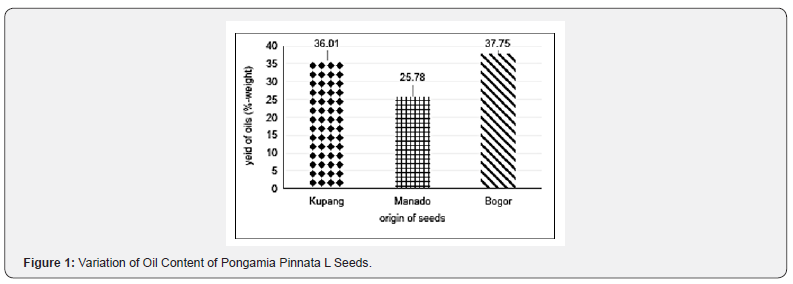

A Therapeutic Yoga Program for University Students with Anxiety: A Mixed Methods Study - Juniper Publishers

  Yoga and Physiotherapy - Juniper Publishers Abstract Anxiety remains one of the most common mental health disorders in the United States. ...