Wednesday, July 3, 2019

Bridging Allure with Importunity of Medical Tourism-Juniper Publishers


Biostatistics and Biometrics Open Access Journal  Juniper Publishers


Summary

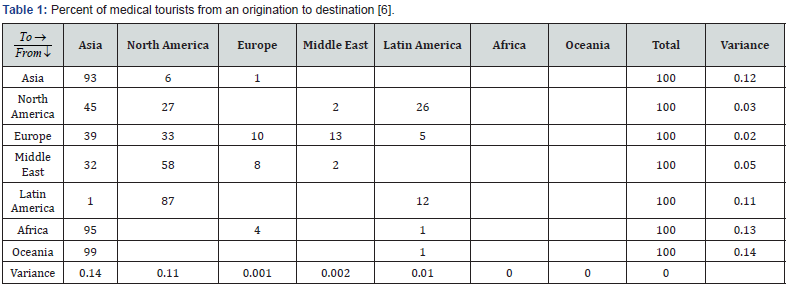
The advancement in medical facility and lesser cost of treatment are understandably de facto in medical tourism between originating and destination continents. However, data about facility or full details about cost are not usually available and hence, are not involved in discussions of medical tourism. Hence, in this article, an innovative visual approach based on probability and statistical concepts is adapted to capture and comprehend on how alluring patients in an originating continent are bridged to importunity in a destination continent in the practices of medical tourism. Both the concept and method are illustrated using the data in Table 1.
Keywords: Probability; Stochastic independence; Radar network visual; Proximity angle; Medical facility; Statistical concepts; Globalization; Decontrolling regulations; Private equity funds; Medical brokerages; Patient’s affordability; Medical treatments; Cornea and retina; Hysterectomy; Liposuction; Ivy treatments; Lasik eye-surgery; Symmetry; Non-within continents; Random numbers; Variance stability; Obtuse angle
Abbrevations: AF: Africa; AS: Asia; EU: Europe; LA: Latin America; ME: Middle East; NA: North America; OC: Oceania; GDP: Gross Domestic Product

Introduction

Of course, advantages as much as risks exist in the practice of medical tourism. Patients in an originating continent chose to visit medical facility in a destination continent for a treatment and this process is recognized as medical tourism. In 21st century, medical advancements have become reality in several continents due to the globalization. Some de facto in the medical tourism are affordable cost and/or advanced medical facility. A lack of authentic pertinent information associated with such facto cripples its usage in the discussion of popularity of a specific continent for medical tourists. How should an analyst proceed to capture and illustrate the attractiveness (or rather importunity) of a destination continent among the alluring patients in an originating continent? This question is the research theme of this article. For discussions in this article, Africa (AF), Asia (AS), Europe (EU), Latin America (LA), Middle East (ME), North America (NA), and Oceania (OC) are considered.
Analysts wonder on how the above mentioned seven continents compare with respect to each other in so far as outbound versus inbound medical tourist flows. In other words, do medical tourists in one originating continent are spanned off at a rate to destination continents in comparison to a different rate in opposite direction. Likewise, the attraction rate of medical tourists in a destination continent differs for an originating continent to others. Could we construct radar network type visuals to assess their adjacency? A picture is worth thousand words in any discussion including the medical tourism in this article.
Of course, in medical tourism, the demand and supply of healthcare facilities are influenced by the social or economic living conditions in the continents. However, the healthcare is a significant part of every country’s economy in the continent. In 2011, the healthcare industry consumed a 9.3 percent of the US gross domestic product (GDP), a 10 percent of the Canada’s GDP, and about 11 percent of the France’s and Germany’s GDP. Healthcare reforms are discussed not only in the developed but also in the developing continents. Private as well as public insurance institutions in almost all continents engage in decontrolling regulations for their patients to seek and obtain best affordable medical service from where ever they could for the sake of minimizing the healthcare cost.
Turner reported that India, Indonesia, Malaysia, Philippines, Singapore, Thailand and many others promoted them as favorable countries for medical tourism [1]. These countries coupled their national airlines, hotel chains, investors and private equity funds, and medical brokerages with the medical tourism. They attracted uninsured Americans and other overseas patients who were unable to afford health care in their home countries. In specific, Turner argued that there were increasing numbers of patients leaving their home countries in search of orthopedic surgery, ophthalmologic care, dental surgery, cardiac surgery and other medical interventions. Cohen [2] critically assessed the social consequences of medical tourism, He claimed that the western medical tourists out pouring to those hubs in eastern continents primarily for cosmetic or other elective treatments.
Shanmugam [3] mentioned that the globalization in this 21st century unified nations. to promote trade in the medical profession for the patient’s affordability [3]. The medical tourism created an economic turmoil. Several medical economists were quite puzzled by the advantages as much as by the damaging impacts by the booming popularity of the medical tourism. Using the principal component analysis, Shanmugam formulated three groups of nations in medical tourism.The first group consisted of USA, Columbia, Costa Rica and Nicaragua. The second group consisted of India, Israel and South Africa. The third group consisted of Jordan, Thailand and Malaysia. Based on the cost of the medical treatment, he articulated that there were three types of medical treatments in the medical tourism.The first type consisted of heart by-pass, angioplasty, heart valve replacement, hip replacement, hip resurfacing, knee replacement, spinal fusion, gastric sleeve and gastric by-pass and lap band and liposuction and ivy treatments. The second group consisted of tummy tuck, breast implants, rhinoplasty, facelift, hysterectomy, cornea and retina. The third group consisted of dental implant and Lasik eye-surgery.
Izadi et al. [4] asserted that like any other rapidly growing industry, the medical tourism prompted ethical and legal issues. These issues pertained to malpractice or consumer protection. Moreover, the risk management, foreign hospital liabilities, facility ownership, intellectual property, organ trafficking and ethical issues became concerns. Travel medicine got confused with alternative medicine and telemedicine. Therefore, comprehensive and detailed legal regulations became necessity to control the issues. Many nations in the continents legislated laws for the medical tourism. Despite the improvements, the future the medical tourism industry still faces serious challenges.
To construct such visuals, we utilize probability syllogisms concepts and mosaic masonries of Shanmugam [5]. Some syllogistic reasonings ought to assist for a better understanding of mysterious medical tourism. In other words, our research aim should be about devising statistical concepts (like correlation type results with related angles) and appropriate analytical tools in a novel manner, to construct visuals between the originating and destination continents in the medical tourism.The concepts and tools are developed in Section 2 and are illustrated in Section3, using the data in Ehrbeck et al. [6]. Finally, in Section 4, comments and conclusions are made for further research work to advance the line of thinking for further comprehension for nifty gritty implications of the medical tourism.

Data analytics for medical tourism

First in this section, for the sake of easy comprehension, we introduce and explain several notations and abbreviations.
Notations:
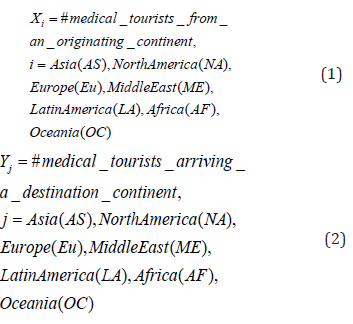
Conditional probability:
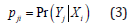
The entries in Table 1 are the proportions Prij of the medical tourists from an origination i to a destination j among the seven continents. For an example, when iNA= (north America) andjAS= (Asia), the proportion is Prij=0.45≠Prij where Prji=0.06 The exchanges between two are not of the same proportions, causing an imbalance in this medical tourism trade off.Understandably, the conditional mean (Yj|Xi)=1/n where n denotes the number of continents. The conditional expectation remains constant. But, their conditional variances var(Yj|Xi) vary among the continents. On the contrary, both the conditional mean E(Xi|Yj) and the conditional variance var(Xi|Yj) of the inflows vary among the destination continents.
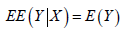
In such a scenario of medical tourists, let us designate that X= total potential number of medical tourists leaving all the destinations and Y= the total potential number of medical tourists arriving all the destinations. From the statistical theory, we realize that EE(X|Y)|=EX and varE(X|Y)+Var(X|Y)=Var(X) the unconditional variance, which is useful to interpret the stability of the outbound random number of medical tourists, .X Likewise, the results
And

portray the unconditional mean and stability of the inbound random number of medical tourists, .Y
We now introduce the reverse-cross correlation to capture the symmetry in the overall movements among the continents and it is
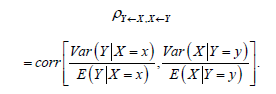
When the correlation ρY←X,X←Y=0, it is to be interpreted as the outbound flow from the continents in the collection ℬ to continents to the continents in the collection ℋ is unconnected to the reverse inflow from the continents in the collection ℋ to the continents in the collection ℬ. If the correlation ρY←X,X←Y<0 it is to be regarded as the outbound flow from the continents in the collection ℬ to continents in the collection ℋ is reduced by the reverse inflow from the continents in the collection ℋ to the continents in the collection ℬ. On the contrary, if the correlation ρY←X,X←Y>0 it is to be regarded as the outbound flow from the continents in the collection ℬ to continents in the collection ℋ is increased to the reverse inflow from the continents in the collection ℋ to the continents in the collection ℬ. The corresponding impact angle of the correlation ρY←X,X←Y=0 is

in its domain[0,360]o. Then, we could then define the ratios: ℜ=E(X)/E(Y) to capture the total expected numbers of medical tourists leaving to the arriving. Likewise, the ratio ℑ=Var(X)/Var(Y) portrays the stability of those leaving to arriving in the system of medical tourism. We now proceed to explore further to formulate visuals.
Shanmugam [7] developed, discussed, and then integrated syllogisms in conditional probability settings to identify the “better” features of “Youden’s” diagnostic testing methods. His method was based on the sensitivity and specificity measures. His syllogisms utilized what was named “double anchored” relationship. A principle of authentication was established to indicate the favorable or dis-favorable evidence level in the diagnostic data. Also explained was whether parity existed between the two reciprocal evidences. Such a parity level distinguished a strong from a circumstantial evidence. Following Shanmugam’s line of thinking in the conditional mean and variance setting, we compute
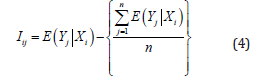
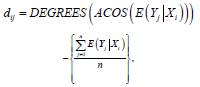
as a measure of medical tourism intensity between the origination continent Xi and the destination continent .Yj Notice that the intensities fall in the domain [-1,1] like the correlation measures. Hence, we translate the intensity into an appropriate degree in the domain [0,360]oo as an anti-clockwise direction for an origination continent to a destination continent using
to capture their adjacency between two continents in the medical tourism. When the intensity level is 0,ijI= then their proximity in the medical tourism is dij=90o meaning an orthogonal adjacency (that is, a statistically independency).If the intensity level is Iij<0 then there exists a lesser statistical adjacency between two continents in the medical tourism with ij>90o (an obtuse angle). On the contrary, with the intensity level is Iij>0 then the statistical adjacency between two continents in the medical tourism is indicative of more attractiveness with dij<90o<(an acute angle). We summarize it a theorem below.

Theorem 1

The statistical adjacency between originating and destination continents in the medical tourism is
Where Yj and Xi denote respectively the random numbers of arriving the jthdestination and leaving the thi originating among n number of continents with 1,2,..,n
Those medical tourists travelling within a continent from a country to another do not excite research enthusiasm as much as those go outside the continent. In this sense, why not analyze the data after excluding the “within continent” travelling in medical tourism. This amounts to removing diagonal entries in the Table 1 from the analysis. Then, the concepts stay the same, but the expressions change. That is, the corresponding ratio ℜ*=EnonDiagonal(X)/EnonDiagonal(Y) captures the expected number of medical tourists leaving versus arriving under the exclusion of medical tourists within the continent. Likewise, the ratio ℑ*=VarnonDiagonal(X)/VarnonDiagonal(Y) portrays the stability of the leaving versus arriving in the system of medical tourism under the exclusion of medical tourists within the continent. Notice that 0jjI= is the intensity measure in the medical tourism if the origination and destination continents are the same.
Their statistical adjacency within the continent is

for such continents in the medical tourism. Because of this diagonal restriction, other statistical adjacencies do change with “non-within continents”. Appropriately, the theorem 1 changes to theorem 2.

Theorem 2

The statistical adjacency between originating and destination continents in the medical tourism is
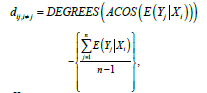
Where Yj and Xi denote respectively the random numbers of arriving the jthsup> destination and leaving the thi originating among n-1 number of continents with .i≠j

Illustration

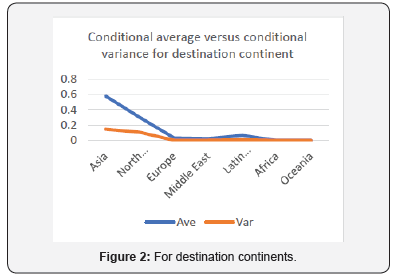
We now proceed to illustrate the concepts and expressions of Section2 with the reported medical tourism data in Table1. Note that this medical tourism data is imbalanced, and it opens a lot more research excitement which will be further explored in this article. The conditional mean E(Yj|Xi) is constant across origination continents with 7n= but their conditional variances Var(Yj|Xi) vary suggesting the number of medical tourists is not stable across the continents (Figure 1 & 2). For the medical tourism data in Table 1, the ratios are ℜ=E(X)/E(Y)=0.142/0.142=1 and ℑ=Var(X)/Var(Y)=0.085/0.085=1 meaning that there exist average and variance stability in the system of medical tourism. Note that the ratio ℜ=EnonWithin(X)/EnonWithin(Y)=0.113/0.113=1 captures the expected number of medical tourists leaving versus arriving under the exclusion of “within continent” medical tourists. Likewise, the ratio ℑ=VarnonWithin(X)/VarnonWithin(Y)=0.071/4.852=0.014 portrays the stability of the leaving versus arriving in the system of medical tourism under the exclusion of medical tourists within the continent. The “non-within continental inbound” flows are not stable.
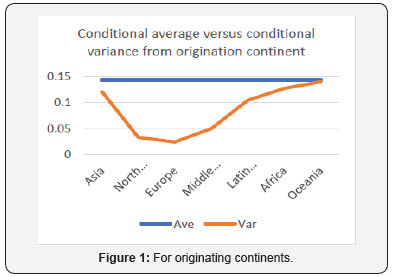
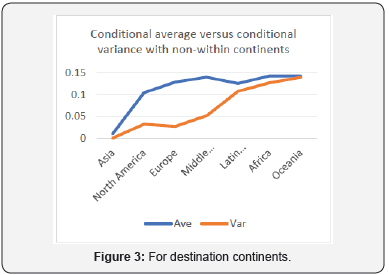
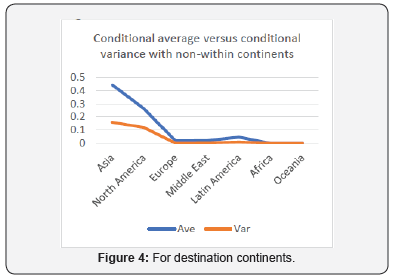
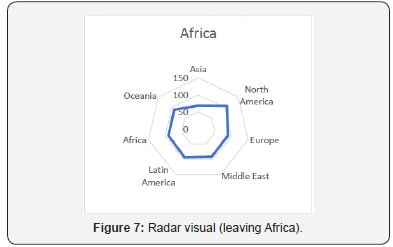
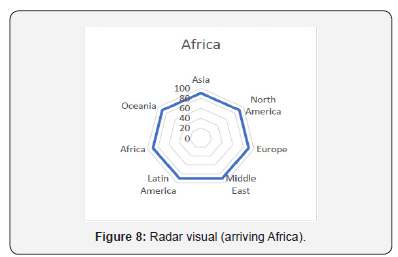
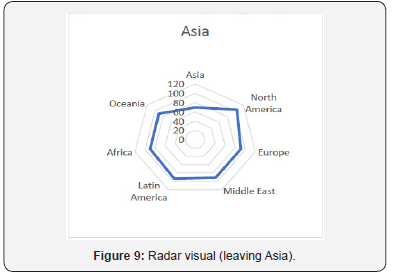
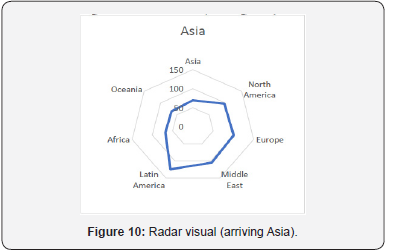
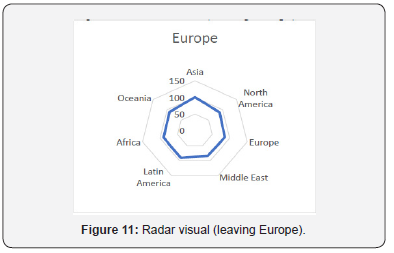
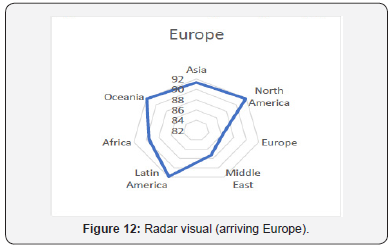
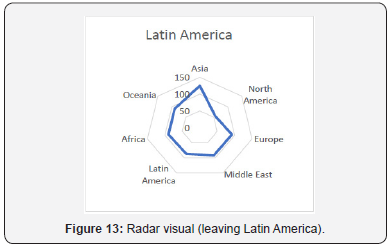
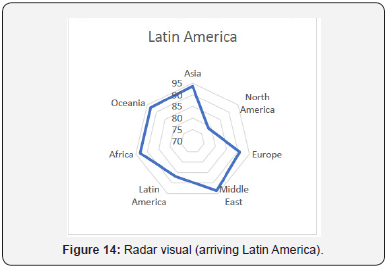
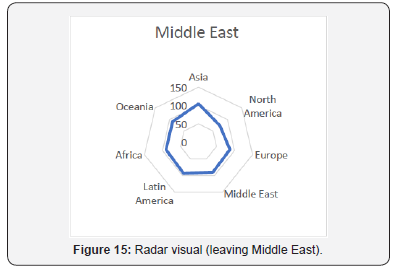
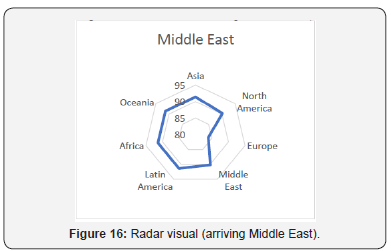
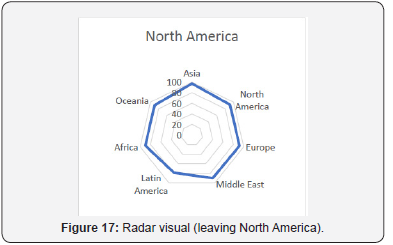
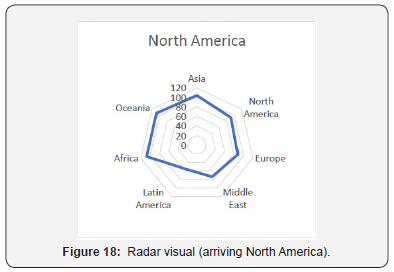
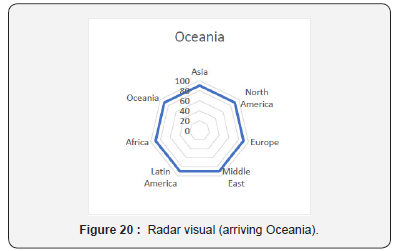
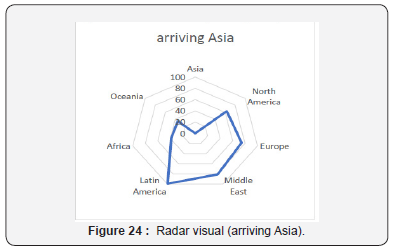
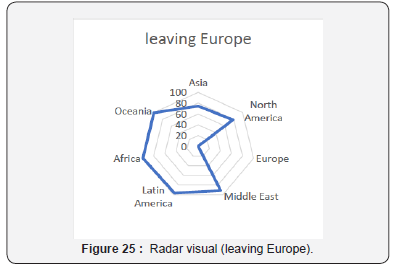
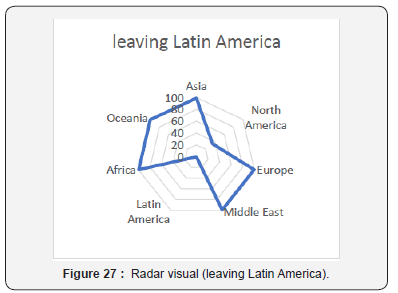
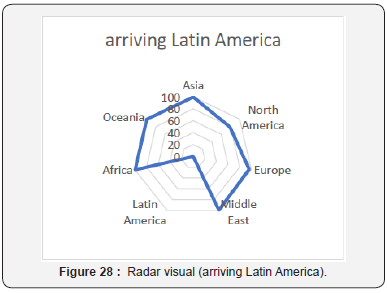
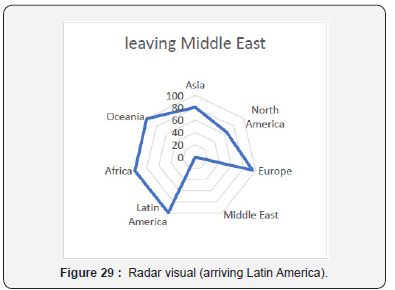
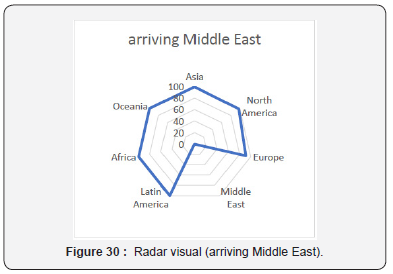
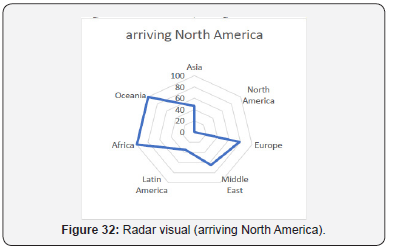
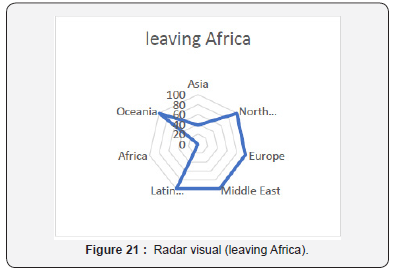
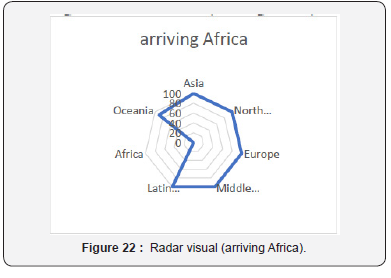
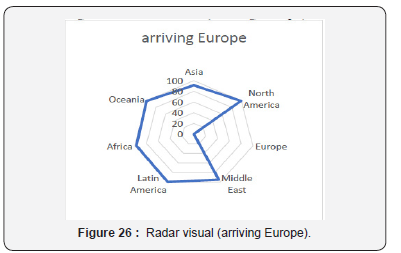
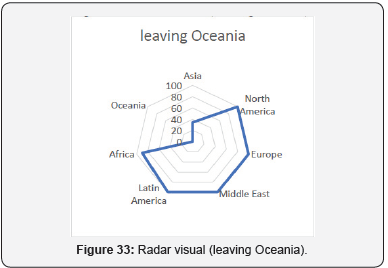
The “non-within continental outbound” flow is stable.Such an instability is indicative of heterogenous continents in so far as the medical facilities. With an exclusion of “within continent tourists”, the patterns of the conditional mean ()jiEYXand the conditional variances Var(Yj|Xi) for origination continents shift significantly suggesting the number of medical tourists is not stable across the continents (Figure 3 & 4). We now compute and interpret the statistical adjacency of the continents in medical tourism. Recall that if the intensity is zero (that is, 0ijI=), then their statistical adjacency in the medical tourism echoes an orthogonal situation (that is, dij=90o) Note that the statistical adjacency between Latin America as an origination continent to Asia as a destination continent consists of intensity level 0.567ijI=− and angel level 124.6oijd= (an obtuse angle) meaning lesser medical tourism. On the contrary, the statistical adjacency between Latin America as an origination continent to North America as a destination continent consists of the intensity level0.569ijI= and the angle level 55.35oijd= an acute angle). An acute proximity angle level is indicative of more frequent medical tourism. Based on the angles, we construct and display radar visuals for leaving and arriving medical tourists in continents AF, AS, EU, LA, ME, NA, and OC (Figures 5-20).
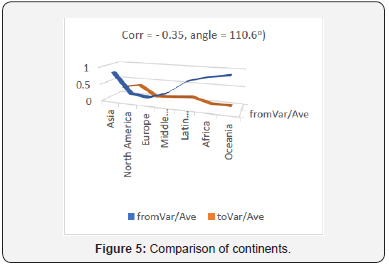
The reverse-cross correlation to capture the symmetry in the overall movements between the continents and it is
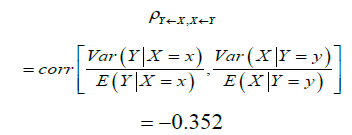
It means that the outbound flow from the continents in the collection

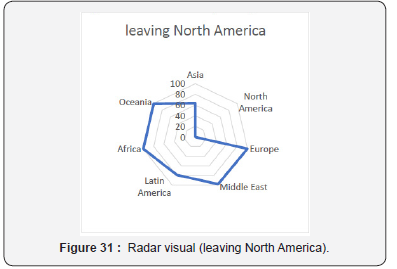
to continents in the collection ℋ is reduced by the reverse inflow from the continents in the collection ℋ to the continents in the collection ℬ. The corresponding impact angle is 110.6o and it indicates a non-orthogonality (non-independency) between the leaving and arriving of medical tourists). Next, we examine the impact of excluding the “within continent” in the medical tourism from the analysis to check whether it causes deviations the statistical adjacency of the continents in medical tourism. Based on the calculated new angles, we construct and visualize the changes in the radar visuals for leaving and arriving medical tourists in continents AF, AS, EU, LA, ME, NA, and OC (Figure 21-34).
We note that
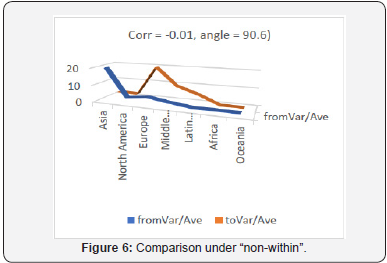
It means that the outbound flow from the continents in the collection ∈{AF,AS,EU,LA,ME,NA,OC) to the continents in the collection ℋ is slightly reduced by the reverse inflow from the continents in the collection ℋ to the continents in the collection ℬ. The corresponding impact angle is 90.6o and it indicates a slight orthogonality. It suggests that the exclusion of “within medical tourists” changes dramatically the visual impression (compare Figures 7-20 with their corresponding Figures 21 through 34) and the understanding. The analysts ought to analyze the entire medical tourism data without the exclusion of “within medical tourists”.
Comments and Conclusion

This article devised both the statistical concepts and analytical tools to check whether the number of medical tourists leaving a continent is independent of arriving number in the seven continents. Expressions are derived to compute their correlation and the angular impact. Also constructed and demonstrated are the visuals for the medical tourism data. These contributions help the analysts to interpret the meaning and implications of the medical tourism patterns over the years. For a variety of reasons [8], the patterns could shift. Such identified shifts become the basis for a trial to understand the consequences of healthcare policies or regulations.

To Know More About  Biostatistics and Biometrics Open Access Journal  Please Click on: 

To Know More About Open Access Journals Publishers Please Click on: Juniper Publishers

Tuesday, July 2, 2019

Repurposing the Thalidomide to the Treatment of Irinotecan-Induced Intestinal Mucositis: An Old Drug to a New Use-Juniper Publishers


Journal of Pharmacy - Pharmaceutical Sciences Journals   Juniper Publishers


Abstract

Intestinal mucositis (IM) is an inflammation caused by antitumor therapy, it seems as side effect especially in irinotecan-based protocols. This condition has a negative impact on patient’s quality of life and treatment effectiveness, once restricts food intake and may predispose the patient to secondary infections. Currently in the clinical practice, only palliative measures are used to treat the IM, which represent the main clinical limitation in management this condition. In this scenario, the repurposing of compounds that are already in clinical use highlight as a rapid and effective strategy against IM caused by chemotherapy. The use of thalidomide has already been demonstrated as a good therapeutic option in preclinical models of irinotecan-induced IM, due its ability to modulate proinflammatory response and to reduce the levels of enterotoxic metabolite of this antitumor agent (i.e., SN-38). In this sense, thalidomide appears as a promising compound for repositioning the therapy of IM, since it exhibits high clinical efficacy and does not affect the activity of ongoing antitumor treatment.
Keywords: Intestinal mucositis; Irinotecan; Thalidomide; Cancer therapy
Abbreviations: IM: Intestinal Mucositis; TNF- α: Tumor Necrosis Factor Alfa; IL-1β: Interleukin 1 Beta; IL-6: Interleukin 6; IFN-Γ: Interferon Gamma; IL-2: Interleukin 2; IL-18: Interleukin 18; RNA: Ribonucleic Acid

Introduction

Intestinal mucositis (IM) is an adverse reaction characterized by acute inflammation of mucosa in small intestine and/or colon induced by a variety of chemotherapeutic agents, particularly irinotecan and 5-fluorouracil [1]. This condition has a great impact on patient’s quality of life, since it limits their tolerability to antineoplastic therapy, restricts food intake (i.e., has been associated to fatigue and sub nutrition), and may predispose the patient to secondary infections, thus generating an increase in time of hospital stay and higher cost to public health [1,2]. As the first-line treatment for colorectal cancer, the clinical benefit of irinotecan is many times limited by IM, which occurs in 15-40% of patients that receiving conventional doses and virtually all on the regimens of high-doses this antitumor [2,3].
Among the main limitations in the clinical management of IM is the absence of curative or prophylactic treatments that are effective and safe in these cases, being available only palliative measures currently [2]. In this direction, the search for new pharmacotherapeutic strategies become imperative to reduce the morbidity and mortality associated with IM and ensure a better quality of life for patients susceptible to this manifestation. Recently, the concept of repurposing is gaining space in the pharmaceutical market by allowing the reduction of costs, optimization of release time for the regulatory agencies and reducing the final price of new drugs [4]. In this development model, compounds that are already in clinical use are diverted from your original employment and assigned to a new application, being required only clinical trials demonstrating the effectiveness of the new use [4,5].
While the activity of many non-enteroprotective drugs has been recognized, only now the interest in exploring these compounds in the treatment of IM is increasing [6]. The thalidomide, a derivative of glutamic acid that is widely employed in the treatment of inflammatory and autoimmune diseases, has showed as a good therapeutic option also in IM [7]. Govindarajan and collaborators [8] observed that the combination of thalidomide and irinotecan in patients with metastatic colorectal cancer eliminated the diarrhea and nausea associated to the treatment, thereby ensuring that the patients completed the chemotherapy course without suspensions or reduction in dose of drug. This clinical evidence indicates that thalidomide might increase the tolerability to antineoplasic therapy preventing the IM, and basic studies have confirmed these findings.
In mice with irinotecan-induced IM (75 mg/kg/day for four days), the treatment with thalidomide (60 mg/kg/day for 7 days, starting 1 day before the first antitumor injection) was able to reduce the inflammatory process in the ileum, but did not reduce late-onset diarrhea associated with chemotherapy [9]. On the other hand, co-administration of thalidomide (100 mg/kg/day for 8 days, starting 1 day before the first antitumor injection) and irinotecan (60 mg/kg/day for four days) in Sprague- Dawley rats produced a considerable reduction in diarrhea and weight loss associated with chemotherapy, as well as protecting animals from other adverse reactions of the antitumor, such as myelosuppression, inflammation of the intestinal mucosa, and apoptosis of enteric epithelial cells. In these animals, the mechanisms involved were the TNF-α, IL-1β, IL-6 and IFN-γ inhibition, and activation of IL-2 [10].
Importantly, thalidomide treatment did not reduce the antitumor effect of irinotecan, and in C57BL/6 mice the use this drug was able to protect the weight loss and intestinal damage, as well as speed up the intestinal epithelia renovation without affecting efficacious of tumor growth inhibition by irinotecan [11]. The biochemical mechanisms that support the therapeutic effect of thalidomide have been associated with the ability of this drug to modulate the proinflammatory response in IM, as well as to modify the pharmacokinetics of the irinotecan, reducing its enterotoxic fraction [9-14]. Thalidomide is known by inhibits TNF-α production, a key cytokine in irinotecan-induced IM, by enhancing the degradation of its messenger RNA [7]. In addition, thalidomide has been associated to inhibition of inflammasome, an important proinflammatory system that leads to maturation and secretion of cytokines associated with IM such as IL-1β and IL-18 [11]. Recent studies have also showed that the hydrolytic products of thalidomide interfere with the pharmacokinetics of irinotecan, which was associated to the enteroprotective effect of this drug [12]. Irinotecan is a prodrug which is activated to the metabolite SN-38 thought of hepatic carboxylesterases. In addition to a higher cytotoxic effect that irinotecan, SN-38 is characterized also by high enterotoxicity, been it related to IM [13]. The metabolites of thalidomide decreasing the systemic exposure of SN-38, reducing half-life and inducing intracellular accumulation of this active metabolite in liver, besides diminishing the biliary excretion and cecal exposure of both, irinotecan and SN-38 [12-14] (Figure 1).

Conclusion

Despite recent advances in the development of prophylactic and curative treatments for irinotecan-induced IM, no universally effective and safe drug is currently licensed in these cases. The fact that the IM is the acute disease limits the time required for the use of therapeutic compounds, which reduces the interest of large pharmaceutical companies in investing to research and development of news drugs directed to these chemotherapyassociated adverse reactions. Thus the repositioning stands out as a strategy that aims to dribble the incipient investments of pharmaceutical companies, as well as the strict legislation applied to the release of new compounds in market. The antiinflammatory effect and the ability of thalidomide to reduce the plasma concentration of the enterotoxic metabolite of irinotecan are shown to have a profound impact on the development of IM. In this context, we can conclude that thalidomide appears as a promising compound for repositioning the therapy of IM, since it exhibits high clinical efficacy and does not affect the activity of ongoing antitumor treatment.

Acknowledgement

We would like to thank Conselho Nacional de Desenvolvimento Cientifico and Tecnologico (CNPq), Coordenacao de Aperfeicoamento de Pessoal de Nivel Superior (CAPES), and Fundacao de Amparo a Pesquisa do estado de Minas Gerais (FAPEMIG) by financial support. RMP and WGL are grateful to CAPES for a graduate fellowship.

To Know More About Journal of Pharmacy - Pharmaceutical Sciences Journals  Please Click on:
https://juniperpublishers.com/gjpps/index.php

To Know More About Open Access Journals Publishers Please Click on: Juniper Publishers

Juniper Publishers ISI Impact Factor Journals

Juniper Publishers

Impact Factor Journals

The impact factor (IF) is used to measure the importance of a journal by calculating the number of times selected articles are cited within the last few years. The value of impact factor depends on citations and publications in a year.
Impact factor can be calculated only after completing the minimum of 2-3 years of publication and cannot be calculated for new journals. The journal gets the highest IF only when there have published the most commonly cited articles over a 2-year period. A journal which publishes more articles and cited more in a year will get highest IFs.
If the Journal has a higher impact factor, then the journal will be highly ranked. It is one tool you can use to compare with the other journals in a same subject category. Journals with higher IFs believed to be more important than those with lower ones.
It is used as an indicator and gives us the importance of a journal within its field and measure the quality and rank of a journal.

ISI Impact Factor Journals in Juniper Publishers

Agriculture Open Access Journals: - 1.191.

ARTOAJ is a dynamic journal for publishing research reports, short communications, Critical Reviews in Agricultural Economics and Farm Management, Agronomy, Forestry, Animal Science, Food Technology, Soil Science, Home Economics, Agricultural Extension, Rural development, Environmental Biology and Agricultural Engineering. The goal of the journal is to publish articles on new and emerging fields and concepts for providing future directions to promote agricultural research globally. It is a unique journal covering all the disciplines of crop sciences, animal sciences, fishery sciences, forestry sciences and natural resources management sciences, to stimulate interest in inter-disciplinary research. The journal will catalyze policy development on issues impacting rational agricultural growth and development globally. 


Juniper Publishers Agriculture Open Access Journals

Journal of Otolaryngology -0.862.

GJO is an open open access, multidisciplinary, peer reviewed journal of Juniper group which publishes clinical and medical studies related to Otolaryngology and focuses on topics that includes Rhinitis and Rhinosinusitis, Sinonasal Disorders, Common Cold, Nasal Disorders, Neurotology, Laryngology, Head, Neck and Oral Oncology, Sinusitis etc. GJO aims to publish most-advanced and rigorous scientific research related to the basic science and clinical aspects of the auditory and vestibular system and diseases of the ear. GJO publishes original research papers, review and mini- review articles, rapid communications, method/protocol and perspective articles. GJO provides authors with an open access option which allows your article to be freely available to read, download and share from the moment it publishes. Papers on comparative aspects of hearing and on effects of drugs and environmental contaminants on hearing function will also be considered. The journal is of primary importance for all scientists and practitioners interested in audiology, otology and neurotology, auditory neurosciences and related disciplines.
Juniper Publishers Journal of Otolaryngology

Journal of Biomedical Engineering-0.822.

The Current Trends in Biomedical Engineering & Biosciences is an Open Access journal publishing Original research articles, Reviews, Mini reviews, Short communications, Opinions and Letter to editors. The Journal is enthusiastic in the development and dissemination of knowledge concerning Biomedical Engineering & Biosciences: seeks to close the gap between engineering and medicine, coalesce the design and problem solving skills of engineering with medical and biological sciences which helps in development of sophisticated instruments which are used for the advance health care treatment, including diagnosis, monitoring, and therapy.Biosciences cover the significant developments in the broad field of biology and biological aspects of living organisms. It includes the topics Animal Sciences, Cell Biology and Life Sciences. 
Juniper Publishers  Journal of Biomedical Engineering

Journal of Environmental Sciences- 0.954.

International Journal of Environmental Sciences & Natural Resources is online, peer reviewed journal devoted to publish original research, review papers, short communications and opinions on all aspects of environmental sciences. The extent of environmental sciences is really huge through all over the world and thus, this journal covers all sorts of details in this field. The articles published in this journal aims in creating public awareness about issues related to protection and sustainability of environment and natural resources such as atmosphere, lithosphere, hydrosphere, biosphere, flora, and fauna and thus enhancing the perception towards the current technologies on various fields. IJESNR is one of the best budding environmental journal which covers the environmental study widely and read by International community of researchers and students across the world.
Juniper Publishers Journal of Environmental Sciences

Journal of Orthopaedics- 0.712

Orthopedics and Rheumatology Open Access Journal (OROAJ) is an international, peer reviewed scientific journal focused towards publishing a complete and reliable source of information on the innovations and ongoing developments in the field of Orthopedics which includes extensive study in the fields of Hand surgery, Shoulder and Elbow surgery, Total joint reconstruction (arthroplasty), Pediatric orthopedics, Foot and Ankle surgery, Spine surgery, Musculoskeletal oncology, Orthopedic trauma, Orthopedic oncology etc. and Rheumatology which means acute or chronic illness which is characterized by inflammation and reduced function of connecting or supporting structures such as the joints, tendons, ligaments, bones, and muscles. The journal publishes scientific work in the form of articles such as original articles, review articles, case reports, short communications, opinions, letter to editors etc.

Juniper Publishers  Journal of Orthopaedics

Cancer Therapy and Oncology International Journal-0.637

Cancer Therapy & Oncology International Journal is dedicated to publish the contributions on all aspects of experimental and clinical cancer research. CTOIJ is a multidisciplinary, Open Access, peer reviewed journal accepts Research, Review Articles, Short Communications, Mini- Review, Case Reports, Opinions, Letter to Editors etc., Authors are requested to submit complete unpublished and original works, including but not limited to the following fields: cancer biology, cancer science and therapeutics, cancer nanotechnology, cancer detection and prevention, radiology, radiation oncology, radiation therapy, medical and clinical oncology. CTOIJ providing a platform for researchers, scholars, clinicians and academicians to collaborate and share knowledge.
Juniper Publishers Cancer Therapy and Oncology International Journal

Journal of Gynecology and Women’s Health-0.621

JGWH is a peer-reviewed, multidisciplinary, international journal of Juniper group that publishes scientific works within the field of obstetrics, gynecology and women’s health. Gynecology deals with the functions and diseases specific to women and girls, especially those affecting the reproductive system. Obstetrics takes care of the issues related to pregnant females, from the time of conception till childbirth, providing pre-natal care, management of pregnancy, and post-partum care. Women's Health is the primary source of information for meeting the challenges of providing optimal health care for women throughout their lifespan. The Journal delivers cutting-edge advancements in diagnostic procedures, therapeutic protocols for the management of diseases, and innovative research in gender-based biology that impacts patient care and treatment. JGWH publications includes original research articles, opinions, short communications, letter to editors, editorials, reviews etc. on a broad range of subjects related to related to female reproductive system, pregnancy, child birth and other related issues.
Juniper Publishers

Gastroenterology Open Access Journals-0.778

ARGH is part of the Juniper publishers which is devoted to publish subject-specific articles focused on the needs of individual research communities across all areas of biology and medicine. ARGH is a bimonthly, peer reviewed, open access, international medical journal covering all aspects of gastroenterology and Hepatology. Gastroenterology is the branch of medicine focused on the digestive system and its disorders. Hepatology is the branch of medicine that incorporates the study of liver, gallbladder, biliary tree, and pancreas as well as management of their disorders. ARGH considers articles on all aspects of the prevention, diagnosis and management of gastrointestinal and hepatobiliary disorders. The scope of this journal includes pathology, diagnosis, and treatment of diseases of the gastrointestinal tract, liver, pancreas, gall bladder, and biliary tract, such as functional gastrointestinal disorders, inflammatory diseases, cancer, infection, and nutritional disorders. Our goal is to publish all the latest gastroenterology articles on juniper.
Juniper Publishers strongly welcomes the submission of papers in different formats like original research papers, review articles, Opinions, short communications, letter to editors on a breadth of clinical topics in gastroenterology and hepatology.

Juniper Publishers

Journal of Cardiology and Cardiovascular Therapy-0.814

Journal of Cardiology & Cardiovascular Therapy is an Open Access, international peer reviewed journal launched from Juniper Publishers. Cardiology is a branch of medicine deals with the disorders of heart that keeps cardiologists up to date with advances in the diagnosis and treatment of cardiovascular diseases. This journal aims to publish the highest quality study, interpreting and integrating novel scientific developments within the field of cardiology & cardiovascular therapy. The overarching goal of the Journal is to improve the care of patients with cardiovascular disease with a specific focus on cardiovascular therapy. JOCCT publishes Research, Review, Mini-Review, Opinion, and Short Communication.
Juniper Publishers

Journal of Medical Microbiology-0.734

Advances in biotechnology and microbiology is an Open Access, peer reviewed scientific journal focused towards publishing a complete and reliable source of information on the innovations and ongoing developments in the field of Biotechnology & Microbiology. The journal publishes scientific work in the form of articles such as original articles, review articles, case reports, short communications etc. from animal, plant and environmental microbiology (including bacteria, fungi, yeasts, algae, protozoa and viruses), microbial, animal, plant biotechnology, physiology, microbial, plant & animal genetics, molecular biology, agriculture, food chemistry, biochemistry, food control, evaluation, processing in food science and environmental sciences. 

Juniper Publishers

Journal of Forensic Sciences-0.793

Journal of Forensic Sciences & Criminal Investigation (JFSCI) This is one of the open access journals that is determined to publish the most complete and reliable source of information on discoveries and current developments related to forensic and criminal science department. JFSCI is devoted to publish papers in all aspects of Forensic science and criminal investigation which is the scientific method of assembling and examining information about the past which is then used in law. The forensic sciences are helpful around the world to resolve civil disputes, to enforce criminal laws and government regulations and to protect public health. JFSCI is devoted to publish papers in the form of Research articles, Review papers, Short Communications, Case Reports, Mini- Reviews, proceedings, Powerpoint presentations (that are presented in various meetings) Opinions, Letter to Editors etc. 


Juniper Publishers

Psychology and Behavioral Science International Journal-0.89

PBSIJ science is an Open Access, peer reviewed, multidisciplinary international journal of Juniper publisher. PBSIJ main aim is to publish quality articles related to mind, behavioral changes, mental functions, social behavior, while also exploring the physiological and biological processes that underlie cognitive functions and behaviors around the globe. Juniper publishes intervention strategies that use psychological science to improve the lives of people around the world. The journal promotes the use of psychological science that is contextually informed, culturally inclusive, and dedicated to serving the public interest. PBSIJ welcome authors to submit Research, Review, Mini-Review, Opinion, and Short Communication that explore of the Psychology, Social sciences, Education, and Home science aspects of human behavior. If you have a submission that you believe meets our criteria, we encourage you to consider PBSIJ as an outlet for your academic research. 
Juniper Publishers

Open Access Dentistry and oral journals-1.092

Advances in Dentistry & Oral Health is an Open Access, International peer reviewed Journal published on behalf of the Juniper Publishers. Dentistry is the branch of medicine that is involved in the research, diagnosis, prevention and treatment of disorders, diseases and conditions related to dental and oral cavity. The main aim of the journal is bring up to date regarding the new ideas, opinions, and development and key issues in Dentistry throughout the world, and to help its readers keep abreast of the best available evidence on the latest development in various aspects of clinical dentistry. The Journal accepts all the technical notes in the field of Dental Health sciences and new techniques of dentistry in the mode of research, review articles, case reports, letter to the editor, opinions etc. Scholarly work on any aspect of dental or medical science will be considered for peer-reviewed publication including but not limited to case reports, epidemiological survey results, clinical trials and recent trends in technology.
Juniper Publishers

Journal of Case studies-0.663

Journal of Case reports is an international, peer reviewed open access journal, focussed on bringing out premium quality case reports in all areas of basic medical sciences and clinical specialities. ‘JOJCS’ aims to serve as a repository of medical case reports that can go a long way in enriching the professional knowledge of medical practitioners around the world.
JOJCS strives to encourage the publication of high quality case reports, by providing a platform for sharing unique, rare, and unusual cases and clinical scenarios that enhance the understanding of the disease process, its diagnosis, treatment options and clinico-pathologic correlations. JOJCS functions as an invaluable resource for young professionals, to understand the intricacies associated with medical cases, and stay abreast of the latest advancements in their field, thereby creating an edge for themselves.
We strongly believe that this ‘bank of professional wisdom’ will go on to enlighten the medical community, thereby creating a space for medical professionals to share their knowledge with each other. All the reports are peer reviewed and published under the guidance of our accomplished Editorial Board members. JOJCS publishes superior quality reports that are guaranteed to take your professional medical knowledge a few notches up, with every issue.

Juniper Publishers

Diabetes and Obesity Journals-0.836

Current Research in Diabetes & Obesity Journal is an international peer reviewed Open Access journal of Juniper Publishers. CRDOJ is committed to increase knowledge, encouraging research and promoting better treatment for people suffering with Diabetes and Obesity. Diabetes is a disorder of carbohydrate metabolism, usually occurring in genetically predisposed individuals, characterized by inadequate production or utilization of insulin and resulting in excessive amounts of glucose in the blood and urine. Obesity is an abnormal accumulation of body fat, usually 20% or more over an individual's ideal body weight. Obesity is associated with increased risk of illness, disability, and death. CRDOJ publishes Research papers, reviews, Mini reviews, short communication, Case reports on topics related to Diabetes & Obesity and provides free and unlimited access of all articles for the betterment of the world. 
Juniper Publishers

Open Access Journal of Neurology-0.854

Open Access Journal of Neurology & Neurosurgery has been developed as an opportunity for the free and open international exchange of information regarding the progress in the clinical and neurosciences. OAJNN publishes original research, reviews, mini reviews, case reports, short communications, opinions and Letter to Editors related to Autonomic Nervous System Diseases, Chronobiology Disorders, Cranial Nerve Diseases, Central Nervous System Diseases, Demyelinating Diseases, Neurodegenerative Diseases, Neuromuscular Diseases, Neurologic Manifestations, Nervous System Neoplasms, Neurotoxicity Syndromes, Nervous System Malformations, Neurocutaneous Syndromes, Sleep Disorders, Trauma and Nervous System. OAJNN is multidisciplinary, open accessed, peer reviewed journal, publishes papers reporting innovative experimental and scientific research which are of a high standard and which contribute to the advancement of knowledge in the field of neurology.
Juniper Publishers

Biostatistics and Biometrics Open Access Journal-0.883

Biostatistics and Biometrics Open Access Journal (BBOAJ) encourages in spreading the information and advances in assorted areas that are concerned with the application of i.Statistics: Responsible for the proper interpretation of scientific data generated in the biology, public health and other health sciences like biomedical sciences And ii. Biometrics: Dealing with the measurable biological characteristics. In computer security, biometrics refers to authentication techniques that rely on measurable physical characteristics that can be automatically checked. BBOAJ aims to publish all Original articles using mathematics to enhance science and bridge the gap between theory and practice from the Biostatisticians. The Journal consolidates Research Papers, Review Articles, Case Presentations, Mini Reviews, Letter to Editor Papers, Short Communications, Editorials etc. 
Juniper Publishers

Oceanography & Fisheries Open access Journal-0.593

Oceanography and Fisheries Open access journal (OFOAJ) is a peer reviewed, premium quality journal that aims to showcase advanced research in the field of Oceanography and Fishery science and all the related areas. Oceanography is the study of marine ecosystems, including the biological, chemical and physical aspects while Fisheries deals with several aspects of marine biology as well as limnology, fish population dynamics, conservation and several related subjects. OFOAJ publishes a wide variety of articles like research papers, review papers, case reports and short communication in all the concerned areas
Juniper Publishers

Peer Reviewed Chemistry Journals-0.945

Organic and Medicinal chemistry international Journal is an open access journal that is committed to publish the papers on various topics of chemistry, especially synthetic organic chemistry, and pharmacology and various other biological specialties, where they are involved with drug design, chemical synthesis and development for market of pharmaceutical agents, or bio-active molecules (drugs). The main aim of the journal is bring up to date information regarding the new ideas, opinions, and development and key issues in chemical field throughout the world, and to help researchers keep abreast of the best available evidence on the latest development in various aspects of chemistry by publishing them as research, review articles, case reports, letter to the editor, opinions etc. 
Juniper Publishers

Food and Nutrition Open Access Journals-0.849

Juniper aims to be a truly global forum for high-quality research in food science and nutrition and publishes high quality manuscripts which are both relevant and applicable to the broad field of applied life sciences. Nutrition and food science international journal is a scientific, peer reviewed, multidisciplinary, international journal for rapid dissemination of research in all areas of food science and nutrition. NFSIJ aims to reflect contemporary thinking so that professionals can keep pace with the developments in the field of nutrition and food sciences. NFSIJ aims to foster a wider academic interest in food and nutrition field, and offers an important forum for researchers to exchange the latest results from research on human nutrition broadly and food-related nutrition in particular. The Journal will consider submissions of quality papers related to all aspects of human food and nutrition, as well as interdisciplinary research that spans these two fields. NFSIJ welcomes Review articles, original research papers and short communications by individual researchers and research groups with strong emphasis on originality and scientific quality.
Juniper Publishers

Academic Journal of Pediatrics and Neonatology-0.631

Academic Journal of Pediatrics & Neonatology is an international peer-reviewed open access journal deals with the publication of papers on health and medical care of infants, children and adolescents. The Journal accepts high quality submissions presented as an original Research articles, Review Articles, Short Communications, Case Reports, Mini- Review, Opinions, Letter to Editors etc., in all areas of pediatric research. Through a meticulous process of peer review, the Journal of Pediatrics & Neonatology strives to publish pediatric research of the highest value for pediatric healthcare professionals.
Juniper Publishers

Monday, July 1, 2019

Effect of Matrix Rhythm Therapy on Chronic Vein Dysfunction Deep Foot Ulcer: A Case Report-Journal of Yoga and Physiotherapy-Juniper Publishers

JUNIPER PUBLISHERS-Journal of Yoga and Physiotherapy


Effect of Matrix Rhythm Therapy on Chronic Vein Dysfunction Deep Foot Ulcer: A Case Report


Authored by Ketan Bhatikar*

There are many different noninvasive physical modalities in physiotherapy that are used in the treatment of wound ulcer. Foot ulcers are more difficult to treat in any patient. It is more difficult if the patient having any peripheral neuropathy and/or circulatory problems. In previous studies ultrasound, LASER and interferential current are proved to be beneficial in treating some foot. The present study addressed 2 deep vein ulcer of a 48 years old male at Dr. Ketan Bhatikar’s Sports Physiotherapy and Aqua Rehabilitation Center. To our knowledge, very fewer studies have focused on the effect of matrix rhythm therapy on wound/ ulcer. Therefore, in the present study, we evaluated the effect of matrix rhythm therapy along with the contemporary physiotherapy treatment (LASER + PEMF + Exercise). The study showed positive results in treating the deep vein ulcers. The present study concludes that Matrix Rhythm Therapy along with the Pulsed electromagnetic field therapy and LASER therapy is beneficial in the healing of a long-standing non-healing deep vein ulcer.

For Read More... Fulltext click on: https://juniperpublishers.com/jyp/JYP.MS.ID.555696.php

For More Articles in Journal of Yoga and Physiotherapy Please Click on:
https://juniperpublishers.com/jyp/index.php

For More Open Access Journals In Juniper Publishers Please Click on: 

A Therapeutic Yoga Program for University Students with Anxiety: A Mixed Methods Study - Juniper Publishers

  Yoga and Physiotherapy - Juniper Publishers Abstract Anxiety remains one of the most common mental health disorders in the United States. ...