Monday, December 5, 2022

The Relationship Between Liking of Children and Job Satisfaction Among Preschool Teachers - Juniper Publishers

 JOJ Nursing & Health Care - Juniper Publishers


Abstract

This study was conducted to examine the relationship between liking of children and job satisfaction among preschool teachers. This cross-sectional analytical study included 140 teachers who volunteered to participate. Data were collected using a sociodemographic information form, the Barnett Liking of Children Scale (BLOCS), and the Minnesota Job Satisfaction Scale. Statistical Package for the Social Sciences (SPSS) 21 package program was used for statistical analysis and p values less than 0.05 were considered significant. There was a statistically significant difference in the preschool teachers’ job satisfaction scores according to age, marital status, and the facilities in their school (p<0.05). In addition, there was a statistically significant difference in liking of children scores based on the teachers’ education level (p<0.05). Correlation analysis revealed statistically significant and positive correlations between liking of children score and overall job satisfaction, intrinsic job satisfaction, and extrinsic job satisfaction (p<0.01). Regression analysis showed that liking of children affected overall, intrinsic, and extrinsic job satisfaction (F=13.175; R²=0.081; F=12.722, R²=0.078; F=10.739, R²=0.065, respectively). The results of this study demonstrate that preschool teachers’ job satisfaction and liking of children are affected by various factors, and that levels of job satisfaction and liking of children are positively correlated.

Keywords: Liking of children Job satisfaction Preschool teacher Child education

Abbrevations: SPSS: Statistical Package for the Social Sciences; BLOCS: Barnet Liking of Children Scale; SD: Standard Deviation

Introduction

Preschool education aims to support children in all areas of development in order to help them acquire new skills and behaviors and prepare them for primary education [1]. Currently, preschool teachers spend the longest time with children due to the prevalence of working mothers. After their primary caretakers (usually the parents), their preschool teachers is the most important person for a child [2]. Therefore, children’s basic need for love and attention must be met as well as their developmental and educational needs [3]. According to Downing, Ryndak & Clark [4], necessary qualities of a preschool teacher include being able to interact with children, being patient, attentive, gentle, and flexible, and liking children. Gelbal & Duyan [5] stated that liking children is the main characteristic of teachers. Brown, Morehead & Smith [6] also emphasized that liking children is a particularly important condition for people who choose teaching as a career. Teacher performance and job satisfaction are also important for effective preschool education [7]. Job satisfaction has been defined in many ways. Especially about teaching, job satisfaction is defined as a series of emotional responses toward their work and their role that explains how they generally feel at work [8,9]. Altaş & Kuzu [10] reported that the positive influence of job satisfaction on preschool teachers’ performance was stronger than that of organizational reassurance or emotional commitment. Massari [11] emphasized that job satisfaction affects not only work-related attitudes but also teaching quality. Job satisfaction is an important factor that can affect teachers’ productivity and their communication with children. Failure to find job satisfaction may have a detrimental impact on teacher-student rapport and quality of education [12]. It is especially important to investigate job satisfaction among preschool teachers, who interact extensively with their students. Therefore, the aim of this study was to investigate the relationship between liking of children and job satisfaction in preschool teachers. For this purpose, the following questions were explored in the study:

The purpose of this article is to identify and discuss literature identifying the use of a MDI-spacer as at least as effective as nebulizers in the delivery of short acting bronchodilators to manage children under 5 years of age with exacerbation of wheezing or asthma.

a.Do teachers’ scores on a liking of children scale differ from their descriptive characteristics?

b.Do teachers’ scores on a job satisfaction scale differ from their descriptive characteristics?

c.Is there a statistically significant relationship between teachers’ liking of children scores and job satisfaction scores?

d.Does teachers’ liking of children affect their job satisfaction and it sub-dimensions?

Methods

Study design

This cross-sectional, analytical study was conducted between April 1 and May 30, 2019 in 21 kindergartens (7 state, 17 private) associated with the Ministry of National Education in the city of Kutahya, Turkey.

Study population

The universe of the study comprised the 159 preschool teachers working in all of the kindergartens of Kutahya Provincial Directorate of National Education. No sample selection was made from the universe; all 140 teachers who were in school on the day of the survey and agreed to participate in the study were included in the study.

Ethical approval

The study was approved by the Kutahya Provincial Directorate of National Education and the Kutahya Health Sciences University Rectorate Non-Interventional Clinical Trials Ethics Committee (approval number 2019/04, dated 19.03.2019). The teachers provided verbal and written informed consent after being informed of the purpose of the study and assured that the study data would remain confidential.

Data collection

Questionnaires were used to collect data from the teachers who agreed to participate in the study. The teachers completed a sociodemographic information form, the Minnesota Job Satisfaction Scale and the Barnet Liking of Children Scale (BLOCS). It took approximately 20 minutes.

Instruments

Sociodemographic Information Form was developed by the researchers and consists of 7 questions that were answered by the teachers. Minnesota Job Satisfaction Scale was developed by Weiss, Davis, England, and the Turkish validity and reliability studieswere conducted by Baycan [13]. It has 20 items that are rated on a Likert-type scale of “very dissatisfied” (1 point), “dissatisfied” (2 points), “can’t decide” (3 points), “satisfied” (4 points), and “very satisfied” (5 points). Scores range from a minimum of 20 to a maximum of 100. The intrinsic satisfaction score includes factors such as achievement, recognition, responsibility, advancement, creativity, and working conditions, while extrinsic satisfaction score includes factors such as compensation, job security, and supervision. The original scale was calculated to have a reliability coefficient of 0.90 for overall job satisfaction, 0.86 for intrinsic satisfaction, and 0.80 for extrinsic satisfaction [13]. In this study, Cronbach’s alpha coefficient was calculated as 0.89 for intrinsic satisfaction, 0.79 for extrinsic satisfaction, and 0.92 for overall job satisfaction. Barnett Liking of Children Scale (BLOCS) was developed by Barnett & Sinisi and the Turkish validity and reliability study was conducted by Duyan & Gelbal [14]. It includes 14 items scored on a 7-point Likert scale from “strongly disagree” to “strongly agree”. The lowest possible score is 14 and the highest score is 98, with higher scores indicating more positive attitudes toward children. Results of the validity and reliability study indicated a test-retest reliability coefficient of 0.85 and internal consistency level of 0.92 [14]. In this study, the Cronbach’s alpha coefficient for total BLOCS score was 0.84.

Data analysis

The study data were analyzed using the SPSS package program. Using the Kolmogorov–Smirnov test, we determined that the data were normally distributed. Number, mean, and standard deviation were used in descriptive statistical analysis. For categorical variables, independent-samples t test was used for comparisons of two groups and one-way ANOVA was used for comparisons of three or more groups. Pearson correlation analysis was used to evaluate the relationships between the scales. Simple linear regression analysis was performed to examine the direction and effect of the relationship between liking of children score and job satisfaction overall and within its sub dimensions. P values <0.05 were considered statistically significant in all statistical tests.

Results
JOJ Nursing & Health Care

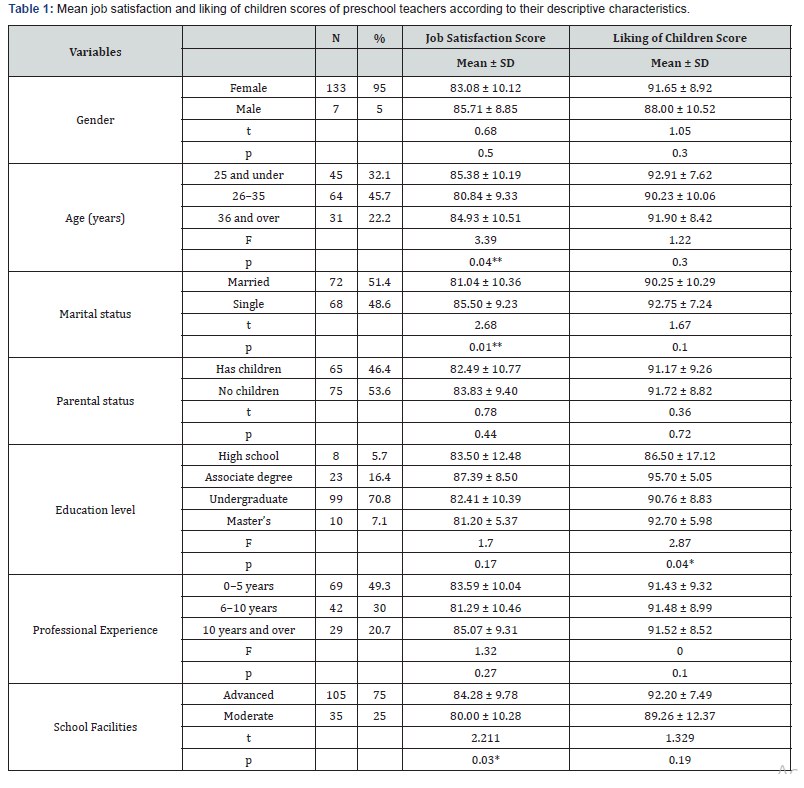
The teachers’ mean job satisfaction and liking of children scores according to descriptive characteristics are shown in Table 1. The study group included mostly women (95%, n=113), 45.7% (n=64) of the participants were in the 26-35 age group, 51.4% (n=72) were married, 53.6% (n=75) did not have children, and 70.8% (n=99) had undergraduate degrees. The preschool teachers’ job satisfaction scores showed significant differences according to age, school facilities, and marital status (p<0.05). Mean scores were significantly higher in single teachers (85.50) compared to married teachers (81.04), teachers who rated their school’s facilities as advanced (84.28), and teachers 25 years old or younger (85.38). There were no significant differences in the preschool teachers’ job satisfaction scores according to their gender, education level, years of professional experience, or parental status (p>0.05) (Table 1). BLOCS score differed significantly according to education level (p<0.05). Mean score was significantly higher among teachers with associate degrees (95.70) compared to those who graduated from high school (86.50) or had undergraduate (90.76) and master’s degrees (92.70). BLOCS score was not associated with gender, age, marital status, years of experience, school facilities, or parental status (p>0.05) (Table 1).


JOJ Nursing & Health Care

Pearson correlation analysis revealed statistically significant but weak positive correlations between job satisfaction and liking of children (r=0.30; p<0.01); intrinsic job satisfaction (r=0.29; p<0.01), and extrinsic job satisfaction (r=0.27; p<0.01). There were strong positive correlations between overall job satisfaction and both job satisfaction sub-dimensions (Table 2). The results of simple linear regression analysis to determine whether BLOCS score affects job satisfaction are shown in Table 3. The regression model generated from the analysis was found to be significant (F=13.175; p<0.01) and indicated that liking of children affects job satisfaction (B=0.330; p<0.01). According to the regression model, liking of children explains 8.1% of job satisfaction (Table 3). Simple linear regression analysis showed that the teachers’ liking of children had a significant effect on their intrinsic job satisfaction (F=12.722, p<0.01). According to the regression model, liking of children explains 7.8% of intrinsic job satisfaction (Table 4). Similarly, the linear regression model for liking of children and extrinsic satisfaction was significant (F=10.739; p<0.01) and revealed that liking of children significantly affects extrinsic job satisfaction (B=0.130; p<0.01). According to the regression model, 6.5% of extrinsic job satisfaction is explained by liking of children (Table 5).

Discussion

In this study, we detected a significant age-based difference in preschool teachers’ job satisfaction, with the highest job satisfaction in teachers aged 25 and under (p<0.05). Kılıç et al. [15] evaluated job satisfaction and social comparison levels in primary and secondary school teachers and determined that teachers in the 20-25 age group had the highest job satisfaction levels. In another study investigating job satisfaction in male and female early childhood educators, Şahin & Sak [16] also found that female teachers aged 21-25 years had higher job satisfaction levels. A possible explanation for these findings is that teachers starting their career at an early age are young and enthusiastic. Another finding of our study is that preschool teachers who considered their school facilities to be advanced also reported higher job satisfaction. Aldridge & Fraser [17] also emphasized the high level of job satisfaction among teachers working in schools with good facilities. Gupta & Gehlawat [18] analyzed secondary school teachers’ job satisfaction and motivation in term of certaindemographic variables and reported that teachers working in schools with good opportunities had higher job satisfaction. Treputtharat & Tayiam [19] conducted a study examining the effects of the school environment on job satisfaction in teachers working in primary education and determined that teachers working in schools with adequate physical facilities and advanced school facilities have higher job satisfaction. In a study by Jiang et al. [20] including 206 preschool teacher candidates in Shanghai, China, school facilities were found to have a positive effect on job satisfaction. These common findings can be attributed to the fact that quality education given under better physical conditions increases teachers’ productivity and job satisfaction.

In our study, preschool teachers’ job satisfaction differed significantly according to marital status, with single teachers’ showing higher job satisfaction levels than married teachers (p<0.05) Kılıç et al. [15] also reported that single teachers were more satisfied with their jobs than married teachers. Considering economic conditions, fewer individuals in the household increases the amount of income per capita. Therefore, single teachers have a higher welfare level and this may contribute to greater job satisfaction. In contrast, job satisfaction was not show significant differences in our study based on the teachers’ gender, education level, years of experience, or parental status (p>0.05). Karakaya et al. [21] also detected no difference in teachers’ job satisfaction according to gender. Koruklu et al. [22] emphasized that job satisfaction of secondary school teachers was not affected by gender or years of experience. Demirtaş & Alanoğlu [23] found that job satisfaction of administrators and teachers did not show significant differences associated with their gender, the school they worked in, their branch, or years of professional experience. However, other investigators have reported contradictory results. Büyükgöze & Özdemir [24] reported that male teachers had higher job satisfaction than female teachers, while a comparative analysis of job satisfaction among male and female early childhood teachers by Şahin & Sak [16] showed that female teachers had higher job satisfaction than male teachers. The preschool teachers participating in our study showed significant differences in liking of children according to their education level. Those with associate degrees had higher mean liking of children score compared to those graduated from high school and those with undergraduate and master’s degrees (p>0.05). In a study conducted by BayramSarıkaya & Özdemir [25] in teachers working with autistic children, a significant and positive relationship was observed between empathic tendency and liking of children, with associate degree holders having the greatest empathic tendencies. The teachers’ success in improving themselves in their schools and the fields in which they studied may be a factor in this difference.

Among the preschool teachers in our study, liking of children was not associated with gender, age, marital status, years of experience, school facilities, or parental status (p>0.05). Durualp & Kaytez [12] showed that there was no significant relationship between teachers’ gender and their liking of children. [26] also determined that preschool teachers’ age, professional experience, institution, and marital or parental status did not have a significant effect on their liking of children. Türk et al. [27] observed no statistically significant effect of gender on liking of children among female and male teachers. All of these findings indicate that teachers’ attitudes toward children are not affected by their gender, age, years of experience, school facilities, or whether they are married or have children of their own. However, some studies have demonstrated a relationship between these variables and teachers’ liking of children [2,28]. In a study conducted by Kaynak et al. [29], it was found that the gender of preschool teacher candidates was associated with their liking of children, with female preschool teachers expressing more positive attitudes toward children than male preschool teachers. Quaglia et al. [30] found that female teachers could establish closer relationships with children. These discrepancies may be due to the fact that the studies were conducted in different societies and cultures. Our evaluation of the relationship between liking of children and job satisfaction revealed positive correlations between liking of children and overall, intrinsic, and extrinsic satisfaction. Longobardi et al. [12] also found a positive, moderate relationship between teachers’ overall job satisfaction and their liking of children. These results are consistent with those of another study [31]. The fundamental building block of the teaching profession is liking children. We believe that teachers who enjoy their profession and like children also have greater job satisfaction.

Conclusion

At the end of the research, it was determined that the preschool teachers’ job satisfaction scores showed significant differences. Mean score was significantly higher among single teachers, teachers who rated their school’s facilities as advanced, and teachers 25 years old or younger (p<0.05). BLOCS score differed significantly according to education level. Mean score was significantly higher among teachers with associate degrees (p<0.05). BLOCS score was not associated with gender, age, marital status, years of experience, school facilities, or parental status (p>0.05) When the relationship between the job satisfaction and child liking levels of the teachers is analyzed, the positive and weak level relationship was found between the job satisfactionand child liking levels of the teachers. There were strong positive correlations between overall job satisfaction and job satisfaction sub-dimensions (p<0.01). Additionally, at this research, the regression model was found to be significant and determined that the liking of children affects job satisfaction and job satisfaction sub-dimensions (p<0.01). This research is limited to the answers provided by the preschool teachers working in one province of Turkey. Thus, the same study can be used with different sample groups. All the necessary works to better the factors (physical conditions, work environment, salary, motivation, etc.) that affect the job satisfaction of the teachers negatively can be conducted and the students can be directed towards choosing a profession consciously.

Click here: https://juniperpublishers.com/index.php  

Friday, December 2, 2022

Does Geopolymer Concrete have the Scope of Effective Utilization in Rigid Pavements? - A Definite Review - Juniper Publishers

 Civil Engineering Research - Juniper Publishers

Abstract

Rigid pavement construction primarily resorts to the utilization of concrete incorporating cement as the integral material. The carbon footprint associated with cement production engendered the conception of modern binders in the construction industry. Furthermore, the substantial amount of waste generation in conjunction with the rapid depletion of natural resources conceived its effective utilization in the pavement sector. Geopolymer concrete (GPC) is the modern binder whose scope in rigid pavement construction is being studied extensively considering its sustainability and performance. Although research portrays comprehensive study on various wastes as the aluminosilicate source for synthesizing geopolymers, yet its application in rigid pavements is rather a newer approach as compared to structural members especially in the Pavement Quality Concrete (PQC) layer. This review presents a precise scenario of GPC utilization in pavements and is definite and specific in terms of its representation. The idea of this article is to introduce the readers to an alternative binder that is relatively contemporary and effective when used in rigid pavement construction.

Keywords: Geopolymer Concrete; Rigid pavements; Curing; Flexural strength

Introduction

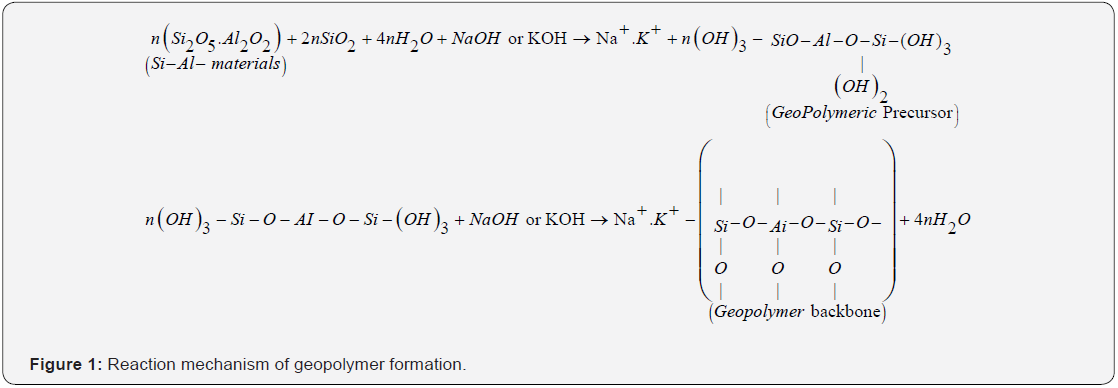
Sustainable construction practices are the need of the hour. Any initiative fostering the reduction of carbon footprint leading to global warming is of unequivocal relevance. With ever-increasing demand driven by environmental protection and subsequent waste re-utilization, several initiatives have been undertaken in the construction industry to effectively utilize them as alternate binders. The primary material constituent for producing geopolymer concrete (GPC) is the activation of an alumina-silicate source using alkaline hydroxides and silicates [1]. Geopolymerisation basically involves a three-step mechanism commencing with the dissolution of silica and alumina from the source materials followed by coagulation and gelation of the dissolved materials which subsequently polymerizes to form 3-D networks of silica aluminates structures [2]. Structures may be in the form of polysialate (Si:Al=1), polysialate siloxo (Si:Al=2), and polysialate disiloxo (Si:Al=3). The geopolymerisation reaction mechanism is depicted in (Figure 1). The constitutional role of the alkaline activators is to activate the source components like fly ash (FA), Ground Granulated Blast Furnace Slag (GGBS), Silica Fume (SF), Red Mud (RM), Glass Powder (GP), etc. Thus, it may be inferred that the geopolymeric system is fundamentally re- utilizing the supplementary cementitious materials and takes a way forward towards sustainability and eco-friendliness [3].

Performance Analysis of Geopolymer Concrete

Aguilar et al. [4] investigated the compressive and flexural strength development of metakaolin-based geopolymer concrete and reported the formation of dense microstructure and a solid interfacial zone. The developed strength was well within the requisite standard specifications. He et al. [5] observed an interesting shift from ductile to brittle failure for longer cured RM-based geopolymeric binders. Moreover,

RM-GP exhibited stabilized strength values after 21days of curing as compared to 7days of metakaolin (MK)-GP blends. It has been further reported that RM can be a probable source modifier owing to its high pH value, richer alumina content, and leaching characteristics [6]. Geopolymerisation is accelerated due to the adequate reaction of the activator with activated alumina contributed by RM [7]. It has been reported that the enhanced geopolymerisation reaction could be achieved when the curing temperature is between 40°C- 85°C [8]. The mechanical properties and strength development of geopolymer concrete are primarily dependent on the curing temperature and are directly proportional. [9]. Research on fly ash-based geopolymer systems exposed to curing at elevated temperature exhibited almost six times the compressive strength obtained from ambient cured specimens at 7 days and nearly double strength increment at 28 days [10]. This method of curing is apt for precast geopolymer specimens. Hence, to overcome the challenges of site application of oven-cured geopolymer concrete, research is now being oriented towards the production of this modern concrete at ambient temperature. The age of curing is a significant parameter influencing the compressive strength developed. For oven-cured specimens, increased curing time had a negligible effect on compressive strength improvement but was a vital criterion for ambient-cured specimens [11]. Though a significant number of studies based on the utilization of wastes had been conducted in the past, yet there is a lack of clear understanding of how the different curing techniques can affect the performance properties of mix prepared by varied combinations of the recycled wastes.

Sustainable use of Geopolymer Concrete in Pavement Layers

The recycling of industrial wastes in the geopolymer matrix, contributes to environmental balance and stability. Literature has shown promising results of geopolymer concrete performance with regards to strength and durability, exhibiting higher strength, better resistance to elevated temperature, limited shrinkage, dense microstructure, and enhanced performance in acidic and sulphate medium. It may be contemplated that the stresses induced in concrete pavements are predominantly flexural. Therefore, designing mixes based on flexural strength criterion is considered for rigid pavement construction. The minimum characteristics flexural strength of concrete shall not be less than 4.5MPa unless otherwise specified [12]. Comprehensive studies have reported that geopolymeric binders are capable of attaining the desired strength when designed considering the influence of strength affecting parameters precisely.

For pavements, consideration of durability is obligatory in predicting the service life since they are exposed outside, often in harsh environments. Various researchers have studied the durability properties of rigid pavements through resistance to acid attack, alkaline silicate reaction, and freeze and thaw cycles [13-15]. Particularly, the resistance of geopolymers to sulfuric acid has been examined due to the frequent exposure of concretes to acid rain, sewage, and sulfur-rich soils [16,17]. The majority of the past research works included durability studies on metakaolin- FA-GGBS based geopolymer concrete with limited literature on synthesis using RM and other wastes.

Conclusion

Geopolymeric binders have paved a new way in the construction of rigid pavements not only by addressing the problems associated with sustainable construction but also through evident enhanced performance. The acceptance of this modern binder by the industry faces multiple challenges because of misconceptions associated with the cost analysis and improper handling of chemicals. The primary objective should be focused on bridging this gap through extensive research and industryacademia interface.

Thursday, December 1, 2022

Community-Based Management of Acute Malnutrition: An Effective Intervention for Under-Nutrition - Juniper Publishers

 Complementary Medicine & Alternative Healthcare - Juniper Publishers


Abstract

Globally, Acute Malnutrition (AM) causes more than 50% of childhood mortality among children under five years of age. Before embracing the use of ready-to-use therapeutic foods, the management of AM was restricted to hospitals bases. However, the current availability of Ready to Use Therapeutic Food (RUTF) has enabled undernourished children to be treated in their communities. RUTF has proved to be highly effective in treating severely malnourished children and allows households to facilitate food intake without supervision from health care professionals. Recent evidence shows that Community Management of Acute Malnutrition (CMAM) is a cost-effective method in management and prevention of malnutrition with high impact on population health, especially in reducing childhood mortality attributed to severe acute malnutrition (SAM). The unique components and principles of CMAM enable early detection and treatment of AM, with high coverage rates. Despite the proven effectiveness of CMAM programs, CMAM still draws insufficient attention for global implementation, and thus the need to integrate CMAM as well as health education and promotion programs into national health systems.

Keywords: Ready to use therapeutic foods; Community management of acute malnutrition; Severe acute malnutrition; Under-nutrition

Introduction

Malnutrition is a widespread health issue in developing countries [1] and is one of the most significant public health concerns in children in sub-Saharan Africa and South-Asia [2,3]. Undernutrition occurs mostly in children <5 years of age and manifests in the form of stunting, wasting and bilateral pitting oedema, of which severe wasting and oedema are attributes of severe acute malnutrition. In recent years the prevalence of children with severe malnutrition has increased in the world, causing severe susceptibility to acute infectious diseases and death [4,5]. The effects of undernutrition increased, particularly in those living in circumstances of extreme poverty in the developing world [6]. Malnutrition is a direct result of an inadequate diet or indirectly caused by underlying infections or illness among children [6]. The recent report from UNICEF shows poor nutrition causes about 20% of deaths in eastern and southern Africa [5]. In 2017, the World Health Organization (WHO), United Nations Children’s Fund (UNICEF), and the World Bank estimated that wasting alone affects lives of approximately 50.5 million children under 5 years of age globally [7]. According to the recent Global Nutrition Report of 2018, malnutrition remains severe, and stunting affects over 150.8 million children below five years of age [8]. Severe acute malnutrition (SAM) remains a crucial problem in developing areas, where over 3.5 million children die of starvation each year. Undernutrition affects child cognitive development and causes other permanent severe social and health consequences affecting the quality of life [9,10] thus reducing child malnutrition is crucial to child survival and sustainable development [11,12].

Before CMAM, AM was classified as either SAM or moderate acute malnutrition (MAM), all patients with SAM were admitted to therapeutic feeding centres, and treated with therapeutic milk, commercially called F75 and F100. This approach posed significant challenges to effective treatment for both health systems and patients such as; overcrowding and cross-infection, long recovery periods, high opportunity costs for families to access and remain in treatment, costly and resource-intensive services for health systems to sustain, low coverage of services, among others [3]. However, with the recent development of RUTF in the mid-1990s, vast numbers of children with SAM could be treated in their communities without being admitted to health facilities [13,14]. RUTF could be safely consumed at home and so replaced F100. RUTF being dehydrated and sealed with a longer shelf life at room temperature; it offers an added benefit of a lower risk of bacterial contamination [15]. This innovative product allowed treatment for uncomplicated cases of SAM to be shifted to the home, paving the way for CMAM. The first pilot project tested the CMAM approach in 2000 in Ethiopia during humanitarian emergencies [3]. It was proved to be much effective that it was endorsed by United Nations (U.N.) agencies in 2007 [16] and is currently considered the global standard of care for managing AM in not only emergency but also development contexts [17].Community-based Management of Acute Malnutrition (CMAM) is thus a new cost-effective approach that enables timely detection of SAM in communities and delivery of treatment for those without medical complications with RUTF or other nutrient-dense foods at home [18,19]. This has proven to reduce childhood mortality attributed to SAM if well implemented [20-22]. Therefore, this mini review aimed to describe current approaches and evidence regarding malnutrition treatment and to highlight the effectiveness of CMAM as a new approach for intervention and control for Under-nutrition.

Community-based Management of Acute Malnutrition (CMAM) Concept

The CMAM program is initiated by volunteers who use simple measures of upper arm circumference (MUAC) to promptly screen potential SAM children and refer them to a clinic for evaluation before they seriously become ill [23]. At the health centre, those children for whom a SAM diagnosis, with complicating medical conditions are referred to inpatient facilities (stabilisation centres) for more intensive treatment, while those diagnosed as SAM without complications, and with appetite receive RUTF, which is administered at home [16,24]. Outpatients in the CMAM program return to the clinic weekly for evaluation and more supply of RUTF and those admitted to an inpatient facility are discharged when their medical conditions are treated and also visit the clinic weekly for check-ups and RUTF. When a child’s weight gain or MUAC exceeds a preset cutoff point, he or she is considered cured of SAM and discharged from the CMAM program [23]. Health professionals suggest that CMAM should be implemented in any community where at least 10% of children under 5 are moderately malnourished (low weight for height) and in the presence of aggravating factors such as food insecurity, widespread infectious diseases and high crude death rate [20]. The program targets children below 5 years old and their families. However, the whole community is involved. Community leaders, volunteers, health staff as well as families participate in the screening, care and follow up of children with acute malnutrition [25,26]. CMAM programs also work to incorporate treatment with various other longer-term interventions, for example, Infant and Young Child Feeding (IYCF), Nutrition Education, food security among others which are designed to reduce the occurrence of malnutrition and improve public health as well as food security in a sustainable manner [27,28].

Key Components of Community-based Management of Acute Malnutrition (CMAM)

CMAM starts with

Community mobilisation

which involves active case finding by community volunteers by measuring MUAC of all children under five to screen those with malnutrition, and this builds a relationship and fosters community participation [29,30].

Supplementary feeding programme (SFP)

where families of children with moderate malnutrition with no medical complications are given take-home food rations and routine significantly treatment. SFP also provides support to other vulnerable individuals like pregnant and lactating mothers [30,31].

Outpatient therapeutic programme (OTP)

This caters for children with severe acute malnutrition but no medical complications (usually 80-85% of children) where they are given home-based treatment and rehabilitation using RUTF. It also provides food rations to the whole family of each severely malnourished child and children’s progress is monitored through regular outpatient clinics [32,33].

Stabilisation centre/inpatient care

This provides intensive in-patient medical and nutrition care to acutely malnourished children with complications like anorexia, severe medical issues or severe oedema. It links with OTP to allow early discharge and continued treatment in the community [34,35].

Effectiveness and Principles of Community-based Management of Acute Malnutrition (CMAM)

CMAM is a useful approach to rehabilitating malnourished children and reducing childhood mortality attributed to acute malnutrition. The approach is effective due to several reasons which are

Community based

As children are cared for and treated in their communities, not in health centres and the whole family is involved. The caregivers can continue their daily activities, and this increases access and participation in the programme, ensuing higher coverage and better results [26,36].

Caregivers

community volunteers frequently screen and monitor all children to promptly identify and treat cases of malnutrition, which fosters excellent coverage, faster rehabilitation and lower mortality [37,38].

Triage approach

Most children with SAM can be treated at home, which protects them from exposure to hospital infections. Only those with severe medical conditions are admitted to Stabilisation Centres, and they are discharged back to the community for follow-up by the OTP as soon as possible. This furthermore reduces mortality, and it is cost-effective compared to inpatient care [24,39,40].

Building community capacity

Due to community participation in treatment and prevention activities, CMAM programs increase community ownership of malnutrition [26,41].

The principles of CMAM include

Maximum coverage and access- to reach as many children with AM as possible. Timeliness- which enables early identification and referral before severe medical complications develop, and Appropriate care- tailored according to care needed thus outpatient care for children with SAM without medical complications as long as required and inpatient care only for those with SAM and medical complications. Evidence from emergency contexts has shown that about 80% of children with SAM can be treated as outpatients, with no need for admission in health centres [17].

Challenges Faced by Community-Based Management of Acute Malnutrition (CMAM)

Despite CMAM’s proven effectiveness in reducing child malnutrition, problems remain with program implementation, uniquely reliable funding and coordination between partners and a secure supply chain for medicine and food are essential to the program’s success. Besides, community health workers need adequate training and supervision for prompt follow-up during the referral process [30,42].

Conclusion

There is an overlap between SAM and HIV/AIDs infection, food insecurity and poor sanitation, especially in limitedresource areas and thus strong links between CMAM and, AIDS and livelihood promotion programs are indispensable. Neverthe- less, CMAM quickens active case identification and prompt treatment for malnutrition and so it is critical to include it along with preventive action to the list of cost-effective interventions to reduce child mortality.

Click here: https://juniperpublishers.com/index.php 

Wednesday, November 30, 2022

Tumor-Related Epilepsy and Post-Surgical Outcomes: Tertiary Hospital Experience in Saudi Arabia - Juniper Publishers

 Neurology & Neurosurgery - Juniper Publishers

Abstract

Objectives: Recent studies reported that tumor histopathology plays a significant role in predicting freedom from seizures after epilepsy surgery; however, no consensus among researchers regarding this issue exists. This study retrospectively examined different types of tumor-related epilepsy and post-epilepsy surgical outcomes and the relationship between various tumor Histopathology and these outcomes.

Methods: In this hospital-based retrospective study, patients with brain tumors and drug-resistant epilepsy, which is defined as the failure of two tolerated and appropriately chosen antiepileptic drugs (whether as monotherapies or in combination) to achieve and alleviate sustained seizure freedom, were recruited. These patients underwent a thorough pre-surgical evaluation in an Epilepsy Monitoring Unit (EMU) before deciding to undergo surgical intervention according to an epilepsy case management conference.

Results: One-hundred patients (including 45 children) with brain tumors were included in this study (male: female = 3:2). Most of the patients (93) had G/GNT. No significant differences in outcome were observed among sex, age, or histopathological categories. However, during the first year after epilepsy surgery, most of the low-grade G/GNT cases showed favorable outcomes based on ILAE classes 1 and 2 (61.3% and 9.7%, respectively), whereas high-grade gliomas and meningothelial tumors showed outcomes of ILAE class 1 (40% and 100%, respectively).

Conclusion: Post-epilepsy surgical outcomes of different brain tumors have been achieved with favorable outcomes in children and adults with low-grade gliomas and meningiomas. Thus, pre-surgical evaluation in EMU is highly recommended to enhance better post-epilepsy surgical outcomes.

Keywords: Epilepsy; Brain tumor; Histopathology; Surgery; Saudi Arabia; ILAE

Introduction

Approximately 30%–50% of patients with brain tumors have epilepsy as an initial presentation [1]. However, 6%–45% of patients with brain tumors develop seizures later in life [2,3]. Although the exact mechanism of seizure development in patients with brain tumors is not clearly understood, recent studies have identified that some changes in the peritumoral regions affect the release of neurotransmitters that lead to seizure development [4]. Many studies have reported a relationship between tumor type and seizure frequency. For example, low-grade gliomas and glioneuronal tumors (G/GNT) are associated with a high rate of seizure incidence (85%–92%) [5-7]. In contrast, glioblastomas, which are high-grade tumors, are associated with a low rate of seizure incidence (20%–50%) [8,9]. The incidence rates of seizures in meningiomas, especially in atypical and malignant subtypes, remain understudied [10]. Despite the abundance of knowledge regarding surgical management of resistant forms of epilepsy, including those associated with brain tumors, especially of the low-grade type, prospective studies regarding the medical treatment of epilepsy in this type of patient are scarce [11]. Reportedly, resection of the epileptogenic zone due to the development of brain tumors lead to freedom from or significant control of seizures in 70-90% of patients [12,13]. Furthermore, tumor type, seizure severity, early surgical intervention, frequency during the pre-operative stage, histopathology of the tumors, and the extension of surgical resection to include peritumoral tissues are reportedly the factors that increase the likelihood of freedom from seizures post-operatively [14]. Two of the best predictors of freedom from post-operative seizures include a duration of less than one year since the onset of epilepsy and gross total surgical resection [15,16]. Tumor histopathology plays a significant role in predicting freedom from seizures after epilepsy surgery; however, there is no consensus among researchers regarding this issue [17,18]. This study retrospectively investigated different types of tumor-related epilepsy and their outcomes in the first year after epilepsy surgery.

Materials and Methods

Study design

A hospital-based retrospective study was conducted using secondary data from the epilepsy registry at King Faisal Specialist Hospital and Research Center (KFSH&RC) between 1998 and 2017.

Study population

The included patients underwent surgery for drug-resistant epilepsy. The patients were admitted to the Epilepsy Monitoring Unit (EMU) for long-term monitoring; they underwent presurgical evaluations such as surface electroencephalography (EEG), 3-tesla magnetic resonance imaging (MRI) of the brain, and fluoro-deoxy-glucose positron emission tomography (PET) brain scans. Additionally, a qualified neuropsychologist was present during the evaluation of the enrolled patients with epilepsy. In some patients, intracranial subdural recordings, intracarotid amobarbital procedure (Wada test) and electrocorticography (ECoG), and motor, sensory, and language mapping were performed.

Detailed information about the patients was collected. This information included demographic characteristics (age, gender, handedness, age at onset of the disease) and history and clinical data (type of seizure and frequency, seizure observed at EMU, MRI findings, PET scan, ictal EEG (IEEG) location and type, subdural EEG recording, and inter-ictal EEG [IIEEG] location and type). Moreover, final diagnosis, surgical procedures, and pathology were recorded as the primary outcome. All tumor cases enrolled in this study were reviewed and graded independently by a neuropathologist according to the World Health Organization (WHO) classification [19]. Epilepsy data were discussed in an epilepsy surgery conference with epileptologists, epilepsy surgeons, neuroradiologists, and neuropsychologists to determine the status and surgical candidacy of the patient.

According to the International League Against Epilepsy (ILAE) commission report (1997–2001), six outcomes of interest were proposed [20]. However, the categories 4, 5, and 6 are difficult to measure and implement in daily practice, particularly when parameters related to the quality of life are included. Hence, we suggested simplifying the ILAE classification of epilepsy surgical outcomes with only four categories rather than six to facilitate its application for a new modification that shares the ILAE classification for classes 1, 2, and 3, while classes 4, 5, and 6 would be merged into only one class, called class 4. Thus, the definitions of the classes were divided into four groups:

1. class 1, patients who were completely seizure-free with no auras;

2. class 2, patients with auras but no seizures;

3. class 3, patients experiencing one to three seizure days per year ±auras; and

4. class 4, ranging from four or more seizure days per year to those experiencing ≥ 50% reduction of baseline seizure days ±auras to ≥ 100% increase in baseline seizure days; ±auras. Furthermore, outcomes of classes 1 and 2 were considered favorable, while those of classes 3 and 4 were considered unfavorable. These four outcomes were investigated during the first post-surgical year.

Data analysis

Statistical analysis through cross-tabulation of the tumor groups, pathologies, and progressive outcomes was performed using SAS software (ver. 9.4). Due to the small sample size, some subgroups, pathologies, and outcomes were collapsed. Proportional statistics, and chi-square and Fisher’s exact test were used to explain the findings within a 95% confidence interval (CI). A P-value of < 0.05 was considered statistically significant.

Results

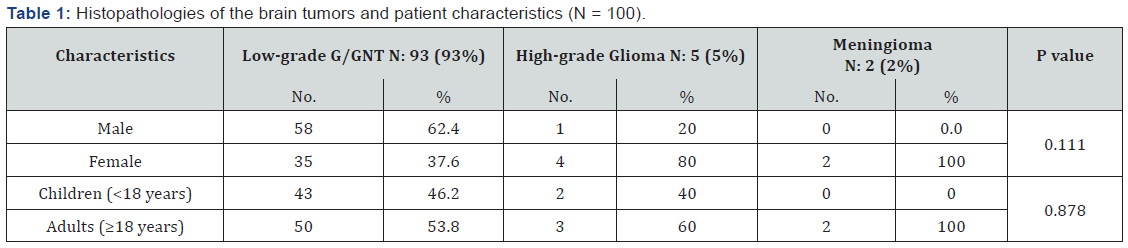
Among the 100 patients with brain tumors related epilepsy included in this study, 59 (59%) were males, and 41 (41%) were females. The incidence of brain tumor-related epilepsy (BTRE) in our center was lower among children than adults (45% versus 55%). However, the differences among sex, age, and the histopathology categories were not statistically significant (P = 0.111 and 0.878, respectively) as depicted in Table 1.

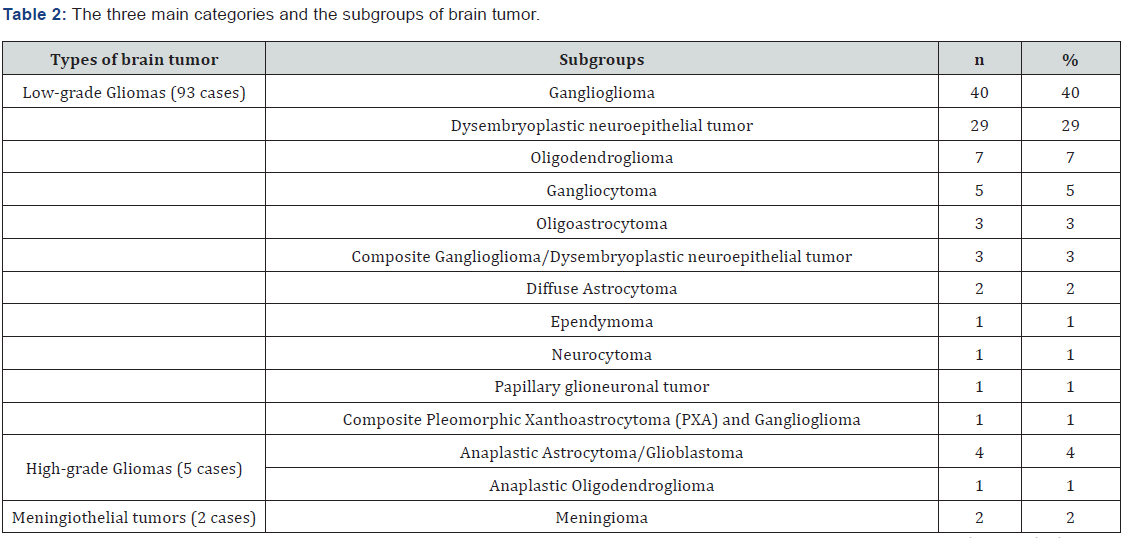
According to histopathological findings, the cases of brain tumors were grouped into three main categories (Table 2). Most of the tumors (93%) were low-grade gliomas or glioneuronal tumors (G/GNT) followed by high-grade gliomas (5%); only two meningioma cases (2%) were detected. Among the three main categories of brain tumors, low-grade G/GNT consisted of 11 entities. Under this category, 40 tumors were gangliogliomas, and 29 tumors were Dysembryoplastic neuroepithelial tumors (DNET). Among the five high-grade gliomas, three were astrocytic tumors. Interestingly, only two meningiomas were found. Table 2 details the pathological categories.

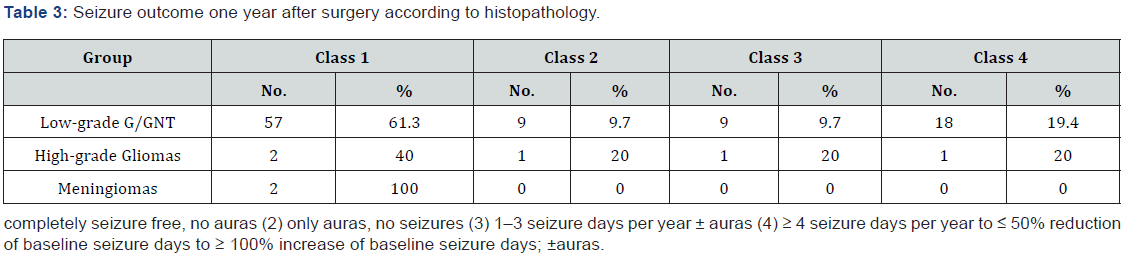
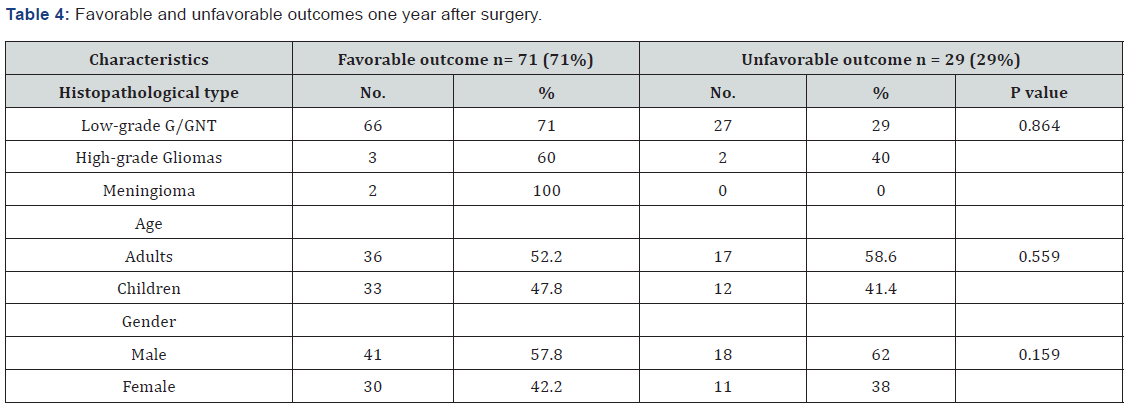
In this study, the primary postoperative outcome was evaluated using the modified ILAE classification described in the methodology section. During the first post-surgical year, most patients with low-grade G/GNT experienced favorable outcomes (classes 1 and 2, 61.3% and 9.7%, respectively) as shown in Table 3. In contrast, approximately 40% of the patients with high-grade gliomas showed favorable outcomes (ILAE class 1). Both meningioma cases (100%) showed outcomes of ILAE class 1. Among the 100 patients with brain tumors, 71 (71%) patients, including 66 patients with low-grade G/GNT, three patients with high-grade gliomas, and two patients with meningiomas, experienced favorable outcomes during the one-year post-surgical period (Table 4). Moreover, the incidence of favorable outcome was higher in adult patients than in children (52.2% versus 47.8%) and in male versus female patients (41% versus 30%). However, these differences in outcome dependent on histopathological type, age, and sex were not statistically significant (P = 0.864, 0.559, and 0.159, respectively).

Discussion

From the epilepsy registry at KFSH&RC, 100 patients who underwent surgery for tumor-related epilepsy were included in this study. Varying associations between different brain tumor types and epilepsy have been reported. Most studies show gangliogliomas to be the most common tumor type associated with epilepsy, followed by DNET, oligodendrogliomas, and astrocytomas [21-24]. These findings support our results, that is, most of our patients had low-grade G/GNT (93.0%), most of which were gangliogliomas (40%) followed by DNET (29%). Furthermore, Babini et al. reported that gangliogliomas (66.7% versus 40%) [25] were the most frequent tumors among their patients; however, their sample size was smaller (30 cases) than in our study. Contrary to our findings, Kahlenberg et al. reported that mixed oligo-astrocytomas were the most prevalent tumors followed by astrocytomas grade II and oligodendrogliomas of grade II [25]. The incidence of high-grade gliomas was lower (5%) in our study than in a study by Michelucci et al. in Italy (77.0%), a finding attributed to a significantly high prevalence of high-grade gliomas in that area [15].

Seizures have a great impact on patient and caregiver quality of life. Seizures affect all aspects of a patient’s life, such as employment, social life, driving, and entertainment. Epilepsy surgery as described in many recent studies, is considered to relieve tumor-related epilepsy and achieve favorable outcomes [15,26,27]. However, in some cases, epilepsy persist even after resecting the primary focus [25]. All of our patients underwent well-planned epilepsy surgery, which is defined as the resection of the tumor and peritumoral tissues [23]. Consequently, our patients showed varying degrees of improvement during the first post-surgical year depending on the type of brain tumor (low-grade G/GNT versus high-grade gliomas); however, the differences were not statistically significant (P = 0.864). For example, patients with low-grade tumors, which were the most common type of tumor in our study (93 cases), showed a favorable outcome during the first post-epilepsy surgery year with approximately 71% freedom from seizure (classes 1 and 2). Michelucci et al. reported findings that were similar to our study, that is, better outcomes was observed in patients with low-grade gliomas (76%) [15]. In contrast, Kahlenberg et al. showed that about half of their patients (30 out of 54; 55.6%) with brain tumor-related epilepsy showed good post-surgical outcomes (seizure-free periods > 12 months) [25]. These proportions were lower than those observed in our study (55.6% versus 71%).

In our opinion, the ILAE classification of epilepsy surgical outcomes should be simplified using only four categories rather than six to facilitate ILAE application. Hence, whenever patients have four or more seizures (outcomes 4, 5, and 6), they should be classified into one category (category 4). The currently used ILAE Commission on Neurosurgery in 2001[28] still has some elements that make the use of categories 4, 5, and 6 difficult to measure and implement in daily practice, particularly when including parameters related to quality of life. This new modified classification can help the researchers in their ongoing studies.

Furthermore, few patients in our study had high-grade gliomas (five) or meningiomas (two). These patients showed a favorable outcome during the first post-surgical year (60% and 100%, respectively). Michelucci et al. reported similar results in which 58% of their patients with high-grade glioma became seizure free after tumor removal [15].

Pediatric and adult groups showed no significant differences regarding seizure outcomes during the first post-surgical year (P = 0.559); thus, we cannot claim that surgery is more beneficial in pediatric patients. These findings were similar to those of other studies [23].

Our study has three main limitations:

1. the sample size was small and included only five patients with high-grade gliomas and two patients with meningothelial tumors (two cases); this made comparison with low-grade G/GNT insufficient although our sample size (100 cases) is comparable to that of other studies;

2. this series of tumor-related epilepsy does not represent the population with epilepsy in Saudi Arabia because not all patients with tumor-related epilepsy are eligible to be admitted to our institution, and thus, they are treated; and

3. the possibility of bias occurring during data collection in a retrospective study. Despite the above-mentioned limitations, we hope that our study provides valuable information on one of the most debatable topics in epilepsy surgery in the country and throughout the Middle East.

Conclusion

In this study, the most common tumor-related epilepsy was low-grade G/GNT. Outcomes of post epilepsy surgery of different brain tumors have been achieved with a favorable outcome in both children and adults. Thus, thorough pre-surgical evaluation of patients with brain tumor-related epilepsy in EMU is highly recommended to enhance better post-epilepsy surgical outcomes. Further prospective, multicenter studies are needed with a larger number of patients to allow the findings to be more generalizable in Saudi Arabia.

Click here: https://juniperpublishers.com/index.php 
Tuesday, November 29, 2022

Takotsubo Caused by Pulmonary Embolism - Juniper Publishers

 Juniper Online Journal of Case Studies - Juniper Publishers

Abstract

Takotsubo is a transient acute coronary myocardial infarction due to a catecholaminergic discharge accounting for 1 in 36,000 adults after intense physical or psychological stress. Most often found in women over 50 years of age. Its association with pulmonary embolism is very rare.

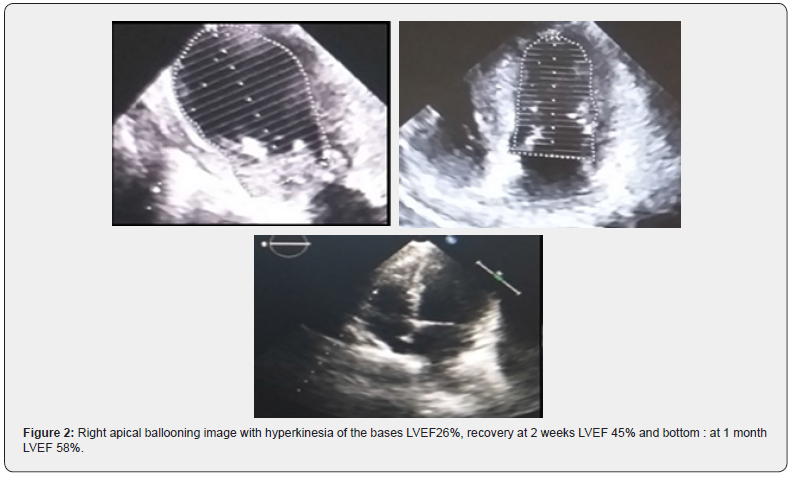
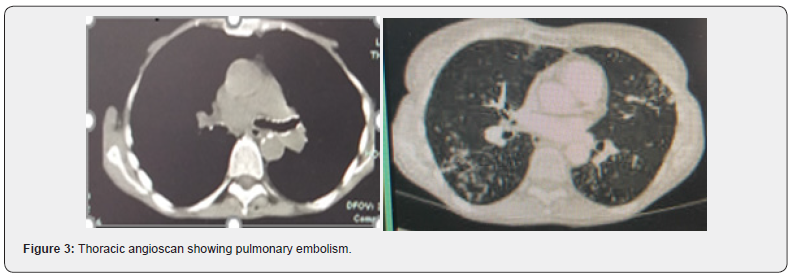
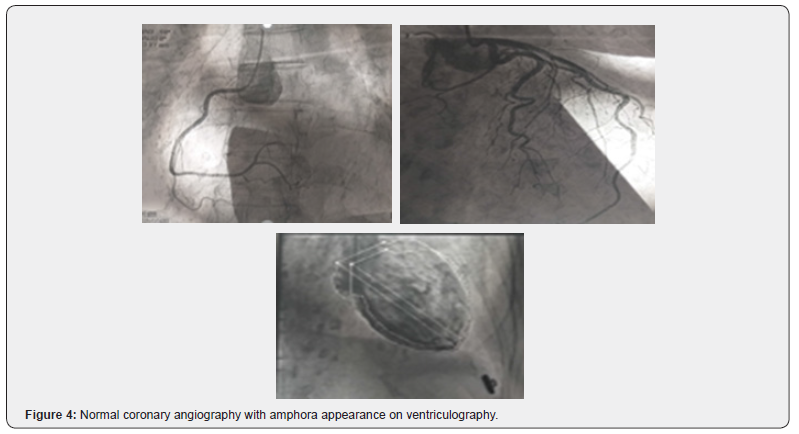
With this in mind, we report the case of a 76-year-old female patient with poorly followed chronic obstructive pulmonary disease (COPD). She presented to the emergency department with acute respiratory distress and lipothymia. Clinical examination revealed hypoxia with SaPO2 at 86% in free air, blood pressure at 120/80mmHg, tachycardia at 112 beats/min. The electrocardiogram showed S1Q3, hyper-right axial deviation, complete right bundle branch block with fragmented QRS, positive AVR with a tachycardia of 125 beats/min. A thoracic angioscan was performed, showing a bilateral pulmonary embolism of segmental and sub-segmental level. Ultrasensitive troponins were highly elevated at 1530ng/l with transthoracic echocardiography showing signs of acute pulmonary heart disease associated with apical ballooning, very akinetic with hyperkinesia of the bases, LVEF 26% suggestive of takotsubo confirmed by coronary angiography coupled with ventriculography giving an amphora-like appearance with a healthy coronary. The patient was initially admitted to the intensive care unit and then to the hospital for an intermediate-high risk pulmonary embolism complicated by takotsubo. The etiological work-up of the pulmonary embolism was normal. She received apixaban, Ramipril and bisoprolol. The evolution was marked by a recovery of the bi ventricular function with an LVEF of 58% in 1 month.

Takotsubo was secondary to respiratory failure caused by pulmonary embolism through catecholaminergic discharge resulting in a redistribution of beta receptors in the myocardium.

Keywords: Pulmonary embolism; takotsubo cardiomyopathy; Myocardial infarction

Abbreviations: COPD: Followed Chronic Obstructive Pulmonary Disease; APH: Acute Pulmonary Heart Disease; CICU: Cardiovascular Intensive Care Unit; LVEF: Left Ventricle; HPA: Hypothalamic-Pituitary-Adrenal; MI: Myocardial Infarction; CPA: Acute Pulmonary Heart; ARBs: Angiotensin 2 Receptor Blockers

Introduction

First described in a Japanese medical journal in 1990 about 5 cases, by the team of Hikaru Sato et al. [1-3] Takotsubo cardiomyopathy usually presents as transient left ventricular dysfunction with apical wall motion abnormalities associated with electrocardiographic changes similar to those of acute coronary syndrome in the absence of significant coronary disease [4,5]. It usually lasts about 15 days, without mortality or severity in the acute phase, and usually occurs in postmenopausal women, with 90% of cases in women aged 67-70 years [5], accounting for about 80% of cases in women over 50 years [4]. Takotsubo syndrome accounts for approximately 1-3% of all patients worldwide, or 1 case per 36,000 adults. In the USA, it accounts for 0.02% of hospital admissions and 1-2% of coronary syndromes in FRANCE [4,6]. The pathophysiological mechanism of takotsubo cardiomyopathy remains unclear, and several possible theories have been put forward, such as excess catecholamines, coronary artery spasm, microvascular dysfunction and metabolic disorders [3]. However, many of these theories focus on the central role of the sympathetic nervous system which, in response to an emotional, physical or combined trigger, releases an excess of catecholamines that cause the disturbance in myocardial kinetics. The mechanism by which catecholamines cause these contraction abnormalities is currently unclear [1], let alone its relationship to pulmonary embolism or being triggered by it. It is with this in mind that we report a case of pulmonary embolism causing takotsubo.

Case Report

We report the case of a 76-year-old female patient with poorly monitored COPD. She presented to the emergency department with acute respiratory distress and lipothymia. The clinical examination revealed hypoxia with SaPO2 at 86% in the open air and 97% under oxygen at 6litre/minute, blood pressure at 120/80mmHg, tachycardia at 112 beats/min. The electrocardiogram showed S1Q3, hyper-right axial deviation, complete right bundle branch block with fragmented QRS, positive AVR with a tachycardia of 125 beats/min. A thoracic angioscan was performed, showing bilateral segmental and sub-segmental pulmonary embolism. Ultrasensitive troponins were highly elevated at 1530ng/l with transthoracic echocardiography showing signs of acute pulmonary heart disease (APH) associated with apical ballooning, very akinetic with hyperkinesia of the bases, LVEF 26% suggestive of takotsubo confirmed by coronary angiography coupled with ventriculography giving an amphora-like appearance with a healthy coronary. The patient was initially admitted to the Cardiovascular Intensive Care Unit (CICU) and then to the hospital for an intermediate-high risk pulmonary embolism complicated by takotsubo. The etiological work-up of the pulmonary embolism was normal. She initially received oxygen therapy for 72 days, apixaban (Eliquis) 10mg x2/dr for 7 days then 5mg x2/dr for 6 months. Ramipril 5mg/dr, bisoprolol 2.5mg/dr. The evolution was marked by a recovery of the biventricular function at 1 month of the treatment with a LVEF at 45% in 2 weeks then at 58% in 1 month.

Discussion

Takotsubo cardiomyopathy is a transient stress cardiomyopathy, the symptomatology of which is highly suggestive of acute myocardial infarction [2]. It usually occurs in postmenopausal women and accounts for about 90% of women with a mean age of 67-70 years. A woman over 55 years of age is 5 times more likely to develop takotsubo than a younger woman, and 10 times more likely than a man [1,2]. Several factors are incriminated in the occurrence of takotsubo. Among them we have :

a) Contributing factors:

i. Falling blood levels of estradiol at the menopause (estradiol seems to protect the microcirculation from the vasoconstrictive effect of adrenaline);

ii. Genetic predisposition, supported by the existence of family cases;

iii. A history of psychiatric illness observed in 42% of cases (e.g. depression in 20% of cases, anxiety) or neurological illness.

b) Triggering factors:

i. Physical stress (stroke or TIA, subarachnoid haemorrhage, acute respiratory failure, accident, strenuous sports activity, cancer chemotherapy, even coronary disorders).

ii. Negative psychological stress (bereavement, divorce, anger, anxiety, financial or professional problems, floods, earthquakes, etc.), but also positive (happy surprises) [2].

Studies that have investigated the pathophysiology of Takotsubo syndrome highlight the central role of strong sympathetic stimulation and parasympathetic depression [2]. Indeed, there are two initial elements of physiology to consider. The first is the cognitive centres of the brain and the hypothalamic-pituitary-adrenal (HPA) axis, and the amount of epinephrine and norepinephrine released in response to a given stress (i.e. the "gain" of the HPA axis). The second is the response of the cardiovascular system (including the myocardium, coronary arteries and peripheral vasculature) and the sympathetic nervous system to sudden sympathetic activation and the surge in circulating catecholamines. Serum catecholamine levels at presentation are significantly higher than resting levels in the same patient or in comparable patients with acute heart failure due to acute myocardial infarction (MI), suggesting a potential for excessive HPA gain and epinephrine release. However, there is currently no proven pathophysiological mechanism to clearly explain Takotsubo syndrome. There may be a synergistic combination of more than one factor, and mechanistic studies have produced conflicting results [7]. The main manifestation of takotsubo is an acute coronary syndrome characterised by angina, repolarisation disorders on the electrocardiogram with, in particular, the pathognomonic sign of an AVR lead with positive T waves, combined with the absence of negative T waves in the V1 lead [3,4]. Elevated cardiac biomarkers and kinetic disturbances are associated with severe left ventricular dysfunction such as transient akinesia or dyskinesia of the apical segments, resulting in ballooning and base preservation [1,2,8,9]. Coronary angiography usually finds healthy coronary arteries in 70-90% of cases, with ventriculography usually showing a characteristic amphora pattern and left ventricular wall motion abnormalities [2]. Early cardiac MRI shows global kinetic disturbances in the apical and medial segments with edematous T2 hypersignal of the apex and middle part of the left ventricle without late enhancement or perfusion abnormalities suggestive of myocarditis or infarction [10].

Pulmonary embolism is a serious and fatal condition, representing the third leading cause of death worldwide after cardiovascular disease and cancer, according to the French Federation of Cardiology in 2021 [11]. Its association with takotsubo is unclear, but increased catecholamine levels during severe pain or respiratory distress associated with pulmonary perfusion defects related to pulmonary embolism appear to lead to the development of left ventricular wall motion abnormalities [12].

Our patient is a 76 year old woman, menopausal, presenting with physical stress such as respiratory distress which constitute three factors favouring takotsubo. The diagnosis in our case was oriented by an electrocardiogram which showed a positive AVR lead although we noted an S1Q3 aspect, a hyper-right axial deviation with a complete right bundle branch block associated with repolarization disorders with fragmented QRS in favour of a pulmonary embolism. Biological markers were strongly positive and rarely encountered in pulmonary embolism. On transthoracic echocardiography, apart from the signs of CPA, we noted severe dysfunction of the left ventricle involving the apical and medial segments with apical ballooning and conservation of the bases, with diagnostic confirmation on coronary angiography coupled with ventriculography as reported in the literature, which objectified healthy coronaries with an amphoric aspect of the left ventricle. Pulmonary embolism in us being at high risk, seems to be at the origin of takotsubo, given the extent of the pulmonary artery involvement and the severity, causing respiratory failure that may be at the origin of a catecholaminergic storm. This causes a redistribution of myocardial beta receptors with a predominance of Gs forms (negative inotropes) at the apex, while G1 type beta receptors (positive inotropes) remain dense at the base. This mechanism is responsible for a dysfunction of the left ventricle with an aspect of apical ballooning in systole causing a decrease in coronary perfusion by a phenomenon of microvascular spasm, responsible for direct lesions of the myocytes as well as a metabolic disorder in the myocardium [13].

The treatment of takotsubo is mainly based on the use of ACE inhibitors and angiotensin 2 receptor blockers (ARBs) as an improvement in one-year survival has been observed with a decrease in recurrence. Whereas bêta-blockers, proposed in the therapeutic strategy, do not seem to be effective in the long term with a recurrence rate of 30%. Antiplatelet agents and anticoagulants are used on a case-by-case basis in combination with treatment of the cause [1,5]. In our case, patient was treated with Ramipril, bisoprolol for takotsubo and apixaban for pulmonary embolism.

Conclusion

Pulmonary embolism associated with takotsubo cardiomyopathy is rarely described to date given its mechanism of occurrence and the severity of the two pathologies that can cause sudden death. This second entity is rarely encountered and sometimes unrecognised, and may have a poor immediate vital prognosis with rapid recovery.

Click here: https://juniperpublishers.com/index.php 

Monday, November 28, 2022

Behind A White-Collar Crime - Juniper Publishers

 Forensic Sciences & Criminal Investigation - Juniper Publishers

Abstract

Money, a masterpiece of paper which is ruling the world economy. This masterpiece also plays a central and fundamental role in “White Collar Crime” [1]. white collar crimes are committed by the people of high social standing [2]. Money is the main reason which makes people who are considered as flawless in many other ways to commit a crime (or) an illegal act against law [1]. Actually, there are many other reasons rather than a coin. Many sociologists worked on this White-Collar Crimes and defined this in their very own ways. White Collar Crimes are corporate crimes which are referred as “CRIME IN THE SUITS” [1]. These are the crimes committed by a person of respectability and high social status. South Africa stands highest in the white-collar crimes according to the reports of 2018 [1]. After going through brief research by reading various articles published about White-Collar crimes, their statistics, various psychological and objective reasons behind them, this is a review article about the reasons “Behind A White-Collar Crime” [3].

Keywords: White Collar Crime; Money; Other Reasons; Crime in The Suits; High Social Standing People; Corporate Crimes; Criminological Vernacular; Bankruptcy Fraud; Anxiety; Hunger of Wealth

Introduction

White Collar Crime is a crime done by people who are well educated and known. Yes, you have read that right. It’s a crime which is committed by people of high social status. If we start from the history of white-collar crime, there will be a lot to be discussed [4]. Edwin H. Sutherland in 1949, published his well renowned classic book named “WHITE COLLAR CRIME” More than fifty-five years after the introduction of the expression “WHITE COLLAR CRIME” into criminological vernacular, it became so difficult for many government officials to define this particular term [1]. This term was defined by many sociologists and government officials in their very own way. Some examples of the types of crimes generally categorized as “WHITE COLLAR CRIMES” are consumer fraud, illegal competition, price fixing, deceptive practices, embezzlement, check and credit card fraud, tax evasion, bankruptcy fraud, corporate bribery, kickbacks, payoffs, bait, and switch frauds, computer crime, pilferage, insurance fraud, securities fraud, political corruption, and fraud against the government [2]. A WHITE-COLLAR CRIME costs both financial and social costs [2]. Many people described it has non- violent results, but this crime has indirect violent results in the life of a victim [2,1]. Many people who have been affected by these white-collar crimes have ended up losing all their life savings, which has led to ruining their families and ultimately pushing them to commit suicide [4].

Even though white-collar crimes are indeed less violent, they are still very dangerous and threatening the well-being of many people and companies within a society [1]. As we jump into the reasons BEHIND A WHITE-COLLAR CRIME there various. Money plays a vital role in this crime but there are many other reasons like control in society, fear and anxiety of decreasing from the social status, lack of social consciousness and integrity, weak and ineffective internal controls of organizations and departments, greed and hunger of wealth, monetary and financial gains and ineffective corporate culture in economy [5,1]. A considerable percentage of white-collar crimes offenders are gainfully employed middle Caucasian men who usually commit their first white collar offense sometime between their late thirties through their mid-forties and appear to have middle class backgrounds. Most have higher education, are married, and have moderate to strong ties community, family, and religious organizations [6,3]. “WHITE COLLAR CRIME” is a word that we read daily in various sections of our newspapers, but we don’t even notice that these white-collar crimes are the reasons for the economic changes in the whole world. Some people don’t even know that a single white collar crime in large scale can impact the life of every individual citizen in various ways. These are the crimes mostly done by the people who rule us and who work for us in the name of the government. But we don’t even care about future, all of us want our short-term goals to be done. The increase in white collar crimes can totally collapse our whole economic scale which we have been building from years and years.

Material and Methods

This research paper is based on various articles from internet and newspapers. Many lines were extracted from the effective research papers written by the authors like Susan P. Shapiro, Edwin Sutherland, Robin Singh, Rgatz, Laurie, Cleff etc. There are numerous articles based on the reasons behind a white-collar crime and the psychological reasons behind a white-collar crime. There is an article where one can extract or acknowledge a lot of information about white collar crimes, the name of the article is “the conceptualization and research of white-collar crime” which is written by Susan P. Shapiro. this article consists mostly about the concept and history of white-collar crimes. This is the basic stage i had followed because here one can learn the roots of this white-collar crime and then eventually get into deeper. Mainly i preferred old research journal or article so that i can present the information in a most realistic way and interesting too. The old journals or articles are quite different from the latest ones the main difference is knowledge. We get to learn more information from the old journals or books written by people like Edwin Sutherland. By reading various articles, journals and books related to the preferred subject we will be able to know some basic subject vernaculars. Then we can dig deeper into the subject by reading tons and tons information provided by the technology now a days. This research article is written by following the same method.

Firstly, all you have to do is to study as many articles related to the selected topic, so that we can get a great idea to start our article. And the most important thing is to note the important things while reading these articles. So that we can frame sentences easily with those important lines and knowledge collected. Collection of knowledge is very important to write something, whatever it is. Articles are the blend of several important and great innovations of things that are collected from other sources like journals, other articles, and books. At the starting of this [7] this article, i questioned myself about these white-collar crimes, i.e., what drives people who are often seen as exemplary in many other ways to commit criminal acts? this lead me to the reasons behind a white collar crime. Then i started writing this article. When it comes to my case i collected as much as matter i can, from all the sources. I first noted all the important lines from the very article i read about white collar crime, and then written the introduction with those important points which i have noted earlier while reading articles and journals related to white collar crimes, but i also added my own lines to the article and made it a bit more interesting and different from others [1].

Results

Through the whole research we will get to know about the reasons behind a white-collar crime. These reasons include psychological, social and all other reasons behind this crime [4]. The reasons are such as lack of accountability, opportunity to commit, peer support, greed and loopholes, Money plays a vital role in this crime but there are many other reasons like control in society, fear and anxiety of decreasing from the social status [5], lack of social consciousness and integrity, weak and ineffective internal controls of organizations and departments, greed and hunger of wealth, monetary and financial gains and ineffective corporate culture in economy [2,3]. Money plays a vital role in this crime but there are many other reasons like control in society, fear and anxiety of decreasing from the social status, lack of social consciousness and integrity, weak and ineffective internal controls of organizations and departments, greed and hunger of wealth, monetary and financial gains and ineffective corporate culture in economy [5,1].

Discussion

The purpose of the study is to know the reasons behind the white-collar crime, most of the people know that the reason behind the white-collar crimes is money. But this article describes about many other reasons which lead to a white-collar crime. It has found that lack of social consciousness can also impact a person to commit crimes. And there are many reasons behind a white-collar crime, as most people quote that it’s just money but not there are many things which influence a person to commit a crime. This study has a significant reason that is it focuses mainly on the reasons behind a white-collar crime. As there are many crimes but white-collar crimes are something most of the people are not aware of white-collar crime. But this study makes you understand about the white-collar crime and its reasons and impacts too in some lines. Results included in this article reveal as many reasons as possible behind this crime but there can be any other reasons or situations that lead to the actual crime. Any situation which cannot be handled by a man leads him to the edge of breaking the law, whatever the crime is he will not be able to control it. There can be many other reasons which can be a reason to a crime but when it comes to white collar crime, even though it is done by high professionals, the greed stands first in the reasons. And the money comes the next when it comes to my opinion. When you read some of the white-collar crimes, you will realize that even though a man reaches highest position in his life or career, he is not satisfied. He always aims for another level after that. And sometimes when that thoughts over crosses it leads him to greed of becoming the only highest. But he will not be able to decide that it leads to his destruction. A greedy man who seeks more than worth, he dies disvalue. And the crimes committed by all those greedy men mostly are called white collar crime [8-14].

Conclusion

There can be no doubt that there are many other reasons behind a white-collar crime, than money even though it plays an important role in white collar crime. there are many other reasons like control in society, fear and anxiety of decreasing from the social status, lack of social consciousness and integrity, weak and ineffective internal controls of organizations and departments, greed and hunger of wealth, monetary and financial gains and ineffective corporate culture in economy [5,1].

Click here: https://juniperpublishers.com/index.php 

Use of Aqueous Extract and Essential Oil of Citrus Aurantifolia Leaves in the Protection of Vegetables- Juniper Publishers

  Nutrition and Food Science- Juniper Publishers Summary Our study is devoted to the valorization of the essential oil and the aqueous extra...