Friday, November 20, 2020

Melatonin Inhibitory Effects on Forming Brain Tumor - Juniper Publishers

 Endocrinology and Thyroid Research - Juniper Publishers


Abstract

Melatonin is a neurohormone secreted by the pineal and extra pineal organs with oncostatic and tumor inhibitory effects. There is considerable evidence that melatonin may be of use in the prevention and treatment of cancer. This manuscript will review some of the underlying molecular mechanisms by melatonin’s antitumor properties with emphasizing on the formation of brain tumors.

Keywords: Melatonin; Brain tumor; Glioblastoma stem-like cell

Introduction

Central nervous system tumors contain many separate types of tumors in the brain parenchyma, meninges, and spinal cord. They can be divided into primary or secondary/metastatic tumors, benign or malignant tumors, based on the WHO classification with varying prevalence and assigned into four grades, from a very benign tumor to highly malignant tumors (Grade I to IV). Gliomas (intra-axial tumors inside brain/spinal cord parenchyma) are the most common malignant types with 75% prevalence than astrocytomas, oligodendrogliomas, mixed oligoastrocytomas, medulloblastomas (MBs), midline diffuse astrocytoma, diffuse intrinsic pontine gliomas (DIPG) and hemangioblastomas (HMBs) [1,2]

Melatonin is L-tryptophan derivatives neurohormones secreted predominantly in the brain (cerebellum and cerebral cortex, raphe nuclei, striate body), spinal cord, retina, lens, cochlea, skin, gastrointestinal tracts such as the stomach, small and intestine, lymphocytes, bones, murine bone marrow, platelets, testes, and ovaries. In the neuro-endocrinal system, melatonin has a crucial role in energy metabolism and its secretion is stimulated by darkness and decreased by light, serum levels peaking between 2 a.m. and 5 a.m. Also, it has some other functions such as synthesis, distribution and divers’ action of different receptors in the specific area of the brain, cellular signaling, and messenger system. Rise melatonin levels in the blood during the night could send signals to the body’s cells and organs into appropriate homeostatic metabolic rhythms. Therefore, melatonin secretion disruption can lead to the progression of target organs cancer [3-5]. This mini review highlights the underlying mechanism by melatonin’s antitumor properties with emphasizing on the formation of brain tumor.

Melatonin and Tumor Growth Inhibition

Melatonin acts as a hormone and based on accumulating data in the last decade also as a cell protector, involved in immunomodulation, antioxidative processes, and hematopoiesis [5]. Several experimental studies have highlighted that melatonin has neuroprotective benefits when given as either a prophylactic or curative treatment in several animal models of brain damage [6]. In 2019, Maitra and et al revealed that melatonin deficiency not only can have a debilitating effect on normal physiology, also can create some abnormal conditions such as malignancy in the brain and finally can lead to glioma. Hence, it can account for high expectations to be included as an adjuvant in cancer treatments [3,7,8].

In 2013, QU and et al with the hypothesis that melatonin may have an inhibiting role in the apoptotic pathway and beneficial efficacy in the prevention of cancer, have investigated the different concentrations of melatonin on C6 glioma cell. They opt them because these cell lines are susceptible to expressing MT1 and MT2 receptors of melatonin, therefore they can be modulated by melatonin at a pharmacological concentration to the treatment of glioma. They also transcriptional regulation of three involved genes (Nestin, Bmi-1, and Sox2) in developing the nervous system as differentiation and proliferation markers in neural cells. In this study melatonin with 3 mM concentration increase the mRNA levels of Nestin, Bmi-1, and Sox2 in a similar pattern, with the highest mRNA levels. At 5 mM concentrations of melatonin, the mRNA levels of Nestin, Bmi-1, and Sox2 were reduced and were correlated with changes ocurred in survival assays [7]. The new therapeutic strategies of brain tumors focusing on glioblastoma with a subpopulation of stem-like cells responsible for glioma proliferation, therapeutic resistance, and tumor recurrence [4,9].

Notably, glioblastoma stem-like cells (GSCs), as protagonists in glioma growth scenarios, can increase tumor-initiating capacity. The results of a research conducted by Chen and et al in 2016, on the effects of melatonin in GSC biology, represent the high capability of melatonin in suppressing self-renewal properties of GSCs. A possible explanation of the anti-oncogenic role of melatonin might be that, it can mediate silencing of transcription factor STAT3 signaling through direct EZH2–STAT3 interaction and contributes to the transcriptional inactivation of H3K27me3 through EZH2 S21 dephosphorylation in GSCs [9]. GSCs and confirmed their claim through Neurosphere-forming assay. The storyline related by this scenario was the reduction in the expression levels of EZH2 and following that they found more strikingly NOTCH1 as a downstream target of EZH2 and core molecule in transfer EZH2-mediated signals which coincidentally has been reduced by melatonin in the GSCs [10,11].

Conclusion

This manuscript investigated some instances of the beneficial outcomes in reducing malignant brain tumor formation by melatonin. Moreover, there is a lack of studies focusing on precise molecular mechanisms by melatonin in different types of brain tumors. Subsequently, more in-depth studies are needed to find therapeutic and preventive strategies through the use of melatonin for all types of brain tumors. Because not only melatonin has extraordinary properties in human physiology, it also is chemically synthesized and available for further investigations.

Wednesday, November 18, 2020

Effects of the Origin on the Composition of Biohydrocarbons Produced by Decarboxylation of Pongamia Pinnata L. Oils - Juniper Publishers

 Juniper Online Journal Material Science - Juniper Publishers  


Abstract

The objective of this work is to investigate the influence of the origin of Pongamia pinnata L. seed oil on the structure and composition of triglyceride or fatty acids and liquid bio-hydrocarbons. In this study, Pongamia pinnata L. seed oil was collected from three different locations in Indonesia, namely Kupang (West Timor), Manado (North Sulawesi) and Bogor (West Java). Through the metathesis method, the oils were converted to basic soaps with a mixture of magnesium and zinc metal compounds. Furthermore, the basic soaps were decarboxylated to produce liquid biohydrocarbon fuel. The oil content, fatty acid composition and liquid biohydrocarbon fraction had been analyzed through a series of experiments. It was found that the oil of Pongamia pinnata L. seed taken from different areas resulted in a variety of fatty acids’ composition. The composition of palmitic, stearic, oleic and linoleic fatty acids were different for each location; the seed oil derived from Kupang were 17.02, 8.40, 30.05 and 17.40% mole, the Bogor’s oil were 11.87, 4.66, 23.41 and 11.40% mole, and Manado’s oil were 15.15, 5.11, 31.93 and 11.22% mole, respectively.

Keywords: Pongamia pinnata seed oil; Liquid biohydrocarbons; Decarboxylation; Basic soap

Introduction

Nowadays, many researchers are interested to find renewable liquid drop-in fuels in view of its enormous economic, social and environmental benefits [1]. That is because fossil fuels are limited, and will be depleted in the near future [2], while its demand continues to increase [3]. For these reasons, many researchers are interested to investigate the various sources of vegetable oil to be processed into renewable liquid drop-in fuels such as green diesel, green jet fuel and green gasoline. Vegetable oils which are specifically for the manufacture of renewable liquid fuels are better derived from non-edible sources, which are widespread in Indonesia. Pongamia pinnata L. is known as one of the non-edible oil producing plants whose growth is widespread in various regions in Indonesia.

Pongamia pinnata L. is an oil seed tree species [4], which produces seeds rich in oil and is easily convertible into diesel fuel (e.g. bio-diesel) meeting international standards [5]. The trees is an important nonedible minor oilseed tree that grows in the semiarid regions [6]. Mature seeds of Pongamia pinnata L. contains about 28-40% oils [7] which can be converted to fuel for conventional diesel engines. At present, the oil of Pongamia pinnata L. seed is being explored mainly for its use as bio-diesel. The potential of Pongamia pinnata L. seed oil as a source of fuel for the biodiesel industry is well recognized [8]. However, the use of biodiesel as a fuel for conventional diesel engines is limited up to 20% only (B20) because it is oxygenate fuel.

To increase the use value of oil of Pongamia pinnata L. seed, it is best to convert the oil to produce drop-in liquid fuels (e.g. green diesel). The drop-in fuel can be used higher than 20 to 100% to be blended in the fossil fuel by this method. One method to produce the drop-in fuel is through basic soaps thermal decarboxylation. In this method, the oil is converted to produce the basic soaps, then the soaps are decarboxylated to produce liquid bio-hydrocarbons (drop-in fuel). In our previous research, it has been found that magnesium-sinc metal compounds mixture is excellent to prepare decarboxylation process feed soaps derived from palm oils [9]. In the case of the production of diesel-type liquid fuels, vegetable oil (e.g. Pongamia pinnata L. is preferable because it contains more palmitic (16:0), staerate (18:0) and oleic (18:1) acids. However, there are technical and informative challenges about data of potential and production of Pongamia pinnata L. seed oil in Indonesia. The technical challenges has mentioned above involved the identification and development of Pongamia pinnata L. plant which may resulted in more seed oil with a composition of fatty acids suitable for the production of certain renewable liquid fuels.

The content of vegetable oil (in seed) such as triglyceride structure and fatty acid composition are influenced by the area of growth (especially soil type and climatic factor) or the origin of the parent plant [10]. Meanwhile, it is well known that fatty acid composition of the feedstock (seed oil) can directly influence the type and quality of produced fuel [11]. Asomaning et al. [12] has reported that product composition and distribution of liquid fuel fraction of fat and oil (include its derivative) decarboxylation depends on the source of the fat or oil. Some data that has been reported above, suggesting that there are differences in oil content and possibly the fatty acid content of Pongamia pinnata L seeds which grow in one area with other regions as well. In particular, the differences in fatty acid content have implications for the types of renewable liquid fuels produced for transportation. However, no research data has been found on the identification and evaluation of oil and the composition of fatty acids contained in Pongamia pinnata L. seeds in Indonesia, and its development to produce renewable liquid fuels, especially drop-in types. The objectives of this work are analyzed oil content, the structure and composition of triglycerides or fatty acids and its liquid bio-hydrocarbons (drop-in fuels) of Pongamia pinnata L. seed from different areas in Indonesia (Kupang, Manado and Bogor). This research is expected to result specific data about Pongamia pinnata L. seed oil in Indonesia and its implications for making of renewable liquid fuels. Thus, these data become the sources to determine the type of fuel that is suitable for the profile of the fatty acid composition in the oil.

Materials and Methods

Seeds of pongamia pinnata L. was collected from several locations in Indonesia, namely Manado, Bogor and Kupang. Soxhlet apparatus was used to extract the oils from pongamia pinnata seeds. Petroleum ether was used as solvent to extraction. The following equation were used to calculate the yield:

Yield (wt%) = p/s x 100

where p = mass of pongamia pinnata oil (g); s = mass of kernel (sample) before extraction.

Pongamia pinnata seed oil methyl esters (PPME) were prepared following a standard procedure of two-step transesterification by methanol using catalyst sodium hydroxide [13]. Basic soap derived from Pongamia pinnata oil was pepared with Double Decomposition method. Decarboxylation of the basic soap was carried out at 370oC and atmospheric pressure for six hours in a semi batch reactor to produce biohydrocarbons.

GC-MS analysis of PPME and liquid hydrocarbons product was performed using a Perkin–Elmer GC Clarus 500 system comprising an AOC-20i auto-sampler and a Gas Chromatograph interfaced to a Mass Spectrometer (GC-MS) equipped with a Elite- 5MS (5% diphenyl/95% dimethyl poly siloxane) fused a capillary column (30×0.25μm ID × 0.25μm df). For GC-MS detection, an electron ionization system was operated in electron impact mode with an ionization energy of 70eV. Helium gas (99.999%) was used as a carrier gas at a constant flow rate of 1ml/min, and an injection volume of 2μl was employed (a split ratio of 10:1). The injector temperature was maintained at 250°C, the ion-source temperature was 200°C, the oven temperature was programmed from 110°C (isothermal for 2 min), with an increase of 10°C/min to 200°C, then 5°C/min to 280°C, ending with a 9 min isothermal at 280°C. Mass spectra were taken at 70eV; a scan interval of 0.5s and fragments from 45 to 450 Days. The solvent delay was 0 to 2min, and the total GC/MS running time was 36min. The relative percentage amount of each component was calculated by comparing its average peak area to the total areas

Results and Discussion

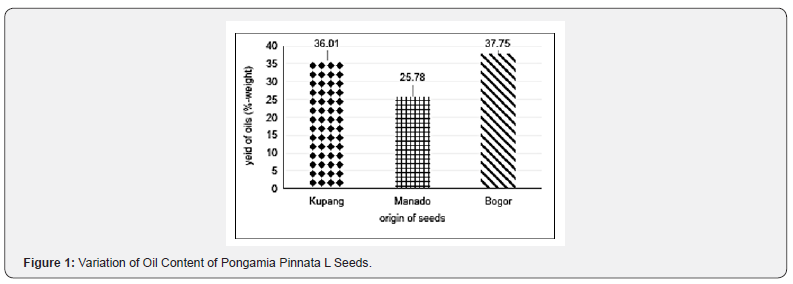
Based on experimental results, it was found that the oil content of Pongamia pinnata L. seeds varies between the all three origin areas. The oil content of seed for each area was shown in Figure 1. It was found that, approximately 37.75% oil was produced by seeds originated from Bogor; it was more than Kupang (36.01%) and Manado (25.78%). These variations reflect the difference in the environmental factors that influence seed oil content.

This difference in the oil content of the seeds is possibly appear as a consequence of differences in soil types and climatic factors [10] in all three areas of growth. According to Jain [14] the fatty acid composition as well as oil content in most oil crops are influenced by a combination of genetic and environmental factors. In addition, variations in oil content may be due to differences in seed maturity at harvest time. With respect to the influence of maturity level, Slack and Brows [15] reports that oil content in developing seeds varies with maturity. However, in this study there were no scientific data and in-depth investigations carried out previously to determine the level of maturity of the seeds from the time of flowering. It is due to the fact that, currently there have been no regular cultivation and observations on Pongamia pinnata L. plants. Therefore, the seeds were collected from wildly growing plants.

The fatty acid composition in oils of Pongamia pinnata L. seed showed different profile (Figure 2) depending on their own origin. These differences most likely emerge due to differences in seed growth rate [11] generated by Pongamia pinnata L. plants in their own origin. Environmental factors may modify the fatty acid pattern of plant. Thus, the seed oils of plants grown in cool climates tend to be more unsaturated than those grown in warm climates [16]. In general, seed oil from all three areas contain chiefly fatty acids having 16 to 24 carbon atoms per molecule. Experimental result shows that total unsaturated fatty acids (18:1 and 18:2) present in oil of Pongamia pinnata L. seed originated from Kupang was 47,45%, which was higher than Manado (44,44%) and Bogor (34,87%). Similarly, saturated fatty acids, mainly stearic (18:0) and palmitic (16:0) present in Kupang (25.42%) was also higher than Manado (20.26 %) and Bogor (16.53 %). In the case of C18 fatty acid composition, the oil of Pongamia pinnata L. seed originated from Kupang contained higher amount of unsaturated fatty acid compared to saturated fatty acids. However, the oil of seed originated from Manado contained higher amount of mono unsaturated fatty acid (18:1).

The presence of differences in saturated and unsaturated fatty acid composition in oil of pongamia pinnata L. seeds likely led to variations in the quality of the yielded bio-hydrocarbon (dropin) fuels. In terms of diesel fuel production, the most important essential fatty acids are palmitic (16:0), stearic (18:0) and oleic (18:1). Oleic acid is regarded as an important source of diesel fuel production because it produces fuel with low cloud point. On the other hand, stearic and palmitic acids are known to increase the cloud point because these molecules have low mobility. Furthermore, polyunsaturated fatty acids i.e. linoleic (18:2) and linolenic (18:3) are less expected in fuel because they can lead to oxidation reactions [8].

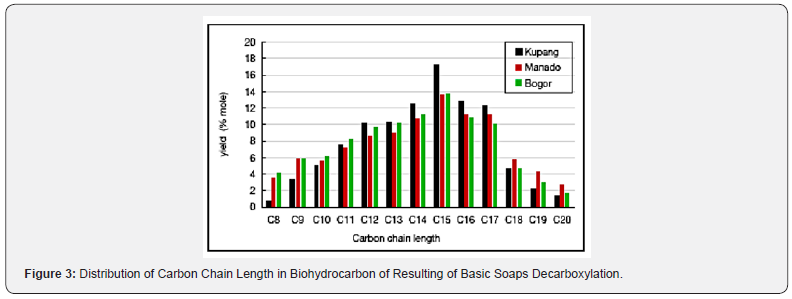
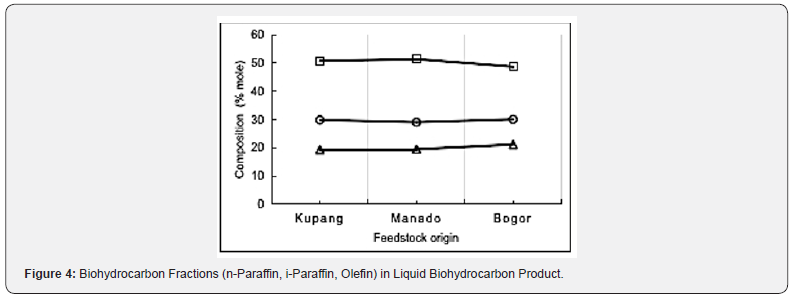
The fatty acid profiles determine the quality and carbon chain length distribution of the resultant liquid bio-hydrocarbon. Decarboxylation of basic soaps derived from Pongamia pinnata L. seed oil of all three areas, was carried out at 370°C for 5 hours in a semi-batch reactor. The reaction product is a mixture of paraffin (normal- and iso-paraffin) and olefins fractions in the ranges of carbon chain length C8 to C20. The carbon chain length distribution of liquid bio-hydrocarbons is shown in Figure 3. Specifically for bio-hydrocarbon molecule with C12-C17 chain length, it was produced more by decarboxylation of basic soaps from Pongamia pinnata L. seed oil originated from Kupang than Bogor and Manado, respectively. The most important carbon chain length for green diesel fuel are C14 to C18. Therefore, the liquid biohydrocarbon (green diesel) produced by decarboxylation of basic soaps derived from Pongamia pinnata L. seed oil originated from Kupang is better than Bogor and Manado. Liquid bio-hydrocarbon product based on the oil extracted of Pongamia pinnata L. seed originated from Manado seemed to have slightly higher isoparaffin (51.45%) than Kupang (50.78%) and Bogor (48.71%). Grouping of liquid bio-hydrocarbon products according to the hydrocarbon fraction is shown in Figure 4.

Specifically, total paraffin (n- and i-paraffin) were found slightly higher in liquid bio-hydrocarbon product produced by decarboxylation of basic soaps based on Pongamia pinnata L. seed oils originated from Kupang (80.65%) than Manado (80.51%) and Bogor (78.79%). High n-paraffin content can increase cetane numbers, whereas, high iso-paraffins can produce good cold flow properties [17]. Olefin fraction was the highest in liquid bio-hydrocarbon based on the oil extracted of seed originated from Bogor, with the highest value was 21.18, which was higher % than Kupang (19.34%) and Manado (19.49%). The liquid biohydrocarbon based on seed oil of all three areas exhibited the least variation in normal paraffin fraction. The saturated fatty acid was found to associate positively with paraffin fraction.

Therefore, to produce liquid bio-hydrocarbons with high paraffin fraction, the oils should have high content of saturated fatty acids as well. The oil with highly unsaturated fatty acid content tends to produce short chain bio-hydrocarbons (<10). This is likely due to the presence of the breaking of the carbon chains of the liquid bio-hydrocarbon molecule on the carbon bonds around the double bond, when decarboxylation takes place on the basic soaps.

Conclusion

The oil content appeared to be higher in Pongamia pinnata L. seeds originated from Bogor (37.75% weight), although it was only slightly higher than Kupang (36.01% weight). Fatty acid composition of the oils of all three Pongamia pinnata seeds appeared to be dominated by palmitic, oleic and linoleic acids. Higher content of mono unsaturated fatty acid was resulted by oil of Pongamia pinnata L. seed from Manado (31.93% mole).

Decarboxylation of basic soaps derived from Pongamia pinnata L. seed oils originated from Bogor resulted in slightly higher olefin (21.18% mole) fractions. The oil of Pongamia pinnata L. seed originated from Kupang contained more palmitic (17.02% mole) and stearic (8.40% mole) fatty acids, therefore, it is better to be used as feedstock to produce green diesel fuel. Pentadecane composition (n-C15) that was most generated in liquid biohydrocarbon by decarboxylation of basic soaps based on seed oil was originated from Kupang area. Acording to all above results, the origin of Pongamia pinnata L. seed strongly influences the oil content, fatty acid composition, carbons chain length and biohydrocarbon fraction in drop-in fuel.

Tuesday, November 17, 2020

Does Foliar Application of Macro and Micronutrients Have Any Impact on Roses Production? A Review - Juniper Publishers

 Annals of Reviews and Research - Juniper Publishers

Abstract

In all over the world rose plants are most widely cultivated and supreme plants among all ornamental plants. However, production and quality are poor due to insufficient knowledge, non-technical skills and the most important inadequate dose and application of method of fertilizers application. The quality and yield of roses directly depends on the balanced and proper application of macro and micronutrients. Most of the traditional framers prefers to apply nutrients in soil but it causes many losses. Therefore, application of fertilizer through an efficient method allows the plant to absorb the nutrients in shorter time. Foliar fertilization is the most appropriate method of providing balanced plant nutrition in horticulture. It provides the immediate translocation of nutrients to various plant organs via leaf tissues under various nutrient deficiencies. The present review focuses on the role of foliar application of macro and micronutrients on yield and quality of roses and demonstrates that foliar application of macro and micronutrients have great impact on roses growth, yield and quality.

Keywords: Roses; Poor Production; Foliar Application; Macro and Micronutrients

Introduction

Rose plants are the most imperative attractive plants in all our world [1]. Rose (Rosa spp.) belongs to the Rosaceae family. It is native to the northern hemisphere and is mainly grown in temperate zones. Rose is one of the most important cut flowers [2]. They are cultivated for aesthetics purpose, but numerous species of roses have correspondingly important pharmaceutical appositeness. There are many cultivars and species available that are cultivated in various environment across the world [3]. However, production and quality are poor due to insufficient knowledge, non-technical skills and the most important inadequate dose and application of method of fertilizers application. Most of the soils have high pH value (alkaline), which hinders the absorption of micronutrients [4]. When nutrient shortage cannot be corrected through soil application then foliar nutrition is an alternate method to correct those problems [5-7]. Due to high pH value of sandy desert soil, application of fertilizers through foliar spray may be helpful in these conditions to keep away from the soil fixation of some micronutrients [8]. Foliar application is very important strategy for plant nutrient management [9]. Foliar fertilization of nutrients can be a useful method of providing balanced plant nutrition in horticulture [10]. Many studies have highlighted the benefits of foliar fertilization in improving plant growth, crop yield, nutrient uptake and product quality. This technique can ensure immediate translocation of nutrients to various plant organs via leaf tissues under various nutrient deficiencies [11,12]. According to literature survey, many reports are available about foliar fertilizers on many plants as chrysanthemum, rose, tuberose and iris plants [13,14]. Micronutrients such as Fe, Mn, B, Cu, Zn, Mo, Ni and Co are necessary in much lesser amount and essential for plant intensification than those of the primary nutrients [15]. These are essential because of their immense connotation and involvement to enzyme system in metabolism. Foliar application of micronutrients may be six to 20 times more efficient than soil application in increasing crop production and other growth parameters [16]. The present review focuses on the role of foliar application of macro and micronutrients on yield and quality of roses and demonstrates that foliar application of macro and micronutrients have great impact on roses growth, yield and quality.

Effect of Foliar Application of Macro Nutrients on Roses

Macronutrients plays a very important role in plant growth and development. Their function ranges from being structural units to redox-sensitive agents. Generally, application of macronutrients increases yield, growth, and quality of crops. In the recent years, plant physiologists, biotechnologists and eco-physiologists have been working to investigate various other blind features of these minerals and their future prospective because nutrients are involved in every step of plant life. Every macronutrient has its own character and is therefore involved in different metabolic processes of plant life [17] performed a trial to check the effect of foliar application of macronutrients on rose plants. They reported that combined application of macronutrients significantly affected the rose production [18] conducted the trial to check the response of growth, yield and flowering of rose cultivar “Gruss-an-taplitz” against the sole and combined application of NPK. They studied plant height, flower diameters, number of branches, number of flower plants-1, flower diameters and flower weight. This research concluded that sole application of N and P significantly affected both vegetative and reproductive parameters. Moreover, flower weight, diameters and yield were also affected by K. However, combined application of all NPK was more effective for flower weight and diameters [19] conducted the experiment to check the effect of soil and foliar application of NPK and (NH4)2 SO4 on several growth parameters of roses. Different concentration was prepared for foliar and soil application. Application of fertilizers were applied at three different stages, namely: 1st at seedling stage, 2nd at juvenile stage and 3rd at pre-flowering stage. However, sole foliar application was not satisfactory [20] conducted the research to check the response of rose plant on different doses of NPK. They reported that the fertilizer level NK (20:12) was best to achieve maximum production.

Effect of Foliar Application of Micronutrients on Roses

In plant sciences, the prodigious significance of micronutrient is unavoidable since plant relies primarily on micronutrient as it has profound influence on array of plant activities. Although micronutrients are abundantly present in the soil, but plants usually acquire them in relatively trace amounts hence, regarded as trace elements. B, Cu, Fe, Mn, Zn are such micronutrients required in minute amounts by plants but inexorably play an eminent role in plant growth and development [21] conducted the research to test the result of foliar spray of micronutrients on quality and quantity of roses (Floribunda). They observed that combination of micronutrients showed significant result in yield and quality of floribunda roses but among all of these treatment Boric acid (0.5%)+ ZnSO4 (0.75%)+ FeSO4 (1.5%) + MgSO4 (0.5%)+ MnSO4 (1%) + CuSO4 (0.3%) showed superior results as compared to other [22] performed the research to check the effect of foliar application of iron and zinc for the quantity and quality of flowers of tube roses and reported that the among all ZnSO4 doses, 0.4% enhance the flowering parameters such as stalk length, minimum days to initiation and flower quality etc. They reported that 0.4% FeSO4 also proved best dose among all the other doses of iron. The contrast doses of Fe and Zn were non-significant so finally concluded that the 0.4% of Fe and Zn is the best level for enhancing the quality and yield [23] conducted the experiment to check the response of foliar application of micronutrients and reported that micronutrient level 0.5% ZnSO4+ 1.0% FeSO4 +0.5% MnSO4 + 0.2% Boric acid 0.1% Citric acid showed significant result for silkworm by increasing weight of larvae, efficient rearing rate, weight of cocoon, weight of shell and cocoon yield, as compared to others treatments [24] conducted the research to check the effect of foliar spray of N, B, Mn and Zn on physiological characteristics of plant. They observed the several parameters like spreading of plant, number of leaves, leaf length, leaf width, total number of suckers’ plant 1. Result indicated that ZnSO4+MnSO4+FeSO4 (0.2%+ 0.2%+0.1%) showed more significant results for total number of leaves, plant spread, leaf length, as compared to other treatments while ZnSO4+ MnSO4+ FeSO4 (0.4%+ 0.4%+ 0.3%) produced maximum leaf width.

Conducted the trial to check the response of damask rose against the foliar application of Copper, Magnesium and Zinc sulphate under Western Himalayas [25]. They reported that ZnSO4 and MgSO4 showed the better result in composition of oil and flowering of damask rose [26] performed the research work to check the response of rose bushes in term of growth, flowers and yield against the application of iron doses. Finally, the result of this study was that the doses of Fe effect positively, but the recommended dose of Fe was 3.6 mg kg-1 that enhance the growth and yield of rose bushes cultivar “Shiny Terrazza” [27] Carried the research to check the response of roses against the foliar application of two level of micronutrients (ZnSO4 and FeSO4). They reported that among all of the treatments ZnSO4 level 0.4% enhance the flowering parameters such as stalk length, minimum days to initiation, flower quality etc. Also, FeSO4 level 0.4% also proven best dose among all the other doses of Fe. So, this research recommended the dose of Fe and Zn is 0.4% for the better production [28] conducted the research to check the growth, stalk length, flower diameter, days to flower initiation and length of plant against the application of salicylic acid and Boron. They reported the dose of SA at the rate of 3 mM showered the best result and the dose of B 15 ppm showed the better result among all of the other [29] conducted the research to study the effect of foliar application of Zinc and copper on growth parameters and also the shelf life of Lilium. Positive response was showed by application of micronutrients in this experiment. Almost all doses showed significant result in specific parameters, such as the Zn 0.4% + Cu 0.4% exhibited the enhancing of leaf area, Zn 0.2% + Cu 0.2% showed maximum chlorophyll content and also maximum fresh and dry weight. Zn 0.4% + Cu 0.2% showed the increasing of shelf life of lilium and maximum solution up taking.

Conducted the research to check the results of foliar spray of micronutrients on medicinal plants growth, yield and also fresh and dry weight of roots and shoots [30]. After the application of these fertilizer the result showed that application of nutrients 400 ppm proved the best among all of the others at this concentration oil formation, growth, yield, fresh and dry weight almost all were showed the positive effect. Therefore, this dose was recommended after this research. [31] Performed the experiment to check the outcome of foliar spray of micronutrients on flowering and growth of Gerbera Jamesonii. They reported almost all the levels of nutrients were showed the positive effect on plants as compared to control. So, concluded that the nutrients improved the flowering and growth of Gerbera Jamesonii as compared to the control [32] conducted the experiment to check the response of foliar application of some macronutrients against yield, growth and nutrient concentration in grains of two registered varieties. They observed result showed that both varieties of plant showed significant response against macronutrients. Nutrient contents in grains was significantly affected by Ca, Fe, Zn, Mn and K [33]. Conducted the research to investigate the result of foliar application of zinc and manganese sulphate on, yield, fruit quality and leaf nutrition status of pomegranate. Experiment showed that the application of Zn and Mn were positive result for most of the character, but their interaction was non-significant. Mn at the rate of 0.3 and 0.6% showed the better result in some character such as growth, fruit size and quality similar Zn also play significant role for some character like TSS, TSS/TA ratio and juice content. The combination of these two nutrients at the rate of 0.3% ZnSO4 and 0.6% MnSO4 is suitable dose for the better growth and yield of pomegranate.

Conducted the research to investigate the response of growth and flowering of roses against the foliar application of micronutrients [34]. They reported the result showed that the combination of nutrients at the rate of 0.3% showed significant result for vegetative growth including number of branches (primary and secondary), number of leaver shoot-1 and number of leaves plant-1, also this level increase the flower yield and quality but showed minimum result for the initiation of 1st flower bud. [35] conducted this research to check the effect of micronutrients on growth, yield and quality of rose under control condition. They observed result was concluded that the variety Grand Gala showed the best result as compared to Corvette in parameters such as flower yield, stalk length, chlorophyll content, leaf area etc. [36]. Conducted the experiment to check the effect of foliar application of different combination of micronutrient on resistant of plant against salinity. They reported result showed that foliar application of nutrients showed significant result in root features, nutrients reserves and growth of plant [37] carried out the experiment to check the effect of foliar application of micronutrients on plant growth and flowering of three rose cultivars Kardinal, Amalia and Rosy cheeks. They reported this experiment showed that the foliar application of micronutrients improved the plant growth, quality and flower yield. B+Zn and all three nutrients combination (B+Zn+Fe) was more effective. It is concluded that the combination of these nutrients showed better result instead of their individual application [38]. Carried the experiment to check the effect of foliar application of manganese and iron with uniconazole on yield, chemical content of plant and photosynthetic pigments under salinity. This experiment showed that the salinity affects mostly parameters such as height of plants, no of tillers, weight of spike, grain weight, and also biological yield. It also enhances the photosynthetic pigments and concentration of K in grains. By this experiment observed that by application of Mn and Fe photosynthetic pigment in leaves and yield parameters were increased [39] conducted the experiment to observe the effect of application of zinc and boron on sunflower and check the difference of physiological parameters, yield and nutrition absorption of flower. This experiment revealed that application of these nutrients were showed positive affect on mostly parameters and among the dose (Zn 15 and B 1.5 along with NPK) prove the best for sun flower because at this level of nutrients plant increase their dry matter, leaf area, flower size, seed rate etc. So, they reported concluded that application of Zn and B at the rate of 15 Kg ha-1 and 1.5 Kg ha-1 respectively were recommended for the production [40]. Conducted the experiment to observe the response of shelf life of two cultivars of rose Trika and whisky mac against the different concentration of sucrose and silver nitrate. They observed the result of this treatment was positive that the cultivar that were treated with different doses of sucrose and silver nitrate was increase the vase life of flower 3 to 4 days as compared to control.

Effect of Foliar Application of combined Macro- Micronutrients

Conducted the experiment to check the response of Lilum hybrid cultivar against the foliar application of micro and macronutrients and vitamins solution. Murashige and skoog media was used [41]. They reported the result showed that the application of MS-macro, MS-micro and MS-vitamins showed significant result in qualitative and quantitative parameters like length of flower, length of flower bud, width of flower bud and weight of bulb. Shelf life of flower improved by the application of MS-macro solution alone [42] performed the trial to check the effect of foliar application of nitrogen, boron, manganese and zinc on maize and check the response of physiological characteristics. They observed result of the research showed that foliar application showed the positive effect on all three stages. Zn application on tasseling stage showed highest weight of grain and at seed forming stage foliar application of B showed significant result, N foliar spray also showed the best result as compared to control that only spray with water [43] conducted the research to check the effect of nitrogen and potassium and some micronutrients on yield and chemical composition of plant. They reported the result showed the positively effect on yield, number of tillers, length of plant, weight of spike, number of grains spike 1. They also observed result revealed that the soil application of N and K and foliar application of micronutrients were suitable for growth and yield of plant. [44]. Executed the research work to study the result of foliar spray of micronutrients on photosynthetic rate and yield of citrus fruit. They reported result of foliar application of Zn, Cu and B at the rate of (0.1%, 0.2%, and 0.3%) respectively showered the improvement in photosynthetic rate, chlorophyll content, transpiration rate, stomatal conductance. Zn, Cu and B (0.3%, 0.1% and 0.2%) respectively was proved best for better fruit quality and yield.

Carried out the research to investigate the result of foliar application of macro and micronutrients on growth and yield [45]. They observed result revealed that foliar application of micro and macronutrients showed significant result in growth and yield. Treatment improved the number of flower, flower weight, leaf area, diameter of flower and NPK (15:32:7) + micro power improved the growth and NPK (15:32:7) + Chelated mix micronutrients improved the length of branches, height of plant. So, by this experiment micro and macronutrients foliar spray proved best for yield and growth [46] performed the research to check the response of rose cultivars “Cardinal mac” and “Whisky mac” to different doses of macro and micronutrients. They observed that NPK (15:32:7) and (NPK + micro power) proved the best combination of macro and micronutrients. They also reported that the NPK (15:20:15) + Chelated mix micro + VC- 10 (vermi compost) showed less effective result due to the addition of VC- 10 because VC-10 increase the acidity of soil which give low growth and also low quality. The comparison between two cultivars “Cardinal mac” response well as compared with “Whisky mac”.

Conclusion

In all over the world rose plants are most widely cultivated and supreme plants among all ornamental plants. However, production is poor due to inadequate application method of fertilizers. The presents review concluded that foliar application has a great impact on roses production, and it is the easiest and most economical way to improve quality production of rose flowers.


Monday, November 16, 2020

Revamping Fashion E-Commerce in India using Artificial Intelligence - Juniper Publishers

 Fashion Technology & Textile Engineering - Juniper Publishers  

Abstract

The research is about methods and lucrative ideas to remodel the various fashion E-commerce platforms with the help of Artificial Intelligence. The advent of technology in E-commerce has brought the concept of Artificial Intelligence upfront. It is subsequently notable that in India, introduction, and usage of AI tools in fashion E-commerce is very limited and people are not aware of the perks of the same. The problem that was associated to the research was the general awareness about the AI tools used in E-commerce applications. But beside that, people had several other problems that dealt with customer satisfaction levels. We conducted a survey and the responses collected were used to study the general patterns of concerns of the customers or the users. The assumptions were made concrete after analysis solely based on the findings. The secondary research added to helping tackle these issues faced by the customers in the most efficient manner possible. Hence extending the potential of Artificial intelligence in the field of E-commerce for Fashion sector.

Keywords: Artificial Intelligence; Fashion trend forecasting; Virtual reality; Augmented reality; Apparel E-commerce; Chatbots; Image searching; Voice recognition

Introduction

Fashion E-commerce is booming with its ease of selling goods and services to people across the world. With the advent of technology, E-commerce has expanded radically and significantly. The concept of E-commerce applied to the fashion industry is not novel anymore. People are looking for novelty factor with every sale. With E-commerce, fashion products are easier to discover, surf and purchase at greater deals. This even leads to the potential of Brick and mortar stores losing their value after all. Shattering the geographical barriers, the virtual world creates a provision for buyers and sellers to interact and do business. Customers can shop whenever they want from wherever they are at. The rapidly growing competition in Apparel E-commerce has led to competitors looking out for something that would give their services a cutting edge.

This is where Artificial Intelligence should be introduced. Artificial intelligence (AI) is that aspect of computer enhancement where a machine can adapt itself and learn and build upon itself from simulations that get enforced around it. The machine behaves and responds like a human, eliminating any degree of doubt of inhuman behaviourism. The ability to reach the closest possible to human thinking makes interactions between man and machine easier and much more efficient. This quality of a machine being able to produce human characteristics is called Artificial Intelligence. There are many types of AI: Analytic AI (sentiment analysis, supplier risk assessment), Functional AI (interactive solutions, robots), Interactive AI (chatbots, personal assistants), Text AI (text recognition, speech-to-text conversion) and Visual AI (computer vision, augmented reality. With the recent developments that have been surfacing around Artificial Intelligence and their creative and efficient application in E-commerce and in the Industry in itself, the research aims to provide an approach to remodel the use of AI to solve and improve customer satisfaction and target the problems that the customer might be facing and give feasible solutions with the help of AI. AI is also capable of plowing the fake reviews providing for an authentic customer experience.

Objective

i.We aim to find the scope of improvement and the problems faced by a customer while shopping online.

ii.The intention is to spread awareness to the average customer about an AI powered site that in other circumstances he or she might probably not be aware of.

iii.We aim to provide feasible solutions keeping the target audience and each of their problems in mind.

iv. To review the discrepancies, the customers might face, they can be clubbed into categories and find precise solutions on an individual basis making no room for any ambiguity.

v. To introduce AI to the country and potential enhancements would be capable to identify data, collect data, classify data and the take smart decisions based on simple inputs.

Literature Review

Few recent studies have focused on various Artificial Intelligence (AI) techniques that are used in the design and development of various E-commerce websites [1]. But there are no review papers available on how to improve user interface and customer satisfaction in E-commerce websites using AI. Sales of apparel and E-commerce retailers are projected to top $170 billion by 2022 [2]. This shows the importance of improving the existing E-commerce websites. So, there is a need to study whether the customers are satisfied with the existing services offered by the E-commerce websites and if not, then improve them, to maximize their shopping experience from E-commerce sites. Fashion companies that effectively utilize the suitable technologies would be able to increase their competitive advantage towards customizing products and shopping experiences, filtering logistical process that nibbles away at budgets [3]. This shows the need of AI to be integrated with the E-Commerce websites to improve the shopping experience of the customers.

The Apparel E-commerce sector still lacks the extensive adoption of AI methods. The apparel E-commerce sector is still using computational tools based on classical algorithms and modern AI techniques are confined to academic research. Hence, it is a requisite for the sector to adopt new AI techniques to have a competitive advantage and improve business profitability [4]. AI has empowered the users with the many high-tech experiences ranging from stores to websites and from chatbots to voice assistants. Such evolution has made the consumers approach the brand services any time from any form. AI right from the starting disrupted the entire apparel E-commerce industry with smart solutions [5]. In E-commerce websites, AI can be used primarily for product selection and recommendation, negotiation, auctions, solving real-world scheduling problems and enhancing servers’ scalability, generating automated responses, and decisions on bundling and pricing of goods, etc. [ 1,6,7].

Many E-commerce websites use AI. Amazon’s Alexa, Beijingbased JD.com partnered up with Siasun Robot & Automation Co Ltd., Tmall Genie and Ali Assistant of Alibaba, eBay Shopbot, voice recognition systems in ASOS and Rakuten are some of them. AI is on the rise in the apparel E-commerce industry; however, it is still far from being perfect. It is believed that Artificial Intelligence in apparel E-commerce will impact transactions, customer retention, satisfaction, efficiency and many more. AI is changing the way we buy and sell online [8-10]. Though AI can be used in these many areas during user interface, not all the apparel E-commerce websites in India uses it. Even though Indian Fashion E-Commerce websites like Myntra uses AI technology not just in helping the design and marketing team cut down design time from six months to just one and helps to give the customer accurate prediction as per what’s trending, it also provides AI tools like smart cam and voice recognition facility for the customers to assist in searching. E-commerce websites like Amazon and Flipkart also uses various AI techniques to improve their customer’s shopping experience [11]. Flipkart’s AI project known as ‘Mira’ aims to deliver an offline experience to online shopping. Amazon also uses AI in correcting address improving catalog quality, products size recommendations, improving product search etc [12].

Research Methodology

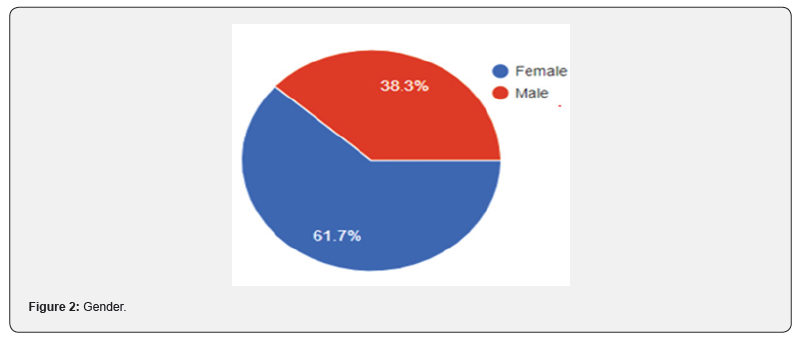
An online survey was conducted using Google forms distributed amidst the people via platforms like Gmail and WhatsApp. 334 samples were collected, and their responses have been deciphered and analyzed. The demographic variables were age and gender and the dependent variables were preference for buying, factors influencing the users as customers, awareness, and interactivity with existing AI tools, etc. The questionnaire consisted of about 14 questions and the feedback was concise and telling in terms of what actions could be taken to improve the customer satisfaction. We received responses from 206 females and 128 males [13]. The age group from where we received most of our responses were from 20-35 years.

Data Analysis & Interpretation

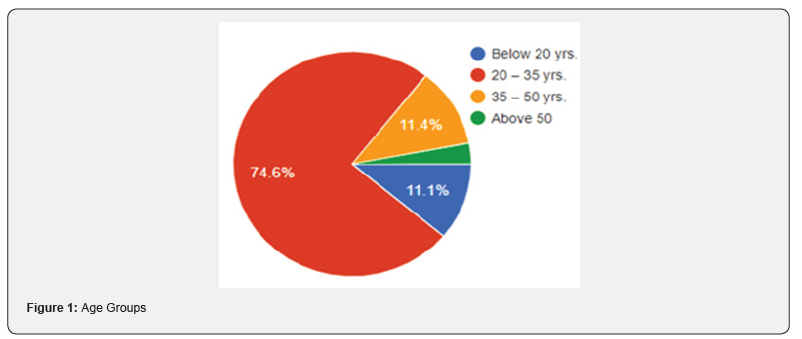
From the questionnaire circulated online through Google forms, responses of 334 people were collected who belonged to different categories of age groups. However, 74.6% of the sample size belonged to people in the category of 20-35 years of age (Figure 1). Size of the female population who answered the questionnaire (61.7%) were more than the male population (38.3%) (Figure 2) [14].

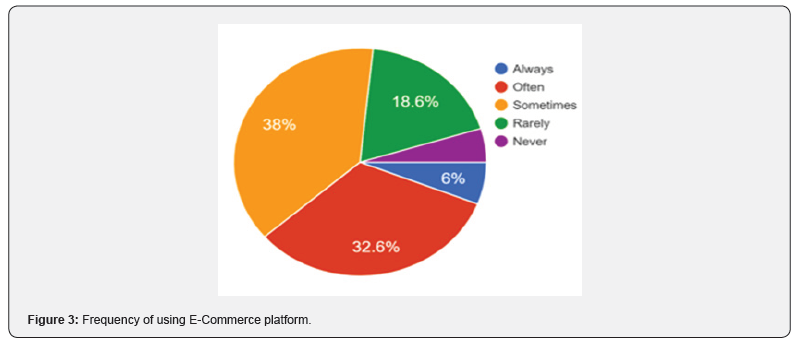
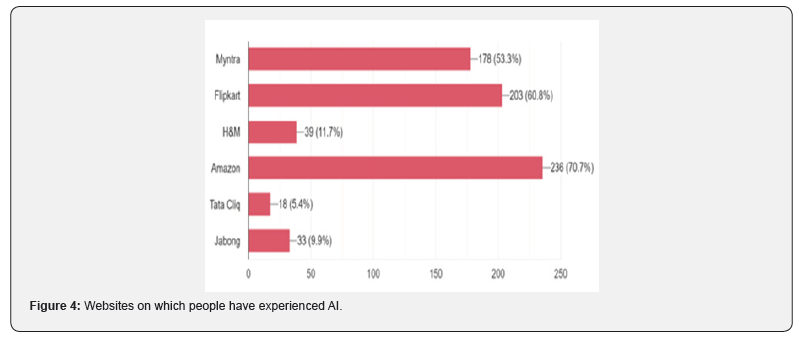
The survey asked the respondents to fill up how often they prefer shopping via E-commerce platforms to purchase apparel. From the survey results, it was observed that 32.6% often use E-commerce platforms to purchase apparel (Figure 3). The purpose of the question was to identify the comfort level that people have while interacting on an online platform. The survey also had a question which gave insight into identifying the apps on which users have experienced an interaction with AI. However, some of the people have even answered that they have experienced AI in websites like Tata Cliq and Jabong. This shows the unawareness amidst our respondents regarding the concept of AI. But the website that people did most often interact with AI was Amazon. 70% of the respondents experienced AI on Amazon followed by 60.8% for Flipkart and the least was 5.4% on Tata Cliq (Figure 4) [15].

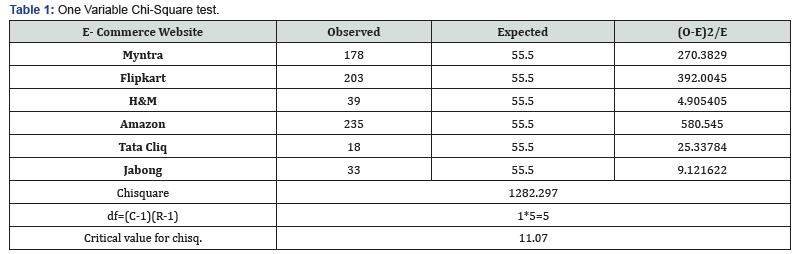
One-Variable Chi-Square test with equal expected frequencies was conducted to check whether people have experienced AI in all the websites equally or not (Table 1). For that, null hypothesis was stated as customers have experienced AI in all the E-Commerce websites and alternate hypothesis as customers have not experienced AI in all the E-Commerce websites, only in some of them. From the test, it was found that the calculated value of chi-square (1282.297) is greater than 11.07, thereby rejecting the null hypothesis that customers have experienced AI in all of the E-Commerce websites and hence accepting the alternative hypothesis that customers have not experienced AI in all the E-Commerce websites. The test helped to conclude that there is a significant difference among the frequencies with which customers have experienced AI interaction in different websites.

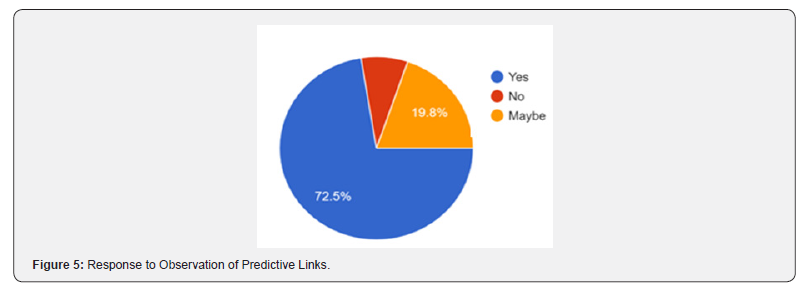
Based on the features of Live Chat, Customer feedback and Inquiries handling for Returns and or Exchange, the responses analyzed concluded that people have had several issues regarding inquiries for Returns and Exchange. The customers were also asked to express their degree of satisfaction with Live Chats offered by few platforms. A t-test was conducted which thus concluded that mean satisfaction level of customers on live chat is less than or equal to 3, implying that the customers are very much dissatisfied with the existing live chat services offered by the E-Commerce websites. The survey asked the respondents whether they have ever observed pop up icons or predictive links based on their previous purchases. This was posed to understand the observation and awareness amidst online shoppers. From the results, 72.5% of them have come across predictive suggestion links and pop up icons, whereas 7.7% have not at all observed this (Figure 5).

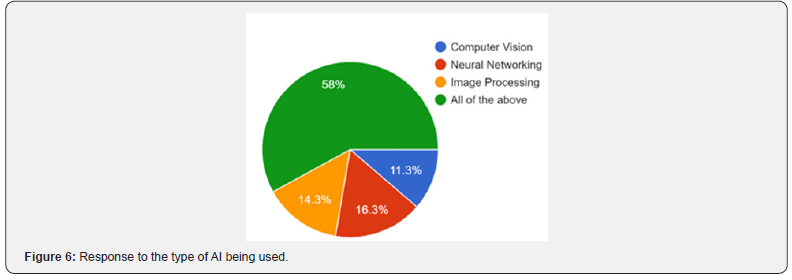
The respondents were also asked to pick the particular aspect of AI that lead to predictive suggestions. This was done in order to know about the familiarity amidst customers about the terms and terminologies of AI.

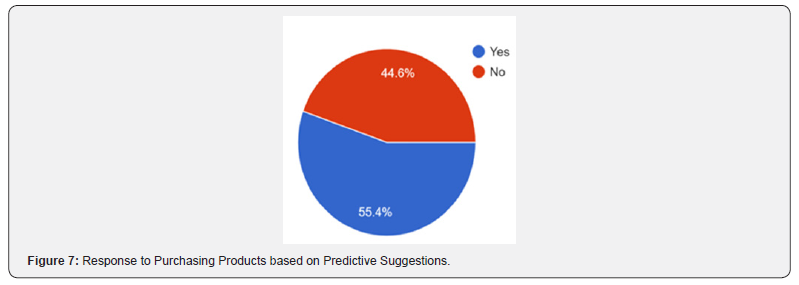
58% of people opted for All of the above while the correct answer was Neural Networking which was only opted by 11.3% of people (Figure 6). Respondents were also asked whether they have been ever influenced by these predictive suggestions offered online to which 55.4% responded Yes and 44.6% opted No (Figure 7) The purpose of the question was to understand the customer behaviour and psychology that leads to purchasing a product online using the help of AI.

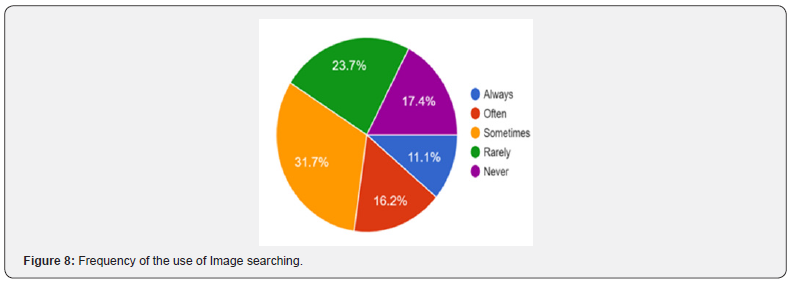
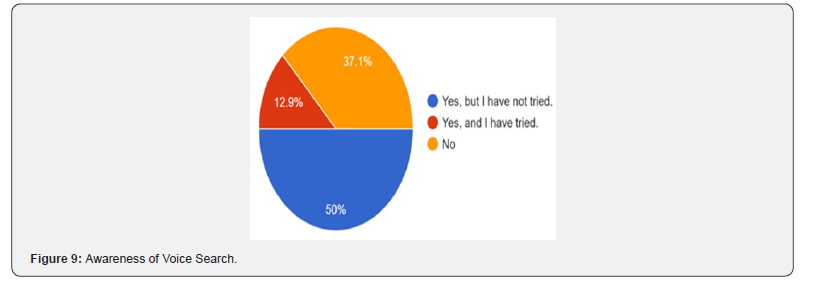
Image searching, another AI tool is present on various online apps and websites. Respondents were asked how often they have tried this option available to them. 11.1% have always opted for Image searching while 17.4% have never tried this out. This shows the hesitance towards accepting technological upgrades generated for the ease of use of a customer (Figure 8). Voice search is another AI tool similar to Image searching that when asked about customers have faced a hesitation to use it. 50% of people were aware about the option available but for some reason abstained from using it. 37.1% have never heard or used it. Only 12.9% were aware about the tool who were also not hesitant to use it (Figure 9).

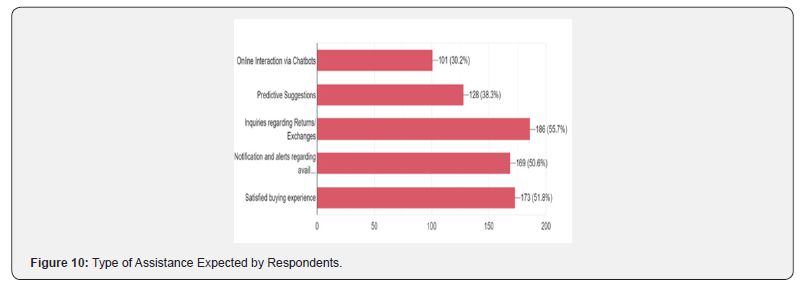
The survey also asked the respondents to choose the online assistance they want and need the most. The response to this question would give us valuable feedback which could be solved with the help of AI tools incorporated to satisfy the comfort of the customer. 55.7% people opted for services regarding Inquiries of Return and Exchange, 51.8% wanted a satisfied buying experience, 50.6% wanted Notifications and alerts regarding availability of new stock or stocks now in supply, 38.3% of them wanted Predictive Suggestions and 30.2% wanted services that would improve online interactions via Chatbots (Figure 10).

Findings

From the data analysis of the survey conducted, the results obtained are:

i. It was found that more than half of the sample have observed predictive suggestion icons and have been influenced to buy a product based on predictive suggestions.

ii. It was observed that Image searching which is the most powerful and visible AI tool on E commerce retail websites was tried by very few people.

iii. It was found that most of the people despite of being aware about the existence of Voice Powered search have never tried it.

iv. Personalized suggestions and trend forecasting have been the parameters customers are highly dissatisfied with. Inquiries regarding returns and exchange has been the most desired assistance that could mean that people are facing issues and lack of assistance in this aspect.

v. It was also identified that customers have not experienced AI in every E-Commerce websites. It was found that Amazon had the most votes. But some people also opted for apps like Tata Cliq and Jabong where AI is not introduced yet. This shows the unawareness amidst our respondents regarding the concept of AI.

vi. From the test it was concluded that customers’ experience is negatively related to existing E-Commerce websites like live chat, customer feedback and inquiries. Inquiries regarding returns and exchanges was something people found difficulty with.

vii. It was also observed that customers have varying satisfaction level towards various services provided by E-Commerce websites. Personalized suggestions and trend forecasting have been the parameters customers are highly dissatisfied with.

viii. Most of the people are identified as satisfied with the return and refund policies offered by the E-Commerce websites. ix. It was also noticed that there is a positive relationship between the gender and the influence of pop up notifications in their buying behaviour.

Conclusion

The survey posed us with all the problems that the respondents as customers faced and our aim was to breakdown the questions and to provide them with solutions that would simplify as well as enhance their experience by supplementing other AI tools to the existing AI models. We took in suggestions and formulated hypothesis from where we were able to identify problems that ranged from customer dissatisfaction when it came to 24/7 guidance, live chats, return and other inquiries and immediate attention. A clear sense of dissatisfaction was regarding personal shopping assistance. Other frequent complaints lodged in the minds of shoppers were service issues and communication gaps. E-commerce shatters all the geographical barriers and customers can shop from anywhere they want. The advent of technology has subtly hinted clues to open our doors wide open to a world that is unafraid to take a step ahead for various possibilities.

Image Searching and Voice Recognition are seen in various online stores like Myntra and Flipkart. But despite this, people have often shown hesitation to try it, failing to understand the ease of these tools that would in turn solve a lot of their issues. With fresher approaches to revamp AI tools and algorithm, it is now possible to create an online platform where people could shop without any hesitation and to use the tools that would simplify their shopping experience and therefore create a virtual world running. Introduction of Chatbots, Augmented Reality and Trend forecasting would in turn give the customer an enhanced experience enabling the joys of shopping online becoming more concrete in vision and acceptance. Bringing this upfront could be a forte as well as a major breakthrough that ultimately even has the potential to challenge offline stores.

Limitation and Future Scope

Since the survey was held during the widespread Pandemic, it was also not possible to reach that section of population who had passive internet connection. We were also unable to collect responses that had a wider age group range since the elderly were not comfortable answering online. It is difficult to know whether willing respondents are truly representative. Had it been other modes of taking the responses, it would have willingly let us examine their behavior, their answers would have been honest and to persuade them to answer would have been easier. We also lacked sufficient information to measure the degree of advancement in Research and Development in the field of Artificial Intelligence in India.

Our question still remains suspended as of why these suggestions were not implemented in the country yet. With our secondary research we were able to formulate some suggestions to enhance the limited AI tools that the customers have had to deal with for better shopping experience as well as an overall technological revamping in the world of Indian E-commerce which is at the cusp of blooming. A Chatbot in E-commerce forms an undeniable bridge to fill in the gap that a customer has always faced while trying to shop a product online. Due to lack of tactile provisions while shopping online, customers are bound to have a thousand problems that concern returns and exchanges of a product. A customer also would be dissatisfied if his queries are not met with lucrative answers. Keeping affordability in mind, Artificial Intelligence has the potential to indulge in developing algorithms to create a Personal Shopper that helps customers pick products that suit them the best according to their personal preferences. It gives them the feeling of having their own personal stylist. AI is able to conduct an adaptive market study for the target audience to produce the best Trend Forecast for future patterns. The modern algorithm involves updates and self-learning method to grasp and learn from the complex demand patterns. There is no E-commerce site or any app in India that has welcomed Virtual try-on so that customers could shop clothes that suit their body type. There were no enhanced developments or application of Augmented Reality combined with AI in fashion E-commerce websites or apps to help shatter the greater problems of Indian customers- the sheer inability to try on products online while sitting at home. Bringing this upfront could be a forte as well as a major breakthrough that ultimately even has the potential to challenge Brick and Mortar stores.

Thursday, November 12, 2020

Influence of Classical Music to Decrease Geriatric Anxiety Level - Juniper Publishers

 Anatomy Physiology & Biochemistry - Juniper Publishers


Abstract

Background: According to the elderly World Health Organization (WHO) is a group of people aged 60 years or older. Mental or psychic changes in the elderly can be an increasingly egocentric attitude, easy to suspect, grow stingy or greedy when having something. There are several types that can be used to reduce the anxiety of elderly like music which can be applied as interventions to alleviate anxiety. It has been proven that the music compiled by Bach, Mozart, and other Italian composers is the most effective in providing distraction effects in patients.

Method: the type of research used is Quasi experiments that have treatment or pre and posttest design.

Result: there is a very strong correlation as there is a decreased in anxiety levels in the elderly after given classical music therapy with a value of T-test of 0.001.

Discuss:Classical music therapy can be given to elderly patients who are hospitalized or in a nursing home or elderly confound. It can be a reference material or a reference in providing intervention to elderly patients with anxiety disorders.

Keywords: Geriatric anxiety classical music therapy elderly compound.

Background

According to the elderly World Health Organization (WHO) is a group of people aged 60 years or older. According to law of Ministry of Health No. 13 of 1998 about the welfare of the elderly in Chapter 1 of article 1 paragraph 2, the elderly is a person who reaches the age of 60 years and above. According to the World Health Organization (WHO), in 2015, the world population is 60 years or older, reaching 900 million. Today, there are 125 million people aged 80 years or older, in 2050, estimated to reach 2 billion people around the world. Nearly as many as 120 million people live alone in China, and 434 million are in this age group worldwide. In the Southeast Asian region the elderly population is 8% or about 142 million people. In 2000 the number of elderly around 5.3 million (7.4%) Of the total population, and the year 2020 is estimated the number of elderly 28.8 million (11.34%) of the total population (Ministry of Health, Republic of Indonesia, 2013).

Population of Indonesia by age group and gender, age group of 45-49 years the number of males 8,352,946 inhabitants while the number of women 8,304,021 inhabitants, age group of 50-54 years the number of males 7,064,237 the number of female women 7,114,776 souls, Age group 55-59 years male number 5,737,258 Soul number female 5,719,813 soul, age group 60-64 year male number 4,247,245 souls number of women 4,150,520, age group 65-69 years male number 2,780,759 the soul number of women 2,962,002 people, the group age 70-74 years of male number 1,817,892 total female population 2,145,584, age group > 75 year number of males 1,876,328 the number of women of 2,650,552 people (Ministry of Health, Republic of Indonesia, 2016).

Mental or psychic changes in the elderly can be an increasingly egocentric attitude, easily suspicious, increased stingy or greedy when having something (Nugroho, 2012). The most common psychological changes that occur and are most commonly experienced by the elderly are anxiety, depression, insomnia and dementia (Maryam, 2011). Anxiety is an emotional state that does not have a specific object, in the form of an obscure worry, spreading, relating to the uncertain and helpless feelings of Fear (Stuart, 2006) Anxiety is an unclear feeling of fear and Not supported by the situation. Anxiety disorders are not considered part of the normal aging process, but the changes and challenges that elderly often face (such as chronic diseases, cognitive disorders, emotional disorders) may contribute to the development of symptoms and disorders Anxiety (Touhy, 2014).

Basically all types of music can actually be used in an effort to lower the anxiety level (Campbell, 2006). There are several types of music that can be applied as interventions to reduce anxiety, among others Music Cure, Mozart’s classical music, classical music’s Four Seasons, classical music played along with natural sounds (sea sounds, rain, and water sounds) as well as other classical music that has been extensively researched by researchers (Analyia & Moekroni, 2016; Heijden, Araghi, Dijk, Jeekel & Hunink, 2015; Mohammadi, Ajorpaz, Torabi, Mirsane & Moradi, 2014; Trappe, 2012). However, it is often recommended to select music with a tempo of about 60 beats / minutes so that the optimal resting state is obtained [1].

The most useful music for a patient’s health is classical music. It has been proven that the music compiled by Bach, Mozart, and other Italian composers is the most effective in providing distraction effects in patients (Trappe, 2012). This is in line with the research conducted by Muhammad Luqman Prihananda & Arina Maliya (2011) entitled “Effect of classical music therapy on the anxiety level of hemodialysis patients at the PKU Muhammadiyah Hospital of Surakarta”, indicating the influence of classical music therapy to the anxiety level in hemodialysis patients in hospital pku Muhammadiyah Surakarta. The selection of classical music is based on the belief of many experts that the rhythm and tempo of most classical music follows a human heart rate speed of about 60 beats / minutes (Campbell, 2006). Patients who receive the most benefit from classical music therapy include patients with anxiety, depressive syndrome, and cardiovascular disorders and those suffering from painful, stress or sleep disorders.

Based on the above background, researchers are interested to do research to the elderly who live in the elderly compound in Sentani District of Jayapura Regency to learn about the effect of giving classical music therapy to elderly anxiety level [2].

Statement of the problem

Based on the background of the problem above, the problem of this research is “is there any influence of classical music therapy to the level of elderly anxiety in the home of the elderly compound in Jayapura district?”

Method of Research

Health problem of foot

The type of research used is research quasi experiments that have treatment. The research aims to reveal causal relationships by involving control groups in addition to experimental groups, but the selection of the two groups is not random. The research also aims to clarify the cause of an event or both. With the design used is a pre and post-Test control group design.

Result

Based on analysis data and test statistic carried out so that the following results are described in the form of analysis of univariate and bivariate.

Univariate analysis

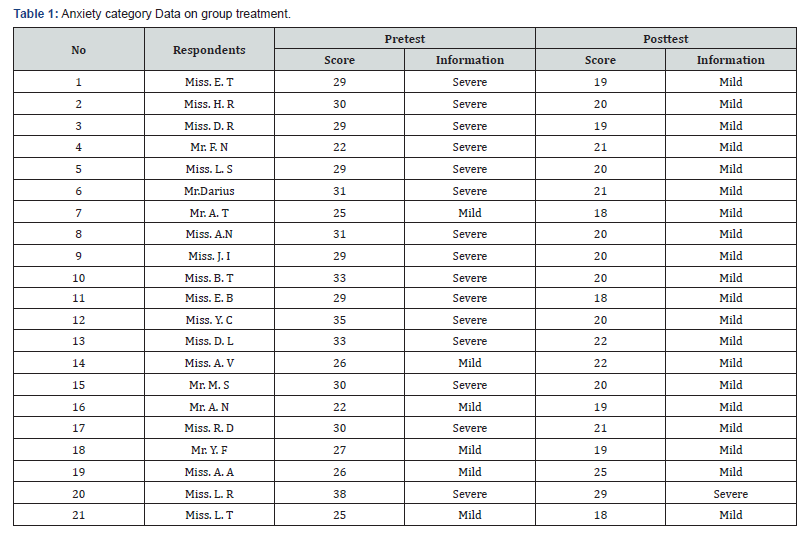
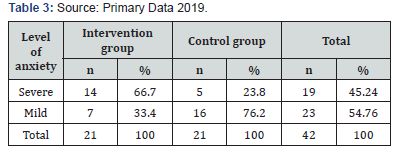
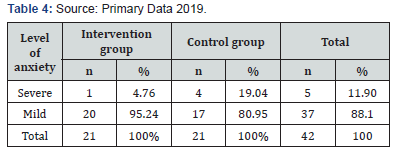
1. Data degree of anxiety when Pretests and posttest on group treatment The table above shows that of the 21 respondents in the treatment group when the pretests experienced the “severe anxiety” category there are 14 elderly and the “mild anxiety” category there are 7 elderly with the highest score of 38 and a score of 22. After the treatment was given the music therapy, the anxiety category during posttest in the treatment group slightly decreased with “severe anxiety” 1 elderly, “mild anxiety” 20 elderly with the highest score of 29 and the lowest score of 18 (Table 1).
Anatomy Physiology & biochemistry international journal

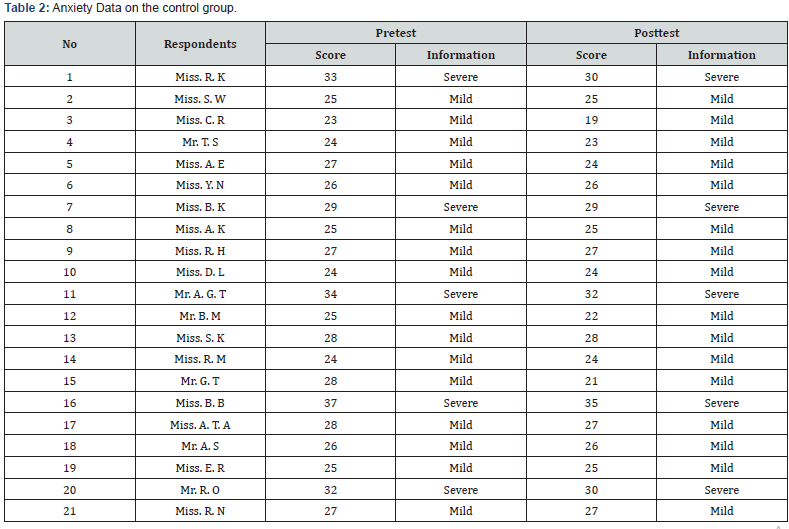
2. Data level of anxiety during pretests and posttest in control group The table above shows that of 21 respondents in the control group when Pretests experienced the “severe anxiety” category there are 5 elderly and “mild anxiety” there are 16 elderly with the highest score of 37 and the lowest score 23. Without treatment is music therapy, anxiety categories during posttest in the average control group did not suffer a decline with the category of “severe anxiety” 3 elderly, “mild anxiety” 18 elderly with the highest score of 34 and the lowest score 19 (Table 2).
Anatomy Physiology & biochemistry international journal

Data level of anxiety group treatment and control group when pretests

Based on the above table shows that the subject in the treatment group is in severe anxiety as much as 14 people (66.65%) and was in mild anxiety as much as 7 people (33.3%), while in the control group who were in severe anxiety as much as 5 people (23.8%) and was in mild anxiety as much as 16 people (76.2%) (Table 3).

Lameness scale

The American Association of Equine Practitioners (AAEP) developed a lameness scale to aid veterinarians and horse owners in communicating about cases and recordkeeping [30,31] (Table 1).
Anatomy Physiology & biochemistry international journal

Data level of anxiety group treatment and group control during posttest

According to the table, it is known that the overall 21 subjects of the treatment group were given treatment of classical music therapy that was in severe anxiety as much as 1 person (4.76%) And that is in mild anxiety as much as 20 people (95.24%), while the level of anxiety in the control group without being given the classical music therapy treatment of the whole subject of the control group that was in severe anxiety as much as 4 people (19.04%) And that was in mild anxiety as much as 17 people (80.95%) (Table 4).
Anatomy Physiology & biochemistry international journal

Bivariate analysis

Normality Test

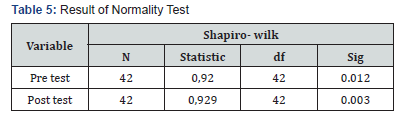
Testing the normality of data distribution in this study is using the Shapiro-Wilk method. Test data normality is intended to determine the normality of the research data spread. Data normality test calculation results can be seen in the table belowThe (Table 5) shows the results of the test Shapiro-wilk normality which results in the value of a pretests variable of 0.012 and a posttest variable of 0.03 where the sig value is less than 0.05. This indicates that the pretests or posttest data is a normal distribution (p > 0.05). Hypothesis testing for normal distribution data using alternative tests of coupled T tests is Wilcoxon’s nonparametric test [3].
Anatomy Physiology & biochemistry international journal

Hypothesis testing

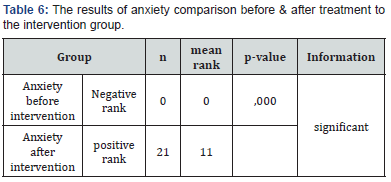
The hypothesis test used in this study was test-T, since the study tested two unpaired samples. This test was inserted to see the classical effect of music therapy before and after the treatmentis also seen the differences in the influence of classical music therapy in the group treatment with control group to the level of anxiety in the elderly (Table 6).
Anatomy Physiology & biochemistry international journal

Other method of therapy

To make a decision whether a proposed hypothesis is received or rejected, it is defined as follows: Ho is no influence of classical music therapy before and after treatment is also a difference in the influence of classical music therapy on group treatment with control group to the level of anxiety that occurs in the elderly compound in the district of Jayapura, Ha that there is the influence of classical music therapy before and after given treatment also differences of influence Classical music therapy in a group treatment with a control group to the level of anxiety that occurs in the elderly compound in Sentani Jayapura District. The hypothesis test decision making criteria by comparing the probability value (p) to α = 5%. The criteria of the decision are as follows: (1) when p > 0.05 then Ho is accepted and Ha is rejected; (2) When P is < 0.05 then Ho is rejected and Ha is accepted. The overall hypothesis test results are summarized and presented as follows

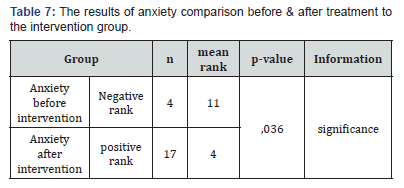
T-test results indicate that the P value obtained is 0.000. The value turns out to be < 0.05, thus Ho is rejected and Ha accepted. This means there is a significant difference in classical music therapy between anxieties before the group treatment with anxiety after the group’s treatment of the elderly. Based on the research statistic data, positive rank or difference (positive) between the anxiety before the treatment group and after the treatment group is 0 positive data on the value n and the mean rank that does not occur increased anxiety on seniors who are given classical music therapy. While negative rank (negative) between before the treatment group and after treatment group is 21 at the value N and 11 in the mean rank which means there has been decreased or reduction of anxiety in the elderly who are given music therapy Classic (Table 7).
Anatomy Physiology & biochemistry international journal

The result of T test shows that the value of P obtained is 0.036 the value is more than 0.05, thus Ho accepted and Ha rejected. This means there is a significant difference in classical music therapy against anxiety before intervention into the control group with anxiety after intervention to the control group. Based on the research statistic data, positive rank or difference (positive) between the anxiety before the control group and after the control group is 0 positive data on the value n and the mean rank that does not change of anxiety in the elderly which is given classical music therapy [4].

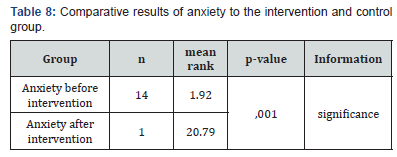
The result of T test shows that the value of P is 0.001. The value was apparently less than 0.05, thus Ho was rejected and Ha was accepted. This means there is a significant difference in classical music therapy between anxieties after a group intervention with anxiety after treatment of the control group (Table 8).
Anatomy Physiology & biochemistry international journal

Discussion

The research aims to determine the effect of classical music therapy on the level of anxiety in the elderly compound. Based on the results of the research gained that the characteristics of anxiety when pretests and posttest and at the treatment group showed that of 21 respondents in treatment groups when pretests experienced the category of “severe anxiety” there are 14 respondents and the category of “mild anxiety” there are 7 respondents with the highest score of 38 and a score of less 22. After given the treatment is music therapy, the anxiety category during posttest in the treatment group experienced a decline with “severe anxiety” 1 respondent, “mild anxiety” 20 respondents with the highest score of 29 and the lowest score 18.

Anxiety characteristics when pretests and posttest in the control group show that of 21 respondents in the control group when Pretests is experiencing “severe anxiety” category there are 5 elderly and “mild anxiety” there are 16 elderly with scores The highest of the 37 and the lowest score 23. Without treatment is music therapy, anxiety categories during posttest in the average control group did not suffer a decline with the category of “severe anxiety” 3 elderly, “mild anxiety” 18 elderly with the highest score of 34 and the lowest score 19. Similar results correspond to the research of Dina (2017) stating that with classical music therapy treatment the category of anxiety in the elderly when posttest was decreased.

Based on the results of research that can be from the test analysis of T-test shows that the value of significance is 0.001.

The test result showed smaller than 0.05. This means there is a significant difference in music therapy between the group treatment and the control group against anxiety. The elderly is a person aged 60 and above both men and women, who are still active in activity and work or those who are powerless to make their own living so that it depends on others to live themselves. The elderly is the process of gradually disappearance of the network’s ability to repair itself or replace, maintain its normal functioning so that it cannot withstand infections and repair damages.

Mental or psychic changes in the elderly can be an increasingly egocentric attitude, easily suspicious, increased stingy or greedy when having something (Nugroho, 2012). The most common psychological changes that occur and are most commonly experienced by the elderly are anxiety, depression, insomnia and dementia (Maryam, 2011). It can be proved by the results of this study which suggests that elderly can experience anxiety with varying levels of anxiety whether it is mild anxiety as well as severe anxiety [5].

Many ways can be used to handle the anxiety of one of them by listening to music. According to Hawari (2011:53) Relaxation, eating chocolate, sleep can restore all physical and mental fatigue; in addition to that anxiety treatment can be done by listening to music. Music therapy includes one of the handles in treating stress and anxiety (Aizid, 2011:42). The music affects the decline in sympathetic nerve control, decreased heart rhythm, respiratory rate, metabolism, oxygen consumption and muscle tension. Listening to classical music helps in reducing stress, while listening to rock music enhances the rhythm of the Heart (John et al, 2010:75).

Similar research also conducted by Kartinah (2013) said that the analysis comparing the results before the therapy (pretest) and after therapy (posttest) showed the influence of music therapy on changes in the level of anxiety in the elderly. For some respondents classical music has tones that can make the heart comfortable when hearing it. Based on the results, there was a difference in the level of anxiety influence in the treatment group with the control group because most of the respondents were very interested in classical music, and when respondents experienced the respondent’s anxiety Do choose to listen to music and do other activities to reduce its level of jealousy [6-8].

Summary

Based on the results of the research and discussion that has been previously exposed, it can be concluded that the elderly tend to experience high anxiety or weight due to the effects of aging and psychological distress because they are far from the family. The conditions of those living in the home and away from the family will trigger for them to experience anxiety disorders. With this research apparently provides an accurate solution to the elderly to prevent or overcome their anxiety disorder with classical music therapy about 15 minutes each time with a frequency twice daily.

Click here: https://juniperpublishers.com/index.php 


Anthropology, Participatory Research and Development Cooperation: A Necessary Dialogue- Juniper Publishers

  Archaeology & Anthropology- Juniper Publishers Abstract Le domande sul “perché e per chi” if it generates conoscenza [1] sono da tempo...