Tuesday, June 8, 2021

Fusion Rates with Autologous Bone Grafts in Pediatric Patients Undergoing Posterior Cervical Spine Fusion - Juniper Publishers

Head Neck & Spine Surgery - Juniper Publishers 

Abstract

Objective: Surgical management of cervical instability and obtaining solid bone fusion in children is technically challenging due to smaller and immature anatomy besides the lack of pediatric-adapted instrumentation. Optimizing fusion via additional bone grafting and postoperative HALO device application has been a topic of controversy. We describe our experience with posterior cervical spine fusion techniques and re-visit the role of autologous bone grafting.

Methods: We performed a retrospective chart review of children, who underwent rigid instrumentation and/or onlay bone graft fusion between 2008 and 2019. The primary outcome was solid bone fusion at 2 years after surgery. Secondary outcomes were neurological outcome and adverse events, including surgical and postoperative complications, graded according to the Spinal Adverse Events Severity System, version 2 (SAVES-V2).

Results: Twenty-one patients had a minimum follow up of 2 years (mean 4.65 years, range: 2.0 – 10.68 years), including 14 males and 7 females. The mean age at surgery was 8.4 years (median 8, range 0.7 – 14 years). Indications for surgical fusion were C1/2 instability, secondary instability after surgery, trauma and other etiologies. Seventeen patients underwent rigid instrumentation with application of autologous bone graft and 4 patients onlay bone graft fusion only. Thirteen patients underwent postoperative HALO vest application. Final solid bone fusion was achieved in 19 patients, including 2 with asymptomatic hardware failure. Nonunion and worsening junctional kyphosis required revision surgery in 2 patients. Neurological status remained unchanged postoperatively and at last follow-up. The surgical complication rate was 14%, the overall complication rate 23% respectively.

Conclusion: Variable fusion techniques of the cervical spine can be safely performed and result in adequate fixation in children. Autologous bone grafting is substantially contributing to solid fusion while having a low morbidity profile.

Keywords: Posterior cervical spine instrumentation; Pediatric; Fusion; Bone graft; Autologous

Abbreviations: BMP: Bone Morphogenetic Proteins; CT: Computer Tomography; FU: Follow Up; MEPs: Motor Evoked Potentials; MRI: Magnet Resonance Imaging; PSIF: Posterior Spinal Instrumented Fusion; SSEPs: Somatosensory Evoked Potentials

Introduction

The quality of bone fusion is one of the most critical outcomes in the surgical management of cervical instability. It highly contributes to the rate of revision surgeries and overall long-term outcome [1,2]. Especially in children the surgical management of cervical instability and achieving solid fusion is technically challenging due to the age-dependent variation of anatomy and the lack of pediatric-adapted instrumentation hardware and tools [3,4].

Importantly, the different subset of etiologies resulting in instability of the pediatric cervical spine comprise acquired, but also congenital, syndromic and developmental disorders, which differ from adult pathologies which are characterized by mostly degenerative and traumatic origins. Accordingly, surgical techniques transferred from adults to pediatrics required technical adjustments and flexibility in their application [4]. Given the growing and immature nature of the pediatric spine additional amendments are necessary in order to anticipate the variable anatomy and secondary adverse effects such as adjacent segment degeneration and reduced future growth, depending on the levels and length of the construct [5,6]. Different instrumentation techniques of the pediatric cervical spine have been described, including non-rigid techniques such as external fixation (HALOvest immobilization), variable techniques of internal fixation and onlay bone grafting only [2,7-9].

Supplemental measures of enhancing fusion include the postoperative application of an external HALO device as well as autologous bone grafting or the application of bone morphogenic protein combined with cancellous morselized allograft during the surgery [10]. Despite their assumed benefit of optimizing postoperative fusion, both of these techniques remain subject of a controversial discussion in previous outcome reports with respect to invasiveness, associated morbidity for autologous bone grafting, compliance and necessity for the external HALO device, respectively [11-15]. We describe our experience with posterior cervical spine fusion techniques in children and re-visit the role of autologous bone grafting.

Clinical Material and Methods

We performed a single center, retrospective observational study including pediatric patients with diagnosed cervical instability, who underwent a first time posterior cervical spinal instrumentation, combined anterior and posterior instrumentation and/or onlay bone graft fusion between January 1, 2008, and December 31, 2019, at the Hospital for Sick Children Toronto, Canada. Demographic, radiological, and clinical data were gathered through a retrospective chart review according to the following inclusion criteria:

a) Age <18 years at time point of surgery

b) Cervical instability (x-ray, MRI, w/wo neurological deficit).

c) Posterior spinal instrumented fusion (PSIF) or onlay bone graft fusion.

d) Follow-up (FU) >2 years

Exclusion criteria were a follow-up period of less than 2 years as well as incomplete clinical and radiographic follow-up. Clinical characteristics, indications for fusion, neurological examination findings, and the use of external Halo traction or vest pre- and postoperatively were reviewed. The primary outcome was defined as presence of a solid bone fusion at 2 years after surgery on plain and dynamic x-ray films, whereas the secondary outcomes included type and number of revision surgeries, surgical complications and neurological outcome. The radiographic indices for a solid fusion were:

a) Presence of a solid fusion mass on x-ray posterior to the fused segments.

b) Absence of motion in dynamic x-rays.

c) Absence of signs for hardware failure (breakage, dislocation).

d) Absence of halo-sign as indicator for screw loosening.

Approval for the study was obtained from the University of Toronto Research Ethics Board and the study was conducted in accordance with ethics guidelines.

Results

Twenty-one out of 31 patients met the inclusion criteria and had a minimum follow up of 2 years (mean 4.65 years, range: 2.0- 10.68 years). The remaining 10 patients had not completed the 2-year follow up at the time point of study submission. The sex distribution was 2:1, with 14 males and 7 females. The mean age at surgery was 8.4 years (median 8 years, range 0.7-14 years). Indications for surgical fusion were C1/2 instability (9 patients), secondary instability after tumor surgery (5 patients), trauma (2 patients) and other etiologies (5 patients). Importantly, most of the treated cervical instabilities occurred in a syndromic context (8 patients) and congenital disorders (2 patients), 48% respectively. A detailed list of the patients’ demographic data, their fusion levels and their pathologies are given in (Table 1).

Treatment overview

The diagnosis of cervical instability was determined by assessing a combination of plain and dynamic x-ray studies and magnetic resonance images demonstrating significantly increased mobility in one or more of the three planes of movement (flexion– extension, axial rotation, and lateral bending. Thin-cut computer tomography (CT) scans with 2D sagittal and coronal as well as 3D reconstructions were obtained pre-operatively for surgical planning with respect to the optimal fusion and instrumentation technique. Four patients underwent preoperative HALO traction in order to obtain a closed reduction in the context of subluxation or cervicothoracic dissociation.

Two of them underwent additional HALO vest application as well as 2 other patients with Down syndrome for primary preoperative stabilization. Sixteen patients were submitted to rigid posterior instrumentation and one patient combined anterior and posterior instrumentation, all with intraoperative application of autologous bone graft. We performed an onlay bone graft fusion only in 4 patients. The autologous bone graft was predominantly harvested from the iliac crest (17 patients), followed by the rib (2 patients) and local graft from the spinous processes (2 patients). All of the surgeries were performed with a rigid head fixation in the Mayfield clamp and under neuromonitoring including somatosensory evoked potentials (SSEPs) and motor evoked potentials (MEPs).

Postoperative HALO vest application was performed in 13 patients, including 8 syndromic patients, 2 patients with a congenital disorder as well as one trauma patient with a severe hyperextension injury. The levels of fusion in all of these patients were located in the upper cervical spine at C1/2 or at the craniocervical junction, including the occiput as upper fixation point. All patients, who underwent posterior cervical fusion with onlay bone graft only were included in this group (Figure 1). The time period for postoperative HALO vest application ranged between 2 and 3 months.

Primary outcome

Solid bone fusion was confirmed radiographically via dynamic x-ray and computer tomography in 19 patients (90%) at the 2-year follow-up, including 2 patients with asymptomatic hardware failure. One of them had a rod breakage on one side and the other one a questionable screw loosening, however a solid posterior bone fusion mass was present, and no motion observed in the dynamic x-rays. Nonunion and worsening junctional kyphosis required revision surgery in 2 patients at 5 and 6 months postoperative follow up.

One of these patients with Hurler syndrome had a previous bone onlay only fusion anticipating his small posterior elements, which did not permit primary instrumentation. He required augmentation of the autologous bone with additional grafting from the rib. A nine-month-old female developed a non-union with persistent atlantoaxial instability, equally requiring augmentation of the autologous bone graft and extension of her fusion to C3 (see case illustration, (Figure 2)). The rate of fusion failure in the early postoperative course was 10%. Radiographic data on the fusion outcomes are shown in (Table 2).


Secondary outcomes

The neurological status of all patients remained unchanged postoperatively and at the last follow-up visit. There were no transient neurological deficits observed in the early postoperative course.

Non-fusion related complications were development of an epidural hematoma after HALO ring application in one patient, necessitating emergent surgical decompression. HALO vest adjustments requiring additional sedation occurred in 2 patients. One patient developed repeat pin site infections due to the lack of adequate care and required antibiotic treatment. None of the patients developed a primary surgical site infection or complications related to the bone graft site. The overall complication rate was 23%, including the HALO vest adjustments and complications related to its placement and positioning. Complications and their grading according to the Spinal Adverse Events Severity System, version 2 (SAVES-V2) are indicated in (Table 2) [16].

Discussion

We have described our experience managing cervical instability of various etiologies in 21 children, undergoing surgical fusion with rigid instrumentation or bone onlay grafts only. All patients underwent autologous bone grafting during the index procedure and 90% were confirmed with a solid fusion at the 2-year follow up. Two patients required revision surgery due to non-union and junctional kyphosis, indicating temporary lack of solid fusion. However, solid fusion could be achieved after revision surgery with augmentation of the bone graft in both patients.

Multiple studies reported the use of autologous bone grafting and its impact on obtaining solid fusion [11,12,17,18]. Posterior iliac crest autograft is the preferred substrate for bone graft material, followed by rib graft in youngest children and after multiple fusion attempts. Despite its excellent structural support and its benefit on fusion outcome it remains controversially discussed in regard to morbidity and surgical site complications [2,19]. Several authors discuss a significant morbidity from the autograft harvest site, such as donor site pain, increased blood loss and infection risk, seroma formation, pelvic fracture, and the risk of peripheral nerve injury.

Moreover, it was experienced as a challenge to harvest and craft a well-fitting bone block from a small rib or thin iliac crest in children [1,20,21]. We did not observe any of these morbidities or complications in our cohort. From a technical perspective we equally did not face any challenges in harvesting the bone graft, which might be related to using autograft as a “gold-standard” during deformity surgeries in our institution. Other authors confirmed a clear superiority of autologous bone graft compared to allograft or bone morphogenetic proteins (BMP) and advocate for its continuous use [22,23].

A recent meta-analysis published by Reintjes et al. [20] assessed the fusion rates in 604 pediatric patients undergoing either posterior cervical or occipitocervical instrumented fusion with additional grafting of autologous bone in 539 and in 65 patients with application of allograft. Higher overall fusion rates were observed in the autologous compared to the allograft group (94% vs 80%) [20]. In our study autologous bone graft was applied to 21 patients, of which 2 demonstrated a shortterm postoperative fusion failure (10%) resulting in a fusion rate of 90%. These results are concordant with previous reports and confirm the benefit of autologous bone grafting with a low morbidity profile. Importantly, we could demonstrate overall good fusion results in patients with bone onlay graft only.

The 4 patients were 2, 6, 11 and 14 years old, suggesting that success of this technique is not necessarily restricted to a specific age group or younger children. However, randomized controlled trials are warranted in order to compare the efficiency and outcomes of rigid instrumentation versus onlay bone graft only. Another important point of discussion is the pre- and postoperative use of HALO devices. They were applied in the majority of our patients, 13 patients (62%) respectively. The reasoning was either to achieve preoperative reduction or to facilitate postoperative fusion.

Latter one might be particularly at risk in patients with cerebral palsy, in syndromic and youngest patients, who might present with abnormal movements or compromised compliance. Furthermore, given the softer bone texture there is a higher complication rate related to implant pull-out in these pediatric patients. In this context HALO vest application after posterior cervical fusion has been shown to be beneficial. Moreover, we do think that fusions performed with onlay bone graft only mandate postoperative external stabilization in order to facilitate a solid bone fusion. Despite not having experienced many pin site infections, except in one patient, we confirm a higher complication rate in patients with HALO devices.

These are either related to readjustments, requiring most of the time sedation and complications that occurred during placement of the device per se. Although HALO devices are related to a higher complication profile, they outweighed in our patient cohort with many complex and syndromic patients the risk of implant pull-out and nonunion. Previous studies reported similar complications, but also an increased fusion rate in patients with postoperative HALO vest or Minerva cast application [24,25]. Thus, the indication for HALO devices needs to be adapted to the underlying pathology, degree of instability, levels of fusion and the compliance of the patient, outweighing its risks and benefits in a critical manner.

Limitations of the study are the small number of patients, especially in the onlay bone graft group as well as the confounding factor of not having a control group, undergoing rigid instrumentation without additional application of autologous bone graft.

Conclusion

In this study, we found that the variable fusion techniques of the pediatric cervical spine can be safely performed and represent an effective way to treat cervical instability in various pathologies and patient ages. The supplemental application of autologous bone graft increases the quality of fusion while having a low morbidity profile with respect to the grafting site. The use of postoperative HALO vest application can be advantageous in syndromic patients and those, who undergo fusion of the upper cervical spine and the craniocervical junction in order to enhance the construct stability and fusion onset. Further studies with larger patient numbers are required to confirm these findings. 

To Know more about Head Neck & Spine Surgery

To Know more about our Juniper Publishers

Click here: https://juniperpublishers.com/index.php 


Monday, June 7, 2021

Vitamin B12 Regulates the Expression of Methotrexate-Induced Increased Markers of Autophagy: An Immunohistochemical Study - Juniper Publishers

 Open Access Journal of Toxicology - Juniper Publishers

Abstract

In this study, the immunohistochemical evaluation of autophagy in brain tissue in the presence and absence of folate was aimed. Therefore, Vitamin B12, a water-soluble folic acid, and Methotrexate (MTX), a folate antagonist, were used in the study. 28 rats were used in the study. Control group (n=7), Vitamin B12 group (n=7) 3μg/kg/ip B12 (during 15 days), MTX group (n=7) injected with 20mg/kg/ip MTX on 8th day of experiment, MTX+Vitamin B12 group (n=7) injected with a single dose of 20mg/kg ip MTX on 8th day of experiment + 3μg/kg/ip Vit B12 (15 days) per. After the histological procedure, microtubule-associated protein 1 Light Chain 3 (LC3B), microtubule-associated protein 1 Light Chain 3 (LC3AB) and glucose-regulated protein 78 (GRP78) immunohistochemistry staining were performed on the brain tissue. According to our results, all three protein expressions were observed in the cerebral cortex. Expressions of LC3AB, LC3B and GRP78 were statistically significantly increased in the MTX group compared to the control. Vitamin B12 administration showed a statistically significant improvement in the expression results of all proteins. Vitamin B12 to be used before MTX treatment may prevent abnormal autophagy in brain tissue.

Keywords: Autophagy; Endoplasmic reticulum stress; Methotrexate; Vitamin B12

Abbreviations: SAM: Adenosylmethionine; BBB: Blood-Brain Barrier; CNS: Central Nervous System; ER-Stress: Endoplasmic Reticulum-Stress; GRP78: Glucose-Regulated Protein 78; MXT: Methotrexate LC3: Microtubule-Associated Protein 1 Light Chain 3

Introduction

Vitamin B12 is a water-soluble vitamin produced by microorganisms in nature, which we take into our bodies through diets [1]. It is the cofactor of methionine synthase, which is involved in the synthesis of methionine, which is the precursor of S-Adenosylmethionine (SAM) [2]. Therefore, it plays an important role in DNA synthesis, erythropoiesis and healthy neurological functions [3,4]. Vitamin B12 deficiency is a common cause of macrocytic anemia, and also causes clinical disorders including peripheral and central neurological manifestations [3,5]. Therefore, bone marrow and nerve tissue are considered to be the organs most susceptible to vitamin deficiency [6]. Methotrexate (MTX) is a folate antagonist used for Central Nervous System (CNS) cancers [7]. However, the presence of the Blood-Brain Barrier (BBB) in the CNS causes the drug to be prevented from entering the brain [8]. Various doses are administered intravenously or intrathecally in order to obtain effective treatment [7]. MTX exerts its effect by limiting one-carbon fragments required for the synthesis of purines in DNA synthesis and cell proliferation and inhibiting dihydrofolate reductase [9]. It has been reported that MTX used for the CNS causes neuron degeneration in different parts of the brain [10]. MTX has been reported to induce apoptosis, which is programmed cell death in brain tissue [11,9]. There is limited information about the effects of MTX on autophagy, another programmed cell death in brain tissue. Autophagy is a highly complex physiological process that recycles cellular components. This process is important in maintaining cellular homeostasis in certain tissues such as the brain and liver muscle [12].

Autophagy can cause cell survival, as well as irregular autophagy can cause cell death. Autophagy occurs under the influence of the Autophagy-Related gene (Atg) family [13]. The yeast Atg8 homologue is rat microtubuleassociated protein 1 Light Chain 3 (LC3) [12]. Three subfamilies of LC3 (LC3A, LC3B and LC3C) have been identified in humans [14]. While autophagy occurs in the cell, first cytosolic LC3-I is produced in the cytoplasm, then transformed into LC3-II, which can localize to autophagosomal membranes [15]. Incorporation of LC3-II into the membrane is associated with Atg activation and the process ends with the formation of mature autophagosomes [12]. Thus, the amount of LC3-II correlates with the number of autophagosomes [16]. Therefore, LC3s are important in showing autophagy in tissue. Information about the relationship of MTX used in CNS cancers with autophagy is quite limited. In this study, we aimed to demonstrate immunohistochemically the role of autophagy in the changes that MTX will cause in brain tissue. In order to eliminate the inhibition of MTX on folate, we aimed to show immunohistochemically whether autophagy is affected by using Vitamin B12. In addition, we evaluated glucose-regulated protein 78 (GRP78) immunohistochemically in the tissue in order to evaluate the possible Endoplasmic Reticulum-Stress (ERstress) that will occur in the tissue if autophagy is affected.

Material And Methods

Animals

Twenty-eight adult male Wistar albino rats (2-3 months/ 8-12 weeks, weighing 200-300 g) was used from Erciyes University Experimental and Clinical Research Center (DEKAM), Kayseri, Turkey. Rats were housed in plastic cages in a well-ventilated rat house and allowed ad libitum access to food and water and kept at a 12-h light: dark cycle. All the animals received humane care according to the standard guidelines. Ethical approval for the study was obtained from Erciyes University Animal Research Local Ethics Committee and the ethic at regulations were followed in accordance with national and institutional guidelines (date 2018, decision no 18/116).

Chemicals

Methotrexate (MTX) (500mg/20ml, Koçak Farma, Turkey) and Vitamin B12 (Vit B12) (Vitamin B12 Rubranova, 5,000 μg; Bristol-Myers Squibb) was used as medicine.

Experimental design

In the study, 28 Wistar albino rats were divided into 4 equal groups. Control group (n=7) injected was applied İntraperitoneally (ip) saline during the experiment to this group. Vitamin B12 group (n=7) 3μg/kg/ip B12 (15 days) per day throughout the experiment. Methotrexate group (MTX) (n=7) injected with a single dose of 20 mg/kg/ip MTX on 8th day of experiment. Methotrexate+Vitamin B12 group (MTX+Vitamin B12) (n=7) injected with a single dose of 20mg/kg ip methotrexate on 8th day of experiment + 3μg/kg/ip Vit B12 (15 days) per day throughout the experiment.

Preparation of brain tissues

At the end of the experimental, the animals were killed by decapitation under ip ketamine (75mg/kg) + xylazine (10mg/ kg) anesthesia. The brain tissues were quickly removed and were fixed in 4% formaldehyde fixative for histological examination. Following dehydration (50%, 70, 80, 96, 3 times absolute alcohol) and clearing (xylene) embedded in parafin. Sections were stained with immunohistochemistry. Photographs were taken with an light microscope (Olympus BX51, Center Valley, PA, USA).

Immunohistochemistry procedure

Immunohistochemistry was applied to the brain tissue sections. The kit (TA-125-HDX, Thermo Fisher Scientific, Waltham, MA, USA) was used to determine the expression intensities of the antibodies. Antibodies are as follows: microtubule-associated protein 1 light chain 3 (LC3AB) (D3U4C, Cell Signaling, USA), microtubule-associated protein 1 Light Chain 3 (LC3B) (NB100-2220, Novus, USA) and glucose-regulated protein 78 (GRP78) (bs1219R, Bioss, USA). A citrate buffer was used for antigen recovery. Phosphate buffered saline (PBS) was preferred for washings. The sections were visualized using 3,30-p-diaminobenzidine tetrahydrochloride (TA-060-HDX, Thermo Fisher Scientific, Waltham, MA, USA) lightly counterstained with Gill hematoxylin. Under the light microscope (Olympus BX51, Center Valley, PA, USA) and images were obtained. Antibody’s immunoreactivities were measured with the Image j program [17].

Statistical analysis

All statistical analyses were carried out by using GraphPad Prism version 7.00 for Mac, GraphPad Software, La Jolla, California, USA. D’Agostino Pearson omnibus test was used to identify the normal distribution of the data. In the case of normal distribution, quantitative variables were compared using one-way analysis of variance and Tukey’s posthoc test. The data were expressed as the mean of normalized data±standard deviation of the mean. p<0.05 was considered as statistically significant.

Results

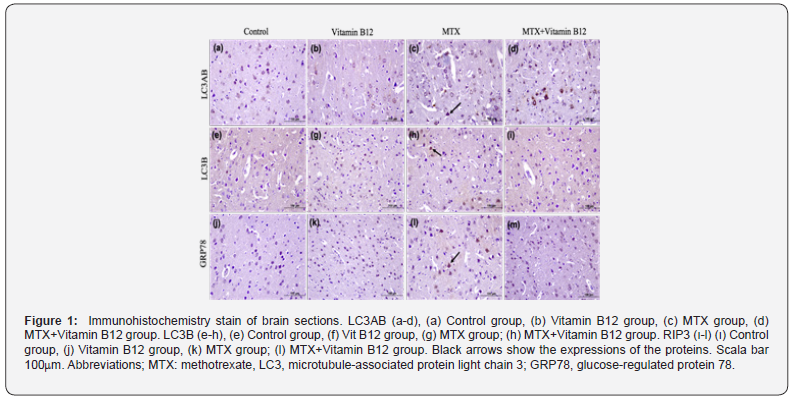
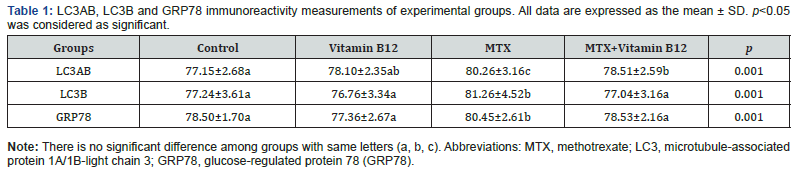
Evaluation of LC3AB and LC3B expressions LC3AB and LC3B expressions were observed in the brain tissue of all groups. Expression intensities were mostly in neuron cytoplasms located in the midline of the cerebral cortex. LC3AB expression showed a statistically significant increase in both the Vitamin B12 group and the MTX group compared to the control. LC3B expression was similar to control and Vitamin B12. It increased statistically significantly in the MTX group. In the MTX + Vitamin B12 group, it decreased, showing a result similar to the control. There was also a statistically significant difference between the vitamin B12 group and the MTX group. LC3AB expression decreased in the MTX + Vitamin B12 group, showing a similar result to the control. Between-group differences in LC3AB and LC3B expressions are shown in Table 1, Figure 1.

Evaluation of GRP78 expression

GRP78 expression was observed especially in the neuron cytoplasm with a pyramidal shaped cell body. There was no statistical difference between the control group and the Vitamin B12 group. There was a statistically significant increase in the MTX group compared to the control. The MTX + Vitamin B12 group was also similar to the control. GRP78 expression is shown in Table 1, Figure 1.

Discussion

MTX shows its effect on cells by inhibiting dihydrofolate reductase, indirectly inhibiting purine synthesis, by inhibiting both DNA synthesis and cell proliferation [18]. Because MTX is a folate antagonist. Intracellular folate deficiency indirectly causes anemia and nerve damage as vitamin B12 deficiency causes inhibition of both purine and pyrimidine synthesis [19]. In our study, we preferred MTX because of its effects on folate and evaluated autophagy in nerve tissue and related ER-stress. In order for the normal physiological process to continue, the cell performs many activities together and regularly. However, under adverse conditions, cell death mechanisms can be triggered. Apoptosis and autophagy are processes that play an important role in maintaining homeostasis. Autophagy, the mechanism of programmed cell death, is essential for normal development and cellular activity, and LC3 (also known as Atg8) is a marker for autophagosomes that occur in autophagy formation [20]. As long as the physiological process continues normally, autophagy is a process that only removes old and degraded cellular components. However, increased abnormal autophagy can also cause cell death. The main difficulty in using MTX in the treatment of brain tumors is the presence of a blood-brain barrier that does not allow tissue passage. For this reason, high doses, various drugs and methods have been developed to obtain the effective concentration of the drug in the tissue [8,21,22]. 

In our study, we evaluated the autophagy marker LC3 and ER-stress marker GRP78 in brain tissue by applying 20mg/kg MTX. Both LC3AB and LC3B expressions in brain tissue increased in MTX group. LC3 expressions were in the cell cytoplasm of neurons. Neurons are the cells of the nervous system that hear, interact, and transmit. Pyramidal neurons of the cerebral cortex are large cell bodied neurons with the same morphological prototype [23]. LC3 expressions were stained specifically in the cytoplasm of these neurons, not Betz cells. Cisplatin, a chemotherapeutic agent such as MTX, has been reported to up-regulate autophagy-related genes in the breast cancer cell line [20]. 

In a study in which neoadjuvant was used to increase the effect of MTX on Ehrlich acid carcinoma, it was reported that the autophagic gene beclin1, up-regulated by MTX, decreased after neoadjuvant drug use [24]. It has been reported that MTX increases LC3 expression in the spermatocyte cell line and is induced in apoptosis due to this increase [25]. In this study, we can say that the decreased folate concentration after MTX administration causes an increase in both LC3 expressions in the brain tissue. Because we obtained similar results to the control in both LC3 expressions in MTX + Vitamin B12 group, which we used to complement the reduced folate. In parallel with the increase in LC3 expressions in the MTX group, we also found an increase in GRP78 expression. GRP78, as one of the important chaperones on ER, participates in the ER protein folding and assembly process [26]. In response to stress conditions, GRP78 overexpression is a harbinger of the presence of large amounts of unfolded protein [27]. It has been reported that substances such as lead impair GRP78 function in the nervous system, increasing the unfolded protein response [28]. It has been reported that low doses of MTX cause a decrease in the number of apoptotic cells by reducing ERstress in vitro and in vivo [29].

On the contrary, it is also suggested that even its topical application promotes ER-stress mediated apoptosis [30]. We found that MTX increased GRP78 expression in brain tissue after 20mg/kg dose administration. This increase was parallel to LC3 expressions. We think that the MTX dose likely increases ER-stress in neurons, causing an increase in the amount of misfolded/unfolded protein, thereby increasing LC3 expressions in response to the cell in order to eliminate these accumulated proteins. These results are not only dependent on them, but also related to more genes and proteins.

The effect of the folate antagonist MTX on LC3 and GRP78 expressions was statistically significantly improved when a folate derivative Vitamin B12 was used. In this case, it can be concluded that regular methionine synthesis has an effect on both autophagy and ER-stress. Because unlike a folic acid antagonist MTX, Vitamin B12 is a water-soluble folic acid [31]. Exogenous completion of depleted endogenous Vitamin B12 indicates that it is necessary for the normal physiological process to continue in the tissue. There is very limited literature information on vitamin B12 and GRP78. Only in the diabetic retinopathy model, Vitamin B12 supplementation has been reported to reduce the various ERstress markers contained in GRP78 [32]. In addition, Vitamin B12 is very important for the nervous system, and neuronal degeneration occurs in its deficiency [33]. Vitamin B12 has also been shown to reverse impaired ER-stress and cellular autophagy after stroke [34]. In our study, we found improvement in autophagic marker LC3 expression and ER-stress marker GRP78 expression with Vitamin B12 administration. This result should not be ignored in order to prevent possible abnormal autophagy.

Conclusion

In study, we demonstrated the autophagy in the brain tissue immunohistochemically using MTX and Vitamin B12. In addition, increased GRP78 expression showed us that increased autophagy can also trigger ER-stress. We think that autophagy and ERstress should not necessarily be ignored in studies on improving the effect of MTX on CNS cancers. In addition, we believe that Vitamin B12 should be essential supplementary food for all drugadministered diseases that may cause folate deficiency.

To Know more about Open Access Journal of Toxicology

To Know more about our Juniper Publishers

Click here: https://juniperpublishers.com/index.php 


Friday, June 4, 2021

Use the Round Ligament of the Liver in Chronic Probodnyhand Bleeding Ulcers Gastroduodenal Zone - Juniper Publishers

 Modern Applications of Bioequivalence & Bioavailability - Juniper Publishers

Annotation

The author had 12 patients with chronic probodnymi and bleeding ulcers gas-troduodenal zones, or for closing holes or perforativnogo for strengthening joints anastomosis, successfully used the round ligament of the liver. Such tactics of surgical treatment was not conditional on the existence of extensive inflammatory infiltrate in patients, which is not allowed for elimination of peritonitis use nor the stomach wall, nor could the great seal, and distal gastrectomy lead to failure of sutures anastomosis. The author proposes to use this method as a backup method of surgical treatment of these ulcers.

Objective: To reflect the usefulness of the round ligament of the liver in the surgical treatment of chronic complicated ulcers gastroduodenal zone as a backup method of operative correction of this pathology.

Keywords: Chronic ulcer complicated with round ligament of liver; Plastic; Gastrectomy; Anastomosis; Hemorrhage

Introduction

Currently, the diagnosis of chronic ulcers gastroduodenal zones, special attention is paid to fi-brogastroduodenoskopii, and in the treatment of three-drug therapy [1-3]. These activities have greatly reduced the incidence data from pathologic process [4,5]. However, some patients under the influence of hereditary factors, harmful habits and lifestyles develops chronic ulcer, which is complicated by hemorrhage and perforation [6,7]. These complications require prompt treatment, which often produced as a matter of urgency. During these, the surgeon may meet with the technical difficulties that are due to the manifestation and the peculiarity of the inflammatory process. It prevents the patient has normal plastic activities aimed at eliminating the complications. Then the required backup activities, one of which is the plastic round ligament lesion of the liver [8].

Materials and Methods

Over the past 5 years in the OCG g. Krasnodar MUNICIPAL HOSPITAL were treating 9958 patients with chronic ulcers gastroduodenal zone. Different operations over bleeding and perforations were made at 557 (6.6%) man. The remaining 9401 (93.4%) the patient was held conservative treatment by assigning three therapy, when capillary bleeding (F1b) endoscopy irrigation surface ulcers 70% alcohol, 5% solution aminocapronova acid and kaproferom. Mortality in this treatment amounted to 3.2%. From 557 patients who were performed, 231 (40%) oslozhnjonnaja had a stomach ulcer, and 346 (60%) of the duodenum (DUODENAL). of patients with stomach ulcer women was 27.5% and 72.5% for men, and from 24% respectively of KDP and 76% in males of both ulcers’ localizations observed roughly the same and met at 3.5 times more often than women. Age of patients with stomach ulcer was from 22 and up to 92 years, and KDP-from 15 and up to 89 years.

67 people died after the surgery (12%). Mortality depended on the age of the patients. So, out of the total number of patients under 20 years, 16.6% died from 21 till 30 years-5.7%, from 31 to 40 years-1.9%, from 41 to 50 years-8.8%, from 51 to 60 years-8.5%, from 61 to 70 years-17.8%, from 71 to 80 years-20% over 81 years-25%, that is, young men and old men dying in 3.2 times more likely than persons of middle age. This suggests that at a young age factors of peptic ulcer of aggression were high, and the defense mechanism the body has not yet formed, and in old-he has already lost its validity. This feature is reflected in lethality factor time in treating patientsit is little depended on the timeliness of a patient in a hospital. So, out of 232 (41.4%) patients who were hospitalized for a day from the onset of the disease, died 24 (10.3%) and of up to 325 days-43 (13.2%), i.e. these fatality rates were not significantly different from each other. of the surgical procedures most frequently applied mostovidnajaduodenoplastike (221, or 39.6%), wedge resection of the stomach (126, or 22.6%) and distal mastectomy (95, or 17.0%). 

The round ligament of the liver during surgical manipulation was used at 12 (2.1%) patients, of which 10 have been punching and 2-c bleeding. At the end of the otsekalsja ligament from perforation of the anterior abdominal wall, rasplastyvalsja and moved into an area of perforation, and then podshivalsja to its edges on all Perimeters. In case of bleeding was performed distal gastrectomy with strengthening seams anastomosis end the round ligament. We believe it necessary to specify that a comparative analysis of the results of survival in different groups of patients was conducted in the light of point estimates of the index of severity by APACHE-II with the inclusion of the 8 factors. All the deceased patients were observed 3-I degree of severity (more than 30 points). Of the 67 dead patients whose operation was performed, at 23 (34.3%) the cause of death was due to the failure of welds anastomosis, the cause of death of the remaining 44 (65.7%) patients were connected, or with acute cardiovascular insufficiency (27), or with renal-hepatic insufficiency (14), or pulmonary emboli (3).

Results and Discussion

All 12 patients, the operation was carried out personally and for this reason, all its nuances were well thought out. 11 men, women 1. Age 11 patients was from 35 to 56 years and 1-76 years (an ulcer drug). Ulcerative anamnesis in all patients was more than 10 years. All were treated with home way (baking soda, mineral water, alkaline diet, small doses of alcohol, Alma ell etc.). In the process of life were examined radio graphically and endoscopic ally and knew about themselves. Suggested surgery, but he refused. All belonged to the choleric with a neurotic syndrome. 

A relapse of the disease starts with strengthening the pain in epigastralna area, heartburn and other diarrheal events. Most amplification of the pathological process arose about two weeks ago before entering the hospital. A leading complication that led to hospitalization patients, 2 were profuse bleeding, and 10-sharp increase in abdominal pain. Before they had been diagnosed with peritonitis. All patients successfully recovering from an operation, but in a patient with an ulcer medication through 7 days developed peritonitis. To save him failed. When autopsies revealed complete dehiscence anastomosis with abandoning the round ligament of the stomach wall. This testified to the complete suppression in this patient reparative process.

Conclusion

In patients with chronic complicated ulcers gastroduodenal zones while developing common inflammatory process rationally use the round ligament of the liver for elimination of peritonitisor strengthening seams anastomosis. It has sufficient thickness of tissue and blood supply to impose sealed seams.

To Know more about Modern Applications of Bioequivalence & Bioavailability

To Know more about our Juniper Publishers

Click here: https://juniperpublishers.com/index.php 


Thursday, June 3, 2021

Higher ratios of face to face blended learning is positively related to student satisfaction - Juniper Publishers

 Annals of Social Sciences & Management Studies - Juniper Publishers


Abstract

This study investigated the satisfaction of 303 undergraduate students who enrolled in traditional 200-level criminology/ criminal justice courses. University students were offered the opportunity to self–select into one of four blended online ratios ranging from 10%, 30% 70% to 90% of the course operating within an online environment. OLS linear regression analysis suggests that students who selected lower intervals of online blended instruction (or high intervals of F2F instruction) were statistically more likely to report higher levels of overall satisfaction in the course. Alternatively, the findings suggest that higher ratios of student selected online instruction may lead to higher levels of student dissatisfaction. OLS data findings reported that younger university students who require more flexibility and convenience of scheduling, are enrolled in higher course loads and/or majoring or minoring in the subject matter produced statistically higher levels of student satisfaction.

Keywords: Online; Blended; Hybrid; Face to Face; F2F; Student Satisfaction; Learner-Content; Learner-Instructor; Learner-Learner; Learner-Technology; Interaction; Student Satisfaction Survey

Introduction

In the current COVID19 pandemic environment [1], post-secondary academic institutions and instructors are scrambling for a best practices model to continue to teach their students. Additionally, the university student (or consumer) searches for the instructional delivery that suits their needs and priorities. With the increasing cost of living, expectation of employment, travel, tuition and textbooks, students are consciously re-assessing the value for their dollar to determine which institution is right for them. We know when universities offer the availability of online and blended courses [2] as well as flexibility in scheduling [3,4] students prefer and are likely more satisfied with their courses [4]. Blended learning offers a solution to traditional face to face lecture contact, combining technology with interval levels of face to face instruction.

It certainly appears that undergraduate students as consumers of educational attainment want more choice and selection of course instruction, not less. As consumers of learning, student satisfaction needs to be accounted for. As Brooks [5] suggests, a significant majority (83%) of students preferred some form of blended instruction rather than a traditional face to face (10%) or traditional online (7%) course. The Center for Applied Research also reports that prefer digital mediums, that device ownership (tablets, smartphones, tablets) is greater among students than the public marketplace and students view their technology as important to their education and success (2016:5). The use of technology within an online environment appears to breed a form of success and/or satisfaction not found within traditional face to face courses. This study explores the use of interval/ ratio levels of student self-selection of course delivery to determine if/ and at what ratios of blended course delivery impacts overall reported student satisfaction.

Literature review

Student satisfaction can be conceptualized using a variety of indices from objective performance measurements assessing grade attainment to subjective measures of student attitudes on process- based learning and its efficacy [6]. Student satisfaction surveys have been numerous and rely on similar questions [7]. As a result, many satisfaction surveys probe the interactions learners have with one another, their instructor, course content, online technology and the method by which it is delivered [8]. There is ample research to suggest that blended learning instruction can impact student satisfaction. Blended learning generally offers differing environments that connect traditional lectures with some form of online learning [10]. A meta-analysis by Moskal et al. [10] examined the adoption of blended learning to its implementation and outcomes. The study reported higher levels of satisfaction among students who enrolled in blended courses versus fully online or lecture-based modes of instruction [10]. Research suggests that even if there may be no difference within instructional delivery, students still prefer blended learning. 

Owston et al. [11] found similar levels of satisfaction when students were asked to compare their blended course instructional delivery to other traditional courses they previously had taken; almost 70% of students reported they would take a blended course again. This was also confirmed by Madriz and Nocente (2016) who surveyed nearly 600 undergraduate students finding overall levels of satisfaction were higher among blended learning and student’s willingness to take another blended course. Vernadakis et al. [12] compared blended and face to face (F2F) sections and found that students enrolled in blended sections reported significantly higher satisfaction (conceptualized from a twelve-question survey). Forte and Root (2011) reported similar findings in which students who enrolled in a blended format had higher levels of satisfaction versus traditional courses with some levels of web-enhancement. Melton et al. [13] compared the satisfaction of students enrolled in four general health courses finding that satisfaction scores were statistically higher for those students enrolled in three blended learning courses than one traditional F2F course. Therefore, there appears to be significant advantages for students when employing a blended learning method to their course load. A study conducted by Dziuban et al. [14, 15] reported higher levels of student satisfaction in a variety of blended courses with 85% of students agreeing that they were satisfied and 67% reporting they would like to take another blended course. 

Utilizing both blended and F2F instructional delivery within a nursing student population, Kumrow (2007) found that blended students were more satisfied than unsatisfied. These studies have all implied that there is an importance of learning independently outside of the classroom which has positive impacts on satisfaction, grades and future expectations for blended courses [16]. The question may not be why an instructor may implement blended learning, but rather why wouldn’t an instructor consider this blending learning opportunity. Student satisfaction includes inherent factors which are often difficult to operationalize such as the motivation to taking a course to a student’s level of pleasure throughout the course to the effectiveness of the educational experience (Wang, 2003). Wu et al. (2008) suggest that higher levels of student satisfaction within a blended learning approach is due to a student’s perceived ease of use, value of the content and the climate or environment itself (for involvement and social interaction). 

Further research by Wu and Liu (2013) confirmed that perceived ease of use is positively correlated with student satisfaction. Sahin and Shelley [17] suggest, it is not just ease of use but also the value and usefulness of the content (similar to any traditional F2F or fully online course). Therefore, each instructor’s inherent design, organization, choice and ease of software implementation and adoption (or lack thereof) of content and value within performance measures can impact student satisfaction. As such, the value of learning interactions and outcomes can often be associated not just with student satisfaction but also the choices instructors make when selecting software and organizing a course. This best reflects what we know in blended learning. While blended learning appears to offer significant value and benefits to students, choices instructors make should ensure that there is an ease and proficiency of use of software within course delivery is paramount to ensuring student success and/or satisfaction. Should students not be proficient in the software and/or frustrated with the layout of the course design, satisfaction may wane. Therefore, student success and satisfaction can closely be tied to the design of the blended course.

The design and implementation of blended instruction requires a thoughtful approach to content, the technology being utilized and performance measurements [18,19]. Some studies offer quality assurance checklists to assist instructors (Chauhan et al., 2016) however, there is no uniform one size fits all strategy. Therefore, instructors need to ensure that new online learning environments are designed appropriately for their targeted audience while also meeting the needs and expectations of students [17]. Due to the holistic and individualized approach to the adoption, development and implementation of courses (not just blended), it creates a level of difficulty and uncertainty in ascertaining what blending works, with which student populations and whether these courses can even be compared to traditional F2F or fully online courses. As meta-analyses of studies have identified, there is a lack of matched or equivocal groups of students to make often generalizable comparisons between blended, traditional face to face and online courses [6,16,20]. 

As such, there are limitations to simply suggesting that blended learning, as a one size fits all strategy will be effective. Satisfaction is often measured conceptually or operationally differently across studies which can lead to mixed results. Other studies have proposed that success be measured in terms of mean/average disparities of grades between groups of students but perhaps the performance measurements in the courses were different. Some studies lack more rigorous testing to examine correlations and/or relationships. As such, there are limitations in asserting that blended learning is simply better than traditional face to face or online learning instruction. This is not simply the fault of poor research methodologies but rather the lack of being able to randomly select students (for ethical reasons) and how university and college courses are offered/ distributed to instructors on an annual basis (leading to logistical issues). The lack of random sampling and selection, experimental designs and rigorous testing means that instructors and students should have a healthy level of skepticism of blended learning. 

Meta-analyses indicate promise in the adoption of blended learning but due to the lack of rigorous methodological approaches, there is no one perfect strategy on how to employ it [6,16,20]. An instructor’s selection of design and construction of blended learning within a course can and should be individualized to fit every instructor and student’s needs and priorities [22]. Therefore, there is not likely one specific percentage or interval that can be used to assert where blended learning is more successful than unsuccessful [23]. There does not appear to be a one size fits all ratio of blended instruction that will universally be effective [11]. Several studies and meta-analyses have reported similar findings where students prefer and/or rank blended course instruction over traditional face to face instructional delivery [20, 23] despite a lack of consensus of the appropriate ratios of blending. It should be noted that comparisons are often made between blended learning and traditional and/or online courses as if blended ratios were at a fixed ratio [10]. 

Despite these limitations, the evidence still supports the use of blended and online learning environments in that they can offer higher levels of student satisfaction than traditional face to face (F2F) instruction [16, 24]. This would suggest that there may be tipping points (for every instructor) when comparing success and satisfaction in and out of the classroom. As Shea et al. (2006) point out, having examined thirty-two colleges, an instructor’s teaching presence is positively related to a student’s sense of learning community and direct instructional facilitation. Therefore, while students may appreciate the convenience of hybrid/blended/independent time, that friendly face in the course is also likely a necessity when constructing a course that will ensure student satisfaction. A 2009 study by Morris and Lim examined the influence of instructional delivery and student learning interactions. Their findings suggest that in addition to age and prior experiences with distance learning opportunities impact students’ satisfaction; a student’s preference in delivery format and average study times are increasingly relevant factors in student satisfaction. This study suggests we need to consider other circumstantial and/or situational factors that are relevant to whether student satisfaction is attained - flexibility and convenience within a student’s life.

A 2016 government report reports that college and university students are working harder than ever before, where students are often taking full course loads (considered full time) while also employed either part or full time. Nearly half of students taking a full course load (41%) were currently employed either part or full time (Kena et al., 2016: 221). Of all students reporting, two in ten (18%) were employed 20-34 hours a week and one in ten students (7%) were working over 35 hours a week (Kena et al., 2016: 221). Therefore, flexibility is a significant need for a majority of students [10,11]. Owston et al. [11] found that students typically benefit from increased time and spatial flexibility during the delivery of their courses providing them more resources and autonomy to regulate their own learning. As Packham et al. [25] suggest, the causes of student failure in online courses are often attributed to issues of family, employment and management support. Therefore, providing more flexibility in time management has a significant impact on satisfaction [3, 26]. Therefore, generating an instructional delivery that facilitates choice and selection of blended learning may allow for higher levels of student success and/or satisfaction.

There is evidence to suggest that student selection of instructional format (when students are offered the opportunity to choose) may have an impact on student satisfaction. A study by Yatrakis and Simon [27] found that students who chose to enroll in courses within an online format achieve higher rates of satisfaction and a perceived retention of information than do students who enroll in online courses where no choice is provided. This concurs with the research of Debrourgh (1999) in that selfselection and satisfaction can be linked to a student’s retention of information. The findings of Yatrakis and Simon [27] suggest that students feel a greater degree of satisfaction when allowed to selfselect for online courses and that choice may carry over into their perception of retained information. These results can be used to support choice and self-selection as satisfying the preferences of the student consumer. This study explores the interval levels of student chosen instructional delivery on overall reported student satisfaction. While the majority of research points to selection being an advantageous option for students, other research [28] suggest a level of mixed results in whether instructional delivery has an impact on student satisfaction. Some studies have found no significant differences between the ratios of blended instructional delivery and satisfaction [29,30]. As such, this exploratory study seeks to add to the limited amount of research on student choice of blended instructional delivery and how other factors (explored above) impact on student satisfaction.

Methodology

This exploratory study examined students enrolled in seven undergraduate courses offered over a sixteen-week semester cycle. This was a convenient sample of students where no random selection existed. This is obviously a limitation but one that allowed student choice and selection of course instruction. Initially, there were 334 participants registered for the seven 200-level criminology/ criminal justice courses. Twenty-two students were removed from the study having dropped or withdrawn from the course throughout the semester. An additional nine students were removed from the study for not having completed survey instruments. Therefore, the sample size for the purpose of analysis was 303 participants. This study conceptualized and operationalized four blended delivery systems that students could select as developed by Twigg [31] and the Sloan Consortium [9]: (1) replacement (90% F2F:10% online); (2) supplemental (70% F2F:30% online) and two emporium options (3) 30% F2F:70% online and (4) 10% F2F:90% online. The most traditional offering was replacement delivery where 90% of the course would be face to face (F2F) and 10% within an online environment. As students considered transitioning away from face to face traditional mlectures, they could connect with one another and the instructor through the use of discussion boards and additional digital-based lectures (rather than F2F). 

Once a student had selected their desired blended instructional delivery, they could opt to revise this offering after the first exam (one month; 8 classes into the course). This offered each student more flexibility, an operational component of Twigg’s [31] buffet style approach Students were asked to complete several pre-test and post-test surveys which included Elaine Strachota’s Student Satisfaction Survey (2006) to ascertain satisfaction within each interval of student’s chosen blended learning which will be explored below. Each of the courses utilized a hard copy and/or digital textbook to ensure ease of access. Instructor developed Microsoft power point modules were used to supplement the textbook and offer additional resources and examples to ensure the retention of key concepts. Supplemental technical reports, peer reviewed articles and online open sourced audio-visual clips were also used to stimulate critical thinking and problem solving skills while ensuring overlap of important concepts and themes in the course. The course was rigorous in a sense that students would be asked to engage in significant reading and watching/viewing videos with a rigid structure/ schedule to ensure timelines were maintained and no additional time was offered for any groups of students being studied. The course was designed to ensure consistency across time, content and performance measurements [32]. Performance measures included three in-class examinations (75%) and three assignments (25%) with deadlines within the semester.

Findings

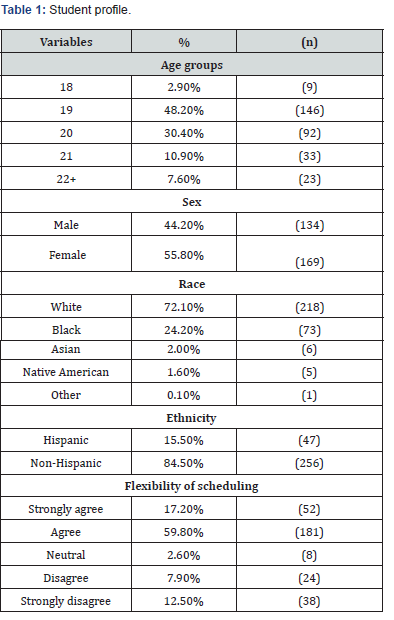
As explained previously, the study sample began with 334 eligible students enrolled in seven 200-level criminology/ criminal justice courses within a liberal arts university in the midwestern United States. Thirty-one students were removed from the study for (i) having dropped or withdrawing from the course or (ii) not completing their self-administered surveys. Therefore, 303 students were used for the analysis of this study. Students were asked to complete a short open-ended self-administered questionnaire at the beginning of the course. Responses were relevant to establishing a baseline of data points to understand the profile of the sample (Table 1 below). Table 1 provides a general demographic profile of the 303 students enrolled in the study. In terms of age distribution, a substantial majority (92%) of undergraduate students were aged 21 21 or under which would suggest that it would be typical of a traditional university 200-level course. Women represented a larger percentage (55%) of the students enrolled in the criminology/ criminal justice courses which mirrored the University’s student body demographics. 

The majority of students enrolled in courses self-identified as White (72%) and a large concentration of students self-identified as Black and/or African American (24%). Asian (2%) and Native American (1.6%) students were also well represented in the course, which closely resembled the student body population of the institution. The University campus in which these courses were facilitated in have a diverse population across it from large concentrations of Black and African American residents (16%) as well as Hispanic/ Latino residents (14%) which mirrored the student body populations of 21% and 15% respectively. Within this study, approximately 16% of the students self- identified as Hispanic and/or Latino. These demographic numbers on race and ethnicity would suggest that visible minorities were slightly oversampled in terms of their population in the area and within the student body population. While this may have an impact on results of the study, this profile of students was somewhat representative of the Institution’s student body. 

In an effort to test for student motivation and needs, the pre-test questions probed for students to reflect on whether flexibility and convenience (in time, travel to campus) was a factor for selecting a particular form of course instruction. A significant percentage of students enrolled in these courses agreed (60%) or strongly agreed (17%) that flexibility and convenience of scheduling impacted their decision on which ratio of blended learning instruction they would select. Approximately 3% of students reported a neutral response however, over 20% of students reported it would not affect their decision. This might suggest a number of factors that were not studied from whether a student was already on campus and felt more online instruction may not be useful, that a student’s schedule did or did not allow for revisions and whether this course should have been introduced to students with more advance warning could have impacted a student’s decision.

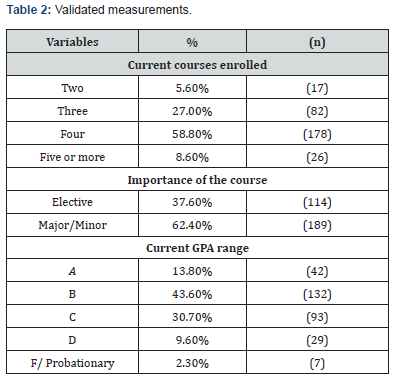
These findings would substantiate the importance of flexibility and convenience that student’s require and perhaps why students may consider blended or online learning. However, as noted above, this was not an issue for nearly one in five students. Student profile data attained from pre-test surveys was also corroborated with a more rigorous and valid reporting measurements attained from the University Registrar. Table 2 examines the validation measurements that were used to also generate variables of interest for further predictive analysis.
Within Table 2, undergraduate students enrolled in the seven criminology/ criminal justice courses were asked to provide their student number so that further variables (their current course load, their designated field of study and current grade point average) could be utilized as a more valid representation of their student history at the Institution. A significant percentage of students (94%) were currently enrolled in three or more classes, which is considered a full-time course load. Additionally, there were more students (8%) were taking the most courses allowed (without permission at five courses) than those students who were only taking two courses in the semester they were taking this course (7%). This finding would suggest that there were no students taking this course as their sole component of their university workload. This would suggest (not accounting for students who may be registered students at another university and the University where this study was conducted) that the findings identified in this study may be significantly different than those studies who may be unaware or not have controlled for course load. This is why the methodological approach within this (exploratory) study will likely generate unique findings that could be more consistent with traditional university students taking larger course loads than those students who are enrolled as part time or single course consumers.

The relative importance of the course was another variable of interest that is often not considered particularly pertinent or tested within the literature. Within this study, there was an expectation that undergraduate university students who are more likely to engage in a designated career path (in this case criminology/ criminal justice) may feel that face to face course work might be more ideal or are more motivated to take face to face courses versus students who enroll in the course to fill an elective within their liberal arts degree. This 200-level course was a pre-requisite for additional courses within the degree program and as such, a majority of the students (62%) had enrolled in these seven courses to fill that pre-requisite for their major/minor of study in criminology/ criminal justice. A smaller but still relatively large component of the students participating in this study (38%) had enrolled in the course either in fulfillment of their liberal arts degree requirement, as an elective and/or not having declared a major or minor in criminology/ criminal justice (which would have likely occurred prior to this course). This finding would suggest that there is still significant variance within the variable that the author felt could be a concern for further analysis. A final variable of interest that was validated through University records was a student’s cumulative grade point average (GPA), A student’s GPA would be compiled from their course work within the University and any other courses they may have transferred into from previous universities or colleges. 

This study purposely chose to use validated University records rather than selfreported scores from students as they would be more reliable and accurate considering that GPA is generally from a score of zero to a 4.0/4.5. Once a student’s GPA was coded, it was then categorized into University pre-determined values of an A, B, C, D and F and/or probationary status. Most students may characterize themselves as excellent however, a validated assessment of student GPA found that only 14% had attained a cumulative A average. The predominant number of students had attained a B (44%) and C (31%) cumulative GPA. Approximately one in ten students (12%) were considered at more high risk of poor or failing cumulative work. Obviously, the finding here is that a large majority of students had completed coursework in a good to fair job prior to enrolling in the course. As such, they may be inherently more likely to be satisfied with their previous work while also be very concerned with their grade in this course. Throughout the survey process, students were asked to select their mode of instructional delivery (viewed below).

Table 3 highlights the student self-selection and/or reselection of online instructional delivery within the seven criminology/ criminal justice courses. As viewed above, 45% of students preferred the 70:30 blended option of course instruction; where 70% of the course would be taught face to face (F2F) and 30% within an online environment. Approximately 2$% enrolled in a 10% online learning environment, similarly to 20% of students who selected a 70% online environment. Only 10% (31) of the 303 students selected an almost entirely 90% online environment. It should be noted that at no point in time, across all seven classes did any one student ever ask or want to select an option of 100% face to face. While this was not an option that students were offered, no one student even chose to ask. This in and of itself, was an interesting finding as there would be an expectation that if 20% of students who reported that convenience and flexibility was not an issue, that one of those students or perhaps other students who had performed well in traditional face to face courses may not want to change (and/ or choose to register/ enroll in this study). As explained within the methodology, to offer students additional flexibility and/or a choice, students were offered the opportunity to revise their initial blended course delivery. When provided this opportunity, 10 students revised their initial choice. This accounts for only 3% of all students. 

This would suggest that 97% of students were satisfied with their initial choice. Therefore, this study can infer that students appear to be confident in determining which level/ ratio/ interval of online instruction they favor. This might suggest that offering this option to traditionally based F2F courses may not require instructors to be overly concerned about student’s ease of access or uncertainty over their initial decision. Of the 10 students who revised their initial instructional delivery, each of these 10 students initially chose less face to face engagement (90:10 or 30:70). When asked to re-select their desired blended course instruction, 10 of 10 students re-selected options with more face to face interactions. Similar to the initial student selection process, no students wanted or preferred a re-imagined 100% face to face course. Operationalizing Twigg’s [31] classification of blended learning, a majority of undergraduate university students selected a replacement (25%) or supplemental approach (48%) rather than an emporium approach (26%). This finding suggests that students in this study preferred higher intervals of face to face instruction than higher ratios of online instruction. Reiterating what was mentioned previously, no one student sought out an entirely face to face traditional course which they originally enrolled in. These findings would infer that students did appreciate the opportunity to select their own instructional delivery. However, Might this appreciation have an impact on satisfaction?

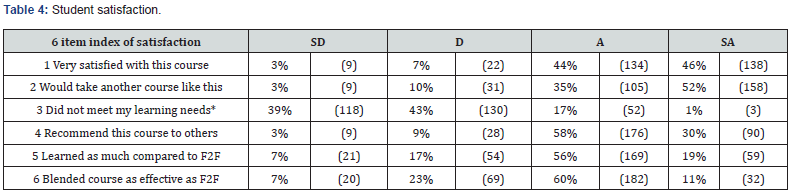
To assess student satisfaction, participating undergraduate students were asked to complete a follow-uo post-test survey once the course was complete and grades assigned. The six-item index of satisfaction was developed by Strachota [33] and further redesigned into what she coined as the Student Satisfaction Survey (2006). Table 4 highlights the findings of the general satisfaction of students within the sample. To pilot her survey instrument, Strachota [8] found this general satisfaction dimension had a reported.90 Chronbach alpha (ranging from zero to one) which is exceptional. The findings from Table 4 indicate that students enrolled in seven 200-level criminology/ criminal justice courses were very satisfied with the course utilizing Stachota’s general satisfaction survey (2006). Nine of ten students agreed or strongly agreed with the statement that they were very satisfied with the course while only 3% (9) of the 303 students reported being very dissatisfied with the course. Nearly the same percentage of students (87%) reported that they would take another selfselected blended instructional course again if it was offered. Further extrapolating the data, one in ten (12%) students reported that they would not recommend this course to others. When considering learning needs, there was significantly more variation in student responses. Approximately eight in ten students (82%) agreed or strongly agreed that the course met their learning needs with 18% reporting the course did not meet their learning needs. Three-quarters (75%) of respondents agreed or strongly agreed with the statement that they learned as much in this course (as compared to other face to face courses they had taken previously) [34-40].

Interestingly, 30% of students reported that they generally believed that blended courses would not be as effective as face to face courses. Therefore, the student responses to satisfaction in the course report some unusual and contradictory findings where students appear to have been very satisfied with the course, there were issues whether they would take another self-selected course (despite previous frequency distributions which inferred some level of appreciation) and/or whether the learning and instruction met their needs. It could be concluded that perhaps the instructor’s learning and/or instructional materials may not have matched the expectations of students. More research is certainly need to justify this potential inference. To assess and predict student satisfaction, an ordinary least squares (OLS) linear regression was utilized for further analysis. As such, survey item/ statement three required a change in coding to ensure that each of the six item likert scales could be aggregated from strongly disagree (0) to strongly agree (3); within the appropriate direction. This allowed for the generation of a larger index of scores from 0-18. As seen in the frequency distributions above, there was enough variability in each of the variable to make conclusions about the potential relationship of that variable (age, sex, race, flexibility, course load, fulfillment of course credit, GPA and student choice of course instruction) and general satisfaction. Student self-selection was coded appropriately from low online instructional delivery to high) [41-50]. The OLS regression data is below.
The linear regression model, located in Table 5, was found to be statistically significant (.001 with a confidence level of 95% with the p < .05 being significantly different than zero). Student self-selection and seven variables of interest were found to explain 48% of student satisfaction based on the Nagelkerke R Square (.482). The regression reported a Chi-square of 209.46 and a model -2 Log likelihood of 111.29 (with 8 degrees of freedom). Four cases were removed from the analysis when the variance inflation factor (VIF >4) and tolerance (TOL) levels of 2.0 or above were controlled for. Student self – selection of instructional delivery was found to be the second most important variable to predict student satisfaction. This finding would suggest that the lower the ratio of online blended learning, the higher the likelihood of student satisfaction. Put another way, the higher the percentage of independent or online learning within courses, the more likely students in this sample would be dissatisfied. This finding suggests that as interval levels of blended learning increase, it can have a detrimental effect on student satisfaction. This might suggest that not all blended learning is the same and that there may be tipping points where satisfaction may become dissatisfaction. However, it should be noted that student choice of instructional delivery was not the only statistically significant variable within the model (based on the Beta values) [51-59].
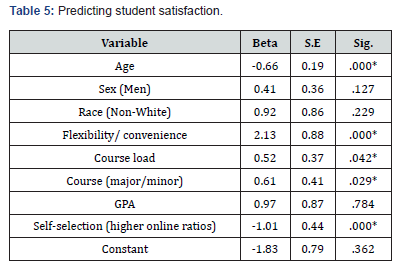
The most significant predictor of the course satisfaction regression model was the flexibility and convenience of the course offerings. This is consistent with previous research in the field in that blended learning courses can predict student satisfaction. This suggests that not only is flexibility important in scheduling but additionally, that those students who enroll in more courses within a semester are more likely to be satisfied than students who enroll in lower numbers of courses simultaneously. The evidence, supported by the data, suggests that age was also a predictor of satisfaction. It appears that older students who participated in the study were more likely than younger adults to be dissatisfied with the course. This is somewhat surprising as it could be hypothesized that older students may be more likely to require more flexibility and convenience (due to employment, child care, etc.). However, this could be a case where ease of use (as explored in the literature) may have been an impact variable rather than age. Other demographic variables including sex and race were found to not have any statistical significance within the model. This is consistent with some of the research findings [16]. Students with higher course loads appeared to be more satisfied with the course. This could be due to the opportunity to have a more balanced and/or flexible schedule however, it is more likely that attaining more course independent time to complete work and assignments had an impact. However, more research is needed before this can be verified but it is certainly an interesting finding. A finding not often examined in the research is whether student interest or motivation, as denoted by a student’s major or minor level of study, has an impact on their reported satisfaction. The data suggests that students who had declared a major or minor in the study of criminology/ criminal justice were more likely to be satisfied with the 200-level criminology/ criminal justice course they enrolled in. Therefore, students who utilized this course as an elective for their liberal arts degree were less likely to be satisfied with the course. This might suggest that how the instructor constructed this course may have inherently benefitted students who declared a major or minor in the field of interest versus those who may have had less interest in the course content. Obviously more research is necessary to understand how student motivation impacts satisfaction.

Implications

As an exploratory case study, the findings of this research would suggest that more examination of blended learning and intervals/ratios of blended learning need to be examined. Simply offering blended learning does not have an impact on course satisfaction (as all forms of instructional delivery in this study had some form of online delivery). This would suggest that there is a tipping point where students find satisfaction with the blended offering but too much blended learning (using the instructional delivery explained within the methods section) has an inverse relationship to student satisfaction. This study finds that student selected ratios or intervals of blended learning that offer more face to face interaction rather than less result in higher levels of student satisfaction. This finding would certainly suggest that while students appreciate the convenience and flexibility of hybrid and blended instruction, they still want (in this instructor’s course) face to face interactions. Therefore, when constructing courses, instructors should be diligent to ensure that they are present and that students receive that face to face time (that even digital recordings are unable to capture). That rapport and relationship building appears to be important to student satisfaction in this study (however more in-depth research is needed). However, as expressed in the literature review, there is no perfect one size fits all strategy to implement blended learning as each instructor will construct their own course, based on their needs and the needs of their students.

As referenced in the literature, convenience and flexibility remains a significant factor when understanding the circumstances students face and satisfaction within their courses. This also may hold true for instructors as well. With a relatively good variance explained within the model, there appears to be hope on the horizon that the use of this a consistent construction and design of a course could reap benefits with instructors and students alike (without significant revision each year). While more research is needed to identify more conclusive findings, blended learning is an increasingly attractive alternative to traditional face to face or online learning and has a significant impact on a student’s or consumer’s satisfaction particularly post-COVID-19. As students continue to search their desired instructional delivery it would be wise that instructors consider offering more choice and selection to ensure each student can attain their desired learning interactions within the same class based on their motivations. Allowing student self-selection also might alleviate the finding that with more online instruction, Allowing student discretion to make their instructional delivery selection places more emphasis on their decision making rather than potentially blaming one form of instructional delivery over another. Despite these findings, it is clear that more research is needed on intervals of blended learning, stronger comparison groups and how student selection impacts not simply student satisfaction but also grade attainment and/or other measures of student success.

To Know more about Annals of Social Sciences & Management Studies

To Know more about our Juniper Publishers

Click here: https://juniperpublishers.com/index.php 

Wednesday, June 2, 2021

The Internet of Things is Applicable in Greenhouses - Juniper Publishers

Robotics & Automation Engineering Journal - Juniper Publishers

Introduction

The industry of growing plants in conditions of artificial microclimate today uses devices that connect to the Internet. The Internet of things in the industry of growing plants create a “smart” greenhouse with improved performance that can bring more profit, to improve the ease of maintenance of technological equipment, and provide efficient flow of the technological processes at all stages. The industry of growing plants and the construction industry of greenhouses are divided sectors, design and construction of greenhouses occur in different geographical regions. Online greenhouse provides a unique opportunity to solve many technical problems at the initial design stage. The system in the presence of sensors in the early stages of construction of the greenhouses will allow you to monitor the progress of construction. Constant monitoring of the process of construction for compliance with the project allows you to cut costs, avoid mistakes and make decisions, checking the results of calculations in real time in the design office at any place of work with the system.

IoT-technology can solve many problems. The energy is distributed rationally between the systems of the microclimate. Monitoring and forecast is made for weather conditions. The control monitors the technical condition and location of equipment in real time. The full provides information about the condition of the plants. The staff analyzes current and historical data, then makes decisions which allows a more efficient use of process equipment, saving time and fuel. The online greenhouse is a from a technological point of view, the consolidation of critical components of the greenhouse as part of a single network to provide them access to each other and exchange information. A network of sensors provides communication. The sensors are part of the technical equipment and interacting with one another. Sensors produce information which is received and accumulated throughout the life cycle of the greenhouse.

IoT- technologies should be used in research work. The problem requires new innovative solutions. Technological method grows plants on the basis of three elements of aeroponic technology with the use of led lighting and instrumentation system for automation of control of technological processes based on IoT technologies. A conceptual model of the industry of growing plants contains two test-object: synthetic adjustable microclimate and plants. Artificial microclimate creates habitat for plants using engineering equipment. Engineering equipment is formed in a separate lighting systems, heating, conditioning, ventilation, irrigation, power, gas composition and so on. The system of microclimate maintained automated control systems using measurement and control equipment to coordinate the operation. Currently ignored three facts. The first fact artificial microclimate shape the technologies that plants subjected to the action of physical fields of different nature: optical, electrical, magnetic and other.

The second fact artificial microclimate depends on the capabilities of biotechnology, where there is a large Arsenal of different tools and techniques to create plants with specific parameters and qualities. The third fact artificial microclimate is not able to establish a direct relationship with the plants. I conducted an analytical review of existing scenarios, organization of a scientific experiment. The object of research is led lighting in the artificial microclimate and the response of the plants. Problem associated with LEDs and plants showed that despite some progress, the technology remains poorly applicable in practice. The results of many studies pay attention to individual approach to each plant. The choice of factors and the criterion is done empirically. According to the analysis made preliminary conclusions that the problem for the industry of growing plants is:

1) Construction of an artificial microclimate require large capital investments. Evaluation of the efficiency of greenhouse production gives a low degree of forecast process

2) Development of technologies for growing plants in conditions of artificial microclimate associated with a long preparatory phase material and time costs

3) Requires large number of laboratory data obtained in experimental models

4) The results obtained in the study correlated poorly with the scale of production

5) Scatter the recommended parameters of the artificial climate for different crops is quite wide, and therefore requires an individual approach to each plant according to varietal characteristics

6) Empirical search of certain combinations of characteristics of temperature and humidity environment, light environment, a gas environment and a nutritious basal medium

7) Search for plants with the appropriate internal genetic potential for adaptive plasticity

Our study is intended to prove that the solution of problems related to the methodology of scientific research system of artificial climate, requires a comprehensive interdisciplinary approach. The main goal of our study is to develop a structural organization of a scientific experiment to study the response of plants to an led system using IoT-technology.

Research is important to overcome the difficulties associated with the study of the peculiarities of the process of growing plants under LEDs in conditions of artificial microclimate. Difficulties arise in the complexity of the organization of the technological process, which is a combination of many interrelated subsystems, as well as imperfect methods and the mathematical apparatus, which does not allow to adequately describe such a set.

Plant as an object of study should be characterized with more General methodological positions. As one of them can be a system approach, is the methodology of scientific research and practical development of complex object. In this case, in the first place is not an analysis of the constituent parts of the object, and the characteristics of the system as a whole, disclosure of the mechanisms and linkages that maintain the integrity of the object. Structural-parametric modeling and optimization of led lighting, underlying the proposed information technology are the rational change components of the light environment, depending on the condition of the plants in the dynamics of the vegetation development. Thus, the concept of biofeedback through the accumulation of a complete image as metamerism design of set logic the system should be more efficient than the classical concept of traditional Cybernetics and systems analysis. Attempts to mathematically postulate what should be a parametric climate, how it should react the plant, the phenomena outside their holistic entirety, will remain in the framework of private applied research. The proposed concept will now, at the level of modern technical equipment and data management systems to guarantee the proper functioning of the systems of artificial microclimate, create intelligent bioengineering systems such as virtual greenhouses.

To Know more about Robotics & Automation Engineering Journal  

To Know more about our Juniper Publishers

Click here: https://juniperpublishers.com/index.php 
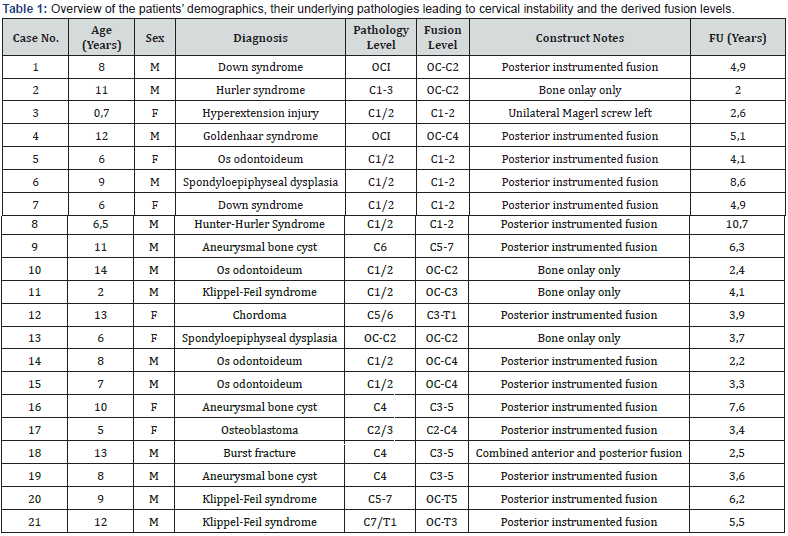
Tuesday, June 1, 2021

Opinion on The Development of Nanotechnology for Treatment of Coronaviruses - Juniper Publishers

Drug Designing & Development - Juniper Publishers


Opinion

The pandemic of innovative coronavirus disease (COVID-19) is an unparalleled public health danger. The disease was discovered in late December 2019 in Wuhan, Hubei Province, China, with an exceptionally high rate of spread. The virus that causes COVID-19, identified as Severe Acute Respiratory Syndrome Coronavirus 2 (SARS-CoV-2), has infected over 118 million people and caused 2.5 million deaths in 216 countries, with the numbers continuing to rise. There are currently no officially licensed vaccines or antiviral drugs for the treatment or prevention of COVID-19. Numerous therapeutic techniques have been tried since its discovery, such as the use of repurposing drugs including broad-spectrum antivirals, immunomodulators, plasma therapies, protease inhibitors, and nucleoside analogs, among others. However, these methods have not demonstrated substantial clinical benefits and are only used to relieve symptoms. Nanotechnology has evolved in recent decades, allowing us to build new nanomaterials and progress in the application of new technical tools.

Nanotechnology-based clinical solutions are a potential way to get around the limitations of COVID-19 prevention, diagnosis, and treatment [1]. Nanomaterials with antiviral activities may be used in personal protective equipment and disinfection procedures to avoid SARS-CoV-2 infection [1], as well as nanomaterials-based vaccines or immunomodulators, to control this disease [1,2]. Nanomaterials can also be used in diagnosis to develop simple, fast, and low-cost detection methods for SARS-CoV-2. For care, nanosystems are used to deliver antiviral and biomolecules to the pulmonary system in a controlled manner, for example, to prevent viral replication or prevent the growth of viral particles [1]. Nanotechnology has the ability to have major benefits in the treatment of emergency viral diseases like COVID-19 [3]. Nanoscale structures, as opposed to macro and micro components, have different physicochemical and biological properties, as per the Food and Drug Administration (FDA). Drug encapsulation in nanocarriers, for example, allows for more precise monitoring of drug release in target sites, increased biocompatibility, and decreased toxicity in healthy tissues [4]. Nanomaterials also prevent infectious infection from the air and interaction with contaminated objects, which could be particularly useful in the sterilization of protective equipment and in a hospital setting. Nanomaterials also have optical and electrical properties that have been studied extensively in the development of diagnostic tools, such as point-of-care (POC) biosensors. Nanoparticles, which allow us to identify the study at low concentrations, may boost the sensitivity of detection. These techniques aid in the rapid diagnosis and exclusion of SARS-CoV-2 infected individuals, as well as the treatment of those infected. Nanomaterials’ interactions with biological interfaces are the framework for their future (bio) medical applications [5]. By allowing new and improved ways of prevention, diagnosis, and treatment, nanotechnology opens up new possibilities in the battle against COVID-19 based on the properties and advantages of nanostructured systems (Figure 1).

Gold nanoparticles (AuNPs) are one of the most appealing nanomaterials because they have optoelectronic properties that can be investigated by a number of biosensors, including spectrofluorimetric, electrochemical, and plasmonic detection systems [6]. AuNPs have been commonly used to mark the target molecule in lateral flow assays (LFAs), resulting in a color shift in the test zone that can be read by the naked eye for qualitative results or analyzed by a smartphone that can assess the concentration of the target from a recorded picture [7].

LFAs biosensors have recently been used to diagnose COVID-19 and are now being distributed to healthcare systems to allow for highly centralized testing [9]. Other colorimetric monitoring systems, in addition to LFAs, investigate the redshift in the LSPR band of AuNPs when they collate. The most main characteristic strategy is to functionalize these nanomaterials with biomolecules, which causes the AuNPs to aggregate and cause a color change in the solution when they bind to the target molecules (Figure 2). Importantly, because it is based on the optical properties of AuNPs, this colorimetric assay can significantly contribute to COVID-19 management by providing a quick and simple diagnosis.

Nanomedicine is a valuable resource in the fight against innovative coronaviruses, but its application in clinical practice still faces significant challenges, most notably in vivo behavior, nanocarrier toxicity, and industrial scale production. Other critical issues include a lack of understanding of the specific characteristics and aspects of disease physiopathology, the processes involved in the nano-biointerface, as well as cytocompatibility, safety, and regulatory issues. COVID-19-specific features and the physicochemical properties of nanosystems can be investigated and used to design customized nanostructures for specific therapeutic purposes, with the goal of neutralizing the current threat to global public health and developing more sustainable nanotechnology-based approaches. Although these factors have not yet been thoroughly investigated, they are critical for the safe and effective application of nanotechnologies to combat SARSCoV- 2 infection. 

To Know more about Drug Designing & Development

To Know more about our Juniper Publishers

Click here: https://juniperpublishers.com/index.php 
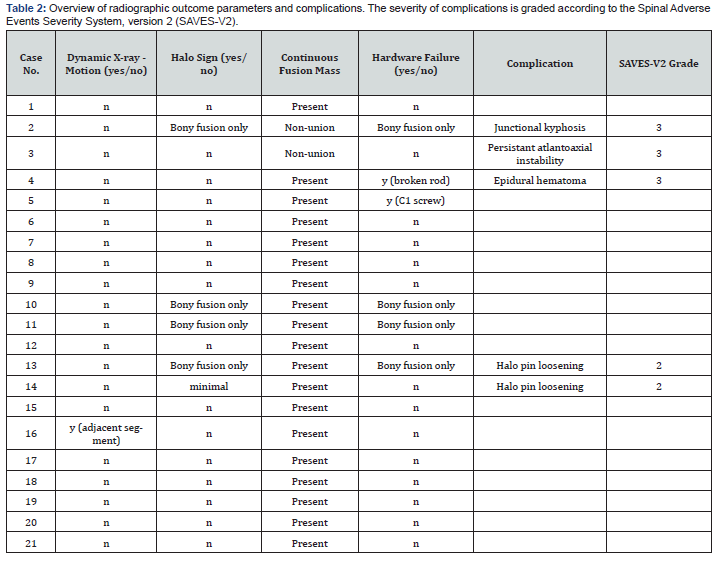
  

Artificial Intelligence System for Value Added Tax Collection via Self Organizing Map (SOM)- Juniper Publishers

  Forensic Sciences & Criminal Investigation - Juniper Publishers Abstract Findings:  Based on our experiments, our approach is an effec...