Thursday, January 23, 2020

Granulated Slag Based Autoclaved Sand-Lime Bricks-Juniper Publishers

Civil Engineering Research Journal


The mechanical properties of sand-lime bricks produced by autoclaving under different conditions and incorporation of granulated slag have been investigated previously. In this study, the relationship is established between the structure, the phases formed and the strength. Based lime and granulated slag a new binder is developed. This is cured at saturated vapour pressures of 1.0 and 1.8MPa. The results showed a decrease in compressive strength due to the substitution. The microstructure analysis showed that reaction products consist mainly of 11Å tobermorite and xonotlite. Also, when increasing the autoclave temperature, it results in an increase in xonotlite relative to tobermorite. The X-ray diffractions of these phases are very low hardly visible, they are masked by the presence of quartz. Their intensities increase with the presence of slag.
Keywords: Sand lime bricks; Autoclaving; Granulated slag; Tobermorite; Xonotlite

Introduction

Calcium silicate brick is considered to be one of the advanced building materials in world and is made by hydrothermal reaction between sand or siliceous materials and lime. Despite many previous studies, several aspects of the reaction are still incompletely understood [1-3]. Under saturated vapour pressure and a temperature varying between 170 and 200 °C, fine-grained quartz (which is insoluble at ambient temperature) becomes chemically active and reacts with hydrated lime “Ca (OH)2”. This gives hydrated calcium silicate that is solid, resistant and insoluble in water [4]. These phases are often regrouped in the tobermorite appellation. The best known being the 14Å, 11Å or 9Å tobermorite; some are termed ‘normal’ while the others are called ‘anomalous’ with a Ca/Si ratio of 0.8-1.0 [5-7].
By virtue of its chemical composition, which is close to that of cement, the blast furnace slag can also be used instead of lime in the sand-lime materials. The rapid cooling of the slag results in a metastable glassy structure that favors its reaction with lime under specific conditions [8]. The blast furnace slag is known to possess latent hydraulic activity; i.e., it shows cementitious properties when in contact with water over a long period of time [9]. A chemical activation is necessary to start germination [10]. In addition, slag can also be reactive by thermal activation (in steam room and autoclave) [11].

Materials and Testing

Materials

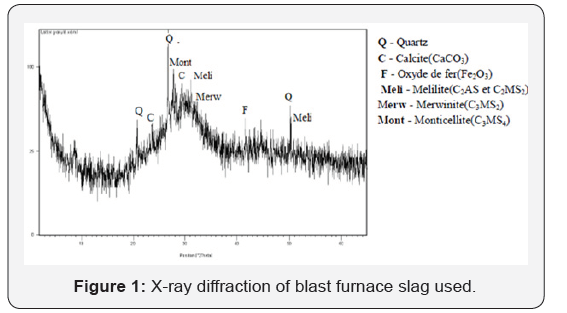
Granulated blast furnace slag (GBFS): The granulated blast furnace slag was provided by ArcelorMittal steel factory (situated in the east of Algeria). The chemical characteristic of slag is shown in Table 1. The slag was ground to a fineness of about 350 m2/kg (by Blain’s method) in a laboratory ball mill. Figure 1 Indicates the XRD patterns of the BFWS used. The crystal structure of GBFS is almost entirely amorphous since the XRD peaks are hardly identified. The angular band between 25° and 35° (2θ) could be attributed to a significant proportion of amorphous structure (glass). However, traces of mellilite, merwinite and probably monticellite at 2θ = 27.7°, can well be distinguished on more crystallized portions of granulated slag. It is likely that some slag agglomerates underwent partial crystallization during the cooling process. In addition to these minerals, traces of quartz, calcite and iron oxide are present [12-14].
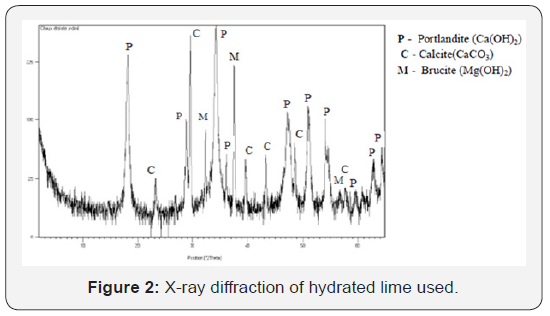
Hydrated lime: The quick lime is also collected from the ArcelorMittal Steel plant. Extinction and grinding were carried out at the Civil Engineering Research Laboratory, Annaba University. The chemical composition of the hydrated lime is given in Table 1. The X-ray diffraction diagram (Figure 2) shows a mineralogical composition of the hydrated lime primarily composed of portlandite Ca (OH)2. The presence of calcite is also noted. This is likely to be the result of carbonation of the portlandite. The brucite Mg (OH)2 (magnesium hydrate) is also identified: the limestone being slightly dolomitic.
Sand: The sand used in this work is collected from the siliceous dune sand of El-Kala area, eastern Algeria. It was ground to a specific area of 232.5m2/Kg and its chemical composition is given in Table 1.
Testing: To characterize the autoclaved sand-lime bricks, the cylindrical samples of 50mm in diameter and slenderness ratio of 2 were made by pressing in a hydraulic machine at a pressure of 20MPa. On the basis of previous study (Arabi 1988), a mixture of 20% hydrated lime and 80% ground sand was then humidified to 10% water. The granulated slag replaces hydrated lime partially. The samples were then put in a laboratory autoclave apparatus with 1.0 and 1.8MPa saturated vapour pressure corresponding to temperatures of 176° and 204 °C respectively. The cyclic treatment in autoclaving was 10 hours: 2 hours of progressively rising temperatures followed by 6 hours conservation at constant temperature then 2 hours of cooling by ventilation. The average of three tests results for each mixture was taken to characterize the compressive strength.

Results and Discussion
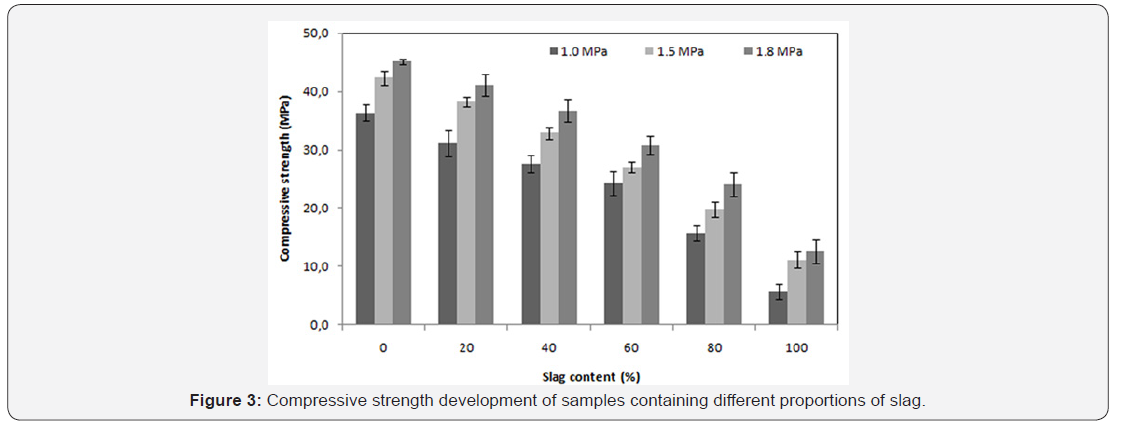
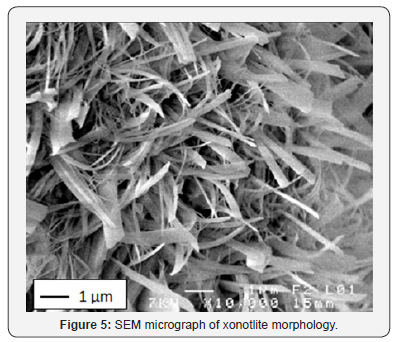
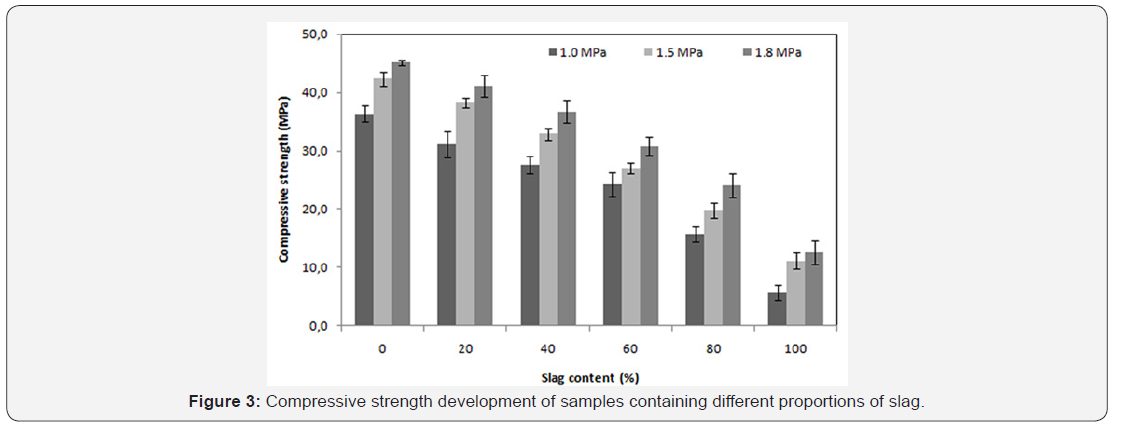
The mechanical strength is observed to improve significantly when the saturated vapor pressure, inside the autoclave, ranges from 1.0 to 1.5MPa. On the other hand, for the case of 1.5 to 1.8MPa saturated vapour pressure a slight improvement is noticed Figure 3. A significant increase of curing temperature can result in the phase breakdown followed by recrystallisation of other phases with weaker properties at microscopic scale (or at crystal scale). In the work reported by Black et al. [15]. concerning xonotlite and was not general to hydrothermally formed phases, an increasing synthesis temperature led to larger crystals, but the crystals also appeared to have split along their length. This case is also observed in this study: there is a conversion of the tobermorite to xonotlite. Figure 4 shows well-crystallized tobermorite in the form of dense and entangled platelets, whereas xonotlite is in the form of very fine interwoven needles Figure 5. However, at material scale the interleaving of xonotlite needles insures an improvement of mechanical strength.
The X-ray powder diffraction patterns Figure 6 shows a significant presence of portlandite in the sample without slag. The decrease of portlandite is induced by pozzolanic effect when the slag partially replaces hydrated lime, is also due to dilution. Portlandite disappears completely for mixtures to 60 and 100% granulated slag. The XRD patterns show at used temperatures and in the presence of slag, the poorly crystallized phases appear. The spectral line more visible is located at 7.8° 2θ; the XRD patterns from sample without slag do not show clearly.

Conclusion

It should be underlined the complexity of the CaO-SiO2-H2O system under hydrothermal reaction and saturated vapour pressure is widely discussed for many years. The presence of slag with almost a complete amorphous structure under such conditions, does not release new hydrate phases other than those known in similar conditions. The relatively high concentration of calcium ions is required for hydrate formation; the presence of lime is found to be essential as an activator for slag. The mechanical strengths are closely related to composition of mixtures. It was estimated that the increment of temperature has not an influence significant in improving resistance (in this study). However, the temperature acts much more on the morphology and crystalline degree of C-S-H. The usual forms of tobermorite and xonotlite are distinct and are not disturbed by the presence of slag. The investigation of phases by X-ray diffractograms is complicated by the presence of quartz (well crystallized and intensities that mask other phases).

To Know More About Open Access Journals Please click on: ttps://juniperpublishers.com/index.php


Wednesday, January 22, 2020

Stem Cells to Improve the Wound Healing-Juniper Publishers

Journal of Head Neck & Spine Surgery

The cellular therapy using Mesenchymal Stem Cells, specially its two subtypes - Bone-marrow Mesenchymal Stem Cells and Adipose Derived Stem Cells - can benefit by virtue of the possibility of differentiating in specialized cells that secrete and suppress growing factors and cytokines necessary in the lesion niche. When attracted by the pro-inflammatory sinalization of the lesion, they act using the paracrine signaling, decreasing the inflammation, increasing the angiogenesis and the cell migration and proliferation. The development in the researches regarding the association of the application of MSCs, with reconstructive surgery practices, leads to effective future results that can bring more benefits to the clinic practice of this field. This paper has the objective of briefly reviewing the literature about the usage of MSCs and its subtypes, the ADSCs, to improve the skin cicatrization.
Keywords: Mesenchymal stem cells; Adipose derived stem cells; Bone-Marrow Mesenchymal Stem cells; Skin flaps; Skin grafts; Wound contraction; Paracrine signaling; Pro-inflammatory Interleukins; Anti-inflammatory Interleukins.
Abbreviations: MSC: Mesenchymal Stem Cells; HLA-DR: Human Leukocyte Antigen; ADSC - Adipose derived stem cells; BM-MSC: Bone-Marrow Mesenchymal Stem Cells; SDF1: Stromal Cell-Derived Factor; PDGF: Platelet-Derived Growth Factor; IL: interleukin; TNFα: Tumor Necrosis Factor-α; IFNγ: Interferon-γ; VEGF: Vascular Endothelial Growth Factor; BFGF: Basic Fibroblast Growth Factor; EGF: Epidermal Growth Factor; KGF: Keratinocyte Growth Factor; HGF: Hepatocyte Growth Factor; PDGF: Platelet-Derived Growth Factor; TGF-β: Transforming Growth Factor-β; FGF: Fibroblast Growth Factor; α-SMA: Alpha-smooth muscle actin's; IRI: Ischemia-Reperfusion Injury

Introduction

Mesenchymal stem cells (MSCs) were first described by Friedenstein et al. [1,2]. MSCs are heterogeneous cell populations, called multipotent adult cells or somatic stem cells [3,4], capable of differentiation in most cell types in order to maintain and repair the organism. They are resident in different organs and tissues such as adipose tissue [4,5], bone marrow, umbilical cord, amniotic membrane [2,4], kidneys, liver, spleen, lungs, pancreas, tendons, synovial membranes, placenta, amniotic fluid and dental pulp [4]. The International Society for Cellular Therapy proposed three minimal criteria for defining MSCs:
    a) Plastic adherence;
    b) Positive expression (greater than 95% of the cell population) for CD105, CD73 and CD90 markers and negative, (maximum 2% of the population) for CD45, CD34, CD14, CD11b, CD79a, CD19 and Human leukocyte antigen (HLA-DR) surface molecules, and
    c) Ability to differentiate into osteoblasts, adipocytes and chondroblasts under standard in vitro differentiating conditions [2,6].
    Later, others researchers complemented this characterization with new markers: CD13, CD44, CD54, 106 and Stro-1 [4] and the presentation of fibroblast cellular morphology [3,4].
MSCs have a great potential to the tissue repairment and regeneration in reconstructive plastic surgery, preventing ischemic lesions in skin flaps [7-14] and in skin grafts [15,16]. MSCs are capable of reducing severe atrophy, retraction, fibrosis and ulceration skin signals, caused by radiotherapy [17,18]. Combined with the lipoinjection in face and body defects and in rejuvenating esthetic treatments, MSCs raise in 35% the survival rate and the microvasculature from the injected fat [18]. Also, diabetic patients with ischemic wounds show greater survival rates and lower number of amputations in affected limbs, when treated with Adipose derived stem cells (ADSCs) [19]. The MSCs improved the skin healing at induced burns in rats [20,21]. In dermatology, the MSCs are being clinically used for inflammatory diseases [22-28], Graft-Versus-Host Disease [23,25], Chrown Disease [29], Systemic Sclerosis, Lupus or dermatomyositis [24,28,30].
When compared with the usage of Growing Factors, that like any drug has a limited half-life, the cellular therapy using MSCs, specially in its two subtypes - the Bone-Marrow Mesenchymal Stem Cells (BM-MSCs) and ADSCs - can bring greater benefits because of: their expansion capacity in cellular culture; stable phenotypic expression; and possibility of differentiating in specialized cells, that secrete and suppress cytokines and growing factors in the injury [13,31-33]. However, long expansion periods of the cellular culture, to achieve effective therapeutic doses, raise the possibility of infection from the host. Because of that, the ADSCs still have to be heavily studied to the application in the clinic routine [2]. This way, this study has as objective briefly review the literature about the usage of MSCs and its subtypes, the ADSCs, to improve the skin healing.

Discussion

The MSCs are capable to answer and adjust their functions, when exposed to cells or typical factors of the lesion environment [33,34]. They have an attraction capacity to the inflammation areas [33-35] or tumors, because of the molecules CCL21 or HMGB1, known as homing. In case of lacking of this signalization, they are attracted in order of preference to the lungs, liver and spleen [35]. The MSCs show chemotaxis in vitro by the Stromal Cell-Derived Factor (SDF1), Platelet-Derived Growth Factor (PDGF), Insulin-Like Growth Factor-1, Interleukin-8 (1L-8) and Tumor Necrosis Factor-α (TNFα). In murine models, the MSCs used in the systemic administration are capable of getting into the damaged tissues [14,34,36].
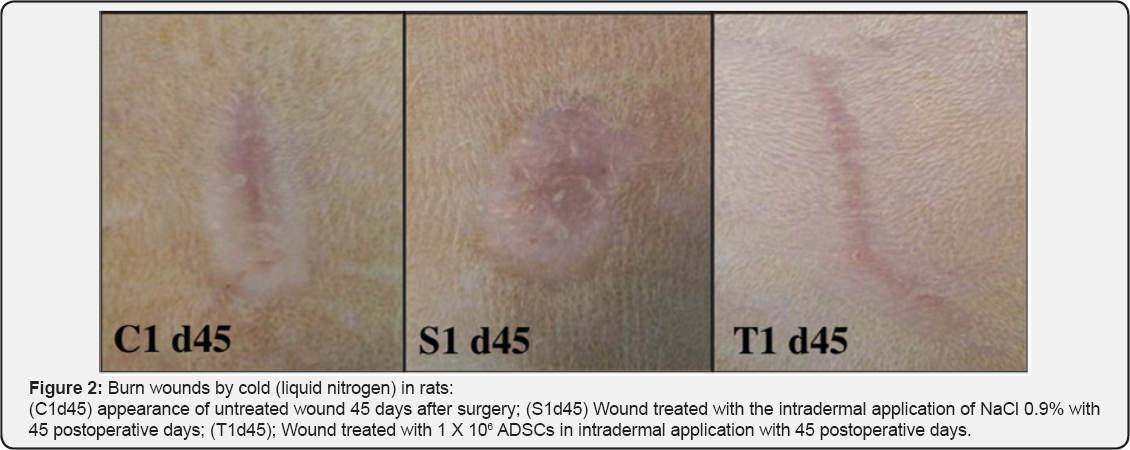
The MSCs act, in many levels, in the three healing phases: inflammatory, proliferative and remodeling phase. Current studies indicate that the differentiation of the MSCs, that contributed to the tissue regeneration, is limited by the small survival rate of these cells in the damaged area. However, the paracrine signaling to the cells from the injury is the main mechanism of the MSCs, reducing the inflammation, stimulating the angiogenesis and inducing the cell migration and proliferation [33,37]. Nevertheless, other authors suggest that the differentiation of the MSCs in keratinocytes and endothelial cells have the same function as the paracrine signaling to accelerate the neovascularization and the reepithelialization of wounds [32] (Figure 1 & 2).

Some studies suggest that immunosuppressive potential is the same of both types of MSCs, ADSCs and BM-MSCs, in an inflammatory environment. Their local administration inhibited the T cells recruitment and proliferation [37-41] and decrease Interferon-γ (lFNγ),Tumor Necrosis Factor-α (TNFα), 1L-6 and IL-1β expression in the skin grafts [39-41]. In the inflammatory phase (one to three days), the expression of anti-inflammatory cytokines 1L-4 and 1L-10 is increased while 1L-2 pro- inflammatory cytokines, TNF-α and 1FN-γ are decreased, causing less local inflammatory reaction [37,42]. MSCs can also regulate macrophage activation and convert phenotype expression of M1 macrophages to M2 anti-inflammatory macrophages [39-41], which accelerates the wound healing. Additionally, MSCs act over the innate immunity to prevent the rejection of transplanted allografts, inhibiting the complement system activation [39]. The decrease of TFN-α also helps the reepithelialization after the proliferation phase [43]. The antimicrobial action from the MSCs are also important to limit the infection occurrence [37].
With the utilization of cell therapy in the proliferative phase (14 days) the production of important growth factors is increased: Vascular Endothelial Growth Factor (VEGF), Basic Fibroblast Growth Factor (bFGF) [32,37,42,43], Epidermal Growth Factor (EGF), Keratinocyte Growth Factor (KGF), Hepatocyte Growth Factor (HGF), Platelet-Derived Growth Factor (PDGF) and Transforming Growth Factor-beta (TGF-β). Through their paracrine action, the MSCs raise the migration and proliferation of keratinocytes, endothelial and epithelial cells. The fibroblasts proliferation is also enhanced, as well as the blood vessels' formation. This way, there is a better growing of a more vigorous granulation tissue [33,37,42,43]. The angiogenesis is a very important factor to the wound's healing, and the VEGF and the Fibroblast Growth Factor (FGF) are very important angiogenic factors [32].
Through the paracrine signaling, from the MSCs in the remodeling phase (21 days to one year), the fibroblasts produce collagen fibers in greater quantity and density, generating an increase in wound tensile strength [37,42,43]. At the same time, there is a smaller wound contraction and increased matrix-metalloproteinases production, that control the collagen deposition exacerbation, improving the aesthetic result and keeping the skin's function [33,42,43]. MSCs also contribute to the scar's appropriate remodeling with the increased secretion of VEGF and HGF, the adequate balance between TGF-β1 and TGF-β3 [37] and the increase of bFGF and TGF-β which inhibit the Alpha-Smooth Muscle Actin (α-SMA) expression, responsible for myofibroblast phenotype [32].
Studies indicate that there is also the possibility of using BM-MSCs and ADSCs to protect the damaged tissues caused by the 1schemia-Reperfusion 1njury (1R1) and to decrease the dysfunction of organs undergoing ischemia. The ADSCs are able to protect axial flaps from the 1R1 with results as satisfactory as the ones obtained in procedures without ischemia, because of the improvement in the angiogenic response and the blood perfusion elevation [10]. Many studies use the ADSCs to prevent ischemic injuries in skin flaps [7-14], as others [15,16] used them to improve the quality of skin grafts.

Conclusion

The MSCs - both BM-MSCs and ADSCs - are capable to answer and module their functions, when exposed to cells or typical factors of the lesion environment, attracted by the cell signaling to the inflammation areas. The researches developed till the moment point the paracrine signaling as the main mechanism from the MSCs, decreasing the inflammation, benefiting the angiogenesis and inducing the cell migration and proliferation in the damaged area. The progress on the researches about the association of MSCs with reconstructive surgery practices indicates good and productive results, which can benefit the clinical practice in this field.


To Know More About Open Access Journals Please click on: ttps://juniperpublishers.com/index.php

Tuesday, January 21, 2020

Public Health Interventions in Cystic Fibrosis-Juniper Publishers

International Journal of Pulmonary & Respiratory Sciences


The United States invests billions of dollars dedicated to funding research projects throughout the country. For instance, President Obama's fiscal budget for the National Institute of Health was 31.3 billion dollars. In efforts to conduct groundbreaking research; however, the budget was decreased due to sequestration from Congress. Consequently, the National Institute of Health has lost over 1.7 billion in funding for FY 2014, this loss will affect over 700 research grants overall due to sequestration (www.nih.gov, 2014, para.4). However, the National Institute for Health invigorates the U.S to stay number one among developed world healthcare providers, it also has advanced medical and scientific technology, by creating sound treatments and preventative measures for those with cystic fibrosis and other chronic diseases that plague U.S citizens alike. Unfortunately, budget cut to the NIH will affect clinical trials, competitive research grants and will poorly impact research prevention overall in the Country. Therefore, budget cuts and cystic genetic mutations affect our government, public facilities and private institutions overall. By, crippling their ability to conduct viable research cystic research will plummet without funding (www.cff.org, 2013). Without, concise clinical research trials the NIH and private researchers who receive grants to study cystic fibrosis will not be able to conduct research trials which help to enroll participants that could offer solutions to unraveling the genetic valley of gene mutations associated with cystic fibrosis. Cystic fibrosis has affected both public health in the United States and global communities, governing bodies research capabilities, and interventional policy creation over the past twenty years.

Introduction

First, cystic fibrosis impacts public health in the U.S. through biological, genetic and molecular factors that are both positive and negative. Regretfully, some aspects of cystic fibrosis are negative upon those suffering from the disease and the governing bodies in which are needed in funding programs and health systems that are essential in treating the disease. Biomedical research has advanced in studying the specific gene mutations that occur in cystic fibrosis while genetic epidemiology has allowed for longer life spans in those with the CFTR gene mutation. People with cystic fibrosis are living to 37.5 years of age and experienced improved public health care impacts as opposed to their global partners in developing worlds (www. cdc.org.gov, 2012). However, this positive growth in treating and care has only grown due to the implementation of sound clinical research and higher education in America [1-8]. Public health measures throughout the country seek to prevent disease states as opposed to responding to disease states as older models of treating diseases after the initial diagnosis has changed. Cystic fibrosis has impacted public health by: identifying those with disease states early on, elongating life in CF patients, and medical practices/providers are seeking to identify those with disease. However, the necessary medical treatments like: antiviral, antibiotics, life support and gene therapies can be costly among all judicial branches in effort to decode the onslaught of mutations that can occur in the CFTR gene [7].
Secondly, some ways governmental contribution roles are implicated is in research prevention of cystic fibrosis has impacted experienced mortality rates associated with the disease state. As stated earlier, those with cystic fibrosis are experiencing much longer lives as opposed to twenty years ago. Governmental research via clinical trials are vital to preventing the spread of cystic fibrosis in newborns that remain undiagnosed without the proper testing for CF and sound institutional procedures. For example, most states within the U.S. require infant testing for cystic fibrosis at delivery times or before three months of age. Fortunately, these early testing requirements have been instrumental in diagnosing and ensuring timely treatment for infants with CF. These timely clinical tests have been an essential part of cystic fibrosis sufferers experiencing better quality of life. With the CFTR mutation amino acids are stagnant and allow for increased mucus production in the CF gene mutation faltering potassium and sodium levels in patients. This has an extreme effect on private intuitions and governments alike. There are not many species which experience this gene mutation except in the human genome. So, identifying people with the mutation is essential in treating the disease and increasing awareness on testing capabilities among those of European heritage. The U.S. funnels billions of dollars into research annually by supporting the National Institute of Health's budget. Ensuring access to healthcare, quality care, adequate hospitals, clinics and preserving federal support to HIH is essential to positive influences from governing systems (www.nih.gov., 2012)

Methods Used to Diagnose Cystic Fibrosis in Infants

    a. Cf testing
    b. Infant test
    c. Sweat test
However, one can become an advocate and delve into governmental cystic fibrosis processes by: volunteering, meeting with congressional representatives and strengthening the Food and Drug Administration's overall. These all can help in the methods utilized in public health prevention initiatives when attempting to fund research associate with cystic fibrosis. The U.S and its European partners have taken on the fight against cystic fibrosis in measures to prevent the disease from occurring more frequently through timely testing.
Thirdly, biological, genetic, molecular indicators that impact public health practices are experienced by millions in the U.S. Biological indicators of public health impacts both patients and governments negatively overall. Therefore, without the proper research to identify mutative genes from all disease states. These spectral norms wouldn’t exist and public health would be greatly deterred among all stakeholders in the U.S. Other biological indicators can be from environmental and molecular variance in the world in which we live and the internal processes from all human, plant and animals. Also, public health impacts are greatly dependent upon the educational, planning, implemented, and evaluation of molecular factors associated with quality care among citizens. Fortunately, new discoveries in large animal studies like pigs are showing great resemblance to CFTR gene mutative phenotypes in animals (Fisher, 2011). Which would greatly improve the understanding of the gene mutation in the human specifies. Although, in earlier studies there were no comparative mutations in small animals like mouse, and ferrets to suggest somatic nuclear cell transference of a CFTR gene type (Warwick, 1963).
Last, but not least, there are several types of public health intervention strategies available to those with cystic fibrosis. From sweat testing early on it a concise indicator for infants with the disease. Even if infants are diagnosed at five to six months early intervention is key in improving life spans among cystic fibrosis patients. This has helped medical providers and parents identify children inflicted with the disease early on. This has led to increasing the lifespan of those with the CFTR gene mutation. Also, other interventions include educating the public on cystic fibrosis symptoms, while stressing the importance of intervention early on. For example, in the U.S. every state tests for the CFTR gene after delivery. There are global initiatives to support research on cystic fibrosis like the United Kingdom's Cystic Trust Research Strategy which increases awareness and raises millions of dollars to support key biomedical, pharmaceutical research.

Conclusion

In conclusion, cystic fibrosis has affected both public health in the United States and global communities, governing bodies research capabilities, and interventional policy creation over the past twenty years. Fortunately, it has inspired great clinical trials and pharmacokinetic practices that continue to p [positively influence the lives of thousands suffering from the disease process. Governing bodies will continually fight against the disease which continually evades the phenotypes of thousands of Eastern Europeans among all populations around the globe. Governmental roles in the CFTR gene mutation are to seek research methods to decrease the prevalence of the disease state. By, family planning, genetic testing, gene sequencing and educating the public are all essential in government processes to fight the F508 gene mutation (Table 1). 

 
To Know More About Open Access Journals Please click on: ttps://juniperpublishers.com/index.php


Tuesday, January 14, 2020

Biological Efficient Dairy Cows in Grazing Systems-Juniper Publishers

Journal of Dairy & Veterinary sciences

The availability of indicators that would help to avoid the overvaluation of one of the characteristics involved in the assessment of a good dairy cow over others that are important as well would also allow identifying the most adapted biotypes to the different environments existing at the place of the evaluation This article aims to discuss the need to use several productive and reproductive indicators when measuring the biological efficiency of a dairy cow in grazing systems. It was used retrospective data corresponding to the lactations of 300 primiparous and multiparous cows of the Holstein breed - American-Canadian biotype, along with records of their entire productive life, from their incorporation into the system until their sale or death. The animals were divided into two categories: pure cows (PC, n = 120) and cows in the breeding record (CBR, n = 180). It is observed that there are two different strategies in some variables that achieve the same biological efficiency, where the CBRs live longer, produce less and have smaller first delivery intervals. There are no significant differences in the milk index but in the fat index. It is concluded that the greater individual production does not guarantee a greater production at the end of the productive life of the cow, nor a greater productive efficiency when considering the time involved to produce a certain amount of liters. In grazing systems, the contribution of other variables included in the milk index - longevity, rearing efficiency and reproductive behavior - should be considered while searching for an aggregate indicator that tends to achieve greater productive efficiency.
Keywords: Dairy cows; Indicators; Efficiency; Grazing Systems

Introduction

The notable increase in the productive performance and size of these modern high-production cows has been made possible by the repeated and asymmetric use of a selection based exclusively on milk production. Although this process has been accompanied by changes in the nutritional area, these have not been sufficient to prevent vital function deterioration such as reproduction and survival. It becomes increasingly difficult to provide a non-limiting environment, being almost impossible during the initial phase of lactation [1]. The efficiency of a productive system is one of the most important factors from an economic and social point of view. And the most used modality to evaluate it is assessing indicators of biological and economic productivity. However, when producing in conditions where resources are scarce and expensive (grazing systems), not only products or outputs but also inputs should be considered when evaluating efficiency. In the particular case of high production dairy cows, the traits associated with biological efficiency or fitness (reproduction and longevity) have deteriorated despite their importance for the viability of the company [2,3].
Suggest that the sustainability of dairy systems depends, to a large extent, on the availability of a biotype adapted to the handling conditions and that it is capable of efficiently transforming food into good quality milk. This biotype must have a good reproductive performance, being the main goal of the system to maximize an efficient productive response per unit area [4]. The search for the maximization of the value of a single productive variable disregarding the remaining variables can alter the equilibrium and deteriorate the overall efficiency of productive systems [5]. Every open system processes the inputs received and generates outputs. In productive systems, the concept of efficiency refers to the most appropriate way to use resources with existing technology and products.
As a result of this positioning, it is considered that a production process is efficient if the maximum output is obtained with the lowest possible inputs [6]. In dairy production, the expression “maximize outputs” may have different connotations: maximize individual production during lactation or maximize production considering the entire life of the cow, reproductive success should be considered in the analysis. The amount of milk produced by a cow can be considered the most important indicator in intensive systems, even though, this indicator alone is not the most appropriate to make operational a complex variable like productive efficiency, when the goal is to make the most out of grazing systems. In these cases, it should be complemented, or even replaced, by other more aggregated indicators that constitute alternatives as a more comprehensive measure to assess the behavior of production in those systems in which pasture is the basic component of the diet.
The availability of indicators of this nature would help to avoid the overvaluation of one of the characteristics involved in the assessment of a good dairy cow over others that are important as well. It would also allow identifying the most adapted biotypes to the different environments existing at the place of the evaluation [7]. This article aims to discuss the need to use several productive and reproductive indicators when measuring the biological efficiency of a dairy cow in grazing systems.

What Is Efficiency

Efficiency is the relationship between an income and an expense, between an input and an output or between a resource and a product [8]. When measuring efficiency, it is necessary to specify exactly which elements are used to evaluate the result through a relation of its values. And to define the units used to measure the values of these elements. The concept of efficiency refers to a relationship between elements and that the circumstances in which the relationship is established have a high specificity. As a consequence, the term itself is very relative, and any value that can be considered as good or low is even more so [8].

How to Measure Efficiency

The advantages of grazing systems are sought within the framework of this approach, in which the cow is provided directly with the necessary input to meet its food requirements, without the need for transportation, processing or distribution of rations [9]. Although it is the most widespread modality, the amount of milk produced by a cow does not represent the most appropriate indicator to make operational a complex variable as productive efficiency. As such, it should be complemented or replaced by other more aggregated indicators creating alternatives for a more comprehensive production measurement to assess their performance in grazing systems. The availability of indicators of this nature would help to avoid the overvaluation of one of the characteristics involved in the assessment of a good dairy cow over others that are important as well. It would also allow identifying the most adapted biotypes to the different environments existing at the place of the evaluation [10].
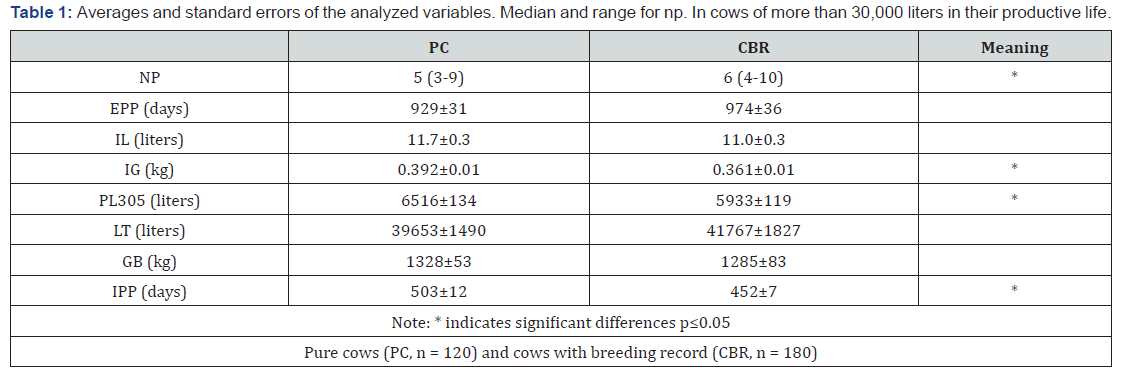
It was used retrospective data corresponding to the lactations of 300 primiparous and multiparous cows of the Holstein breed - American-Canadian biotype, along with records of their entire productive life, from their incorporation into the system until their sale or death. The animals were divided into two categories: pure cows (PC, n = 120) and cows in the breeding record (CBR, n = 180). The existence of significant differences in the assessed time between groups was studied by applying variance analysis to a classification criterion. JMP 5.0 for Windows (JMP®, SAS Institute, 2003) was used for statistical analysis Table 1.
The following variables were analyzed: a. Number of births b. Milk production (PL by its initials in Spanish): liters produced per cow adjusted to 305 days c. Age at first birth (PPE by its initials in Spanish) in days d. Total Butyrose Fat production in kg: GB, ΣGBi where “i” are the kilograms produced in the j-th lactation e. Total milk production (liters) = pl, Σpli, where “i” are the liters produced in the j-th lactation f. Milk index (milk production per day of life) in liters = IL, by its initials in Spanish, (il: LT / e e: age in days at the end of the last lactation): il = pl / age [11] g. Fat Index (production of Butyrose fat per day of life) in kg = IG by its initials in Spanish, (ig: Total GB / e e: age in days at the end of the last lactation): ig = kg GB / age [10] h. First delivery interval - delivery in days (IPP by its initials in Spanish): Σipp, where “i” are the days between deliveries / number of deliveries [12].
Pure cows are pregnant at an age closer to optimal, showing a difference of 60 days with cows in the breeding record. They produce in their five lactations 6516 liters on average against the 5933 liters in six lactations of cows in the breeding record, achieving a total of 41767 liters in its life against the 39653 liters of pure cows. Additionally, the pure cow takes for each new delivery 51 days (total 306 days (6 deliveries * 51 days)) more than the cow in the breeding record. In conclusion, the advantage in days they have because of its first birth during its life is lost in a single IPP, as well as producing almost for a year in the less efficient part of the lactation curve.
It is observed that there are two different strategies in some variables that achieve the same biological efficiency, where the CBRs live longer, produce less and have smaller IPP. There are no significant differences in the milk index but in the fat index. Although considering each variable separately is relevant, when reference values are available and allow these cows to be positioned in particular in the framework for milk production of the Holstein breed, the characterization of the efficiency of a productive system requires a joint analysis of all of them instead of individual consideration [5].

Conclusion

It is concluded that the greater individual production does not guarantee a greater production at the end of the productive life of the cow (LT) nor a greater productive efficiency when considering the time involved to produce a certain amount of liters (il). In grazing systems, the contribution of other variables included in the milk index - longevity, rearing efficiency and reproductive behavior - should be considered while searching for an aggregate indicator that tends to achieve greater productive efficiency.

 
To Know More About Open Access Journals Please click on: ttps://juniperpublishers.com/index.php


Artificial Intelligence System for Value Added Tax Collection via Self Organizing Map (SOM)- Juniper Publishers

  Forensic Sciences & Criminal Investigation - Juniper Publishers Abstract Findings:  Based on our experiments, our approach is an effec...